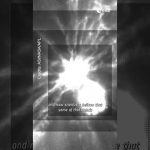
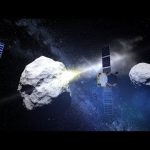
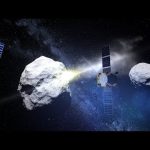
In 2022 NASA’s DART spacecraft made history, and changed the Solar System forever, by impacting the Dimorphos asteroid and measurably shifting its orbit around the larger Didymos asteroid. In the process a plume of debris was thrown out into space.
The latest modelling, available on the preprint server arXiv and accepted for publication in the September volume of The Planetary Science Journal, shows how small meteoroids from that debris could eventually reach both Mars and Earth – potentially in an observable (although quite safe) manner.
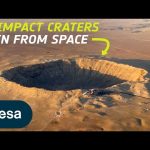
Have you ever wondered what an impact crater looks like from space? Today, we’re counting down some of our favourite impact craters here on Earth – captured by Earth-observing satellites.
Craters are inevitably part of being a rocky planet. They occur on every planetary body in our solar system – no matter the size. By studying impact craters and the meteorites that cause them, we can learn more about the processes and geology that shape our entire solar system.
We are Europe’s gateway to space. Our mission is to shape the development of Europe’s space capability and ensure that investment in space continues to deliver benefits to the citizens of Europe and the world. Check out https://www.esa.int/ to get up to speed on everything space related.
Countdown to impact as NASA’s Double Asteroid Redirection Test (DART) attempts humanity’s first-ever test of planetary defense! The DART spacecraft will intentionally crash into asteroid Dimorphos at 7:14 p.m. ET on Monday, September 26, 2022 to see if kinetic force can change its orbit. Why? If this test is successful, the same technique could be used to deflect an Earth-threatening asteroid in the future, should one ever be discovered.
The #DARTMission’s target asteroid is NOT a threat to Earth before, during or after the impact event.
Meteoroizii se ciocnesc cu atmosfera Pământului în fiecare zi. Află ce ne pot învăța aceste impacturi despre riscurile întâlnirii cu un asteroid, împreună cu Simon Anghel, cercetător în cadrul Institutului Astronomic al Academiei Române, specialist în științe planetare. Urmărește LIVE discuția moderată împreună cu Ada Roseti joi de la ora 21.00, aici https://www.youtube.com/watch? . Dacă ai curiozități, pune o întrebare aici și, dacă întrebarea va primi răspuns în cadrul emisiunii, poți câștiga o carte de la Editura Humanitas.
Află ce spun cercetări de top realizate în România, sub coordonarea lui Mihai Ciubotaru, directorul Laboratorului de imunulogie moleculară din cadrul Spitalului Colentina și cercetător al Institutului de Fizică Nucleară de la Măgurele, despre interacțiunea dintre biologia omului și fizica mediului, despre felul în care medicina modernă poate folosi „foarfeci” la nivelul moleculelor cu care să „croiască” soluții personalizate. Urmărește LIVE discuția moderată împreună cu Ada Roseti joi de la ora 21.00, aici https://www.youtube.com/watch?v=K0-qpmPTau8. Dacă ai curiozități, pune o întrebare aici și, dacă întrebarea va primi răspuns în cadrul emisiunii, poți câștiga o carte de la Editura Humanitas.
The impact of coronavirus to NASA’s missions, prelaunch training continues for the next space station crew, and launch preparations for Orion … a few of the stories to tell you about – This Week at NASA!
This video is available for download from NASA’s Image and Video Library: https://images.nasa.gov/details-NASA_2020_0327_The%20Impact%20of%20Coronavirus%20to%20NASA%E2%80%99s%20Missions%20on%20This%20Week%20@NASA%20%E2%80%93%20March%2027,%202020
It’s the year 2028, and we’ve been carefully monitoring a worrying situation: an enormous asteroid is en route to strike Earth, although the exact point of impact is not yet clear.
National governments are planning to evacuate millions of people, an undertaking that will cause untold human misery and disruption on a gigantic scale. If the asteroid’s impact zone can be fixed, perhaps such chaos can be avoided.
As precious hours pass, find out how our Planetary Defence Office is able to obtain crucial information on this potential disaster as part of the Agency’s Space Safety and Security activities.
Back to the present day: Find out more about how we are preparing to protect our pale blue dot, its inhabitants and the vital satellite systems on which we have become so dependent.
Space Safety & Security at ESA: www.esa.int/spacesafety
Planetary Defence: www.esa.int/planetarydefence
★ Subscribe: http://bit.ly/ESAsubscribe and click twice on the bell button to receive our notifications.
ESA is Europe’s gateway to space. Our mission is to shape the development of Europe’s space capability and ensure that investment in space continues to deliver benefits to the citizens of Europe and the world. Check out http://www.esa.int/ESA to get up to speed on everything space related.
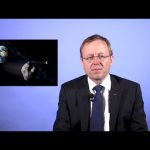
ESA Director General Jan Woerner sends a message to mark Asteroid Day 2016, an annual global movement to increase public awareness of potential asteroid impacts with Earth, and the importance of guarding against them. It is held each year on 30 June, the anniversary of the largest impact in recent history, the 1908 Tunguska event in Siberia.
ESA’s Asteroid Impact Mission, currently under study for launch in 2020 and arrival in 2022, would be humanity’s first probe to a double asteroid system. Targeting an approximately 180-m diameter asteroid – around the same size as the Great Pyramid of Giza – AIM would spend a busy six months gathering data on its surface and inner structure.
It would then perform before-and-after measurements as the NASA-led Double Asteroid Redirection Test spacecraft impacts straight into it, in an attempt to change the asteroid’s orbital period – marking the very first time that humanity shifts a Solar System object in a measurable way. Success would make it possible to consider carrying out such an operation again if an incoming asteroid ever threatened our planet. The two missions combined are called the Asteroid Impact & Deflection Assessment, or ‘AIDA’ for short.
But why do we need to plan such a ground-breaking experiment? Astrophysicist and Queen guitarist Brian May, ESA astronaut Luca Parmitano, the UK’s Astronomer Royal Sir Martin Rees and Canadian astronaut Chris Hadfield share their own thoughts.
La misión AIM (Asteroid Impact Mission), candidata a ser desarrollada, actualmente en fase de diseño preliminar.
AIM se lanzaría en octubre de 2020 y su objetivo es viajar al sistema binario de asteroides Dídimos para estudiar la luna Didymoon. El sistema Didimos cuenta con un cuerpo principal de unos 800 metros de diámetro y una luna que orbita alrededor de este cuerpo principal, de unos 170 metros de diámetro aproximadamente, está luna se la conoce con el nombre de Didymoon. El sistema Didimos se aproximará a 11 millones de kilómetros de la tierra en 2022.
AIM escaneará la pequeña Didymoon en detalle con su cámara VIS, con imágenes térmicas y un radar de alta resolución para construir mapas detallados de su superficie y estructura interior.
La nave principal de AIM llevará al menos tres sondas más pequeñas – el módulo de aterrizaje, Mascot-2, desarrollado por el Centro Aeroespacial Alemán (Mascot-1 ya está volando en la misión Hayabusa-2 de JAXA), así como dos o más CubeSats. Así, AIM pondría a prueba las comunicaciones ópticas y los enlaces inter-satelitales en el espacio profundo, una tecnología que será esencial para la exploración futura del espacio.
Si se aprueba, AIM también será la contribución europea a la misión AIDA, Asteroid Impact and Deflection Assessment. En 2022, la sonda DART (Double-Asteroid Redirection Test), parte dirigida por la NASA, llegará al sistema binario y se estrellará contra Didymoon a una velocidad de unos 6 km/s.
El impacto será observado por AIM y por sus CubeSats. A través de las imágenes de alta resolución de AIM se evaluará el tamaño y la profundidad del cráter tras el impacto. AIM realizará una segunda fase de mediciones para comparar detalladamente la estructura del objeto, así como su órbita al rededor del asteroide mayor, antes y después del impacto.
The Asteroid Impact Mission (AIM) is a candidate mission currently undergoing preliminary design work.
Launched in October 2020, AIM would travel to a binary asteroid system – the paired Didymos asteroids, which will come a comparatively close 11 million km to Earth in 2022. The 800 m-diameter main body is orbited by a 170 m moon, informally called ‘Didymoon’.
This smaller body is AIM’s focus: the spacecraft would perform high-resolution visual, thermal and radar mapping of the moon to build detailed maps of its surface and interior structure.
The main AIM spacecraft is planned to carry at least three smaller spacecraft – the Mascot-2 asteroid lander, being provided by DLR (Mascot-1 is already flying on JAXA’s Hayabusa-2), as well as two or more CubeSats. AIM would test optical communications and inter-satellite links in deep space, essential technology for future exploration.
If approved, AIM would also be Europe’s contribution to the larger Asteroid Impact & Deflection Assessment mission: AIDA. In late 2022, the NASA-led part of AIDA will arrive: the Double Asteroid Redirection Test, or DART, probe will approach the binary system – then crash straight into the asteroid moon at about 6 km/s.
AIM is intended to be watching closely as DART hits Didymoon. In the aftermath, it will perform detailed before-and-after comparisons on the structure of the body itself, as well as its orbit, to characterise DART’s kinetic impact and its consequences.
The Asteroid Impact and Deflection Assessment (AIDA) study examines ways to potentially deflect asteroids from trajectories that could lead to them impacting Earth. The Johns Hopkins University Applied Physics Laboratory would work with NASA and ESA on the mission, which includes two independent spacecraft: an impactor (to be built by APL for NASA) and an impact monitor (to be built by ESA).
The target of this mission is the binary asteroid system Didymos. The impactor would strike the smaller secondary of Didymos, while the monitor would observe and measure any change in the relative orbit.