NASA Administrator Bill Nelson has announced that the Ingenuity Mars Helicopter has come to an end. The Ingenuity Mars Helicopter made history by achieving the first powered, controlled flight on another planet on April 19, 2021. Despite initial plans for up to five flights, the helicopter has exceeded expectations and executed an impressive 72 flights on the Red Planet. NASA pays tribute to its accomplishments, which have far exceeded what was thought possible and have paved the way for future flights in our solar system.
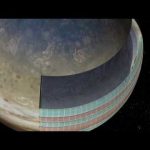
On May 16, 2023, NASA’s Juno spacecraft flew past Jupiter’s volcanic moon Io, and then the gas giant soon after. Io is the most volcanically active body in the solar system. Slightly larger than Earth’s moon, Io is a world in constant torment. Not only is the biggest planet in the solar system forever pulling at it gravitationally, but so are its Galilean siblings – Europa and the biggest moon in the solar system, Ganymede. The result is that Io is continuously stretched and squeezed, actions linked to the creation of the lava seen erupting from its many volcanoes.
This rendering provides a “starship captain” point of view of the flyby, using images from JunoCam. For both targets, Io and Jupiter, raw JunoCam images were reprojected into views similar to the perspective of a consumer camera. The Io flyby and the Jupiter approach movie were rendered separately and composed into a synchronous split-screen video.
Launched on Aug. 5, 2011, Juno embarked on a 5-year journey to Jupiter. Its mission: to probe beneath the planet’s dense clouds and answer questions about the origin and evolution of Jupiter, our solar system, and giant planets in general across the cosmos. Juno arrived at the gas giant on July 4, 2016, after a 1.7-billion-mile journey, and settled into a 53-day polar orbit stretching from just above Jupiter’s cloud tops to the outer reaches of the Jovian magnetosphere. Now in its extended mission, NASA’s most distant planetary orbiter continues doing flybys of Jupiter and its moons.
NASA will host a briefing to provide highlights from the first year-and-a-half of the Perseverance rover’s exploration of Mars.
The rover landed in Mars’ Jezero Crater in February 2021 and is collecting samples of rock and other materials from the Martian surface. Perseverance is investigating the sediment-rich ancient river delta in the Red Planet’s Jezero Crater.
Speakers: • Lori Glaze, director of NASA’s Planetary Science Division, NASA Headquarters • Laurie Leshin, JPL director • Rick Welch, Perseverance deputy project manager, JPL • Ken Farley, Perseverance project scientist, Caltech • Sunanda Sharma, Scanning Habitable Environments with Raman and Luminescence for Organics and Chemicals (SHERLOC) scientist, JPL • David Shuster, Perseverance returned sample scientist, University of California, Berkeley
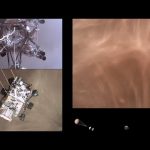
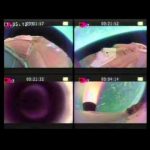
NASA’s Mars 2020 Perseverance mission captured thrilling footage of its rover landing in Mars’ Jezero Crater on Feb. 18, 2021. The real footage in this video was captured by several cameras that are part of the rover’s entry, descent, and landing suite. The views include a camera looking down from the spacecraft’s descent stage (a kind of rocket-powered jet pack that helps fly the rover to its landing site), a camera on the rover looking up at the descent stage, a camera on the top of the aeroshell (a capsule protecting the rover) looking up at that parachute, and a camera on the bottom of the rover looking down at the Martian surface.
The audio embedded in the video comes from the mission control call-outs during entry, descent, and landing.
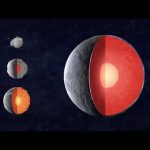
Psyche is both the name of an asteroid orbiting the Sun between Mars and Jupiter — and the name of a NASA space mission to visit that asteroid, led by Arizona State University. Join the Psyche team to explore why this mission was selected for NASA’s Discovery Program, how we’ll get to the asteroid, what we hope to learn from Psyche, and the importance of scientific discovery.
Credits: NASA/JPL-Caltech/Arizona State Univ./Peter Rubin/SSL
The bands were thought to be an expression of Jovian weather, related to winds blowing eastward and westward at different speeds.
This animation illustrates a recent discovery by Juno that demonstrates these east-west flows, also known as jet-streams penetrate deep into the planet’s atmosphere, to a depth of about 1,900 miles (3,000 kilometers). Due to Jupiter’s rapid rotation (Jupiter’s day is about 10 hours), these flows extend into the interior parallel to Jupiter’s axis of rotation, in the form of nested cylinders. Below this layer the flows decay, possibly slowed by Jupiter’s strong magnetic field.
The depth of these flows surprised scientists who estimate the total mass involved in these jet streams to be about 1% of Jupiter’s mass (Jupiter’s mass is over 300 times that of Earth). This discovery was revealed by the unprecedented accuracy of Juno’s measurements of the gravity field.
On Sept. 13, NASA held a news conference from the agency’s Jet Propulsion Laboratory, in Pasadena, California to discuss details of final mission activities for the agency’s Cassini mission to Saturn. On Sept. 15, the Cassini spacecraft will complete its remarkable story of exploration with an intentional plunge into Saturn’s atmosphere, ending its mission after nearly 20 years in space.
The team developing NASA’s next rover mission to Mars has received a go-ahead from the agency to proceed with building the rover for launch in 2020. A July 15 Facebook Live event from NASA’s Jet Propulsion Laboratory featured updated news about the Mars 2020 rover and its mission. It will be almost identical to the Curiosity rover currently on Mars, but will have enhanced landing technology, the ability to prepare soil and rock samples for return to Earth and microphones to capture sound. The rover will look for signs of past life in a region of the Red Planet where the ancient environment was favorable for microbial life.
NASA’s Low Density Supersonic Decelerator (LDSD) launched on Monday, June 8th from the U.S. Navy’s Pacific Missile Range Facility on Kauai, Hawaii. The saucer-shaped vehicle was used to test new technologies that will help NASA land heavier payloads than current technology will allow on the surface of planets including Mars. The test vehicle was carried by balloon to about 120,000 feet. After release, an engine took the vehicle to 180,000 feet, where the tests occurred in the thin atmosphere to simulate Mars’ atmosphere. This flight test was the second of three planned for the project. The LDSD mission is designed to test entry and descent technology in the form of a donut-shaped airbag and a supersonic parachute that can be deployed while the vehicle is traveling several times the speed of sound.
A Theodore von Kármán Lecture Series talk, held November 6 and 7 at NASA’s Jet Propulsion Laboratory in Pasadena, California, addressed the key aspects of the agency’s Asteroid Redirect Robotic Mission (ARRM) concept, which seeks to rendezvous with, capture, and redirect to translunar space a near-Earth asteroid.
A live conversation about the future of space exploration with actor, director and narrator Morgan Freeman. He spoke at NASA’s Jet Propulsion Laboratory in Pasadena, California, about his personal vision for space. The event also included NASA astronaut Reid Wiseman and Expedition 40 Commander Steve Swanson participating from the International Space Station.
Where is the best place to find living life beyond Earth? It may be a small, ice-covered moon of Jupiter or Saturn that harbors some of the most habitable real estate in our Solar System. Life loves liquid water and these moons have lots of it! Dr.Kevin Hand, Deputy Chief Scientist for Solar System Exploration at NASA’s Jet Propulsion Laboratory explains the science behind how these oceans exist and what we know about the conditions on these worlds. Dr. Hand focuses on Jupiter’s moon Europa, which is a top priority for future NASA missions and shows how the exploration of Earth’s ocean is helping our understanding of the potential habitability of worlds.
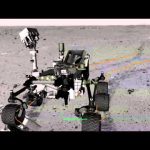
A NASA Mars Curiosity rover team member gives an update on developments and status of the planetary exploration mission. The Mars Science Laboratory spacecraft delivered Curiosity to its target area on Mars at 1:31:45 a.m. EDT on Aug. 6, 2012 which includes the 13.8 minutes needed for confirmation of the touchdown to be radioed to Earth at the speed of light. The rover will conduct a nearly two-year prime mission to investigate whether the Gale Crater region of Mars ever offered conditions favorable for microbial life.
Curiosity carries 10 science instruments with a total mass 15 times as large as the science payloads on NASA’s Mars rovers Spirit and Opportunity. Some of the tools, such as a laser-firing instrument for checking rocks’ elemental composition from a distance, are the first of their kind on Mars. Curiosity will use a drill and scoop, which are located at the end of its robotic arm, to gather soil and powdered samples of rock interiors, then sieve and parcel out these samples into the rover’s analytical laboratory instruments.
A NASA’s Mars Curiosity rover team member gives an update on developments and status of the planetary exploration mission. The Mars Science Laboratory spacecraft delivered Curiosity to its target area on Mars at 1:31:45 a.m. EDT on Aug. 6, which includes the 13.8 minutes needed for confirmation of the touchdown to be radioed to Earth at the speed of light. The rover will conduct a nearly two-year prime mission to investigate whether the Gale Crater region of Mars ever offered conditions favorable for microbial life.
A NASA’s Mars Curiosity rover team member gives an update on developments and status of the planetary exploration mission. The Mars Science Laboratory spacecraft delivered Curiosity to its target area on Mars at 1:31:45 a.m. EDT on Aug. 6, which includes the 13.8 minutes needed for confirmation of the touchdown to be radioed to Earth at the speed of light. The rover will conduct a nearly two-year prime mission to investigate whether the Gale Crater region of Mars ever offered conditions favorable for microbial life.
Curiosity carries 10 science instruments with a total mass 15 times as large as the science payloads on NASA’s Mars rovers Spirit and Opportunity. Some of the tools, such as a laser-firing instrument for checking rocks’ elemental composition from a distance, are the first of their kind on Mars. Curiosity will use a drill and scoop, which are located at the end of its robotic arm, to gather soil and powdered samples of rock interiors, then sieve and parcel out these samples into the rover’s analytical laboratory instruments.
A NASA’s Mars Curiosity rover team member gives an update on developments and status of the planetary exploration mission. The Mars Science Laboratory spacecraft delivered Curiosity to its target area on Mars at 1:31:45 a.m. EDT on Aug. 6, which includes the 13.8 minutes needed for confirmation of the touchdown to be radioed to Earth at the speed of light. The rover will conduct a nearly two-year prime mission to investigate whether the Gale Crater region of Mars ever offered conditions favorable for microbial life.
Curiosity carries 10 science instruments with a total mass 15 times as large as the science payloads on NASA’s Mars rovers Spirit and Opportunity. Some of the tools, such as a laser-firing instrument for checking rocks’ elemental composition from a distance, are the first of their kind on Mars. Curiosity will use a drill and scoop, which are located at the end of its robotic arm, to gather soil and powdered samples of rock interiors, then sieve and parcel out these samples into the rover’s analytical laboratory instruments.
NASA’s newest Mars rover has found evidence that a stream once ran vigorously across the area on the Red Planet where the rover is now driving. The finding is a different type of evidence for water on Mars than ever found before. Scientists are studying Curiosity’s images of rocks containing ancient streambed gravels. The sizes and shapes of stones cemented into a layer of conglomerate rock are clues to the speed and distance of a long-ago stream’s flow.
A NASA’s Mars Curiosity rover team member gives an update on developments and status of the planetary exploration mission. The Mars Science Laboratory spacecraft delivered Curiosity to its target area on Mars at 1:31:45 a.m. EDT on Aug. 6, which includes the 13.8 minutes needed for confirmation of the touchdown to be radioed to Earth at the speed of light. The rover will conduct a nearly two-year prime mission to investigate whether the Gale Crater region of Mars ever offered conditions favorable for microbial life.
Curiosity carries 10 science instruments with a total mass 15 times as large as the science payloads on NASA’s Mars rovers Spirit and Opportunity. Some of the tools, such as a laser-firing instrument for checking rocks’ elemental composition from a distance, are the first of their kind on Mars. Curiosity will use a drill and scoop, which are located at the end of its robotic arm, to gather soil and powdered samples of rock interiors, then sieve and parcel out these samples into the rover’s analytical laboratory instruments.
Special Thanks to Anne Ketola for all the awesome NASA gear, and David Zimmerman for video equipment!
Lyrics:
When I EDL, time for seven minutes of flamin’ hell
Rover’s touchin’ down
everybody passin’ peanuts around, yeah
We’re at mission control, getting full use outta ev-er-y Sol (wa!)
Just 25 feet left to go
It’s Curiosity, look out below (yo)
Crane lower that rover (ah)
Crane lower that rover (ah)
Crane lower that rover (ah)
N-N-N-Now bug out!
Crane lower that rover
Crane lower that rove
Crane lower that rover
Now bug out!
Kickin’ it at my con(sole), this is what I see (okay)
Data streaming back from curiosity
I got stars on my ‘hawk
and I ain’t afraid to show it (show it, show it, show it)
We’re NASA and we know it
We’re NASA and we know it
(Yo)
When I look for ice, gotta calibrate, gotta be precise
And when I raise the mast, panoramic views are unsurpassed (wha?)
This is how I rove, baking red rocks in my nuclear stove
We headed to the peak, with my laser eye
No one to bury me when it’s time to die (ow!)
Crane lower that rover
Crane lower that rover
Crane lower that rover
Now bug out!
Crane lower that rover
Crane lower that rover
Crane lower that rover
Now bug out!
Shoutout to Carl the Sage (and) Neil Degrasse T (B.A.!)
Shoutout to JPL and the Rocker-Bogie
We’re better than SpaceX
And we ain’t afraid to show it (show it, show it, show it)
We’re NASA and we know it
We’re NASA and we know it
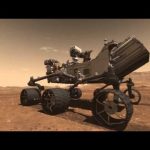
This 11-minute animation depicts key events of NASA’s Mars Science Laboratory mission, which will launch in late 2011 and land a rover, Curiosity, on Mars in August 2012. A shorter 4-minute version of this animation, with narration, is also available on our youtube page.