Tag: Kourou

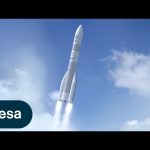
  • Ariane 6 launch animation

    Ariane 6 launch animation

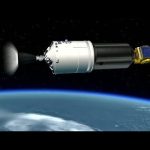
    Animation of the first launch of the Ariane 6 rocket with two boosters.

    Ariane 6 is an all-new design, created to succeed Ariane 5 as Europe’s heavy-lift launch system. With Ariane 6’s upper stage and its reignitable Vinci engine, Europe’s launch capability will be tailored to the needs of multiple payloads, for example to orbit satellite constellations. This autonomous capability to reach Earth orbit and deep space supports Europe’s navigation, Earth observation, scientific and security programmes. Ongoing development of Europe’s space transportation capabilities is made possible by the sustained dedication of thousands of talented people working in ESA’s 22 Member States.

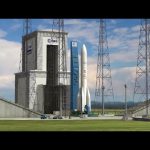
    At over 60 metres tall, Ariane 6 will weigh almost 900 tonnes when launched with a full payload – roughly equivalent to one and a half Airbus A380 passenger aircraft.

    Vinci, the upper stage engine of Ariane 6 fed by liquid hydrogen and oxygen, can be stopped and restarted multiple times – to place satellites into different orbits and then de-orbit the upper stage, so it is not left behind as hazardous debris in space.

    For the development of Ariane 6, ESA is working with an industrial network of several hundred companies in 13 European countries, led by prime contractor ArianeGroup.

    France’s space agency, CNES, is preparing the Ariane 6 launch facilities at Europe’s Spaceport in French Guiana.

    Credits: ESA – European Space Agency

    ★ Subscribe: http://bit.ly/ESAsubscribe and click twice on the bell button to receive our notifications.

    Check out our full video catalog: http://bit.ly/SpaceInVideos
    Follow us on Twitter: http://bit.ly/ESAonTwitter
    On Facebook: http://bit.ly/ESAonFacebook
    On Instagram: http://bit.ly/ESAonInstagram
    On LinkedIn: https://bit.ly/ESAonLinkedIn
    On Pinterest: https://bit.ly/ESAonPinterest
    On Flickr: http://bit.ly/ESAonFlickr

    We are Europe’s gateway to space. Our mission is to shape the development of Europe’s space capability and ensure that investment in space continues to deliver benefits to the citizens of Europe and the world. Check out https://www.esa.int/ to get up to speed on everything space related.

    Copyright information about our videos is available here: https://www.esa.int/ESA_Multimedia/Terms_and_Conditions

    #ESA
    #Ariane6
    #Rockets
  • Vega-C inaugural launch campaign timelapse, VV21

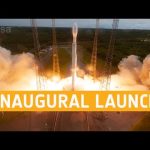
    Vega-C inaugural launch campaign timelapse, VV21

    ESA’s new Vega-C rocket lifted off for its inaugural flight VV21 at 15:13 CEST/13:13 UTC/10:13 local time from Europe’s Spaceport in French Guiana. With new first and second stages and an uprated fourth stage, Vega-C increases performance to about 2.3 t in a reference 700 km polar orbit, from the 1.5 t capability of its predecessor, Vega. For flight VV21, Vega-C’s payload is LARES-2, a scientific mission of @AsiTVit and six research CubeSats from France, Italy and Slovenia.

    Learn more about Vega-C: https://bit.ly/VegaRocketESA

    Directed by:
    Manuel Pedoussaut/Zetapress
    Stéphane Corvaja/ESA

    Music by: Hubrid – Cosmic Breath

    ★ Subscribe: http://bit.ly/ESAsubscribe and click twice on the bell button to receive our notifications.

    Check out our full video catalog: http://bit.ly/SpaceInVideos
    Follow us on Twitter: http://bit.ly/ESAonTwitter
    On Facebook: http://bit.ly/ESAonFacebook
    On Instagram: http://bit.ly/ESAonInstagram
    On LinkedIn: https://bit.ly/ESAonLinkedIn
    On Pinterest: https://bit.ly/ESAonPinterest
    On Flickr: http://bit.ly/ESAonFlickr

    We are Europe’s gateway to space. Our mission is to shape the development of Europe’s space capability and ensure that investment in space continues to deliver benefits to the citizens of Europe and the world. Check out https://www.esa.int/ to get up to speed on everything space related.

    Copyright information about our videos is available here: https://www.esa.int/ESA_Multimedia/Terms_and_Conditions

    #ESA
    #VegaC
    #SpaceRockets

  • Vega-C launch in slow motion

    Vega-C launch in slow motion

    ESA’s new Vega-C rocket lifted off for its inaugural flight VV21 on 13 July 2022 at 15:13 CEST/13:13 UTC/10:13 local time from Europe’s Spaceport in French Guiana. This video features shots of the launch from different angles.

    With new first and second stages and an uprated fourth stage, Vega-C increases performance to about 2.3 t in a reference 700 km polar orbit, from the 1.5 t capability of its predecessor, Vega.

    For flight VV21, Vega-C’s payload is LARES-2, a scientific mission of the Italian space agency ASI and six research CubeSats from France, Italy and Slovenia.

    Learn more about Vega-C: https://bit.ly/VegaRocketESA

    ★ Subscribe: http://bit.ly/ESAsubscribe and click twice on the bell button to receive our notifications.

    Check out our full video catalog: http://bit.ly/SpaceInVideos
    Follow us on Twitter: http://bit.ly/ESAonTwitter
    On Facebook: http://bit.ly/ESAonFacebook
    On Instagram: http://bit.ly/ESAonInstagram
    On LinkedIn: https://bit.ly/ESAonLinkedIn
    On Pinterest: https://bit.ly/ESAonPinterest
    On Flickr: http://bit.ly/ESAonFlickr

    We are Europe’s gateway to space. Our mission is to shape the development of Europe’s space capability and ensure that investment in space continues to deliver benefits to the citizens of Europe and the world. Check out https://www.esa.int/ to get up to speed on everything space related.

    Copyright information about our videos is available here: https://www.esa.int/ESA_Multimedia/Terms_and_Conditions

  • Vega-C launch (operational audio only)

    Vega-C launch (operational audio only)

    Enjoy the inaugural flight of ESA’s new Vega-C rocket. The principal payload of this flight is LARES-2, a scientific mission of @AsiTV. Also onboard are six European research CubeSats.

    – Stay tuned: 00:00 – 7:06
    – 1st launch attempt: 7:07 – 36:49
    – Intermission: 36:50 – 1:29:36
    – 2nd launch attempt: 1:29:37 – 1:35:43
    – 2nd Intermission: 1:35:44 – 2:29:56
    – Liftoff and stage separation: 2:29:57 – 3:00:31
    – 1st break of the speakers: 3:00:32 – 3:44:55
    – LARES-2 separation: 3:44:56 – 4:13:50
    – 2nd break of the speakers: 4:13:51 – 4:35:53
    – Cubesats separation: 4:35:54 – 4:57:45
    – Intermission: 4:57:46 – 5:24:38
    – Press conference: 5:24:39 – 6:11:30

    Channels with commentary are available here:
    English: https://youtu.be/_uXUM6xC0Vk
    Italian: https://youtu.be/mgxx3A2FIQ8
    French: https://youtu.be/XnijRbDBxZE

    Learn more: https://bit.ly/VegaCSuccessfullyCompletesInaugalFlight

    ★ Subscribe: http://bit.ly/ESAsubscribe and click twice on the bell button to receive our notifications.

    Check out our full video catalog: http://bit.ly/SpaceInVideos
    Follow us on Twitter: http://bit.ly/ESAonTwitter
    On Facebook: http://bit.ly/ESAonFacebook
    On Instagram: http://bit.ly/ESAonInstagram
    On Flickr: http://bit.ly/ESAonFlickr

    We are Europe’s gateway to space. Our mission is to shape the development of Europe’s space capability and ensure that investment in space continues to deliver benefits to the citizens of Europe and the world. Check out https://www.esa.int/ to get up to speed on everything space related.

    Copyright information about our videos is available here: https://www.esa.int/ESA_Multimedia/Terms_and_Conditions

    #ESA
    #VegaC
    #SpaceRockets

  • Lancement de Vega-C

    Lancement de Vega-C

    Enjoy the inaugural flight of ESA’s new Vega-C rocket. The principal payload of this flight is LARES-2, a scientific mission of @AsiTV. Also onboard are six European research CubeSats.

    – Stay tuned: 00:00 – 7:06
    – 1st launch attempt: 7:07 – 36:49
    – Intermission: 36:50 – 1:29:36
    – 2nd launch attempt: 1:29:37 – 1:35:43
    – 2nd Intermission: 1:35:44 – 2:29:56
    – Liftoff and stage separation: 2:29:57 – 3:00:31
    – 1st break of the speakers: 3:00:32 – 3:44:55
    – LARES-2 separation: 3:44:56 – 4:13:50
    – 2nd break of the speakers: 4:13:51 – 4:35:53
    – Cubesats separation: 4:35:54 – 4:57:45
    – Intermission: 4:57:46 – 5:24:38
    – Press conference: 5:24:39 – 6:11:30

    Learn more: https://bit.ly/VegaCSuccessfullyCompletesInaugalFlight

    ★ Subscribe: http://bit.ly/ESAsubscribe and click twice on the bell button to receive our notifications.

    Check out our full video catalog: http://bit.ly/SpaceInVideos
    Follow us on Twitter: http://bit.ly/ESAonTwitter
    On Facebook: http://bit.ly/ESAonFacebook
    On Instagram: http://bit.ly/ESAonInstagram
    On Flickr: http://bit.ly/ESAonFlickr

    We are Europe’s gateway to space. Our mission is to shape the development of Europe’s space capability and ensure that investment in space continues to deliver benefits to the citizens of Europe and the world. Check out https://www.esa.int/ to get up to speed on everything space related.

    Copyright information about our videos is available here: https://www.esa.int/ESA_Multimedia/Terms_and_Conditions

    #ESA
    #VegaC
    #SpaceRockets

  • Vega-C launch

    Vega-C launch

    Enjoy the inaugural flight of ESA’s new Vega-C rocket. The principal payload of this flight is LARES-2, a scientific mission of the @AsiTV. Also onboard are six European research CubeSats.

    – Stay tuned: 00:00 – 7:06
    – 1st launch attempt: 7:07 – 36:49
    – Intermission: 36:50 – 1:29:36
    – 2nd launch attempt: 1:29:37 – 1:35:43
    – 2nd Intermission: 1:35:44 – 2:29:56
    – Liftoff and stage separation: 2:29:57 – 3:00:31
    – 1st break of the speakers: 3:00:32 – 3:44:55
    – LARES-2 separation: 3:44:56 – 4:13:50
    – 2nd break of the speakers: 4:13:51 – 4:35:53
    – Cubesats separation: 4:35:54 – 4:57:45
    – Intermission: 4:57:46 – 5:24:38
    – Press conference: 5:24:39 – 6:11:30

    Live commentary is provided by Matt Russell from @The Interplanetary Podcast, together with ESA’s Dante Galli, Space Rider Programme Manager.

    Other audio channels available are:
    – Italian: https://youtu.be/mgxx3A2FIQ8
    – French: https://youtu.be/XnijRbDBxZE
    – No commentary: https://youtu.be/sJTm-3QxDQc

    Learn more: https://bit.ly/VegaCSuccessfullyCompletesInaugalFlight

    ★ Subscribe: http://bit.ly/ESAsubscribe and click twice on the bell button to receive our notifications.

    Check out our full video catalog: http://bit.ly/SpaceInVideos
    Follow us on Twitter: http://bit.ly/ESAonTwitter
    On Facebook: http://bit.ly/ESAonFacebook
    On Instagram: http://bit.ly/ESAonInstagram
    On Flickr: http://bit.ly/ESAonFlickr

    We are Europe’s gateway to space. Our mission is to shape the development of Europe’s space capability and ensure that investment in space continues to deliver benefits to the citizens of Europe and the world. Check out https://www.esa.int/ to get up to speed on everything space related.

    Copyright information about our videos is available here: https://www.esa.int/ESA_Multimedia/Terms_and_Conditions

    #ESA
    #VegaC
    #SpaceRockets

  • Vega-C: Stacked and ready to launch

    Vega-C: Stacked and ready to launch

    ESA’s newest launcher stands nearly 35m tall when its four stages and payload are fully stacked. For its inaugural flight, VV21, the main payload is LARES-2, a scientific mission of @AsiTV.

    Learn more about Vega-C: https://bit.ly/VegaRocketESA

    ★ Subscribe: http://bit.ly/ESAsubscribe and click twice on the bell button to receive our notifications.

    Check out our full video catalog: http://bit.ly/SpaceInVideos
    Follow us on Twitter: http://bit.ly/ESAonTwitter
    On Facebook: http://bit.ly/ESAonFacebook
    On Instagram: http://bit.ly/ESAonInstagram
    On LinkedIn: https://bit.ly/ESAonLinkedIn
    On Pinterest: https://bit.ly/ESAonPinterest
    On Flickr: http://bit.ly/ESAonFlickr

    We are Europe’s gateway to space. Our mission is to shape the development of Europe’s space capability and ensure that investment in space continues to deliver benefits to the citizens of Europe and the world. Check out https://www.esa.int/ to get up to speed on everything space related.

    Copyright information about our videos is available here: https://www.esa.int/ESA_Multimedia/Terms_and_Conditions

    #ESA
    #VegaC
    #SpaceRockets

  • Vega-C inaugural launch: mission highlights

    Vega-C inaugural launch: mission highlights

    This animated preview of flight VV21 illustrates gantry rollout and liftoff from Europe’s Spaceport in French Guiana, stage and fairing separations, and deployment of the Italian Space Agency’s LARES-2 scientific payload and six research CubeSats. Vega-C represents a dramatic capability boost compared to its predecessor, Vega, which has flown since 2012. With new first and second stages and an uprated fourth stage, Vega-C increases performance from Vega’s 1.5 t to about 2.2 t in a reference 700 km polar orbit and handles larger payloads.

    Learn more about Vega-C: https://bit.ly/VegaRocketESA

    ★ Subscribe: http://bit.ly/ESAsubscribe and click twice on the bell button to receive our notifications.

    Check out our full video catalog: http://bit.ly/SpaceInVideos
    Follow us on Twitter: http://bit.ly/ESAonTwitter
    On Facebook: http://bit.ly/ESAonFacebook
    On Instagram: http://bit.ly/ESAonInstagram
    On Flickr: http://bit.ly/ESAonFlickr

    We are Europe’s gateway to space. Our mission is to shape the development of Europe’s space capability and ensure that investment in space continues to deliver benefits to the citizens of Europe and the world. Check out https://www.esa.int/ to get up to speed on everything space related.

    Copyright information about our videos is available here: https://www.esa.int/ESA_Multimedia/Terms_and_Conditions

    #ESA
    #VegaC
    #SpaceRockets

  • Ariane 6 launch complex – December 2020

    Ariane 6 launch complex – December 2020

    Tour the Ariane 6 launch complex at Europe’s Spaceport in Kourou, French Guiana.

    The 8200 tonne 90 metre-high mobile gantry has platforms to enable engineers to access the vehicle for integration of the stages. This steel structure protects Ariane 6 before launch and is rolled back prior to liftoff.

    At the entrance of the gantry are two mockup Ariane 6 P120C rocket boosters. These are representative of the real boosters, having the same size and mass but filled with water instead of solid propellant and used in mechanical tests.

    The hydrogen and oxygen storage facilities are close by. Underground, engineers are preparing the launch support systems.

    A pumping station at the reservoir will supply the water to quell the exhaust at liftoff.

    Credits: CNES/ESA

    ★ Subscribe: http://bit.ly/ESAsubscribe and click twice on the bell button to receive our notifications.

    Check out our full video catalog: http://bit.ly/SpaceInVideos
    Follow us on Twitter: http://bit.ly/ESAonTwitter
    On Facebook: http://bit.ly/ESAonFacebook
    On Instagram: http://bit.ly/ESAonInstagram
    On Flickr: http://bit.ly/ESAonFlickr

    We are Europe’s gateway to space. Our mission is to shape the development of Europe’s space capability and ensure that investment in space continues to deliver benefits to the citizens of Europe and the world. Check out https://www.esa.int/ to get up to speed on everything space related.

    Copyright information about our videos is available here: https://www.esa.int/ESA_Multimedia/Terms_and_Conditions

    #ESA
    #SpaceCare
    #Ariane6

  • Back to business – Europe’s Spaceport

    Back to business – Europe’s Spaceport

    Workers are returning to Europe’s Spaceport in Kourou, French Guiana to resume preparations for Vega and Ariane 5 launches. Construction of the new Ariane 6 launch pad has also restarted.

    COVID-19 lockdown measures introduced in March meant that all but safety-critical operations were suspended at the Spaceport and the vast site had to be secured. Strict new safety and hygiene procedures have now been introduced. Launch teams returning from mainland Europe will spend two weeks in quarantine.

    Vega is due to return to flight this summer on its first rideshare mission dedicated to small satellites and Vega’s new dispenser called the Small Spacecraft Mission Service.

    ★ Subscribe: http://bit.ly/ESAsubscribe and click twice on the bell button to receive our notifications.

    Check out our full video catalog: http://bit.ly/SpaceInVideos
    Follow us on Twitter: http://bit.ly/ESAonTwitter
    On Facebook: http://bit.ly/ESAonFacebook
    On Instagram: http://bit.ly/ESAonInstagram
    On Flickr: http://bit.ly/ESAonFlickr

    We are Europe’s gateway to space. Our mission is to shape the development of Europe’s space capability and ensure that investment in space continues to deliver benefits to the citizens of Europe and the world. Check out http://www.esa.int/ESA to get up to speed on everything space related.

    Copyright information about our videos is available here: http://www.esa.int/spaceinvideos/Terms_and_Conditions

    #ESA
    #SpacePort
    #FrenchGuiana

  • Ariane 6 launch complex – September 2019

    Ariane 6 launch complex – September 2019

    Things are shaping up at Europe’s Spaceport in French Guiana in preparation for Ariane 6. Take a tour of the launch complex and its various facilities.

    Recent tests have used mock-ups of the P120C boosters to trial how they will be transported. See them on the launch pad, and get a sense of scale for Ariane 6.

    Learn more about Ariane 6: http://bit.ly/Ariane6ESA

    Copyright: CNES/ESA

    ★ Subscribe: http://bit.ly/ESAsubscribe and click twice on the bell button to receive our notifications.

    Check out our full video catalog: http://bit.ly/SpaceInVideos
    Follow us on Twitter: http://bit.ly/ESAonTwitter
    On Facebook: http://bit.ly/ESAonFacebook
    On Instagram: http://bit.ly/ESAonInstagram
    On Flickr: http://bit.ly/ESAonFlickr

    We are Europe’s gateway to space. Our mission is to shape the development of Europe’s space capability and ensure that investment in space continues to deliver benefits to the citizens of Europe and the world. Check out http://www.esa.int/ESA to get up to speed on everything space related.

    Copyright information about our videos is available here: http://www.esa.int/spaceinvideos/Terms_and_Conditions

    #ESA
    #Ariane6
    #Rocket

  • A new generation of European Launch Vehicles

    A new generation of European Launch Vehicles

    We strive for the future of Europe in space and key to this endeavour is maintaining access to space.

    This objective is accomplished by supporting the development of new launch vehicles and next year will be an important year: Vega-C and Ariane 6 will fly for the first time.

    Vega-C is an enhanced version of Europe’s current Vega, with increased power and capacity.

    Ariane 6 is Europe’s next heavy-lift launcher which will replace Ariane 5. With Ariane 6 the approach is evolving for the assembly and production processes, and also in the sharing of responsibilities between us and Industry.

    In parallel to preparing a new generation of launchers, we are also working on its first reusable spacecraft, Space Rider, that will fly on top of a Vega-C and which should be confirmed at Space19+, the Ministerial Conference in Seville in November 2019.

    Already, the future of European Space transportation is clearly visible in Kourou where Vega-C and Ariane 6 are step-by-step becoming a reality.

    ★ Subscribe: http://bit.ly/ESAsubscribe and click twice on the bell button to receive our notifications.

    Check out our full video catalog: http://bit.ly/SpaceInVideos
    Follow us on Twitter: http://bit.ly/ESAonTwitter
    On Facebook: http://bit.ly/ESAonFacebook
    On Instagram: http://bit.ly/ESAonInstagram
    On Flickr: http://bit.ly/ESAonFlickr

    We are Europe’s gateway to space. Our mission is to shape the development of Europe’s space capability and ensure that investment in space continues to deliver benefits to the citizens of Europe and the world. Check out http://www.esa.int/ESA to get up to speed on everything space related.

    Copyright information about our videos is available here: http://www.esa.int/spaceinvideos/Terms_and_Conditions

    #ESA
    #Ariane6
    #VegaC

  • Flying under Aeolus

    Flying under Aeolus

    Following the launch of Aeolus on 22 August 2018, scientists have been busy fine-tuning and calibrating this latest Earth Explorer satellite. Aeolus carries a revolutionary instrument, which comprises a powerful laser, a large telescope and a very sensitive receiver. It works by emitting short, powerful pulses – 50 pulses per second – of ultraviolet light from a laser down into the atmosphere. The instrument then measures the backscattered signals from air molecules, dust particles and water droplets to provide vertical profiles that show the speed of the world’s winds in the lowermost 30 km of the atmosphere. These measurements are needed to improve weather forecasts. As part of the working being done to calibrate this novel mission, scientists have been taking similar measurements from an aircraft carrying an airborne version of Aeolus’ instrument. The pilot flies the plane under the satellite as it orbits above so that measurements of wind can be compared.

    Learn more about Aeolus: http://bit.ly/AeolusESA

    ★ Subscribe: http://bit.ly/ESAsubscribe and click twice on the bell button to receive our notifications.

    Check out our full video catalog: http://bit.ly/SpaceInVideos
    Follow ESA on Twitter: http://bit.ly/ESAonTwitter
    On Facebook: http://bit.ly/ESAonFacebook
    On Instagram: http://bit.ly/ESAonInstagram
    On Flickr: http://bit.ly/ESAonFlickr

    ESA is Europe’s gateway to space. Our mission is to shape the development of Europe’s space capability and ensure that investment in space continues to deliver benefits to the citizens of Europe and the world. Check out http://www.esa.int/ESA to get up to speed on everything space related.

    Copyright information about our videos is available here: http://www.esa.int/spaceinvideos/Terms_and_Conditions

    #Aeolus
    #Satellite
    #EarthObservation

  • BepiColombo mission to Mercury

    BepiColombo mission to Mercury

    BepiColombo is scheduled for launch at 01:45 GMT (03:45 CEST) on 20 October on an Ariane 5 from Europe’s Spaceport in Kourou.

    Final assembly of the two orbiters and transfer module has taken place, ready for the spacecraft to be integrated into its Ariane 5 launcher.

    BepiColombo is Europe’s first mission to Mercury, the smallest and least explored planet in the inner Solar System. It is a joint endeavour between ESA and the Japan Aerospace Exploration Agency, JAXA, and consists of two scientific orbiters: ESA’s Mercury Planetary Orbiter (MPO) and JAXA’s Mercury Magnetospheric Orbiter (MMO). The mission will study all aspects of Mercury, from the structure and dynamics of its magnetosphere and how it interacts with the solar wind, to its internal structure with its large iron core, and the origin of the planet’s magnetic field.

    More about #BepiColombo: http://bit.ly/ESAsBepiColombo

    ★ Subscribe: http://bit.ly/ESAsubscribe

    Check out our full video catalog: http://bit.ly/SpaceInVideos
    Follow ESA on Twitter: http://bit.ly/ESAonTwitter
    On Facebook: http://bit.ly/ESAonFacebook
    On Instagram: http://bit.ly/ESAonInstagram
    On Flickr: http://bit.ly/ESAonFlickr

    ESA is Europe’s gateway to space. Our mission is to shape the development of Europe’s space capability and ensure that investment in space continues to deliver benefits to the citizens of Europe and the world. Check out http://www.esa.int/ESA to get up to speed on everything space related.

    Copyright information about our videos is available here: http://www.esa.int/spaceinvideos/Terms_and_Conditions

  • Aeolus liftoff replay

    Aeolus liftoff replay

    ESA’s Earth Explorer Aeolus satellite lifted off on a Vega rocket from Europe’s Spaceport in Kourou, French Guiana, at 21:20 GMT (23:20 CEST, 18:20 local time) on 22 August 2018. Aeolus carries one of the most sophisticated instruments ever to be put into orbit. The first of its kind, the Aladin instrument includes revolutionary laser technology to generate pulses of ultraviolet light that are beamed down into the atmosphere to profile the world’s winds – a completely new approach to measuring the wind from space. By profiling the lowermost 30 km of the atmosphere, Aeolus will give scientists global information on the speed of the wind in near-real time. This will improve our understanding of how wind, pressure, temperature and humidity are interlinked. This new mission will also provide insight into how the wind influences the exchange of heat and moisture between Earth’s surface and the atmosphere. These aspects are important for understanding climate change. As well as advancing science and improving weather forecasts, data from Aeolus will be used in air-quality models to improve forecasts of dust and other airborne particles that affect public health.

    ★ Subscribe: http://bit.ly/ESAsubscribe

    Learn more about Aeolus: http://bit.ly/AeolusESA

  • Galileo 23-26 – Liftoff

    Galileo 23-26 – Liftoff

    Europe’s next four Galileo satellites lifted off at 11:25 GMT (13:25 CEST, 08:25 local time) on 25 July from Europe’s Spaceport in French Guiana atop an Ariane 5 launcher.

    Copyright: ESA/CNES/Arianespace

    ★ Subscribe: http://bit.ly/ESAsubscribe

  • Ariane 6 launch site visit

    Ariane 6 launch site visit

    At Europe’s Spaceport in French Guiana, everything is being prepared to accommodate Europe’s newest launcher, Ariane 6.

    A new launch pad is under construction and the mobile gantry protecting the launcher will soon be visible.

    The new assembly building dimensions can now be fully seen as the outer shell is almost complete.

    Ariane 6 will guarantee Europe’s independent access to space and should consolidate Arianespace’s leading role on the satellites launch market.

    The first Ariane 6 launch is scheduled for July 2020.

    More about Ariane 6:
    http://www.esa.int/Our_Activities/Space_Transportation/Launch_vehicles/Ariane_6

    File download & source material:
    http://www.esa.int/esatv/Videos/2018/01/Ariane_6_launch_site_visit

  • ESA Euronews: Ariane 6

    ESA Euronews: Ariane 6

    El Puerto Espacial Europeo en la Guyana francesa, está en plena efervescencia. Estamos en medio de una gigantesca obra. Aquí se sitúa la nueva plataforma de lanzamiento de Ariane 6, cuyo despegue está previsto en julio de 2020. Intentamos averigurar qué se necesita para mantenerse a la vanguardia en el negocio del espacio.

    Amanece en Guyana y los ingenieros europeos se afanan en la construcción del terminal de lanzamiento de Ariane 6. Esta gigantesca obra tiene un único objetivo: lanzar cohetes al espacio por un coste, dos veces inferior al de Ariane 5. Para lograrlo se necesita un montón de hormigón, de acero y de mano de obra.

  • ESA Euronews: Pas de tir d’Ariane 6

    ESA Euronews: Pas de tir d’Ariane 6

    Dans cette édition de Space, nous entrons dans les coulisses d’un chantier colossal au Centre spatial européen de Kourou en Guyane française. Un pas de tir est en train de sortir de terre en vue du vol inaugural d’Ariane 6 programmé en juillet 2020. Grâce à ce projet, l’Europe se relance dans la compétition mondiale qui oppose les acteurs du secteur spatial.

    Sur la côte nord-est de l’Amérique du Sud, à Kourou en Guyane, des ingénieurs européens s’affairent à la construction du nouveau pas de tir d’Ariane 6. Ce chantier colossal doit répondre à un objectif simple : diviser par deux, les coûts de lancement par rapport à son modèle précédent. Pour y parvenir, il faut d’abord une quantité astronomique de béton, d’acier et de main-d’oeuvre.

  • ESA Euronews: Ariane 6

    ESA Euronews: Ariane 6

    The race is on to build the new launch pad for the Ariane 6 rocket, due to make its maiden voyage in July 2020. Construction is in full swing in French Guiana as Europe builds not only a new rocket but also a new way of launching rockets, in a bid to face down competition from the likes of Space X.

    When Euronews visited, around 500 people were active on the site from six in the morning until ten at night, with attention focused on two key elements of the pad – firstly the huge flame trench which will take the hot gases away from the rocket on launch, and the new building in which the Ariane 6 will be built.

    This video is also available in the following languages:
    German: https://www.youtube.com/watch?v=n4u07oXpMLY />French: https://www.youtube.com/watch?v=R8Jiivb0eZs />Italian: https://www.youtube.com/watch?v=OEFpiOk6xQ0 />Spanish: https://www.youtube.com/watch?v=Z_8Gy7kQyI4 />Portuguese: https://www.youtube.com/watch?v=SzArKzBPF08 />Hungarian: https://www.youtube.com/watch?v=OdYyyMm4IyY />Greek: https://www.youtube.com/watch?v=b371yYF29MQ

  • ESA Euronews: Az Ariane-6 rakétát már az űrversenyre tervezik

    ESA Euronews: Az Ariane-6 rakétát már az űrversenyre tervezik

    Francia-Guyanáról köszöntjük az Euronews nézőit, Európa űrkikötőjében vagyunk.

    Egy hatalmas építkezés zajlik: új kilövőállást alakítanak ki az Ariane-6 rakétához. A tervek szerint 2020 júliusában bocsátják fel.

    Ma bepillantunk az előkészületek kulisszái mögé. Ami zajlik már nem csak kutatás, maga az űrbiznisz.

  • Ariane 6 –  a reality in Kourou

    Ariane 6 – a reality in Kourou

    At Europe’s Spaceport in French Guiana, Ariane 6 is now a reality with the launch zone taking shape.

    Indeed there is no time to lose for the future European launcher since its first launch is planned for July 2020.

    But the independent access to space for Europe is at stake along with its leading role on the launcher market.

    This video shows the status of Ariane 6 launch zone in Kourou with latest drone images and an interview with Daniel Neuenschwander, ESA’s Director of Space Transportation.

    Read more about Ariane 6:
    http://www.esa.int/Our_Activities/Space_Transportation/Launch_vehicles/Ariane_6

  • Ariane 6

    Ariane 6

    At the European spaceport in Kourou, French Guiana, the new launch facilities for ESA’s Ariane 6 launcher are being built. With the Ariane 6 launcher and the upgrade of the Vega to Vega C, Europe expands its launching capacities by creating versatile launchers that meet market demands. At the same time ESA supports both institutional missions and European industry as both Ariane 6 and Vega C will be fully European. With Ariane 6 and Vega C, Europe secures its independent access to space for years to come.

  • LISA Pathfinder prepares for liftoff (4K timelapse replay)

    LISA Pathfinder prepares for liftoff (4K timelapse replay)

    This timelapse video shows the preparations for LISA Pathfinder’s launch at Europe’s Spaceport in Kourou, French Guiana. The video spans three weeks, starting on 12 November 2015 with the completed and fuelled spacecraft and ending on the 3 December launch day.

    Over this period, the spacecraft was attached to the payload adaptor of the Vega launcher, encapsulated within the half-shells of the rocket fairing, transferred to the launcher assembly area, and installed on top of Vega inside the mobile gantry, which was rolled back shortly before liftoff.

    LISA Pathfinder will test key technologies for space-based observation of gravitational waves – ripples in the fabric of spacetime that are predicted by Albert Einstein’s general theory of relativity.

    Credit/Copyrights: Directed by Stephane Corvaja, ESA; Edited by Manuel Pedoussaut, Zetapress; Music: Hubrid-Gravity

  • Ariane 5 flight VA217 liftoff replay

    Ariane 5 flight VA217 liftoff replay

    The first Ariane 5 launch of 2014 lifted off from Europe’s Spaceport in French Guiana on its mission to place two telecommunications satellites, ABS-2 & Athena–Fidus, into their planned transfer orbits.

    Credit: ESA / CNES / Arianespace

  • Three launchers at Europe’s Spaceport

    Three launchers at Europe’s Spaceport

    2012 has seen three launchers lift off from Europe’s Spaceport in French Guiana. The heavy Ariane 5, the medium Soyuz and the small Vega now provide Europe with a full range of launch services and capabilities. Watch this new video of the trio’s assembly, final preparations, rollout and liftoff.

  • Succès pour le vol inaugural du nouveau lanceur Vega de l’ESA

    Succès pour le vol inaugural du nouveau lanceur Vega de l’ESA

    Vega, le nouveau lanceur de l’ESA, est désormais prêt pour son entrée en exploitation aux côtés d’Ariane-5 et de Soyouz, après le succès de son vol de qualification, effectué ce matin depuis le port spatial de l’Europe à Kourou (Guyane française).

    Avec Vega, qui vient compléter la famille des lanceurs disponibles à Kourou, l’Europe est désormais à même de répondre à toute la gamme des besoins de lancement, que ce soit pour mettre sur orbite des petits satellites scientifiques et d’observation de la Terre ou pour entreprendre des missions de vaste envergure comme l’envoi de véhicules ESA de ravitaillement à destination de la Station spatiale internationale (ISS).

    Vega a décollé pour la première fois à 10h00 GMT (11h00 heure de Paris, 7h00 heure locale) de son nouveau pas de tir, et son vol de qualification s’est parfaitement déroulé.

  • ESA Euronews: A star rocket is born

    ESA Euronews: A star rocket is born

    The family of European rockets is growing. The next one is the youngest, called Vega, soon to be launched from Europe’s Spaceport in French Guiana.
    This new rocket complements the range that Europe already has to offer in the commercial market.

  • ESA Euronews: Nasce una stella tra i lanciatori spaziali europei

    ESA Euronews: Nasce una stella tra i lanciatori spaziali europei

    La famiglia dei vettori spaziali europei si allarga con il prossimo lancio di Vega dalla base europea della Guyana francese. Questo nuovo lanciatore va a completare l’offerta della gamma europea nell’ambito dei razzi commerciali. Ne parliamo nella rubrica Space.

  • First Soyuz transfer and liftoff from French Guiana

    First Soyuz transfer and liftoff from French Guiana

    The Russian Soyuz vehicle lifted off for the first time from its new launch complex at Europe’s Spaceport in French Guiana on 21 October 2011. Flight VS01 carried the first two operational satellites of Europe’s Galileo navigation system into orbit.
    This time-lapse movie shows the three-stage Soyuz transfer from the assembly and testing building to the launch pad where it is then raised to the vertical. Once in the Mobile gantry, the Upper Composite containing the satellites and Fregat-MT upper stage is hoisted into position on top of the vehicle. The gantry is then rolled back, clearing the way for Soyuz to lift off.

  • ESA Euronews: 2011, año de los lanzadores espaciales europeos

    ESA Euronews: 2011, año de los lanzadores espaciales europeos

    Ariane 5, la punta de lanza de la industria europea de cohetes espaciales, lidera el mercado de lanzadores comerciales.
    En breve, otros cohetes se le unirán para completar la oferta europea, haciendo de 2011 el año de los lanzadores espaciales europeos

  • ESA Euronews: The year of the Launchers

    ESA Euronews: The year of the Launchers

    Ariane 5, the European space industry’s workhorse, continues to successfully carry payloads into orbit. Two new launchers will soon complement Ariane 5, offering a full range of competitive services to Europe.
    2011 will be the year of the launchers.

  • ATV-2 mission profile with ESA Mission Director Kris Capelle

    ATV-2 mission profile with ESA Mission Director Kris Capelle

    ESA’s lead ATV-2 Mission Director Kris Capelle talks us through all phases of this complex mission – from launch preparation and lift-off to rendezvous and docking with the ISS through the attached phase, undocking and reentry.