Tag: Landsat

  • Earth from Space: Washington, US

    Earth from Space: Washington, US

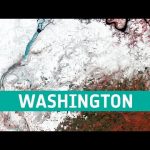
    To celebrate the recent data release from Landsat 9, this week’s edition of the Earth from Space programme features a Landsat 9 image over part of Washington state – the northwesternmost state of the US.

    Download the image: https://www.esa.int/ESA_Multimedia/Images/2022/02/Washington_US

    ★ Subscribe: http://bit.ly/ESAsubscribe and click twice on the bell button to receive our notifications.

    Check out our full video catalog: http://bit.ly/SpaceInVideos
    Follow us on Twitter: http://bit.ly/ESAonTwitter
    On Facebook: http://bit.ly/ESAonFacebook
    On Instagram: http://bit.ly/ESAonInstagram
    On LinkedIn: https://bit.ly/ESAonLinkedIn
    On Pinterest: https://bit.ly/ESAonPinterest
    On Flickr: http://bit.ly/ESAonFlickr

    We are Europe’s gateway to space. Our mission is to shape the development of Europe’s space capability and ensure that investment in space continues to deliver benefits to the citizens of Europe and the world. Check out https://www.esa.int/ to get up to speed on everything space related.

    Copyright information about our videos is available here: https://www.esa.int/ESA_Multimedia/Terms_and_Conditions

    #ESA
    #Washington
    #EarthFromSpace
  • NASA Science Live: Landsat – A Legacy of Seeing Earth from Space

    NASA Science Live: Landsat – A Legacy of Seeing Earth from Space

    Earth is changing, and these changes can be seen from space. A series of satellites built by NASA and operated by the U.S. Geological Survey (USGS) have been monitoring and tracking changes across our planet for almost 50 years. Adding to this legacy circling the globe every 99 minutes and collecting images of the Earth landscapes and coastal regions, Landsat 9 will continue to answer the many questions we have about Earth’s climate change, population growth and even your very own food supply. Join experts on #NASAScience Live Thursday, Sept. 30 at 3:00 p.m. ET to learn more. Submit your questions by using #Landsat

    Meet the experts:
    Your host for this episode is Jacob Richmond, the Earth Science Communications Manager at NASA’s Goddard Space Flight Center. Jacob joined NASA after retiring from the Air Force after 20 years of service. In his spare time he loves to hike and travel with his family.

    Dr. Liz Hoy is a Senior Scientist at NASA Goddard and is our fire expert for this episode. Dr. Hoy started her graduate studies in remote sensing science where she went to Alaska, hiked around and took tree and soil measurements to compare them with NASA satellite observations. She really enjoys working with a group of scientists all focused on the same goal – to better study the Earth system. In her spare time, Dr. Hoy enjoys outdoor activities – hiking, biking, boating, swimming, and taking her dog for a walk.

    Ms. Nikki Tulley is a Research Assistant with NASA’s Wester Water Applications Office (WWAO). Her time at NASA began when she was selected for a summer internship with the WWAO Navajo Nation Drought Severity Evaluation Tool (DSET) project in 2020. In this role, Ms. Tulley was able to create important connections to the community where DSET would be used through developing language connections through the Navajo Language. Her favorite part of working with NASA is that she gets to break down stereotypes and let people know how accessible data is to help their communities. In her spare time and every chance she gets, Ms. Tulley travels home back to the Navajo Nation.

  • Launch of the Landsat 9 Earth-Observing Satellite

    Launch of the Landsat 9 Earth-Observing Satellite

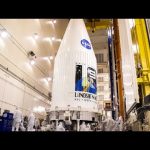
    🚀 Watch the newest #Landsat satellite lift off! This joint NASA-U.S. Geological Survey mission will contribute to the longest data record of Earth’s landscapes taken from space. Landsat 9 continues the nearly 50-year legacy of the Landsat Program: observing our changing home planet, monitoring its land and coastal regions, helping us manage its essential resources, and providing free, publicly available images and data.

    Landsat 9 will launch Mon., Sept. 27 at 2:12 p.m. EDT (18:12 UTC) aboard a United Launch Alliance Atlas V rocket from Space Launch Complex 3 at Vandenberg Space Force Base in California. Landsat 9 will join its sister satellite, Landsat 8, in orbit in collecting images from across the planet every eight days.

  • Earth from Space: Mississippi River Delta

    Earth from Space: Mississippi River Delta

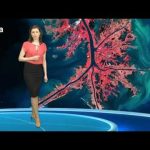
    Earth from Space is presented by Kelsea Brennan-Wessels from the ESA Web-TV virtual studios.
    In the twenty-fourth edition we look at the Mississippi River Delta, where the largest river in the United States empties into the Gulf of Mexico.