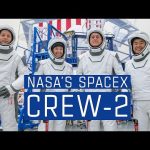
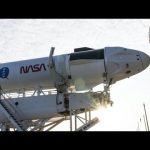
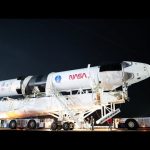
At 5:49 a.m. EDT (9:49 UTC), the SpaceX Crew Dragon Endeavour spacecraft and Falcon 9 rocket will lift off from NASA’s Kennedy Space Center in Florida. Shane Kimbrough and Megan McArthur of NASA, Thomas Pesquet of the European Space Agency, and Akihiko Hoshide of the Japan Aerospace Exploration Agency will join the station’s crew, for a mission of approximately six months.
This will be the first launch through our Commercial Crew Program to fly two international partner astronauts, and the first reuse of a Crew Dragon spacecraft and Falcon 9 rocket for a crew mission.
Once aboard the station, the Crew-2 astronauts will spend a lot of time on science — in areas such as medical technology, human health, and materials to benefit life on Earth. The space station is a unique scientific platform, enabling researchers from all over the world to put their talents to work on innovative experiments. It has instruments that monitor our home planet’s global climate, environmental changes, and natural hazards.
On April 23, 2021, NASA astronauts Shane Kimbrough and Megan McArthur, ESA astronaut Thomas Pesquet, and JAXA astronaut Akihiko Hoshide will launch on NASA’s SpaceX Crew-2 mission headed for the International Space Station. Once there, they will perform space station upgrades, conduct science experiments to benefit life on Earth, and continue preparing humanity for future missions to the Moon – and eventually Mars.
This is the second crew rotation mission with four astronauts flying on a commercial spacecraft, and the first with two international partners. It’s time to #LaunchAmerica!
Producer/Editor: Lacey Young Music: Universal Production Music
Join us live at 8 a.m. EDT (12:00 UTC) from NASA’s Kennedy Space Center in Florida for a news update on NASA’s SpaceX Crew-2 mission, targeted for liftoff Thurs., April 22 at 6:11 a.m. EDT (10:11 UTC).
The SpaceX Falcon 9 rocket and Crew Dragon Endeavour spacecraft will carry astronauts Shane Kimbrough and Megan McArthur of NASA, Thomas Pesquet of the European Space Agency and Akihiko Hoshide of the Japan Aerospace Exploration Agency to the International Space Station.
Experts from NASA, SpaceX, ESA, JAXA, and the U.S. Space Force 45th Weather Squadron will discuss the launch. Participants are:
• Steve Stich, manager, Commercial Crew Program, Kennedy • Joel Montalbano, manager, International Space Station, Johnson • Kirt Costello, chief scientist, International Space Station Program, Johnson • Norm Knight, deputy manager, Flight Operations Directorate, Johnson • Benji Reed, senior director, Human Spaceflight Programs, SpaceX • Junichi Sakai, manager, International Space Station Program, JAXA • Frank de Winne, manager, International Space Station Program, ESA • Brian Cizek, launch weather officer, U.S. Space Force 45th Weather Squadron
Watch a Soyuz MS-18 spacecraft lift off on a two-orbit, three-hour journey to the International Space Station! NASA astronaut Mark Vande Hei and cosmonauts Oleg Novitskiy and Pyotr Dubrov of Roscosmos are scheduled to launch at 3:42 a.m. EDT, Friday, April 9, from the Baikonur Cosmodrome in Kazakhstan.
The trio will be part of Expeditions 64 and 65 on the station, where they’ll continue work on hundreds of experiments in biology, biotechnology, physical science, and Earth science. This will be Vande Hei’s second spaceflight, Novitskiy’s third, and Dubrov’s first.
Tour the Ariane 6 launch complex at Europe’s Spaceport in Kourou, French Guiana.
The 8200 tonne 90 metre-high mobile gantry has platforms to enable engineers to access the vehicle for integration of the stages. This steel structure protects Ariane 6 before launch and is rolled back prior to liftoff.
At the entrance of the gantry are two mockup Ariane 6 P120C rocket boosters. These are representative of the real boosters, having the same size and mass but filled with water instead of solid propellant and used in mechanical tests.
The hydrogen and oxygen storage facilities are close by. Underground, engineers are preparing the launch support systems.
A pumping station at the reservoir will supply the water to quell the exhaust at liftoff.
Credits: CNES/ESA
★ Subscribe: http://bit.ly/ESAsubscribe and click twice on the bell button to receive our notifications.
We are Europe’s gateway to space. Our mission is to shape the development of Europe’s space capability and ensure that investment in space continues to deliver benefits to the citizens of Europe and the world. Check out https://www.esa.int/ to get up to speed on everything space related.
Tune in live starting at 10:45 a.m. EST, Sun., Dec. 6 as the 21st SpaceX cargo resupply mission to the International Space Station lifts off from Launch Complex 39A at NASA’s Kennedy Space Center. Launch is targeted at 11:17 a.m. The targeted date has changed due to poor weather conditions on Sat., Dec. 5 in the recovery area. This will be the first flight of the upgraded cargo version of the Dragon 2 spacecraft. On board are over 250 science investigations, as well as the Nanoracks Bishop Airlock, set to be attached to the station’s Tranquility module. This first commercially funded space station airlock will increase the capacity for external space research at the space station.
The journey of Resilience to the space station, the next ocean-observing satellite, and an update on a critical rocket test series for our Artemis missions … a few of the stories to tell you about – This Week at NASA!
Download link: images-assets.nasa.gov/video/The Journey of Resilience to The Space Station on This Week @NASA – November 21 2020/The Journey of Resilience to The Space Station on This Week @NASA – November 21 2020~orig.mp4
Producer: Andre Valentine
Editor: Sonnet Apple
Music: Universal Production Music
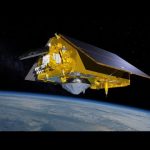
On Nov. 21, 2020, the U.S.-European oceanographic satellite Sentinel-6 Michael Freilich launched to orbit aboard a SpaceX Falcon 9 rocket. During a five-and-a-half-year prime mission, it will collect the most accurate data yet on global sea level and how our ocean is rising in response to climate change. The mission will also collect precise data of atmospheric temperature and humidity that will help improve weather forecasts and climate models.
We’re sending the Sentinel-6 Michael Freilich satellite to space to collect the most accurate data yet on global sea level and how our oceans are rising in response to climate change. This #SeeingTheSeas mission, a historic U.S.-European partnership, will launch from Vandenberg Air Force Base in California aboard a SpaceX Falcon 9 rocket at 12:17 p.m. EST (9:17 a.m. PST, 5:17 p.m. UTC).
The satellite, and its twin Sentinel-6B, is jointly developed by ESA (European Space Agency), the European Organisation for the Exploitation of Meteorological Satellites (EUMETSAT), NASA, and the National Oceanic and Atmospheric Administration (NOAA), with funding support from the European Commission and support from France’s National Centre for Space Studies (CNES). Sentinel-6 Michael Freilich is named in honor of the former director of NASA’s Earth Science Division, who was instrumental in advancing space-based ocean measurements.
The SpaceX Crew Dragon Resilience successfully docked to the International Space Station at 11:01 p.m. EST Monday, transporting NASA astronauts Michael Hopkins, Victor Glover, Shannon Walker, and Japan Aerospace Exploration Agency (JAXA) astronaut Soichi Noguchi.
NASA’s SpaceX Crew-1 mission lifted off Sunday, Nov. 15, at 7:27 p.m. on the SpaceX Falcon 9 rocket and Crew Dragon spacecraft from Launch Complex 39A at NASA’s Kennedy Space Center in Florida. The mission is the first of six certified, crew missions NASA and SpaceX will fly as a part of the agency’s Commercial Crew Program.
The crew will conduct science and maintenance during a six-month stay aboard the orbiting laboratory and will return in spring 2021. It is scheduled to be the longest human space mission launched from the United States. The Crew Dragon spacecraft is capable of staying in orbit for at least 210 days, as a NASA requirement.
Producer Credit: Sonnet Apple Music: Willpower/Universal Production Music
Watch as we #LaunchAmerica! Join us for live coverage of SpaceX Crew-1, the first crew rotation flight to the International Space Station by a U.S. commercial spacecraft. The crew is set to arrive at the International Space Station on Monday, Nov. 16 at 11 p.m. EST (Nov. 17 at 4 a.m. UTC). Watch continuous coverage of their entire ride, HERE: https://youtu.be/21X5lGlDOfg
The Crew Dragon ‘Resilience’ will carry astronauts Michael Hopkins, Victor Glover, and Shannon Walker of NASA and Soichi Noguchi of JAXA (Japan Aerospace Exploration Agency) to the station. Liftoff was at 7:27 p.m. EST, Sunday, Nov. 15 from Launch Complex 39A at NASA’s Kennedy Space Center in Florida.
Join us LIVE from NASA’s Kennedy Space Center in Florida for updates as we prepare to #LaunchAmerica with NASA’s SpaceX Crew-1 mission.
The SpaceX Falcon 9 rocket and Crew Dragon spacecraft will carry astronauts Michael Hopkins, Victor Glover, and Shannon Walker of NASA, and astronaut Soichi Noguchi of the Japan Aerospace Exploration Agency (JAXA) to the International Space Station. Officials from NASA, SpaceX and U.S. Air Force 45th Weather Squadron will be on hand to talk about the upcoming mission scheduled for liftoff at 7:27 p.m. EST Sunday, Nov. 15.
Final preparations are underway in California for the launch of Sentinel-6 Michael Freilich, a joint European and US satellite designed to take precise measurements of sea-level change. The satellite forms part of the European Union’s Copernicus Earth Observation programme and will employ a radar altimeter to map sea-surface topography. The satellite will provide fundamental data for climate science and policymaking, helping to protect the 600 million people who live in vulnerable coastal areas. It will also deliver near-realtime information for marine and weather forecasts.
The mission is a collaboration between ESA, the European Commission, EUMETSAT, NASA and NOAA, with support from the French space agency CNES. Scheduled for launch on 21 November on a SpaceX Falcon 9 rocket from the Vandenberg Air Force Base on the California coast, the satellite is named Michael Freilich after NASA’s former Director of Earth Science.
★ Subscribe: http://bit.ly/ESAsubscribe and click twice on the bell button to receive our notifications.
We are Europe’s gateway to space. Our mission is to shape the development of Europe’s space capability and ensure that investment in space continues to deliver benefits to the citizens of Europe and the world. Check out https://www.esa.int/ to get up to speed on everything space related.
On Nov. 14, 2020, NASA astronauts Mike Hopkins, Victor Glover, Shannon Walker and JAXA astronaut Soichi Noguchi will launch on NASA’s SpaceX Crew-1 mission bound for the International Space Station. Once there, they will perform space station upgrades, conduct science experiments to benefit life on Earth, and continue preparing humanity for future missions to the Moon — and eventually Mars.
This is the first crew rotation mission with four astronauts flying on a commercial spacecraft, and the first including an international partner. Get on board. It’s #LaunchAmerica time!
Tune in as experts from NASA, ESA (European Space Agency), EUMETSAT (European Organisation for the Exploitation of Meteorological Satellites, and NOAA (National Oceanic and Atmospheric Administration) discuss the upcoming launch of Sentinel-6 Michael Freilich, a satellite that will collect the most accurate data yet on global sea levels. The satellite is targeted for launch aboard a SpaceX Falcon 9 rocket on Nov. 10 at 2:31 p.m. EST, from Vandenberg Air Force Base in California.
Sentinel-6 Michael Freilich is a historic U.S.-European partnership that will continue the legacy of previous missions and extend our records of sea level into the fourth decade, collecting accurate measurements of sea surface height down to the centimeter for 90% of the world’s oceans.
NASA completed a full-scale booster test for NASA’s Space Launch System rocket in Promontory, Utah, on Sept. 2.
The full-scale booster firing was conducted with new materials and processes that may be used for NASA’s Space Launch System (SLS) rocket boosters. NASA and Northrop Grumman, the SLS boosters lead contractor, will use data from the test to evaluate the motor’s performance using potential new materials and processes for Artemis missions beyond the initial Moon landing in 2024.
The SLS boosters are the largest, most powerful boosters ever built for flight. The two boosters on the rocket provide more than 75% of the thrust needed to launch NASA’s future deep space missions through NASA’s Artemis lunar program. Northrop Grumman is the lead contractor for the SLS boosters.
For a little over two minutes — the same amount of time that the boosters power the SLS rocket during liftoff and flight for each Artemis mission — the five-segment flight support booster fired in the Utah desert, producing more than 3 million pounds of thrust.
NASA and Northrop Grumman have previously completed three development motor tests and two qualification motor tests. Today’s test, called Flight Support Booster-1 (FSB-1), builds on prior tests with the introduction of propellant ingredients from new suppliers for boosters on SLS rockets to support flights after Artemis III.
How do rockets lift off from the ground and how fast do they go? Can we launch rockets from other planets? ESA rocket scientist Kate Underhill answers these questions and offers more fun facts about launchers in this episode of Meet The Experts.
We are Europe’s gateway to space. Our mission is to shape the development of Europe’s space capability and ensure that investment in space continues to deliver benefits to the citizens of Europe and the world. Check out http://www.esa.int/ESA to get up to speed on everything space related.
NASA is enabling safe, reliable, and cost-effective crew transportation to and from the International Space Station from two private companies – Spacex and Boeing. NASA’s Commercial Crew Program represents a revolutionary approach to government and commercial collaborations for the advancement of space exploration.
For the first time in history, NASA astronauts launched from American soil in a commercially built and operated American crew spacecraft to the space station. The SpaceX Crew Dragon spacecraft carrying NASA astronauts Robert Behnken and Douglas Hurley launched May 31 on the company’s Falcon 9 rocket from Launch Complex 39A at NASA’s Kennedy Space Center in Florida. They returned to Earth and splashed down in the Dragon Endeavor capsule on Sunday, Aug. 2, off the coast of Pensacola, Florida.
Known as NASA’s SpaceX Demo-2, the mission is an end-to-end test flight to validate the SpaceX crew transportation system, including launch, in-orbit, docking and landing operations. The program demonstrates NASA’s commitment to investing in commercial companies through public-private partnerships and builds on the success of American companies, including SpaceX, already delivering cargo to the space station. Boeing will also complete an uncrewed flight test followed by a crewed flight test for certification to fly NASA astronauts to the space station.
In this “On the Go” episode of #EZScience, we’re on the scene at Kennedy Space Center with the rocket that will take the Perseverance rover and the Ingenuity helicopter to Mars.
ABOUT THE SERIES: In our #EZScience video series with the National Air and Space Museum, NASA’s associate administrator for science Dr. Thomas Zurbuchen and Museum director Dr. Ellen Stofan talk about the latest in planetary science and exploration.
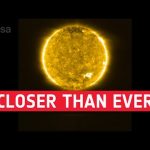
ESA’s Solar Orbiter spacecraft has sent back its first images of the Sun. At 77 million kilometres from the surface, this is the closest a camera has ever flown to our nearest star. The pictures reveal features on the Sun’s exterior that have never been seen in detail before.
Launched on 10 February 2020, the spacecraft completed its commissioning phase and first close-approach to the Sun in mid-June. Since then, science teams have been processing and examining this early data.
The spacecraft is currently in its cruise phase, on its way to Venus, but will eventually get even closer to the Sun.
We are Europe’s gateway to space. Our mission is to shape the development of Europe’s space capability and ensure that investment in space continues to deliver benefits to the citizens of Europe and the world. Check out http://www.esa.int/ESA to get up to speed on everything space related.
The first images from ESA’s Solar Orbiter, captured around the spacecraft’s first close pass of the Sun, some 77 million kilometres from its surface, are already exceeding expectations revealing interesting new phenomena on our parent star.
This animation shows a series of close-up views captured by the Extreme Ultraviolet Imager (EUI) at wavelengths of 17 nanometers, showing the upper atmosphere of the Sun, or corona, with a temperature of around 1 million degrees.
These images reveal a multitude of small flaring loops, erupting bright spots and dark, moving fibrils. A ubiquitous feature of the solar surface, uncovered for the first time by these images, have been called ‘campfires’. They are omnipresent minuature eruptions that could be contributing to the high temperatures of the solar corona and the origin of the solar wind.
Captured on 30 May 2020, when Solar Orbiter was roughly halfway between the Earth and the Sun, these are the closest views of the Sun ever taken, allowing EUI to see features in the solar corona of only 400 km across. As the mission continues, Solar Orbiter will go closer to the Sun and this will increase the instrument’s resolving power by a factor of two at closest approach.
The colour on this image has been artificially added because the original wavelength detected by the instrument is invisible to the human eye.
The circle in the lower left corner indicates the size of Earth for scale.
The extended grey shape visible at times moving across the field (00:00-00:25; 01:00-01:28; 01:50-02:00; 02:52-03:27) is not a solar feature but is caused by a sensor artefact.
Solar Orbiter is a space mission of international collaboration between ESA and NASA.
We are Europe’s gateway to space. Our mission is to shape the development of Europe’s space capability and ensure that investment in space continues to deliver benefits to the citizens of Europe and the world. Check out http://www.esa.int/ESA to get up to speed on everything space related.
The first images from ESA’s Solar Orbiter are already exceeding expectations and revealing interesting new phenomena on the Sun.
This animation combines a series of views captured with several remote-sensing instruments on Solar Orbiter between 30 May and 21 June 2020, when the spacecraft was roughly halfway between the Earth and the Sun ¬– closer to the Sun than any other solar telescope has ever been before.
The red and yellow images were taken with the Extreme Ultraviolet Imager (EUI) in the extreme ultraviolet region of the electromagnetic spectrum, at wavelengths of 30 and 17 nanometers, respectively.
The close-up views by EUI show the upper atmosphere of the Sun, or corona, with a temperature of around 1 million degrees. With the power to see features in the solar corona of only 400 km across, these images reveal a multitude of small flaring loops, erupting bright spots and dark, moving fibrils. A ubiquitous feature of the solar surface, uncovered for the first time by these images, have been called ‘campfires’. They are omnipresent minuature eruptions that could be contributing to the high temperatures of the solar corona and the origin of the solar wind.
The EUI images are followed by three views based on data from the Polarimetric and Helioseismic Imager (PHI) instrument. The blue and red view is a ‘tachogram’ of the Sun, showing the line of sight velocity of the Sun, with the blue side turning to us and the red side turning away. The following view is a magnetogram, or a map of magnetic propertied for the whole Sun, featuring a large magnetically active region in the lower right-hand quadrant of the Sun. The yellow-orange view is a visible light image and represents what we would see with the naked eye: there are no sunspots visible because the Sun is displaying only low levels of magnetic activity at the moment.
On larger scales, the Metis coronograph blocks out the dazzling light from the solar surface, bringing the fainter corona into view. Metis observes the corona simultaneously in visible light (shown in green) and ultraviolet light (shown in red) for the first time with unprecedented temporal coverage and spatial resolution. These images reveal the two bright equatorial streamers and fainter polar regions that are characteristic of the solar corona during times of minimal magnetic activity.
On even grander scales, the Heliospheric Imager (SoloHI) telescope takes images of the solar wind – the stream of charged particles constantly released by the Sun into outer space – by capturing the light scattered by electrons in the wind. The first-light image from SoloHI is shown at the end, as a mosaic of four separate images from the instrument’s four separate detectors. In this view, the Sun is located to the right of the frame, and its light is blocked by a series of baffles; the last baffle is in the field of view on the right-hand side and is illuminated by reflections from the solar array. The partial ellipse visible on the right is the zodiacal light, created by sunlight reflecting off the dust particles that are orbiting the Sun. The signal from the solar wind outflow is faint compared to the much brighter zodiacal light signal, but the SoloHI team has developed techniques to reveal it. Planet Mercury is also visible as a small bright dot near the lower edge of the upper left tile.
Solar Orbiter is a space mission of international collaboration between ESA and NASA.
We are Europe’s gateway to space. Our mission is to shape the development of Europe’s space capability and ensure that investment in space continues to deliver benefits to the citizens of Europe and the world. Check out http://www.esa.int/ESA to get up to speed on everything space related.
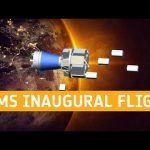
Multiple small satellites will be launched at once on the Vega VV16 mission from Europe’s Spaceport in Kourou, French Guiana. This flight will demonstrate the modular SSMS dispenser resting on its upper stage intended to bring routine affordable launch opportunities for light satellites from 0.2 kg CubeSats up to 400 kg minisatellites.
Until now the smallest classes of satellites – all the way down to tiny CubeSats, built from 10 cm modular boxes – have typically ‘piggybacked’ to orbit. They have to make use of any spare capacity as a single large satellite is launched, meaning their overall launch opportunities are limited.
The new Vega Small Spacecraft Mission Service switches this into a ‘rideshare’ model, with multiple small satellites being flown together, splitting the launch cost.
SAB Aeropsace in the Czech Republic and Bercella in Italy designed and manufactured this modular dispenser for ESA’s Vega prime contractor Avio. The component structures are made of very low-density aluminium ‘sandwich’ panels protected by carbon fibre reinforced polymer skins. This makes it very lightweight and rigid.
The SSMS comprises two main sections, the hexagonal lower section can hold six nanosatellites or up to a dozen CubeSat deployers while the upper section section is used for microsatellites, minisatellites and small satellites. The lower section can also be used independently, coupled with a larger satellite replacing the top section.
The hexagonal module, a central column, towers, a supporting platform and a set of standard satellite interface spacers are assembled to suit each mission and combination of satellites. For this flight, a configuration called Flexi-3 weighing just 330 kg is being used.
This demonstration flight aims to prove the technical and financial viability of the rideshare service. ESA has collaborated with the European Union, which has partly funded this mission within the Horizon 2020 programme. This is part of the Contribution Agreement between ESA and the EU on space technology activities signed on 16 April 2019.
The animation shows the separation of the ESAIL mission which is a joint ESA LuxSpace project to extend the monitoring of maritime traffic beyond existing land-based tracking of Automatic Identification Systems (AIS) through the means of an array of microsatellites: SAT-AIS.
★ Subscribe: http://bit.ly/ESAsubscribe and click twice on the bell button to receive our notifications.
We are Europe’s gateway to space. Our mission is to shape the development of Europe’s space capability and ensure that investment in space continues to deliver benefits to the citizens of Europe and the world. Check out http://www.esa.int/ESA to get up to speed on everything space related.
For the first time in history, NASA astronauts have launched from American soil in a commercially built and operated American crew spacecraft on its way to the International Space Station.
The SpaceX Crew Dragon spacecraft carrying NASA astronauts Robert Behnken and Douglas Hurley lifted off at 3:22 p.m. EDT Saturday on the company’s Falcon 9 rocket from Launch Complex 39A at NASA’s Kennedy Space Center in Florida. The crew will have a 19-hour-journey to the space station, arriving on Sunday, May 31.
Take a tour of the Ariane 6 launch complex and its various facilities filmed on 1 March 2020 at Europe’s Spaceport in French Guiana.
The 8200 tonne 90 metre-high mobile gantry stands over the launch pad. Take a look at the bogies that moved it there. Inside stand two mock-ups of the P120C boosters flanked by work platforms that will enable engineers to access the launch vehicle.
Delve deep under the launch table structure to see engineers working on the launch support systems.
Outside, tour past the liquid hydrogen and oxygen stores and on up to the assembly building where a mock-up of the Ariane 6 core stage is waiting at the entrance. Close by are additional service facilities, and the pumping station that will provide the water to quell the exhaust from the motors at liftoff.
We are Europe’s gateway to space. Our mission is to shape the development of Europe’s space capability and ensure that investment in space continues to deliver benefits to the citizens of Europe and the world. Check out http://www.esa.int/ESA to get up to speed on everything space related.
Three space travelers launched to the International Space Station aboard a Soyuz spacecraft.🚀 Astronaut Chris Cassidy of NASA and cosmonauts Anatoly Ivanishin and Ivan Vagner of the Russian space agency Roscosmos lifted off at 4:05 a.m. EDT on a four-orbit, six-hour journey to our orbiting laboratory.
This is the third spaceflight for both Cassidy and Ivanishin and the first for Vagner. During their mission on the station, they’ll welcome NASA’s Bob Behnken and Doug Hurley aboard the SpaceX Crew Dragon, which is currently targeted to launch no earlier than mid-to-late May.
Watch SpaceX launch its 20th resupply mission to the International Space Station, carrying 5,600 pounds of science investigations and supplies. NASA TV coverage starts Friday, March 6, at 11:30 p.m. EST. Launch is scheduled for 11:50 p.m. EST.
Highlights from the preparation and liftoff of ESA’s Sun-exploring mission Solar Orbiter.
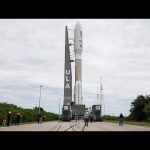
Solar Orbiter lofted to space aboard the US Atlas V 411 rocket from NASA’s spaceport in Cape Canaveral, Florida at 04:03 GMT (05:03 CET) on 10 February 2020.
An ESA-led mission with strong NASA participation, Solar Orbiter carries a set of ten instruments for imaging the surface of the Sun and studying the environment in its vicinity. The spacecraft will travel around the Sun on an elliptical orbit that will take it as close as 42 million km away from the Sun’s surface, about a quarter of the distance between the Sun and Earth. The orbit will allow Solar Orbiter to see some of the never-before-imaged regions of the Sun, including the poles, and shed new light on what gives rise to solar wind, which can affect infrastructure on Earth.
We are Europe’s gateway to space. Our mission is to shape the development of Europe’s space capability and ensure that investment in space continues to deliver benefits to the citizens of Europe and the world. Check out http://www.esa.int/ESA to get up to speed on everything space related.
Solar Orbiter, a collaboration between European Space Agency and NASA, is launching Sunday, Feb. 9, to study the inner workings of our nearest star. Tune in for launch coverage starting at 10:30 p.m. on Sunday, Feb. 9 to see liftoff, currently targeted for 11:03 p.m. EST.
ESA’s new Sun-exploring mission Solar Orbiter lofted to space aboard the US Atlas V 411 rocket from NASA’s spaceport in Cape Canaveral, Florida at 04:03 GMT (05:03 CET) on 10 February 2020.
Solar Orbiter, an ESA-led mission with strong NASA participation, carries a set of ten instruments for imaging the surface of the Sun and studying the environment in its vicinity. The spacecraft will travel around the Sun on an elliptical orbit that will take it as close as 42 million km away from the Sun’s surface, about a quarter of the distance between the Sun and Earth. The orbit will allow Solar Orbiter to see some of the never-before-imaged regions of the Sun, including the poles, and shed new light on what gives rise to solar wind, which can affect infrastructure on Earth.
We are Europe’s gateway to space. Our mission is to shape the development of Europe’s space capability and ensure that investment in space continues to deliver benefits to the citizens of Europe and the world. Check out http://www.esa.int/ESA to get up to speed on everything space related.
ESA’s Solar Orbiter satellite in a cleanroom at the Astrotech payload processing facility near Kennedy Space Centre, Florida. The spacecraft is seen being mounted onto the payload adaptor ring and encapsulated into a fairing, which will protect the satellite and the rocket upper stage during the turbulent ascent through Earth’s atmosphere.
We are Europe’s gateway to space. Our mission is to shape the development of Europe’s space capability and ensure that investment in space continues to deliver benefits to the citizens of Europe and the world. Check out http://www.esa.int/ESA to get up to speed on everything space related.
As the year comes to a close, it is once again time to look back and reflect on some of the achievements and highlights of European spaceflight. The new Gaia star catalogue and the launch of Cheops are keeping ESA at the forefront of space science, as will Solar Orbiter, being prepared for launch next year. The Copernicus programme continues to be the largest Earth observation programme in the world, with ESA preparing even more missions. On the Space Station, Luca Parmitano became the third European to command an ISS expedition. During his second mission, he made some of the space programme’s most complex and demanding spacewalks. At the end of 2019, the ESA Space19+ ministerial conference agreed to give ESA its largest budget ever and expressed continued support for Europe’s independent access to space with Ariane 6 and Vega-C.
★ Subscribe: http://bit.ly/ESAsubscribe and click twice on the bell button to receive our notifications.
We are Europe’s gateway to space. Our mission is to shape the development of Europe’s space capability and ensure that investment in space continues to deliver benefits to the citizens of Europe and the world. Check out http://www.esa.int/ESA to get up to speed on everything space related.
Boeing’s Starliner spacecraft launched aboard an Atlas V rocket on an Orbital Flight Test at 6:36 a.m. EST, Friday, Dec. 20, 2019. The spacecraft had an off-nominal orbit insertion, but was placed in a safe orbit and configuration and landed at White Sands, New Mexico on Dec. 22. Watch the landing: https://www.youtube.com/watch?v=lPzNHeX7OYM
A new cooling system for a device on the space station, first results from the first spacecraft to touch the Sun, and preparing Orion for some critical testing … a few of the stories to tell you about – This Week at NASA!
This video is available for download from NASA’s Image and Video Library: https://images.nasa.gov/details-NHQ_2019_1206_New%20Cooling%20System%20for%20a%20Device%20on%20the%20Space%20Station%20on%20This%20Week%20@NASA%20%E2%80%93%20December%206,%202019
On Sat., Nov. 2 at 9:59 a.m. EDT, Northrop Grumman’s Antares rocket and Cygnus spacecraft launched from Wallops Flight Facility in Virginia on a cargo resupply mission to the International Space Station. Cygnus delivered around 8,200 pounds of research, supplies, and hardware to the orbiting laboratory, including supplies for upcoming spacewalks and student CubeSats.
Things are shaping up at Europe’s Spaceport in French Guiana in preparation for Ariane 6. Take a tour of the launch complex and its various facilities.
Recent tests have used mock-ups of the P120C boosters to trial how they will be transported. See them on the launch pad, and get a sense of scale for Ariane 6.
We are Europe’s gateway to space. Our mission is to shape the development of Europe’s space capability and ensure that investment in space continues to deliver benefits to the citizens of Europe and the world. Check out http://www.esa.int/ESA to get up to speed on everything space related.
Three space travelers, including NASA astronaut Jessica Meir, Oleg Skripochka of the Russian space agency Roscosmos and spaceflight participant Hazzaa Ali Almansoori from the United Arab Emirates, launched to space at 9:57 a.m. EDT on Wednesday, Sept. 24, 2019, for a nearly six-hour ride to the International Space Station.
SpaceX’s 18th Commercial Resupply Services mission to the International Space Station lifted off on Thursday, July 25, at 6:01 p.m. EDT from Space Launch Complex 40 at Cape Canaveral Air Force Station, next to NASA’s Kennedy Space Center in Florida. The Dragon spacecraft will deliver more than 5,000 pounds of research and supplies to the orbiting laboratory. Replay the countdown and liftoff!
ESA astronaut Luca Parmitano has arrived on the International Space Station following a six-hour flight in the Russian Soyuz MS-13 spacecraft alongside NASA astronaut Drew Morgan and Roscosmos cosmonaut Alexander Skvortsov.
The trio were launched from the Baikonur Cosmodrome in Kazakhstan at 16:28 GMT (18:28 CEST) on Saturday 20 July and orbited Earth four times before docking to the Station’s Zvezda service module at 22:50 GMT (00:50 CEST).
This mission to the International Space Station is the second for Luca, the third for Alexander and the first for Drew. They were warmly welcomed by NASA astronauts Christina Koch and Nick Hague and current International Space Station commander Alexey Ovchinin of Roscosmos, bringing the number of humans in orbit to six.
This clip shows highlights from preparations prior to launch, liftoff, docking and hatch opening as the crew start to settle into their new home and workplace.
Luca will live and work in orbit for the six-month duration of his Beyond mission. There, he will support over 50 European experiments and more than 200 international experiments in microgravity.
During the latter part of his mission, Expedition 61, he will take up the role of Space Station commander. He is the first Italian and third European astronaut ever appointed to this role, after ESA astronauts Alexander Gerst in 2018 and Frank De Winne in 2009.
We are Europe’s gateway to space. Our mission is to shape the development of Europe’s space capability and ensure that investment in space continues to deliver benefits to the citizens of Europe and the world. Check out http://www.esa.int/ESA to get up to speed on everything space related.