Tag: LISA

  • ESA highlights 2019

    ESA highlights 2019

    As the year comes to a close, it is once again time to look back and reflect on some of the achievements and highlights of European spaceflight. The new Gaia star catalogue and the launch of Cheops are keeping ESA at the forefront of space science, as will Solar Orbiter, being prepared for launch next year. The Copernicus programme continues to be the largest Earth observation programme in the world, with ESA preparing even more missions. On the Space Station, Luca Parmitano became the third European to command an ISS expedition. During his second mission, he made some of the space programme’s most complex and demanding spacewalks. At the end of 2019, the ESA Space19+ ministerial conference agreed to give ESA its largest budget ever and expressed continued support for Europe’s independent access to space with Ariane 6 and Vega-C.

    ★ Subscribe: http://bit.ly/ESAsubscribe and click twice on the bell button to receive our notifications.

    Check out our full video catalog: http://bit.ly/SpaceInVideos
    Follow us on Twitter: http://bit.ly/ESAonTwitter
    On Facebook: http://bit.ly/ESAonFacebook
    On Instagram: http://bit.ly/ESAonInstagram
    On Flickr: http://bit.ly/ESAonFlickr

    We are Europe’s gateway to space. Our mission is to shape the development of Europe’s space capability and ensure that investment in space continues to deliver benefits to the citizens of Europe and the world. Check out http://www.esa.int/ESA to get up to speed on everything space related.

    Copyright information about our videos is available here: http://www.esa.int/spaceinvideos/Terms_and_Conditions

    #ESA
    #2019Highlights
    #Space
  • Exploring black holes with LISA and Athena

    Exploring black holes with LISA and Athena

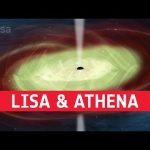
    In this video, our scientists Paul McNamara and Matteo Guainazzi explain how we could combine the observing power of two of our future missions, LISA and Athena, to study these cosmic clashes and their mysterious aftermath for the first time.

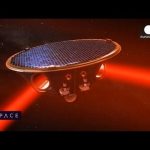
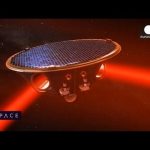
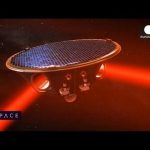
    LISA, the Laser Interferometer Space Antenna, will be the first space-borne observatory of gravitational waves – fluctuations in the fabric of spacetime produced by the acceleration of cosmic objects with very strong gravity fields, like pairs of merging black holes. Athena, the Advanced Telescope for High-ENergy Astrophysics, will be the largest X-ray observatory ever built, investigating some of the hottest and most energetic phenomena in the cosmos with unprecedented accuracy and depth. Currently in the study phase, both missions are scheduled for launch in the early 2030s.

    More information: A unique experiment to explore black holes
    http://www.esa.int/Our_Activities/Space_Science/A_unique_experiment_to_explore_black_holes

    Copyright: ESA

    Credits: Event Horizon Telescope Collaboration (black hole image); NASA, ESA and F. Summers, STScI (Hubble Ultra Deep Field flythrough and galaxy merger); Simulating eXtreme Spacetimes Project (gravitational waves and merging black holes); NASA’s Goddard Space Flight Centre (spiralling supermassive black holes); AEI/Milde Science Communication/exozet (LISA orbit sequence); ESA/Hubble, NASA, M. Kornmesser

    ★ Subscribe: http://bit.ly/ESAsubscribe and click twice on the bell button to receive our notifications.

    Check out our full video catalog: http://bit.ly/SpaceInVideos
    Follow us on Twitter: http://bit.ly/ESAonTwitter
    On Facebook: http://bit.ly/ESAonFacebook
    On Instagram: http://bit.ly/ESAonInstagram
    On Flickr: http://bit.ly/ESAonFlickr

    We are Europe’s gateway to space. Our mission is to shape the development of Europe’s space capability and ensure that investment in space continues to deliver benefits to the citizens of Europe and the world. Check out http://www.esa.int/ESA to get up to speed on everything space related.

    Copyright information about our videos is available here: http://www.esa.int/spaceinvideos/Terms_and_Conditions

    #ESA
    #LISA
    #Athena

  • Lisa Pathfinder end of Mission

    Lisa Pathfinder end of Mission

    The LISA Pathfinder mission ends on 18 July 2017 after a successful demonstration of the technology needed to detect gravitational waves in space. These vibrations in spacetime, first predicted by Einstein over a hundred years ago, are produced by huge astronomical events – such as two black holes colliding – and will allow scientists to open new windows into our universe.

    The success of the LISA Pathfinder mission has paved the way for the newly selected LISA mission which, when built and launched, will detect gravitational waves from objects up to a million times larger than our Sun.

    The film features interview soundbites from Dr Paul McNamara, LISA Pathfinder Project Scientist, at the European Space Agency’s European Technology and Science facility (ESTEC) in The Netherlands.

    More about LISA Pathfinder:
    http://sci.esa.int/lisa-pathfinder/

  • LISA Pathfinder results

    LISA Pathfinder results

    Launched in December 2015, LISA Pathfinder travelled to its operational orbit, 1.5 million km from earth towards the Sun, where it started its scientific mission on 1 March.

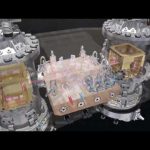
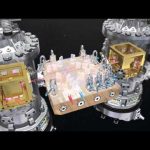
    At the core of the spacecraft, two identical gold-platinum cubes, are being held in the most precise free-fall ever produced in space.

    Placing the test masses in a motion subject only to gravity is the challenging condition needed to build and operate a future space mission to observe gravitational waves. Predicted by Albert Einstein a century ago, gravitational waves are fluctuations in the fabric of space-time, which were recently detected directly for the first time by the Laser Interferometer Gravitational-Wave Observatory.

    Over the first two months of scientific operations, the LISA Pathfinder team has performed a number of experiments on the test masses to prove the feasibility of gravitational wave observation from space.

    These results are explained in this video with interviews of Paul McNamara, LISA Pathfinder Project scientist, ESA and two LISA Pathfinder Principal investigators : Rita DOLES, University of Trento and Martin Hewitson, University of Hannover.

    Read more in LISA Pathfinder exceeds expectations: http://www.esa.int/Our_Activities/Space_Science/LISA_Pathfinder_exceeds_expectations

  • LISA Pathfinder prepares for liftoff (4K timelapse replay)

    LISA Pathfinder prepares for liftoff (4K timelapse replay)

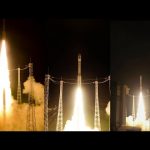
    This timelapse video shows the preparations for LISA Pathfinder’s launch at Europe’s Spaceport in Kourou, French Guiana. The video spans three weeks, starting on 12 November 2015 with the completed and fuelled spacecraft and ending on the 3 December launch day.

    Over this period, the spacecraft was attached to the payload adaptor of the Vega launcher, encapsulated within the half-shells of the rocket fairing, transferred to the launcher assembly area, and installed on top of Vega inside the mobile gantry, which was rolled back shortly before liftoff.

    LISA Pathfinder will test key technologies for space-based observation of gravitational waves – ripples in the fabric of spacetime that are predicted by Albert Einstein’s general theory of relativity.

    Credit/Copyrights: Directed by Stephane Corvaja, ESA; Edited by Manuel Pedoussaut, Zetapress; Music: Hubrid-Gravity

  • Inside LISA Pathfinder, with narration

    Inside LISA Pathfinder, with narration

    ESA’s LISA Pathfinder mission is a technology demonstrator that will pave the way for future spaceborne gravitational-wave observatories. It will operate about 1.5 million km from Earth towards the Sun, orbiting the first Sun–Earth ‘Lagrangian point’, L1.

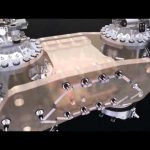
    The animation of the spacecraft build-up begins with two freely falling test masses. Between them lies the central component of LISA Pathfinder’s payload: the 20 x 20 cm optical bench interferometer. A set of 22 mirrors and beam-splitters directs laser beams across the bench. There are two beams: one reflects off the two free-falling test masses while the other is confined to the bench. By comparing the length of the different paths covered by the beams, it is possible to monitor changes accurately in distance and orientation between the two test masses.

    A box surrounds the two masses without touching them, shielding them from outside influence and constantly applying tiny adjustments to its position. This internal payload is housed in a central cylinder, isolating the test masses from the other components of the science payload and spacecraft.

    The solar array provides power to the instrumentation and acts as a thermal shield. Microthrusters control the spacecraft to keep the master test mass centred in its housing, opposing the force of the solar radiation pressure – the main source of ‘noise’ – impinging on the solar array.

    Although LISA Pathfinder is not aimed at the detection of gravitational waves themselves, it will prove the innovative technologies needed to do so. It will demonstrate that the two independent masses can be monitored as they free-fall through space, reducing external and internal disturbances to the point where the relative test mass positions would be more stable than the expected change caused by a passing gravitational wave, equal to much less than the size of an atom.

    Animated sequence without narration: Inside LISA Pathfinder: https://www.youtube.com/watch?v=YyZJ1JC_URc

    More about LISA Pathfinder: http://sci.esa.int/lisa-pathfinder/

  • LISA Pathfinder – Window on the gravitational universe

    LISA Pathfinder – Window on the gravitational universe

    LISA Pathfinder’s name, Laser Interferometer Space Antenna, clearly indicates the role of precursor that this mission plays. Its goal is to validate the technology required to detect gravitational waves from space. Gravitational waves will open a new door in our understanding of the Universe, and at the same time help to verify Einstein’s General Theory of Relativity. LISA Pathfinder will be launched early December 2015 on a Vega rocket from Kourou in French Guiana.

  • Lisa Pathfinder mission overview

    Lisa Pathfinder mission overview

    LISA Pathfinder will pave the way for future missions by testing in flight the very concept of gravitational wave detection: it will put two test masses in a near-perfect gravitational free-fall and control and measure their motion with unprecedented accuracy. LISA Pathfinder will use the latest technology to minimise the extra forces on the test masses, and to take measurements.

    The inertial sensors, the laser metrology system, the drag-free control system and an ultra-precise micro-propulsion system make this a highly unusual mission.

    LISA Pathfinder is an ESA mission, which will also carry a NASA payload.

  • LISA Pathfinder’s journey to L1

    LISA Pathfinder’s journey to L1

    The journey and final orbit of LISA Pathfinder, ESA’s technology demonstration mission that will pave the way for future gravitational-wave observatories in space.

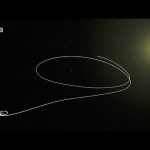
    LISA Pathfinder is scheduled for launch on 2 December 2015 on a Vega rocket from Europe’s Spaceport in French Guiana. Vega will place the spacecraft into an elliptical orbit, with a perigee (closest approach to Earth) of 200 km, apogee (furthest point) of 1540 km, with the path angled at 6.5º to the equator.

    Then, once Vega’s final stage is jettisoned, LISA Pathfinder will continue under its own power, beginning a series of six apogee-raising manoeuvres over the next two weeks.

    The last burn will set LISA Pathfinder on its way towards its final orbiting location. The cruise will last about six weeks, and the propulsion module will be discarded along the way four weeks in.

    Eventually, the spacecraft will circle the L1 Sun–Earth Lagrangian point. There, LISA Pathfinder will begin its six months of demonstrating key technologies for space-based observation of gravitational waves.

  • LISA Pathfinder launch animation

    LISA Pathfinder launch animation

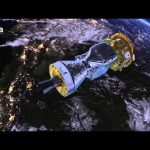
    Artist’s impression of the launch of LISA Pathfinder, ESA’s technology demonstration mission that will pave the way for future gravitational-wave observatories in space.

    Scheduled to lift off on a Vega rocket from Europe’s Spaceport in French Guiana in late 2015, LISA Pathfinder will operate at the Lagrange point L1, 1.5 million km from Earth towards the Sun. After launch, the spacecraft will take about eight weeks to reach its operational orbit around L1.

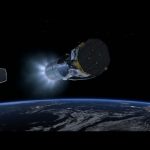
    The Vega rocket is designed to take small payloads into low-Earth orbit. The animation shows the rocket shortly after launch, rising above our planet and releasing the fairing.

    Vega will place the spacecraft onto an elliptical orbit with perigee at 200 km, apogee at 1540 km and angled at about 6.5° to the equator. Then, LISA Pathfinder will continue on its own, using its separable propulsion module to perform a series of six manoeuvres and gradually raise the apogee of the initial orbit.

    Eventually, LISA Pathfinder will cruise towards its final orbiting location, discarding the propulsion system along the way, one month after the last burn. Once in orbit around L1, the spacecraft will begin its six months of operations devised to demonstrate key technologies for space-based observation of gravitational waves.

    More about LISA Pathfinder:
    http://www.esa.int/Our_Activities/Space_Science/LISA_Pathfinder_overview

    Credit: ESA/ATG medialab

  • ESA Euronews: Echoes from the Big Bang

    ESA Euronews: Echoes from the Big Bang

    Scientists are getting closer than ever to understanding the origins of the Universe. For the first time, they have glimpsed behind the veil that covers the ‘Big Bang’ with the announcement that the Background Imaging of Cosmic Extragalactic Polarisation — BICEP2 — experiment at the South Pole had spotted the footprints of something called primordial gravitational waves. These waves may be a sign that a theory known as cosmic inflation can be confirmed. For those studying the Big Bang — the beginning of the Universe — this is big news.

    Other languages available:
    Italian: http://youtu.be/_woXIqJ1NPQ
    French: http://youtu.be/b-e5s0IVgic
    German: http://youtu.be/xiNRKQvteWI
    Spanish: http://youtu.be/VGc_moUu9Gk
    Greek: http://youtu.be/_62reqKm2n4
    Portuguese: http://youtu.be/54YS2K6PsuQ
    Hungarian: http://youtu.be/PYf_psXKsPg

  • ESA Euronews: Vadászat a Big Bang visszhangjára

    ESA Euronews: Vadászat a Big Bang visszhangjára

    Segíthetnek-e a gravitációs hullámok megérteni az univerzum kezdetét? Ez még mindig nagy kérdés, ezért izgatják annyira az elsődleges gravitációs hullámok a tudósokat.

  • ESA Euronews: Ήχοι από τη Μεγάλη Έκρηξη

    ESA Euronews: Ήχοι από τη Μεγάλη Έκρηξη

    Πλησιάζουμε περισσότερο από ποτέ στην κατανόηση της προέλευσης του σύμπαντος. Για πρώτη φορά αφαιρούμε το πέπλο που καλύπτει το Big Bang. Τι καταλαβαίνουμε λοιπόν για τη γέννηση του κόσμου.

  • Science in the Rockies 2008 – Inside Look

    Science in the Rockies 2008 – Inside Look

    Get an inside look at Steve Spangler’s hands-on science training for teachers at his Science in the Rockies experience. July 2008.