Is there a planet like our Earth out there? Scientists have discovered over 4000 exoplanets, or planets outside of our Solar System, that ESA’s CHEOPS satellite will study in depth. Project scientist Kate Isaak discusses the types of exoplanets discovered and what we can learn from them.
We are Europe’s gateway to space. Our mission is to shape the development of Europe’s space capability and ensure that investment in space continues to deliver benefits to the citizens of Europe and the world. Check out http://www.esa.int/ESA to get up to speed on everything space related.
Microbial life is known to survive in all sorts of extreme environments by going into a dormant state. Could they have survived long trips around our galaxy to seed life on Earth? Astrobiologist Nicol Caplin talks extreme life in this episode of Meet The Experts.
We are Europe’s gateway to space. Our mission is to shape the development of Europe’s space capability and ensure that investment in space continues to deliver benefits to the citizens of Europe and the world. Check out http://www.esa.int/ESA to get up to speed on everything space related.
Meet the team designing and building the Psyche mission’s gamma ray and neutron spectrometer. This instrument on the spacecraft will detect, measure, and map Psyche’s elemental composition. It is mounted on a 6-foot (2-meter) boom to distance the sensors from background radiation created by energetic particles interacting with the spacecraft and to provide an unobstructed field of view. The team is based at the Applied Physics Laboratory at Johns Hopkins University and is led by Principal Investigator David Lawrence.
Ice and snow can be a hot topic when talking about climate. The polar regions are very fragile and can tell us a lot about how Earth’s climate is changing. Andrew Shepherd of the University of Leeds is a leading climate scientist working with ESA and NASA. In this episode he explains how we can separate the effects of weather versus climate from data records and the role of space in studying changes to our planet in real-time and in the future.
We are Europe’s gateway to space. Our mission is to shape the development of Europe’s space capability and ensure that investment in space continues to deliver benefits to the citizens of Europe and the world. Check out http://www.esa.int/ESA to get up to speed on everything space related.
With around two and half hours set aside for exercise every day, skipping the gym is not an option for astronauts on the International Space Station. ESA’s team of astronaut trainers are responsible for developing specialised training programmes to prepare astronauts for spaceflight and combat the effects of microgravity on the body.Astronaut Fitness Expert, Dr. Nora Petersen, discusses training astronauts and how the programme may change for future missions to the Moon and Mars.
We are Europe’s gateway to space. Our mission is to shape the development of Europe’s space capability and ensure that investment in space continues to deliver benefits to the citizens of Europe and the world. Check out http://www.esa.int/ESA to get up to speed on everything space related.
Professionals in the space sector don’t try to predict the future, but a dedicated team prepares for it. The Advanced Concepts Team (ACT) is ESA’s multidisciplinary team of future concepts researchers that explore solutions to potential problems in space many decades from now. Young Graduate Trainee Belinda Rich works on Advanced Materials for Space Habitats and discusses the ACT’s work in this area as well as in artificial intelligence, fundamental physics, neuroscience, energy systems, mission analysis and more.
We are Europe’s gateway to space. Our mission is to shape the development of Europe’s space capability and ensure that investment in space continues to deliver benefits to the citizens of Europe and the world. Check out http://www.esa.int/ESA to get up to speed on everything space related.
A lot goes into planning a space mission, including how to de-orbit the spacecraft once it completes its mission. Systems engineer Sara Morales Serrano of ESA’s Clean Space office discusses the problem of space debris and the tools available to clean up space.
We are Europe’s gateway to space. Our mission is to shape the development of Europe’s space capability and ensure that investment in space continues to deliver benefits to the citizens of Europe and the world. Check out http://www.esa.int/ESA to get up to speed on everything space related.
Cold, dark, remote, Antarctica is as close to space as you can get on Earth. Humans conduct research in Antarctic bases on a wide range of topics, from climate studies and astronomy to glaciology and human physiology and psychology. Dr. Stijn Thoolen, the ESA-sponsored research doctor based at the French/Italian Concordia research station in Antarctica, discusses life in isolation in what is often referred to as White Mars.
We are Europe’s gateway to space. Our mission is to shape the development of Europe’s space capability and ensure that investment in space continues to deliver benefits to the citizens of Europe and the world. Check out http://www.esa.int/ESA to get up to speed on everything space related.
Though it has been fifty years since humans first stepped on the Moon, we haven’t forgotten about Earth’s natural satellite. Several missions since Apollo have taught us so much about the Moon and have paved the way for humankind to return. ESA Moon scientist James Carpenter gives us an overview of these missions and future exploration of the Moon.
We are Europe’s gateway to space. Our mission is to shape the development of Europe’s space capability and ensure that investment in space continues to deliver benefits to the citizens of Europe and the world. Check out http://www.esa.int/ESA to get up to speed on everything space related.
The Apollo Mission proved humans can work on the lunar surface but the longest lunar spacewalk lasted a total of 22 hours. Could humans spend longer amounts of time on the Moon? How about live there, as they do on the International Space Station? Lunar technology expert Bérengère Houdou describes living on the Moon.
We are Europe’s gateway to space. Our mission is to shape the development of Europe’s space capability and ensure that investment in space continues to deliver benefits to the citizens of Europe and the world. Check out http://www.esa.int/ESA to get up to speed on everything space related.
We can 3D print just about anything these days, from tools and buildings to cells and even food. But that’s on Earth, where materials are readily available. What about in space or on the Moon? Could we 3D print a lunar base? ESA engineer Advenit Makaya walks us through the process.
We are Europe’s gateway to space. Our mission is to shape the development of Europe’s space capability and ensure that investment in space continues to deliver benefits to the citizens of Europe and the world. Check out http://www.esa.int/ESA to get up to speed on everything space related.
It’s common knowledge that the Moon is a cratered ball of rock. Stunning as it is in the night sky or in photographs taken from orbit the landscape is barren, grey, dusty and dark. Are there other things to be found than meets the eye? Moon scientist Alexandre Meurisse explains which resources can be found on the Moon.
We are Europe’s gateway to space. Our mission is to shape the development of Europe’s space capability and ensure that investment in space continues to deliver benefits to the citizens of Europe and the world. Check out http://www.esa.int/ESA to get up to speed on everything space related.
Did you know NASA studies snowstorms, sinking coastlines, wildfires and many other processes affecting life on Earth? Join our experts live as we preview five new airborne science campaigns taking to the field in 2020 to explore questions critical to understanding our home planet. Tune in for the live broadcast from Hangar 703 at our Armstrong Flight Research Center on Tuesday, Jan. 7, from 11 a.m. to noon EST.
35 years ago, on October 11, 1984, NASA astronaut Kathy Sullivan became the first American woman to walk in space. We video chatted with Kathy to ask her about this historic feat as well as her thoughts on the upcoming all-female spacewalk scheduled to take place October 21, 2019, with NASA astronauts Christina Koch and Jessica Meir.
Astronauts on the Moon found themselves hopping around, rather than simply walking. Switzerland’s SpaceBok planetary exploration robot has followed their example, launching all four legs off the ground during tests at our technical heart.
SpaceBokis a quadruped robot designed and built by a Swiss student team from ETH Zurich and ZHAW Zurich, currently being tested using Automation and Robotics Laboratories (ARL) facilities at our technical centre in the Netherlands. The robot is being used to investigate the potential of ‘dynamic walking’ and jumping to get around in low gravity environments.
SpaceBok could potentially go up to 2 m high in lunar gravity, although such a height poses new challenges. Once it comes off the ground the legged robot needs to stabilise itself to come down again safely – like a mini-spacecraft.So, like a spacecraft. SpaceBok uses a reaction wheel to control its orientation
We are Europe’s gateway to space. Our mission is to shape the development of Europe’s space capability and ensure that investment in space continues to deliver benefits to the citizens of Europe and the world. Check out http://www.esa.int/ESA to get up to speed on everything space related.
——————————————————————————————————
Join Amazon Prime For Amazing Offers(Free 30 Days Trial) : http://amzn.to/2HjTpKM
——————————————————————————————————-
Some Cheap & Cool Doll Girls & Toys You Can Buy On Amazon – Here all links are Affiliate links:
—————————————————————————————-
—————————————————————————————-
1. Eileen MK MysticKids Doll Girl BJD Doll 1/3 58CM BJD Doll Dollfie / 100% Custom-made / Free Make-up + Free Gifts
What can Meccano M.A.X. do once you build this interactive robot? Watch how you can use this hands-on STEM toy as a DJ to mix music, play Are You Smarter Than a Robot and more!
*This video is sponsored by Spin Master*
Cozmo is a mini companion robot powered by a so-called emotion engine that develops as it learns about you. Developers will have access to an SDK to program the robot.
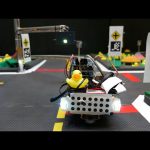
This spring, a hands-on course housed at MIT’s Computer Science and Artificial Intelligence Laboratory (CSAIL) took students on a trip to “Duckietown.” The class’ goal was to create a fleet of 50 duckie-adorned robo-taxis that can navigate roads with just a single on-board camera and no pre-programmed maps.
At age 42, Hong Kong designer Ricky Ma spent a little more than a year and $50,000 working on his childhood dream of building a life-sized humanoid robot.
» Subscribe to CNBC: http://cnb.cx/SubscribeCNBC
About CNBC: From ‘Wall Street’ to ‘Main Street’ to award winning original documentaries and Reality TV series, CNBC has you covered. Experience special sneak peeks of your favorite shows, exclusive video and more.
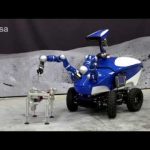
This is the Interact Centaur rover that ESA astronaut Andreas Mogensen will be operating from orbit aboard the International Space Station, to drive into position and then perform an operation requiring sub-millimetre precision.
Developed by ESA’s Telerobotics and Haptics Laboratory, the Interact Centaur is a 4×4 wheeled rover combining a camera head on a neck system, a pair of highly advanced force sensitive robotic arms designed for remote force-feedback-based operation and a number of proximity and localisation sensors.
As demonstrated here, Andreas will first attempt to guide the robot to locate an ‘operations task board’ and then to remove and plug a metal pin into it, which has a very tight mechanical fit and tolerance of only about 150 micrometres, less than a sixth of a millimetre.
As currently scheduled, Monday 7 September should see the Interact rover driven around the grounds of ESA’s ESTEC technical centre in Noordwijk, the Netherlands, from the extremely remote location of Earth orbit, 400 km up.
Signals between the crew and the robot must travel a total distance of approximately ninety thousand kilometres, via a satellite constellation located in geostationary orbit. Despite this distance, Andreas will exactly feel what the robot does on the surface – with only a very slight lag.
You, together with your 500 million fellow citizens from ESA’s 20* European member nations, are the collective owners of one of the world’s leading space agencies.
The European Space Agency is an intergovernmental organisation, a cooperative coming together of its Member States in their national interest and common good.
This new video offers a quick introduction: Europe, meet ESA.
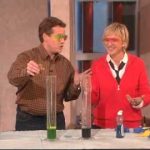
Short clips and cool science experiments from a few of Steve Spangler’s television appearances.
About Steve Spangler Science…
Steve Spangler is a celebrity teacher, science toy designer, speaker, author and an Emmy award-winning television personality. Spangler is probably best known for his Mentos and Diet Coke geyser experiment that went viral in 2005 and prompted more than 1,000 related YouTube videos. Spangler is the founder of www.SteveSpanglerScience.com, a Denver-based company specializing in the creation of science toys, classroom science demonstrations, teacher resources and home for Spangler’s popular science experiment archive and video collection. Spangler is a frequent guest on the Ellen DeGeneres Show where he takes classroom science experiments to the extreme. Check out his pool filled with 2,500 boxes of cornstarch!
On the education side, Spangler started his career as a science teacher in the Cherry Creek School district for 12 years. Today, Steve travels extensively training teachers in ways to make learning more engaging and fun. His hands-on science boot camps and summer institutes for teachers inspire and teach teachers how to prepare a new generation for an ever-changing work force. Over the last 15 years, he has also made more than 500 television appearances as an authority on hands-on science and inquiry-based learning.
On the business side, Spangler is the founder and CEO of Steve Spangler Science, a Denver-based company specializing in the creation of educational toys and kits and hands-on science training services for teachers. The companys unique business strategies and viral creations have been featured in the Wall Street Journal, Inc. Magazine, Wired and TIME Magazine where online readers voted Steve Spangler #18 in the Top 100 Most Influential People of the Year for 2006 (what were they thinking?). You’ll find more than 140 Spangler created products available online at SteveSpanglerScience.com and distributed to toy stores and mass-market retailers worldwide.
Spangler joined NBC affiliate 9News in 2001 as the science education specialist. His weekly experiments and science segments are designed to teach viewers creative ways to make learning fun. His now famous Mentos Geyser experiment, turning 2-liter bottles of soda into erupting fountains, became an Internet sensation in September 2005 when thousands of people started posting their own Mentos explosions on YouTube.com.
As founder of SteveSpanglerScience.com, Spangler and his design team have developed more than 140 educational toys and science-related products featured by mass-market retailers like Target, Wal-Mart, Toys R’ Us, Discovery Channel Stores and over 1,400 independent specialty toy stores. His educational science catalog and on-line business offers more than a thousand science toys and unique learning resources. Recently, Spangler has been featured in the Wall Street Journal, Inc. Magazine, WIRED, the History Channel, Food Network and TIME Magazine where on-line readers voted Steve Spangler #18 in the Top 100 Most Influential People of the Year for 2006.
His recent appearances on the Ellen DeGeneres Show have taught viewers how to blow up their food, shock their friends, create mountains of foam, play on a bed of nails, vanish in a cloud of smoke and how to turn 2,500 boxes of cornstarch and a garden hose into a swimming pool of fun.