Tag: MEX

  • Fifteen years imaging the Red Planet

    Fifteen years imaging the Red Planet

    On 25 December 2003, ESA’s Mars Express entered orbit around the Red Planet. The spacecraft began returning the first images from orbit using its High Resolution Stereo Camera just a couple of weeks later, and over the course of its fifteen year history has captured thousands of images covering the globe.

    This video compilation highlights some of the stunning scenes revealed by this long-lived mission. From breathtaking horizon-to-horizon views to the close-up details of ice- and dune-filled craters, and from the polar ice caps and water-carved valleys to ancient volcanoes and plunging canyons, Mars Express has traced billions of years of geological history and evolution.

    For regular news and image releases from Mars Express see http://www.esa.int/Our_Activities/Space_Science/Mars_Express

    ★ Subscribe: http://bit.ly/ESAsubscribe and click twice on the bell button to receive our notifications.

    Check out our full video catalog: http://bit.ly/SpaceInVideos
    Follow ESA on Twitter: http://bit.ly/ESAonTwitter
    On Facebook: http://bit.ly/ESAonFacebook
    On Instagram: http://bit.ly/ESAonInstagram
    On Flickr: http://bit.ly/ESAonFlickr

    ESA is Europe’s gateway to space. Our mission is to shape the development of Europe’s space capability and ensure that investment in space continues to deliver benefits to the citizens of Europe and the world. Check out http://www.esa.int/ESA to get up to speed on everything space related.

    Copyright information about our videos is available here: http://www.esa.int/spaceinvideos/Terms_and_Conditions

  • Mars Express ten year highlights

    Mars Express ten year highlights

    The journey of Mars Express, from drawing board through launch, to its key science highlights during ten years of operations. With its suite of seven instruments, Mars Express has studied the subsurface of the Red Planet to the upper atmosphere and beyond to the two tiny moons Phobos and Deimos, providing an in depth analysis of the planet’s history and returning stunning 3D images.

  • Mars mineral globe

    Mars mineral globe

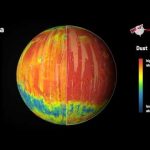
    This unique atlas comprises a series of maps showing the distribution and abundance of minerals formed in water, by volcanic activity, and by weathering to create the dust that makes Mars red.
    Together the maps provide a global context for the dominant geological processes that have defined the planet’s history.

    The maps were built from ten years of data collected by the OMEGA visible and infrared mineralogical mapping spectrometer on Mars Express.

    The animation cycles through maps showing: individual sites where a range of minerals that can only be formed in the presence of water were detected; maps of olivine and pyroxene, minerals that tell the story of volcanism and the evolution of the planet’s interior; and ferric oxide and dust. Ferric oxide is a mineral phase of iron, and is present everywhere on the planet: within the bulk crust, lava outflows and the dust oxidised by chemical reactions with the martian atmosphere, causing the surface to ‘rust’ slowly over billions of years, giving Mars its distinctive red hue.

    The map showing hydrated minerals includes detections made by both ESA’s Mars Express and by NASA’s Mars Reconnaissance Orbiter.

    Copyright: Hydrated mineral map: ESA/CNES/CNRS/IAS/Université Paris-Sud, Orsay; NASA/JPL/JHUAPL; Olivine, pyroxone, ferric dust & dust maps: ESA/CNES/CNRS/IAS/Université Paris-Sud, Orsay Orsay; Video production: ESA.

  • Traces of Martian life: Valles Marineris

    Traces of Martian life: Valles Marineris

    Valles Marineris, the ‘Grand Canyon’ of Mars, a huge canyon system around 4000 km long, up to 240 km wide and 6.5 km deep, where water is believed to have flowed many thousands of years ago. The geological history of Valles Marineris still remains a mystery.

  • Traces of life on Mars: Olympus Mons

    Traces of life on Mars: Olympus Mons

    Olympus Mons is the highest volcano on Mars, and in our Solar System, towering 26 km above the surrounding plains.