ESA astronaut Samantha Cristoforetti gets a quick trim aboard the International Space Station, showing how haircuts work in microgravity.
📹 ESA – European Space Agency
📸 ESA/NASA
#ESA #Astronauts #Space

ESA astronaut Samantha Cristoforetti gets a quick trim aboard the International Space Station, showing how haircuts work in microgravity.
📹 ESA – European Space Agency
📸 ESA/NASA
#ESA #Astronauts #Space
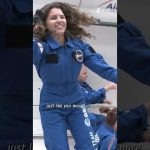
Air Zero G’s parabolic flights create a weightless environment by flying along a curved path called a parabola. This short period of weightlessness lasts about 22 seconds, during which people and experiments on board the parabolic flight can experience the same weightlessness as astronauts in orbit on the International Space Station.
The price to pay for this free-floating freedom is two short periods of hypergravity, during which everything weighs almost double for 20 seconds: first when the aircraft pulls up sharply and then again when it pulls out sharply afterwards to return to a normal flight path.
Each parabola takes about one minute to complete and is repeated 31 times in one flight, providing a total of about ten minutes of zero-gravity.
The flights provide European scientists with access to a repeatable, low-gravity research environment. Hundreds of experiments have flown over thousands of parabolas, enabling extensive scientific endeavours across many disciplines and resulting in a huge legacy of publications.
📹 ESA – European Space Agency
📸 ESA/Novespace
#ESA #ZeroG #ParabolicFlight
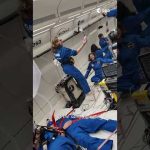
We know how microgravity impacts the brain thanks to astronauts on the ISS, but what about life on the Moon or Mars? Future explorers will also face hypoxia—low oxygen levels—which could affect their brain function and decision-making.
A team of students is tackling this challenge by conducting zero-gravity flight experiments to study how the brain responds to both microgravity and hypoxia. Their research could help improve astronaut safety for future lunar and Martian missions, ensuring they can explore safely beyond their spacecraft.
Could this be a key step in preparing humans for deep space exploration? Let us know your thoughts in the comments!
📹 ESA – European Space Agency
📸 ESA – European Space Agency
#ESA #SpaceExploration #BrainInSpace
European Space Agency astronaut Samantha Cristoforetti shared this video on social media with the caption: How do you cross a module in space? 🙃
📹 ESA – S. Cristoforetti
#ESA #Floating #MissionMinerva

Did you know that in microgravity you can better study liquid metals and how they solidify?
Research in space on metallurgy helps improving production processes while enhancing properties for stronger, lighter and durable materials.
The step to space research is closer than you might think. Get involved with spaceflight research via https://www.esa.int/spaceflightAO. Find out about our commercial partnerships and opportunities in human and robotic exploration via https://www.esa.int/explorationpartners to run your research in microgravity as well.
★ Subscribe: http://bit.ly/ESAsubscribe and click twice on the bell button to receive our notifications.
Check out our full video catalog: http://bit.ly/SpaceInVideos
Follow us on Twitter: http://bit.ly/ESAonTwitter
On Facebook: http://bit.ly/ESAonFacebook
On Instagram: http://bit.ly/ESAonInstagram
On Flickr: http://bit.ly/ESAonFlickr
We are Europe’s gateway to space. Our mission is to shape the development of Europe’s space capability and ensure that investment in space continues to deliver benefits to the citizens of Europe and the world. Check out https://www.esa.int/ to get up to speed on everything space related.
Copyright information about our videos is available here: https://www.esa.int/ESA_Multimedia/Terms_and_Conditions
#ESA
#ISS
#Metallurgy

Did you know that in microgravity we are preparing one of the most promising fuels for the future?
Microgravity is helping to find answers and models to refine the processes needed to efficiently burn solid fuel like iron dust. Are we witnessing the rise of a new “Iron Age”? Could we use metal powders instead of petrol to fuel our cars?
Solid fuels are used for burning a match, lighting a sparkler on New Year’s Eve as well as the fuel inside the boosters of Ariane and of other rockets. But metals such as iron can also burn, in powder form, and are entirely smokeless and carbon free.
Metals could be produced using clean energy, such as from solar cells or wind turbines. That electricity is stored as chemical energy in the metal powder at energy densities that are competitive with fossil fuels. This has the potential to reduce greenhouse gasses emission globally, but a barrier to implementing this technology is the development of combustion systems that can efficiently burn the metal fuels, which requires a solid understanding of their combustion physics.
To understand the physics of metal fuel combustion, a cluster of iron powder needs to be suspended for about 30 seconds, the time needed to observe and study how a flame propagates. Researchers used sounding rockets and parabolic flights to run experiments in weightlessness and to validate existing models, yielding promising results.
The density of iron particles and the composition of gases in the combustion chamber are essential parameters, like in a petrol car engine. Microgravity allows for the study of the laws of flame propagation, to optimise parameters in industrial burner designs, and reduce impact on the environment.
These space experiments also help us understand similar phenomena, such as the spreading of contagious microbes and forest fires.
In a vote of confidence for the technique a student team at TU Eindhoven in The Netherlands worked with industrial partners to design a metal combustion facility now installed at Swinkels Family Brewers, subsidised by the Dutch province of Noord-Brabant, used to produce steam for the brewing process.
The step to space research is closer than you might think. Get involved with spaceflight research via https://www.esa.int/spaceflightAO. Find out about our commercial partnerships and opportunities in human and robotic exploration via https://www.esa.int/explorationpartners to run your research in microgravity as well.
★ Subscribe: http://bit.ly/ESAsubscribe and click twice on the bell button to receive our notifications.
Check out our full video catalog: http://bit.ly/SpaceInVideos
Follow us on Twitter: http://bit.ly/ESAonTwitter
On Facebook: http://bit.ly/ESAonFacebook
On Instagram: http://bit.ly/ESAonInstagram
On Flickr: http://bit.ly/ESAonFlickr
We are Europe’s gateway to space. Our mission is to shape the development of Europe’s space capability and ensure that investment in space continues to deliver benefits to the citizens of Europe and the world. Check out https://www.esa.int/ to get up to speed on everything space related.
Copyright information about our videos is available here: https://www.esa.int/ESA_Multimedia/Terms_and_Conditions
#ESA
#ISS
#MetalFuels
With around two and half hours set aside for exercise every day, skipping the gym is not an option for astronauts on the International Space Station. ESA’s team of astronaut trainers are responsible for developing specialised training programmes to prepare astronauts for spaceflight and combat the effects of microgravity on the body.Astronaut Fitness Expert, Dr. Nora Petersen, discusses training astronauts and how the programme may change for future missions to the Moon and Mars.
Learn more: http://bit.ly/ExpeditionHome12_18YearsOld
★ Subscribe: http://bit.ly/ESAsubscribe and click twice on the bell button to receive our notifications.
Check out our full video catalog: http://bit.ly/SpaceInVideos
Follow us on Twitter: http://bit.ly/ESAonTwitter
On Facebook: http://bit.ly/ESAonFacebook
On Instagram: http://bit.ly/ESAonInstagram
On Flickr: http://bit.ly/ESAonFlickr
We are Europe’s gateway to space. Our mission is to shape the development of Europe’s space capability and ensure that investment in space continues to deliver benefits to the citizens of Europe and the world. Check out http://www.esa.int/ESA to get up to speed on everything space related.
Copyright information about our videos is available here: http://www.esa.int/spaceinvideos/Terms_and_Conditions
#ESA
#MeetTheExperts
#ExpeditionHome
The International Space Station, a laboratory like no other, offers something we can’t get on our home planet: Microgravity. Come along with #NASAExplorers as we follow a team of scientists during their journey to launch their research off our planet to the space station, and to see what microgravity may reveal. #S4E0

Engineers, pilots, researchers and scientists convened in Bordeaux, France, for ESA’s 71st parabolic flight campaign. Over the course of three days they flew on a specially-fitted commercial aircraft, testing equipment and running research as the pilots put the plane through repeated parabolas, giving the passengers and their experiments brief bouts of microgravity.
ESA’s project coordinator Neil Melville introduces the experiments that flew on this campaign, from plasma to granular physics and heat pipes.
Parabolic flights are one of many platforms ESA offers for European researchers to run experiments for spaceflight. These flights are one of the few that allow the researchers to interact with their own experiments “hands-on” in a weightless environment. Send a proposal through our continuously open research announcements and you could be flying on the next campaign.
More on ESA’s parabolic flights and research in zero gravity here: http://bit.ly/ESAparabolicFlights
★ Subscribe: http://bit.ly/ESAsubscribe and click twice on the bell button to receive our notifications.
Check out our full video catalog: http://bit.ly/SpaceInVideos
Follow us on Twitter: http://bit.ly/ESAonTwitter
On Facebook: http://bit.ly/ESAonFacebook
On Instagram: http://bit.ly/ESAonInstagram
On Flickr: http://bit.ly/ESAonFlickr
We are Europe’s gateway to space. Our mission is to shape the development of Europe’s space capability and ensure that investment in space continues to deliver benefits to the citizens of Europe and the world. Check out http://www.esa.int/ESA to get up to speed on everything space related.
Copyright information about our videos is available here: http://www.esa.int/spaceinvideos/Terms_and_Conditions
#ESA
#ZeroG
#ParabolicFlight

During an interview with ABC News on April 1, 2019, NASA Astronaut Anne McClain addressed a question about what would have been the first all-female spacewalk during Women’s History Month. Based on McClain’s recommendation, NASA changed assignments to protect the safety of the crew and the timing of the mission.
Learn more about the spacewalk reassignment at https://www.nasa.gov/feature/spacewalk-reassignments-what-s-the-deal.

NASA astronaut Drew Feustel recorded this music video from space. Feustel launched to the International Space Station in March 2018 and is currently serving as Expedition 56 Commander. Drew thanks all who helped bring this to life, including his friend, Gord Sinclair, for giving him permission to use the song, and the crew of Expeditions 55 and 56 for their support and participation in NASA’s human space exploration mission.
Learn more about the International Space Station by visiting https://www.nasa.gov/mission_pages/station/main/index.html
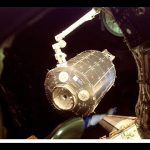
On 7 February 2008, Space Shuttle Atlantis launched to the International Space Station. In its cargo bay, ESA’s laboratory module Columbus. Now for adecade Columbus has been a part of the ISS. It is the place where ESA astronauts have done countless experiments in microgravity and the scientific importance of the module can hardly be overstated.
Join us live from ESA’s technical heart in the Netherlands on 7 February for the celebration of the 10th anniversary of the Columbus laboratory and the launch of the first Automated Transfer Vehicle. Details: http://www.esa.int/Our_Activities/Human_Spaceflight/Columbus/Live_celebrating_10_years_of_European_space_science

Paxi has joined ESA Education’s Fly Your Thesis! 2016 campaign where 4 teams of university students are running their experiments in an environment of microgravity.
More about Fly Your Thesis!:
http://www.esa.int/Education/Fly_Your_Thesis
More about Paxi:
http://www.esa.int/paxi/
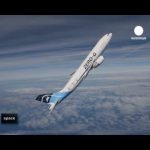
If you fly a plane in the right way at the right speed, you can be weightless for a few seconds. By throwing the aircraft into an orbit-like path within Earth’s atmosphere, you can enter the wonderful world of weightlessness.
It is one of the best ways to simulate the environment of space, and a valuable experimental tool for scientists with a special interest in microgravity. If they want to find out how the brain works, study the natural posture of humans in space, or how water boils in a weightless environment, this is the way to do it.
Take a journey into a free-floating world of the parabola in this edition of Space.