Tag: missions

  • Three New Missions Launch to Track Space Weather

    Three New Missions Launch to Track Space Weather

    We’re about to launch three new observatories that will study the Sun—and help us protect Earth. Come watch with us!

    NASA’s IMAP (Interstellar Mapping and Acceleration Probe) mission, the Carruthers Geocorona Observatory, and NOAA’s Space Weather Follow On–Lagrange 1 (SWFO-L1) observatory are scheduled to lift off from Kennedy Space Center aboard a SpaceX Falcon 9 rocket at 7:32 a.m. EDT (1132 UTC) on Tuesday, Sept. 23.

    The IMAP mission will map the boundaries of our heliosphere, the vast bubble created by the Sun’s wind that covers our entire solar system. NASA’s Carruthers Geocorona Observatory will study the ultraviolet glow of Earth’s exosphere, the outermost region of our planet’s atmosphere — helping scientists understand how space weather from the Sun affects our planet.

    The SWFO-L1 mission, managed by NOAA and developed with NASA’s Goddard Space Flight Center and commercial partners, will use a suite of instruments to provide real-time measurements of solar wind, along with a compact coronagraph to detect coronal mass ejections from the Sun.

    Learn more about these three missions and the launch schedule: https://www.nasa.gov/news-release/nasa-sets-launch-coverage-for-space-weather-missions/

    Credit: NASA
  • “Fuel” and Fire: NASA’s Artemis Missions to the Moon, feat. Metallica

    “Fuel” and Fire: NASA’s Artemis Missions to the Moon, feat. Metallica

    What do Metallica and NASA’s Artemis missions to the Moon have in common? Both love “Fuel” and fire. See footage of the Artemis I launch scored by Metallica’s “Fuel.”

    Learn more about how NASA’s Space Launch System (SLS) rocket and Orion spacecraft will send four astronauts on a lunar flyby around the Moon for NASA’s Artemis II mission: https://nasa.gov/sls

    Credit: NASA/Brandon Hancock and Sam Lott

    #Artemis

  • New Venus Missions Announced on This Week @NASA – June 4, 2021

    New Venus Missions Announced on This Week @NASA – June 4, 2021

    Learn about two new future missions to Venus and other reasons why the State of NASA is strong and exciting, launching supplies to the space station, and more good news for OSIRIS-REx … a few of the stories to tell you about – This Week at NASA!

    Download Link: https://images.nasa.gov/details-New%20Venus%20Missions%20Announced%20on%20This%20Week%20@%20NASA%20-%20June%204,%202021

    Producer: Andre Valentine
    Editor: Lacey Young
    Music: Universal Production Music

  • ESA’s missions to the Sun

    ESA’s missions to the Sun

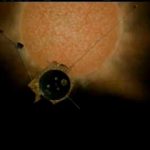
    ESA’s new Sun-explorer, Solar Orbiter, will capture close-up images of never before seen regions of our parent star, including the poles, and study the electromagnetic environment in its vicinity. The cutting-edge spacecraft will get as close as 42 million kilometres away from the Sun, about a quarter of the distance between the Sun and Earth, and face scorching temperatures of up to 500°C.

    ESA has a long history of studying the Sun from space. Since the launch of Ulysses in 1990, the agency has led or cooperated on several Sun-exploring missions including SOHO, the Cluster quartet and Proba-2.

    Learn more about the Sun: http://bit.ly/LivingWithAStar

    ★ Subscribe: http://bit.ly/ESAsubscribe and click twice on the bell button to receive our notifications.

    Check out our full video catalog: http://bit.ly/SpaceInVideos
    Follow us on Twitter: http://bit.ly/ESAonTwitter
    On Facebook: http://bit.ly/ESAonFacebook
    On Instagram: http://bit.ly/ESAonInstagram
    On Flickr: http://bit.ly/ESAonFlickr

    We are Europe’s gateway to space. Our mission is to shape the development of Europe’s space capability and ensure that investment in space continues to deliver benefits to the citizens of Europe and the world. Check out http://www.esa.int/ESA to get up to speed on everything space related.

    Copyright information about our videos is available here: http://www.esa.int/spaceinvideos/Terms_and_Conditions

    #ESA
    #SpaceScience
    #Sun

  • Lunar Exploration – ESA’s missions

    Lunar Exploration – ESA’s missions

    50 years after the first human landed on the Moon, what is next? The exploration of our Moon is a global endeavour with Europeans and commercial actors playing a large role. The European Space Agency has developed an exploration programme based on four main missions.

    Luna Resurs is a partnership with the Russian agency Roscosmos that will carry European technology to land precisely and safely on the Moon (PILOT) and to extract and analyse samples of the lunar terrain (PROSPECT).

    Orion and the European Service Module will return humans to the Moon and take advantage of the new technology for human space transportation. Orion, the NASA spacecraft, will bring humans farther than they have never been before. ESA is providing the service modules that will provide propulsion, life support, power, air and water, and control the temperature in the crew module.

    ISRU aims to extract and process resources on the Moon into useful products and services: “In-situ resource utilisation”. A mission to explore lunar resources could be a reality from 2025. The goal is to produce drinkable water or breathable oxygen on the Moon.

    The Heracles mission could take of in 2028 to allow us to gain knowledge on human-robotic interaction while landing a spacecraft on the Moon, collecting samples with a rover operated from the lunar Gateway and send samples back to Earth.

    Visit our #LunarExploration interactive site to explore more: http://lunarexploration.esa.int

    ★ Subscribe: http://bit.ly/ESAsubscribe

    Check out our full video catalog: http://bit.ly/SpaceInVideos
    Follow ESA on Twitter: http://bit.ly/ESAonTwitter
    On Facebook: http://bit.ly/ESAonFacebook
    On Instagram: http://bit.ly/ESAonInstagram
    On Flickr: http://bit.ly/ESAonFlickr

    ESA is Europe’s gateway to space. Our mission is to shape the development of Europe’s space capability and ensure that investment in space continues to deliver benefits to the citizens of Europe and the world. Check out http://www.esa.int/ESA to get up to speed on everything space related.

    Copyright information about our videos is available here: http://www.esa.int/spaceinvideos/Terms_and_Conditions

  • ESOC: Where missions come alive

    ESOC: Where missions come alive

    ESOC – European Space Operations Centre 2017

    As a centre of excellence for mission operations since 1967, ESA’s ‘mission control’ delivers expertise and experience in a unique mix that serves the scientific and engineering goals of ESA, and enables economically vital European programmes like Copernicus and Galileo.

    ESOC is home to highly specialised teams who control and navigate spacecraft, manage ESA’s worldwide tracking station network, and build the ground systems that enable satellites to conduct their missions. Spacecraft flown from ESOC are studying our planet and helping us understand climate change through realtime Earth data, and are exploring our Sun and Solar System or peering deep into the mysteries of time and space.

    The centre is unique and unparalleled in its ability to control sophisticated probes, and to design, develop and build everything needed on ground to successfully fly satellites in space.

    Our world is about systems, communication and exploration; our passion is for humanity’s voyages into the Universe.

    In 2017, ESOC celebrates its 50th anniversary #esoc50
    http://www.esa.int/esoc
    http://www.esa.int/esoc50

    This video is also available in the following languages:
    German: https://www.youtube.com/watch?v=Tl4W91VF_SM />French: https://www.youtube.com/watch?v=8-VHgc6kWMQ

  • NASA’s New Discovery Missions

    NASA’s New Discovery Missions

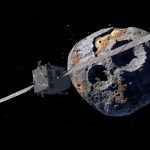
    On Jan. 4, NASA announced the selection of two missions to explore previously unexplored asteroids. The first mission, called Lucy, will study asteroids, known as Trojan asteroids, trapped by Jupiter’s gravity. The Psyche mission will explore a very large and rare object in the solar system’s asteroid belt that’s made of metal, and scientists believe might be the exposed core of a planet that lost its rocky outer layers from a series of violent collisions. Lucy is targeted for launch in 2021 and Psyche in 2023. Both missions have the potential to open new windows on one of the earliest eras in the history of our solar system – a time less than 10 million years after the birth of our sun.

  • 2012 ESA Missions Preview

    2012 ESA Missions Preview

    This video presents the key events in 2012 for ESA.

    André Kuipers continues his PromISSe mission aboard the International Space Station until May, the 4th ESA long duration mission. During his stay the third European ATV cargo ship will bring food and supplies to the orbital outpost. Early in the year the new Vega launcher will make its qualifying flight from Europe’s Spaceport in French Guiana. The end of the year will be marked by an ESA Conference at Ministerial level, a major decision point for the future of Europe in Space.

    More backgroud information can be found on: www.esa.int

  • NASA Details Future Science Missions & Launches

    NASA Details Future Science Missions & Launches

    Chief scientist Waleed Abdalati is among the panelists who talk and answer questions about upcoming NASA science missions.

  • NASA Mission Update: ULYSSES

    NASA Mission Update: ULYSSES

    The sun is the source of life-sustaining energy here on Earth. Much of how it works – and affects us — remains a source of scientific mystery. Sunspots were first recorded by humans in the 16-hundreds. Astrophysicists have since linked heightened sunspot activity with the solar wind. It’s a million-mile-an-hour force of magnetically-charged particles emanating from the sun’s upper atmosphere. Ebbing and flowing in minimum and maximum intensities over eleven year cycles, this so-called space weather can seriously affect how things work here on Earth, such as disrupting satellite communications, telephone service and personal electronics.

    Arik Posner, Program Scientist: “It would help our technology, to safeguard the technology by knowing when and in what intensity space weather occurs and where these effects might show up”

    Launch Announcer : “2 -1 ignition and liftoff of Discovery and the Ulysses spacecraft bound for the polar regions of the sun.”

    Until the launch of Ulysses from space shuttle Discovery in 1990, data for understanding and predicting space weather had come from a limited sampling area: the plane extending from the suns equator. Ulysses has since made three orbits above and below the poles of the sun, vastly expanding the territory from where raw space weather data are gathered.

    Arik Posner: “So Ulysses was really the first spacecraft that leaped out of this confinement, and it gives us a view of the global heliosphere.”

    Ulysses has found that the solar minimum were in right now is producing the lowest levels of solar wind seen since accurate readings became available a half-century ago. But for heliophysicists, these data raise as many questions as they answer.

    Arik Posner: “The Space Age is only 50 years now, and the Sun just operates on longer time scales than these 50 years. So we might have just glimpsed just the surface of what is really going on.”

    By expanding its reach, both in time and space, Ulysses is helping the discipline of space weather prediction grow beyond its infancy for the betterment of life here on Earth.

    For more about Ulysses, the heliosphere, and space weather, log onto: www.nasa.gov/missions and click on ‘Ulysses.’

  • European missions to the International Space Station

    European missions to the International Space Station

    Capturing the excitement of three highlights of European manned spaceflight in 2007 and 2008, these clips feature Paolo Nespoli’s STS-120 flight, the Columbus laboratory, and finally the ATV Jules Verne, Europe’s first space ferry.