
The Earth is a unique planet. In celebration of Earth Day, NASA scientists shared their favorite thing about our home planet.
Tag: nasa science
-
Spinoff 2019: How NASA Technology Improves Life on Earth
NASA is everywhere – our space technology turns up in nearly all corners of modern life. The world has come to rely on GPS signal correction software created by NASA, which enables precision agriculture, airplane navigation, smartphones, Earth science and much more. A lightweight, high-pressure tank NASA invented to hold rocket fuel now stores life-saving oxygen to keep pilots, firefighters and intensive care patients breathing — not to mention gases that power city buses and even paintball guns. Fitness enthusiasts may be surprised to learn about NASA’s contribution to the Bowflex Revolution resistance-exercise home gym.
For more examples of how NASA shows up in your everyday life, visit: https://spinoff.nasa.gov
This video is available for download from NASA’s Image and Video Library: https://images.nasa.gov/details-NHQ_2019_0403_Spinoff%202019.html
-

NASA Explorers: Final Approach
In the pre-dawn hours of a late October day, a satellite and an airplane joined forces over the frigid Weddell Sea, taking simultaneous measurements of drifting sea ice. It was the culmination of more than a decade of planning, designing and building the best way to measure Earth’s changing ice.
#NASAExplorers are constantly pushing the limit to learn more about our world and those far beyond. Join in as they celebrate a milestone in the quest to better understand the planet we call home.
-
NASA Explorers: Ice Odyssey
To know the evolution of sea ice and how we observe it from space is to know Dr. Claire Parkinson. Meet the scientist who continues to have a profound effect on the study of climate change through her work monitoring the health of global sea ice.
-
First 8K Video from Space – Ultra HD
Science gets scaled up with the first 8K ultra high definition (UHD) video from the International Space Station. Get closer to the in-space experience and see how the international partnership-powered human spaceflight is improving lives on Earth, while enabling humanity to explore the universe. More: https://go.nasa.gov/2zgPY5o Special thanks to the European Space Agency, the ISS National Lab, and astronauts Alexander Gerst, Serena Auñón-Chancellor, Ricky Arnold and Drew Feustel.
Download this video: https://images.nasa.gov/details-First-8K-Video-from-Space.html
Featured investigations and facilities:
0:01, 2:36 BEST seeks to advance use of sequencing DNA and RNA in space. https://go.nasa.gov/2tNntKu0:13 The Minus Eighty-Degree Laboratory Freezer for ISS (MELFI) is a cold storage unit that maintains experiment samples at ultra-cold temperatures throughout a mission. https://go.nasa.gov/2RkJAl5
0:21 The Advanced Plant Habitat (APH), a recent addition to the space station, is the largest growth chamber aboard the orbiting laboratory. https://go.nasa.gov/2JCi8vV
0:33 Canadarm2 is part of Canada’s contribution to the space station. This 17-metre-long robotic arm was extensively involved in the assembly of the orbiting laboratory. https://go.nasa.gov/2ReaU42
0:41 Crew Earth Observations record how the planet is changing over time, from human-caused changes like urban growth and reservoir construction, to natural dynamic events such as hurricanes, floods and volcanic eruptions. https://go.nasa.gov/2KLFAaq
0:49 The Light Microscopy Module (LMM) is a modified commercial, highly flexible, state-of-the-art light imaging microscope facility that provides researchers with powerful diagnostic hardware and software onboard the space station. https://go.nasa.gov/2RfdYwS
0:53 ACE-T-2 looks at the assembly of complex structures from micron-scale colloidal particles interacting via tunable attractive interactions. https://go.nasa.gov/2Re2ppS
0:57 Plant Habitat-1 comprehensively compares differences in genetics, metabolism, photosynthesis, and gravity sensing between plants grown in space and on Earth. https://go.nasa.gov/2MdDBfc
1:05 The Cupola provides an observation and work area for the International Space Station crew that gives visibility to support the control of the station’s robotic arms, and a beautiful view of the Earth, celestial objects and visiting vehicles. https://go.nasa.gov/2CRsxCT
1:14 Atomization observes the disintegration processes of low-speed water jets under various conditions to improve spray combustion processes inside rocket and jet engines. https://go.nasa.gov/2RkKrlN
1:30 BCAT-CS focuses on the study of forces between particles that cluster together by studying sediments of quartz and clay particles. https://go.nasa.gov/2p6WBSV
1:38 Functional Immune analyzes blood and saliva samples to determine the changes taking place in crew members’ immune systems during flight. https://go.nasa.gov/2RfUMz1
2:03 Life Support Rack (LSR) is a technology demonstrator for closed loop air revitalization. https://go.nasa.gov/2Rdfi3C
2:15 The Japanese Experiment Module Airlock is used to deliver science experiments to external platforms, and prepare small satellites for deployment from station. https://go.nasa.gov/2RdcBik
2:23 SPHERES Tether Slosh combines fluid dynamics equipment with robotic capabilities aboard the space station to investigate automated strategies for steering passive cargo that contain fluids. https://go.nasa.gov/2RfQPdQ
Follow updates on the science conducted aboard the space station on Twitter:
https://twitter.com/iss_researchFor more information on how you can conduct your research in microgravity, visit https://go.nasa.gov/2q84LJj
-

NASA Explorers: The Snow Below
Snow is one part of the cryosphere that many of us have actually encountered, but it also plays a crucial role in regulating Earth’s climate. Through decades of remote sensing, NASA has kept a close eye on the ebb and flow of snow cover. #NASAExplorers also venture into the field at the far reaches of Earth to study snow, a critical resource for the millions of people who rely on it for drinking water.
-
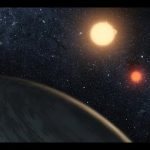
Legacy of NASA’s Kepler Space Telescope: More Planets Than Stars
After 9 years in space collecting data that revealed our night sky to be filled with trillions of hidden planets, NASA is ending the Kepler space telescope’s science operations. Kepler discovered over 2,600 planets, some of which could be promising places for life. https://go.nasa.gov/2P2umV1
-
NASA Explorers: Cryosphere – The Big Thaw
NASA Explorers is a new digital series that takes you inside the space agency and follows the pioneers, risk-takers and experts at the front line of exploration. Season 1, “Cryosphere,” joins NASA scientists on their journey to the frozen ends of the Earth as they study our rapidly changing world from satellites, planes and boots on the ground. The Cryosphere is a place we all depend on, but many of us will never go to. As temperatures rise, the frozen regions of Earth are changing rapidly. NASA scientists are locked in a race against time to understand our shifting climate and how it affects life on Earth.
-
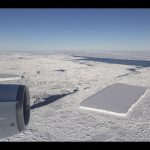
Flight Over a Rectangular Iceberg in the Antarctic
Can you spot the sharp-angled, rectangular iceberg? This footage (partially sped up) is from an Oct. 16, 2018 flight over the northern Antarctic Peninsula by our Operation IceBridge DC-8 aircraft. Mission Scientist John Sonntag provides commentary. More: https://go.nasa.gov/2JdEy71
Operation IceBridge is NASA’s longest-running aerial survey of polar ice. During the survey, designed to assess changes in the ice height of several glaciers draining into the Larsen A, B and C embayments, IceBridge senior support scientist Jeremy Harbeck saw a very sharp-angled, tabular iceberg floating among sea ice just off of the Larsen C ice shelf. A photo of the iceberg (seen at right) was widely shared after it was posted on social media.