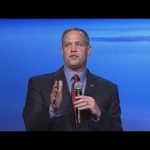
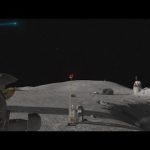
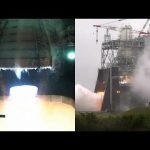
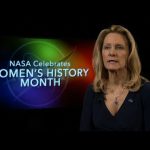
The latest about our Artemis program, an astronaut shares her story with students, and another record-breaking maneuver by one or our spacecraft … a few of the stories to tell you about – This Week at NASA!
This video is available for download from NASA’s Image and Video Library: https://images.nasa.gov/details-NHQ_2019_0614_Administrator%20Bridenstine%20Discusses%20Our%20Artemis%20Program%20on%20This%20Week%20@NASA%20%E2%80%93%20June%2014,%202019.html
Thanks to new signage, visitors to NASA Headquarters in Washington, D.C. will be reminded of the contributions of the “hidden figures” essential to the success of early spaceflight. The renaming honors Katherine Johnson, Dorothy Vaughan, and Mary Jackson, who were featured in Margot Lee Shetterly’s book – and the movie – Hidden Figures, as well as all women who honorably serve their country, advancing equality, and contributing to the United States space program. News release: https://go.nasa.gov/HiddenFiguresWay
On June 12, Administrator Jim Bridenstine joined U.S. Senator Ted Cruz of Texas, D.C. Council Chairman Phil Mendelson and author Margot Lee Shetterly for the renaming of the street in front of NASA Headquarters in Washington – E Street SW – to “Hidden Figures Way.”
The International Space Station is open for commercial business, another space station resupply mission successfully completed, and making a virtual landing on the Moon … a few of the stories to tell you about – This Week at NASA!
This video is available for download from NASA’s Image and Video Library: https://images.nasa.gov/details-NHQ_2019_0607_Opening%20the%20International%20Space%20Station%20for%20Commercial%20Business%20on%20This%20Week%20@NASA%20%E2%80%93%20June%207,%202019.html
NASA has a unique and important view of hurricanes around the planet. Satellites and aircraft watch as storms form, travel across the ocean and sometimes, make landfall. After the hurricanes have passed, the satellites and aircraft see the aftermath of hurricanes, from downed forests to mass power loss. Complete transcript available.
Music credit: “Northern Breeze” by Denis Levaillant [SACEM], “Stunning Horizon” by Maxime Lebidois [SACEM], Ronan Maillard [SACEM], “Magnetic Force” by JC Lemay [SACEM] from Killer Tracks
This video is public domain and along with other supporting visualizations can be downloaded from the Scientific Visualization Studio at: http://svs.gsfc.nasa.gov/13216
#NASAExplorers come in all ages! In this week’s bonus episode, we headed back to Alaska to check in with some of our tiniest Explorers. They’re following in the scientists’ footsteps, working with NASA’s GLOBE program to measure when and where snow and ice are freezing. Plus, stick around for a thank you message from our scientists to the young Explorers collecting their data.
Learn more about GLOBE and the work of student scientists around the planet: https://www.globe.gov/
Enjoy this sped-up Earth view, captured by the Expedition 59 astronauts currently onboard the International Space Station. The station orbits the Earth every 90 minutes — meaning this sunset you see is actually one of 16 the station residents see each day!
The first commercial robotic lunar landers to support our Artemis program, discussing our exploration goals, and a breakdown of the Apollo Moon landings … a few of the stories to tell you about – This Week at NASA!
This video is available for download from NASA’s Image and Video Library: https://images.nasa.gov/details-NHQ_2019_0531_The%20First%20Commercial%20Moon%20Landing%20Service%20Providers%20on%20This%20Week%20@NASA%20%E2%80%93%20May%2031,%202019.html
This time-lapse video taken by NASA astronaut Nick Hague squeezes a 30-minute International Space Station trip over a cloudy Earth into 60 seconds, covering the Pacific to the Atlantic.
We are building a coalition of nations that can help us get to the Moon quickly and sustainably. Together.
We have a bold vision to go back to the Moon by 2024. As we work towards this goal, we welcome a growing list of international and commercial partners.
It is the partnerships over the last 60 years that have ensured the steady progress. With Mars on the horizon, together we can explore more of our solar system and share in the advances and the knowledge that will come.
A key milestone for our lunar Gateway, “rolling out” for a critical Orion safety test, and a chance to send your name to Mars … a few of the stories to tell you about – This Week at NASA!
This video is available for download from NASA’s Image and Video Library: https://images.nasa.gov/details-NHQ_2019_0524_A%20New%20Partnership%20to%20Power%20The%20Lunar%20Gateway%20on%20This%20Week%20@NASA%20%E2%80%93%20May%2024,%202019.html
Did you know there are six humans living in space, and you can see their home from your home? NASA astronaut Nick Hague shares how you can use https://spotthestation.nasa.gov/ to find out when the International Space Station will be visible from your town!
A commercial resupply mission heads to the space station, watching Earth breathe from space, and dealing with the impact threat of near-Earth objects … a few of the stories to tell you about – This Week at NASA!
This video is available for download from NASA’s Image and Video Library: https://images.nasa.gov/details-NHQ_2019_0504_Commercial%20Resupply%20Mission%20Launches%20to%20the%20Space%20Station%20on%20This%20Week%20@NASA%20%E2%80%93%20May%204,%202019.html
Our alien friend Paxi, went to visit American astronaut Anne McClain on board the International Space Station. Anne explains to Paxi how astronauts move around in weightlessness on the ISS.
Credits: ESA/NASA
★ Subscribe: http://bit.ly/ESAsubscribe and click twice on the bell button to receive our notifications.
ESA is Europe’s gateway to space. Our mission is to shape the development of Europe’s space capability and ensure that investment in space continues to deliver benefits to the citizens of Europe and the world. Check out http://www.esa.int/ESA to get up to speed on everything space related.
What could be the first sound of a marsquake, helping astronauts bust the dust on future missions to the Moon, and celebrating our home planet … a few of the stories to tell you about – This Week at NASA!
This video is available for download from NASA’s Image and Video Library: https://images.nasa.gov/details-NHQ_2019_0426_The%20First%20Possible%20Sound%20of%20a%20Marsquake%20on%20This%20Week%20@NASA%20%E2%80%93%20April%2026,%202019.html
Of all the planets NASA has explored, none have matched the dynamic complexity of our own. Earth is a very special place. From the vantage point of space, the perspective of sky and sea, and all across the land, we study our planet not only to learn about it, but also to protect it.
An extended stay in space for one of our astronauts, a new resupply mission to the space station, and locating the universe’s first type of molecule … a few of the stories to tell you about – This Week at NASA!
This video is available for download from NASA’s Image and Video Library: https://images.nasa.gov/details-NHQ_2019_0419_An%20Extended%20Stay%20Onboard%20The%20Space%20Station%20on%20This%20Week%20@NASA%20%E2%80%93%20April%2019,%202019.html
The plan to put humans on the Moon by 2024, wrapping up a series of spacewalks on the space station, and an historic first look at a black hole … a few of the stories to tell you about – This Week at NASA!
This video is available for download from NASA’s Image and Video Library: https://images.nasa.gov/details-NHQ_2019_0412_Our%20Five-Year%20Plan%20to%20Return%20Humans%20to%20the%20Moon%20on%20This%20Week%20@NASA%20%E2%80%93%20April%2012,%202019.html
NASA Administrator Jim Bridenstine delivered a keynote address April 9 during the 35th Space Symposium in Colorado Springs, Colorado. During his speech, Bridenstine outlined NASA’s accelerated plans to send American astronauts to the Moon’s South Pole by 2024. The president’s direction from Space Policy Directive-1 galvanizes NASA’s return to the Moon and builds on progress on the Space Launch System rocket and Orion spacecraft, collaborations with U.S industry and international partners, and knowledge gained from current robotic assets at the Moon and Mars.
Accelerating a human return to the Moon, wrapping up testing of our Space Launch System rocket engines, and Curiosity captures eclipses on Mars … a few of the stories to tell you about – This Week at NASA!
This video is available for download from NASA’s Image and Video Library: https://images.nasa.gov/details-NHQ_2019_0405_Discussing%20our%20Accelerated%20Return%20of%20Humans%20to%20the%20Moon%20on%20This%20Week%20@NASA%20%E2%80%93%20April%205,%202019.html
NASA is a step closer to returning astronauts to the Moon in the next five years following this successful “hot fire” test of flight engine No. 2062 on the A-1 Test Stand at Stennis Space Center in Mississippi. This April 4, 2019 test caps more than four years of testing for the RS-25 engines that will help power the first four missions of the Space Launch System rockets. It also concludes a 51-month test series that demonstrated RS-25 engines can perform at the higher power level needed to launch the super heavy-lift SLS rocket.
NASA is everywhere – our space technology turns up in nearly all corners of modern life. The world has come to rely on GPS signal correction software created by NASA, which enables precision agriculture, airplane navigation, smartphones, Earth science and much more. A lightweight, high-pressure tank NASA invented to hold rocket fuel now stores life-saving oxygen to keep pilots, firefighters and intensive care patients breathing — not to mention gases that power city buses and even paintball guns. Fitness enthusiasts may be surprised to learn about NASA’s contribution to the Bowflex Revolution resistance-exercise home gym.
The Solar Orbiter spacecraft is undergoing important pre-launch tests at the IABG National Space Centre in Ottobrunn, Germany, ahead of its launch, scheduled for February 2020.
The mission will study the Sun, but first the spacecraft must pass vibration, acoustic and shock tests. This will ensure the spacecraft can withstand the stresses of lift off and the extreme environments it will encounter while in orbit around the Sun – from the coldness of space, 150 million km away, to temperatures up to 500 ºC reached when it will be a mere 46 million km away, closer than Mercury.
Solar Orbiter is an ESA-led mission with strong NASA participation. The spacecraft was built and is being tested by Airbus.
This film contains interviews with César García, ESA Solar Orbiter Project Manager, and Ian Walters, Solar Orbiter Project Manager at Airbus Defence and Space.
ESA is Europe’s gateway to space. Our mission is to shape the development of Europe’s space capability and ensure that investment in space continues to deliver benefits to the citizens of Europe and the world. Check out http://www.esa.int/ESA to get up to speed on everything space related.
Headquarters hosted an agencywide town hall with NASA Administrator Jim Bridenstine on Monday, April 1, at 1:30 p.m. EDT. NASA HQ employees were invited to join the Administrator in the Webb auditorium for this important discussion on our Moon to Mars plans.
During an interview with ABC News on April 1, 2019, NASA Astronaut Anne McClain addressed a question about what would have been the first all-female spacewalk during Women’s History Month. Based on McClain’s recommendation, NASA changed assignments to protect the safety of the crew and the timing of the mission.
“When I was a kid, coding was terrifying,” says Farah Alibay, a Systems Engineer at NASA’s Jet Propulsion Laboratory.
This month we are celebrating #WomensHistoryMonth with a video series highlighting some exceptional builders and makers. Learn about how she and other #WomenAtNASA build and speak to instruments on Mars everyday.
Producer: Sarah Loff/NASA
Director/Editor: Nasreen Alkhateeb/NASA
Videographer: Ryan Bell/NASA
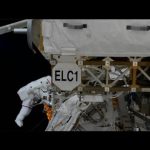
Accelerating our return to the Moon, another spacewalk outside the International Space Station, and testing our Mars Helicopter … a few of the stories to tell you about – This Week at NASA!
Flying low over some of the most dramatic landscapes on the planet, a cadre of scientists and pilots have been measuring changes in Alaskan glaciers as part of NASA’s Operation IceBridge for almost a decade. The team has seen significant change in ice extent and thickness over that time. Data from the mission was used in a 2015 study that put numbers on the loss of Alaskan glaciers: 75 billion tons of ice every year from 1994 to 2013. Last summer, Chris Larsen and Martin Truffer, both of the University of Alaska Fairbanks, flew with University of Arizona’s Jack Holt and University of Texas student Michael Christoffersen.
Credit: NASA’s Goddard Space Flight Center
Jefferson Beck (USRA): Lead Producer
Maria-Jose Vinas Garcia (Telophase): Writer
Chris Larsen (University of Alaska Fairbanks): Lead Scientist
Mark Fahnestock (University of Alaska): Scientist
Alex Kekesi (GST): Lead Visualizer
Martin Truffer (University of Alaska): Lead Scientist
“You don’t need a path that is what someone else tells you to do.” Janet Karika remembers being one of the only women at her college studying mechanical engineering. Now she sees women everywhere at NASA. Celebrate #WomensHistoryMonth with our Chief of Staff.
On behalf of the President, Vice President Mike Pence directed NASA Administrator Jim Bridenstine to accelerate the agency’s lunar exploration plans during a National Space Council meeting held at the U.S. Space and Rocket Center in Huntsville, Alabama, March 26. Administrator Bridenstine said NASA accepts the challenge to land humans on the Moon in 2024. For more information, visit: https://www.nasa.gov/moontomars.
A spacewalk outside the space station, testing a motor critical to the safety of Orion, and some surprising findings about asteroid Bennu … a few of the stories to tell you about – This Week at NASA!
This video is available for download from NASA’s Image and Video Library: https://images.nasa.gov/details-A%20Spacewalk%20Outside%20The%20International%20Space%20Station%20on%20This%20Week%20@NASA%20%E2%80%93%20March%2022,%202019.html
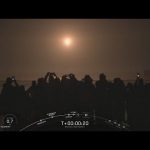
On the latest Watch this Space, NASA Administrator Jim Bridenstine chats with SpaceX CEO and Chief Designer Elon Musk during a tour of Launch Complex 39A just before the Demo-1 launch at the Kennedy Space Center in Florida. The historic Demo-1 mission launched at 2:49 a.m. EDT on Saturday, March 2 and was the first launch of a commercially built and operated American spacecraft and space system designed for humans as part of NASA’s Commercial Crew Program.
Strong budget support for our Moon to Mars effort, a new crew launches to the space station, and training for Orion recovery … a few of the stories to tell you about – This Week at NASA!
This video is available for download from NASA’s Image and Video Library: https://images.nasa.gov/details-NHQ_2019_0315_Strong%20Budget%20Support%20for%20Moon%20to%20Mars%20Effort%20on%20This%20Week%20@NASA%20%E2%80%93%20March%2015,%202019.html
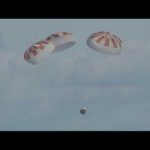
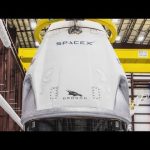
After undocking from the International Space Station at 2:32 a.m. EST on Friday, March 8, the SpaceX Crew Dragon completed a deorbit burn to reenter Earth’s atmosphere, deployed parachutes and splashed down in the Atlantic Ocean at 8:45 a.m. EST. These are the final milestones of the Demo-1 flight test, in which SpaceX demonstrated systems which will be used to carry astronauts aboard the Crew Dragon to the space station.
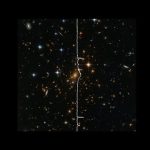
Space becomes “sonified” in this visualization of a cluster of galaxies imaged by NASA’s Hubble Space Telescope. Time flows left to right, and the frequency of sound changes from bottom to top, ranging from 30 to 1,000 hertz. Objects near the bottom of the image produce lower notes, while those near the top produce higher ones. Most of the visible specks are galaxies housing countless stars. A few individual stars shine brightly in the foreground. Stars and compact galaxies create short, clear tones, while sprawling spiral galaxies emit longer notes that change pitch. The higher density of galaxies near the center of the image — the heart of this galaxy cluster, known as RXC J0142.9+4438 — results in a swell of mid-range tones halfway through the video. Hubble’s Advanced Camera for Surveys and Wide Field Camera 3 acquired this image on Aug. 13, 2018.
An important step for the Commercial Crew Program, more testing with our Space Launch System rocket engine, and a new show that explores how we do, what we do … a few of the stories to tell you about – This Week at NASA!
This video is available for download from NASA’s Image and Video Library: https://images.nasa.gov/details-NHQ_2019_0301_An%20Important%20Step%20for%20Commercial%20Crew%20on%20This%20Week%20@NASA%20%E2%80%93%20March%202,%202019.html
An upcoming Commercial Crew Flight Test, training underway for the space station’s next crew, and a new development in our search for life beyond Earth … a few of the stories to tell you about – This Week at NASA!
This video is available for download from NASA’s Image and Video Library: https://images.nasa.gov/details-NHQ_2019_0222_An%20Upcoming%20Commercial%20Crew%20Flight%20Test%20on%20This%20Week%20@NASA%20%E2%80%93%20February%2022,%202019.html
On the latest Watch This Space, NASA administrator Jim Bridenstine looks back at 15 years of discoveries by our Opportunity rover on Mars, and forward to new commercial partnerships for missions to the Moon. Learn how we’ll work with American companies to design and develop human lunar landers and reusable systems so we can return to the Moon — to stay.
This video is available for download from NASA’s Image and Video Library: https://images.nasa.gov/details-NHQ_2019_0221_Watch%20This%20Space%20with%20NASA%20Administrator%20Jim%20Bridenstine%20with%20the%20latest%20from%20the%20Moon%20and%20Mars.html