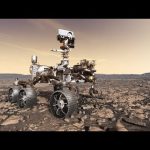
Working with industry to develop new lunar landers, testing resumes with our Space Launch System rocket engine, and after a job well done – the end of the line for one of our Mars rovers … a few of the stories to tell you about – This Week at NASA!
This video is available for download from NASA’s Image and Video Library: https://images.nasa.gov/details-NHQ_2019_0215_Discussing%20Lunar%20Exploration%20Plans%20on%20This%20Week%20@NASA%20%E2%80%93%20February%2015,%202019.html
Direct from America’s space program to YouTube, watch NASA TV live streaming here to get the latest from our exploration of the universe and learn how we discover our home planet.
NASA TV airs a variety of regularly scheduled, pre-recorded educational and public relations programming 24 hours a day on its various channels. The network also provides an array of live programming, such as 24-hour coverage of missions, events (spacewalks, media interviews, educational broadcasts), press conferences and rocket launches.
In the United States, NASA Television’s Public and Media channels are MPEG-2 digital C-band signals carried by QPSK/DVB-S modulation on satellite AMC-3, transponder 15C, at 87 degrees west longitude. Downlink frequency is 4000 MHz, horizontal polarization, with a data rate of 38.86 Mhz, symbol rate of 28.1115 Ms/s, and ¾ FEC. A Digital Video Broadcast (DVB) compliant Integrated Receiver Decoder (IRD) is needed for reception.
Remembering our fallen heroes, a milestone for our InSight lander on Mars, and, data released on our global temperature … a few of the stories to tell you about – This Week at NASA!
No matter what team you’re rooting for, our technology is helping you play the game. Our discoveries off the planet have developed all sorts of equipment on the field — from shock-absorbent foam in helmets to retractable stadium roofs. 🏈 Go NASA!
Getting back to the business of NASA, an update on our Commercial Crew Program, and, our mission to the Sun is in full swing … a few of the stories to tell you about – This Week at NASA!
This video is available for download from NASA’s Image and Video Library: https://images.nasa.gov/details-NHQ_2019_0201_Getting%20Back%20to%20Business%20on%20This%20Week%20@NASA%20%E2%80%93%20February%201,%202019.html
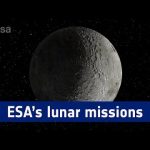
50 years after the first human landed on the Moon, what is next? The exploration of our Moon is a global endeavour with Europeans and commercial actors playing a large role. The European Space Agency has developed an exploration programme based on four main missions.
Luna Resurs is a partnership with the Russian agency Roscosmos that will carry European technology to land precisely and safely on the Moon (PILOT) and to extract and analyse samples of the lunar terrain (PROSPECT).
Orion and the European Service Module will return humans to the Moon and take advantage of the new technology for human space transportation. Orion, the NASA spacecraft, will bring humans farther than they have never been before. ESA is providing the service modules that will provide propulsion, life support, power, air and water, and control the temperature in the crew module.
ISRU aims to extract and process resources on the Moon into useful products and services: “In-situ resource utilisation”. A mission to explore lunar resources could be a reality from 2025. The goal is to produce drinkable water or breathable oxygen on the Moon.
The Heracles mission could take of in 2028 to allow us to gain knowledge on human-robotic interaction while landing a spacecraft on the Moon, collecting samples with a rover operated from the lunar Gateway and send samples back to Earth.
ESA is Europe’s gateway to space. Our mission is to shape the development of Europe’s space capability and ensure that investment in space continues to deliver benefits to the citizens of Europe and the world. Check out http://www.esa.int/ESA to get up to speed on everything space related.
On December 24, 1968, Apollo 8 arrived at the Moon and began orbital insertion. The Apollo spacecraft flew most of the way to the Moon sideways,pointed toward celestial “north” for guidance purposes.
NASA astronauts Frank Borman, James Lovell, William Anders became the first humans to travel beyond low Earth orbit and orbit another celestial body.
They were also the first humans to see the far side of the Moon, and Earth as a whole planet, taking the famous Earthrise photo.
On this 50th anniversary of the historic flight of Apollo 8, NASA wishes Season’s Greetings to everyone on the good Earth.
50 years ago, three NASA astronauts embarked on a journey that would take them “Round the moon and back”. The Apollo 8 mission proved the performance of the command and service module. This historic mission launched on December 21, 1968 to demonstrate a lunar trajectory and was the first crewed launch of the Saturn V rocket. On Christmas Eve, Frank Borman, Jim Lovell, and Bill Anders were the first humans to orbit the Moon and the first to see an Earthrise above its surface.
In the pre-dawn hours of a late October day, a satellite and an airplane joined forces over the frigid Weddell Sea, taking simultaneous measurements of drifting sea ice. It was the culmination of more than a decade of planning, designing and building the best way to measure Earth’s changing ice.
#NASAExplorers are constantly pushing the limit to learn more about our world and those far beyond. Join in as they celebrate a milestone in the quest to better understand the planet we call home.
In this episode of “Watch this Space,” NASA Administrator Jim Bridenstine discusses NASA’s recent selection of U.S. companies to potentially deliver science payloads to the lunar surface. He also visits the Jet Propulsion Laboratory in California, where he discusses the Mars InSight landing and plans for Mars 2020.
With our Moon to Mars effort underway, a new administrator takes over to lead the charge, and – oh yeah – we stuck another nearly flawless landing on Mars! All that and more as we look back at what happened This Year @ NASA!
This video is available for download from NASA’s Image and Video Library: https://images.nasa.gov/details-NHQ_2018_1217_NASA%20Begins%20America%E2%80%99s%20New%20Moon%20to%20Mars%20Exploration%20Approach%20in%202018%20-%20The%20Year%20@NASA.html
It’s 5 a.m. on a normal September day and #NASAExplorers have gathered in a California field to watch a rocket launch light up the pre-dawn sky. On board the rocket is a satellite more than 10 years in the making, with one single instrument that will revolutionize the study of ice on Earth. Join the team in the excitement and stress of watching ICESat-2 launch into space and begin its work measuring our home planet.
This week, #NASAExplorers head back in time…by going underground. In the Arctic, a frozen layer of soil – permafrost – trapped dead plants and animals for thousands of years. As the climate warms, that soil is beginning to thaw, releasing carbon dioxide and methane.
The space station’s newest crew members are safely onboard, our first asteroid sample return mission arrives at its destination, and the first sounds from Mars … a few of the stories to tell you about – This Week at NASA!
This video is available for download from NASA’s Image and Video Library: https://images.nasa.gov/details-NHQ_2018_1207_New%20Crewmembers%20Onboard%20the%20Space%20Station%20on%20This%20Week%20@NASA%20%E2%80%93%20December%207,%202018.html
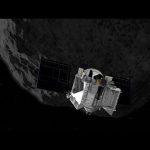
On Dec. 3, 2018, the OSIRIS-REx spacecraft arrives at its target, near-Earth asteroid Bennu. Here, the team explains mission goals and the process of approach and rendezvous. OSIRIS-REx will study Bennu for two years before collecting a sample to return to Earth.
They’re rivers of ice, slowly flowing down the sides of mountains, and they currently have an outsized role in sea level rise. This week, #NASAExplorers are taking us high into the mountains of Alaska, Patagonia, Asia and elsewhere for a closer look at mountain glaciers.
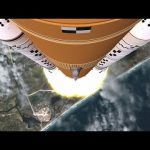
At the Vehicle Assembly Building at Kennedy Space Center, technicians practice and prepare to stack NASA’s Space Launch System rocket. The SLS fueled-up core stage weighs around 2.3 million pounds and measures 212 feet long.
After a 24-hour journey from Bremen, Germany with stops in Hamburg and Portsmouth, USA, the European Service Module landed on 6 November 2018 at Kennedy Space Center in Florida.
The shipment from Bremen to Florida is just the beginning – the first leg of an exciting journey that will boost the spacecraft to lunar orbit and back.
The first service module is a key component that will see #Orion around the Moon for Exploration Mission-1. It will make the powerful burns required to enter and exit lunar orbit as well as softer burns to allow for space manoeuvring and course correction.
After years of designing, building, and testing in Europe, the powerhouse that will propel NASA’s Orion spacecraft to the Moon will be mated with the rest of the spacecraft to undergo final testing before flight.
ESA’s partnership with NASA takes the European effort to the global stage. For the first time, NASA will use a European-built system as a critical element to power an American spacecraft, extending the international cooperation of the International Space Station into deep space.
ESA is Europe’s gateway to space. Our mission is to shape the development of Europe’s space capability and ensure that investment in space continues to deliver benefits to the citizens of Europe and the world. Check out http://www.esa.int/ESA to get up to speed on everything space related.
When NASA’s InSight descends to the Red Planet on Nov. 26, 2018, it’s guaranteed to be a white-knuckle event. Rob Manning, chief engineer at NASA’s Jet Propulsion Laboratory, explains the critical steps that must happen in perfect sequence to get the robotic lander safely to the surface.
A landing site is selected for our next Mars rover, our InSight mission is in the home stretch of its journey to the Red Planet, and a week of celebration on the space station … a few of the stories to tell you about – This Week at NASA!
This video is available for download from NASA’s Image and Video Library: https://images.nasa.gov/details-NHQ_2018_1123_Landing%20Site%20Selected%20for%20Mars%202020%20Mission%20on%20This%20Week%20@NASA%20%E2%80%93%20November%2023,%202018.html
You have to start somewhere when looking for life away from Earth. Many #NASAExplorers look for places with water ice, including distant moons like Enceladus and Europa. This week, we’re traveling away from our home planet to investigate ice in the solar system.
On Monday, Nov. 26, 2018, our InSight spacecraft is set to land on Mars: https://go.nasa.gov/2Qcl8lq. This new documentary from NASA Launch Services follows InSight’s road to launch earlier this year & May 5, 2018 liftoff from Vandenberg Air Force Base, California.
Data from space are informing those fighting the California wildfires, a U.S. commercial resupply mission launches to the space station, and showcasing the powerhouse for our Orion spacecraft … a few of the stories to tell you about – This Week at NASA!
This video is available for download from NASA’s Image and Video Library: https://images.nasa.gov/details-NHQ_2018_1117_Assisting%20Those%20Fighting%20the%20California%20Wildfires%20on%20This%20Week%20@NASA%20%E2%80%93%20November%2017,%202018.html
We’ve taken giant leaps and left our mark in the heavens. Now we’re building the next chapter, returning to the Moon to stay, and preparing to go beyond. We are NASA – and after 60 years, we’re just getting started. Special thanks to Mike Rowe for the voiceover work.
#NASAExplorers study Earth’s glaciers and ice sheets more than almost any other part of the cryosphere. As they melt and change, glaciers and ice sheets dramatically affect sea level rise and the climate system as a whole, creating an urgency to understand and forecast their behavior.
The NASA Administrator sends the agency’s workforce a message to observe Veterans Day 2018.
This video is available for download from NASA’s Image and Video Library: https://images.nasa.gov/details-NASA%20Administrator%20Jim%20Bridenstine%20Veterans%20Day%20Message.html
To know the evolution of sea ice and how we observe it from space is to know Dr. Claire Parkinson. Meet the scientist who continues to have a profound effect on the study of climate change through her work monitoring the health of global sea ice.
Orion is NASA’s spacecraft for carrying astronauts on exploration missions to the Moon and beyond. When Orion returns to Earth from space, it will be slowed by parachutes before splashdown. Here, NASA’s recovery team and the U.S. Navy practice recovering a test Orion capsule from the ocean waters. Bonus: stunning views of the sunset in the Pacific off the coast of California!
This footage was captured on Nov. 1, 2018, during Underway Recovery Test-7 (URT-7) — one in a series of tests that NASA’s Exploration Ground Systems Recovery Team and the U.S. Navy are conducting: https://go.nasa.gov/2Ph6Mnr. These tests verify and validate procedures and hardware that will be used to recover the Orion spacecraft after it splashes down in the Pacific Ocean following deep space exploration missions.
A new record for our mission to the Sun, the end of an era for a prolific planet hunter, and our next mission to Mars is closing in on its destination … a few of the stories to tell you about – This Week at NASA!
This video is available for download from NASA’s Image and Video Library: https://images.nasa.gov/details-NHQ_2018_1102_The%20Closest%20Spacecraft%20to%20the%20Sun%20on%20This%20Week%20@NASA%20%E2%80%93%20November%202,%202018.html
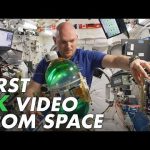
Science gets scaled up with the first 8K ultra high definition (UHD) video from the International Space Station. Get closer to the in-space experience and see how the international partnership-powered human spaceflight is improving lives on Earth, while enabling humanity to explore the universe. More: https://go.nasa.gov/2zgPY5o Special thanks to the European Space Agency, the ISS National Lab, and astronauts Alexander Gerst, Serena Auñón-Chancellor, Ricky Arnold and Drew Feustel.
Featured investigations and facilities:
0:01, 2:36 BEST seeks to advance use of sequencing DNA and RNA in space. https://go.nasa.gov/2tNntKu
0:13 The Minus Eighty-Degree Laboratory Freezer for ISS (MELFI) is a cold storage unit that maintains experiment samples at ultra-cold temperatures throughout a mission. https://go.nasa.gov/2RkJAl5
0:21 The Advanced Plant Habitat (APH), a recent addition to the space station, is the largest growth chamber aboard the orbiting laboratory. https://go.nasa.gov/2JCi8vV
0:33 Canadarm2 is part of Canada’s contribution to the space station. This 17-metre-long robotic arm was extensively involved in the assembly of the orbiting laboratory. https://go.nasa.gov/2ReaU42
0:41 Crew Earth Observations record how the planet is changing over time, from human-caused changes like urban growth and reservoir construction, to natural dynamic events such as hurricanes, floods and volcanic eruptions. https://go.nasa.gov/2KLFAaq
0:49 The Light Microscopy Module (LMM) is a modified commercial, highly flexible, state-of-the-art light imaging microscope facility that provides researchers with powerful diagnostic hardware and software onboard the space station. https://go.nasa.gov/2RfdYwS
0:53 ACE-T-2 looks at the assembly of complex structures from micron-scale colloidal particles interacting via tunable attractive interactions. https://go.nasa.gov/2Re2ppS
0:57 Plant Habitat-1 comprehensively compares differences in genetics, metabolism, photosynthesis, and gravity sensing between plants grown in space and on Earth. https://go.nasa.gov/2MdDBfc
1:05 The Cupola provides an observation and work area for the International Space Station crew that gives visibility to support the control of the station’s robotic arms, and a beautiful view of the Earth, celestial objects and visiting vehicles. https://go.nasa.gov/2CRsxCT
1:14 Atomization observes the disintegration processes of low-speed water jets under various conditions to improve spray combustion processes inside rocket and jet engines. https://go.nasa.gov/2RkKrlN
1:30 BCAT-CS focuses on the study of forces between particles that cluster together by studying sediments of quartz and clay particles. https://go.nasa.gov/2p6WBSV
1:38 Functional Immune analyzes blood and saliva samples to determine the changes taking place in crew members’ immune systems during flight. https://go.nasa.gov/2RfUMz1
2:03 Life Support Rack (LSR) is a technology demonstrator for closed loop air revitalization. https://go.nasa.gov/2Rdfi3C
2:15 The Japanese Experiment Module Airlock is used to deliver science experiments to external platforms, and prepare small satellites for deployment from station. https://go.nasa.gov/2RdcBik
2:23 SPHERES Tether Slosh combines fluid dynamics equipment with robotic capabilities aboard the space station to investigate automated strategies for steering passive cargo that contain fluids. https://go.nasa.gov/2RfQPdQ
Snow is one part of the cryosphere that many of us have actually encountered, but it also plays a crucial role in regulating Earth’s climate. Through decades of remote sensing, NASA has kept a close eye on the ebb and flow of snow cover. #NASAExplorers also venture into the field at the far reaches of Earth to study snow, a critical resource for the millions of people who rely on it for drinking water.
After 9 years in space collecting data that revealed our night sky to be filled with trillions of hidden planets, NASA is ending the Kepler space telescope’s science operations. Kepler discovered over 2,600 planets, some of which could be promising places for life. https://go.nasa.gov/2P2umV1
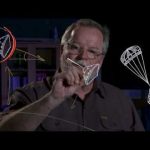
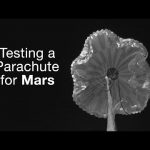
Watch as NASA tests a new parachute for landing the Mars 2020 rover on the Red Planet. On Sept. 7, NASA’s ASPIRE project broke a record when its rocket-launched parachute deployed in 4-10ths of a second—the fastest inflation of this size chute in history: https://go.nasa.gov/2Ro4eAL
A week full of Moon to Mars and more for administrator Bridenstine, seeking ideas for future cargo deliveries to our Gateway, and an oddity of an iceberg … a few of the stories to tell you about – This Week at NASA!
This video is available for download from NASA’s Image and Video Library: https://images.nasa.gov/details-NHQ_2018_1026_Talking%20Moon%20to%20Mars%20and%20more%20on%20This%20Week%20@NASA%20%E2%80%93%20October%2026,%202018.html
NASA Explorers is a new digital series that takes you inside the space agency and follows the pioneers, risk-takers and experts at the front line of exploration. Season 1, “Cryosphere,” joins NASA scientists on their journey to the frozen ends of the Earth as they study our rapidly changing world from satellites, planes and boots on the ground. The Cryosphere is a place we all depend on, but many of us will never go to. As temperatures rise, the frozen regions of Earth are changing rapidly. NASA scientists are locked in a race against time to understand our shifting climate and how it affects life on Earth.
It’s not rockets and satellites that make NASA soar. It’s people. NASA Explorers is a new digital series that takes you inside the space agency and follows the pioneers, risk-takers and experts at the frontline of exploration. Season 1, “Cryosphere,” joins NASA scientists on their journey to the frozen ends of the Earth as they study our rapidly changing world from satellites, planes and boots on the ground.
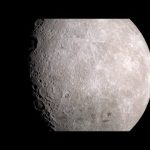
This visualization uses a digital 3D model of the Moon built from global elevation maps and image mosaics by NASA’s Lunar Reconnaissance Orbiter mission. It was created to accompany a performance of Claude Debussy’s Clair de Lune by the National Symphony Orchestra Pops, led by conductor Emil de Cou, at the Kennedy Center for the Performing Arts in Washington, DC, on June 1 and 2, 2018, as part of a celebration of NASA’s 60th anniversary.
Clair de Lune (moonlight in French) was published in 1905, as the third of four movements in the composer’s Suite Bergamasque, and unlike the other parts of this work, Clair is quiet, contemplative, and slightly melancholy, evoking the feeling of a solitary walk through a moonlit garden.
The visuals were composed like a nature documentary, with clean cuts and a mostly stationary virtual camera. The viewer follows the Sun throughout a lunar day, seeing sunrises and then sunsets over prominent features on the Moon. The sprawling ray system surrounding Copernicus crater, for example, is revealed beneath receding shadows at sunrise and later slips back into darkness as night encroaches.
This video is public domain and along with other supporting visualizations can be downloaded from the Scientific Visualization Studio at: http://svs.gsfc.nasa.gov/4655
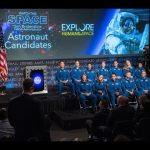
NASA’s newest class of astronaut trainees joined agency Administrator Jim Bridenstine Sept. 27 at NASA headquarters, to talk about their experiences in the training program, hopes for future missions, and more, in a live episode of “Watch This Space”.
Astronaut candidates Zena Cardman, Jasmin Moghbeli, Jonny Kim, Frank Rubio, Matthew Dominick, Warren Hoburg, Kayla Barron, Bob Hines, Raja Chari, Loral O’ Hara and Jessica Watkins were joined by Canadian Space Agency astronaut candidates Joshua Kutryk and Jenni Sidey-Gibbons. The first U.S. astronauts, the “Original Seven,” were selected in 1959. Since then, NASA has selected 21 more groups of astronauts. This latest class, announced on June 7, 2017, includes a physician, biologist, geologist, military pilots and engineers.
Once their training is complete, they may be assigned to any of a variety of missions, including: performing research on the International Space Station, launching from American soil on spacecraft built by U.S. commercial companies, and departing for deep space missions on NASA’s new Orion spacecraft and Space Launch System rocket.
This video is available for download from NASA’s Image and Video Library:https://images.nasa.gov/details-NASA%20Administrator%20Talks%20Training,%20Future%20Missions%20with%20Newest%20Astronaut%20Class.html
Our administrator chats with astronaut Nick Hague, OSIRIS-REx “brakes” for a certain asteroid, and what landing site is right for our next mission to Mars? A few of the stories to tell you about – This Week at NASA!
This video is available for download from NASA’s Image and Video Library: https://images.nasa.gov/details-NHQ_2018_1019_Administrator%20Bridenstine%20chats%20with%20astronaut%20Nick%20Hague%20on%20This%20Week%20@NASA%20%E2%80%93%20October%2019,%202018.html