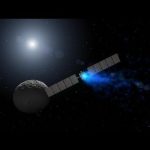
After 11 years of 🌌breathtaking imagery, ⚙️unprecedented feats of engineering & 🛰️spacecraft records broken — it’s nearly time to bid farewell to NASA’s Dawn spacecraft as it comes to the expected end of the mission. Learn about its final orbits at Ceres: https://go.nasa.gov/dawnfinale
Tag: NASA
-
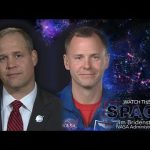
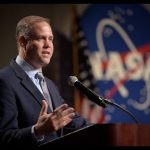
NASA Administrator Bridenstine Talks With Astronaut Nick Hague
NASA Administrator Jim Bridenstine talks via satellite with astronaut Nick Hague in Houston. Hague and Russian crewmate Alexey Ovchinin safely made a ballistic landing in Kazakhstan on Oct. 11, when the launch of their Soyuz spacecraft to the International Space Station was aborted due to an anomaly.
This video is available for download from NASA’s Image and Video Library: https://images.nasa.gov/details-NHQ_2018_1017_NASA%20Administrator%20Bridenstine%20Talks%20With%20Astronaut%20Nick%20Hague.html
-
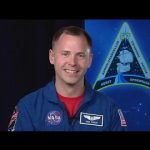
Q&A with Astronaut Nick Hague on Launch Anomaly and Safe Landing
On Thurs., Oct. 11, 2018, Nick Hague’s planned launch to the International Space Station aboard a Soyuz spacecraft ended minutes later in a safe landing on Earth, after an issue with the rocket’s booster: https://youtu.be/LUwnLFKfuBE He answered questions for the first time on Oct. 16, in a Facebook Live event with NASA’s followers.
Learn more about the incident: https://www.nasa.gov/feature/astronaut-cosmonaut-safe-after-abort-during-launch-to-international-space-station
Learn more about astronaut Nick Hague: https://www.nasa.gov/astronauts/biographies/tyler-nick-hague -

NASA Employees Celebrate Hispanic Heritage Month
NASA employees tell their stories for Hispanic Heritage Month. Each year, Americans observe National Hispanic Heritage month from September 15 – October 15, by celebrating the histories, cultures and contributions of American citizens whose ancestors came from Spain, Mexico, the Caribbean and Central and South America. https://go.nasa.gov/2PAkYnH
-

Soyuz Crew Lands Safely After Launch Anomaly on This Week @NASA – October 12, 2018
Soyuz crew is safe following a launch anomaly, another major hurricane seen from space, and testing continues for the rocket engine that will power us to deep space … a few of the stories to tell you about – This Week at NASA!
This video is available for download from NASA’s Image and Video Library: https://images.nasa.gov/details-NHQ_2018_1012_Soyuz%20Crew%20Lands%20Safely%20After%20Launch%20Anomaly%20on%20This%20Week%20@NASA%20%E2%80%93%20October%2012,%202018.html
-
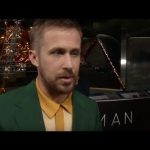
Historic NASA Mission Hits the Big Screen
The cast and crew of Universal’s feature film First Man reflect on the story of Neil Armstrong and the Apollo 11 moon landing, one of NASA’s most notable figures and one of the agency’s crowning achievements. They also note their visits to NASA and working with the agency’s staff in the production of the film. NASA provided our historical expertise, footage and imagery, plus allowed for filming access at our facilities.
Film footage provided courtesy of Universal Pictures.
-

Apollo 50th: First Crew Launches on Apollo 7
On October 11th, 1968, just 15 months from President Kennedy’s deadline for a moon landing, NASA launched its first Apollo crew into space. Apollo 7’s Wally Schirra, Donn Eisele, and Walter Cunningham spent 11 days in low Earth orbit, thoroughly testing the Apollo Command and Service Module’s systems. The crew also won an Emmy for the first live television broadcasts from an American spacecraft.
This video is available for download from NASA’s Image and Video Library: https://images.nasa.gov/details-NHQ_2018_1011_Apollo%2050th%20-%20First%20Crew%20Launches%20on%20Apollo%207.html
-
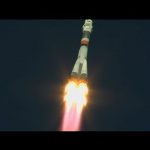
Crew Safe After Soyuz Launch Abort
NASA astronaut Nick Hague and Russian cosmonaut Alexey Ovchinin are in good condition following an aborted launch of their Soyuz spacecraft.
The Soyuz MS-10 spacecraft launched from the Baikonur Cosmodrome in Kazakhstan to the International Space Station at 4:40 a.m. EDT Thursday, October 11 (2:40 p.m. in Baikonur) carrying American astronaut Nick Hague and Russian cosmonaut Alexey Ovchinin. Shortly after launch, there was an anomaly with the booster and the launch ascent was aborted, resulting in a ballistic landing of the spacecraft. Search and rescue teams were deployed to the landing site. Hague and Ovchinin are out of the capsule and are reported to be in good condition.
Note: This video is edited for length, but includes the launch, the initial report of the issue, and the confirmation that the crew landed safely.
-
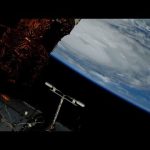
Hurricane Michael From Space on October 9
Cameras outside the International Space Station captured views of Hurricane Michael at 12:13 p.m. and 12:50 p.m. EDT Oct. 9 from an altitude of 255 miles as the storm churned over the Gulf of Mexico moving northwest at 12 miles an hour. More: https://go.nasa.gov/2NxKdp4
Michael is expected to make landfall Wednesday, Oct. 10 as a category 3 hurricane over the Florida panhandle.
For more info: www.nasa.gov/station
-
Sixty Years of NASA and Counting, on This Week @NASA – October 5, 2018
Celebrating sixty years of NASA, space station crew makes a safe return to Earth , and evidence of a possible discovery outside our solar system … a few of the stories to tell you about – This Week at NASA!
This video is available for download from NASA’s Image and Video Library: https://images.nasa.gov/details-NHQ_2018_1005_Sixty%20Years%20of%20NASA%20and%20Counting,%20on%20This%20Week%20@NASA%20%E2%80%93%20October%205,%202018.html
-
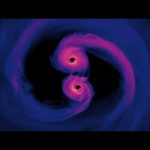
Supercomputer Simulation Reveals Supermassive Black Holes
A new supercomputer model could help astronomers find spiraling, merging systems of two supermassive black holes. These mergers happen often in the universe, but are hard to see. Watch as the simulation reveals the merger’s brighter, more variable X-rays. https://go.nasa.gov/2OsaMAs
Credit: NASA’s Goddard Space Flight Center
Music: “Games Show Sphere 01” from Killer TracksThis video is public domain and along with other supporting visualizations can be downloaded from the Scientific Visualization Studio at: http://svs.gsfc.nasa.gov/13043
-
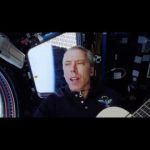
NASA Astronaut Drew Feustel Records Music Video from Space
NASA astronaut Drew Feustel recorded this music video from space. Feustel launched to the International Space Station in March 2018 and is currently serving as Expedition 56 Commander. Drew thanks all who helped bring this to life, including his friend, Gord Sinclair, for giving him permission to use the song, and the crew of Expeditions 55 and 56 for their support and participation in NASA’s human space exploration mission.
Learn more about the International Space Station by visiting https://www.nasa.gov/mission_pages/station/main/index.html
-

How Do We Prepare a Spacecraft for Launch? Countdown to T-Zero for NASA’s TESS Mission
Revisit the April 18, 2018, launch of NASA’s Transiting Exoplanet Survey Satellite (TESS) aboard a SpaceX Falcon 9 rocket. TESS is already scanning the skies, identifying planet candidates that may be orbiting distant stars. https://go.nasa.gov/2Q3J9ei
TESS is NASA’s next step in the search for planets outside of our solar system, including those that could support life. The mission will find exoplanets that periodically block part of the light from their host stars, events called transits. TESS will survey 200,000 of the brightest stars near the sun to search for transiting exoplanets.
-

A Festival of “First Lights” on This Week @NASA – September 21, 2018
Several NASA instruments see their first light, another active week for our administrator, and discover just how much space is in our daily lives … a few of the stories to tell you about – This Week at NASA!
This video is available for download from NASA’s Image and Video Library: https://images.nasa.gov/details-A%20Festival%20of%20%E2%80%9CFirst%20Lights%E2%80%9D%20on%20This%20Week%20@NASA%20%E2%80%93%20September%2021,%202018.html
-
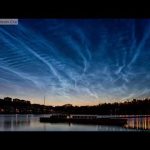
NASA Balloon Observes Rare Electric Blue Clouds
On the cusp of our atmosphere live a thin group of seasonal electric blue clouds. Read the story: https://go.nasa.gov/2QPcrOD
Forming fifty miles above the poles in summer, these clouds are known as noctilucent clouds or polar mesospheric clouds — PMCs. A recent NASA long-duration balloon mission observed these clouds over the course of five days at their home in the mesosphere. The resulting photos, which scientists have just begun to analyze, will help us better understand turbulence in the atmosphere, as well as in oceans, lakes, and other planetary atmospheres, and may even improve weather forecasting.Music credit: “In The End” By Andrew John Skeet [PRS], Andrew Michael Britton [PRS], David Stephen Goldsmith [PRS] from Killer Tracks
Credits: David Fritts (GATS): Scientist
Joy Ng (USRA): Producer
Mara Johnson-Groh (Wyle Information Systems): Writer Tom Bridgman (GST): Data Visualizer
William Putman (NASA/GSFC): Data VisualizerThis video is public domain and along with other supporting visualizations can be downloaded from the Scientific Visualization Studio at: http://svs.gsfc.nasa.gov/13073
-

NASA Technology We Use Everyday: Introducing Home & City
Visit the site: https://go.nasa.gov/2NQHhba
There’s more space in your life than you think! NASA studies our planet, Sun, solar system & beyond, but you can find thousands of NASA-influenced technologies right in your backyard. -
NASA 60th: Home, Sweet Home
Earth is a complex, dynamic system. For 60 years, we have studied our changing planet, and our understanding continues to expand with the use of new technologies. With data from satellites, instruments on the International Space Station, airborne missions, balloons, and observations from ships and on land, we track changes to land, water, ice, and the atmosphere. Application of our Earth observations help improve life now and for future generations.
Congress passed the National Aeronautics and Space Act, on July 16 and President Eisenhower signed it into law on July 29, 1958. NASA opened for business on Oct. 1, 1958. Our history tells a story of exploration, innovation and discoveries. The next 60 years, that story continues. Learn more: https://www.nasa.gov/60
This video is available for download from NASA’s Image and Video Library: https://images.nasa.gov/details-NHQ_2018_0914_NASA%2060th%20Home%20Sweet%20Home.html
-

Hurricane Florence From Space on September 12
A high definition camera outside the International Space Station captured a stark and sobering view of Hurricane Florence at 7:50 a.m. EDT on Sept. 12. NASA satellites track the storm: https://go.nasa.gov/2CEmDGQ
This video was taken as Florence churned across the Atlantic in a west-northwesterly direction with winds of 130 miles an hour. The National Hurricane Center forecasts additional strengthening for Florence before it reaches the coastline of North Carolina and South Carolina early Friday, Sept. 14.
-
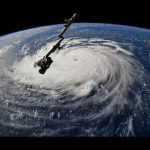
Hurricane Florence From Space on September 10
At 8:10 a.m. Eastern time, Sept. 10, cameras on the International Space Station captured views of Hurricane Florence. NASA satellites track the storm: https://go.nasa.gov/2CEmDGQ | Download video: https://go.nasa.gov/2Ql555y
Florence is moving in a westerly direction across the Atlantic, headed for a likely landfall along the eastern seaboard of the U.S. late Thursday or early Friday. Now a major hurricane with winds of 115 miles an hour and increasing, the National Hurricane Center says Florence’s forecast track will take the system over the southwestern Atlantic Ocean between Bermuda and the Bahamas Tuesday and Wednesday, and Florence will approach the coast of South Carolina or North Carolina on Thursday. The station was flying 255 miles over the storm at the time this video was captured. -
NASA 60th: Trailblazing Technology
Technology drives exploration. For 60 years, we have advanced technology to meet the rigorous needs of our missions. From GPS navigation to water filtration systems, our technologies developed for space improve your daily life on Earth. We continue to innovate and explore.
Congress passed the National Aeronautics and Space Act, on July 16 and President Eisenhower signed it into law on July 29, 1958. NASA opened for business on Oct. 1, 1958. Our history tells a story of exploration, innovation and discoveries. The next 60 years, that story continues. Learn more: https://www.nasa.gov/60This video is available for download from NASA’s Image and Video Library: https://images.nasa.gov/details-NHQ_2018_0907_NASA%2060_Technology_YT%20FINAL.html
-
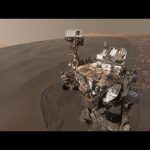
Clearing Skies for our Rovers on Mars on This Week @NASA – September 7, 2018
An update on our Mars rovers, continued progress for our Moon to Mars effort, and a look back at Dawn – in its twilight … a few of the stories to tell you about – This Week at NASA!
This video is available for download from NASA’s Image and Video Library: https://images.nasa.gov/details-NHQ_2018_0907_Clearing%20Skies%20for%20our%20Rovers%20on%20Mars%20on%20This%20Week%20@NASA%20%E2%80%93%20September%207,%202018.html
-
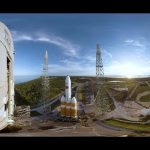
NASA | 360 Video of Parker Solar Probe Mission to “Touch” the Sun
Watch in 360 degrees as an United Launch Alliance Delta IV Heavy rocket lifts off from Space Launch Complex-37 at Cape Canaveral Air Force Station in Florida carrying NASA’s Parker Solar Probe spacecraft. Roughly the size of a small car, the spacecraft lifted off at 3:31 a.m. EDT on Aug. 12, 2018, starting its historic mission to “touch” the Sun.
Learn more about the mission at https://www.nasa.gov/parkersolarprobe.
-
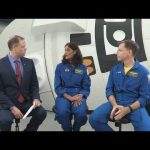
NASA Administrator Jim Bridenstine talks to Commercial Crew Astronauts
During a recent visit to Johnson Space Center, NASA Administrator Jim Bridenstine sat down with astronauts Chris Ferguson and Sunita “Suni” Williams for an informal Q&A session about the Commercial Crew Program.
NASA’s Commercial Crew Program has worked with several American aerospace industry companies to facilitate the development of U.S. human spaceflight systems since 2010. Both Ferguson and Williams were selected to fly on the Boeing CST-100 Starliner for the Commercial Crew Program – marking the first time that American astronauts will launch to the International Space Station from American soil on American-made spacecraft since the Space Shuttle Program ended in 2011.
To watch specific portions of the Q&A about the future of human space exploration, click a timestamp:
2:30 – Astronaut Chris Ferguson talks about what he has been doing since it was announced that he is a member of the Commercial Crew Program
3:30 – Astronaut Chris Ferguson explains why his flight suit says Boeing and not NASA
4:27 – Astronaut Suni Williams talks about what a day in the life of an astronaut is like and what she has been up to since she was selected for the Commercial Crew program
6:30 – Astronaut Chris Ferguson talks about how the Starliner is different from the Space Shuttle
7:30 – Astronaut Suni Williams talks about how is the Starliner is similar to and different from the Soyuz
8:32 – Astronaut Chris Ferguson talks about how many people the Starliner will be able to carry to the International Space Station
9:20 – Administrator Jim Bridenstine talks about the future of space exploration for NASA
10:58 – Astronaut Suni Williams talks about her previous spaceflights and how her Commercial Crew flight will be different
12:20 – Astronaut Suni Williams talks about their experience landing in space vehicles
15:20 – Administrator Jim Bridenstine and astronaut Chris Ferguson discuss thermal protection to keep astronauts safe
17:30 – Administrator Jim Bridenstine talks about the components of the Space Launch System and how it compares to technology for avionics
18:55 – Astronaut Chris Ferguson discusses how flying tests in the U.S. Navy prepared them for their upcoming missions
20:28 – Astronaut Chris Ferguson discusses what it’s like to dock the Starliner
21:30 – Astronaut Suni Williams talks about training, automation and providing input to Boeing about the Starliner
22:30 – Astronauts Chris Ferguson and Suni Williams talk about the team of individuals who make human spaceflight possible
24:45 – Administrator Jim Bridenstine talks about the preparations that go into space exploration missions
25:46 – Administrator Jim Bridenstine talks about NASA’s launch capabilities
26:52 – Astronauts Chris Ferguson and Suni Williams provide guidance to Administrator Jim Bridenstine as he docks the Boeing Starliner simulator -
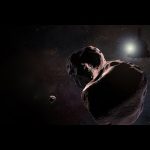
New Horizons Detects Next Flyby Target on This Week @NASA – August 31, 2018
New Horizons spots its next flyby target, Administrator Bridenstine visits our west coast facilities, and using data from space to fight a life-threatening disease … a few of the stories to tell you about – This Week at NASA!
This video is available for download from NASA’s Image and Video Library: https://images.nasa.gov/details-NHQ_2018_0831_New%20Horizons%20Detects%20Next%20Flyby%20Target%20on%20This%20Week%20@NASA%20%E2%80%93%20August%2031,%202018.html
-
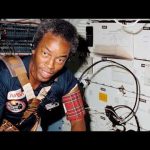
NASA | Guy Bluford Reflects on the 35th Anniversary of His First Space Flight
On August 30, 1983, mission specialist Guion “Guy” Bluford became the first African-American astronaut to fly in space. The dramatic night launch of space shuttle Challenger on the STS-8 mission (https://go.nasa.gov/2N8y4e8), 35 years ago today, marked an important milestone in American history. Bluford, who flew on three more shuttle missions during his NASA career, reflects on the significance of his first space flight.
-
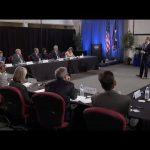
Bridenstine Speaks at NASA Advisory Council Meeting
NASA Administrator Jim Bridenstine spoke the agency’s exploration goals, during a meeting of the NASA Advisory Council (NAC) on Aug. 29 at the agency’s Ames Research Center in Moffett Field, California. The Council meets several times a year for fact finding and deliberative sessions. Meetings are held at NASA Headquarters in Washington, DC, as well as at NASA Centers across the country.
This video is available for download from NASA’s Image and Video Library: https://images.nasa.gov/details-NHQ_2018_0829_Bridenstine%20Speaks%20at%20NASA%20Advisory%20Council%20Meeting.html
-
Parker Solar Probe Countdown to T-Zero for a Journey to “Touch” the Sun
NASA’s historic Parker Solar Probe mission that launched Aug. 12, 2018 from Space Launch Complex 37 on Cape Canaveral Air Force Station in Florida will revolutionize our understanding of the Sun. The Parker Solar Probe spacecraft will travel through the Sun’s atmosphere, closer to the surface than any spacecraft before it, facing brutal heat and radiation conditions — and ultimately providing humanity with the closest-ever observations of a star. This is a look at the moments leading up to T-Zero for NASA’s mission to “touch” the Sun.
Learn more about the mission at: https://www.nasa.gov/parkersolarprobe
-
NASA 60th: The Leading Edge of Flight
Aeronautics is our tradition. For 60 years, we have advanced aeronautics, developed new technologies and researched aerodynamics. Our advancements have transformed the way you fly. We will continue to revolutionize flight.
Congress passed the National Aeronautics and Space Act, on July 16 and President Eisenhower signed it into law on July 29, 1958. NASA opened for business on Oct. 1, 1958. Our history tells a story of exploration, innovation and discoveries. The next 60 years, that story continues. Learn more: https://www.nasa.gov/60This video is available for download from NASA’s Image and Video Library: https://images.nasa.gov/details-NHQ_2018_0828_NASA%2060_Leading%20Edge%20of%20Flight.html
-
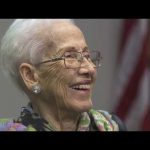
NASA Administrator Kicks Off a Celebration of Katherine Johnson’s 100th Birthday
On Aug. 26, as part of NASA’s celebration of Katherine Johnson’s 100th birthday, agency employees received a special message from administrator Jim Bridenstine to mark the occasion. With slide rules and pencils, Katherine, a legendary NASA mathematician – and the other human computers who worked at the agency – helped our nation’s space program get off the ground, but it was their confidence, bravery and commitment to excellence that broke down racial and social barriers that continue to inspire to this day. To learn more about Katherine and other trailblazing ‘human computers,’ visit: https://www.nasa.gov/modernfigures
-
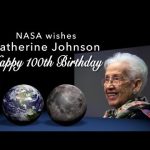
NASA wishes Katherine Johnson a Happy 100th Birthday
In 1962, as NASA prepared for the orbital mission of John Glenn, Katherine Johnson was called upon to hand check the computer’s orbital equations that would control the trajectory of the capsule in John Glenn’s Friendship 7 mission, from blast off to splashdown.
“If she says they’re good,’” Katherine Johnson remembers the astronaut saying, “then I’m ready to go.” Glenn’s flight was a success, and marked a turning point in the competition between the United States and the Soviet Union in space.
NASA wishes Katherine Johnson a very Happy 100th Birthday.
To learn more about Katherine and other trailblazing ‘human computers,’ visit: https://www.nasa.gov/modernfigures
-
Vice President Pence Talks Future Human Space Exploration on This Week @NASA – August 24, 2018
Discussing the future of human space exploration, a vital resource is confirmed on the surface of the Moon, and a first glimpse at asteroid Bennu … a few of the stories to tell you about – This Week at NASA!
This video is available for download from NASA’s Image and Video Library: https://images.nasa.gov/details-NHQ_2018_0824_Vice%20President%20Pence%20Talks%20Future%20Human%20Space%20Exploration%20on%20This%20Week%20@NASA%20%E2%80%93%20August%2024,%202018.html
-
Our Journey to Touch the Sun is Underway on This Week @NASA – August 17, 2018
Our mission to touch the Sun is on its way, Administrator Bridenstine visits NASA spaceflight facilities, and an update on our first-ever asteroid sample return mission … a few of the stories to tell you about – This Week at NASA!
This video is available for download from NASA’s Image and Video Library: https://images.nasa.gov/details-Our%20Journey%20to%20Touch%20the%20Sun%20is%20Underway%20on%20This%20Week%20@NASA%20%E2%80%93%20August%2017,%202018.html
-
NASA 60th: What’s Out There
In the past 60 years, NASA has advanced our understanding of our solar system and beyond. We continually ask “What’s out there?” as we advance humankind and send spacecraft to explore.
Congress passed the National Aeronautics and Space Act, on July 16 and President Eisenhower signed it into law on July 29, 1958. NASA opened for business on Oct. 1, 1958.
Our history tells a story of exploration, innovation and discoveries. The next 60 years, that story continues. Learn more: https://www.nasa.gov/60This video is available for download from NASA’s Image and Video Library: https://images.nasa.gov/details-NHQ_2018_0810_NASA%2060_What’s%20Out%20There.html
-
NASA’s Parker Solar Probe Mission Launches to Touch the Sun
NASA’s Parker Solar Probe mission launched Aug. 11 from Cape Canaveral Air Force Station in Florida. The mission will be the first to fly directly through the Sun’s corona – the hazardous region of intense heat and solar radiation in the Sun’s atmosphere that is visible during an eclipse. It will gather data that could help answer questions about solar physics that have puzzled scientists for decades. Gathering information about fundamental processes near the Sun can help improve our understanding of how our solar system’s star changes the space environment, where space weather can affect astronauts, interfere with satellite orbits, or damage spacecraft electronics.
This video is available for download from NASA’s Image and Video Library: https://images.nasa.gov/details-NHQ_2018_0812_Parker%20Solar%20Probe%20Mission%20Launches%20to%20Touch%20the%20Sun%20-.html
-
Humanity’s first mission to touch the Sun on This Week @NASA – August 11, 2018
Humanity’s first mission to touch the Sun, Administrator Bridenstine visits Kennedy Space Center, and historic California wildfires seen from space … a few of the stories to tell you about – This Week at NASA!
This video is available for download from NASA’s Image and Video Library: https://images.nasa.gov/details-NHQ_2018_0811_Humanity%E2%80%99s%20first%20mission%20to%20touch%20the%20Sun%20on%20This%20Week%20@NASA%20%E2%80%93%20August%2011,%202018.html
-
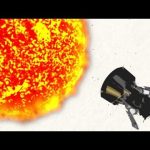
NASA | Parker Solar Probe: It’s Surprisingly Hard to Go to the Sun
The Parker Solar Probe will be the first-ever mission to “touch” the Sun, traveling directly into the Sun’s atmosphere about 4 million miles from the surface. Read the story: https://go.nasa.gov/2KEExYZ NASA launch schedule: https://go.nasa.gov/2JfklMB
The Sun contains 99.8 of the mass in our solar system. Its gravitational pull is what keeps everything here, from tiny Mercury to the gas giants to the Oort Cloud, 186 billion miles away.
But even though the Sun has such a powerful pull, it’s surprisingly hard to actually go to the Sun: It takes 55 times more energy to go to the Sun than it does to go to Mars. Why is it so difficult? The answer lies in the same fact that keeps Earth from plunging into the Sun: Our planet is traveling very fast – about 67,000 miles per hour – almost entirely sideways relative to the Sun. The only way to get to the Sun is to cancel that sideways motion.
Since Parker Solar Probe will skim through the Sun’s atmosphere, it only needs to drop 53,000 miles per hour of sideways motion to reach its destination, but that’s no easy feat. In addition to using a powerful rocket, the Delta IV Heavy, Parker Solar Probe will perform seven Venus gravity assists over its seven-year mission to shed sideways speed into Venus’ well of orbital energy. These gravity assists will draw Parker Solar Probe’s orbit closer to the Sun for a record approach of just 3.83 million miles from the Sun’s visible surface on the final orbits.
Though it’s shedding sideways speed to get closer to the Sun, Parker Solar Probe will pick up overall speed, bolstered by Sun’s extreme gravity – so it will also break the record for the fastest-ever human-made objects, clocking in at 430,000 miles per hour on its final orbits.
Music: Percs and Pizz from Killer Tracks.
Credit: NASA’s Godddard Space flight Center -
Astronauts Assigned to First Commercial Crew Flights on This Week @NASA – August 3, 2018
Astronauts named to the first commercial crew flights, using Earth science data to benefit society, and California wildfires seen from space … a few of the stories to tell you about – This Week at NASA!
This video is available for download from NASA’s Image and Video Library: https://images.nasa.gov/details-NHQ_2018_0803_Astronauts%20Assigned%20to%20First%20Commercial%20Crew%20Flights%20on%20This%20Week%20@NASA%20%E2%80%93%20August%203,%202018.html
-
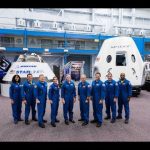
NASA Announces Astronaut Crews for First Commercial Vehicle Flights
NASA announces the men and women who will be on board the first flights of the new spaceships built by Boeing and SpaceX when Americans are once again launched into space from the USA.
News release: https://go.nasa.gov/2KoGhVSThe nine astronauts targeted to make the first flights on the Boeing CST-100 Starliner and SpaceX Crew Dragon share their thoughts about the assignment and the importance of this new capability to support the International Space Station as part of the nation’s overall space exploration plan.
More about the Commercial Crew Program: https://go.nasa.gov/1EIx5m6
-
NASA 60th: How It All Began
Congress passed the National Aeronautics and Space Act, on July 16 and President Eisenhower signed it into law on July 29, 1958. NASA opened for business on Oct. 1, 1958, with T. Keith Glennan as our first administrator. Our history tells a story of exploration, innovation and discoveries. The next 60 years, that story continues. Learn more: https://www.nasa.gov/60
This video is available for download from NASA’s Image and Video Library: https://images.nasa.gov/details-NHQ_2018_0727_NASA%2060_How%20It%20All%20Began.html