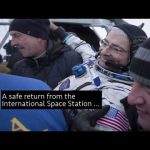
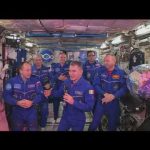
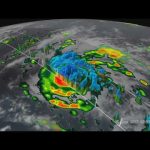
A safe return from the International Space Station, a new weather satellite launched into orbit, and our next mission to Mars moves closer to launch … a few of the stories to tell you about – This Week at NASA!
This video is available for download from NASA’s Image and Video Library: https://images.nasa.gov/details-NHQ_2018_0305_Space%20Station%20Crew%20Returns%20Safely%20on%20This%20Week%20@NASA%20%E2%80%93%20March%205,%202018.html
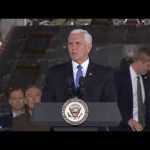
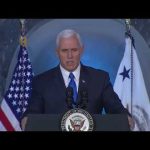
Vice President Mike Pence led the second meeting of the National Space Council, Next Space Station Crew Trains for Launch, and Webb Telescope to Reveal Secrets of Mars … a few of the stories to tell you about – This Week at NASA!
This video is available for download from NASA’s Image and Video Library: https://images.nasa.gov/details-NHQ_2018_0223_The%20Second%20Meeting%20of%20the%20National%20Space%20Council%20on%20This%20Week%20@NASA%20%E2%80%93%20February%2023,%202018.html
NASA’s Kennedy Space Center in Florida hosted a meeting of the National Space Council, chaired by Vice President Mike Pence on Wednesday, Feb. 21. This was the second meeting of the council, which President Trump reestablished last year. “Moon, Mars, and Worlds Beyond: Winning the Next Frontier” included testimonials from leaders in the civil, commercial, and national security sectors about the importance of the United States’ space enterprise.
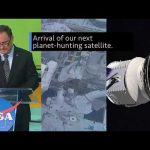
The Fiscal Year 2019 budget and the State of NASA, astronauts at work outside the International Space Station, and the arrival of our next planet-hunting satellite … a few of the stories to tell you about – This Week at NASA!
This video is available for download from NASA’s Image and Video Library: https://images.nasa.gov/details-NHQ_2018_0216_A%20Strong%20State%20of%20NASA%20on%20This%20Week%20@NASA%20%E2%80%93%20February%2016,%202018.html
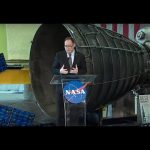
On Feb. 12, NASA centers across the country hosted “State of NASA” events, following President Trump’s Fiscal Year 2019 budget proposal delivery to the U.S. Congress. The events included an address, by acting NASA Administrator Robert Lightfoot, to the agency’s workforce, from NASA’s Marshall Space Flight Center, in Huntsville, Alabama. During his speech, Lightfoot highlighted how the budget would help the agency achieve its goals for space exploration.
On Feb. 12, NASA centers across the country hosted “State of NASA” events, following President Trump’s Fiscal Year 2019 budget proposal delivery to the U.S. Congress. The events included an address, by acting NASA Administrator Robert Lightfoot, to the agency’s workforce, from NASA’s Marshall Space Flight Center, in Huntsville, Alabama. During his speech, Lightfoot highlighted how the budget would help the agency achieve its goals for space exploration.
This video is available for download from NASA’s Image and Video Library: https://images.nasa.gov/details-NHQ_2018_0212_Annual%20’State%20of%20NASA’%20Speech%20to%20Highlight%20Agency%20Goals%20for%20Space%20Exploration.html
Super Blue Blood Moon – a rare triple treat up in the sky, celebrating America’s first explorer in space, and smoke and fire – another Space Launch System engine test … a few of the stories to tell you about – This Week at NASA!
On Jan. 31, 1958, at 10:48 p.m. EST, Explorer 1 launched into space, hurtling into Earth’s orbit in seven and a half minutes. Read more: https://go.nasa.gov/2nwic63
The next day’s front-page news declared that the United States was now officially in the Space Age.
Music: Look Forward by Laurent Dury, The Space Between by Max Concors, Picking Locks by James Alexander Dorman and Foraging At Dusk by Benjamin James Parsons. Complete transcript available.
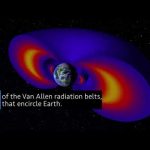
This video is public domain and along with other supporting visualizations can be downloaded from the Scientific Visualization Studio at: http://svs.gsfc.nasa.gov/12837
Credit: NASA’s Goddard Space Flight Center/LK Ward
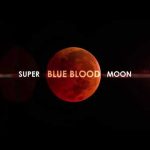
January 31 brings a lunar trifecta: the super blue blood Moon! Starting at 5:30 a.m. Eastern, NASA TV will offer a livestream of the Moon. This full moon is the third in a series of “supermoons,” when the Moon is closer to Earth in its orbit — known as perigee — and about 14 percent brighter than usual. It’s the second full moon of the month, commonly known as a “blue moon.” The super blue moon will pass through Earth’s shadow to give viewers in the right location a total lunar eclipse. While the Moon is in the Earth’s shadow it will take on a reddish tint, known as a “blood moon.” More: https://www.nasa.gov/feature/super-blue-blood-moon-coming-jan-31
The first space station spacewalk of the new year, launching GOLD to study Earth’s near-space environment, and – read all about it … there’s NASA tech you probably use every day … a few of the stories to tell you about – This Week at NASA!
This video is available for download from NASA’s Image and Video Library: https://images.nasa.gov/details-NHQ_2018_0126_Going%20EVA%20Outside%20the%20Space%20Station%20on%20This%20Week%20@NASA%20%E2%80%93%20January%2026,%202018.html
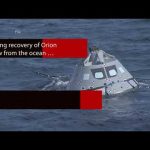
Firing the engine that will power humans to deep space, testing a potential source of power for future exploration, and practicing water recovery of the Orion spacecraft – a few of the stories to tell you about – This Week at NASA!
This video is available for download from NASA’s Image and Video Library: https://images.nasa.gov/details-NHQ_2018_0119_Feel%20the%20Rumble!%20RS-25%20Engine%20Test%20on%20This%20Week%20@NASA%20%E2%80%93%20January%2019,%202018.html
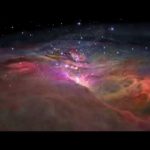
The James Webb Space Telescope’s cryogenic vacuum testing at our Johnson Space Center verified it’s ready for the cold, harsh environment of space, and its mission to uncover a part of the universe we have not seen. From distant worlds orbiting other stars, to mysterious cosmic structures, Webb could help answer questions about our universe and our place in it. Launch of Webb is set for 2019. Also, Flight through Orion Nebula, 360 Degree View from the Center of the Galaxy, and Raging Water on Launch Pad!
This video is available for download from NASA’s Image and Video Library: https://images.nasa.gov/details-NHQ_2018_0112_Webb%20Space%20Telescope%20Update%20on%20This%20Week%20@NASA%20%E2%80%93%20January%2012,%202018.html
By combining the visible and infrared capabilities of the Hubble and Spitzer space telescopes, astronomers and visualization specialists from NASA’s Universe of Learning program have created a spectacular, three-dimensional, fly-through movie of the magnificent Orion nebula, a nearby stellar nursery. Using actual scientific data along with Hollywood techniques, a team at the Space Telescope Science Institute in Baltimore, Maryland, and the Caltech/IPAC in Pasadena, California, has produced the best and most detailed multi-wavelength visualization yet of the Orion nebula.
Credits: Space Telescope Science Institute
More: https://www.nasa.gov/feature/goddard/2018/hubble-yields-new-discoveries-at-the-winter-aas-meeting
Download: http://hubblesite.org/news_release/news/2018-04
Astronaut John Young, who walked on the Moon during Apollo 16 and commanded the first space shuttle mission, has passed away at the age of 87.
He is the only person to go into space as part of the Gemini, Apollo and space shuttle programs and was the first to fly into space six times — or seven times, when counting his liftoff from the Moon during Apollo 16.
The astronauts and cosmonauts on the International Space Station take pictures of Earth out their windows nearly every day, and over a year that adds up to thousands of photos. The people at the Earth Science and Remote Sensing Unit at NASA’s Johnson Space Center in Houston had the enviable job of going through this year’s crop to pick their top 17 photos of Earth for 2017—here’s what they chose!
This is NASA’s 2018 ‘To Do’ list.
The work we do, which will continue in 2018, helps the United States maintain its world leadership in space exploration and scientific discovery.
Launches, discoveries and more exploration await in the year ahead.
This video is available for download from NASA’s Image and Video Library:
images-assets.nasa.gov/video/NHQ_2017_1219_NASA 2018 TO DO LIST_FINAL/NHQ_2017_1219_NASA 2018 TO DO LIST_FINAL~orig.mp4
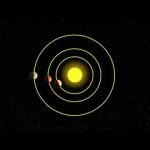
The newly-discovered Kepler-90i — a sizzling hot, rocky planet that orbits its star once every 14.4 days — was found by researchers from Google and The University of Texas at Austin using machine learning. Machine learning is an approach to artificial intelligence in which computers “learn.” In this case, computers learned to identify planets by finding in Kepler data instances where the telescope recorded signals from planets beyond our solar system, known as exoplanets.
Video credit: NASA/Ames Research Center
NASA’s Ames Research Center is located in California’s Silicon Valley. Follow us on social media to hear about the latest developments in space, science and technology.
2017: A year of groundbreaking discoveries and record-setting exploration at NASA. The Moon became a focal point for the agency, we brought you unique coverage of the first coast-to-coast total solar eclipse in the U.S. in 99 years, we announced the most Earth-size planets ever found in the habitable zone of a star outside our solar system, and more!
This animation takes the viewer on a simulated flight into, and then out of, Jupiter’s upper atmosphere at the location of the Great Red Spot. It was created by combining an image from the JunoCam imager on NASA’s Juno spacecraft with a computer-generated animation.
The perspective begins about 2,000 miles (3,000 kilometers) above the cloud tops of the planet’s southern hemisphere. The bar at far left indicates altitude during the quick descent; a second gauge next to that depicts the dramatic increase in temperature that occurs as the perspective dives deeper down. The clouds turn crimson as the perspective passes through the Great Red Spot. Finally, the view ascends out of the spot.
The Geminid meteor shower will put on a dazzling show for skywatchers when it peaks overnight on Dec. 13-14, 2017. NASA will show a livestream of the Geminid shower beginning at 9 p.m. EST (10 p.m. Central) on Dec. 13, from the Automated Lunar and Meteor Observatory at NASA’s Marshall Space Flight Center in Huntsville, Alabama.
New data reveal that the interstellar asteroid that recently zipped through our solar system is rocky, cigar-shaped, and has a somewhat reddish hue. It’s the first confirmed object from another star observed in our solar system, and was discovered Oct. 19 by the University of Hawaii’s Pan-STARRS1 telescope team, funded by NASA’s Near-Earth Object Observations Program. The telescope team named it ‘Oumuamua (oh MOO-uh MOO-uh) – Hawaiian for “a messenger from afar arriving first.” The unusually-shaped asteroid, which is up to a quarter mile long and perhaps 10 times as long as it is wide, may provide new clues into how other solar systems formed. Also, Advanced Weather Satellite Launched, James Webb Space Telescope Completes Final Cryogenic Testing, Recurring Martian Streaks: Flowing Sand, Not Water? and Happy Thanksgiving, from Space!
This video is available for download from NASA’s Image and Video Library: https://images.nasa.gov/details-NHQ_2017_1124_New%20Details%20about%20Interstellar%20Visitor%20on%20This%20Week%20@NASA%20%E2%80%93%20November%2024,%202017.html
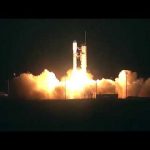
Early on the morning of Saturday, Nov. 18, NASA successfully launched for the National Oceanic and Atmospheric Administration (NOAA) the first in a series of four advanced polar-orbiting satellites, equipped with next-generation technology and designed to improve the accuracy of U.S. weather forecasts out to seven days. The Joint Polar Satellite System-1 (JPSS-1) lifted off on a United Launch Alliance Delta II rocket from Vandenberg Air Force Base on California’s central coast. JPSS-1 data will improve weather forecasting and help agencies involved with post-storm recovery by visualizing storm damage and the geographic extent of power outages.
Breathable air is necessary to sustain humans both on Earth as well as in space.
NASA is working with the Robert Wood Johnson Foundation (RWJF) to sponsor the Earth and Space Air Prize competition for a solution that could improve air quality and health in space and on Earth. This project is a technology innovation challenge to promote development of robust, durable, inexpensive, efficient, lightweight, and easy-to-use aerosol sensors for space and Earth environments. The competition asks teams or individuals to design and develop specialized sensor technology that has the potential to be useful in spaceflight as well as on Earth anywhere outdoors in a community where people may be exposed to airborne particles.
To learn more about the rules and to register for the competition please visit www.earthspaceairprize.org
Join us November 15 for the debut of the new NASA podcast, “Gravity Assist,” hosted by Dr. Jim Green, NASA’s director of planetary science. Gravity Assist is a virtual tour of the solar system and beyond with the top scientists in the world as your guides. The weekly podcast kicks off with a special 10-part series on the solar system that begins with the Sun, and takes you outward to Pluto and beyond.
This video is available for download from NASA’s Image and Video Library: https://images.nasa.gov/#/details-NHQ_2017_1027_NASA%E2%80%99s%20New%20%E2%80%9CGravity%20Assist%E2%80%9D%20Podcast%20Debuts%20Nov.15.html
On Oct. 26, Vice President Mike Pence joined our Associate Administrator for Science, Thomas Zurbuchen for a close-up view of the agency’s Mars InSight spacecraft, during a visit to the Littleton, Colorado facilities of Lockheed Martin. InSight is being prepped for a May 2018 launch to the Red Planet, with landing targeted for next November. The mission will study the deep interior of Mars, with a primary goal of helping scientists understand how rocky planets – including Earth – formed and evolved. The vice president also visited a Virtual Reality lab that featured demos of the company’s human exploration efforts, including our Orion spacecraft. Orion will launch on the agency’s Space Launch System rocket, and take humans farther into the solar system than ever before. Also, Interstellar Visitor from Beyond the Solar System, Space Station Crew Talks with Pope Francis, Dawn Finds Possible Ancient Ocean Remnants at Ceres, and Take a Walk on Mars!
This video is available for download from NASA’s Image and Video Library: https://images.nasa.gov/#/details-NHQ_2017_1027_Pence%20Visits%20Mars%20InSight%20Facility%20on%20This%20Week%20@NASA%20%E2%80%93%20October%2027,%202017.html
Earth from Space is presented by Kelsea Brennan-Wessels from the ESA Web-TV virtual studios. Explore the US capital with Sentinel-2 in the 245th edition.
For the first time, NASA scientists have detected light tied to a gravitational-wave event. The gravitational wave – caused by an explosive merger of two neutron stars, about 130 million light-years from Earth – produced a gamma-ray burst and a rarely seen flare-up called a “kilonova”. The phenomenon was captured by our Fermi, Swift, Hubble, Chandra and Spitzer missions, along with dozens of NASA-funded ground-based observatories. Also, Trio of Station Spacewalks Completed, Fresh Findings from Cassini, and Test of SLS RS-25 Flight Engine!
Engineers at NASA’s Stennis Space Center in Mississippi on Oct. 19 completed a hot-fire test of RS-25 rocket engine E2063, a flight engine for NASA’s new Space Launch System (SLS) rocket. Engine E2063 is scheduled to help power SLS on its Exploration Mission-2 (EM-2), the first flight of the new rocket to carry humans.
This video is available for download from NASA’s Image and Video Library: https://images.nasa.gov/#/details-NASA%20Tests%20RS-25%20Flight%20Engine%20for%20Space%20Launch%20System.html
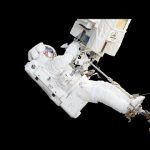
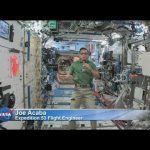
The Oct. 10th spacewalk outside the International Space Station was the second in less than a week by NASA’s Randy Bresnik and Mark Vande Hei – and one of three U.S. spacewalks planned for October. The astronauts lubricated the new latching end effector they installed on the Canadarm2 robotic arm on Oct. 5. They also replaced a faulty camera system and completed several other tasks. Joe Acaba will join Bresnik for the next spacewalk – currently scheduled for Oct. 20. Also, California Wildfires Seen from Space, NASA Pinpoints Cause of Earth’s Record CO2 Levels, Send Your Name to Mars, Celebrating the First Piloted Supersonic Flight, and Potential Asteroid Warning Network Tested!
This video is available for download from NASA’s Image and Video Library: https://images.nasa.gov/#/details-NHQ_2017_1013_October%20Spacewalks%20Aboard%20the%20Space%20Station%20on%20This%20Week%20@NASA%20%E2%80%93%20October%2013,%202017.html
On Oct. 12, NASA’s Hispanic Outreach and Leadership Alliance (HOLA) celebrated Hispanic Heritage month with a panel discussion of the contributions of Hispanics to NASA’s mission and the importance of Hispanic representation in science, technology, engineering and mathematics (STEM) education and careers.
This video is available for download from NASA’s Image and Video Library: https://images.nasa.gov/#/details-NHQ_%202017_1012_NASA%20Hispanic%20Heritage%20Month%20Event,%20%C2%A1Latinos%20STEM%20Up!.html
Vice President Mike Pence called for renewed U.S. leadership in space during the first meeting of the National Space Council – outlining exploration goals that include returning American astronauts to the Moon, to build the foundation needed to send Americans to Mars and beyond. The October 5 council meeting, held at the Smithsonian National Air and Space Museum’s Steven F. Udvar-Hazy Center, outside Washington, brought together representatives from all aspects and sectors of the national space enterprise, for the first time in a quarter century – including NASA’s Acting Administrator, Robert Lightfoot. Also, U.S. Spacewalk aboard the Space Station, Eugene Parker Views Solar Probe Spacecraft, Scientists Find Giant Black Hole Pairs, and Parachute Test Platform Launched!
NASA tested a parachute platform during the flight of a Terrier-Black Brant IX suborbital sounding rocket on Oct. 4, from the agency’s Wallops Flight Facility in Virginia. The rocket carried the Advanced Supersonic Parachute Inflation Research Experiment (ASPIRE) from NASA’s Jet Propulsion Laboratory in Pasadena, Calif. The mission will evaluate the performance of the ASPIRE payload, which is designed to test parachute systems in a low-density, supersonic environment.
On Oct. 2, NASA held a briefing at the Johnson Space Center in Houston, to preview a trio of spacewalks in October to perform maintenance outside the International Space Station. Expedition 53 Commander Randy Bresnik of NASA will lead all three spacewalks, joined on Oct. 5 and 10 by Flight Engineer Mark Vande Hei, also of NASA. Flight Engineer Joe Acaba of NASA will join Bresnik on Oct. 18 for the third spacewalk. NASA TV coverage of the spacewalks will begin at 6:30 a.m. on Oct. 5, 10 and 18. Each spacewalk is scheduled to start at approximately 8:05 a.m., however, the spacewalks may begin earlier if the crew is running ahead of schedule.
Vice President Mike Pence visited our Marshall Space Flight Center on Sept. 25 to thank employees working on NASA’s human spaceflight programs. He also spoke to the three NASA astronauts currently serving onboard the International Space Station. During a tour, the Vice President also saw progress being made on our Space Launch System rocket, that will send astronauts in our Orion spacecraft on missions around the Moon and ultimately to Mars. Also, NASA Data and Tech Aid in Disaster Relief, Congressional Hearing on August 21 Solar Eclipse, OSIRIS-REx Views Earth During Flyby, and “Bladed Terrain” on Pluto Made of Frozen Methane!
This video is available for download from NASA’s Image and Video Library: https://images.nasa.gov/#/details-NHQ_2017_0929_Vice%20President%20Visits%20Marshall%20Space%20Flight%20Center%20on%20This%20Week%20@NASA%20%E2%80%93%20September%2029,%202017.html
Vice President Mike Pence offered his thanks Monday to employees working on NASA’s human spaceflight programs during a tour of the agency’s Marshall Space Flight Center in Huntsville, Alabama. The Vice President saw the progress being made on NASA’s Space Launch System (SLS), the world’s most powerful deep space rocket, that will send astronauts on missions around the Moon and ultimately to Mars. He also visited Marshall’s Payload Operations Integration Center, where the agency manages all research aboard the International Space Station.
Satellite data continues to enable weather forecasters to look inside and outside of powerful hurricanes. Imagery from NOAA’s GOES East satellite, captured Sept. 17 to Sept. 20, shows Hurricane Jose along the U.S. east coast, and Hurricane Maria, as it moved through the Leeward Islands, strengthening to a Category 5 hurricane, and making landfall in Puerto Rico. Meanwhile, The Global Precipitation Measurement (GPM) satellite found rain falling inside Maria at a rate of over 6.44 inches per hour in powerful storms that reached above 9.7 miles high. Also, SpaceX Dragon Returns with Science, Katherine Johnson Research Facility Opened, Earth’s Gravity Assist to OSIRIS-REx, Hubble Spots Asteroids Orbiting Each Other, and Engineering the Future!