Tag: NASA

  • Farewell to Cassini on This Week @NASA – September 15, 2017

    Farewell to Cassini on This Week @NASA – September 15, 2017

    On Sept. 15, our Cassini spacecraft concluded its remarkable mission with a plunge into Saturn’s atmosphere. This was the last of 22 close orbits Cassini made between Saturn and its rings as part of the mission’s Grand Finale. No other spacecraft has ever explored this unique region. Although the spacecraft may be gone after the finale, the enormous amount of data collected about Saturn, its magnetosphere, rings and moons during this last dive is expected to yield new discoveries for decades. Also, Recovering from Irma, New Crew Launches to the Space Station, Successful Orion Chute Test and Shane Kimbrough in Washington!

    This video is available for download from NASA’s Image and Video Library: https://images.nasa.gov/#/details-NHQ_2017_0915_Farewell%20to%20Cassini%20on%20This%20Week%20@NASA%20%E2%80%93%20September%2015,%202017.html
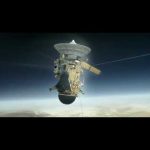
  • Cassini End of Mission Commentary

    Cassini End of Mission Commentary

    On Sept. 15, NASA’s Cassini spacecraft completed its remarkable story of exploration with an intentional plunge into Saturn’s atmosphere, ending its mission after nearly 20 years in space. Live commentary of Cassini’s end of mission activities was shown on NASA TV and the agency’s website. Launched in 1997, Cassini arrived in orbit around Saturn in 2004 on a mission to study the giant planet, its rings, moons and magnetosphere.

    This video is available for download from NASA’s Image and Video Library: https://images.nasa.gov/#/details-NHQ_2017_0915_Cassini%20End%20of%20Mission%20Commentary.html

  • NASA Previews Cassini End of Mission Activities

    NASA Previews Cassini End of Mission Activities

    On Sept. 13, NASA held a news conference from the agency’s Jet Propulsion Laboratory, in Pasadena, California to discuss details of final mission activities for the agency’s Cassini mission to Saturn. On Sept. 15, the Cassini spacecraft will complete its remarkable story of exploration with an intentional plunge into Saturn’s atmosphere, ending its mission after nearly 20 years in space.

  • NASA Astronauts Back From Space, Talk with Media

    NASA Astronauts Back From Space, Talk with Media

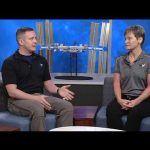
    NASA astronauts Peggy Whitson and Jack Fischer, who returned to Earth on Sept. 2 after spending months aboard the International Space Station, discussed their mission during a news conference on Sept. 11 at the agency’s Johnson Space Center.

    Although Whitson and Fischer returned to Earth together, they arrived at the space station separately. Whitson launched from the Baikonur Cosmodrome in Kazakhstan on Nov. 17 and spent more than nine months in space. She now holds the U.S. record for cumulative time in space, with 665 days in orbit during three long-duration missions. Fischer launched to the space station on April 20 and spent 136 days in orbit on his first space mission, during which he took part in two spacewalks that total just under seven hours.

  • Catastrophic Storm Seen from Space on This Week @NASA – September 1, 2017

    Catastrophic Storm Seen from Space on This Week @NASA – September 1, 2017

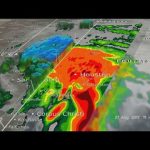
    We worked with our partner agencies to use space-based assets to capture imagery of Hurricane Harvey that impacted the Texas-Louisiana Gulf Coast region. Imagery captured from the vantage point of space, provides data that weather forecasters, emergency responders and other officials can use to better inform the public. Views from the International Space Station, and NOAA’s GOES East satellite showed the massive size and movement of the storm. While our Global Precipitation Measurement (GPM) Mission analyzed the storm’s record-breaking rainfall – which led to catastrophic flooding in Texas and Louisiana. Due to the storm, our Johnson Space Center in Houston is closed through Labor Day, while the region recovers, but Mission Control remains operational in support of the crew aboard the International Space Station. Also, Final RS-25 Engine Test of the Summer, Key SLS Rocket Hardware Finished, and Researching Quiet Supersonic Flight!

    This video is available for download from NASA’s Image and Video Library: https://images.nasa.gov/#/details-NHQ_2017_0901_Catastrophic%20Storm%20Seen%20from%20Space%20on%20This%20Week%20@NASA%20%E2%80%93%20September%201,%202017.html

  • Voyager 1 Trajectory through the Solar System

    Voyager 1 Trajectory through the Solar System

    This visualization tracks the trajectory of the Voyager 1 spacecraft through the solar system. Launched on September 5, 1977, it was one of two spacecraft sent to visit the giant planets of the outer solar system. Voyager 1 flew by Jupiter and Saturn before being directed out of the solar system.

    To fit the 40 year history of the mission into a short visualization, the pacing of time accelerates through most of the movie, starting at about 5 days per second at the beginning and speeding up to about 11 months per second after the planet flybys are past.

    The termination shock and heliopause are the ‘boundaries’ created when the plasma between the stars interacts with the plasma flowing outward from the Sun. They are represented with simple grid models and oriented so their ‘nose’ is pointed in the direction (Right Ascension = 17h 24m, declination = 17 degrees south) represented by more recent measurements from other missions.
    https://svs.gsfc.nasa.gov/4139
    Credit: NASA’s Scientific Visualization Studio

  • Voyager 2 Trajectory through the Solar System

    Voyager 2 Trajectory through the Solar System

    This visualization tracks the trajectory of the Voyager 2 spacecraft through the solar system. Launched on August 20, 1977, it was one of two spacecraft sent to visit the giant planets of the outer solar system. Like Voyager 1, Voyager 2 flew by Jupiter and Saturn, but the Voyager 2 mission was extended to fly by Uranus and Neptune before being directed out of the solar system.

    To fit the 40 year history of the mission into a short visualization, the pacing of time accelerates through most of the movie, starting at about 5 days per second at the beginning and speeding up to about 11 months per second after the planet flybys are past.

    The termination shock and heliopause are the ‘boundaries’ created when the plasma between the stars interacts with the plasma flowing outward from the Sun. They are represented with simple grid models and oriented so their ‘nose’ is pointed in the direction (Right Ascension = 17h 24m, declination = 17 degrees south) represented by more recent measurements from other missions.

    Credit: NASA’s Scientific Visualization Studio
    https://svs.gsfc.nasa.gov/4140

  • Eclipse Across America on This Week @NASA – August 25, 2017

    Eclipse Across America on This Week @NASA – August 25, 2017

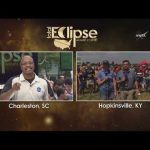
    The Aug. 21 eclipse across America generated interest and excitement far and wide. Our coverage of the historic eclipse – the first coast-to-coast total solar eclipse for the U.S. in 99 years – was widespread … Anchored from the College of Charleston, in South Carolina – we showed you views of the eclipse that only NASA could. Views from space, from Earth’s atmosphere and from the ground – with expert observation and analysis provided from many of the 14 states around the country, situated along the path of totality. That’s where thousands of people flocked – for the ultimate eclipse experience – total darkness in the middle of the day!

    This video is available for download from NASA’s Image and Video Library: https://images.nasa.gov/#/details-NHQ_2017_0825_Eclipse%20Across%20America%20on%20This%20Week%20@NASA%20%E2%80%93%20August%2025,%202017.html

  • Space Station Camera Captures New Views of Hurricane Harvey

    Space Station Camera Captures New Views of Hurricane Harvey

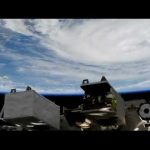
    The National Hurricane Center (NHC) upgraded the remnants of tropical storm Harvey to a tropical depression on August 23, 2017 at 11 a.m. EDT (1500 UTC). Harvey became better organized and was revived after moving from Mexico’s Yucatan Peninsula into the Bay of Campeche. The warm waters of the Gulf of Mexico and favorable vertical wind shear promoted the regeneration of the tropical cyclone. This video includes views from The International Space Station recorded on August 24, 2017 at 6:15 p.m. Eastern Time.

    This video is available for download from NASA’s Image and Video Library: https://images.nasa.gov/#/details-NHQ_2017_0824_Space%20Station%20Camera%20Captures%20New%20Views%20of%20Hurricane%20Harvey.html

  • Eclipse 2017: Through the Eyes of NASA

    Eclipse 2017: Through the Eyes of NASA

    During the eclipse, 14 states across the U.S. were in the path of totality and experienced more than two minutes of darkness in the middle of the day – with a partial eclipse viewable all across North America. The broadcast – Eclipse Across America: Through the Eyes of NASA – covered locations along the path of totality, from Oregon to South Carolina including public reactions from all ages. The eclipse’s long path over land provided a unique opportunity to study the Sun, Earth, Moon and their interaction.

    This video is available for download from NASA’s Image and Video Library:

    “Total Eclipse Preview Show”, Total Solar Eclipse: “Through The Eyes of NASA,” Part 1
    https://images.nasa.gov/#/details-NHQ_2017_0821_Total%20Solar%20Eclipse%20Noon%20to%201%20pm%20ET.html
    Total Solar Eclipse: “Through The Eyes of NASA,” Part 2
    https://images.nasa.gov/#/details-NHQ_2017_0821_Total%20Solar%20Eclipse%201%20pm%20to%202%20pm%20ET.html

    Total Solar Eclipse: “Through The Eyes of NASA,” Part 3
    https://images.nasa.gov/#/details-NHQ_2017_0821_Total%20Solar%20Eclipse%202%20pm%20to%203%20pm%20ET.html
    Total Solar Eclipse: “Through The Eyes of NASA,” Part 4

    https://images.nasa.gov/#/details-NHQ_2017_0821_Total%20Solar%20Eclipse%203%20pm%20to%204%20pm%20ET.html

  • Space Station Crew Discusses Life in Space with NASA’s Newest Astronauts

    Space Station Crew Discusses Life in Space with NASA’s Newest Astronauts

    Aboard the International Space Station, Expedition 52 Flight Engineers Peggy Whitson, Jack Fischer and Randy Bresnik of NASA conducted a question and answer session with the agency’s newest class of astronauts during an in-flight “orientation” session Aug. 22 with the new selectees. Twelve new astronauts were announced by NASA on June 7 and will begin extensive training this year for future flight assignments.

  • Third Generation Satellite Joins NASA’s Communication Network

    Third Generation Satellite Joins NASA’s Communication Network

    On Friday, August 18, NASA launched the third in a series of three advanced, Tracking and Data Relay Satellites, known as TDRS-M, from Cape Canaveral Air Force Station, in Florida. This latest addition to the fleet will augment a space communications network that provides the critical path for high data-rate communication to a host of spacecraft including the International Space Station and its resupply vehicles, the Hubble Space Telescope and many of NASA’s Earth-observing fleet spacecraft.

  • New Crew Launches to the Space Station on This Week @NASA – July 28, 2017

    New Crew Launches to the Space Station on This Week @NASA – July 28, 2017

    Acting Administrator Robert Lightfoot was in Kazakhstan on July 28 to observe the launch to the International Space Station of our astronaut Randy Bresnik with his crewmates – Sergey Ryazanskiy of Roscosmos, and Paolo Nespoli of the European Space Agency. The trio is scheduled to spend more than four months on the station working on hundreds of science and technology experiments. Also, New 4K Footage of Spacewalk, NASA Technologies Showcased at AirVenture Event, Preparing to Chase the Total Solar Eclipse from the Sky, and Another Successful RS-25 Engine Test!

  • NASA’s RS-25 Rocket Engine Fires Up Again

    NASA’s RS-25 Rocket Engine Fires Up Again

    Engineers conduct the third in a series of RS-25 flight controller tests on July 25, 2017, for NASA’s Space Launch System (SLS) rocket. The more than 8 1/2 minute test on the A-1 Test Stand at NASA’s Stennis Space Center in Mississippi signaled another step toward launch of NASA’s new Space Launch System (SLS). The SLS rocket, powered by four RS-25 engines, along with the Orion spacecraft will take astronauts on a new era of exploration beyond Earth’s orbit into deep space.

  • Celebrating 100 Years of NASA Langley: A Storied Legacy, A Soaring Future

    Celebrating 100 Years of NASA Langley: A Storied Legacy, A Soaring Future

    NASA Langley – 100 Years: Something happened 100 years ago that changed forever the way we fly, the way we explore space and how we study our home planet. That something was the establishment of what is now NASA’s Langley Research Center in Hampton, Virginia, which commemorates its 100th anniversary on July 17, 2017.
    Astronaut Neil Armstrong, the first human to step foot on the moon and who learned how to do so by training at Langley said, “If a competition were held to determine the organization that had accomplished the largest number of advancements to aeronautic and aerospace progress, my nomination would be this place.”
    This 45-minute documentary looks back across the 100 years, updates us on work being done at Langley today, and takes a peek into the future.
    Find out more about NASA Langley’s centennial at: https://www.nasa.gov/langley/100

  • Vice President Pence Visits Kennedy on This Week @NASA – July 7, 2017

    Vice President Pence Visits Kennedy on This Week @NASA – July 7, 2017

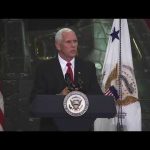
    Vice President Mike Pence spoke to employees on July 6 at our Kennedy Space Center in Florida, highlighting the public/private partnerships transforming the center into a multi-user spaceport, and changing the way we do business in low-Earth orbit. Acting Administrator Robert Lightfoot and Kennedy Director Bob Cabana accompanied the Vice President on tours of several facilities currently being leased by private space companies. The tour showcased hardware, systems and infrastructure, that will soon facilitate U.S. based astronaut launches and eventual missions to deep space. Also, SpaceX Dragon Released from Space Station, Happy July 4th from Space, and 3D-Printed Habitat Challenge!

  • Vice President Pence Visits NASA’s Kennedy Space Center

    Vice President Pence Visits NASA’s Kennedy Space Center

    Vice President Mike Pence visited NASA’s Kennedy Space Center in Florida today and addressed employees at the iconic Vehicle Assembly Building. The vice president also toured Kennedy to learn more about the center’s work as a multi-user spaceport for commercial and government clients, and he saw the agency’s progress toward launching from U.S. soil on spacecraft built by American companies. He visited the Neil Armstrong Operation’s and Checkout Building to see NASA’s Orion spacecraft that will travel past the moon, and eventually on to Mars atop the Space Launch System rocket.

  • President Trump Reestablishes the National Space Council on This Week @NASA – June 30, 2017

    President Trump Reestablishes the National Space Council on This Week @NASA – June 30, 2017

    President Donald Trump signed an Executive Order on June 30 to reestablish the National Space Council. To mark International Asteroid Day on June 30, we aired a special television program with information about the work our Planetary Defense Coordination Office and other NASA-funded programs do to find, track and characterize Near Earth Objects. These are asteroids and comets in the vicinity of Earth’s orbit that could pose an impact threat to our planet. The Planetary Defense Coordination Office also issues alerts and helps coordinate any U.S. government response to an impact threat. The broadcast was part of a 24-hour Asteroid Day program from Broadcasting Center Europe. Also, NASA Testifies at Congressional Hearings, and Colorful Clouds in Space!

  • Happy 4th of July, from NASA

    Happy 4th of July, from NASA

    From NASA to you, we wish you a safe and happy Independence Day. In this video, we simulated rocket and engine sounds to reflect the cannon booms in the music.

    Here is a chronological list of the engines and rocket launches we highlighted:

    RS-25 Engine Test, SLS Booster Nozzle Test, Delta ll Rocket Launch, Rocket Sled Test, SpaceX Dragon Capsule Abort Test, SLS Booster Test, Orion Abort Tower Separation Animation, Orbital ATK Cygnus Launch, Atlas V Rocket Launch

  • NASA Spacecraft Fire and Combustion

    NASA Spacecraft Fire and Combustion

    In this episode, NASA experts discuss Spacecraft Fire and Combustion Research.

  • What’s Happened So Far – Mid Year @NASA – June 16, 2017

    What’s Happened So Far – Mid Year @NASA – June 16, 2017

    2017 is shaping up to be another year of unprecedented exploration, amazing discoveries, technological advances and progress in development of future missions – and we’re just six months into the year. Here are some of our top stories of 2017, so far – Mid-Year at NASA!

  • 2017 Administrator’s Agency Honor Awards Celebrate NASA’s Best of the Best

    2017 Administrator’s Agency Honor Awards Celebrate NASA’s Best of the Best

    During the 2017 Administrator’s Agency Honor Awards Ceremony on June 15 at Langley Research Center, NASA’s Acting Administrator, Robert Lightfoot, presented Distinguished Service and Distinguished Public Service Medals to individuals who have made extraordinary and indelible contributions to the agency’s mission success. These awards are NASA’s most prestigious and distinguished honors.

  • Vice President Pence Tours NASA’s Historic Mission Control in Houston

    Vice President Pence Tours NASA’s Historic Mission Control in Houston

    As part of his visit to NASA’s Johnson Space Center on June 7, to welcome America’s newest astronaut candidates, Vice President Mike Pence took a tour of the Christopher C. Kraft Jr. Mission Control Center and was briefed on current human spaceflight operations.

    The Vice President also joined Acting Administrator Robert Lightfoot and Johnson Center Director Ellen Ochoa to announce the 12 men and women who were selected to the 2017 astronaut class from more than 18,300 applicants. The new astronaut candidates could one day be performing research on the International Space Station, launching from American soil aboard spacecraft built by American companies, and traveling to the moon or even Mars with the help of NASA’s new Orion spacecraft and Space Launch System rocket.

    Get more information on astronaut selection and information on the candidates after their introduction at: https://www.nasa.gov/2017astronauts.

  • NASA’s New Astronauts to Conduct Research Off the Earth, For the Earth and Deep Space Missions

    NASA’s New Astronauts to Conduct Research Off the Earth, For the Earth and Deep Space Missions

    After receiving a record-breaking number of applications to join an exciting future of space exploration, NASA has selected its largest astronaut class since 2000. Rising to the top of more than 18,300 applicants, NASA chose 12 women and men as the agency’s new astronaut candidates. Vice President Mike Pence joined Acting NASA Administrator Robert Lightfoot, Johnson Space Center Director Ellen Ochoa, and Flight Operations Director Brian Kelly to welcome the new astronaut candidates during an event June 7 at the agency’s Johnson Space Center in Houston. The astronaut candidates will return to Johnson in August to begin two years of training. Then they could be assigned to any of a variety of missions: performing research on the International Space Station, launching from American soil on spacecraft built by commercial companies, and departing for deep space missions on NASA’s new Orion spacecraft and Space Launch System rocket.

  • ESA astronauts training in Houston

    ESA astronauts training in Houston

    Four ESA astronauts have recently been training at NASA’s Johnson Space Centre (JSC) in Houston, Texas. For ESA’s newest astronaut Matthias Maurer, it was a chance to inspect a mock-up of NASA’s future space vehicle Orion alongside Tim Peake and Luca Parmitano, both experienced astronauts. Tim and Matthias have undergone spacewalk training in the neutral buoyancy pool. Alexander Gerst is also at JSC, training for his 2018 long-duration mission to the ISS.

    Connect with the astronauts: http://www.esa.int/astronauts

  • NASA names Unique Solar Mission after University of Chicago Physicist Eugene Parker

    NASA names Unique Solar Mission after University of Chicago Physicist Eugene Parker

    On May 31, NASA renamed humanity’s first mission to fly a spacecraft directly into the sun’s atmosphere in honor of Professor Eugene Parker, a pioneering physicist at the University of Chicago. This is the first time in agency history a spacecraft has been named for a living individual. Parker, the S. Chandrasekhar Distinguished Service Professor Emeritus in Physics, is best known for developing the concept of solar wind—the stream of electrically charged particles emitted by the sun.

    Previously named Solar Probe Plus, the Parker Solar Probe will launch in summer 2018. Placed in orbit within four million miles of the sun’s surface, and facing heat and radiation unlike any spacecraft in history, the spacecraft will explore the sun’s outer atmosphere and make critical observations that will answer decades-old questions about the physics of how stars work. The resulting data will improve forecasts of major space weather events that impact life on Earth, as well as satellites and astronauts in space.

  • Acting Administrator Robert Lightfoot Discusses NASA’s FY2018 NASA Budget Request

    Acting Administrator Robert Lightfoot Discusses NASA’s FY2018 NASA Budget Request

    Acting NASA Administrator Robert Lightfoot discussed the agency’s Fiscal Year 2018 budget request on May 23, during an agencywide town hall State of NASA address at NASA Headquarters in Washington. The address also was broadcast on NASA Television and streamed on the agency’s homepage and mobile apps.

  • Media View Barge Pegasus and SLS Hardware on This Week @NASA – May 19, 2017

    Media View Barge Pegasus and SLS Hardware on This Week @NASA – May 19, 2017

    On May 16, NASA held a media event at Marshall Space Flight Center in Huntsville, Alabama, to highlight the recent arrival of the barge Pegasus with the first core stage test article for NASA’s Space Launch System (SLS) rocket. NASA modified Pegasus to accommodate the massive SLS core stage, increasing the barge’s length and weight-carrying capacity. The core stage test article – manufactured at the agency’s Michoud Assembly Facility, in New Orleans – is the first of four core stage test articles scheduled to be delivered to Marshall for testing. This delivery marks a critical milestone toward Exploration Mission-1 (EM-1), the first flight of SLS and NASA’s Orion spacecraft. It also brings the agency a step closer to sending humans to deep space destinations – including Mars. Also, Lightfoot Discusses Future Exploration Goals, Ochoa, Foale Inducted into Hall of Fame, and Virtual Tour of Meteorite Lab!

  • Space Station Crew Conducts Milestone Spacewalk

    Space Station Crew Conducts Milestone Spacewalk

    Outside the International Space Station, Expedition 51 Commander Peggy Whitson and Flight Engineer Jack Fischer of NASA conducted a spacewalk May 12 to replace an avionics box responsible for routing power and data commands to experiments on the orbital outpost. In addition to that work, the two spacewalkers installed a data cable for the Alpha Magnetic Spectrometer and a new high definition camera on the station’s truss. The spacewalk was the 200th in support of space station assembly and maintenance since 1998, the ninth for Whitson, who vaulted into third place on the all-time list for most spacewalking hours, and the first for Fischer.

  • Milestone Spacewalk on the Space Station on This Week @NASA – May 12, 2017

    Milestone Spacewalk on the Space Station on This Week @NASA – May 12, 2017

    On May 12, Peggy Whitson and Jack Fischer conducted a spacewalk outside the International Space Station. This was the 200th spacewalk in support of station assembly and maintenance. Prior to the outing, during their pre-breathe activities in the airlock, the spacewalkers had to share Whitson’s service and cooling umbilical (SCU), due to an issue with the SCU connected to Fischer’s suit. That device provides electricity, cooling and communications during the pre-breathe phase of a spacewalk. Despite a late start, the pair completed the primary task of replacing an avionics box that supplies electricity and data connections to the science experiments on the orbital laboratory. It was Whitson’s ninth spacewalk and the first for Fischer. Also, Exploration Mission-1 Announcement, Future Space Station Crew Previews Mission, Humans to Mars Summit 2017, James Webb Space Telescope at JSC, and Martian New Year in Mars, PA!

  • NASA Celebrates Mars New Year in Mars, Pennsylvania

    NASA Celebrates Mars New Year in Mars, Pennsylvania

    NASA helped the town of Mars, Pennsylvania ring in the Martian New Year, May 5-6. Citizens of the town, just north of Pittsburgh, invited the agency to help celebrate Mars New Year, which happens about every two Earth years. Activities included two days of science, technology, engineering, arts and mathematics or (STEAM) activities, to encourage young people to pursue careers in these fields of study, which are critical to NASA’s journey to Mars.

  • Webb Telescope Passes Important Optical Test on This Week @NASA – May 5, 2017

    Webb Telescope Passes Important Optical Test on This Week @NASA – May 5, 2017

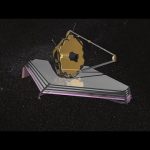
    NASA’s James Webb Space Telescope (JWST) has successfully passed the center of curvature test at Goddard Space Flight Center, in Greenbelt, Md. This important optical measurement of Webb’s fully assembled primary mirror was the final test held at Goddard before the telescope is shipped off for end-to-end cryogenic testing at Johnson Space Center in Houston. When that’s complete, the world’s most advanced observatory goes to Northrop Grumman Aerospace Systems in Redondo Beach, California, for final assembly and testing. Webb is targeted for launch in 2018 on a mission to help unravel some of the greatest mysteries of the universe. Also, Cassini Update, NASA Visits Midwest Company Helping Build Orion, Orion’s Launch Abort System Motor Tested, Wind Tunnel Tests Continue with SLS, and Community College Aerospace Scholars!

  • Whitson Receives Call from President Trump on This Week @NASA – April 28, 2017

    Whitson Receives Call from President Trump on This Week @NASA – April 28, 2017

    On April 24 aboard the International Space Station, NASA astronaut Peggy Whitson set a new record for cumulative time spent in space by a U.S. astronaut. President Donald Trump marked the milestone with a call from the Oval Office, with First Daughter Ivanka Trump, and NASA astronaut Kate Rubins – to the station, where Whitson was joined by NASA’s Jack Fischer. Whitson, who in 2008 became the first woman to command the space station, also holds the record for most spacewalks by a female astronaut. NASA worked with the Department of Education, on behalf of the White House, to make the president’s call to the station available to schools across America. Whitson encouraged students to think about how the steps they take in the classroom today could someday help NASA make the next giant leap in space exploration. Also, First Live 4K Broadcast from Space, Kate Rubins Visits National Institutes of Health, Cassini Begins its Grand Finale, and 2017 Astrobiology Science Conference!

  • NASA Acting Administrator Robert Lightfoot’s 2017 National Small Business Week message.

    NASA Acting Administrator Robert Lightfoot’s 2017 National Small Business Week message.

    Acting NASA Administrator Robert Lightfoot recognizes the 2017 National Small Business Week; a time to celebrate the critical contributions of America’s entrepreneurs and small business owners. NASA honors its 2016 Agency Small Business Advocate Award winners and acknowledges the contributions made by NASA civil servant personnel throughout the Agency. The Agency 2016 Small Industry Award winners are also highlighted and they recognize the outstanding Small Business Prime Contractor, Small Business Subcontractor, Large Business Prime Contractor, and Mentor-Protégé Agreement that support NASA in achieving its mission.

  • President Trump Calls Space Station Crew on Record-Setting Day

    President Trump Calls Space Station Crew on Record-Setting Day

    From the Oval Office at the White House, President Trump called Expedition 51 Commander Peggy Whitson and Flight Engineer Jack Fischer of NASA April 24 to offer congratulations to Whitson on the day she broke the record for most cumulative days on orbit by a U.S. astronaut. Whitson’s 534-day total surpassed the record held by NASA’s Jeff Williams. Trump’s daughter Ivanka and NASA astronaut Kate Rubins joined the president to discuss Whitson’s presence as a role model for young women and students as she continues her more than nine-month mission on station.

  • Orbital ATK’s Cygnus Cargo Spacecraft Launches to the ISS

    Orbital ATK’s Cygnus Cargo Spacecraft Launches to the ISS

    On April 18, Orbital ATK’s Cygnus cargo space craft launched from Cape Canaveral Air Force Station in Florida aboard a United Launch Alliance rocket, on Orbital ATK’s seventh resupply mission to the International Space Station. Cygnus is packed with 7,600 pounds of supplies and research for the crew aboard the orbiting laboratory.

  • Oceans Beyond Earth on This Week @NASA – April 14, 2017

    Oceans Beyond Earth on This Week @NASA – April 14, 2017

    Two long-running NASA missions are providing new details about ocean bearing moons of Jupiter and Saturn – further heightening scientific interest in these and other “ocean worlds” in our solar system and beyond. The details – discussed during an April 13 NASA science briefing – include the announcement by the Cassini mission that a key ingredient for life has been found in the ocean on Saturn’s moon Enceladus. Meanwhile, researchers using the Hubble Space Telescope observed a probable plume erupting from the surface of Jupiter’s moon Europa, at the same location where Hubble saw evidence of a plume in 2014. Researchers say this could be circumstantial evidence of water erupting from the moon’s interior. Hubble’s monitoring of plume activity on Europa and Cassini’s long-term investigation of Enceladus are laying the groundwork for NASA’s Europa Clipper mission, which is being planned for launch in the 2020s. Also, Expedition 50 Returns Home Safely, Next Space Station Crew at Launch Site, Student Launch Event, Groundbreaking for New Lab, and Yuri’s Night, First Space Shuttle Mission Celebrated!

  • NASA Reveals New Discoveries on Oceans Beyond Earth During Science Briefing

    NASA Reveals New Discoveries on Oceans Beyond Earth During Science Briefing

    During a NASA science briefing on April 13, representatives from the agency discussed new results about ocean worlds in our solar system based on data gathered by NASA’s Cassini spacecraft and the Hubble Space Telescope.

    The two veteran missions are providing tantalizing new details about icy, ocean-bearing moons of Jupiter and Saturn, further enhancing the scientific interest of these and other “ocean worlds” in our solar system and beyond.

    New research from Cassini indicates that hydrogen gas, which could potentially provide a chemical energy source for life, is pouring into the ocean of Saturn’s icy moon Enceladus from hydrothermal vents in the seafloor. The Cassini spacecraft detected the hydrogen in the plume of gas and icy material spraying from Enceladus during its deepest dive through the plume on Oct. 28, 2015.This means that ocean microbes — if any exist there — could use the hydrogen to produce energy

    NASA’s Hubble Space Telescope saw a probable plume of material erupting from the moon’s surface on 2016, at the same location where Hubble saw evidence of a plume in 2014. These images bolster evidence that the Europa plumes could be a real phenomenon, flaring up intermittently in the same region on the moon’s surface.

    Both Cassini and Hubble investigations are laying the groundwork for NASA’s Europa Clipper mission, which is being planned for launch in the 2020s.

  • NASA Cassini Mission Prepares for “Grand Finale” on This Week @NASA – April 7, 2017

    NASA Cassini Mission Prepares for “Grand Finale” on This Week @NASA – April 7, 2017

    NASA held a news conference April 4 at the Jet Propulsion Laboratory, with participation from NASA headquarters, to preview the final phase of the Cassini spacecraft’s mission to Saturn. On April 26, Cassini will begin its “Grand Finale” – a series of deep dives between the planet and its rings. No other mission has ever explored this unique region that is so close to the planet. Cassini will make 22 orbits that swoop between the rings and the planet before ending its 20-year mission on Sept. 15, with a final plunge into Saturn. The mission team hopes to gain powerful insights into the planet’s internal structure and the origins of the rings, obtain the first-ever sampling of Saturn’s atmosphere and particles coming from the main rings, and capture the closest-ever views of Saturn’s clouds and inner rings. Also, Next Space Station Crew Travels to Launch Site, New Target Launch Date for Orbital ATK Mission to ISS, Lightfoot Visits Industry Partners, Human Exploration Rover Challenge, and John Glenn Interred at Arlington National Cemetery.