Tag: NASA

  • NASA Science Live: Connected by Earth

    NASA Science Live: Connected by Earth

    This year at NASA, EarthDay is about connections—to our planet and to each other. Our planet is home to over 7 billion people of diverse backgrounds and experiences, but we are all #ConnectedByEarth. Join NASA climate experts to learn about the connections between human activity and climate change.

    Dr. Kimberley R. Miner will host this episode and is a climate scientist at NASA’s Jet Propulsion Laboratory (JPL). While she’s been at JPL since July 2020, she has been studying and exploring the Earth since…forever! Dr. Miner loves working outside, asking questions about nature and protecting the animals and plants all around us. She loves that being an Earth Scientist lets her do all these things.

    Dr. Lesley Ott is a climate scientist at NASA’s Goddard Space Flight Center where she’s worked since getting her PhD 15 years ago. She studies the processes that control greenhouse gas concentrations and always loves seeing the ways that springtime changes in vegetation show up in satellite data.

    Ms. Equisha Glenn is a graduate student research assistant at NASA Goddard Institute for Space Studies (NASA GISS) and is finishing her PhD in Civil Engineering. Growing up, Ms. Glenn used to watch TV shows about the environment and loves how diverse Earth is, yet everything works together. Ms. Glenn is passionate about bridging the gap between data, climate and end users to help build a more resilient future for cities and society.

  • NASA Picks SpaceX for Artemis Human Lunar Lander Development

    NASA Picks SpaceX for Artemis Human Lunar Lander Development

    NASA is getting ready to send astronauts to explore more of the Moon as part of the Artemis program, and the agency has selected SpaceX to continue development of the first commercial human lander that will safely carry the next two American astronauts to the lunar surface.

    The agency’s powerful Space Launch System rocket will launch four astronauts aboard the Orion spacecraft for their multi-day journey to lunar orbit. There, two crew members will transfer to the SpaceX human landing system (HLS) for the final leg of their journey to the surface of the Moon. After approximately a week exploring the surface, they will board the lander for their short trip back to orbit where they will return to Orion and their colleagues before heading back to Earth.

  • Earth from Space: Space Coast, Florida, USA

    Earth from Space: Space Coast, Florida, USA

    The Copernicus Sentinel-2 mission takes us over Cape Canaveral, USA, in a region known as the Space Coast, in this edition of the Earth from Space programme. From here, on 22 April 2021, ESA astronaut Thomas Pesquet is planned to return to the International Space Station for his second mission, Alpha.

    Download the image: https://www.esa.int/ESA_Multimedia/Images/2021/04/Space_Coast_Florida

    ★ Subscribe: http://bit.ly/ESAsubscribe and click twice on the bell button to receive our notifications.

    Check out our full video catalog: http://bit.ly/SpaceInVideos
    Follow us on Twitter: http://bit.ly/ESAonTwitter
    On Facebook: http://bit.ly/ESAonFacebook
    On Instagram: http://bit.ly/ESAonInstagram
    On Flickr: http://bit.ly/ESAonFlickr

    We are Europe’s gateway to space. Our mission is to shape the development of Europe’s space capability and ensure that investment in space continues to deliver benefits to the citizens of Europe and the world. Check out https://www.esa.int/ to get up to speed on everything space related.

    Copyright information about our videos is available here: https://www.esa.int/ESA_Multimedia/Terms_and_Conditions

    #ESA
    #EarthFromSpace
    #SpaceCoast

  • Exoplanet Types: Worlds Beyond Our Solar System

    Exoplanet Types: Worlds Beyond Our Solar System

    When we describe different types of exoplanets – planets outside our solar system – what do we mean by “hot Jupiters,” “warm Neptunes,” and “super-Earths”? Since we’re still surveying and learning about the variety of worlds out there among the stars, it’s sometimes helpful to refer to characteristics they share with planets we’re familiar with in our own planetary system.

    Credit: NASA/JPL-Caltech

  • NASA 2022: A Year of Innovation

    NASA 2022: A Year of Innovation

    With a budget increase of more than 6% from the previous year, NASA will continue to boost its ingenuity in exploration, technology, aeronautics and science. This is a year of innovation.

    This budget increases our ability to better understand Earth as a system –allowing us to tackle climate change in new ways. We will develop more climate-friendly aviation systems, like the X-57 Maxwell, and launch the James Webb Space Telescope that will enable groundbreaking research. Including a diverse and more inclusive workforce, we will continue pushing the boundaries of human exploration with Artemis, with goals of landing the first woman and the first person of color on the Moon, as well as fostering our international and commercial partnerships that help to make it all possible.

    We look forward to continuing our legacy of inspiring the nation and the next generation of scientists, engineers and explorers, who will help us accomplish the ambitious goals that we’ve set out for NASA.

    Producer/Editor: Lacey Young
    Music: Universal Production Music

  • NASA Drop Test of Orion Spacecraft for Crewed Artemis Missions

    NASA Drop Test of Orion Spacecraft for Crewed Artemis Missions

    Engineers will drop an 14,000-pound test version of the Orion spacecraft into the Hydro Impact Basin at NASA’s Langley Research Center’s Landing and Impact Research Facility in Hampton, Virginia at 1:45 p.m. EDT Tuesday, April 6.

    This series of drop tests began March 23 to finalize computer models for loads and structures prior to the Artemis II flight test, NASA’s first mission with crew aboard Orion. Artemis II will carry astronauts around the Moon and back, paving the way to land the first woman and next man on the lunar surface and establish a sustainable presence at the Moon under the Artemis program.

  • What Is an Exoplanet?

    What Is an Exoplanet?

    Exoplanets – planets outside our solar system – are everywhere. But why do we study them? What makes them so interesting? At NASA, we’re surveying and studying exoplanets to learn all about their weirdness, their variety, and all the fascinating things they can tell us about how planets form and develop.

    Credit: NASA/JPL-Caltech

  • NASA Science Live: Modern-Day Explorers Search for Life Beyond Earth

    NASA Science Live: Modern-Day Explorers Search for Life Beyond Earth

    Is there life beyond Earth? NASA has been sending spacecraft to the far reaches of our solar system in search of an answer. But extreme forms of life on our own planet might reveal secrets of how life could form beyond Earth. Meet two NASA women who have ventured on remote expeditions and traversed Earth’s most extreme landscapes in the name of science and astrobiology. Send in your questions using #askNASA on Wednesday, March 31 at 3:00 p.m. EST, and tune in to hear from host and science communicator Kellie Gerardi.

    Dr. Darlene Lim blends her field science research with future human-robotic spaceflight concepts to the Moon and Mars. She’s gone for runs on 6 out of the 7 continents on Earth.

    Dr. Jackie Goordial looks for life in extreme environments to understand its limits, and where and how we could find life beyond Earth. Despite doing research at sea for weeks, she still gets very seasick and didn’t learn how to swim until later in life.

  • NASA Remembers Legendary Flight Director Glynn Lunney

    NASA Remembers Legendary Flight Director Glynn Lunney

    Legendary NASA Flight Director Glynn Lunney, 84, died Friday, March 19.

    Lunney was a flight director for the Apollo 11 Moon landing mission, and was lead flight director for Apollo 7, the first crewed Apollo flight, and Apollo 10, the dress rehearsal for the first Moon landing, in NASA’s Mission Control Center in Houston. He led the mission control team credited with key actions that made it possible to save three Apollo 13 astronauts aboard a spacecraft disabled on the way to the Moon.

    Read more: https://www.nasa.gov/press-release/nasa-remembers-legendary-flight-director-glynn-lunney

    Video produced by David Anderson

  • Smoke & Fire! NASA Tests the World’s Most Powerful Rocket

    Smoke & Fire! NASA Tests the World’s Most Powerful Rocket

    NASA’s Space Launch System (SLS) rocket’s core stage fired all four of its RS-25 engines on March 18th at Stennis Space Center near Bay St. Louis, Mississippi.

    The core stage includes the liquid hydrogen tank and liquid oxygen tank, four RS-25 engines, and the computers, electronics, and avionics that serve as the “brains” of the rocket.

    The hot fire was the final test of the Green Run series. The term “green” refers to the new hardware that will work together to power the stage, and “run” refers to operating all the components together simultaneously for the first time. For the test, the 212-foot core stage generated 1.6 million pounds of thrust, while anchored in the B-2 Test Stand at NASA’s Stennis Space Center near Bay St. Louis, Mississippi. The hot fire test included loading 733,000 gallons of liquid oxygen and liquid hydrogen – mirroring the launch countdown procedure – and igniting the engines.

    Artemis I will be the first in series of increasingly complex missions, testing the SLS rocket and Orion spacecraft as an integrated system ahead of crewed flights to the Moon. Under the Artemis program, NASA is working to land the first woman and the next man on the Moon. SLS is the only rocket that can send Orion, astronauts, and supplies to the Moon on a single mission.

    Learn more here: https://www.nasa.gov/exploration/systems/sls/index.html

    Download link: https://images.nasa.gov/details-NHQ_2021_0318_Green%20Run%20Wrap

    Producer Credit: Sonnet Apple
    Music: Universal Production Music/”I Gotta Rise Up”

  • Underwater spacewalk training with Thomas Pesquet

    Underwater spacewalk training with Thomas Pesquet

    In preparation for his second mission to the International Space Station, ESA astronaut Thomas Pesquet is training for possible spacewalks at @NASA’s Johnson Space Center. His second six-month mission is called Alpha and will see Thomas launch as part Crew-2 on the @SpaceX Dragon spacecraft with NASA astronaut Megan Behnken and Shane Kimbrough and @JAXA | 宇宙航空研究開発機構 astronaut Aki Hoshide.

    Watch this underwater spacewalk training session in 4K with audio from the astronauts and “mission control” recorded on 2 December 2020. Thomas is moved into position on a functional mockup of the International Space Station’s robotic arm to install hardware.

    Astronauts practice spacewalks in NASA’s Neutral Buoyancy Laboratory. The training pool is the largest indoor swimming pool in the world, holding over 23 million litres of water, but it is still not large enough to hold the complete Space Station. Instead, specific parts of the Station structure are used as needed for training.

    Training underwater is as close as it gets to experiencing weightlessness on Earth so spending time in a full spacesuit is used to practise techniques for spacewalks and neutral buoyancy is substituted for microgravity. Support and training divers are on hand to guide the astronauts during their tasks. In space, the astronauts are aided by mission control and colleague astronauts on the Station.
    Extra Vehicular Activities (known as EVAs or spacewalks) are the most challenging tasks for an astronaut. When venturing from their spacecraft in a self-contained spacesuit to carry out repairs or install new equipment outside the International Space Station safety and efficiency are vital.

    It might be relaxing and soothing to watch this underwater spacewalk at home, but spacewalks are marathons that require concentration and physical exertion for six hours at a time, with no food or bathroom breaks.

    Follow Thomas: http://bit.ly/ThomasPesquetBlog

    ★ Subscribe: http://bit.ly/ESAsubscribe and click twice on the bell button to receive our notifications.

    Check out our full video catalog: http://bit.ly/SpaceInVideos
    Follow us on Twitter: http://bit.ly/ESAonTwitter
    On Facebook: http://bit.ly/ESAonFacebook
    On Instagram: http://bit.ly/ESAonInstagram
    On Flickr: http://bit.ly/ESAonFlickr

    We are Europe’s gateway to space. Our mission is to shape the development of Europe’s space capability and ensure that investment in space continues to deliver benefits to the citizens of Europe and the world. Check out https://www.esa.int/ to get up to speed on everything space related.

    Copyright information about our videos is available here: https://www.esa.int/ESA_Multimedia/Terms_and_Conditions

    #ESA
    #ThomasPesquet
    #AstronautTraining

  • Women of NASA Drive Exploration and Discovery

    Women of NASA Drive Exploration and Discovery

    March is Women’s History Month. Women at NASA contribute every day to the success of our current missions and pave the way for future generations to reach for the stars.

    To learn more:
    https://www.nasa.gov/women

    Video Credits:
    Producer/Editor: Amy Leniart

  • Vice President Kamala Harris Calls NASA Astronaut Victor Glover

    Vice President Kamala Harris Calls NASA Astronaut Victor Glover

    U.S. Vice President Kamala Harris placed a special phone call to space this week when she spoke with astronaut Victor Glover who is aboard the International Space Station.

    Glover, a crew member of NASA’s SpaceX Crew-1 mission, is the first African American astronaut to fly on a commercial spacecraft, and the first African American to fly a long-term mission aboard the orbiting laboratory. This is his first spaceflight since being selected as a NASA astronaut in 2013.
    Learn more about Glover by visiting https://www.nasa.gov/astronauts/biographies/victor-j-glover/biography

    Download Link: https://images.nasa.gov/details-Vice%20President%20Kamala%20Harris%20Calls%20NASA%20Astronaut%20Victor%20Glover

    Producer Credit: Sonnet Apple
    Music: “Say So”/Universal Production Music

  • NASA Headquarters Unveils New Name: Mary W. Jackson Headquarters Building

    NASA Headquarters Unveils New Name: Mary W. Jackson Headquarters Building

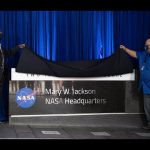
    NASA paid tribute to a “Hidden Figure” by holding a ceremony officially naming the NASA Headquarters building in Washington, D.C. in honor of Mary W. Jackson Friday, Feb 26.

    Mary W. Jackson, the first African American female engineer at NASA, began her career with the agency in the segregated West Area Computing Unit of NASA’s Langley Research Center in Hampton, Virginia. The mathematician and aerospace engineer went on to lead programs influencing the hiring and promotion of women in NASA’s science, technology, engineering, and mathematics careers. In 2019, she was awarded the Congressional Gold Medal posthumously.

    In addition to unveiling a building sign with Jackson’s name, the event featured video tributes with reflections on Jackson’s career and legacy from current and former NASA employees and astronauts, celebrities, elected officials and others.

    Learn more at: https://www.nasa.gov/content/mary-w-jackson-biography

    Producer Credit: Sonnet Apple
    Music: “Back to Basics”/Universal Production Music

  • NASA ceremony to name headquarters after Hidden Figure Mary W. Jackson

    NASA ceremony to name headquarters after Hidden Figure Mary W. Jackson

    You’re invited to join us for a virtual event on Friday, Feb. 26 at 1 p.m. EST officially naming the NASA Headquarters building in Washington, D.C, in honor of Mary W. Jackson, the first African American female engineer at NASA who made extensive contributions to aerospace research, and the hiring and promotion of minorities in science, technology, engineering, and mathematics.

    In addition to unveiling a building sign with Jackson’s name, the event will feature video tributes with reflections on her career and legacy from a variety of individuals, including William R. Harvey, the president of Hampton University, Jackson’s alma mater, as well as family and friends, current and former NASA employees and astronauts, celebrities, elected officials and others. The event also will feature a video of poet Nikki Giovanni reading an excerpt from her poem “Quilting the Black-Eyed Pea,” which is about space and civil rights.

    Learn more about Mary W. Jackson by visiting: https://www.nasa.gov/content/mary-w-jackson-biography

  • Honoring a ‘Hidden Figure’: NASA to Unveil the Mary W. Jackson Headquarters Building

    Honoring a ‘Hidden Figure’: NASA to Unveil the Mary W. Jackson Headquarters Building

    Mary W. Jackson, the first African American female engineer at NASA, began her career with the agency in the segregated West Area Computing Unit of NASA’s Langley Research Center in Hampton, Virginia. The mathematician and aerospace engineer went on to lead programs influencing the hiring and promotion of women in NASA’s science, technology, engineering, and mathematics careers. In 2019, she was awarded the Congressional Gold Medal posthumously.

    Acting NASA Administrator Steve Jurczyk will lead a ceremony at 1 p.m. EST Friday, Feb 26, officially naming the NASA Headquarters building in Washington in honor of Mary W. Jackson.

    The event will air live on NASA Television and the agency’s website and will stream live on the agency’s flagship social media accounts. and theNASA app.

    In addition to unveiling a building sign with Jackson’s name, the event will feature video tributes with reflections on Jackson’s career and legacy from current and former NASA employees and astronauts, celebrities, elected officials and others. The event will also feature a video of poet Nikki Giovanni reading an excerpt from her poem “Quilting the Black-Eyed Pea,” which is about space and civil rights.

    Producer Credit: Sonnet Apple
    Music: “My One and Only”/Universal Production Music

  • Watch NASA’s Perseverance Rover Land | Video from Mars!

    Watch NASA’s Perseverance Rover Land | Video from Mars!

    New video from NASA’s Mars 2020 Perseverance rover chronicles major milestones during the final minutes of its entry, descent and landing (EDL) on the Red Planet on Feb. 18 as the spacecraft plummeted, parachuted, and rocketed toward the surface of Mars.

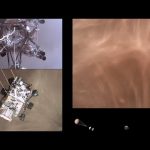
    From the moment of parachute inflation, the camera system covers the entirety of the descent process, showing some of the rover’s intense ride to Mars’ Jezero Crater. The footage from high-definition cameras aboard the spacecraft starts 7 miles (11 kilometers) above the surface, showing the supersonic deployment of the most massive parachute ever sent to another world and ends with the rover’s touchdown in the crater.

    Producer Credit: Sonnet Apple
    Music: “DMC 12″/Universal Production Music

  • Perseverance Rover’s Descent and Touchdown on Mars (Official NASA Video)

    Perseverance Rover’s Descent and Touchdown on Mars (Official NASA Video)

    NASA’s Mars 2020 Perseverance mission captured thrilling footage of its rover landing in Mars’ Jezero Crater on Feb. 18, 2021. The real footage in this video was captured by several cameras that are part of the rover’s entry, descent, and landing suite. The views include a camera looking down from the spacecraft’s descent stage (a kind of rocket-powered jet pack that helps fly the rover to its landing site), a camera on the rover looking up at the descent stage, a camera on the top of the aeroshell (a capsule protecting the rover) looking up at that parachute, and a camera on the bottom of the rover looking down at the Martian surface.

    The audio embedded in the video comes from the mission control call-outs during entry, descent, and landing.

    For more information about Perseverance, visit https://mars.nasa.gov/perseverance

    Credit: NASA/JPL-Caltech

  • NASA Science Live: We Landed on Mars

    NASA Science Live: We Landed on Mars

    Join us for a live Q&A with members of the team that helped get NASA’s Perseverance rover to Mars! Tag your questions with #CountdownToMars and we’ll answer as many as we can during our 3:00pm ET live event today.

    A new chapter of Mars exploration has officially begun! On Feb. 18, 2021, NASA’s Perseverance rover successfully landed on Mars. What’s next? The rover will prepare to explore its new Martian home, search for signs of ancient life and collect samples to be returned by a future mission.

    On this episode of NASA Science Live we feature:

    – Dr. Moogega Cooper, host of the episode and lead of making sure the rover didn’t bring Earth bacteria with it to Mars
    – Dr. Kelsey Moore, Perseverance Science Team Member studying astrobiology and how early life forms
    – Gregorio Villar, Entry Descent and Landing Operations Lead who helped build and test the system that landed the Perseverance rover on Mars

  • We Asked a NASA Scientist: Is Mars Habitable?

    We Asked a NASA Scientist: Is Mars Habitable?

    Is Mars habitable? Could ancient life once have existed on the Red Planet? Is there potential for life today deep beneath the Martian crust? NASA Mars expert Ell Bogat is here to give us the details.

  • We Asked a NASA Scientist: Could Microbes Survive a Trip to Mars?

    We Asked a NASA Scientist: Could Microbes Survive a Trip to Mars?

    Could Earth-based microbes survive a trip to Mars? Yes! That’s why we made sure our Perseverance Mars rover met cleanliness requirements before leaving our home planet. Dr. Moogega Cooper from the NASA Jet Propulsion Laboratory is here to fill us in. #CountdownToMars

  • We are Family: NASA Honors Black History Month

    We are Family: NASA Honors Black History Month

    NASA celebrates Black History Month by honoring the accomplishments and contributions of African Americans across the agency.
    This year, NASA pays tribute to The Black Family: Representation, Identity, and Diversity, the theme for 2021.
    Each year during February, NASA highlights the African American community’s significant achievements, whose creativity and innovations have done much to advance science & technology and made our lives more enriched.

    Video Credits:
    Producer/Editor: Jori Kates
    Writer: Jori Kates and Andre Valentine

  • NASA Science Live: Continuing a Legacy of Trailblazers

    NASA Science Live: Continuing a Legacy of Trailblazers

    Behind every NASA success story are the people who make the impossible, possible. Join us as we celebrate Black History Month and the contributions of African American trailblazers and those following in their footsteps as they help NASA reach new heights for the benefit of all humankind.

  • See the European Service Modules taking humankind forward to the Moon

    See the European Service Modules taking humankind forward to the Moon

    From the @Airbus integration halls in Bremen, Germany, this replay of a live event shows a sneak peek of the two European Service Modules that will power astronauts to the Moon and back as part of @NASA’s Orion spacecraft.

    Orion is NASA’s next exploration spacecraft to send astronauts farther into space than ever before, beyond the Moon to asteroids and even Mars.

    ESA has contracted and is overseeing the development of the European Service Module, the part of the Orion spacecraft that provides air, electricity and propulsion. Much like a train engine pulls passenger carriages and supplies power, the European Service Module will power the Orion crew module to its destination and back to Earth.

    The programme includes Andreas Hammer, Head of @Airbus Defence and Space Exploration showing the European Service Modules in production, ESA Director General Jan Wörner announcing future developments, a statement by ESA’s head of European Service Module programme Philippe Deloo, a statement by Airbus head of European Service Module programme Didier Radola, a Moon missions overview with ESA astronaut Alexander Gerst and ESA’s head of Space Transportation Nico Dettmann on how ESA is building Orion with industry.

    ★ Subscribe: http://bit.ly/ESAsubscribe and click twice on the bell button to receive our notifications.

    Check out our full video catalog: http://bit.ly/SpaceInVideos
    Follow us on Twitter: http://bit.ly/ESAonTwitter
    On Facebook: http://bit.ly/ESAonFacebook
    On Instagram: http://bit.ly/ESAonInstagram
    On Flickr: http://bit.ly/ESAonFlickr

    We are Europe’s gateway to space. Our mission is to shape the development of Europe’s space capability and ensure that investment in space continues to deliver benefits to the citizens of Europe and the world. Check out https://www.esa.int/ to get up to speed on everything space related.

    Copyright information about our videos is available here: https://www.esa.int/ESA_Multimedia/Terms_and_Conditions

    #ESA
    #Artemis
    #Orion

  • NASA Day of Remembrance at Arlington National Cemetery

    NASA Day of Remembrance at Arlington National Cemetery

    On Thursday, Jan. 28, wreaths were laid at Arlington National Cemetery in Virginia in memory of the fallen astronauts of Apollo 1, space shuttles Challenger and Columbia, and other members of the NASA family who lost their lives in the quest for space exploration. A limited number of senior agency officials and others from NASA Headquarters joined family members for the small family gathering on the annual Day of Remembrance.

    https://www.nasa.gov/specials/dor2021/

    Producer Credit: Amy Leniart & Sonnet Apple

  • NASA Remembers Fallen Heroes

    NASA Remembers Fallen Heroes

    NASA remembers the crews of Apollo 1, space shuttles Challenger and Columbia during the agency’s Day of Remembrance on Jan. 28, 2021, the 35th anniversary of the Challenger accident. NASA’s Day of Remembrance honors members of the NASA family who lost their lives while furthering the cause of exploration and discovery.

    Download Link: https://images.nasa.gov/details-NASA%20Remembers%20Fallen%20Heroes

    Producer Credit: Sonnet Apple
    Music: Universal Production Music

  • Spacewalk by NASA Astronauts to Install Space Station Science Platform

    Spacewalk by NASA Astronauts to Install Space Station Science Platform

    Watch live as astronauts Victor Glover and Michael Hopkins of NASA venture outside the International Space Station on Jan. 27. The spacewalk will begin at about 7 a.m. EST and last for approximately six and a half hours. The astronauts will focus on completing cable and antenna rigging for the “Bartolomeo” science payloads platform outside the station’s ESA (European Space Agency) Columbus module. They’ll also configure a Ka-band terminal that will enable an independent, high-bandwidth communication link to European ground stations.

    Hopkins will be extravehicular crew member 1 (EV 1), wearing a spacesuit with red stripes, and Glover will be extravehicular crew member 2 (EV 2), wearing a spacesuit with no stripes. This will be the third spacewalk in Hopkins’ career, and the first for Glover.

  • NASA Astronauts Share Inauguration Message From the Space Station

    NASA Astronauts Share Inauguration Message From the Space Station

    NASA astronauts Shannon Walker, Victor Glover, Kate Rubins and Mike Hopkins shared a special inaugural message while aboard the International Space Station, orbiting 200 miles above the Earth’s surface.

    Download this video from NASA’s image and video library: https://images.nasa.gov/details-NASA%20Astronauts%20Share%20Their%20Inauguration%20Message%20From%20The%20Space%20Station
    Editor: Lacey Young

  • NASA Administrator Jim Bridenstine: A Look Back

    NASA Administrator Jim Bridenstine: A Look Back

    A look back at Administrator Jim Bridenstine’s time at NASA and all the incredible things accomplished during his tenure. From introducing the Artemis Generation to renaming NASA headquarters after hidden figure Mary W. Jackson, there have been so many highlights to appreciate.

    Producer/Editor: David Anderson
    Music: Universal Production Music

  • NASA 2021: Let’s Go to the Moon

    NASA 2021: Let’s Go to the Moon

    Sending the first Artemis mission to the Moon in preparation for human missions, landing a new rover on Mars, and launching the James Webb Space Telescope into space, expanding our ability to see deep into the universe, are just a few of the things NASA has planned for 2021.

    To learn more about the missions mentioned in this video, take a deep dive into these links:

    To the Moon [00:12]
    Space Launch System: https://www.nasa.gov/sls
    Artemis I: https://www.nasa.gov/artemis
    Commercial Lunar Payload Services: https://www.nasa.gov/clps
    Human Landing System: https://www.nasa.gov/content/humans-on-the-moon-0
    Artemis Accords: https://www.nasa.gov/artemisaccords

    Exploring Beyond [00:47]
    Perseverance: https://www.nasa.gov/perseverance
    MOXIE: https://mars.nasa.gov/mars2020/spacecraft/instruments/moxie/
    Ingenuity: https://mars.nasa.gov/technology/helicopter/#Overview
    James Webb Space Telescope: https://www.nasa.gov/jwst
    DART: https://www.nasa.gov/dart
    LUCY: https://www.nasa.gov/lucy
    Landsat 9: https://landsat.gsfc.nasa.gov/landsat-9/landsat-9-overview

    Humans in Space [1:38]
    International Space Station: https://www.nasa.gov/iss
    Commercial Crew: https://www.nasa.gov/commercialcrew
    Astronaut Candidates: https://www.nasa.gov/astronauts

    Space Technology [2:07]
    CAPSTONE: https://www.nasa.gov/directorates/spacetech/small_spacecraft/capstone
    Laser Communications Relay Demonstration: https://www.nasa.gov/spacetech

    Pioneering Flight [2:28]
    X-57 Maxwell: https://www.nasa.gov/aero
    Advanced Air Mobility: https://www.nasa.gov/aero
    X-59 QUESST: https://www.nasa.gov/subject/7565/future-aircraft/

  • Season’s Greetings from NASA

    Season’s Greetings from NASA

    It’s winter in the Northern Hemisphere on Earth, but we’re not the only place with ice and snow! From the frozen polar craters of Mercury to methane frost on the mountains of Pluto, enjoy season’s greetings from around the solar system.

  • NASA Science Live: How to See Saturn and Jupiter’s Great Conjunction

    NASA Science Live: How to See Saturn and Jupiter’s Great Conjunction

    Have you noticed two bright objects in the sky getting closer together with each passing night? It’s Jupiter and Saturn doing a planetary dance that will result in the Great Conjunction on Dec. 21. On that day, Jupiter and Saturn will be right next to each other in the sky — the closest they have appeared in nearly 400 years! Want to learn when and where to look up? Join our expert astronomer Dr. Henry Throop on #NASAScience Live.

  • NASA Science Live: You Too Can Do NASA Science

    NASA Science Live: You Too Can Do NASA Science

    No matter who you are or where you are, YOU can participate in the science done at NASA and make new discoveries alongside NASA scientists. Watch #NASAScience Live on Wednesday, Dec. 16 at 3:00 p.m. EST to hear from people around the globe about how they’re doing NASA science and learn how you too can get involved with NASA’s citizen science projects.

  • Artemis I – European Service Module perspective

    Artemis I – European Service Module perspective

    The Orion spacecraft with European Service Module will fly farther from Earth than any human-rated vehicle has ever flown before. This video gives an overview of the first mission – without astronauts – for Artemis, focussing on ESA’s European Service Module that powers the spacecraft.

    The spacecraft will perform a flyby of the Moon, using lunar gravity to gain speed and propel itself 70 000 km beyond the Moon, almost half a million km from Earth – further than any human has ever travelled.

    On its return journey, Orion will do another flyby of the Moon before heading back to Earth.
    The total trip will take around 20 days, ending with a splashdown in the Pacific Ocean without the European Service Module – it separates and burns up harmlessly in the atmosphere.

    The second Artemis mission will have a similar flight plan but with astronauts. The third Artemis mission will see astronauts taken to the lunar surface.

    The European Service Module is ESA’s contribution to NASA’s Orion spacecraft that will send astronauts to the Moon and beyond. It provides electricity, water, oxygen and nitrogen as well as keeping the spacecraft at the right temperature and on course.

    The European Service Module has 33 thrusters, 11 km of electrical wiring, four propellant and two pressure tanks that all work together to supply propulsion and everything needed to keep astronauts alive far from Earth – there is no room for error.

    ★ Subscribe: http://bit.ly/ESAsubscribe and click twice on the bell button to receive our notifications.

    Check out our full video catalog: http://bit.ly/SpaceInVideos
    Follow us on Twitter: http://bit.ly/ESAonTwitter
    On Facebook: http://bit.ly/ESAonFacebook
    On Instagram: http://bit.ly/ESAonInstagram
    On Flickr: http://bit.ly/ESAonFlickr

    We are Europe’s gateway to space. Our mission is to shape the development of Europe’s space capability and ensure that investment in space continues to deliver benefits to the citizens of Europe and the world. Check out https://www.esa.int/ to get up to speed on everything space related.

    Copyright information about our videos is available here: https://www.esa.int/ESA_Multimedia/Terms_and_Conditions

    #ESA
    #Artemis
    #Orion

  • ESA & NASA | Forward to the Moon

    ESA & NASA | Forward to the Moon

    The European Space Agency and NASA signed a Memorandum of Understanding (MoU) to take Europe to the Moon.

    This historic agreement will see ESA Member States contribute a number of essential elements to the first human outpost in lunar orbit, known as the Gateway.
    It confirms ESA’s commitment to delivering at least two European Service Modules that provide electricity, water, oxygen and nitrogen to NASA’s Orion spacecraft – with more to come. ESA will also receive three flight opportunities for European astronauts to travel to and work on the Gateway.

    ESA’s head of the Legal Services, Marco Ferrazzani, explains how these agreements will take us forward to the Moon.

    Learn more: https://bit.ly/GatewayMoUandArtemisAccords

    ★ Subscribe: http://bit.ly/ESAsubscribe and click twice on the bell button to receive our notifications.

    Check out our full video catalog: http://bit.ly/SpaceInVideos
    Follow us on Twitter: http://bit.ly/ESAonTwitter
    On Facebook: http://bit.ly/ESAonFacebook
    On Instagram: http://bit.ly/ESAonInstagram
    On Flickr: http://bit.ly/ESAonFlickr

    We are Europe’s gateway to space. Our mission is to shape the development of Europe’s space capability and ensure that investment in space continues to deliver benefits to the citizens of Europe and the world. Check out https://www.esa.int/ to get up to speed on everything space related.

    Copyright information about our videos is available here: https://www.esa.int/ESA_Multimedia/Terms_and_Conditions

  • NASA Science Live: Lucy in the Sky with Asteroids

    NASA Science Live: Lucy in the Sky with Asteroids

    Asteroids are prehistoric treasures that hold the lost tales about the origin of our solar system. We are slowly starting to unfold this story and NASA’s Lucy mission will launch in about a year to venture on a 12-year tour studying diverse primordial worlds. Join mission experts on #NASAScience Live and learn about the first ever spacecraft to study the swarm of asteroids associated with Jupiter, known as the Trojans.

    This episode was originally broadcast live on Thursday, Dec. 3, 2020.

  • An astronaut’s perspective on searching meteorites in Antarctica

    An astronaut’s perspective on searching meteorites in Antarctica

    In late 2019, ESA astronaut and geophysicist Alexander Gerst travelled to one of the harshest environments on Earth to learn more about our solar system, and to gather operational knowledge for missions to planetary surfaces such as the Moon. Travel with him to Antarctica and discover the many secrets held by meteorites in this documentary from the ice.

    Since its inception in 1976, the US-led Antarctic Search for Meteorites (ANSMET) has recovered more than 22,000 specimens. These are rocks that fell from space, originating from several sources in our solar system, including the Moon and Mars. After each field season the newly recovered specimens are shipped (still frozen and sterile) to the Antarctic Meteorite laboratory at NASA’s Johnson Space Center in Houston, Texas. There they are thawed, dried, carefully examined, and shipped to planetary scientists world-wide. These rock fragments enable scientists to look beyond our planet, and Earth’s orbit, into the depths of space.

    As a member of the 2019-2020 crew, Alexander gained and shared knowledge with his team mates and followed in the footsteps of great Antarctic explorers before him, spending weeks in a remote field camp, only a few hundred kilometres from the South Pole. The team recovered 346 meteorites during this season. His mission also shared many similarities with what astronauts will encounter when flying to the Lunar South Pole in the not-so-distant future – making it another valuable step in preparing for what might lie ahead.

    Find out more about ANSMET over on the blog https://caslabs.case.edu/ansmet/category/19-20/

    ★ Subscribe: http://bit.ly/ESAsubscribe and click twice on the bell button to receive our notifications.

    Check out our full video catalog: http://bit.ly/SpaceInVideos
    Follow us on Twitter: http://bit.ly/ESAonTwitter
    On Facebook: http://bit.ly/ESAonFacebook
    On Instagram: http://bit.ly/ESAonInstagram
    On Flickr: http://bit.ly/ESAonFlickr

    We are Europe’s gateway to space. Our mission is to shape the development of Europe’s space capability and ensure that investment in space continues to deliver benefits to the citizens of Europe and the world. Check out https://www.esa.int/ to get up to speed on everything space related.

    Copyright information about our videos is available here: https://www.esa.int/ESA_Multimedia/Terms_and_Conditions

  • NASA Science Live: Lucy in the Sky with Asteroids

    NASA Science Live: Lucy in the Sky with Asteroids

    Asteroids are prehistoric treasures that hold the lost tales about the origin of our solar system. We are slowly starting to unfold this story and NASA’s Lucy mission will launch in about a year to venture on a 12-year tour studying diverse primordial worlds. Join mission experts on #NASAScience Live Thursday, Dec. 3 at 3:00 p.m. ET and learn about the first ever spacecraft to study the swarm of asteroids associated with Jupiter, known as the Trojans. Have questions? Use #askNASA.

  • NASA’s SpaceX Crew-1 Launch

    NASA’s SpaceX Crew-1 Launch

    The SpaceX Crew Dragon Resilience successfully docked to the International Space Station at 11:01 p.m. EST Monday, transporting NASA astronauts Michael Hopkins, Victor Glover, Shannon Walker, and Japan Aerospace Exploration Agency (JAXA) astronaut Soichi Noguchi.

    NASA’s SpaceX Crew-1 mission lifted off Sunday, Nov. 15, at 7:27 p.m. on the SpaceX Falcon 9 rocket and Crew Dragon spacecraft from Launch Complex 39A at NASA’s Kennedy Space Center in Florida. The mission is the first of six certified, crew missions NASA and SpaceX will fly as a part of the agency’s Commercial Crew Program.

    The crew will conduct science and maintenance during a six-month stay aboard the orbiting laboratory and will return in spring 2021. It is scheduled to be the longest human space mission launched from the United States. The Crew Dragon spacecraft is capable of staying in orbit for at least 210 days, as a NASA requirement.

    Producer Credit: Sonnet Apple
    Music: Willpower/Universal Production Music

  • NASA Science Live: Rising Seas

    NASA Science Live: Rising Seas

    Sea levels across the globe are rising as a result of a changing climate — and the rate at which they are rising is accelerating. Watch NASA Science Live Tuesday, Nov. 17 at 12:30 p.m. EST to meet NASA researchers studying these changes, and learn how the next mission launching to space will continue the nearly 30-year record of monitoring Earth’s ocean from space.