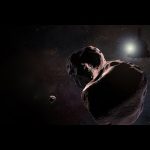
New Horizons spots its next flyby target, Administrator Bridenstine visits our west coast facilities, and using data from space to fight a life-threatening disease … a few of the stories to tell you about – This Week at NASA!
This video is available for download from NASA’s Image and Video Library: https://images.nasa.gov/details-NHQ_2018_0831_New%20Horizons%20Detects%20Next%20Flyby%20Target%20on%20This%20Week%20@NASA%20%E2%80%93%20August%2031,%202018.html
A new resupply mission arrives at the Space Station, a closer look at dwarf planet, Ceres, and the Parker Solar Probe is ready for the heat … a few of the stories to tell you about – This Week at NASA!
This video is available for download from NASA’s Image and Video Library: https://images.nasa.gov/details-NHQ_2018_0706_New%20Supplies%20and%20Research%20for%20the%20Space%20Station%20on%20This%20Week%20@NASA%20%E2%80%93%20July%206,%202018.html
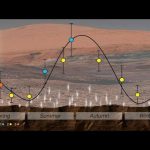
A new crew aboard the space station, Curiosity rover’s new science findings on Mars, and – Celebrating 60 years of NASA … a few of the stories to tell you about – This Week at NASA!
This video is available for download from NASA’s Image and Video Library: https://images.nasa.gov/details-NHQ_2018_0608_Curiosity%E2%80%99s%20New%20Mars%20Science%20Results%20on%20This%20Week%20@NASA%20%E2%80%93%20June%208,%202018.html
A new crew at the space station, some science on the next SpaceX resupply mission, and testing Orion’s parachutes – a few of the stories to tell you about – This Week at NASA!
This video is available for download from NASA’s Image and Video Library: https://images.nasa.gov/details-NHQ_2018_0323_New%20Crew%20Arrives%20at%20the%20Space%20Station%20on%20This%20Week%20@NASA%20%E2%80%93%20March%2023,%202018.html
This evidence seems to suggest that the dark matter is particles that are less than four times the mass of a proton and are moving at non-relativistic speeds. This is consistent with dark matter particles being so-called WIMPs: https://en.wikipedia.org/wiki/Weakly_interacting_massive_particles.
In Bonn, Germany, two ESA astronauts recently went through a brand new training programme which could be very useful in case of no contact with the ground or when communication might be delayed.
Samantha Cristoferetti and Matthias Maurer were taught basic mechanical, electronic, electrical and pneumatic skills and how to use these skills to troubleshoot their equipment in space.
This new training, commissioned by ESA, has been developed by the Dr. Reinold-Hagen Foundation and by Space Application Services.
New data reveal that the interstellar asteroid that recently zipped through our solar system is rocky, cigar-shaped, and has a somewhat reddish hue. It’s the first confirmed object from another star observed in our solar system, and was discovered Oct. 19 by the University of Hawaii’s Pan-STARRS1 telescope team, funded by NASA’s Near-Earth Object Observations Program. The telescope team named it ‘Oumuamua (oh MOO-uh MOO-uh) – Hawaiian for “a messenger from afar arriving first.” The unusually-shaped asteroid, which is up to a quarter mile long and perhaps 10 times as long as it is wide, may provide new clues into how other solar systems formed. Also, Advanced Weather Satellite Launched, James Webb Space Telescope Completes Final Cryogenic Testing, Recurring Martian Streaks: Flowing Sand, Not Water? and Happy Thanksgiving, from Space!
This video is available for download from NASA’s Image and Video Library: https://images.nasa.gov/details-NHQ_2017_1124_New%20Details%20about%20Interstellar%20Visitor%20on%20This%20Week%20@NASA%20%E2%80%93%20November%2024,%202017.html
Join us November 15 for the debut of the new NASA podcast, “Gravity Assist,” hosted by Dr. Jim Green, NASA’s director of planetary science. Gravity Assist is a virtual tour of the solar system and beyond with the top scientists in the world as your guides. The weekly podcast kicks off with a special 10-part series on the solar system that begins with the Sun, and takes you outward to Pluto and beyond.
This video is available for download from NASA’s Image and Video Library: https://images.nasa.gov/#/details-NHQ_2017_1027_NASA%E2%80%99s%20New%20%E2%80%9CGravity%20Assist%E2%80%9D%20Podcast%20Debuts%20Nov.15.html
From the internationally renowned maker of robotics building sets arises a new model of impressive proportions. Unlike anything else Meccano has created, M.A.X. combines Artificial Intelligence (AI) with customizable programming. The result is a one-of-a-kind robot of your own creation! Budding engineers, innovators and creators can expand their knowledge of programming as they personalize this robot to their specifications. Once built, M.A.X measures 12” in tall. Control it using voice commands, buttons on the MeccaBrain, or the free app! You’ll know exactly what its thinking based on its expressive facial graphics. As a S.T.E.M robotics platform, M.A.X is designed to engage kids in intellectually stimulating play, drawing on their knowledge of science, technology, engineering and math. Not just a learning tool, this robot loves fun! Try playing on M.A.X’s built-in gaming platform; test your knowledge in a trivia game or listen to some funny jokes! With a multitude of features, kids will want to bring their new friend everywhere! This robot comes with built-in infrared sensors, enabling it to move with agility and avoid obstacles in its path. If you know a young mind in need of a challenge, introduce them to their new friend, M.A.X!
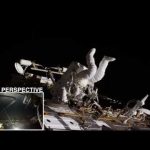
Acting Administrator Robert Lightfoot was in Kazakhstan on July 28 to observe the launch to the International Space Station of our astronaut Randy Bresnik with his crewmates – Sergey Ryazanskiy of Roscosmos, and Paolo Nespoli of the European Space Agency. The trio is scheduled to spend more than four months on the station working on hundreds of science and technology experiments. Also, New 4K Footage of Spacewalk, NASA Technologies Showcased at AirVenture Event, Preparing to Chase the Total Solar Eclipse from the Sky, and Another Successful RS-25 Engine Test!
After receiving a record-breaking number of applications to join an exciting future of space exploration, NASA has selected its largest astronaut class since 2000. Rising to the top of more than 18,300 applicants, NASA chose 12 women and men as the agency’s new astronaut candidates. Vice President Mike Pence joined Acting NASA Administrator Robert Lightfoot, Johnson Space Center Director Ellen Ochoa, and Flight Operations Director Brian Kelly to welcome the new astronaut candidates during an event June 7 at the agency’s Johnson Space Center in Houston. The astronaut candidates will return to Johnson in August to begin two years of training. Then they could be assigned to any of a variety of missions: performing research on the International Space Station, launching from American soil on spacecraft built by commercial companies, and departing for deep space missions on NASA’s new Orion spacecraft and Space Launch System rocket.
Thomas Pesquet reflects on living on the International Space Station after his six-month Proxima mission. Beyond science and technology the voyage often reveals more than the destination. A message for all humans.
As Marcel Proust wrote in his book The Prisoner: “The only true voyage of discovery, … would be not to visit strange lands but to possess other eyes, to behold the universe through the eyes of another, of a hundred others, to behold the hundred universes that each of them beholds, that each of them is.”
The footage was shot with the Space Station’s highest resolution camera at resolutions between 4K and 6K and available here in Ultra High Definition (3840×2160 pixels). Download the full high-resolution file from ESA’s video archive: http://www.esa.int/spaceinvideos/Videos/2017/05/New_eyes
During Proxima, Thomas performed around 50 scientific experiments for ESA and France’s space agency CNES as well as take part in many research activities for the other Station partners.
The mission is part of ESA’s vision to use Earth-orbiting spacecraft as a place to live and work for the benefit of European society while using the experience to prepare for future voyages of exploration further into the Solar System.
During a NASA science briefing on April 13, representatives from the agency discussed new results about ocean worlds in our solar system based on data gathered by NASA’s Cassini spacecraft and the Hubble Space Telescope.
The two veteran missions are providing tantalizing new details about icy, ocean-bearing moons of Jupiter and Saturn, further enhancing the scientific interest of these and other “ocean worlds” in our solar system and beyond.
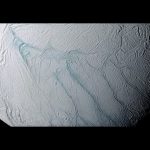
New research from Cassini indicates that hydrogen gas, which could potentially provide a chemical energy source for life, is pouring into the ocean of Saturn’s icy moon Enceladus from hydrothermal vents in the seafloor. The Cassini spacecraft detected the hydrogen in the plume of gas and icy material spraying from Enceladus during its deepest dive through the plume on Oct. 28, 2015.This means that ocean microbes — if any exist there — could use the hydrogen to produce energy
NASA’s Hubble Space Telescope saw a probable plume of material erupting from the moon’s surface on 2016, at the same location where Hubble saw evidence of a plume in 2014. These images bolster evidence that the Europa plumes could be a real phenomenon, flaring up intermittently in the same region on the moon’s surface.
Both Cassini and Hubble investigations are laying the groundwork for NASA’s Europa Clipper mission, which is being planned for launch in the 2020s.
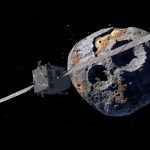
On Jan. 4, NASA announced the selection of two missions to explore previously unexplored asteroids. The first mission, called Lucy, will study asteroids, known as Trojan asteroids, trapped by Jupiter’s gravity. The Psyche mission will explore a very large and rare object in the solar system’s asteroid belt that’s made of metal, and scientists believe might be the exposed core of a planet that lost its rocky outer layers from a series of violent collisions. Lucy is targeted for launch in 2021 and Psyche in 2023. Both missions have the potential to open new windows on one of the earliest eras in the history of our solar system – a time less than 10 million years after the birth of our sun.
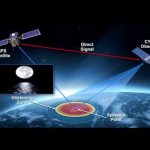
NASA held a media briefing on Nov. 10 at the agency’s headquarters to discuss the upcoming Cyclone Global Navigation Satellite System (CYGNSS) mission. GYGNSS is a constellation of eight microsatellites that will gather never-before-seen details on the formation and intensity of tropical cyclones and hurricanes.
CYGNSS, targeted for a Dec. 12 launch from Cape Canaveral Air Force Station in Florida, is the first mission competitively selected by NASA’s Earth Venture program. This program focuses on low-cost, science-driven missions to enhance our understanding of the current state of Earth and its complex, dynamic system and enable continual improvement in the prediction of future changes.
TechCrunch is a leading technology media property, dedicated to obsessively profiling startups, reviewing new Internet products, and breaking tech news.
NASA’s Director of Planetary Science, Jim Green, discusses the Jan. 20 Astronomical Journal science paper that points to the possibility of a new “Planet 9” in our solar system beyond Pluto, examining the scientific process and inviting you to have a front row seat to our exploration of the solar system.
2015 was an incredible year for aeronautics research, human exploration, earth science, space science, and technology. We can’t wait to show you what we have in store for 2016.
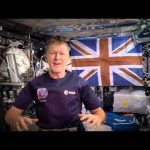
ESA astronaut Tim Peake wishes Earth a happy new year from the International Space Station.
Tim is spending six months in space to maintain the Space Station and run experiments for scientists on Earth. His Principia mission will see him perform over 30 experiments for European scientists alone.
Follow Tim and his mission via timpeake.esa.int.
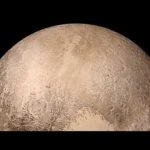
During a July 24 science update at NASA headquarters, new surprising imagery and science results were revealed from the recent flyby of Pluto, by the New Horizons spacecraft. These included an image from the Long Range Reconnaissance Imager or (LORRI) – looking back at Pluto – hours after the historic flyby that shows haze in the planet’s sunlit atmosphere, that extends as high as 80 miles above Pluto’s surface – much higher than expected. Models suggest that the hazes form when ultraviolet sunlight breaks apart methane gas.
LORRI images also show evidence that exotic ices have flowed – and may still be flowing across Pluto’s surface, similar to glacial movement on Earth. This unpredicted sign of present-day geologic activity was detected in Sputnik Planum – an area in the western part of Pluto’s heart-shaped Tombaugh Regio.
Additionally, new compositional data from New Horizons’ Ralph instrument indicate that the center of Sputnik Planum is rich in nitrogen, carbon monoxide, and methane ices.
These key excerpts from a July 24 science update at NASA headquarters, features team members of NASA’s New Horizons mission discussing surprising new images and science results from the spacecraft’s historic July 14 flyby of Pluto.
A July 24 update at NASA headquarters, featured new surprising imagery and science results from the recent flyby of Pluto, by the New Horizons spacecraft. These included an image from the Long Range Reconnaissance Imager or (LORRI) – looking back at Pluto – hours after the historic flyby that revealed a haze in the planet’s sunlit atmosphere that extends as high as 80 miles above Pluto’s surface – much higher than expected. Models suggest that the hazes form when ultraviolet sunlight breaks apart methane gas. LORRI images also show evidence that exotic ices have flowed – and may still be flowing across Pluto’s surface, similar to glacial movement on Earth. This unpredicted sign of present-day geologic activity was detected in Sputnik Planum – an area in the western part of Pluto’s heart-shaped Tombaugh Regio. Additionally, new compositional data from New Horizons’ Ralph instrument indicate that the center of Sputnik Planum is rich in nitrogen, carbon monoxide, and methane ices. Also, Kepler discovers Earth’s “bigger cousin”, New crew launches to space station, EPIC view of Earth, Newman continues NASA center visits and Small Class Vehicle launch pad complete!
After a nearly decade-long journey, NASA’s New Horizons spacecraft arrived at Pluto on July 14 – passing by at a mere 7,750 miles above the surface … resulting in an absolutely breathtaking image – the closest ever of Pluto. Initial congratulations included a Twitter post from the White House … and from iconic figures in the scientific community. The so-called “data waterfall” released by New Horizons contains so many astounding images and detailed information about Pluto that investigators anticipate it will take about 16 months to send it all back to Earth. Also, Mariner 4 Mars flyby anniversary, Newman sworn-in, New wildfire detection tool, Expedition 44/45 prepares for launch and 40th anniversary of Apollo-Soyuz!
Earth from Space is presented by Kelsea Brennan-Wessels from the ESA Web-TV virtual studios. The one hundred fifty-first edition features a satellite image of New York City in the United States.
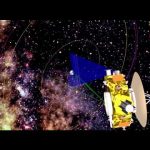
At approximately 7:49 a.m. on July 14, NASA’s New Horizons spacecraft is scheduled to be as close as it will get to Pluto, approximately 7,800 miles (12,500 kilometers) above the surface. This historic moment is part of NASA’s coverage of New Horizons’ nine year, three billion mile journey to the Pluto system to gather data about Pluto and its moons.
NASA’s New Horizons spacecraft arrives at Pluto on July 14th; a journey lasting nearly 10 years and traveling over 3 billion miles. Watch coverage of the historic flyby of Pluto on NASA Television as NASA counts down to the Pluto encounter of a lifetime.
Weekly pre-flyby updates aired June 23 on NASA TV provides an overview of the New Horizons mission, the spacecraft and its suite of instruments being prepared for a July 14 flyby, and a summary of Pluto science to date.
In NASA’a second televised briefings on Tuesday, April 14, plans and upcoming activities about the agency’s mission to Pluto that will make the first-ever close flyby of the dwarf planet on July 14 were briefed.
Briefers described the mission’s goals and context, scientific objectives and encounter plans – including what images can be expected and when.
New Horizons already has covered more than 3 billion miles since it launched on Jan. 19, 2006. The spacecraft will pass Pluto at a speed of 31,000 mph taking thousands of images and making a wide range of science observations. At a distance of nearly 4 billion miles from Earth at flyby, it will take approximately 4.5 hours for data to reach Earth.
Participants for the 2:20-3:30 p.m. discussion were:
– James Green, director of Planetary Science, NASA Headquarters
– Glen Fountain, New Horizons Project Manager, Johns Hopkins University Applied Physics Laboratory, Laurel, Maryland
– Hal Weaver, New Horizons Project Scientist, Johns Hopkins University Applied Physics Laboratory, Laurel, Maryland
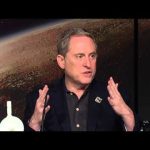
– Alan Stern, New Horizons Principal Investigator, Southwest Research Institute, Boulder, Colorado
In NASA first of two televised briefings on Tuesday, April 14, plans and upcoming activities about the agency’s mission to Pluto that will make the first-ever close flyby of the dwarf planet on July 14 were discussed.
Briefers described the mission’s goals and context, scientific objectives and encounter plans – including what images can be expected and when.
New Horizons already has covered more than 3 billion miles since it launched on Jan. 19, 2006. The spacecraft will pass Pluto at a speed of 31,000 mph taking thousands of images and making a wide range of science observations. At a distance of nearly 4 billion miles from Earth at flyby, it will take approximately 4.5 hours for data to reach Earth.
Participants for 1-2 p.m. discussion were:
– John Grunsfeld, astronaut and Science Mission Directorate associate administrator, NASA Headquarters, Washington
– James Green, director of Planetary Science, NASA Headquarters
– Alan Stern, New Horizons Principal Investigator, Southwest Research Institute, Boulder, Colorado
– William McKinnon, New Horizons Co-Investigator, Washington University in St. Louis
– Cathy Olkin, New Horizons Deputy Project Scientist, Southwest Research Institute, Boulder, Colorado
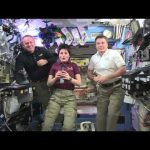
New Year greeting from ESA astronaut Samantha Cristoforetti and her crewmates, NASA astronauts Barry Wilmore and Terry Virts, who are currently living and working on board the International Space Station as part of the Expedition 42 crew.
NASA’s Terry Virts and Expedition 42/43 crewmates, Anton Shkaplerov of the Russian Federal Space Agency and the European Space Agency’s Samantha Cristoforetti, launched Nov. 23 at 4:01 p.m. Eastern Standard Time, from Baikonur, Kazakhstan. Almost six hours later, their Soyuz spacecraft docked to the International Space Station – where they joined Expedition 42 Commander Barry Wilmore of NASA, and Flight Engineers Alexander Samokutyaev and Elena Serova of Roscosmos – returning the station crew to its full complement of six people. Also, First 3-D printed object in space, Orion flight test update, New airborne Earth Science missions and Happy Thanksgiving from space!
Work is underway to build the E-ELT, a telescope that could one day find signs of life on distant planets. With a 39-metre mirror, it will be the world’s biggest optical and infrared telescope.
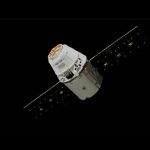
Approximately 2.4 tons of NASA science investigations and cargo were launched to the International Space Station aboard SpaceX’s Dragon spacecraft. The launch aboard the company’s Falcon 9 rocket took place from Space Launch Complex 40 at Cape Canaveral Air Force Station in Florida on Monday, April 18 at 3:25 p.m. EDT. Dragon’s cargo will support more than 150 experiments that will be conducted during space station Expeditions 39 and 40. The spacecraft will be grappled at 7:11 a.m. on Wednesday, April 16 by Expedition 39 Commander Koichi Wakata of the Japan Aerospace Exploration Agency. Dragon is scheduled to depart the space station May 18 for a splashdown in the Pacific Ocean west of Baja California, bringing with it about 3,500 pounds of science and research, hardware, crew supplies and spacewalk tools from the space station.
At NASA, we’ve been a little busy: landing on Mars, developing new human spacecraft, going to the space station, working with commercial partners, observing the Earth and the Sun, exploring our solar system and understanding our universe. And that’s not even everything.
This animation shows NASA’s Orion spacecraft as it will appear on its Exploration Mission-1 in 2017, complete with a service module to be provided by the European Space Agency. After Orion blasts off atop a Space Launch System rocket, the ESA-provided service module will fuel and propel the capsule on its journey through space. Exploration Mission-1 in 2017 will be the first mission to incorporate both the Orion vehicle and NASA’s new Space Launch System. It will follow the upcoming Exploration Flight Test-1 in 2014, in which an uncrewed Orion will launch atop a Delta IV Heavy rocket and fly 3,600 miles above Earth’s surface, farther than a human spacecraft has gone in 40 years.