Tag: planets

  • Which planets have wind? 🌬️🪐

    Which planets have wind? 🌬️🪐

    Jupiter has super strong winds and massive storms, including the iconic Great Red Spot, a storm bigger than Earth! At the poles, winds can reach up to 1440 km/h.

    Saturn is even windier! It has some of the fastest, but not the fastest winds in our Solar System blow. Winds here can reach 1800 km/h.

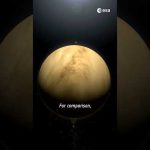
    Venus has super-rotating winds that race around the planet up to 60x faster than Venus itself spins. That’s way faster than Earth’s winds, which top out at 10–20% of our planet’s rotation speed.

    Mars has a thin atmosphere, so winds are usually gentle. But during dust storms, they can kick up to around 100 km/h.

    Neptune holds the record for the fastest winds in the Solar System, blowing at over 2000 km/h!

    For context: the fastest wind ever recorded on Earth? 408 km/h—during a massive tornado in Australia.

    📹 European Space Agency (ESA)
    📸 ESA/Voyager 2, NASA, NSSDC Photo Gallery ID P-34709C

    #ESA #Space #SolarSystem

  • December sky highlights ✨ #shorts

    December sky highlights ✨ #shorts

    – Mercury’s beauty at greatest eastern elongation (4 December)

    – New Moon (12 December): Great for capturing Star Trails.

    – Geminids Meteor Shower (14-15 December): without any moonlight interference.

    – Moon-Mercury Conjunction (14 November): A cosmic rendezvous.

    – Solstice (22 December at 4:27 CET): Sol Invictus

    – Full Moon (27 December): A glowing spectacle in the heavens.

    Don’t miss these celestial events in this month!

    📹 ESA – European Space Agency
    📸 EUMETSAT

    #ESA
    #NightSky
    #AstroHighlights

  • Astronomy  highlights of August 2023 ✨ #shorts

    Astronomy highlights of August 2023 ✨ #shorts

    August night sky is full of wonders. ✨

    – Mercury retrograde (23 August 2023): Will you have trouble with communication this month? Up to you to decide.

    – Saturn at opposition (27 August 2023): It’s your time to shine.

    – Super blue moon (30 August 2023): Enjoy it with someone special.

    📹 ESA – European Space Agency

    #ESA
    #August2023
    #Skywatching

  • How Do Planets Get Their Names? We Asked a NASA Expert

    How Do Planets Get Their Names? We Asked a NASA Expert

    How do planets get their names? With the exception of Earth, the planets in our solar system were named after Greek or Roman gods. Today, the job of naming things in space falls to the International Astronomical Union (IAU), the internationally recognized authority for naming celestial bodies and their surface features. NASA scientist Dr. Henry Throop explains more.

    Link to download this video: https://go.nasa.gov/3Qc2qMI

    Producers: Jessica Wilde, Scott Bednar
    Editor: David Shelton

    Credit: NASA

  • NASA’s Juno Spacecraft Flies Past Io and Jupiter, With Music by Vangelis

    NASA’s Juno Spacecraft Flies Past Io and Jupiter, With Music by Vangelis

    On May 16, 2023, NASA’s Juno spacecraft flew past Jupiter’s volcanic moon Io, and then the gas giant soon after. Io is the most volcanically active body in the solar system. Slightly larger than Earth’s moon, Io is a world in constant torment. Not only is the biggest planet in the solar system forever pulling at it gravitationally, but so are its Galilean siblings – Europa and the biggest moon in the solar system, Ganymede. The result is that Io is continuously stretched and squeezed, actions linked to the creation of the lava seen erupting from its many volcanoes.

    This rendering provides a “starship captain” point of view of the flyby, using images from JunoCam. For both targets, Io and Jupiter, raw JunoCam images were reprojected into views similar to the perspective of a consumer camera. The Io flyby and the Jupiter approach movie were rendered separately and composed into a synchronous split-screen video.

    Launched on Aug. 5, 2011, Juno embarked on a 5-year journey to Jupiter. Its mission: to probe beneath the planet’s dense clouds and answer questions about the origin and evolution of Jupiter, our solar system, and giant planets in general across the cosmos. Juno arrived at the gas giant on July 4, 2016, after a 1.7-billion-mile journey, and settled into a 53-day polar orbit stretching from just above Jupiter’s cloud tops to the outer reaches of the Jovian magnetosphere. Now in its extended mission, NASA’s most distant planetary orbiter continues doing flybys of Jupiter and its moons.

    Visit http://www.nasa.gov/juno & http://missionjuno.swri.edu to learn more.

    Animation: Koji Kuramura and Gerald Eichstädt
    Music: Vangelis
    Producer: Scott J. Bolton
    Credit: NASA/JPL-Caltech/SwRI/MSSS

  • Euclid in a nutshell

    Euclid in a nutshell

    ESA’s Euclid mission is designed to explore the composition and evolution of the dark Universe. The space telescope will create a great map of the large-scale structure of the Universe across space and time by observing billions of galaxies out to 10 billion light-years, across more than a third of the sky. Euclid will explore how the Universe has expanded and how structure has formed over cosmic history, revealing more about the role of gravity and the nature of dark energy and dark matter.

    Euclid is a fully European mission, built and operated by ESA, with contributions from NASA. The Euclid Consortium – consisting of more than 2000 scientists from 300 institutes in 13 European countries, the US, Canada and Japan – provided the scientific instruments and scientific data analysis. ESA selected Thales Alenia Space as prime contractor for the construction of the satellite and its Service Module, with Airbus Defence and Space chosen to develop the Payload Module, including the telescope. NASA provided the near-infrared detectors of the NISP instrument.

    More about Euclid: esa.int/euclid

    ★ Subscribe: http://bit.ly/ESAsubscribe and click twice on the bell button to receive our notifications.

    Check out our full video catalog: http://bit.ly/SpaceInVideos
    Follow us on Twitter: http://bit.ly/ESAonTwitter
    On Facebook: http://bit.ly/ESAonFacebook
    On Instagram: http://bit.ly/ESAonInstagram
    On LinkedIn: https://bit.ly/ESAonLinkedIn
    On Pinterest: https://bit.ly/ESAonPinterest
    On Flickr: http://bit.ly/ESAonFlickr

    We are Europe’s gateway to space. Our mission is to shape the development of Europe’s space capability and ensure that investment in space continues to deliver benefits to the citizens of Europe and the world. Check out https://www.esa.int/ to get up to speed on everything space related.

    Copyright information about our videos is available here: https://www.esa.int/ESA_Multimedia/Terms_and_Conditions

    #ESA
    #Euclid
    #Universe

  • News Briefing: NASA’s Perseverance Mars Rover Investigates Geologically Rich Area (Sept. 15, 2022)

    News Briefing: NASA’s Perseverance Mars Rover Investigates Geologically Rich Area (Sept. 15, 2022)

    NASA will host a briefing to provide highlights from the first year-and-a-half of the Perseverance rover’s exploration of Mars.

    The rover landed in Mars’ Jezero Crater in February 2021 and is collecting samples of rock and other materials from the Martian surface. Perseverance is investigating the sediment-rich ancient river delta in the Red Planet’s Jezero Crater.

    Speakers:
    • Lori Glaze, director of NASA’s Planetary Science Division, NASA Headquarters
    • Laurie Leshin, JPL director
    • Rick Welch, Perseverance deputy project manager, JPL
    • Ken Farley, Perseverance project scientist, Caltech
    • Sunanda Sharma, Scanning Habitable Environments with Raman and Luminescence for Organics and Chemicals (SHERLOC) scientist, JPL
    • David Shuster, Perseverance returned sample scientist, University of California, Berkeley

    https://mars.nasa.gov

    #NASA #Space #Exploration #Planets #Perseverance #Mars #MarsRover #PerseveranceRover #SearchForLife #RedPlanet #JetPropulsionLaboratory #JPL #JezeroCrater #Astrobiology #SolarSystem #MarsSampleReturn
  • 5,000 Exoplanets: Listen to the Sounds of Discovery (360 Video)

    5,000 Exoplanets: Listen to the Sounds of Discovery (360 Video)

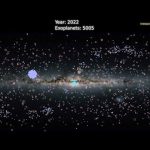
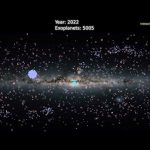
    On March 21, 2022, the number of known exoplanets passed 5,000 according to the NASA Exoplanet Archive. This 360-degree animation and sonification tracks humanity’s discovery of the planets beyond our solar system over time. Turning NASA data into sounds allows users to hear the pace of discovery with additional information conveyed by the notes themselves.

    As each exoplanet is discovered, a circle appears at its position in the sky. The size of the circle indicates the relative size of the planet’s orbit and the color indicates which planet detection method was used to discover it. The music is created by playing a note for each newly discovered world. The pitch of the note indicates the relative orbital period of the planet. Planets that take a longer time to orbit their stars are heard as lower notes, while planets that orbit more quickly are heard as higher notes.

    Exoplanet detection methods: radial velocity (pink); transit (purple); imaging (orange); microlensing (green); timing variations (red); orbital brightness modulation (yellow); astrometry (gray); disk kinematics (blue).

    Please note: Not all browsers support viewing 360 videos. YouTube supports their playback on computers using Chrome, Firefox, MS Edge, and Opera browsers. For the best experience on a mobile device, play this video in the YouTube app.

    Credit: NASA/JPL-Caltech/M. Russo, A. Santaguida (SYSTEM Sounds)

  • 5,000 Exoplanets: Listen to the Sounds of Discovery (NASA Data Sonification)

    5,000 Exoplanets: Listen to the Sounds of Discovery (NASA Data Sonification)

    On March 21, 2022, the number of known exoplanets passed 5,000 according to the NASA Exoplanet Archive. This animation and sonification tracks humanity’s discovery of the planets beyond our solar system over time. Turning NASA data into sounds allows users to hear the pace of discovery, with additional information conveyed by the notes themselves.

    As each exoplanet is discovered, a circle appears at its position in the sky. The size of the circle indicates the relative size of the planet’s orbit and the color indicates which planet detection method was used to discover it. The music is created by playing a note for each newly discovered world. The pitch of the note indicates the relative orbital period of the planet. Planets that take a longer time to orbit their stars are heard as lower notes, while planets that orbit more quickly are heard as higher notes.

    Credit: NASA/JPL-Caltech/M. Russo, A. Santaguida (SYSTEM Sounds)

  • Exoplanet Types: Worlds Beyond Our Solar System
    Exoplanet Types: Worlds Beyond Our Solar System
    When we describe different types of exoplanets – planets outside our solar system – what do we mean by “hot Jupiters,” “warm Neptunes,” and “super-Earths”? Since we’re still surveying and learning about the variety of worlds out there among the stars, it’s sometimes helpful to refer to characteristics they share with planets we’re familiar with in our own planetary system.

    Credit: NASA/JPL-Caltech

  • How to survive on another planet with Lucie Poulet | Space Bites

    How to survive on another planet with Lucie Poulet | Space Bites

    Plans for human space exploration in the next decades are to leave Earth orbit and go to destinations such as the Moon and Mars. But what are the challenges associated with human survival in space and what kind of research is needed to address these challenges?

    Life-support systems expert Lucie Poulet participated in four Mars analogue missions as a crew member and has over eight years of experience working on regenerative life-support systems with various groups such as the Micro-Ecological Life-Support System Alternative (MELiSSA) project and the German Aerospace Center, DLR, in Bremen, Germany.

    Space Bites hosts the best talks on space exploration from the most inspiring and knowledgeable speakers from the field. Held at the technical heart of the European Space Agency in The Netherlands, the lectures illustrate challenges of space.

    To know more about the exploration of the Moon visit http://lunarexploration.esa.int

    ★ Subscribe: http://bit.ly/ESAsubscribe and click twice on the bell button to receive our notifications.

    Check out our full video catalog: http://bit.ly/SpaceInVideos
    Follow us on Twitter: http://bit.ly/ESAonTwitter
    On Facebook: http://bit.ly/ESAonFacebook
    On Instagram: http://bit.ly/ESAonInstagram
    On Pinterest: https://bit.ly/ESAonPinterest
    On Flickr: http://bit.ly/ESAonFlickr

    We are Europe’s gateway to space. Our mission is to shape the development of Europe’s space capability and ensure that investment in space continues to deliver benefits to the citizens of Europe and the world. Check out https://www.esa.int/ to get up to speed on everything space related.

    Copyright information about our videos is available here: https://www.esa.int/ESA_Multimedia/Terms_and_Conditions

    #ESA
    #SpaceBites
    #MELiSSA

  • We Go Together

    We Go Together

    We are building a coalition of nations that can help us get to the Moon quickly and sustainably. Together.

    We have a bold vision to go back to the Moon by 2024. As we work towards this goal, we welcome a growing list of international and commercial partners.
    It is the partnerships over the last 60 years that have ensured the steady progress. With Mars on the horizon, together we can explore more of our solar system and share in the advances and the knowledge that will come.
    We go, together.

    More about NASA’s Moon to Mars plans: https://www.nasa.gov/specials/moon2mars/
    This video is available for download from NASA’s Image and Video Library:
    https://images.nasa.gov/details-NHQ_2019_0528_We%20Go%20Together.html

  • How Do We Prepare a Spacecraft for Launch? Countdown to T-Zero for NASA’s TESS Mission

    How Do We Prepare a Spacecraft for Launch? Countdown to T-Zero for NASA’s TESS Mission

    Revisit the April 18, 2018, launch of NASA’s Transiting Exoplanet Survey Satellite (TESS) aboard a SpaceX Falcon 9 rocket. TESS is already scanning the skies, identifying planet candidates that may be orbiting distant stars. https://go.nasa.gov/2Q3J9ei

    TESS is NASA’s next step in the search for planets outside of our solar system, including those that could support life. The mission will find exoplanets that periodically block part of the light from their host stars, events called transits. TESS will survey 200,000 of the brightest stars near the sun to search for transiting exoplanets.

  • Where are all the aliens? | Stephen Webb

    Where are all the aliens? | Stephen Webb

    The universe is incredibly old, astoundingly vast and populated by trillions of planets — so where are all the aliens? Astronomer Stephen Webb has an explanation: we’re alone in the universe. In a mind-expanding talk, he spells out the remarkable barriers a planet would need to clear in order to host an extraterrestrial civilization — and makes a case for the beauty of our potential cosmic loneliness. “The silence of the universe is shouting, ‘We’re the creatures who got lucky,’” Webb says.

    Check out more TED Talks: http://www.ted.com

    The TED Talks channel features the best talks and performances from the TED Conference, where the world’s leading thinkers and doers give the talk of their lives in 18 minutes (or less). Look for talks on Technology, Entertainment and Design — plus science, business, global issues, the arts and more.

    Follow TED on Twitter: http://www.twitter.com/TEDTalks
    Like TED on Facebook: https://www.facebook.com/TED

    Subscribe to our channel: https://www.youtube.com/TED

  • Paxi – Rosetta och Kometer

    Paxi – Rosetta och Kometer

    Följ med Paxi till utkanten av Solsystemet för att upptäcka en värld av kometer och lära dig om det fascinerande Rosetta-projektet till kometen 67P/Churyumov-Gerasimenko.

    I den här videofilmen, som är avsedd för barn mellan 6 och 12 år, tar Paxi med sig barn för att utforska kometer och Rosetta, ESA:s fascinerande rymdfarkost som flyger sida vid sida med kometen 67P/Churyumov-Gerasimenko och ska försöka släppa ned en landningsenhet på kometen den 12 November 2014.

    Den här videofilmen är den tredje i en serie av animationer i vilka Paxi, ESA:s utbildningsmaskot, berör olika aspekter av Solsystemet, Universum, planeten Jordens hemligheter och mycket mer.

  • Vem är Paxi

    Vem är Paxi

    Lär känna Paxi, ESA:s utbildningsmaskot. Var han kommer ifrån, varför han gillar rymdresor, vilka hans vänner är …

    I den här videofilmen som är avsedd för barn mellan 6 och 12 år, introduceras Paxi, en liten rymdvarelse från planeten Ally-O, och som har kommit till Jorden för att träffa nya vänner och ta med barn på en äventyrlig upptäcktsresa i rymden. Det är den första i en serie av animationer i vilka Paxi, ESA:s utbildningsmaskot, berör olika aspekter av Solsystemet, Universum, planeten Jordens hemligheter och mycket mer.

  • Paxi – Solsystemet

    Paxi – Solsystemet

    Följ med Paxi på en resa genom vårt Solsystem. Från de steniga inre planeterna nära Solen och förbi de jättestora planeterna, ut till den iskalla utkanten där kometerna bor.

    I den här videofilmen som är avsedd för barn mellan 6 och 12 år, tar Paxi med oss på en resa i vårt eget Solsystem där vi besöker alla åtta planeterna samt andra mindre himlakroppar såsom asteroider, kometer och dvärgplaneten Pluto.
    Den här videofilmen är den andra i en serie av animationer i vilka Paxi, ESA:s utbildningsmaskot, berör olika aspekter av Solsystemet, Universum, planeten Jordens hemligheter och mycket mer.

  • Paxi – O Sistema Solar

    Paxi – O Sistema Solar

    Acompanhe o Paxi numa viagem através do sistema solar, dos planetas rochosos interiores próximos do Sol, passando pelos planetas gigantes até à orla gelada onde se encontram os cometas.

    Neste vídeo, destinado a crianças entre os 6 e os 12 anos de idade, o Paxi leva-nos a dar uma volta pelo sistema solar, visitando os oitos planetas e outros corpos menores como asteroides, cometas e o planeta anão Plutão.

    Este vídeo é o segundo de uma série de animações em que o Paxi, a mascote educacional da ESA, aborda diferentes aspetos do sistema solar e do Universo, os segredos do planeta Terra e muito mais.

  • Quem é o Paxi?

    Quem é o Paxi?

    Este é o Paxi, a mascote educacional da ESA: de onde vem, do que gosta nas viagens espaciais, quem são os seus amigos…

    Este vídeo, destinado a crianças entre os 6 e os 12 anos de idade, apresenta o Paxi, um pequeno extraterrestre originário do planeta Ally-O e que veio à Terra para fazer novos amigos e levar as crianças numa viagem de aventura e exploração do espaço. É o primeiro de uma série de animações em que o Paxi, a mascote educacional da ESA, aborda diferentes aspetos do sistema solar e do Universo, os segredos do planeta Terra e muito mais.

  • Paxi – Rosetta og kometer

    Paxi – Rosetta og kometer

    Følg Paxi til udkanten af solsystemet for at udforske kometernes verden og lære om den fantastiske Rosetta-mission til kometen 67P/Churyumov-Gerasimenko.

    I denne video, som er rettet mod børn i aldersgruppen 6 til 12 år, tager Paxi børnene med for at udforske kometer og se på Rosetta – det fantastiske ESA-rumfartøj, som flyver ved siden af kometen 67P/Churyumov-Gerasimenko, hvorpå den prøver at placere en lander den 12. november 2014.
    Denne video er den tredje i en serie af animationer, hvori Paxi, ESA’s uddannelsesmaskot, kommer ind på forskellige aspekter af solsystemet, universet, hemmelighederne bag planeten Jorden og meget mere.

  • Paxi – Solsystemet

    Paxi – Solsystemet

    Tag med Paxi på hans rejse gennem vores solsystem, fra de klippefyldte indre planeter tæt på Solen, forbi de gigantiske planeter og ud til den iskolde udkant, hvor kometerne hører hjemme.

    I denne video, som er rettet mod børn mellem 6 og 12 år, tager Paxi os med på en rundvisning gennem vores solsystem og besøger alle otte planeter samt andre mindre legemer såsom asteroider, kometer og dværgplaneten Pluto.
    Denne video er den anden i en serie af animationer, hvori Paxi, ESA’s uddannelsesmaskot, kommer ind på forskellige aspekter af solsystemet, universet, hemmelighederne bag planeten Jorden og meget mere.

  • Hvem er Paxi?

    Hvem er Paxi?

    Mød Paxi, ESA’s uddannelsesmaskot: Hvor han kommer fra, hvad han kan lide ved rumrejser, hvem hans venner er…

    Denne video, som er rettet mod børn i aldersgruppen 6 til 12 år, introducerer Paxi, som er et lille rumvæsen fra planeten Ally-O. Han er kommet til Jorden for at møde nye venner og tage børn med på en omgang spændende rumudforskning. Videoen er den første i en serie af animationer, hvori Paxi, ESA’s uddannelsesmaskot, kommer ind på forskellige aspekter af solsystemet, universet, hemmelighederne bag planeten Jorden og meget mere.

  • Rosetta ja komeetat

    Rosetta ja komeetat

    Lähde Paxin mukaan aurinkokunnan laidalle. Löydä komeettojen maailma ja tutustu Rosetan ihmeelliseen matkaan komeetta 67P/Churyumov-Gerasimenkon luo.

    Tällä 6–12-vuotiaille suunnatulla videolla Paxi vie lapset tutkimaan komeettoja ja Rosettaa, ESAn ihmeellistä avaruusalusta, joka lentää 67P/Churyumov-Gerasimenko-komeetan rinnalla ja yrittää laskeutua sille 12. marraskuuta 2014.

    Tällä animaatiosarjan kolmannella videolla Paxi, ESAn koulutusmaskotti, esittelee eri näkökulmista aurinkokuntaa, maailmankaikkeutta, Maa-planeetan salaisuuksia ja paljon, paljon muuta.

  • Kuka on Paxi?

    Kuka on Paxi?

    Tutustu Paxiin, ESAn koulutusmaskottiin: mistä hän tulee, mitä hän pitää avaruusmatkailusta, ketkä ovat hänen ystäviään…

    Tämä videomme on suunniteltu 6–12-vuotiaille lapsille. Videolla esiintyy Paxi, pieni avaruusolento, joka tulee Ally-O-planeetalta. Paxi on tullut Maahan tutustumaan uusiin ystäviin, ja hän ottaa lapset mukaansa seikkailulle tutkimaan avaruutta. Animaatiosarjan ensimmäisellä videolla Paxi, ESAn koulutusmaskotti, esittelee eri näkökulmista aurinkokuntaa, maailmankaikkeutta, Maa-planeetan salaisuuksia ja paljon, paljon muuta.

  • Paxi – Rosetta y komety

    Paxi – Rosetta y komety

    Leć z Paxim do granic Układu Słonecznego, aby odkryć świat komet i dowiedzieć się więcej o niesamowitej misji statku Rosetta do komety 67P/Czuriumow-Gierasimienko.

    W tym filmie, przeznaczonym dla dzieci w wieku od 6 do 12 lat, Paxi zabiera dzieci ze sobą, aby pokazać im komety i niesamowity statek kosmiczny ESA Rosetta, lecący obok komety 67P/Czuriumow-Gierasimienko, a także próbę umieszczenia na niej lądownika, jaka miała miejsce 12 listopada 2014 r.

    Film ten jest trzecią z całej serii animacji, w których Paxi, edukacyjna maskotka ESA, przedstawia różne zagadnienia związane z Układem Słonecznym, Wszechświatem, tajemnicami planety Ziemi i wiele innych tematów.

  • Paxi – Sonnensystem

    Paxi – Sonnensystem

    Przyłącz się do Paxiego podczas jego podróży przez nasz Układ słoneczny, rozpoczynającej się od skalistych planet wewnętrznych położonych blisko Słońca, poprzez planety-olbrzymy, aż do mroźnych granic, gdzie zamieszkują komety.

    W tym filmie, przeznaczonym dla dzieci w wieku od 6 do 12 lat, Paxi zabiera nas na wycieczkę po naszym Układzie Słonecznym. Odwiedzimy wszystkie osiem planet i inne pomniejsze obiekty, takie jak asteroidy, komety oraz karłowatą planetę Pluton.

    Film ten jest drugą z całej serii animacji, w których Paxi, edukacyjna maskotka ESA, przedstawia różne zagadnienia związane z Układem Słonecznym, Wszechświatem, tajemnicami planety Ziemi i wiele innych tematów.

  • Kim jest Paxi?

    Kim jest Paxi?

    Poznajcie Paxiego, edukacyjną maskotkę ESA: skąd pochodzi, co lubi w podróżach kosmicznych, kim są jego przyjaciele…

    Niniejszy film przeznaczony jest dla dzieci w wieku od 6 do 12 lat i przedstawia Paxiego – małego kosmitę, który przybył na Ziemię z planety Ally-O, aby zdobyć nowych przyjaciół i zabrać dzieci w pełną przygód podróż na podbój kosmosu. Jest to pierwsza z całej serii animacji, w których Paxi, edukacyjna maskotka ESA, przedstawia różne zagadnienia związane z Układem Słonecznym, Wszechświatem, tajemnicami planety Ziemi i wiele innych tematów.

  • Paxi – Rosetta a komety

    Paxi – Rosetta a komety

    Následujte Paxiho k okraji sluneční soustavy, objevte svět komet a naučte se něco o úžasné misi Rosetta ke kometě 67P/Churyumov-Gerasimenko.

    V tomto videu určeném pro děti od 6 do 12 let Paxi vezme děti na objevování komet a Rosetty, skvělé kosmické lodi ESA létající po boku komety 67P/Churyumov-Gerasimenko, na kterou 12. listopadu 2014 vypustila přistávací modul.

    Jedná se o třetí ze série animací, ve které se Paxi, vzdělávací maskot ESA, dotýká různých aspektů sluneční soustavy, vesmíru, tajemství planety Země a mnoha dalších zajímavostí.

  • Paxi – Sluneční soustava

    Paxi – Sluneční soustava

    Přidejte se k Paximu na cestě naší sluneční soustavou, od skalnatých vnitřních planet blízkých Slunci, přes obří planety až k mrazivému okraji, domovu komet.

    V tomto videu určeném pro děti od 6 do 12 let vás Paxi vezme na prohlídku naší sluneční soustavy, na návštěvu všech osmi planet a dalších menších těles jako asteroidů, komet a na trpasličí planetu Pluto.

    Jedná se o druhou ze série animací, ve které se Paxi, vzdělávací maskot ESA, dotýká různých aspektů sluneční soustavy, vesmíru, tajemství planety Země a mnoha dalších zajímavostí.

  • Paxi – Rosetta şi cometele

    Paxi – Rosetta şi cometele

    Urmează-l pe Paxi la marginea Sistemului Solar pentru a descoperi lumea cometelor şi pentru a afla mai multe despre uimitoarea misiune Rosetta către cometa 67P / Ciuriumov-Gherasimenko.

    În acest video, destinat copiilor cu vârste cuprinse între 6 şi 12 ani, Paxi îi va lua cu el pe copii într-o călătorie pentru a descoperi cometele şi pe Rosetta, uluitoarea navă spaţială a ESA care zboară alături de cometa 67P / Ciuriumov-Gherasimenko şi care va încerca, la data de 12 noiembrie 2014, să plaseze o sondă de aterizare pe aceasta.

    Acest videoclip este al treilea dintr-o serie de desene animate în care Paxi, mascota educaţională a ESA, abordează diferite aspecte ale Sistemului Solar, Universul, secretele planetei Pământ şi multe altele.

  • Paxi – Sistemul Solar

    Paxi – Sistemul Solar

    Alăturaţi-vă lui Paxi într-o călătorie prin Sistemul nostru solar, dinspre planetele interne stâncoase, situate mai aproape de Soare, trecând pe lângă planetele gigante şi până la marginea îngheţată a Sistemului, căminul cometelor.

    În acest video, destinat copiilor cu vârste cuprinse între 6 şi 12 ani, Paxi ne conduce într-un tur al Sistemului nostru solar, vizitând toate cele opt planete şi alte corpuri cereşti minore, cum ar fi asteroizi, comete şi planeta pitică Pluto.
    Acest videoclip este al doilea dintr-o serie de desene animate în care Paxi, mascota educaţională a ESA, abordează diferite aspecte ale Sistemului Solar, Universul, secretele planetei Pământ şi multe altele.

  • Cine este Paxi?

    Cine este Paxi?

    Faceţi cunoştinţă cu Paxi, mascota educaţională a ESA: veţi afla de unde vine, de ce îi plac călătoriile prin spaţiu, care sunt prietenii lui…

    Acest videoclip, destinat copiilor cu vârste cuprinse între 6 şi 12, ni-l prezintă pe Paxi, un micuţ extraterestru de pe planeta Ally-O, care a venit pe Pământ pentru a-şi face prieteni noi şi pentru a-i lua pe copii într-o călătorie plină de aventuri, în cadrul căreia să exploreze spaţiul. Acesta este primul dintr-o serie de desene animate în care Paxi, mascota educaţională a ESA, abordează diferite aspecte ale Sistemului Solar, Universul, secretele planetei Pământ şi multe altele.

  • Paxi – The Red Planet

    Paxi – The Red Planet

    Follow Paxi on his journey to Mars, where he will explore the planet’s dry river beds, volcano, and polar ice caps.

    Connect with Paxi on social media:
    http://www.esa.int/paxi/

    Credits: ESA

  • Paxi – Do Martians exist?

    Paxi – Do Martians exist?

    Join Paxi on his journey to the Red Planet to investigate if Martians exist, and learn about the European Space Agency’s ExoMars missions.

    Follow Paxi on social media:
    http://www.esa.int/paxi/

    Credits: ESA

  • Paxi – The Solar System

    Paxi – The Solar System

    Join Paxi on a journey through our Solar System, from the rocky inner planets close to the Sun, past the giant planets to the freezing edge, the home of comets.

    In this video, targeted at children between 6 and 12, Paxi takes us on a tour of our Solar System, visiting all eight planets and other minor bodies such as asteroids, comets and the dwarf planet Pluto.

    This video is the second of a series of animations in which Paxi, ESA’s Education mascot, touches on different aspects of the Solar System, the Universe, the secrets of planet Earth, and much more.

    More Paxi videos in this playlist:
    https://www.youtube.com/playlist?list=PLbyvawxScNbucdsnNdB9p89RmePmGv5cM

    Copyright: ESA; produced by Science Office, illustrations by Kaleidoscope Design, NL

    The Paxi videos are also available in the following languages, follow the link for a full playlist
    Spanish: https://www.youtube.com/playlist?list=PLbyvawxScNbsiYWkwXlb3WMdm2IFWoMyc
    Dutch: https://www.youtube.com/playlist?list=PLbyvawxScNbs-7xR5B6QgJeEK89RtGdoK
    Italian: https://www.youtube.com/playlist?list=PLbyvawxScNbt11Hfg6Cww2ckfHnvXeOdv
    German: https://www.youtube.com/playlist?list=PLbyvawxScNbvwcIVrGQV4p6g6cp9pH0To
    French: https://www.youtube.com/playlist?list=PLbyvawxScNbsiKIAXeo63bGr1QjYJ4QiL

    Portuguese subtitles are also available on this video. Select them using the YouTube controls along the bottom of the video player.

  • ESA Euronews: Desvelando los secretos de Venus

    ESA Euronews: Desvelando los secretos de Venus

    Es conocido como el lucero del alba o la estrella de la mañana, pero no es una estrella: es un planeta. Venus es, junto con Marte, nuestro vecino más cercano, y al mismo tiempo, un gran desconocido. Levantamos el velo que esconde los misterios del planeta ardiente.

  • ESA Euronews: Quand Vénus se dévoile

    ESA Euronews: Quand Vénus se dévoile

    On l’appelle l’étoile du berger ou encore l’étoile du matin, mais c’est tout sauf une étoile. C’est même une planète de notre voisinage immédiat. Vénus est, avec Mars, la plus proche planète de la Terre. Proche peut-être mais au combien différente. On commence tout juste à lever quelques pans du voile qui entoure le mystère de la planète brûlante.

  • ESA Euronews: Unveiling Venus

    ESA Euronews: Unveiling Venus

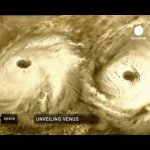
    It can be called the morning or evening star, depending on where you are or what time it is, but it is anything but a star. In fact, it is one of our nearest planetary neighbours. Venus and Mars may be Earth’s close cousins, but they are oh-so different. Only now are we starting to peer through Venus’ clouds to reveal the burning planet’s secrets.

  • Kepler – A Search for Habitable Planets

    Kepler – A Search for Habitable Planets

    “Kepler is a critical component in NASA’s broader efforts to ultimately find and study planets where Earth-like conditions may be present,” said Jon Morse, the Astrophysics Division director at NASA Headquarters in Washington. “The planetary census Kepler takes will be very important for understanding the frequency of Earth-size planets in our galaxy and planning future missions that directly detect and characterize such worlds around nearby stars.”

    The mission will spend three and a half years surveying more than 100,000 sun-like stars in the Cygnus-Lyra region of our Milky Way galaxy. It is expected to find hundreds of planets the size of Earth and larger at various distances from their stars. If Earth-size planets are common in the habitable zone, Kepler could find dozens; if those planets are rare, Kepler might find none.

    In the end, the mission will be our first step toward answering a question posed by the ancient Greeks: are there other worlds like ours or are we alone?