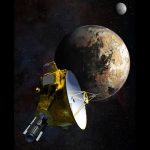
Tag: Pluto

  • Pluto

    Pluto

    🔸 SUSȚINE ȘI TU DIRECT ACTIVITATEA MEA ►https://patreon.com/cristianpresura
    🔸 DEVINO YOUTUBE MEMBRU ►https://bit.ly/35Q8vXC
    🔸 PAYPAL ► paypal.me/cristianpresura
    🔸 DONORBOX ► https://donorbox.org/cristianpresura

    ❗TikTok ► https://www.tiktok.com/@cristian.presura
    ❗Facebook ► https://www.facebook.com/presura
    ❗Facebook page ► https://www.facebook.com/stiintaclub
    ❗Instagram ► https://www.instagram.com/cristianpresura/
    ❗Twitch ► https://www.twitch.tv/cristian_presura
    ❗Discord ► https://www.discord.gg/presura
    ❗Reddit ► https://www.reddit.com/r/presura/

    📙 Carte ► “Fizica Povestita”: https://bit.ly/2YsKaAc
    📙 Carte ► “O calatorie prin Univers”: https://bit.ly/3pdOfGp
    📙 Carte ► “Care e diferența dintre un copil și un laptop?” https://bit.ly/3h4auLZ

    🔊 Spotify Podcast ► https://spoti.fi/3dbvYo6
    🔊 MixCloud Podcas ► https://www.mixcloud.com/StiintaClub/
    ❗Asociația “Știinta pentru toți” ► https://www.presura.ro/

    Seria Fizica Cool #seriacool https://tinyurl.com/2s437srj
    Seria shorts: https://tinyurl.com/yw8b4sab
    Seria carte “Fizica Povestită” #fizicapovestita https://tinyurl.com/966kzam9
    Seria „Dicţionarul de idei şi ideologii (#2i)”: https://tinyurl.com/muryddb5
    Seria “Deschis la cercetare”: https://tinyurl.com/2p9dtb6k
    Fizica pentru începători: https://tinyurl.com/4xbc67c2
    Fizica cuantică: https://tinyurl.com/mr2d7acu
    Fizica nucleara: https://tinyurl.com/3yv3kr5r
    Fizica spațiului: https://tinyurl.com/3kc5jz95
    Călătorie prin Univers: https://tinyurl.com/mv6sxxrb
    Teoria relativității: https://tinyurl.com/2m8umyew
    Fizica simplă: https://tinyurl.com/24j6ekje
    Fizica avansată: https://tinyurl.com/39chd56e
    Fizica mediului inconjurator: https://tinyurl.com/5n86xdzc
    Cum sa ne protejam? https://tinyurl.com/mmyvr3n7
    Fizica 5G: https://tinyurl.com/2p9b3j6r
    Podcast “Întâlnirea cu fizica”: https://tinyurl.com/5n8hsswe

    #stiinta #fizica #science #tehnologie #technology #cristianpresura

  • NASA | Charon at 40: The Discovery of Pluto’s Largest Moon

    NASA | Charon at 40: The Discovery of Pluto’s Largest Moon

    The largest of Pluto’s five moons, Charon, was discovered on June 22, 1978, by James Christy and Robert Harrington at the U.S. Naval Observatory in Flagstaff, Arizona.
    Read the story: https://www.nasa.gov/feature/charon-at-40-four-decades-of-discovery-on-pluto-s-largest-moon
    Charon was discovered only about six miles from where Pluto itself was discovered at Lowell Observatory. They weren’t even looking for satellites of Pluto – Christy, examining a series of grainy telescope images, trying to refine Pluto’s orbit around the Sun.

    Christy and others tell the story of this amazing scientific find, which fueled Pluto’s transformation from a telescopic dot into an actual planetary system – and a source of many discoveries to come.

  • Pluto’s mysteries

    Pluto’s mysteries

    European scientists are learning more about Pluto’s mysteries from NASA’s New Horizons mission, even as the spacecraft continues its summer hibernation. Data sent back from the spacecraft reveals a dynamic planet filled with unusual features that are helping scientists understand this unusually dynamic and icy world.

  • ESA Euronews: Τα «παγωμένα» μυστικά του Πλούτωνα

    ESA Euronews: Τα «παγωμένα» μυστικά του Πλούτωνα

    Αυτόν τον μήνα η εκπομπή το Space σας μεταφέρει στα απώτερα όρια του ηλιακού μας συστήματος, στον Πλούτωνα.

    Αποδεικνύεται πολύ πιο εξωτικός από ότι θα περίμενε κανείς, με πολλά είδη ανεξήγητων φαινομένων στην επιφάνειά του.

    Η εκπομπή Space συνάντησε μερικούς από τους κορυφαίους εμπειρογνώμονες της Ευρώπης στον πάγο για να μάθει περισσότερα για τα μυστικά του.

    Ο Πλούτωνας αποτελούσε μυστήριο για την ανθρωπότητα από τότε που ανακαλύφθηκε, το 1930.

    Αρχικά είναι χαρακτηριστεί ως πλανήτης. Το 2006 αναθεωρήθηκε η άποψη αυτή και ονομάστηκε πλανήτης- νάνος του ηλιακού μας συστήματος.

  • ESA Euronews: Plútó – a rejtélyes törpebolygó

    ESA Euronews: Plútó – a rejtélyes törpebolygó

    A Plútóról 2015-ben készített részletes felvételeket a New Horizons űrszonda, ezek a felvételek felbolygatták a tudományos közösséget. A törpebolygó több a furcsaságot tartogat, mint arra bárki számított, felszínén olyan jelenségek zajlanak, amire egyelőre nincs magyarázatunk. A fenti videóban a téma legjobb európai szakértői beszélnek arról, mit tudunk a Plútóról, és miértérdekes ez a probléma tudományos szempontból.

    A Plutó 1930-as felfedezése óta rejtély volt az emberiség számára. Először bolygónak nevezték, 2006-ban átsorolták a törpe-bolygók közé. Minél többet tudunk meg róla, annál jobban megragadja tudósok fantáziáját.

  • NASA 2016 Look Ahead

    NASA 2016 Look Ahead

    The work NASA does, and will continue in 2016, helps the United States maintain its world leadership in space exploration and scientific discovery. The agency will continue investing in its journey to Mars, returning human spaceflight launches from American soil, fostering groundbreaking technology development, breakthroughs in aeronautics and bringing to every American the awe-inspiring discoveries and images captured by NASA’s missions in our solar system and beyond.

    For more about NASA’s missions, research and discoveries, visit:

    http://www.nasa.gov

  • NASA Reaches New Heights in 2015

    NASA Reaches New Heights in 2015

    As 2015 comes to a close we look back at an exciting year of reaching new heights and revealing the unknown for the benefit of humankind.

  • NASA’s New Horizons Team Reveals New Scientific Findings on Pluto

    NASA’s New Horizons Team Reveals New Scientific Findings on Pluto

    During a July 24 science update at NASA headquarters, new surprising imagery and science results were revealed from the recent flyby of Pluto, by the New Horizons spacecraft. These included an image from the Long Range Reconnaissance Imager or (LORRI) – looking back at Pluto – hours after the historic flyby that shows haze in the planet’s sunlit atmosphere, that extends as high as 80 miles above Pluto’s surface – much higher than expected. Models suggest that the hazes form when ultraviolet sunlight breaks apart methane gas.

    LORRI images also show evidence that exotic ices have flowed – and may still be flowing across Pluto’s surface, similar to glacial movement on Earth. This unpredicted sign of present-day geologic activity was detected in Sputnik Planum – an area in the western part of Pluto’s heart-shaped Tombaugh Regio.

    Additionally, new compositional data from New Horizons’ Ralph instrument indicate that the center of Sputnik Planum is rich in nitrogen, carbon monoxide, and methane ices.

  • New Horizons science update on This Week @NASA – July 24, 2015

    New Horizons science update on This Week @NASA – July 24, 2015

    A July 24 update at NASA headquarters, featured new surprising imagery and science results from the recent flyby of Pluto, by the New Horizons spacecraft. These included an image from the Long Range Reconnaissance Imager or (LORRI) – looking back at Pluto – hours after the historic flyby that revealed a haze in the planet’s sunlit atmosphere that extends as high as 80 miles above Pluto’s surface – much higher than expected. Models suggest that the hazes form when ultraviolet sunlight breaks apart methane gas. LORRI images also show evidence that exotic ices have flowed – and may still be flowing across Pluto’s surface, similar to glacial movement on Earth. This unpredicted sign of present-day geologic activity was detected in Sputnik Planum – an area in the western part of Pluto’s heart-shaped Tombaugh Regio. Additionally, new compositional data from New Horizons’ Ralph instrument indicate that the center of Sputnik Planum is rich in nitrogen, carbon monoxide, and methane ices. Also, Kepler discovers Earth’s “bigger cousin”, New crew launches to space station, EPIC view of Earth, Newman continues NASA center visits and Small Class Vehicle launch pad complete!

  • New Horizons arrives at Pluto on This Week @NASA – July 17, 2015

    New Horizons arrives at Pluto on This Week @NASA – July 17, 2015

    After a nearly decade-long journey, NASA’s New Horizons spacecraft arrived at Pluto on July 14 – passing by at a mere 7,750 miles above the surface … resulting in an absolutely breathtaking image – the closest ever of Pluto. Initial congratulations included a Twitter post from the White House … and from iconic figures in the scientific community. The so-called “data waterfall” released by New Horizons contains so many astounding images and detailed information about Pluto that investigators anticipate it will take about 16 months to send it all back to Earth. Also, Mariner 4 Mars flyby anniversary, Newman sworn-in, New wildfire detection tool, Expedition 44/45 prepares for launch and 40th anniversary of Apollo-Soyuz!

  • NASA News Conference on the New Horizons Mission

    NASA News Conference on the New Horizons Mission

    NASA officials and team members of the historic New Horizons mission to Pluto provide an update and share the latest developments on the spacecraft during a news conference from NASA headquarters.

  • New Horizons Arrives at Pluto

    New Horizons Arrives at Pluto

    At approximately 7:49 a.m. on July 14, NASA’s New Horizons spacecraft is scheduled to be as close as it will get to Pluto, approximately 7,800 miles (12,500 kilometers) above the surface. This historic moment is part of NASA’s coverage of New Horizons’ nine year, three billion mile journey to the Pluto system to gather data about Pluto and its moons.

  • The Year of Pluto – New Horizons Documentary Brings Humanity Closer to the Edge of the Solar System

    The Year of Pluto – New Horizons Documentary Brings Humanity Closer to the Edge of the Solar System

    New Horizons is the first mission to the Kuiper Belt, a gigantic zone of icy bodies and mysterious small objects orbiting beyond Neptune. This region also is known as the “third” zone of our solar system, beyond the inner rocky planets and outer gas giants. Johns Hopkins University Applied Physics Laboratory (APL) in Maryland, designed, built and operates the New Horizons spacecraft, and manages the mission for NASA’s Science Mission Directorate in Washington. The Year of Pluto – NASA New Horizons is a one hour documentary which takes on the hard science and gives us answers to how the mission came about and why it matters. Interviews with Dr. James Green, John Spencer, Fran Bagenal, Mark Showalter and others share how New Horizons will answer many questions. New Horizons is part of the New Frontiers Program, managed by NASA’s Marshall Space Flight Center in Huntsville, Alabama.

  • NASA’s New Horizons Spacecraft: Getting to Pluto

    NASA’s New Horizons Spacecraft: Getting to Pluto

    In NASA’a second televised briefings on Tuesday, April 14, plans and upcoming activities about the agency’s mission to Pluto that will make the first-ever close flyby of the dwarf planet on July 14 were briefed.

    Briefers described the mission’s goals and context, scientific objectives and encounter plans – including what images can be expected and when.

    New Horizons already has covered more than 3 billion miles since it launched on Jan. 19, 2006. The spacecraft will pass Pluto at a speed of 31,000 mph taking thousands of images and making a wide range of science observations. At a distance of nearly 4 billion miles from Earth at flyby, it will take approximately 4.5 hours for data to reach Earth.

    Participants for the 2:20-3:30 p.m. discussion were:

    – James Green, director of Planetary Science, NASA Headquarters
    – Glen Fountain, New Horizons Project Manager, Johns Hopkins University Applied Physics Laboratory, Laurel, Maryland
    – Hal Weaver, New Horizons Project Scientist, Johns Hopkins University Applied Physics Laboratory, Laurel, Maryland
    – Alan Stern, New Horizons Principal Investigator, Southwest Research Institute, Boulder, Colorado

  • NASA’s New Horizons Spacecraft: Seeing Pluto as Never Before

    NASA’s New Horizons Spacecraft: Seeing Pluto as Never Before

    In NASA first of two televised briefings on Tuesday, April 14, plans and upcoming activities about the agency’s mission to Pluto that will make the first-ever close flyby of the dwarf planet on July 14 were discussed.

    Briefers described the mission’s goals and context, scientific objectives and encounter plans – including what images can be expected and when.

    New Horizons already has covered more than 3 billion miles since it launched on Jan. 19, 2006. The spacecraft will pass Pluto at a speed of 31,000 mph taking thousands of images and making a wide range of science observations. At a distance of nearly 4 billion miles from Earth at flyby, it will take approximately 4.5 hours for data to reach Earth.

    Participants for 1-2 p.m. discussion were:

    – John Grunsfeld, astronaut and Science Mission Directorate associate administrator, NASA Headquarters, Washington
    – James Green, director of Planetary Science, NASA Headquarters
    – Alan Stern, New Horizons Principal Investigator, Southwest Research Institute, Boulder, Colorado
    – William McKinnon, New Horizons Co-Investigator, Washington University in St. Louis
    – Cathy Olkin, New Horizons Deputy Project Scientist, Southwest Research Institute, Boulder, Colorado

  • The State of NASA on This Week @NASA

    The State of NASA on This Week @NASA

    NASA Administrator Charles Bolden, speaking during his Feb. 2 “State of NASA” address at Kennedy Space Center in Florida after the release of President Obama’s Fiscal Year 2016 $18.5 billion budget proposal for NASA said, “I can unequivocally say that the State of NASA is strong.” The proposed budget is a half-billion-dollar increase over last year’s enacted budget, which, the Administrator noted, “is a clear vote of confidence to you – the employees of NASA and the ambitious exploration program you are executing.” The budget facilitates NASA’s plan moving forward, which includes development of new vehicles and technologies needed for unprecedented human missions to an asteroid and to Mars, commercial partnerships to provide transportation to and from the International Space Station from the United States and research on the station for the benefit of future deep space travelers and people living on our home planet. Also, New views of Pluto, Soil moisture mission underway and Virginia Aerospace Day!