Tag: Principia mission

  • Let’s brew a cup of coffee on ISS ☕ #shorts

    Let’s brew a cup of coffee on ISS ☕ #shorts

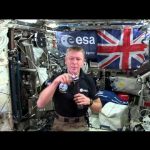
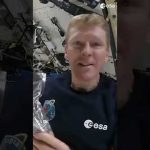
    Former ESA astronaut Tim Peake shows how to brew a “cup” of coffee on the International Space Station.

    ★ Subscribe: http://bit.ly/ESAsubscribe and click twice on the bell button to receive our notifications.

    Check out our full video catalog: http://bit.ly/SpaceInVideos
    Follow us on Twitter: http://bit.ly/ESAonTwitter
    On Facebook: http://bit.ly/ESAonFacebook
    On Instagram: http://bit.ly/ESAonInstagram
    On LinkedIn: https://bit.ly/ESAonLinkedIn
    On Pinterest: https://bit.ly/ESAonPinterest
    On Flickr: http://bit.ly/ESAonFlickr

    We are Europe’s gateway to space. Our mission is to shape the development of Europe’s space capability and ensure that investment in space continues to deliver benefits to the citizens of Europe and the world. Check out https://www.esa.int/ to get up to speed on everything space related.

    Copyright information about our videos is available here: https://www.esa.int/ESA_Multimedia/Terms_and_Conditions

    #ESA
    #ISS
    #Coffee
  • Principia: the mission so far

    Principia: the mission so far

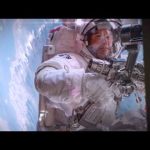
    ESA astronaut Tim Peake shares his views of Earth and his six-month Principia mission while on the International Space Station. Narrated by Tim himself taken from interviews while in space, this video shows the best views, experiments and shares the experience of Tim’s life in space.

    Music:
    Roob Sebastiaan – Gravity
    https://soundcloud.com/r00b/sets/ambient-occlusion

    More about the Principia mission:
    http://www.esa.int/principia

  • Gyroscopes in space

    Gyroscopes in space

    Gyroscopes form an important in keeping the International Space Station and satellites pointing the right way as they orbit our planet.

    ESA astronaut Tim Peake shows how gyroscopes can be used to keep spacecraft stable during his six-month Principia mission.

    There is no up or down in space. Satellites track their pointing direction using the same approach as on submarines and aircraft: fast-spinning gyroscopes that maintain a fixed orientation in the same way as a child’s spinning top. The International Space Station has four big gyroscopes which are used for stabilization of the Station.

    Follow Tim Peake via http://timpeake.esa.int
    More about Principia: http://www.esa.int/principia

  • On the shoulders of giants

    On the shoulders of giants

    “If I have seen further, it is by standing on the shoulders of giants” is the famous quote by renowned scientist Sir Isaac Newton. This is particularly apt as a title for this video summary of ESA astronaut Tim Peake’s Principia mission – named after Newton’s monumental work Philosophiae Naturalis Principia and now building on the work of previous European astronaut missions, while being supported by a huge team of scientists and engineers on the ground.

    The music accompanying this video was chosen by Tim, coming from the soundtrack of one of his favourite films, the 2004 movie Layer Cake. This piece is called ‘Drive to the Boatyard’, by internationally known British film composer Ilan Eshkeri. Ilan provided a slightly extended piece specially for ESA.

    Tim comments: “I’m delighted with this video, which captures the essence of human spaceflight and natural beauty of our planet from space – all put to Ilan’s inspiring soundtrack!”

    More info on Principia: http://www.esa.int/Our_Activities/Human_Spaceflight/Principia

    More about Ilan Eshkeri: http://www.ilaneshkeri.com/

    Music by I. Eshkeri, © Ole Colorful Drawings Music Inc. administered by SonyATV Music Publishing

    BV ℗ Columbia Pictures Industries, Inc.

  • Tim Peake mission overview

    Tim Peake mission overview

    Named after Isaac Newton’s text Naturalis Principia Mathematica, ESA’s Principia mission will be the eighth long-duration mission to the International Space Station. British astronaut Tim Peake will be launched from Baikonur in Kazakhstan onboard a Russian Soyuz vehicle, spending five months in orbit. He’ll carry out an intensive schedule of European and international experiments, in addition to numerous educational activities from space.