The mission to return martian samples back to Earth will see a European 2.5 metre-long robotic arm pick up tubes filled with precious soil from Mars and transfer them to a rocket for an historic interplanetary delivery.
The sophisticated robot, known as the Sample Transfer Arm or STA, will play a crucial role in the success of the Mars Sample Return campaign. The joint endeavour between @NASA and ESA aims to bring back martian samples to the best labs in our planet by 2033.
The robotic arm will land on Mars to retrieve the sample tubes NASA’s Perseverance rover is currently collecting from the surface. Able to “see”, “feel” and take autonomous decisions, the Sample Transfer Arm will identify, pick up and transfer the tubes into the first rocket fired off another planet – the Mars Launch System.
Only after the robot closes the container’s lid, the martian samples will be launched for rendezvous with ESA’s Earth Return Orbiter (ERO) and bring the material back to Earth.
The Sample Transfer Arm is conceived to be autonomous, highly reliable and robust.
Its architecture mimics a human arm with a shoulder, elbow and wrist, and has its own built-in brain and eyes. The robot can perform a large range of movements with seven degrees of freedom.
We are Europe’s gateway to space. Our mission is to shape the development of Europe’s space capability and ensure that investment in space continues to deliver benefits to the citizens of Europe and the world. Check out http://www.esa.int/ESA to get up to speed on everything space related.
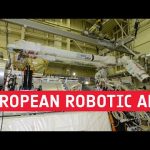
The European Robotic Arm (ERA) will be launched to the International Space Station together with the Russian Multipurpose Laboratory Module, called ‘Nauka’. ERA is the first robot able to ‘walk’ around the Russian segment of the Space Station. It has the ability to anchor itself to the Station and move back and forward by itself, hand-over-hand between fixed base-points. This 11-metre intelligent space robot will serve as main manipulator on the Russian part of the Space Station, assisting the astronauts during spacewalks. The robot arm can help install, deploy and replace elements in outer space ERA is 100% made-in-Europe. A consortium of European companies led by Airbus Defence and Space Netherlands designed and assembled it for ESA. The robotic arm is largely funded by the Dutch government.
We are Europe’s gateway to space. Our mission is to shape the development of Europe’s space capability and ensure that investment in space continues to deliver benefits to the citizens of Europe and the world. Check out https://www.esa.int/ to get up to speed on everything space related.
Over the last two decades, space agencies have created more comfortable conditions on the International Space Station, but we need to explore the concept of ‘living in space’ much further if humans are to ever live and work on another world, such as the Moon or Mars.
ESA’s Discovery and Preparation Programme works to prepare ESA for the future of space exploration. As part of this programme, ESA has worked with academic and industrial partners on a huge number of studies that lay the groundwork for living in space.
The technology that exists today could easily take us to the Moon and beyond, but it is studies like those carried out under the Discovery and Preparation Programme that will make a trip resourceful, sustainable and productive.
★ Subscribe: http://bit.ly/ESAsubscribe and click twice on the bell button to receive our notifications.
ESA is Europe’s gateway to space. Our mission is to shape the development of Europe’s space capability and ensure that investment in space continues to deliver benefits to the citizens of Europe and the world. Check out http://www.esa.int/ESA to get up to speed on everything space related.
For many years scientists have been working to simulate human perception and human actions in machines. The aim: artificial intelligence. But if artificial intelligence is already superior to people in some areas, what role will we then still play in the future? And how can we trust these systems if today’s computers are susceptible to viruses and hacking? Check out latest video to find out more about.
Script download: www.explainity.com/education-project/transskripte/
——-
This explainer video was produced by explainity GmbH
Homepage: www.explainity.com
E-Mail: info@explainity.com
This explanatory film was produced and published for private, non-commercial use and may be used free of charge in this context for private purposes without consultation or written authorization. Please note, however, that neither the content nor the graphics of this explanatory film may be altered in any way. Please always give explainity as the source when using the film, and if you publish it on the internet, provide a reference to www.explainity.com.
For commercial use or use for training purposes, such as projection of the film at training events (e.g. projection of the film as a teaching aid in school or in adult education), a licence is required. Further information on this subject will be found here: https://www.explainity.com/education-project
If you are interested in an own explainity explainer video, visit our website www.explainity.com and contact us. We are looking forward to your inquiry.
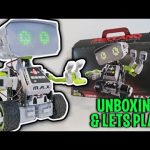
From the internationally renowned maker of robotics building sets arises a new model of impressive proportions. Unlike anything else Meccano has created, M.A.X. combines Artificial Intelligence (AI) with customizable programming. The result is a one-of-a-kind robot of your own creation! Budding engineers, innovators and creators can expand their knowledge of programming as they personalize this robot to their specifications. Once built, M.A.X measures 12” in tall. Control it using voice commands, buttons on the MeccaBrain, or the free app! You’ll know exactly what its thinking based on its expressive facial graphics. As a S.T.E.M robotics platform, M.A.X is designed to engage kids in intellectually stimulating play, drawing on their knowledge of science, technology, engineering and math. Not just a learning tool, this robot loves fun! Try playing on M.A.X’s built-in gaming platform; test your knowledge in a trivia game or listen to some funny jokes! With a multitude of features, kids will want to bring their new friend everywhere! This robot comes with built-in infrared sensors, enabling it to move with agility and avoid obstacles in its path. If you know a young mind in need of a challenge, introduce them to their new friend, M.A.X!
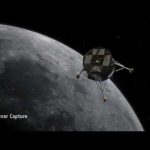
Lunar Lander mission, from launch to landing and exploring the Moon.
Lunar Lander is a robotic explorer that will demonstrate key European technologies and conduct science experiments.
The mission is a forerunner to future human and robotic exploration of the Moon and Mars. It will establish European expertise to allow strong international partnerships in exploration.
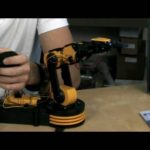
Order now and check out other cool science toys at http://www.stevespanglerscience.com/product/robotic-arm A great top holiday gift idea. Need a helping hand? Weve got just the thing the Robotic Arm is a great way to introduce children to the world of robotics. This amazing kit allows children to put together their own robot and then operate it. The arm lets you control the gripper to open and close and has a lifting capacity of 100 grams. The amazing technology on the arm includes a searchlight on the gripper and a safety gear audible indicator to prevent any potential injury or damage to the gears. The total command functionality makes it possible for you to predict the robots behavior, and the extended life of the gearbox means prolonged control of the robot.
About Steve Spangler Science…
Steve Spangler is a celebrity teacher, science toy designer, speaker, author and an Emmy award-winning television personality. Spangler is probably best known for his Mentos and Diet Coke geyser experiment that went viral in 2005 and prompted more than 1,000 related YouTube videos. Spangler is the founder of www.SteveSpanglerScience.com, a Denver-based company specializing in the creation of science toys, classroom science demonstrations, teacher resources and home for Spangler’s popular science experiment archive and video collection. Spangler is a frequent guest on the Ellen DeGeneres Show where he takes classroom science experiments to the extreme. Check out his pool filled with 2,500 boxes of cornstarch!
On the education side, Spangler started his career as a science teacher in the Cherry Creek School district for 12 years. Today, Steve travels extensively training teachers in ways to make learning more engaging and fun. His hands-on science boot camps and summer institutes for teachers inspire and teach teachers how to prepare a new generation for an ever-changing work force. Over the last 15 years, he has also made more than 500 television appearances as an authority on hands-on science and inquiry-based learning.
On the business side, Spangler is the founder and CEO of Steve Spangler Science, a Denver-based company specializing in the creation of educational toys and kits and hands-on science training services for teachers. The companys unique business strategies and viral creations have been featured in the Wall Street Journal, Inc. Magazine, Wired and TIME Magazine where online readers voted Steve Spangler #18 in the Top 100 Most Influential People of the Year for 2006 (what were they thinking?). You’ll find more than 140 Spangler created products available online at SteveSpanglerScience.com and distributed to toy stores and mass-market retailers worldwide.
Spangler joined NBC affiliate 9News in 2001 as the science education specialist. His weekly experiments and science segments are designed to teach viewers creative ways to make learning fun. His now famous Mentos Geyser experiment, turning 2-liter bottles of soda into erupting fountains, became an Internet sensation in September 2005 when thousands of people started posting their own Mentos explosions on YouTube.com.
As founder of SteveSpanglerScience.com, Spangler and his design team have developed more than 140 educational toys and science-related products featured by mass-market retailers like Target, Wal-Mart, Toys R’ Us, Discovery Channel Stores and over 1,400 independent specialty toy stores. His educational science catalog and on-line business offers more than a thousand science toys and unique learning resources. Recently, Spangler has been featured in the Wall Street Journal, Inc. Magazine, WIRED, the History Channel, Food Network and TIME Magazine where on-line readers voted Steve Spangler #18 in the Top 100 Most Influential People of the Year for 2006.
His recent appearances on the Ellen DeGeneres Show have taught viewers how to blow up their food, shock their friends, create mountains of foam, play on a bed of nails, vanish in a cloud of smoke and how to turn 2,500 boxes of cornstarch and a garden hose into a swimming pool of fun.