Tag: science

  • ESA Euronews: Gaia’s revolution in astronomy

    ESA Euronews: Gaia’s revolution in astronomy

    Astronomy is undergoing a revolution with the release of precision data on 1.7 billion stars in our galaxy from the Gaia space telescope. We head to the historic Observatory of Paris and ESA’s ESTEC base in the Netherlands to find out more.

    It’s fair to say that science has been waiting for centuries, or even millennia for such a detailed survey of the Milky Way, and right now star-gazers are swamped with fresh, high-quality data that they can use to answer every question about the galaxy they ever wanted to ask.

    This video is also available in the following languages:
    German: https://youtu.be/I7EHdEnXGi4
    French: https://youtu.be/dJRPGaS3VB4
    Italian: https://youtu.be/hyOdUHRCDYA
    Spanish: https://youtu.be/BCP4xg6sGeY
    Portuguese: https://youtu.be/OeBMRQmojXc
    Greek: https://youtu.be/Ra0BOhFJ4NU
    Hungarian: https://youtu.be/-PYmrCk1iwM

    ★ Subscribe to our channel: http://bit.ly/ESAsubscribe

    Learn more: http://bit.ly/GaiaRickestStarMap
  • Meet the Robots at Amazon

    Meet the Robots at Amazon

    Will robots take over the world? Most researchers don’t think so. But how about our jobs?

    NOVA on Facebook: https://www.facebook.com/NOVAonline
    NOVA on Twitter: @novapbs
    NOVA on Instagram: @novapbs

    PRODUCTION CREDITS

    Digital Producer:
    Michael Rivera

    NOVA WONDERS: WHAT ARE ANIMALS SAYING?
    Producers:
    Michael Bicks & Anna Lee Strachan

    © WGBH Educational Foundation 2018

  • Uploading Your Mind Is 100 Percent Fatal

    Uploading Your Mind Is 100 Percent Fatal

    Could you ever make a perfect copy of your brain? Perhaps…but not without a price.

    SUBSCRIBE: http://youtube.com/whatthephysics?sub

    Host, Producer: Greg Kestin
    Research: Samia Bouzid, Greg Kestin, Peter Chang
    Writing: Samia Bouzid, Greg Kestin
    Editorial Input from: Julia Cort, Ari Daniel
    Filming, Editing, and Animating: Greg Kestin, Samia Bouzid
    Scientific Consultants: Mark Hillery, Scott Aaronson
    Special thanks: Entire NOVA team
    From the producers of PBS NOVA © WGBH Educational Foundation
    Funding provided by FQXi
    Music provided by APM
    Sound effects: Freesound.org
    Silicone heart footage courtesy of ETH Zürich
    Fireball animation courtesy of Videocopilot.net

  • Fly over Neukum crater

    Fly over Neukum crater

    This movie, based on images taken by ESA’s Mars Express, showcases the 102 km wide Neukum Crater in the southern hemisphere of Mars.

    The crater is named for the German physicist and planetary scientist, Gerhard Neukum, one of the founders of ESA’s Mars Express mission who inspired and led the development of the high-resolution stereo camera on Mars Express.

    This complex impact crater has a diverse geologic history, as indicated by various features on the crater rim and floor. Particularly striking are the dark dune fields, likely made up of volcanic material blown in and shaped by strong winds.

    The crater’s shallow interior has been infilled by sediments over its history. It is also marked with two irregular depressions that may be a sign of a weaker material that has since eroded away, leaving behind some islands of more resistant material.

    Over time the crater rim has undergone varying degrees of collapse, with landslides and slumped material visible in the crater walls. Many smaller craters have also overprinted the rim and pockmarked the interior since Neukum Crater was formed, highlighting its long history.

    Neukum Crater is situated in Noachis Terra, one of the oldest known regions on Mars, dating back to at least 3.9 billion years.

    Credits: Animation: ESA/DLR/FU Berlin, CC BY-SA 3.0 IGO; Music: Coldnoise, CC BY-SA 4.0 and Adrian Neesemann

    ★ Subscribe: http://bit.ly/ESAsubscribe

    Learn more: http://bit.ly/ESACraterNeukum

  • 3 Ways Black Holes Could Break Physics

    3 Ways Black Holes Could Break Physics

    What if the Earth were swallowed by a black hole? Would humanity’s legacy be gone forever? Or could you somehow get back that information from behind the event horizon?

    There are three possible answers to this question…but they all break physics as we know it!

    SUBSCRIBE: http://youtube.com/whatthephysics?sub

    Learn more in NOVA’s two-hour special, “Black Hole Apocalypse”: http://www.pbs.org/wgbh/nova/space/black-hole-apocalypse.html

    CREDITS:
    Host, Producer: Greg Kestin
    Research: Samia Bouzid, Greg Kestin, and Peter Chang
    Writing: Samia Bouzid, Greg Kestin
    Editorial Input from: Julia Cort, Ari Daniel
    Filming, Editing, and Animation: Greg Kestin and Samia Bouzid
    Scientific Consultants: Joe Polchinski, Netta Engelhardt, Steve Giddings
    Special thanks: Entire NOVA team
    From the producers of PBS NOVA © WGBH Educational Foundation
    Funding provided by FQXi
    Music provided by APM
    Sound effects: Freesound.org
    Images: MEDIODESCOCIDO (Stewie Griffin) and Paul Anderson (Grumpy Cat)

  • Mars sample return

    Mars sample return

    Spacecraft in orbit and on Mars’s surface have made many exciting discoveries, transforming our understanding of the planet and unveiling clues to the formation of our Solar System, as well as helping us understand our home planet. The next step is to bring samples to Earth for detailed analysis in sophisticated laboratories where results can be verified independently and samples can be reanalysed as laboratory techniques continue to improve.

    Bringing Mars to Earth is no simple undertaking—it would require at least three missions from Earth and one never-been-done-before rocket launch from Mars.

    A first mission, NASA’s 2020 Mars Rover, is set to collect surface samples in pen-sized canisters as it explores the Red Planet. Up to 31 canisters will be filled and readied for a later pickup – geocaching gone interplanetary.

    In the same period, ESA’s ExoMars rover, which is also set to land on Mars in 2021, will be drilling up to two meters below the surface to search for evidence of life.

    A second mission with a small fetch rover would land nearby and retrieve the samples in a Martian search-and-rescue operation. This rover would bring the samples back to its lander and place them in a Mars Ascent Vehicle – a small rocket to launch the football-sized container into Mars orbit.

    A third launch from Earth would provide a spacecraft sent to orbit Mars and rendezvous with the sample containers. Once the samples are safely collected and loaded into an Earth entry vehicle, the spacecraft would return to Earth, release the vehicle to land in the United States, where the samples will be retrieved and placed in quarantine for detailed analysis by a team of international scientists.

    Credits: NASA/ESA

    ★ Subscribe: http://bit.ly/ESAsubscribe
    Learn more: http://bit.ly/BringingMartianSoilToEarth

  • ESA at ILA roundup day 3

    ESA at ILA roundup day 3

    Roundup from ESA WebTV of Day 3 at the Berlin Air and Space Show, 27 April

    ★ Subscribe: http://bit.ly/ESAsubscribe
    Learn more: http://bit.ly/ESAAtILA

  • 360° Dive into a BLACK HOLE

    360° Dive into a BLACK HOLE

    You just jumped into a black hole! Here’s what you’ll see as you hurtle toward the event horizon.

    SUBSCRIBE: http://youtube.com/whatthephysics?sub

    Learn more in NOVA’s two-hour special, “Black Hole Apocalypse”: http://www.pbs.org/wgbh/nova/space/black-hole-apocalypse.html

    CREDITS:
    Host, Producer: Greg Kestin
    Researchers: Samia Bouzid, Peter Chang
    Writers: Samia Bouzid, Greg Kestin
    Scientific Consultants: Joe Polchinski, Andrew Hamilton, Netta Engelhardt, Steve Giddings, Ethan Siegel, Janna Levin
    Editorial Input from: Julia Cort, Ari Daniel
    Filming and Editing: Greg Kestin
    Animation: Greg Kestin and Francesco Castelnovo
    Special thanks: Entire NOVA team
    From the producers of PBS NOVA © WGBH Educational Foundation
    Funding provided by FQXi
    Music provided by APM
    Sound effects: Freesound.org

  • BLACK HOLE Choose Your Own Adventure

    BLACK HOLE Choose Your Own Adventure

    Have you ever wondered what it would be like to fall into a black hole? Take a 360° adventure to find out!
    SUBSCRIBE: http://youtube.com/whatthephysics?sub

    Learn more in NOVA’s two-hour special, “Black Hole Apocalypse”: http://www.pbs.org/wgbh/nova/space/black-hole-apocalypse.html

    CREDITS:
    Host, Producer: Greg Kestin
    Researchers: Samia Bouzid, Peter Chang
    Writers: Samia Bouzid, Greg Kestin
    Scientific Consultants: Joe Polchinski, Andrew Hamilton, Netta Engelhardt, Steve Giddings, Ethan Siegel, Janna Levin
    Editorial Input from: Julia Cort, Ari Daniel
    Filming and Editing: Greg Kestin
    Animation: Greg Kestin and Francesco Castelnovo
    Special thanks: Entire NOVA team
    From the producers of PBS NOVA © WGBH Educational Foundation
    Funding provided by FQXi
    Music provided by APM
    Sound effects: Freesound.org

    Links to unlisted videos along this adventure:
    Push Greg into Black Hole: https://www.youtube.com/watch?v=Mpgw0oWLzS8
    Jump into Black Hole: https://www.youtube.com/watch?v=YRPpwUA6nQA
    Quantum Death: https://www.youtube.com/watch?v=SiutiEXlS60
    Gravity Death: https://www.youtube.com/watch?v=QIsRZ0nNYcs
    Greg Quantum Death: https://www.youtube.com/watch?v=hEEtfkclPDw
    Greg Gravity Death: https://www.youtube.com/watch?v=u0VdQTkc-78

  • ESA at ILA round up day 2

    ESA at ILA round up day 2

    Roundup of Day 2 at the Berlin Air and Space Show, 26 April

    ★ Subscribe: http://bit.ly/ESAsubscribe

    Learn more: bit.ly/ESAAtILA

  • Earth from Space: Cloud-free Europe

    Earth from Space: Cloud-free Europe

    Earth from Space is presented by Kelsea Brennan-Wessels from the ESA Web TV virtual studios. A mosaic of cloud-free images from the Copernicus Sentinel-3A satellite spanning Europe is featured in this edition.

    See also http://www.esa.int/spaceinimages/Images/2018/04/Cloud-free_Europe to download the image.

    Image acquired by Sentinel-3

    Animation credits: ATG medialab

    ★ Subscribe: http://bit.ly/ESAsubscribe

  • Sentinel-3B highlights

    Sentinel-3B highlights

    The Copernicus Sentinel-3B satellite spent six weeks at the Plesetsk cosmodrome in Russia being carefully prepared for liftoff. After being shipped from France to the launch site, the satellite was tested, joined to the rocket launch adapter, sealed from view in the fairing and taken by train to the launch pad. Sentinel-3B lifted off on 25 April 2018 at 17:57 GMT (19:57 CEST).

    It joins its twin, Sentinel-3A, in orbit. The pairing of identical satellites provides the best coverage and data delivery for Europe’s Copernicus programme – the largest environmental monitoring programme in the world. The satellites carry the same suite of cutting-edge instruments to measure oceans, land, ice and atmosphere. While these data are fed primarily into the Copernicus Marine Environment Monitoring Service, all the Copernicus services benefit to produce knowledge and information products in near-real time for a wide range of applications. The Sentinel-3 mission is essential for applications for ocean and coastal monitoring, numerical weather and ocean prediction, sea-level change and sea-surface topography monitoring, ocean primary production estimation and land-cover change mapping.

    ★ Subscribe: http://bit.ly/ESAsubscribe

  • Gaia second data release

    Gaia second data release

    The second data release of ESA’s Gaia mission has produced an extraordinary catalogue of over one and a half billion stars in our galaxy. Based on observations between July 2014 to May 2016, it includes the most accurate information yet on the positions, brightness, distance, motion, colour and temperature of stars in the Milky Way as well as information on asteroids and quasars.

    ★ Subscribe: http://bit.ly/ESAsubscribe

    Learn more: http://bit.ly/GaiaRickestStarMap
  • The Hyades cluster

    The Hyades cluster

    Animated 3D view of the sky as observed by ESA’s Gaia satellite using information from the mission’s second data release.

    The bright band in the left half of the image is the Milky Way, where most of the stars in our Galaxy reside. The animation starts with the Orion constellation at the centre; we then move towards the neighbouring Taurus constellation and to the Hyades star cluster, which is part of this constellation. Hyades is the closest open cluster to the Solar System, some 150 light-years away.

    The animation first shows the 3D structure of the cluster, based on accurate position and distance information from Gaia. Then an animated view of the future motions of stars is shown – both in Hyades and beyond. This is based on Gaia’s measurements of the velocity of stars across the sky, also known as proper motion.

    Credit: ESA/Gaia/DPAC, CC BY SA 3.0 IGO

    Acknowledgement: Gaia Data Processing and Analysis Consortium (DPAC); Gaia Sky; S. Jordan / T. Sagristà, Astronomisches Rechen-Institut, Zentrum für Astronomie der Universität Heidelberg, Germany

    ★ Subscribe: http://bit.ly/ESAsubscribe

    Learn more: bit.ly/GaiaRickestStarMap

  • Gaia’s first asteroid survey

    Gaia’s first asteroid survey

    Animated view of 14 099 asteroids in our Solar System, as viewed by ESA’s Gaia satellite using information from the mission’s second data release. The orbits of the 200 brightest asteroids are also shown, as determined using Gaia data.

    In future data releases, Gaia will also provide asteroid spectra and enable a complete characterisation of the asteroid belt. The combination of dynamical and physical information that is being collected by Gaia provides an unprecedented opportunity to improve our understanding of the origin and the evolution of the Solar System.

    Credit: ESA/Gaia/DPAC, CC BY SA 3.0 IGO

    Acknowledgement: Gaia Data Processing and Analysis Consortium (DPAC); Orbits: Gaia Coordinating Unit 4; P. Tanga, Observatoire de la Côte d’Azur, France; F. Spoto, IMCCE, Observatoire de Paris, France; Animation: Gaia Sky; S. Jordan / T. Sagristà, Astronomisches Rechen-Institut, Zentrum für Astronomie der Universität Heidelberg, Germany

    ★ Subscribe: http://bit.ly/ESAsubscribe

    Learn more: bit.ly/GaiaRickestStarMap

  • 360º Parallax and proper motion on the sky

    360º Parallax and proper motion on the sky

    A 360° animated view of the entire sky on 25 April 2018.

    After a few seconds, the stars start moving in the sky according to parallax, an apparent shift caused by Earth’s yearly motion around the Sun. Then, constellation outlines appear as visual aids. Finally, stars start moving according to their true motion through space, which is visible on the sky as proper motion. Parallaxes have been exaggerated by 100 000 and proper motions have been speeded up by one trillion (10^12) to make them visible in this animation. This animation is based on data from the second data release of ESA’s Gaia satellite, which has measured the positions, parallaxes and motions of more than one billion stars across the sky to unprecedented accuracy.

    ESA/Gaia/DPAC, CC BY SA 3.0 IGO

    Acknowledgement: Gaia Data Processing and Analysis Consortium (DPAC); Gaia Sky; S. Jordan / T. Sagristà, Astronomisches Rechen-Institut, Zentrum für Astronomie der Universität Heidelberg, Germany

    ★ Subscribe: http://bit.ly/ESAsubscribe

    Learn more: http://bit.ly/GaiaRickestStarMap
  • To Europe’s spaceport!

    To Europe’s spaceport!

    Meet our new space explorers, the spacecraft of the BepiColombo mission, as they begin their adventure to planet Mercury. But first, they have to navigate through Amsterdam Schiphol airport to reach Europe’s spaceport in Kourou, French Guiana.

    The spacecraft really do depart from Schiphol; along with essential ground-support equipment they are scheduled to fly in a series of Antonov aircraft during the last week of April and first week of May. Upon arrival at Kourou, an intensive six-months of preparations will prepare the mission for launch. The launch window opens 5 October until 29 November 2018.

    Find out more about the BepiColombo mission on esa.int/bepicolombo

    Credits: ESA

    ★ Subscribe: http://bit.ly/ESAsubscribe

    Follow Bepi: http://bit.ly/BepiTwitter
    Follow MMO: http://bit.ly/MMOTwitter
    Follow MTM: http://bit.ly/MTMtwitterESA

  • Waiting for Gaia

    Waiting for Gaia

    On 25 April 2018, ESA’s Gaia mission will publish its much awaited second data release, including high-precision measurements of nearly 1.7 billion stars in our Galaxy.

    Scientists who have been working on creating and validating the data contained in the catalogue tell us why they are waiting for this extraordinary release.

    Featured in the video: Antonella Vallenari (INAF, Astronomical Observatory of Padua), Anthony Brown (Leiden University), Timo Prusti (European Space Agency), Annie Robin (Institut UTINAM, OSU THETA Franche-Comté-Bourgogne), Laurent Eyer (University of Geneva) and Federica Spoto (IMCCE, Observatory of Paris).

    A media briefing on the second Gaia data release will be held at the ILA Berlin Air and Space Show in Germany on 25 April 11:00-12:15 CEST. Watch the webstream at www.esa.int/live

    Learn more about Gaia: bit.ly/ESAsGaia

    ★ Subscribe: http://bit.ly/ESAsubscribe

  • ESA Euronews: Surfing scientists

    ESA Euronews: Surfing scientists

    We meet a surfing scientist and toxic algae hunters to see how Sentinel-3 satellite data is used to study the coastline of the English Channel in this month’s episode of Space.

    Bob Brewin is pioneering a new technique in satellite oceanography – by going surfing.
    The Plymouth Marine Laboratory scientist uses his board to take sea surface temperature measurements, and then use them to better interpret data from European satellite Sentinel-3.

    This video is also available in the following languages:
    German: https://youtu.be/1dU52RA1IEE
    French: https://youtu.be/kSJXmrSWG-s
    Italian: https://youtu.be/PRPvcvZgQno
    Spanish: https://youtu.be/H0vQdyanyKk
    Portuguese: https://youtu.be/_nP6Bmpa6YQ
    Greek: https://youtu.be/y4zObvFjckY
    Hungarian: https://youtu.be/kj3-iO2S4UQ

    ★ Subscribe to the channel: http://bit.ly/ESAsubscribe

  • Earth from Space: special edition

    Earth from Space: special edition

    In this special edition of Earth from Space, senior project scientist at Gamma Remote Sensing, Dr Maurizio Santoro, joins the show to discuss how his team estimates forest biomass from space.

    ★ Subscribe: http://bit.ly/ESAsubscribe

  • Paxi on the ISS: Sleeping in space

    Paxi on the ISS: Sleeping in space

    Our alien friend Paxi, ESA Education’s mascot, went to visit American astronaut Scott Tingle on board the International Space Station. Tingle tells Paxi about how astronauts sleep in weightlessness, an important aspect of living on the ISS.

    Credit: ESA/NASA

    #ESA
    #Paxi
    #InternationalSpaceStation

  • ESA – Space to Relax / Europe from Space

    ESA – Space to Relax / Europe from Space

    Having a stressful day? We got you covered! Sit back, turn the volume up and enjoy a relaxing moment brought to you by ESA and Lufthansa exploring the countries which make up the European Space Agency with images taken by the Copernicus Sentinel-1A, Sentinel-2A and Sentinel-3A, Proba-V and Envisat satellites.

    Don’t forget to favourite this video. You will always have a space to relax with us.

    Music by Matt Baute.

  • 5 Unbelievable Facts: FAKE? or PHYSICS?

    5 Unbelievable Facts: FAKE? or PHYSICS?

    Test yourself with our April Fools’ Day game: Fake or physics?
    SUBSCRIBE: http://youtube.com/whatthephysics?sub

    LINKS AND DETAILS:
    More details:
    #1. Speed of sound: Unlike light, sound needs a medium to travel through, and its speed depends on characteristics of that medium like density and temperature. In the extreme environment of a neutron star’s core, sound can travel extremely fast. But knowing that sound can’t surpass the speed of light, physicists can narrow down their models of neutron stars to include only those where “extremely fast” is less than light speed.

    For more: http://www.phys.utk.edu/news/archives/2015/speed-of-sound.pdf

    #2. Invisibility: The invisibility lens pictured in the video was developed at the University of Rochester. For more on how it works: http://www.rochester.edu/newscenter/watch-rochester-cloak-uses-ordinary-lenses-to-hide-objects-across-continuous-range-of-angles-70592/

    A more recent attempt at invisibility: https://www.ft.com/content/c6864c76-de7d-11e7-a0d4-0944c5f49e46

    #3. Relativity rainbows: A team at MIT created a game called “A Slower Speed of Light” that lets you see the world as you would at near-light speeds. Their trailer: https://www.youtube.com/watch?v=uu7jA8EHi_0

    #4. Acoustic levitation: A demo from Harvard Natural Sciences Lecture Demonstrations: https://www.youtube.com/watch?v=XpNbyfxxkWE

    #5: Quantum cloning: A video from MinutePhysics on why quantum mechanics doesn’t allow cloning: https://www.youtube.com/watch?v=owPC60Ue0BE

    CREDITS:
    Host, Producer: Greg Kestin
    Researchers: Greg Kestin, Samia Bouzid
    Writers: Samia Bouzid, Greg Kestin
    Editorial Input from: Julia Cort, Ari Daniel
    Filming: Greg Kestin
    Editing: Greg Kestin, Samia Bouzid
    Media: Hubble, NASA
    Special thanks: Entire NOVA team
    From the producers of PBS NOVA © WGBH Educational Foundation
    Funding provided by FQXi
    Ultrasonic Levitation video footage courtesy Harvard Natural Sciences Lecture Demonstrations
    Ultrasonic Levitation still courtesy of Argonne National Laboratory
    Music provided by APM
    Sound effects: Freesound.org

  • ESA reentry expertise

    ESA reentry expertise

    Every week, on average, a substantial, inert satellite drops into our atmosphere and burns up. Monitoring these reentries and warning European civil authorities has become routine work for ESA’s space debris experts.

    Each year, about 100 tonnes of defunct satellites, uncontrolled spacecraft, spent upper stages and discarded items like instrument covers are dragged down by Earth’s upper atmosphere, ending their lives in flaming arcs across the sky.

    Some of these objects are big and chunky, and pieces of them survive the fiery reentry to reach the surface. Our planet, however, is a big place, mostly covered by water, and much of what falls down is never seen by anyone, sinking to the bottom of some ocean, or landing far from human habitation.

    While still in orbit, these and many other objects are tracked by a US military radar network, which shares the data with ESA, since Europe has no such capability of its own.It’s the task of ESA’s Space Debris team to look at these data and issue updates to ESA Member States and partner civil authorities around the globe.

    Visit http://www.esa.int/Our_Activities/Operations/Space_Debris/ESA_reentry_expertise to learn more

  • ExoMars low-altitude parachute drop test

    ExoMars low-altitude parachute drop test

    The video features footage taken of the parachute deployment as seen from the ground, as well as from onboard GoPros fixed to the drop test vehicle and looking up at the parachute. The test focused on the deployment and inflation of the second main stage 35m-wide parachute, which will be the largest to fly on Mars.

    Discussing the test are Stephane Langlois, ESA ExoMars engineer, and John Underwood, principal engineer at Vorticity.

    The test was carried out by Vorticity Ltd under supervision of Thales Alenia Space France, Thales Alenia Space Italy and ESA, in Kiruna, Sweden, on 2 March 2018.

    Credits: ESA & Vorticity Ltd

  • Fizz, Bang, Wow! 25 Years of Making Science Fun

    Fizz, Bang, Wow! 25 Years of Making Science Fun

    Things that fizz, pop, explode and inspire the next generation of scientists and engineers. Here’s are just a few highlights of the last 25 years working with the team at Steve Spangler Science. Thanks to everyone from around the world who subscribed to our channels, participated in our live events, purchased our educational science kits, joined our STEM subscription club or followed our journey over the years. We promise more fun, learning and inspiration in the years to come. Thank you! – Steve Spangler

    Sick Science® is a trademark of Steve Spangler, inc.

    © 2018 Steve Spangler, Inc all rights reserved

  • What The World Will Look Like In 50 Years, According To Tech Experts

    What The World Will Look Like In 50 Years, According To Tech Experts

    Business Insider spoke to 6 tech industry figures at MWC 2018, and asked them what they thought the world would look like in 50 years’ time. From self-driving cars to implanted technology, watch to hear what these experts are predicting for the future.

    Tech Insider tells you all you need to know about tech: gadgets, how-to’s, gaming, science, digital culture, and more.
    Subscribe to our channel and visit us at: http://www.businessinsider.com/sai
    TI on Facebook: https://www.facebook.com/techinsider
    TI on Instagram: https://www.instagram.com/tech_insider/
    TI on Twitter: https://twitter.com/techinsider

  • ESA – Space to Relax / eARTh

    ESA – Space to Relax / eARTh

    Having a stressful day? We got you covered!Sit back, turn the volume up and enjoy a relaxing moment brought to you by ESA and Lufthansa getting lost in the beauty of our planet with images captured by Envisat, JAXA ALOS, KARI Kompsat-2, GeoEye Ikonos-2 and NASA Landsat-5 and Landsat-7 satellites.

    Don’t forget to favourite this video. You will always have a space to relax with us.

    Music: “Page of Life” by Green Sun.

  • Stephen Hawking – His Wisdom, Wit, and Work

    Stephen Hawking – His Wisdom, Wit, and Work

    “The past tells us who we are. Without it, we lose our identity.” —Stephen Hawking

    Today we’re remembering Stephen Hawking, who shone light on the darkest places in the universe.

    Video about information paradox: https://youtu.be/jyFAsbBvZ70

    Credits
    Host, Producer: Greg Kestin
    Researchers: Greg Kestin, Samia Bouzid
    Writers: Samia Bouzid, Greg Kestin
    Editorial Input from: Julia Cort, Ari Daniel
    Black Hole Animations: Edgeworx
    Special thanks: Entire NOVA team
    From the producers of PBS NOVA © WGBH Educational Foundation
    Funding provided by FQXi
    Music provided by APM
    Sound effects: Freesound.org

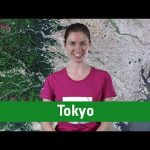
  • Earth from Space: Tokyo

    Earth from Space: Tokyo

    Earth from Space is presented by Kelsea Brennan-Wessels from the ESA Web TV virtual studios. In this edition, Sentinel-2A satellite takes us over Japan’s capital, the world’s largest megacity.

    See also http://www.esa.int/spaceinimages/Images/2018/03/Tokyo to download the image.

  • ESA – Space to Relax / Frozen planet

    ESA – Space to Relax / Frozen planet

    Having a stressful day? We got you covered! Sit back, turn the volume up and enjoy a relaxing moment brought to you by ESA and Lufthansa exploring the coldest parts of our planet with a collection of ice images captured by the Envisat satellite.

    Don’t forget to favourite this video. You will always have a space to relax with us.

    Music: “Page of Life” by Green Sun.

  • Artificial Intelligence: Investing in Yourself | Upamanyu Ghose | TEDxHRCollege

    Artificial Intelligence: Investing in Yourself | Upamanyu Ghose | TEDxHRCollege

    This talk explores the similarities between the human brain and AI. It is a very high level abstraction of AI and how it enables us to unfold the convolutions of the mind. It convinces you that when you invest in AI, you are actually investing in yourself. Upamanyu Ghose is a 3rd year computer science and engineering student, who is an ex computer vision team member of Project Manas, the only team comprising only of undergraduate students, working to build India’s first driverless car for Mahindra’s million dollar rise prize challenge.
    He has been actively pursuing projects and research in the field of computer vision and natural language processing for the past year and is currently working on a project to enable searching through contents of a video. His prior projects include, cervical cancer detection using deep learning, tweet generator, generating stem cell lineage using image processing techniques (assisted a lab in Imperial College London). He’s also a part of a group called Teach Code for Good, which focuses on teaching underprivileged children the basics of coding in order to gear them up for the future.
    His future plan is to pursue research in the field of human cognition in order to understand the mind better through artificial intelligence. This talk was given at a TEDx event using the TED conference format but independently organized by a local community. Learn more at https://www.ted.com/tedx

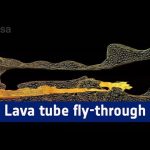
  • Lava tube fly-through

    Lava tube fly-through

    The “Cueva de los Verdes” lava tube in Lanzarote, Spain, is one of the world’s largest volcanic cave complexes with a total length of about 8 km.

    Geology experts from ESA’s Pangaea-X campaign mapped most of the lava tube system as part of a project supported by local authorities Cabildo of Lanzarote and the University of Padova, Italy. The data was acquired in November 2017 by Leica Geosystems.

    The map comes alive in great detail in 3D, helping institutions to protect the subterranean environment. The map also provides scientific data to study the origins of the tube and its peculiar formations.
    Pangaea-X is a test campaign that brings together geology, high-tech survey equipment and space exploration. Learn more about the science and technology behind this campaign visiting http://blogs.esa.int/pangaea

  • Do Parallel Universes Exist?

    Do Parallel Universes Exist?

    Could we be living in one of many parallel universes? Find out why some physicists think we might.
    – Subscribe: https://www.youtube.com/WhatThePhysics?sub_confirmation=1

    Have questions, ask me:
    twitter @gkestin

    *learn more about electron volts here: https://en.wikipedia.org/wiki/Electronvolt

    Host, Producer: Greg Kestin
    Researchers: Samia Bouzid, Drew Gannon, Peter Chang
    Writers: Samia Bouzid, Greg Kestin
    Fish voices: Tiffany Dill, Arlo Perez
    Scientific Consultant: Alan Lightman, Curtis McCully
    Editorial Input from: Julia Cort, Ari Daniel
    Filming: Greg Kestin
    Animation and Editing: Greg Kestin
    Special thanks: Entire NOVA team
    From the producers of PBS NOVA © WGBH Educational Foundation
    Funding provided by FQXi
    Music provided by APM

  • What is Dark Matter? A New Clue!

    What is Dark Matter? A New Clue!

    Scientists may have found clues to the nature of dark matter in a signal from the universe’s first stars.
    – Subscribe: https://www.youtube.com/WhatThePhysics?sub_confirmation=1

    Here is the research paper: https://www.nature.com/articles/nature25792
    Authors: Judd D. Bowman, Alan E. E. Rogers, Raul A. Monsalve, Thomas J. Mozdzen & Nivedita Mahesh

    This evidence seems to suggest that the dark matter is particles that are less than four times the mass of a proton and are moving at non-relativistic speeds. This is consistent with dark matter particles being so-called WIMPs: https://en.wikipedia.org/wiki/Weakly_interacting_massive_particles.

    Have questions, ask me:
    twitter @gkestin

    Credits
    Host, Producer: Greg Kestin
    Researchers: Greg Kestin, Samia Bouzid
    Writers: Greg Kestin, Samia Bouzid
    Scientific Consultant: Douglas Finkbeiner
    Editorial input from: Julia Cort, Ari Daniel
    Filming: Greg Kestin
    Animation and Editing: Greg Kestin
    Special thanks: Avi Loeb, entire NOVA team
    Media Courtesy of: NASA, ESO, and CERN
    Dark matter halo footage courtesy of ESO/L. Calçada.
    From the producers of PBS NOVA © WGBH Educational Foundation
    Funding provided by FQXi
    Music provided by APM

  • Phobos and Saturn

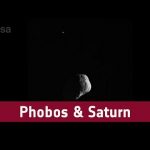
    Phobos and Saturn

    These observations of Phobos and Saturn were taken by the Super Resolution Channel of the High Resolution Stereo Camera on Mars Express. The video comprises 30 separate images acquired during Mars Express orbit 16 346 on 26 November 2016. The slight up and down movement of Saturn and Phobos in these images is caused by the oscillation of the spacecraft’s orientation after completing the turn towards the moon. Phobos can be seen in the foreground, partially illuminated, with Saturn visible as a small ringed dot in the distance.
    For more information go tohttp://www.esa.int/Our_Activities/Space_Science/Mars_Express/Mars_Express_views_moons_set_against_Saturn_s_rings

  • ESA astronaut Luca Parmitano talks science in space

    ESA astronaut Luca Parmitano talks science in space

    From ESA astronaut Luca Parmitano’s hometown in Catania, Italy, Luca talks about the science he ran on the International Space Station.

    The European laboratory Columbus was launched in 2008 and offers scientists a permanent place in space to conduct research that is out of this world.

    Luca’s first spaceflight was in 2013 with Russian cosmonaut Fyodor Yurchikhin and NASA astronaut Karen Nyberg. He conducted over 20 experiments during the Volare mission as flight engineer for Expeditions 36 and 37 and he was the first of ESA’s new generation of astronauts to fly into space.

    Luca talks about space research, being a human guinea pig, dieting to avoid bone disease osteoporosis, human physiology, using ultrasound remotely to diagnose back problems, measuring eye pressure and how his body and mind reacted to living in weightlessness.

    Luca is set for a second mission to the International Space Station in 2019.

    Follow Luca and his adventures in space and on Earth via http://lucaparmitano.esa.int

    More about Columbus here: http://www.esa.int/Columbus

  • ExoMars Trace Gas Orbiter completes aerobraking

    ExoMars Trace Gas Orbiter completes aerobraking

    Since arriving at Mars in October 2016, the ExoMars Trace Gas Orbiter has been aerobraking its way into a close orbit of the Red Planet by using the top of the atmosphere to create drag and slow down. It is almost in the right orbit to begin observations – only a few hundred kilometres to go! With aerobraking complete, additional manoeuvres will bring the craft into a near-circular two-hour orbit, about 400 km above the planet, by the end of April. The mission’s main goal is to take a detailed inventory of the atmosphere, sniffing out gases like methane, which may be an indicator of active geological or biological activity. The camera will help to identify surface features that may be related to gas emissions. The spacecraft will also look for water-ice hidden below the surface, which could influence the choice of landing sites for future exploration. It will also relay large volumes of science data from NASA’s rovers on the surface back to Earth and from the ESA–Roscosmos ExoMars rover, which is planned for launch in 2020.

    Visit our website to learn more about ExoMars: https://www.esa.int/Our_Activities/Space_Science/ExoMars

  • Profiling the wind

    Profiling the wind

    ESA’s Earth Explorer Aeolus satellite will be launched later this year to measure the world’s winds from space. The satellite carries one of the most sophisticated instruments ever to be put into orbit: Aladin, which includes two powerful lasers, a large telescope and very sensitive receivers. The laser generates ultraviolet light that is beamed down into the atmosphere to profile the world’s winds – a completely new approach to measuring the wind from space. These vertical slices through the atmosphere, along with information it gathers on aerosols and clouds, will improve our understanding of atmospheric dynamics and contribute to climate research. As well as advancing science, Aeolus will play an important role in improving weather forecasts. The mission will also complement information about the atmosphere being provided by the Copernicus Sentinel missions.

    Visit our website to learn more: http://www.esa.int/Our_Activities/Observing_the_Earth/Aeolus