You’re a hands-on scientist, right? That means you’ve definitely played with magnets and slime. Did you know that you can play with both at the same time? Our ever-amazing slime-ologists have discovered a way to make Magnetic Slime. Seriously, we’re very “attracted” to this new kind of slime that jumps to a super-strong neodymium magnet. This is a hands-on science activity you have to do to believe.
Read the full experiment at http://www.stevespanglerscience.com/experiment/acid-base-rocket When you think of baking soda and vinegar, you probably think of two things: homemade volcano models or that gross thing Aunt Muriel calls “dinner.” Don’t let these lackluster and disgusting experiences put you off to the true potential of this classic acid and base reaction. With the Chemistry Rocket experiment, you’ll see just how explosive and exciting the combination of baking soda and vinegar can be when it’s in the right setting.
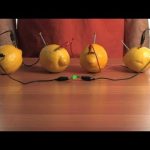
Read the full experiment at http://www.stevespanglerscience.com/experiment/fruit-power-battery Voltaic batteries of all shapes and sizes are objects that convert chemical energy into electrical energy. You probably use batteries to power your cell phone, iPod, or any number of wireless gadgets. But did you know that you can actually use chemical energy stored within a lemon to power a small LED light? It’s true, and we’ll show you exactly how in the Fruit-Power Battery experiment.
Read the full experiment at http://www.stevespanglerscience.com/experiment/bubbling-lava-lamp Lava lamps hold a special place in pop culture history, but there is a lot of science that we can learn from them, too. With the Bubbling Lava Lamp, you’ll learn how to make a homemade, kid-safe lava lamp using materials right in your home. With a soda bottle, oil and water, and a secret ingredient that makes the whole thing fizz, bubble, and erupt, you’ll have a colorful concoction you will love.
We can’t get our hands on enough stuff to shrink. Faced with the problem of creating tiny chip bags (don’t ask, some things are better left alone), we turned to Steve. “I don’t know. Throw them in the microwave,” was all he had to say. So we tossed a bag in the microwave and now we have this experiment. Is it scientific? Oh you bet your bag of salted potato chips that it’s scientific.
Steve Spangler is a celebrity teacher, science toy designer, speaker, author and an Emmy award-winning television personality. Spangler is probably best known for his Mentos and Diet Coke geyser experiment that went viral in. Spangler is the founder of www.SteveSpanglerScience.com, a Denver-based company specializing in the creation of science toys, classroom science demonstrations, teacher resources and home for Spangler’s popular science experiment archive and video collection. Spangler is a frequent guest on the Ellen DeGeneres Show and Denver 9 News where he takes classroom science experiments to the extreme. For teachers, parents or DIY Science ideas – check out other sources of learning:
So, you’re waiting for your dinner to arrive and you’re bored out of your mind. There’s nothing to read… the conversation is slim to none… and you’ve already counted all of the sugar packets. Hmmm? There’s a straw… and straws are interesting. Is there anything you can do with a straw to “be amazing?” Keep reading – in a matter of minutes you’ll have the entire restaurant upset by your science antics.
Here’s a classic science demonstration that is sure to wake you up… and the people down the street… and every dog in the neighborhood! With a little practice and some science know-how, you’ll turn an ordinary piece of aluminum rod into a singing virtuoso.
A rusted iron ball bearing seems like it might be past its prime, as far as uses go. Thankfully, all you need to do is wrap one of the bearings in some aluminum foil. You’re almost ready to create a thermite reaction. BANG!
We’ll admit, we take a little bit of offense when someone says, “Snow only comes in white.” Apparently, they’ve never seen the Rainbow Snow activity. If you’ve ever played with our Insta-Snow® powder, especially with our Color Fizzers, you know exactly how superabsorbent polymers can create a colorful blizzard of the most realistic fake snow out there.
Grab a bag of Imperial Sugar or Dixie Crystals and let’s blow some bubbles. Wait… let’s blow bubbles INSIDE of other bubbles! When you mix-up a batch of super strong bubble solution and know a bit about volume and elasticity, you can blow bubble inside of bubble, inside of bubble. How many Bubble Inside a Bubble challenges can you do?
Discovering density has never been more colorful, or fun! The Sugar Rainbow is a creative and engaging method of teaching about how different densities will stack atop each other. There’s even an additional lesson about adhesion and cohesion! Combine gorgeous colors and awesome science with a little bit of sugar and water!
Many people have wondered exactly how a Magic Pumpkin is created. Well, sorry to burst your bubble, but the secret it animation. It’s a cartoon. Want to create your own illustrated Magic Pumpkin? Check out the amazing Magic Pumpkin designed by our team of scientists. It’s an activity that will have you spinning… literally!
Steve Spangler is a celebrity teacher, science toy designer, speaker, author and an Emmy award-winning television personality. Spangler is probably best known for his Mentos and Diet Coke geyser experiment that went viral in. Spangler is the founder of www.SteveSpanglerScience.com, a Denver-based company specializing in the creation of science toys, classroom science demonstrations, teacher resources and home for Spangler’s popular science experiment archive and video collection. Spangler is a frequent guest on the Ellen DeGeneres Show and Denver 9 News where he takes classroom science experiments to the extreme. For teachers, parents or DIY Science ideas – check out other sources of learning:
Where does slime come from, you ask? Monsters, of course. But thanks to some cool genetic mutations, vampires now have their own slime. Telling the difference between monster slime and vampire slime can be tricky at first glance, unless you know the vampire secret… hold the slime up to the light. Ordinary monster slime just looks green (because monster blood is green, dah). Vampire slime, on the other hand, shows its true color when you hold it up to the light because the green turns dark red to reveal what vampires drink… well… you know… that stuff. Leave it to the vampires to find another way to hide their true identity.
This activity will prove that Mom was right… “Wash your hands with soap and warm water!” A Petri dish prepared with nutrient agar (a seaweed derivative with beef nutrients) is an ideal food source for the bacteria you’ll be growing. In this experiment, Steve Spangler collected samples from items around the office – you will not believe what he found.
Drop one weight into the tube and, no surprise here, the weight drops to the ground with a thud. Go figure… it’s gravity at work! The second weight might bend your mind a little, though. Drop this weight into the aluminum tube and… wait… why didn’t it come out the bottom? Give it a second, that weight just takes a while longer, but figuring it out may be a bit tricky. That’s why we call it Newton’s Nightmare!
When it comes to scientific muses, Sir Isaac Newton is definitely near the top of our list. Our favorite laws to break involve physics, movement, and motion! That’s why we came up with the Coin Tower demonstration. Using a butter knife, you’ll remove the bottom coin from an entire tower of coins. What’s the secret? Perform the project to find out!
It’s probably the world’s most baffling optical illusion. Hold one arc above the other and ask the question, “Which arc is bigger?” The bottom arc will always look bigger than the top one, yet they are actually the same size! Reverse the arcs to make the other one look bigger. What you see is not always what you get! Keep reading and we’ll let you in on some presentation ideas and stunts that will really amaze and fool your friends.
Graffiti Research Lab first introduced us to the awesome throwie idea, and we loved it. Ever since, we’ve been playing around with the idea of using light-emitting diodes (LED) and throwies as a great hands-on method to teaching science. You can do it, too, and we’ll show you how!
Smartphones are used more frequently than for watching videos than ever before, but sometimes you just want a bigger viewing area. For those strapped for cash or in the mood to do something creative, you can construct your own Homemade Projector. All the project takes is a cardboard box, a smart phone, and a few basic tools. The result is a real, working projector that you’ve made with your own hands!
We’ve found an awesome new science activity that uses Cartesian divers. No, it’s not Hook or Squidy, although they are pretty awesome, too. We’re talking about the Five Divers experiment. This project features, you guessed it, five individual Cartesian divers, but they’re all in the same bottle. Give the bottle a squeeze and watch as more divers sink as the pressure increases. Try it for yourself!
Notebooks are a necessity in every science setting. Graphs, observations, procedures… all of science falls by the wayside without a way of recording the information. Here’s a fun fact: two notebooks are even better than one! When you intertwine two notebooks, page by page, they become Inseparable Books! Check out this hands-on activity and see if you can overpower the friction between the books!
Do you think you can successfully perform the Steve Spangler Science inertia challenge? Balance a yellow ring on the mouth of an empty 1 or 2 liter bottle and place a hex nut or other heavy object on top of the ring. When the yellow ring is removed, the hex nut will drop straight into the bottle. It might take a little bit of practice, but you’ll get it. Inertia rings are a perfect tool for introducing students to physics, motion, and inertia.
If you’ve ever needed to clean a coin like a nickel or a dime, you might have used vinegar. That’s a perfect combination, unless you forget to dry the vinegar off of the coin! With the Colorful Coins activity, you’ll see how there is more to a shiny nickel or dime that initially meets the eyes.
You may have seen your favorite circus performers or magicians perform the classic Bed of Nails Trick… but what is the secret? Using a smaller version of the bed and a clear balloon, you can see the science behind the trick.
The human body is a magnificent machine. Every part serves a purpose that seems to work like magic (except maybe the appendix). The more science discovers and understands about the human body, the more opportunities we have to replicate their processes. With the Homemade Lung science project, you’ll learn how you can replicate a working lung with household objects. You’ll have a blast recreating this bodily function, and you don’t have to give up a lung to do it!
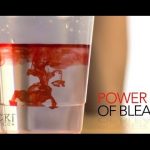
Water and bleach: historically, this pair go together pretty well, namely in the world of cleanliness. Bleach is a remarkably caustic base that, when diluted with water, can clean stains from whites and linoleum. However, apart from their similarly clear appearance, water and bleach are very dissimilar. Bleach is very alkaline, but water is a neutral pH. Chemically, that is saying a lot. But what does that have to do with vivid colors?
Kaleidoscopes are an incredible tool for witnessing the effects of refracting light, but putting your own kaleidoscope together can be a pain. We’ve simplified the process using our famous Rainbow Peepholes. Witness a literal rainbow of colors when you build your own kaleidoscope with the Homemade Kaleidoscope experiment.
You can have a ton of science fun with a straw. You can make it into a blow gun, using the properties of air, or it can double as a pipette when your lab has run out. But did you know you can perform some awesome hands-on science with the straw’s wrapper, too? It’s true. With the Wrapper Worm, we’ll reveal how to turn an ordinary straw wrapper into a growing worm!
Carbon dioxide is a gas that we interact with every day. For instance, CO2 enables plants to perform photosynthesis, you exhale CO2 when you breathe, and CO2 can extinguish fire. You probably knew all those facts, but did you know that you can get really science-y and extremely creative when putting out flames with CO2? It’s as simple as pouring the gas onto fire. Pouring? You better believe it!
Milk goes great with a lot of things: cereal, cookies, cake, and pie. You know what’s even more incredible to mix with milk? A big ol’ bottle of soda! We know what you’re thinking, “Soda and milk would be disgusting, together!” You’re absolutely correct, but you aren’t supposed to drink the mixture! Instead, watch the magic happen when you mix the two.