Will the Sun ever burn out? Not quite, but it will change dramatically. Like all stars, it’s going through a life cycle powered by nuclear fusion. Right now, it’s halfway through its 10-billion-year lifetime.
Eventually, the Sun will expand into a red giant, engulfing the inner planets, then collapse into a white dwarf — a small, hot, dim remnant of its former self.
A NASA scientist explains what’s ahead for our star.
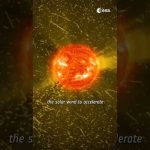
Fast’ solar wind moves with speeds above 500 km/s. Curiously, this wind exits the Sun’s corona with lower speeds, so something speeds it up as it moves farther away. The million-degree wind naturally cools down as it expands into a larger volume and becomes less dense, much like the air on Earth as you climb a mountain. And yet, it cools more slowly than expected from this effect alone.
So, what provides the necessary energy to accelerate and heat the fastest parts of the solar wind?
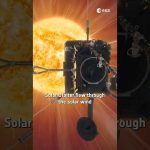
Data from our Solar Orbiter and NASA’s Parker Solar Probe have provided conclusive evidence that the answer is large-scale oscillations in the Sun’s magnetic field, known as Alfvén waves.
The source of the solar wind is no longer a mystery thanks to our trailblazing Solar Orbiter mission. This success opens a new way for solar physicists to study the source regions of the solar wind.
🎥 ESA – European Space Agency 📸 ESA & NASA /Solar Orbiter/EUI & SPICE
Coronal Mass Ejections or CMEs, are an eruption of around a billion tonnes of particles that comes from the solar atmosphere, the corona, and travels through the solar system. CMEs are an important part of ‘space weather’. The particles spark aurorae on planets with atmospheres, and can cause malfunctions in some technology. They can also be harmful to unprotected astronauts. So it is important to understand CMEs, and be able to track their progress.
Credits: ESA – European Space Agency
★ Subscribe: http://bit.ly/ESAsubscribe and click twice on the bell button to receive our notifications.
We are Europe’s gateway to space. Our mission is to shape the development of Europe’s space capability and ensure that investment in space continues to deliver benefits to the citizens of Europe and the world. Check out https://www.esa.int/ to get up to speed on everything space related.
The aurora isn’t unique to Earth. Some other worlds in our Solar System, such as Saturn and Jupiter, have magnetic fields too. Solar wind particles can collide with them just as happens with Earth! Would you like to fly to another planet and see its aurora?
📹 @EuropeanSpaceAgency
★ Subscribe: http://bit.ly/ESAsubscribe and click twice on the bell button to receive our notifications.
We are Europe’s gateway to space. Our mission is to shape the development of Europe’s space capability and ensure that investment in space continues to deliver benefits to the citizens of Europe and the world. Check out https://www.esa.int/ to get up to speed on everything space related.
This sequence was taken by Solar Orbiter’s Extreme Ultraviolet Imager using the Full Sun Imager telescope, and shows the Sun at a wavelength of 17 nanometers. This wavelength is emitted by gas in the Sun’s atmosphere with a temperature of around one million degrees. The colour on this image has been artificially added because the original wavelength detected by the instrument is invisible to the human eye.
Credit: ESA & @NASA /Solar Orbiter/EUI Team
★ Subscribe: http://bit.ly/ESAsubscribe and click twice on the bell button to receive our notifications.
We are Europe’s gateway to space. Our mission is to shape the development of Europe’s space capability and ensure that investment in space continues to deliver benefits to the citizens of Europe and the world. Check out https://www.esa.int/ to get up to speed on everything space related.
Solar Orbiter has made the first ever remote sensing observation consistent with a magnetic phenomenon called a solar switchback – sudden and large deflections of the solar wind’s magnetic field. The new observation provides a full view of the structure, in this case confirming it has an S-shaped character, as predicted. Furthermore, the global perspective provided by the Solar Orbiter data indicates that these rapidly changing magnetic fields can have their origin near the surface of the Sun.
We are Europe’s gateway to space. Our mission is to shape the development of Europe’s space capability and ensure that investment in space continues to deliver benefits to the citizens of Europe and the world. Check out https://www.esa.int/ to get up to speed on everything space related.
Solar Orbiter is a space mission of international collaboration between ESA and @NASA.
Solar Orbiter’s closest approach to the Sun, known as perihelion, took place on 26 March. The spacecraft was inside the orbit of Mercury, at about one-third the distance from the Sun to the Earth, and its heatshield was reaching around 500°C. But it dissipated that heat with its innovative technology to keep the spacecraft safe and functioning.
ESA’s Solar Orbiter spacecraft has sent back its first images of the Sun. At 77 million kilometres from the surface, this is the closest a camera has ever flown to our nearest star. The pictures reveal features on the Sun’s exterior that have never been seen in detail before.
Launched on 10 February 2020, the spacecraft completed its commissioning phase and first close-approach to the Sun in mid-June. Since then, science teams have been processing and examining this early data.
The spacecraft is currently in its cruise phase, on its way to Venus, but will eventually get even closer to the Sun.
We are Europe’s gateway to space. Our mission is to shape the development of Europe’s space capability and ensure that investment in space continues to deliver benefits to the citizens of Europe and the world. Check out http://www.esa.int/ESA to get up to speed on everything space related.
The first images from ESA’s Solar Orbiter, captured around the spacecraft’s first close pass of the Sun, some 77 million kilometres from its surface, are already exceeding expectations revealing interesting new phenomena on our parent star.
This animation shows a series of close-up views captured by the Extreme Ultraviolet Imager (EUI) at wavelengths of 17 nanometers, showing the upper atmosphere of the Sun, or corona, with a temperature of around 1 million degrees.
These images reveal a multitude of small flaring loops, erupting bright spots and dark, moving fibrils. A ubiquitous feature of the solar surface, uncovered for the first time by these images, have been called ‘campfires’. They are omnipresent minuature eruptions that could be contributing to the high temperatures of the solar corona and the origin of the solar wind.
Captured on 30 May 2020, when Solar Orbiter was roughly halfway between the Earth and the Sun, these are the closest views of the Sun ever taken, allowing EUI to see features in the solar corona of only 400 km across. As the mission continues, Solar Orbiter will go closer to the Sun and this will increase the instrument’s resolving power by a factor of two at closest approach.
The colour on this image has been artificially added because the original wavelength detected by the instrument is invisible to the human eye.
The circle in the lower left corner indicates the size of Earth for scale.
The extended grey shape visible at times moving across the field (00:00-00:25; 01:00-01:28; 01:50-02:00; 02:52-03:27) is not a solar feature but is caused by a sensor artefact.
Solar Orbiter is a space mission of international collaboration between ESA and NASA.
We are Europe’s gateway to space. Our mission is to shape the development of Europe’s space capability and ensure that investment in space continues to deliver benefits to the citizens of Europe and the world. Check out http://www.esa.int/ESA to get up to speed on everything space related.
The first images from ESA’s Solar Orbiter are already exceeding expectations and revealing interesting new phenomena on the Sun.
This animation combines a series of views captured with several remote-sensing instruments on Solar Orbiter between 30 May and 21 June 2020, when the spacecraft was roughly halfway between the Earth and the Sun ¬– closer to the Sun than any other solar telescope has ever been before.
The red and yellow images were taken with the Extreme Ultraviolet Imager (EUI) in the extreme ultraviolet region of the electromagnetic spectrum, at wavelengths of 30 and 17 nanometers, respectively.
The close-up views by EUI show the upper atmosphere of the Sun, or corona, with a temperature of around 1 million degrees. With the power to see features in the solar corona of only 400 km across, these images reveal a multitude of small flaring loops, erupting bright spots and dark, moving fibrils. A ubiquitous feature of the solar surface, uncovered for the first time by these images, have been called ‘campfires’. They are omnipresent minuature eruptions that could be contributing to the high temperatures of the solar corona and the origin of the solar wind.
The EUI images are followed by three views based on data from the Polarimetric and Helioseismic Imager (PHI) instrument. The blue and red view is a ‘tachogram’ of the Sun, showing the line of sight velocity of the Sun, with the blue side turning to us and the red side turning away. The following view is a magnetogram, or a map of magnetic propertied for the whole Sun, featuring a large magnetically active region in the lower right-hand quadrant of the Sun. The yellow-orange view is a visible light image and represents what we would see with the naked eye: there are no sunspots visible because the Sun is displaying only low levels of magnetic activity at the moment.
On larger scales, the Metis coronograph blocks out the dazzling light from the solar surface, bringing the fainter corona into view. Metis observes the corona simultaneously in visible light (shown in green) and ultraviolet light (shown in red) for the first time with unprecedented temporal coverage and spatial resolution. These images reveal the two bright equatorial streamers and fainter polar regions that are characteristic of the solar corona during times of minimal magnetic activity.
On even grander scales, the Heliospheric Imager (SoloHI) telescope takes images of the solar wind – the stream of charged particles constantly released by the Sun into outer space – by capturing the light scattered by electrons in the wind. The first-light image from SoloHI is shown at the end, as a mosaic of four separate images from the instrument’s four separate detectors. In this view, the Sun is located to the right of the frame, and its light is blocked by a series of baffles; the last baffle is in the field of view on the right-hand side and is illuminated by reflections from the solar array. The partial ellipse visible on the right is the zodiacal light, created by sunlight reflecting off the dust particles that are orbiting the Sun. The signal from the solar wind outflow is faint compared to the much brighter zodiacal light signal, but the SoloHI team has developed techniques to reveal it. Planet Mercury is also visible as a small bright dot near the lower edge of the upper left tile.
Solar Orbiter is a space mission of international collaboration between ESA and NASA.
We are Europe’s gateway to space. Our mission is to shape the development of Europe’s space capability and ensure that investment in space continues to deliver benefits to the citizens of Europe and the world. Check out http://www.esa.int/ESA to get up to speed on everything space related.
With a simple Google Cardboard-style virtual reality (VR) viewer, you can experience how it feels to be a spacecraft hurtling past Earth. This 360-degree VR simulation of a flyby manoeuvre performed by ESA’s Mercury-bound BepiColombo spacecraft takes you on a trip past Earth at the distance of only 12 700 km, closer than the orbit of Europe’s navigational satellites Galileo.
The simulation displays the field of view of two of BepiColombo’s science instruments (MERTIS and PHEBUS) and two of its three MCAM selfie cameras during the gravity-assist flyby at Earth on 10 April 2020.
The simulation was created using the SPICE software developed by NASA’s Jet Propulsion Laboratory and data generated by the European Space and Astronomy Centre (ESAC)in Spain.
BepiColombo, a joint mission of ESA and the Japan Aerospace Exploration Agency (JAXA), is on a seven-year cruise to Mercury, the smallest and innermost planet of the Solar System. Launched in October 2018, BepiColombo follows an intricate trajectory that involves nine gravity-assist flyby manoeuvres. In addition to the flyby at Earth, BepiColombo will perform two flybys at Venus and six at Mercury, its target planet. The manoeuvres slow down the spacecraft as it needs to constantly brake against the gravitational pull of the Sun in order to be able to enter the correct orbit around Mercury in 2025, ahead of commencing science operations in early 2026.
Credit: ESA SPICE Service/RHEA Group.
★ Subscribe: http://bit.ly/ESAsubscribe and click twice on the bell button to receive our notifications.
We are Europe’s gateway to space. Our mission is to shape the development of Europe’s space capability and ensure that investment in space continues to deliver benefits to the citizens of Europe and the world. Check out http://www.esa.int/ESA to get up to speed on everything space related.
Earth’s magnetic field protects life on Earth from the intense radiation and titanic amounts of energetic material our Sun blasts in every direction. However, astronauts and satellites in space, future explorers travelling to the Moon and Mars, and infrastructure on Earth such as power grids and communication systems remain vulnerable to these violent outbursts.
For this reason, ESA is planning to send a satellite to monitor the ‘side’ of our Sun, from a gravitationally stable position known as the fifth Lagrange point. From here, the Lagrange satellite will detect potentially hazardous solar events before they come into view from Earth, giving us advance knowledge of their speed, direction and chance of impact.
★ Subscribe: http://bit.ly/ESAsubscribe and click twice on the bell button to receive our notifications.
We are Europe’s gateway to space. Our mission is to shape the development of Europe’s space capability and ensure that investment in space continues to deliver benefits to the citizens of Europe and the world. Check out http://www.esa.int/ESA to get up to speed on everything space related.
Highlights from the preparation and liftoff of ESA’s Sun-exploring mission Solar Orbiter.
Solar Orbiter lofted to space aboard the US Atlas V 411 rocket from NASA’s spaceport in Cape Canaveral, Florida at 04:03 GMT (05:03 CET) on 10 February 2020.
An ESA-led mission with strong NASA participation, Solar Orbiter carries a set of ten instruments for imaging the surface of the Sun and studying the environment in its vicinity. The spacecraft will travel around the Sun on an elliptical orbit that will take it as close as 42 million km away from the Sun’s surface, about a quarter of the distance between the Sun and Earth. The orbit will allow Solar Orbiter to see some of the never-before-imaged regions of the Sun, including the poles, and shed new light on what gives rise to solar wind, which can affect infrastructure on Earth.
We are Europe’s gateway to space. Our mission is to shape the development of Europe’s space capability and ensure that investment in space continues to deliver benefits to the citizens of Europe and the world. Check out http://www.esa.int/ESA to get up to speed on everything space related.
ESA’s new Sun-exploring mission Solar Orbiter lofted to space aboard the US Atlas V 411 rocket from NASA’s spaceport in Cape Canaveral, Florida at 04:03 GMT (05:03 CET) on 10 February 2020.
Solar Orbiter, an ESA-led mission with strong NASA participation, carries a set of ten instruments for imaging the surface of the Sun and studying the environment in its vicinity. The spacecraft will travel around the Sun on an elliptical orbit that will take it as close as 42 million km away from the Sun’s surface, about a quarter of the distance between the Sun and Earth. The orbit will allow Solar Orbiter to see some of the never-before-imaged regions of the Sun, including the poles, and shed new light on what gives rise to solar wind, which can affect infrastructure on Earth.
We are Europe’s gateway to space. Our mission is to shape the development of Europe’s space capability and ensure that investment in space continues to deliver benefits to the citizens of Europe and the world. Check out http://www.esa.int/ESA to get up to speed on everything space related.
ESA’s Solar Orbiter satellite in a cleanroom at the Astrotech payload processing facility near Kennedy Space Centre, Florida. The spacecraft is seen being mounted onto the payload adaptor ring and encapsulated into a fairing, which will protect the satellite and the rocket upper stage during the turbulent ascent through Earth’s atmosphere.
We are Europe’s gateway to space. Our mission is to shape the development of Europe’s space capability and ensure that investment in space continues to deliver benefits to the citizens of Europe and the world. Check out http://www.esa.int/ESA to get up to speed on everything space related.
ESA’s new Sun-explorer, Solar Orbiter, will capture close-up images of never before seen regions of our parent star, including the poles, and study the electromagnetic environment in its vicinity. The cutting-edge spacecraft will get as close as 42 million kilometres away from the Sun, about a quarter of the distance between the Sun and Earth, and face scorching temperatures of up to 500°C.
ESA has a long history of studying the Sun from space. Since the launch of Ulysses in 1990, the agency has led or cooperated on several Sun-exploring missions including SOHO, the Cluster quartet and Proba-2.
We are Europe’s gateway to space. Our mission is to shape the development of Europe’s space capability and ensure that investment in space continues to deliver benefits to the citizens of Europe and the world. Check out http://www.esa.int/ESA to get up to speed on everything space related.
ESA’s Solar Orbiter is getting ready for its launch on an Atlas V rocket provided by NASA and operated by United Launch Alliance from Cape Canaveral, Florida.
Once in space, and over the course of several years, the spacecraft will repeatedly use the gravity of Venus and Earth to raise its orbit above the poles of the Sun, providing new perspectives on our star, including the first images of the Sun’s polar regions.
All these operations will be controlled from the European Space Operations Centre (ESOC), Germany, where a dedicated team is currently working on simulations of the first moments in orbit, after separation from the launcher, but also all the delicate manoeuvres of the journey that will make Solar Orbiter mission possible.
We are Europe’s gateway to space. Our mission is to shape the development of Europe’s space capability and ensure that investment in space continues to deliver benefits to the citizens of Europe and the world. Check out http://www.esa.int/ESA to get up to speed on everything space related.
ESA’s mission to the Sun, Solar Orbiter, is due for launch on an Atlas V 411 from Cape Canaveral, Florida on 9 February 23:03 EST / 04:03 GMT / 05:03 CET on 10 Feb.
Equipped with a suite of ten scientific instruments, Solar Orbiter will capture the first images of the Sun’s poles and make detailed observations of solar activity. Its specially designed heatshield is capable of enduring temperatures of more than 500ºC.
Solar Orbiter is a space mission of international collaboration between ESA and NASA. The spacecraft has been developed by Airbus.
We are Europe’s gateway to space. Our mission is to shape the development of Europe’s space capability and ensure that investment in space continues to deliver benefits to the citizens of Europe and the world. Check out http://www.esa.int/ESA to get up to speed on everything space related.
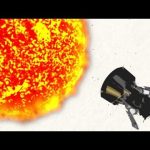
Is the Sun a ball of fire? And why does NASA send missions to the Sun? NASA’s Heliophysics Director Nicky Fox explains NASA’s latest solar science findings. The Parker Solar Probe mission is revolutionizing our understanding of the Sun, where changing conditions can propagate out into the solar system, affecting Earth and other worlds. It will travel through the Sun’s atmosphere, closer to the surface than any spacecraft before it, facing brutal heat and radiation conditions — and ultimately providing humanity with the closest-ever observations of a star.
Comment with your #AskNASA question and subscribe to learn more from our experts!
Engineers have completed their testing of ESA’s Solar Orbiter spacecraft in preparation for launch early next year.
Equipped with a suite of ten instruments, Solar Orbiter will capture the closest ever pictures of our star, the first images of its poles, and make detailed observations of solar activity. Its specially designed heatshield is capable of enduring temperatures of more than 500 degrees Celsius.
Over the past year, Solar Orbiter has been undergoing a series of rigorous tests at the IABG test centre near Munich, Germany. The spacecraft is due to be packed into an Antonov cargo plane on 31 October for shipping to Florida. Launch on an Atlas 5 rocket from Cape Canaveral, is planned for February 2020.
We are Europe’s gateway to space. Our mission is to shape the development of Europe’s space capability and ensure that investment in space continues to deliver benefits to the citizens of Europe and the world. Check out http://www.esa.int/ESA to get up to speed on everything space related.
The Solar Orbiter spacecraft is undergoing important pre-launch tests at the IABG National Space Centre in Ottobrunn, Germany, ahead of its launch, scheduled for February 2020.
The mission will study the Sun, but first the spacecraft must pass vibration, acoustic and shock tests. This will ensure the spacecraft can withstand the stresses of lift off and the extreme environments it will encounter while in orbit around the Sun – from the coldness of space, 150 million km away, to temperatures up to 500 ºC reached when it will be a mere 46 million km away, closer than Mercury.
Solar Orbiter is an ESA-led mission with strong NASA participation. The spacecraft was built and is being tested by Airbus.
This film contains interviews with César García, ESA Solar Orbiter Project Manager, and Ian Walters, Solar Orbiter Project Manager at Airbus Defence and Space.
ESA is Europe’s gateway to space. Our mission is to shape the development of Europe’s space capability and ensure that investment in space continues to deliver benefits to the citizens of Europe and the world. Check out http://www.esa.int/ESA to get up to speed on everything space related.
Följ med Paxi då han utforskar månen. I den här filmen förklarar Paxi månens faser och månförmörkelser. Filmen vänder sig till barn i åldern sex till tolv år.
ESA is Europe’s gateway to space. Our mission is to shape the development of Europe’s space capability and ensure that investment in space continues to deliver benefits to the citizens of Europe and the world. Check out http://www.esa.int/ESA to get up to speed on everything space related.
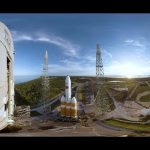
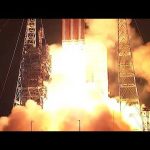
Watch in 360 degrees as an United Launch Alliance Delta IV Heavy rocket lifts off from Space Launch Complex-37 at Cape Canaveral Air Force Station in Florida carrying NASA’s Parker Solar Probe spacecraft. Roughly the size of a small car, the spacecraft lifted off at 3:31 a.m. EDT on Aug. 12, 2018, starting its historic mission to “touch” the Sun.
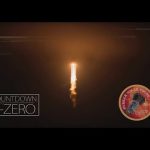
NASA’s historic Parker Solar Probe mission that launched Aug. 12, 2018 from Space Launch Complex 37 on Cape Canaveral Air Force Station in Florida will revolutionize our understanding of the Sun. The Parker Solar Probe spacecraft will travel through the Sun’s atmosphere, closer to the surface than any spacecraft before it, facing brutal heat and radiation conditions — and ultimately providing humanity with the closest-ever observations of a star. This is a look at the moments leading up to T-Zero for NASA’s mission to “touch” the Sun.
NASA’s Parker Solar Probe mission launched Aug. 11 from Cape Canaveral Air Force Station in Florida. The mission will be the first to fly directly through the Sun’s corona – the hazardous region of intense heat and solar radiation in the Sun’s atmosphere that is visible during an eclipse. It will gather data that could help answer questions about solar physics that have puzzled scientists for decades. Gathering information about fundamental processes near the Sun can help improve our understanding of how our solar system’s star changes the space environment, where space weather can affect astronauts, interfere with satellite orbits, or damage spacecraft electronics.
The Parker Solar Probe will be the first-ever mission to “touch” the Sun, traveling directly into the Sun’s atmosphere about 4 million miles from the surface. Read the story: https://go.nasa.gov/2KEExYZ NASA launch schedule: https://go.nasa.gov/2JfklMB
The Sun contains 99.8 of the mass in our solar system. Its gravitational pull is what keeps everything here, from tiny Mercury to the gas giants to the Oort Cloud, 186 billion miles away.
But even though the Sun has such a powerful pull, it’s surprisingly hard to actually go to the Sun: It takes 55 times more energy to go to the Sun than it does to go to Mars. Why is it so difficult? The answer lies in the same fact that keeps Earth from plunging into the Sun: Our planet is traveling very fast – about 67,000 miles per hour – almost entirely sideways relative to the Sun. The only way to get to the Sun is to cancel that sideways motion.
Since Parker Solar Probe will skim through the Sun’s atmosphere, it only needs to drop 53,000 miles per hour of sideways motion to reach its destination, but that’s no easy feat. In addition to using a powerful rocket, the Delta IV Heavy, Parker Solar Probe will perform seven Venus gravity assists over its seven-year mission to shed sideways speed into Venus’ well of orbital energy. These gravity assists will draw Parker Solar Probe’s orbit closer to the Sun for a record approach of just 3.83 million miles from the Sun’s visible surface on the final orbits.
Though it’s shedding sideways speed to get closer to the Sun, Parker Solar Probe will pick up overall speed, bolstered by Sun’s extreme gravity – so it will also break the record for the fastest-ever human-made objects, clocking in at 430,000 miles per hour on its final orbits.
Music: Percs and Pizz from Killer Tracks.
Credit: NASA’s Godddard Space flight Center
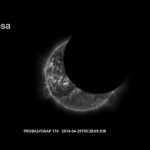
What is a lunar eclipse? What is a solar eclipse? This short video explains the difference between these regularly occurring events that can be observed from Earth.
The video uses a mix of ground- and space-based imagery of eclipses, including footage from the International Space Station, ESA’s Proba-2 satellite and the Japanese-led Hinode satellite.
Remember: never look directly at the Sun, even when partially eclipsed, without proper eye protection such as special solar eclipse glasses, or you risk permanent eye damage.
Credits: ESA, ESA/CESAR (graphics, ground-based observations), NASA’s Scientific Visualization Studio (partial lunar eclipse sequence) ESA/NASA (ISS footage), ESA/Royal Observatory of Belgium (Proba-2 footage), NASA/Hinode/XRT (Hinode image).
Orbiting Earth once every 90 minutes, the International Space Station soars into 16 sunrises and sunsets every single day. Many of these sunrises occur while the crew is working or sleeping, but ESA astronaut Alexander Gerst captured this stunning timelapse of a sunrise to share with us here on Earth.
These photos were taken by Alexander at an interval of two per second and the video has been edited at 25 frames per second.
Music: First Survivors 4 by Los Angeles-based British composer, Luke Richards. Sourced from Audio Network Limited.
These are solar sounds generated from 40 days of the Solar and Heliospheric Observatory’s (SOHO) Michelson Doppler Imager (MDI) data and processed by A. Kosovichev. Read more & download audio: https://go.nasa.gov/2JR0wLL
The procedure he used for generating these sounds was the following. He started with doppler velocity data, averaged over the solar disk, so that only modes of low angular degree (l = 0, 1, 2) remained. Subsequent processing removed the spacecraft motion effects, instrument tuning, and some spurious points. Then Kosovichev filtered the data at about 3 mHz to select clean sound waves (and not supergranulation and instrumental noise). Finally, he interpolated over the missing data and scaled the data (speeded it up a factor 42,000 to bring it into the audible human-hearing range (kHz)).
NASA heliophysicist Alex Young explains how sound connects us with the Sun and all other stars. This piece features low frequency sounds of the Sun. Raw audio (no commentary): https://youtu.be/-I-zdmg_Dno Read more: https://go.nasa.gov/2JR0wLL
Credit: NASA’s Goddard Space Flight Center
Micheala Sosby (NASA/GSFC): Lead Producer
Katie Atkinson (GSFC Interns): Lead Producer
C. Alex Young (NASA/GSFC): Narrator
Aaron E. Lepsch (ADNET Systems Inc.): Technical Support
Music: “Flow” by Lee Rosevere
This video is public domain and along with other supporting materials can be downloaded from the Scientific Visualization Studio at: https://svs.gsfc.nasa.gov/13011
Animated view of 14 099 asteroids in our Solar System, as viewed by ESA’s Gaia satellite using information from the mission’s second data release. The orbits of the 200 brightest asteroids are also shown, as determined using Gaia data.
In future data releases, Gaia will also provide asteroid spectra and enable a complete characterisation of the asteroid belt. The combination of dynamical and physical information that is being collected by Gaia provides an unprecedented opportunity to improve our understanding of the origin and the evolution of the Solar System.
Credit: ESA/Gaia/DPAC, CC BY SA 3.0 IGO
Acknowledgement: Gaia Data Processing and Analysis Consortium (DPAC); Orbits: Gaia Coordinating Unit 4; P. Tanga, Observatoire de la Côte d’Azur, France; F. Spoto, IMCCE, Observatoire de Paris, France; Animation: Gaia Sky; S. Jordan / T. Sagristà, Astronomisches Rechen-Institut, Zentrum für Astronomie der Universität Heidelberg, Germany
A chance to send your name to the Sun, testing systems for our Orion spacecraft, and sizing up Earth, from space – a few of the stories to tell you about – This Week at NASA!
This video is available for download from NASA’s Image and Video Library: https://images.nasa.gov/details-NHQ_2018_0309_Send%20Your%20Name%20to%20the%20Sun%20on%20This%20Week%20@NASA%20%E2%80%93%20March%209,%202018.html
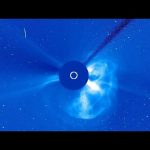
The Sun unleashed powerful solar flares on 6 September, one of which was the strongest in over a decade. An X2.2-class flare was launched at 09:10 GMT and an X9.3 flare was observed at 12:02 GMT. An M-class flare was also observed two days earlier on 4 September.
The images were captured by the ESA/NASA Solar and Heliospheric Observatory, SOHO. The flares were launched from a group of sunspots classified as active region 2673.The shaded disc at the centre of the image is a mask in SOHO’s LASCO instrument that blocks out direct sunlight to allow study of the faint details in the Sun’s corona. The white circle added within the disc shows the size and position of the visible Sun.
Photographic paper has long been a popular warm weather activity for kids and adults, but did you know that you can use fabric, too? With Sun Sensitive Fabric, just lay objects on the UV reactive cloth and expose it to the sun’s rays. After ten minutes, rinse the fabric with water and lock the images in place. You even have multiple colors to choose from! Try making images from red, green, or even yellow fabric. Get out in the sun and enjoy Sun Sensitive Fabric!
Has the universe a beginning or was it here since forever? Well, evidence suggests that there was indeed a starting point to this universe we are part of right now. But how can this be? How can something come from nothing? And what about time? We don’t have all the answers yet so let’s talk about what we know.
Also, we try to make this one not depressing. Tell us if we succeeded.
BY THE WAY. We have a website now. We’ll try to blog from time to time, show you guys how we make the videos and give more insight to our process. Also we sell stuff. We really don’t know where this whole kurzgesagt stuff leads us. But we are really thankful for all the attention and positive feedback and yeah, maybe we can make this our jobs — it would be pretty nice and we could do more content each month. But we’ll see. For now, thank you very much everybody for making this little adventure possible.
If you like the MUSIC of the video, you can get it here: http://bit.ly/1fCOlLI
Thomas did an aweful good job again. 🙂
Next Video: April. (as soon as we can but we kind of have to make a living and visit college) Topic: Nuclear Energy (probably, if we finish the research in time — if not something else)
Short videos, explaining things. For example Evolution, the Universe, Time, the Stock Exchange or controversial topics like Fracking. Because we love science.
We’re a bunch of Information designers from munich, visit us on our website, twitter, facebook or behance to say hi!
Gaia is ESA’s billion-star surveyor, designed to provide a precise 3D map of our Milky Way galaxy in order to understand its composition, formation and evolution.