Tag: Technology

  • Lagrange mission to provide solar warning

    Lagrange mission to provide solar warning

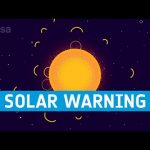
    Earth’s magnetic field protects life on Earth from the intense radiation and titanic amounts of energetic material our Sun blasts in every direction. However, astronauts and satellites in space, future explorers travelling to the Moon and Mars, and infrastructure on Earth such as power grids and communication systems remain vulnerable to these violent outbursts.

    For this reason, ESA is planning to send a satellite to monitor the ‘side’ of our Sun, from a gravitationally stable position known as the fifth Lagrange point. From here, the Lagrange satellite will detect potentially hazardous solar events before they come into view from Earth, giving us advance knowledge of their speed, direction and chance of impact.

    ★ Subscribe: http://bit.ly/ESAsubscribe and click twice on the bell button to receive our notifications.

    Check out our full video catalog: http://bit.ly/SpaceInVideos
    Follow us on Twitter: http://bit.ly/ESAonTwitter
    On Facebook: http://bit.ly/ESAonFacebook
    On Instagram: http://bit.ly/ESAonInstagram
    On Flickr: http://bit.ly/ESAonFlickr

    We are Europe’s gateway to space. Our mission is to shape the development of Europe’s space capability and ensure that investment in space continues to deliver benefits to the citizens of Europe and the world. Check out http://www.esa.int/ESA to get up to speed on everything space related.

    Copyright information about our videos is available here: http://www.esa.int/spaceinvideos/Terms_and_Conditions

    #ESA
    #Lagrange
    #SpaceSafety
  • Why CAVES – Astrobiology

    Why CAVES – Astrobiology

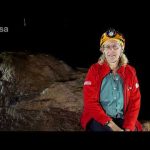
    NASA’s director of Astrobiology Institue, Penelope Boston, explains why caves are interesting to astrobiologists.

    Caves are little studied areas and can resemble environments found on other planets. Caves exist on the Moon and Mars and could be used by astronauts for shelter when we explore our Solar System

    Recorded during a workshop on astrobiology and caves in Sardinia, Italy in 2015.

    ESA’s CAVES course – Cooperative Adventure for Valuing and Exercising human behaviour and performance Skills – is a two-week course that prepares astronauts to work safely and effectively in multicultural teams in an environment where safety is critical – in caves.
    ★ Subscribe: http://bit.ly/ESAsubscribe and click twice on the bell button to receive our notifications.

    Check out our full video catalog: http://bit.ly/SpaceInVideos
    Follow us on Twitter: http://bit.ly/ESAonTwitter
    On Facebook: http://bit.ly/ESAonFacebook
    On Instagram: http://bit.ly/ESAonInstagram
    On Flickr: http://bit.ly/ESAonFlickr

    We are Europe’s gateway to space. Our mission is to shape the development of Europe’s space capability and ensure that investment in space continues to deliver benefits to the citizens of Europe and the world. Check out http://www.esa.int/ESA to get up to speed on everything space related.

    Copyright information about our videos is available here: http://www.esa.int/spaceinvideos/Terms_and_Conditions

  • Solar Orbiter launch highlights

    Solar Orbiter launch highlights

    Highlights from the preparation and liftoff of ESA’s Sun-exploring mission Solar Orbiter.

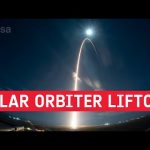
    Solar Orbiter lofted to space aboard the US Atlas V 411 rocket from NASA’s spaceport in Cape Canaveral, Florida at 04:03 GMT (05:03 CET) on 10 February 2020.

    An ESA-led mission with strong NASA participation, Solar Orbiter carries a set of ten instruments for imaging the surface of the Sun and studying the environment in its vicinity. The spacecraft will travel around the Sun on an elliptical orbit that will take it as close as 42 million km away from the Sun’s surface, about a quarter of the distance between the Sun and Earth. The orbit will allow Solar Orbiter to see some of the never-before-imaged regions of the Sun, including the poles, and shed new light on what gives rise to solar wind, which can affect infrastructure on Earth.

    More about Solar Orbiter: https://www.esa.int/solarorbiter

    ★ Subscribe: http://bit.ly/ESAsubscribe and click twice on the bell button to receive our notifications.

    Check out our full video catalog: http://bit.ly/SpaceInVideos
    Follow us on Twitter: http://bit.ly/ESAonTwitter
    On Facebook: http://bit.ly/ESAonFacebook
    On Instagram: http://bit.ly/ESAonInstagram
    On Flickr: http://bit.ly/ESAonFlickr

    We are Europe’s gateway to space. Our mission is to shape the development of Europe’s space capability and ensure that investment in space continues to deliver benefits to the citizens of Europe and the world. Check out http://www.esa.int/ESA to get up to speed on everything space related.

    Copyright information about our videos is available here: http://www.esa.int/spaceinvideos/Terms_and_Conditions

    #ESA
    #SolarOrbiter
    #WeAreAllSolarOrbiters

  • Solar Orbiter liftoff

    Solar Orbiter liftoff

    ESA’s new Sun-exploring mission Solar Orbiter lofted to space aboard the US Atlas V 411 rocket from NASA’s spaceport in Cape Canaveral, Florida at 04:03 GMT (05:03 CET) on 10 February 2020.

    Solar Orbiter, an ESA-led mission with strong NASA participation, carries a set of ten instruments for imaging the surface of the Sun and studying the environment in its vicinity. The spacecraft will travel around the Sun on an elliptical orbit that will take it as close as 42 million km away from the Sun’s surface, about a quarter of the distance between the Sun and Earth. The orbit will allow Solar Orbiter to see some of the never-before-imaged regions of the Sun, including the poles, and shed new light on what gives rise to solar wind, which can affect infrastructure on Earth.

    More about Solar Orbiter: https://www.esa.int/solarorbiter

    ★ Subscribe: http://bit.ly/ESAsubscribe and click twice on the bell button to receive our notifications.

    Check out our full video catalog: http://bit.ly/SpaceInVideos
    Follow us on Twitter: http://bit.ly/ESAonTwitter
    On Facebook: http://bit.ly/ESAonFacebook
    On Instagram: http://bit.ly/ESAonInstagram
    On Flickr: http://bit.ly/ESAonFlickr

    We are Europe’s gateway to space. Our mission is to shape the development of Europe’s space capability and ensure that investment in space continues to deliver benefits to the citizens of Europe and the world. Check out http://www.esa.int/ESA to get up to speed on everything space related.

    Copyright information about our videos is available here: http://www.esa.int/spaceinvideos/Terms_and_Conditions

    #ESA
    #SolarOrbiter
    #WeAreAllSolarOrbiters

  • Solar Orbiter launch preparations

    Solar Orbiter launch preparations

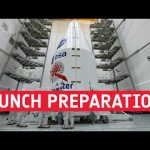
    ESA’s Solar Orbiter satellite in a cleanroom at the Astrotech payload processing facility near Kennedy Space Centre, Florida. The spacecraft is seen being mounted onto the payload adaptor ring and encapsulated into a fairing, which will protect the satellite and the rocket upper stage during the turbulent ascent through Earth’s atmosphere.

    Learn more about Solar Orbiter: http://bit.ly/ESASolarOrbiter

    The video was created with support from Airbus/Astrotech/ULA/NASA

    ★ Subscribe: http://bit.ly/ESAsubscribe and click twice on the bell button to receive our notifications.

    Check out our full video catalog: http://bit.ly/SpaceInVideos
    Follow us on Twitter: http://bit.ly/ESAonTwitter
    On Facebook: http://bit.ly/ESAonFacebook
    On Instagram: http://bit.ly/ESAonInstagram
    On Flickr: http://bit.ly/ESAonFlickr

    We are Europe’s gateway to space. Our mission is to shape the development of Europe’s space capability and ensure that investment in space continues to deliver benefits to the citizens of Europe and the world. Check out http://www.esa.int/ESA to get up to speed on everything space related.

    Copyright information about our videos is available here: http://www.esa.int/spaceinvideos/Terms_and_Conditions

    #ESA
    #SolarOrbiter
    #WeAreAllSolarOrbiters

  • ESA’s missions to the Sun

    ESA’s missions to the Sun

    ESA’s new Sun-explorer, Solar Orbiter, will capture close-up images of never before seen regions of our parent star, including the poles, and study the electromagnetic environment in its vicinity. The cutting-edge spacecraft will get as close as 42 million kilometres away from the Sun, about a quarter of the distance between the Sun and Earth, and face scorching temperatures of up to 500°C.

    ESA has a long history of studying the Sun from space. Since the launch of Ulysses in 1990, the agency has led or cooperated on several Sun-exploring missions including SOHO, the Cluster quartet and Proba-2.

    Learn more about the Sun: http://bit.ly/LivingWithAStar

    ★ Subscribe: http://bit.ly/ESAsubscribe and click twice on the bell button to receive our notifications.

    Check out our full video catalog: http://bit.ly/SpaceInVideos
    Follow us on Twitter: http://bit.ly/ESAonTwitter
    On Facebook: http://bit.ly/ESAonFacebook
    On Instagram: http://bit.ly/ESAonInstagram
    On Flickr: http://bit.ly/ESAonFlickr

    We are Europe’s gateway to space. Our mission is to shape the development of Europe’s space capability and ensure that investment in space continues to deliver benefits to the citizens of Europe and the world. Check out http://www.esa.int/ESA to get up to speed on everything space related.

    Copyright information about our videos is available here: http://www.esa.int/spaceinvideos/Terms_and_Conditions

    #ESA
    #SpaceScience
    #Sun

  • Luca speaks with European media

    Luca speaks with European media

    Media had their first opportunity to ask questions of ESA astronaut Luca Parmitano in Europe on Saturday 8 February 2020 – just two days after he returned from 201 days in space.

    This news conference at ESA’s European Astronaut Centre (EAC) started at 12:30 CET (11:30 GMT) with an introduction from the Head of EAC Frank De Winne, followed by statements from ESA Director General Jan Wörner and Director of Human and Robotic Exploration David Parker.

    Luca then answered a range of questions about his recent mission, known as ‘Beyond’. Luca answers questions in Italian and others in English.

    The entire conference was broadcast live on ESA Web TV.

    Beyond was Luca’s second long-duration mission to the International Space Station. His first was Volare in 2013.

    Luca was launched to the Station 20 July 2019 – the 50th anniversary of the first lunar landing – and returned 6 February 2020 in the Russian Soyuz MS-13 spacecraft.

    During his Beyond mission he became the third European and first Italian in command of the Space Station, set the record for longest cumulative spacewalking time by a European astronaut, remotely controlled a rock-collecting rover in the Netherlands, supported over 50 European and 200 international experiments and welcomed the first Emirati astronaut Hazzaa Ali Almansoori among other mission highlights.

    (Please note: There were some technical issues about 45-50 minutes into the press conference, in the replay there is some loss of audio quality and loss of audio/image sync.)

    Follow Luca: http://bit.ly/ESALucaParmitano

    ★ Subscribe: http://bit.ly/ESAsubscribe and click twice on the bell button to receive our notifications.

    Check out our full video catalog: http://bit.ly/SpaceInVideos
    Follow us on Twitter: http://bit.ly/ESAonTwitter
    On Facebook: http://bit.ly/ESAonFacebook
    On Instagram: http://bit.ly/ESAonInstagram
    On Flickr: http://bit.ly/ESAonFlickr

    We are Europe’s gateway to space. Our mission is to shape the development of Europe’s space capability and ensure that investment in space continues to deliver benefits to the citizens of Europe and the world. Check out http://www.esa.int/ESA to get up to speed on everything space related.

    Copyright information about our videos is available here: http://www.esa.int/spaceinvideos/Terms_and_Conditions

    #ESA
    #LucaParmitano
    #MissionBeyond

  • Solar Orbiter operations simulations

    Solar Orbiter operations simulations

    ESA’s Solar Orbiter is getting ready for its launch on an Atlas V rocket provided by NASA and operated by United Launch Alliance from Cape Canaveral, Florida.

    Once in space, and over the course of several years, the spacecraft will repeatedly use the gravity of Venus and Earth to raise its orbit above the poles of the Sun, providing new perspectives on our star, including the first images of the Sun’s polar regions.

    All these operations will be controlled from the European Space Operations Centre (ESOC), Germany, where a dedicated team is currently working on simulations of the first moments in orbit, after separation from the launcher, but also all the delicate manoeuvres of the journey that will make Solar Orbiter mission possible.

    Learn more Solar Orbiter: http://bit.ly/ESASolarOrbiter

    ★ Subscribe: http://bit.ly/ESAsubscribe and click twice on the bell button to receive our notifications.

    Check out our full video catalog: http://bit.ly/SpaceInVideos
    Follow us on Twitter: http://bit.ly/ESAonTwitter
    On Facebook: http://bit.ly/ESAonFacebook
    On Instagram: http://bit.ly/ESAonInstagram
    On Flickr: http://bit.ly/ESAonFlickr

    We are Europe’s gateway to space. Our mission is to shape the development of Europe’s space capability and ensure that investment in space continues to deliver benefits to the citizens of Europe and the world. Check out http://www.esa.int/ESA to get up to speed on everything space related.

    Copyright information about our videos is available here: http://www.esa.int/spaceinvideos/Terms_and_Conditions

    #ESA
    #SolarOrbiter
    #WeAreAllSolarOrbiters

  • Luca Parmitano: back from Beyond

    Luca Parmitano: back from Beyond

    ESA astronaut Luca Parmitano returned from his second long-duration mission to the International Space Station, known as ‘Beyond’, on 6 February 2020. In this interview at ESA’s Astronaut Centre in Cologne, Germany, he shares some of his experiences and feelings after 201 days in orbit.

    This interview was conducted late on the night Luca landed in Cologne, and is the first full interview with him in Europe since he touched down in Kazakhstan at 09:12 GMT (10:12 CET) Thursday 6 February.

    Some of the highlights of Luca’s Beyond mission include becoming the third European and first Italian in command of the Space Station, leading three of four complex spacewalks to maintain the cosmic-ray-detecting Alpha Magnetic Spectrometer AMS-02, gaining the European record for most cumulative spacewalking time, remotely controlling a rock-collecting rover in the Netherlands, supporting over 50 European and 200 international experiments and sharing his experiences with those back on Earth through images and video links.

    One of the main things Luca highlighted throughout his mission was the fragility of our planet and the need to act now for generations to come.

    Watch the interview in Italian here: https://youtu.be/5BZy1Dd56oI

    Follow Luca: http://bit.ly/ESALucaParmitano

     ★ Subscribe: http://bit.ly/ESAsubscribe and click twice on the bell button to receive our notifications.

    Check out our full video catalog: http://bit.ly/SpaceInVideos
    Follow us on Twitter: http://bit.ly/ESAonTwitter
    On Facebook: http://bit.ly/ESAonFacebook
    On Instagram: http://bit.ly/ESAonInstagram
    On Flickr: http://bit.ly/ESAonFlickr

    We are Europe’s gateway to space. Our mission is to shape the development of Europe’s space capability and ensure that investment in space continues to deliver benefits to the citizens of Europe and the world. Check out http://www.esa.int/ESA to get up to speed on everything space related.

    Copyright information about our videos is available here: http://www.esa.int/spaceinvideos/Terms_and_Conditions

    #ESA
    #LucaParmitano
    #MissionBeyond

  • Luca Parmitano: torna da Beyond

    Luca Parmitano: torna da Beyond

    L’astronauta dell’ESA Luca Parmitano è tornato dalla sua seconda missione di lunga durata sulla Stazione Spaziale Internazionale chiamata ‘Beyond’, il 6 febbraio 2020. In questa intervista al Centro astronauti dell’ESA di Colonia in Germania, condivide alcune delle sue esperienze e dei suoi sentimenti dopo 201 giorni in orbita.

    Questa intervista è stata condotta nella tarda notte in cui Luca è atterrato a Colonia, ed è la prima intervista completa con lui in Europa da quando è atterrato in Kazakistan alle 09:12 GMT (10:12 CET) giovedì 6 febbraio.

    Tra i momenti salienti della missione Beyond di Luca ci sono: diventare il terzo europeo e il primo italiano al comando della Stazione Spaziale, condurre tre delle quattro complesse passeggiate spaziali, ottenere il record europeo per la maggior parte del tempo trascorso durante le passeggiate spaziali, controllare a distanza un rover che raccoglie rocce nei Paesi Bassi, condurre oltre 50 esperimenti europei e 200 internazionali e condividere le sue esperienze attraverso immagini e collegamenti video.

    Una delle cose principali che Luca ha evidenziato nel corso della sua missione è stata la fragilità del nostro pianeta e la necessità di agire ora per le generazioni a venire.

    Watch the interview in English here: https://youtu.be/UgqRt08FV_Y

    ★ Subscribe: http://bit.ly/ESAsubscribe and click twice on the bell button to receive our notifications.

    Check out our full video catalog: http://bit.ly/SpaceInVideos
    Follow us on Twitter: http://bit.ly/ESAonTwitter
    On Facebook: http://bit.ly/ESAonFacebook
    On Instagram: http://bit.ly/ESAonInstagram
    On Flickr: http://bit.ly/ESAonFlickr

    We are Europe’s gateway to space. Our mission is to shape the development of Europe’s space capability and ensure that investment in space continues to deliver benefits to the citizens of Europe and the world. Check out http://www.esa.int/ESA to get up to speed on everything space related.

    Copyright information about our videos is available here: http://www.esa.int/spaceinvideos/Terms_and_Conditions

    #ESA
    #LucaParmitano
    #MissionBeyond

  • Earth from Space: Flevoland

    Earth from Space: Flevoland

    The Copernicus Sentinel-1 mission takes us over part of the Dutch province of Flevoland – the newest province in the Netherlands and one of the largest land reclamation projects in the world, in this week’s edition of the Earth from Space programme.

    Download the image: https://www.esa.int/ESA_Multimedia/Images/2020/02/Flevoland_the_Netherlands

    ★ Subscribe: http://bit.ly/ESAsubscribe and click twice on the bell button to receive our notifications.

    Check out our full video catalog: http://bit.ly/SpaceInVideos
    Follow us on Twitter: http://bit.ly/ESAonTwitter
    On Facebook: http://bit.ly/ESAonFacebook
    On Instagram: http://bit.ly/ESAonInstagram
    On Flickr: http://bit.ly/ESAonFlickr

    We are Europe’s gateway to space. Our mission is to shape the development of Europe’s space capability and ensure that investment in space continues to deliver benefits to the citizens of Europe and the world. Check out http://www.esa.int/ESA to get up to speed on everything space related.

    Copyright information about our videos is available here: http://www.esa.int/spaceinvideos/Terms_and_Conditions

    #ESA
    #EarthFromSpace
    #Flevoland

  • Luca Parmitano: return to Earth

    Luca Parmitano: return to Earth

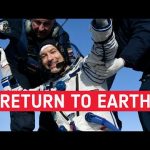
    ESA astronaut Luca Parmitano touched down in the Kazakh Steppe at 09:12 GMT (10:12 CET), 6 February 2020 after his second six-month mission on the International Space Station. Luca returned to Earth in the Russian Soyuz MS-13 spacecraft alongside US astronaut Christina Koch and Russian cosmonaut Alexander Skvortsov.
    During his second mission, known as ‘Beyond’, Luca served as the third European and first ever Italian in command of the International Space Station. Before leaving the Station, he handed this role over to Russian cosmonaut Oleg Skripocha in a traditional change of command ceremony.

    While in orbit, Luca also performed four complex spacewalks to maintain the cosmic-ray-detecting Alpha Magnetic Spectrometer AMS-02, remotely operated a rock-collecting rover in the Netherlands, supported more than 50 European and over 200 international experiments, gained the European record for longest cumulative spacewalking time, and publicly shared countless images as he warned of the challenges facing our planet.

    Luca will now return to ESA’s Astronaut Centre in Cologne, Germany where he will continue to work with researchers to gather baseline data and undertake an extensive programme of rehabilitation supported by ESA experts. The findings of this research and Luca’s work in space will help shape the future of space exploration and enhance technological developments on Earth.

    Follow Luca: http://bit.ly/ESALucaParmitano

    ★ Subscribe: http://bit.ly/ESAsubscribe and click twice on the bell button to receive our notifications.

    Check out our full video catalog: http://bit.ly/SpaceInVideos
    Follow us on Twitter: http://bit.ly/ESAonTwitter
    On Facebook: http://bit.ly/ESAonFacebook
    On Instagram: http://bit.ly/ESAonInstagram
    On Flickr: http://bit.ly/ESAonFlickr

    We are Europe’s gateway to space. Our mission is to shape the development of Europe’s space capability and ensure that investment in space continues to deliver benefits to the citizens of Europe and the world. Check out http://www.esa.int/ESA to get up to speed on everything space related.

    Copyright information about our videos is available here: http://www.esa.int/spaceinvideos/Terms_and_Conditions

    #ESA
    #MissionBeyond
    #LucaParmitano

  • Fit for space – survival training

    Fit for space – survival training

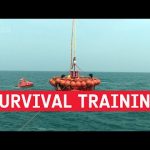
    In the third episode of our ‘Fit for space’ training series, ESA astronaut Matthias Maurer explains how astronauts learn to survive on their own if ever a spacecraft lands away from its intended landing site.

    Generally a spacecraft lands within a few kilometers of its landing site, but sometimes they return in a so-called ‘ballistic mode’ in a steeper entrance trajectory putting the astronauts under increased gravity loads, and landing with less precision – sometimes 400 km away from the intended landing area.

    From winter survival to water survival, astronauts are prepared for anything, from building fires and shelters, to surviving cold waters and righting capsized life rafts.

    The video includes footage from the Soyuz winter survival training, water survival training fire emergency training as well as Chinese sea survival training.

    ★ Subscribe: http://bit.ly/ESAsubscribe and click twice on the bell button to receive our notifications.

    Check out our full video catalog: http://bit.ly/SpaceInVideos
    Follow us on Twitter: http://bit.ly/ESAonTwitter
    On Facebook: http://bit.ly/ESAonFacebook
    On Instagram: http://bit.ly/ESAonInstagram
    On Flickr: http://bit.ly/ESAonFlickr

    We are Europe’s gateway to space. Our mission is to shape the development of Europe’s space capability and ensure that investment in space continues to deliver benefits to the citizens of Europe and the world. Check out http://www.esa.int/ESA to get up to speed on everything space related.

    Copyright information about our videos is available here: http://www.esa.int/spaceinvideos/Terms_and_Conditions

    #ESA
    #SpaceExploration
    #SurvivalTraining

  • Intense ‘Beyond’ mission for Luca

    Intense ‘Beyond’ mission for Luca

    Italian ESA astronaut Luca Parmitano will return to Earth 6 February 2020, following his second long-duration mission on the International Space Station (ISS).

    Luca’s mission – known as ‘Beyond’ – began 20 July 2019, exactly 50 years after the first lunar landing. On this date, Luca was launched to the Space Station in a Russian Soyuz spacecraft alongside Roscosmos cosmonaut Alexander Skvortsov and NASA astronaut Andrew Morgan.

    During Beyond, Luca supported over 50 European experiments in orbit. These included remotely operating a rover in the Netherlands to collect rock samples as instructed by scientists in Germany, and completing four complex spacewalks to repair the cosmic-ray-detecting Alpha Magnetic Spectrometer AMS-02. He also supported numerous international experiments and became the third European and first ever Italian commander of the International Space Station.

    Science and research completed during Luca’s mission will help pave the way for farther exploration as ESA looks beyond the International Space Station to the Moon and Mars.

    Follow Luca’s Beyond Mission: http://bit.ly/ESALucaParmitano

    ★ Subscribe: http://bit.ly/ESAsubscribe and click twice on the bell button to receive our notifications.

    Check out our full video catalog: http://bit.ly/SpaceInVideos
    Follow us on Twitter: http://bit.ly/ESAonTwitter
    On Facebook: http://bit.ly/ESAonFacebook
    On Instagram: http://bit.ly/ESAonInstagram
    On Flickr: http://bit.ly/ESAonFlickr

    We are Europe’s gateway to space. Our mission is to shape the development of Europe’s space capability and ensure that investment in space continues to deliver benefits to the citizens of Europe and the world. Check out http://www.esa.int/ESA to get up to speed on everything space related.

    Copyright information about our videos is available here: http://www.esa.int/spaceinvideos/Terms_and_Conditions

    #ESA
    #LucaParmitano
    #MissionBeyond

  • Earth from Space: Lake George

    Earth from Space: Lake George

    Ahead of World Wetlands Day, celebrated internationally each year on 2 February, this week’s edition of the Earth from Space programme features a Copernicus Sentinel-2 image over Lake George in western Uganda. In 1988, Lake George was designated as Uganda’s first site under the Ramsar Convention – an international treaty for the conservation and sustainable use of wetlands.

    Download the image: https://www.esa.int/ESA_Multimedia/Images/2020/01/Lake_George_Uganda

    ★ Subscribe: http://bit.ly/ESAsubscribe and click twice on the bell button to receive our notifications.

    Check out our full video catalog: http://bit.ly/SpaceInVideos
    Follow us on Twitter: http://bit.ly/ESAonTwitter
    On Facebook: http://bit.ly/ESAonFacebook
    On Instagram: http://bit.ly/ESAonInstagram
    On Flickr: http://bit.ly/ESAonFlickr

    We are Europe’s gateway to space. Our mission is to shape the development of Europe’s space capability and ensure that investment in space continues to deliver benefits to the citizens of Europe and the world. Check out http://www.esa.int/ESA to get up to speed on everything space related.

    Copyright information about our videos is available here: http://www.esa.int/spaceinvideos/Terms_and_Conditions

    #ESA
    #EarthFromSpace
    #LakeGeorge

  • Solar Orbiter – the Sun close-up

    Solar Orbiter – the Sun close-up

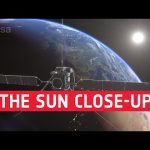
    ESA’s mission to the Sun, Solar Orbiter, is due for launch on an Atlas V 411 from Cape Canaveral, Florida on 9 February 23:03 EST / 04:03 GMT / 05:03 CET on 10 Feb.
     
    Equipped with a suite of ten scientific instruments, Solar Orbiter will capture the first images of the Sun’s poles and make detailed observations of solar activity. Its specially designed heatshield is capable of enduring temperatures of more than 500ºC.

    Solar Orbiter is a space mission of international collaboration between ESA and NASA. The spacecraft has been developed by Airbus.

    Learn more Solar Orbiter: http://bit.ly/ESASolarOrbiter

    ★ Subscribe: http://bit.ly/ESAsubscribe and click twice on the bell button to receive our notifications.

    Check out our full video catalog: http://bit.ly/SpaceInVideos
    Follow us on Twitter: http://bit.ly/ESAonTwitter
    On Facebook: http://bit.ly/ESAonFacebook
    On Instagram: http://bit.ly/ESAonInstagram
    On Flickr: http://bit.ly/ESAonFlickr

    We are Europe’s gateway to space. Our mission is to shape the development of Europe’s space capability and ensure that investment in space continues to deliver benefits to the citizens of Europe and the world. Check out http://www.esa.int/ESA to get up to speed on everything space related.

    Copyright information about our videos is available here: http://www.esa.int/spaceinvideos/Terms_and_Conditions

    #ESA
    #SolarOrbiter
    #WeAreAllSolarOrbiters

  • Grand tour of the International Space Station with Drew and Luca | Single take

    Grand tour of the International Space Station with Drew and Luca | Single take

    ESA astronaut Luca Parmitano and NASA astronaut Drew Morgan take you on a unique tour of the International Space Station shot in one take with two cameras strapped together. Luca and Drew take it in turns to guide you through the modules and spacecraft docked to the orbital outpost.

    Starting from the Soyuz MS-15 spacecraft that bought Drew to the Space Station, the duo show each module and spacecraft docked with the International Space Station at the time it was recorded around the New Year 2020. Passing colleagues include NASA astronaut Jessica Meir and Christina Koch exercising and Russian cosmonauts Alexander Skvortsov and Oleg Skripochka.

    This is the first tour of the International Space Station with two astronauts presenting and the first done in a single take.

    At the time of recording three supply vehicles were docked, the Russian Progress MS-13, Space-X’s Dragon-19 and Northrup Grumman’s Cygnus-12, as well as two astronaut vehicles the Soyuz MS-15 and Soyuz MS-13.

    The map overlay graphic erroneously shows the future Nauka module instead of Pirs. The Russian Multipurpose Laboratory Module Nauka is planned for launch in the future and will replace Pirs, but we put it on the map already.

    Skip to specific modules or features such as the toilets using the timestamps below:

    00:00:06 Soyuz MS-15
    00:04:53 Zvezda service module
    00:08:01 Pirs
    00:09:27 Mini Research Module-2 (MRM-2)
    00:10:30 Soyuz MS-13
    00:11:44 MRM-2
    00:12:27 Progress
    00:13:19 Functional Cargo Block (FGB)
    00:07:12 Mini Research Module-1 (MRM-1)
    00:19:36 Pressurised Mating Adapter
    00:20:42 Node-1 Unity
    00:22:46 Northrup Grumman Cygnus-12
    00:27:32 Quest Airlock
    00:29:27 Node-3 Tranquility
    00:30:58 T2 Treadmill
    00:31:17 Toilet
    00:33:38 Cupola at night
    00:34:11 Permanent Multipurpose Module Leonardo (PMM)
    00:36:42 US laboratory Destiny
    00:37:45 Robotics station for Canadarm2
    00:38:40 Exercise bike
    00:42:21 Node-2 Harmony
    00:44:40 Space X Dragon
    00:46:35 European laboratory Columbus
    00:49:53 Japanese laboratory Kibo
    00:56:17 Space Station fly through
    01:00:43 Cupola daytime
    01:04:27 Goodbye from Cupola

    ★ Subscribe: http://bit.ly/ESAsubscribe and click twice on the bell button to receive our notifications.

    Check out our full video catalog: http://bit.ly/SpaceInVideos
    Follow us on Twitter: http://bit.ly/ESAonTwitter
    On Facebook: http://bit.ly/ESAonFacebook
    On Instagram: http://bit.ly/ESAonInstagram
    On Flickr: http://bit.ly/ESAonFlickr

    We are Europe’s gateway to space. Our mission is to shape the development of Europe’s space capability and ensure that investment in space continues to deliver benefits to the citizens of Europe and the world. Check out http://www.esa.int/ESA to get up to speed on everything space related.

    Copyright information about our videos is available here: http://www.esa.int/spaceinvideos/Terms_and_Conditions

    #ESA
    #LucaParmitano
    #InternationalSpaceStation

  • Earth from Space: Japanese archipelago

    Earth from Space: Japanese archipelago

    The Copernicus Sentinel-3 mission takes us over Japan’s four main islands, in this week’s edition of the Earth from Space programme.

    Download the image: https://www.esa.int/ESA_Multimedia/Images/2020/01/Japanese_archipelago

    ★ Subscribe: http://bit.ly/ESAsubscribe and click twice on the bell button to receive our notifications.

    Check out our full video catalog: http://bit.ly/SpaceInVideos
    Follow us on Twitter: http://bit.ly/ESAonTwitter
    On Facebook: http://bit.ly/ESAonFacebook
    On Instagram: http://bit.ly/ESAonInstagram
    On Flickr: http://bit.ly/ESAonFlickr

    We are Europe’s gateway to space. Our mission is to shape the development of Europe’s space capability and ensure that investment in space continues to deliver benefits to the citizens of Europe and the world. Check out http://www.esa.int/ESA to get up to speed on everything space related.

    Copyright information about our videos is available here: http://www.esa.int/spaceinvideos/Terms_and_Conditions

    #ESA
    #EarthFromSpace
    #Japan

  • ESA Director General’s press briefing

    ESA Director General’s press briefing

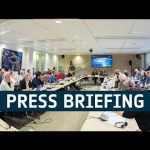
    Recording of the ESA Director General’s start-of-the-year press briefing, held at ESA headquarters in Paris, France, on 15 January 2020.

    This briefing, with DG Jan Wörner and ESA Directors, lays out plans for the new budget committed to by Member States at Space19+ and looks ahead to activities in 2020.

    ★ Subscribe: http://bit.ly/ESAsubscribe and click twice on the bell button to receive our notifications.

    Check out our full video catalog: http://bit.ly/SpaceInVideos
    Follow us on Twitter: http://bit.ly/ESAonTwitter
    On Facebook: http://bit.ly/ESAonFacebook
    On Instagram: http://bit.ly/ESAonInstagram
    On Flickr: http://bit.ly/ESAonFlickr

    We are Europe’s gateway to space. Our mission is to shape the development of Europe’s space capability and ensure that investment in space continues to deliver benefits to the citizens of Europe and the world. Check out http://www.esa.int/ESA to get up to speed on everything space related.

    Copyright information about our videos is available here: http://www.esa.int/spaceinvideos/Terms_and_Conditions

    #ESA
    #PressBriefing
    #SpacePolicy

  • Moon stresses greater gov’t role in fostering AI technology

    Moon stresses greater gov’t role in fostering AI technology

    문 대통령, 새해 첫 부처 업무보고서 과학기술 통한 성장 강조

    President Moon Jae-in has called for the government to play a greater role in growing the country’s artificial intelligence sector… to boost the competitiveness of Korea’s IT sector globally.
    Shin Se-min reports.
    President Moon Jae-in has pressed for more governmental support to boost Korea’s information technology prowess, including its AI industry.
    During an annual policy review on Thursday, held at the state-funded Electronics and Telecommunications Research Institute in Daejeon,… the president said the country has the potential to become an AI powerhouse.
    “We must secure future jobs with information technology and become an innovative and inclusive nation. Korea has enough potential to become a science-technology power and the world leader in the AI field. Turning that potential into reality is the task the government should do.”
    Calling it the “infrastructure of Korea’s innovative growth,” the president said the country should complete the establishment of a nationwide 5G network by 2022.
    He also promised to lead the way in fostering AI-related unicorn firms through support with education and training.
    Backing that plan,… the Ministry of Science and ICT announced it will invest a trillion won, around 860 million U.S. dollars, to create more AI and software professionals.
    The first policy briefing focusing on scientific technology clearly reflects the administration’s resolve in boosting the nation’s competitiveness in advanced technology this year,… one of the core policy goals for 2020.
    The president, also stressing the importance of the role of broadcasting, said comprehensive policy measures are critical in trying to contain the spread of fake news,… something that has been rapidly growing in the new forms of media.
    Shin Se-min, Arirang News.

    #AI #technology #government

    Arirang News Facebook: http://www.facebook.com/arirangtvnews

  • Forward to the Moon with ESA

    Forward to the Moon with ESA

    The first flight of the Artemis programme, which will see humans return to the Moon, is scheduled to begin soon. The lunar spacecraft consists of NASA’s Orion crew module and the European Service Module, or ESM. Developed by ESA and building on technology from its Automated Transfer Vehicle (ATV), the ESM will provide propulsion, life support, environmental control and electrical power to Orion. The Artemis 1 spacecraft modules are undergoing thermal vacuum and electromagnetic interference tests in the world’s largest space simulation vacuum chamber at the Glenn Research Centre’s Plum Brook Station in Sandusky, Ohio, USA.

    Learn more about Orion: http://bit.ly/ESAOrion

    ★ Subscribe: http://bit.ly/ESAsubscribe and click twice on the bell button to receive our notifications.

    Check out our full video catalog: http://bit.ly/SpaceInVideos
    Follow us on Twitter: http://bit.ly/ESAonTwitter
    On Facebook: http://bit.ly/ESAonFacebook
    On Instagram: http://bit.ly/ESAonInstagram
    On Flickr: http://bit.ly/ESAonFlickr

    We are Europe’s gateway to space. Our mission is to shape the development of Europe’s space capability and ensure that investment in space continues to deliver benefits to the citizens of Europe and the world. Check out http://www.esa.int/ESA to get up to speed on everything space related.

    Copyright information about our videos is available here: http://www.esa.int/spaceinvideos/Terms_and_Conditions

    #ESA
    #Artemis
    #Orion

  • First phase of | Artificial Intelligence | with | Tacto-Lab |

    First phase of | Artificial Intelligence | with | Tacto-Lab |

    Come let’s play with Tacto-Lab…..
    Registration Age group 9 to 16 or class 6th to 12th
    Online Session is also available….!!!!
    So kids make your future with new technologies with Tacto-Lab…

    Register Here :

    www.lab.tacto-erp.com/register

  • ESA Preview 2020

    ESA Preview 2020

    The year 2020 will see new and exciting European space missions, from journeys to the Sun and back to Mars, and from innovative telecommunications satellites to the continuing operation of Copernicus Earth observation satellites. The second ExoMars mission will see a  European rover on the ‘Red Planet’ and the ESA/NASA Solar Orbiter mission will be launched around the Sun. This year marks probably the last time an ESA astronaut flies on a Russian Soyuz spacecraft – future European astronaut flights are likely to be on the new US spacecraft, in particular the NASA Orion vehicles, which feature European-built Service Modules, now being prepared for flights to the Moon and beyond. The year also sees the first flight of ESA’s new Vega-C launcher from Europe’s Spaceport in French Guiana, where Ariane 6 operations are also taking shape for its first flight.

    ★ Subscribe: http://bit.ly/ESAsubscribe and click twice on the bell button to receive our notifications.

    Check out our full video catalog: http://bit.ly/SpaceInVideos
    Follow us on Twitter: http://bit.ly/ESAonTwitter
    On Facebook: http://bit.ly/ESAonFacebook
    On Instagram: http://bit.ly/ESAonInstagram
    On Flickr: http://bit.ly/ESAonFlickr

    We are Europe’s gateway to space. Our mission is to shape the development of Europe’s space capability and ensure that investment in space continues to deliver benefits to the citizens of Europe and the world. Check out http://www.esa.int/ESA to get up to speed on everything space related.

    Copyright information about our videos is available here: http://www.esa.int/spaceinvideos/Terms_and_Conditions

    #ESA
    #HappyNewYear
    #2020Preview

  • Paxi utforsker eksoplaneter!

    Paxi utforsker eksoplaneter!

    Bli med Paxi på en reise utenfor solsystemet vårt. I denne videoen, som er beregnet på barn mellom 6–12 år, utforsker Paxu ekstrasolare planeter.

    ★ Subscribe: http://bit.ly/ESAsubscribe and click twice on the bell button to receive our notifications.

    Check out our full video catalog: http://bit.ly/SpaceInVideos
    Follow us on Twitter: http://bit.ly/ESAonTwitter
    On Facebook: http://bit.ly/ESAonFacebook
    On Instagram: http://bit.ly/ESAonInstagram
    On Flickr: http://bit.ly/ESAonFlickr

    We are Europe’s gateway to space. Our mission is to shape the development of Europe’s space capability and ensure that investment in space continues to deliver benefits to the citizens of Europe and the world. Check out http://www.esa.int/ESA to get up to speed on everything space related.

    Copyright information about our videos is available here: http://www.esa.int/spaceinvideos/Terms_and_Conditions

    #Paxi
    #ESAkids
    #Cheops

  • ESA highlights 2019

    ESA highlights 2019

    As the year comes to a close, it is once again time to look back and reflect on some of the achievements and highlights of European spaceflight. The new Gaia star catalogue and the launch of Cheops are keeping ESA at the forefront of space science, as will Solar Orbiter, being prepared for launch next year. The Copernicus programme continues to be the largest Earth observation programme in the world, with ESA preparing even more missions. On the Space Station, Luca Parmitano became the third European to command an ISS expedition. During his second mission, he made some of the space programme’s most complex and demanding spacewalks. At the end of 2019, the ESA Space19+ ministerial conference agreed to give ESA its largest budget ever and expressed continued support for Europe’s independent access to space with Ariane 6 and Vega-C.

    ★ Subscribe: http://bit.ly/ESAsubscribe and click twice on the bell button to receive our notifications.

    Check out our full video catalog: http://bit.ly/SpaceInVideos
    Follow us on Twitter: http://bit.ly/ESAonTwitter
    On Facebook: http://bit.ly/ESAonFacebook
    On Instagram: http://bit.ly/ESAonInstagram
    On Flickr: http://bit.ly/ESAonFlickr

    We are Europe’s gateway to space. Our mission is to shape the development of Europe’s space capability and ensure that investment in space continues to deliver benefits to the citizens of Europe and the world. Check out http://www.esa.int/ESA to get up to speed on everything space related.

    Copyright information about our videos is available here: http://www.esa.int/spaceinvideos/Terms_and_Conditions

    #ESA
    #2019Highlights
    #Space

  • 40 years of Ariane

    40 years of Ariane

    The 250th flight of an Ariane launcher was another success. The Ariane launcher programme has effectively put Europe on the map in the worldwide commercial satellites launcher market. Next 24 December will mark the 40th anniversary of the first Ariane Launch from Europe’ Spaceport in French Guiana and the situation has evolved along the years. An opportunity to look at what has been achieved and what can be expected for the future of Space Transportation in Europe.

    ★ Subscribe: http://bit.ly/ESAsubscribe and click twice on the bell button to receive our notifications.

    Check out our full video catalog: http://bit.ly/SpaceInVideos
    Follow us on Twitter: http://bit.ly/ESAonTwitter
    On Facebook: http://bit.ly/ESAonFacebook
    On Instagram: http://bit.ly/ESAonInstagram
    On Flickr: http://bit.ly/ESAonFlickr

    We are Europe’s gateway to space. Our mission is to shape the development of Europe’s space capability and ensure that investment in space continues to deliver benefits to the citizens of Europe and the world. Check out http://www.esa.int/ESA to get up to speed on everything space related.

    Copyright information about our videos is available here: http://www.esa.int/spaceinvideos/Terms_and_Conditions

    #ESA
    #Ariane
    #Rockets

  • Zero gravity Science

    Zero gravity Science

    ESA’s parabolic flight project coordinator Neil Melville explains why 40 researchers working on 12 technologically-advanced experiments are put in an aircraft that flies at maximum thrust in repeated 50° angles at the limits of the Novespace aircraft’s design.

    Parabolic flights offer sessions of 20 seconds of zero gravity giving a total of 10 minutes of weightlessness each flight. The advantage of parabolic flights over other platforms for experimentation in altered gravity is that researchers can join the flight and interact with their experiment – fine tuning hardware, running tests on human subjects or changing parameters on the fly. The experiments are carefully chosen for potential benefits, safety and uniqueness.
    Neil highlights some of the experiments on ESA’s 72nd campaign that covered disciplines as diverse as astronomy, cooling techniques, metallurgy, weather and human physiology.

    The Progra2 experiment is creating clouds of matter and recording how light is scattered by micrometre-sized particles. The carbon-based dust is chosen to resemble the clouds found in our Solar System such as around asteroids and comets. Knowing how light is scattered by these particles in microgravity will help interpret observations made from telescopes and increase our understanding the Universe.

    An experiment from the Université Libre de Bruxelles in Belgium is looking at healing wounds with bio-mimetic materials by submitting them to mechanical stresses typical in weightlessness. The knowledge acquired will pave the way for the development of biophysical models and a have a direct impact on the industrial market of wearable electronics.

    The VIP-GRAN team is looking into how particles behave in reduced gravity to understand the underlying physics in detail. On this flight they investigated the jamming of particles as they flow through small openings. This can be an annoyance on Earth when salt gets stuck in the shaker for example, but the phenomenon is influenced by gravity and the researchers want to know more. This was the ninth flight for the VIP-GRAN team and who are working towards having a version of their experiment fly on the International Space Station with even more weightless time.

    Air Zero-G exterior footage courtesy of Airborne Films and Novespace.

    ★ Subscribe: http://bit.ly/ESAsubscribe and click twice on the bell button to receive our notifications.

    Check out our full video catalog: http://bit.ly/SpaceInVideos
    Follow us on Twitter: http://bit.ly/ESAonTwitter
    On Facebook: http://bit.ly/ESAonFacebook
    On Instagram: http://bit.ly/ESAonInstagram
    On Flickr: http://bit.ly/ESAonFlickr

    We are Europe’s gateway to space. Our mission is to shape the development of Europe’s space capability and ensure that investment in space continues to deliver benefits to the citizens of Europe and the world. Check out http://www.esa.int/ESA to get up to speed on everything space related.

    Copyright information about our videos is available here: http://www.esa.int/spaceinvideos/Terms_and_Conditions

  • What is Cheops?

    What is Cheops?

    What is ESA’s Characterising Exoplanet Satellite, Cheops, and how will it improve our knowledge of exoplanets? Find out more in this interview with Kate Isaak, ESA Cheops project scientist.

    More about Cheops: http://bit.ly/ESACheops

    ★ Subscribe: http://bit.ly/ESAsubscribe and click twice on the bell button to receive our notifications.

    Check out our full video catalog: http://bit.ly/SpaceInVideos
    Follow us on Twitter: http://bit.ly/ESAonTwitter
    On Facebook: http://bit.ly/ESAonFacebook
    On Instagram: http://bit.ly/ESAonInstagram
    On Flickr: http://bit.ly/ESAonFlickr

    We are Europe’s gateway to space. Our mission is to shape the development of Europe’s space capability and ensure that investment in space continues to deliver benefits to the citizens of Europe and the world. Check out http://www.esa.int/ESA to get up to speed on everything space related.

    Copyright information about our videos is available here: http://www.esa.int/spaceinvideos/Terms_and_Conditions

    #ESA
    #Cheops
    #Exoplanets

  • Paxi bada egzoplanety!

    Paxi bada egzoplanety!

    Zabierz się z Paxim na wycieczkę poza Układ Słoneczny. W tym wideo, przeznaczonym dla dzieci w wieku od 6 do 12 lat, Paxi bada planety pozasłoneczne.
    ★ Subscribe: http://bit.ly/ESAsubscribe and click twice on the bell button to receive our notifications.

    Check out our full video catalog: http://bit.ly/SpaceInVideos
    Follow us on Twitter: http://bit.ly/ESAonTwitter
    On Facebook: http://bit.ly/ESAonFacebook
    On Instagram: http://bit.ly/ESAonInstagram
    On Flickr: http://bit.ly/ESAonFlickr

    We are Europe’s gateway to space. Our mission is to shape the development of Europe’s space capability and ensure that investment in space continues to deliver benefits to the citizens of Europe and the world. Check out http://www.esa.int/ESA to get up to speed on everything space related.
    Copyright information about our videos is available here: http://www.esa.int/spaceinvideos/Terms_and_Conditions

    #Paxi
    #ESAkids
    #Cheops

  • Paxi explorează exoplanetele!

    Paxi explorează exoplanetele!

    Alăturați-vă lui Paxi într-o călătorie dincolo de sistemul nostru solar. În acest videoclip, destinat copiilor cu vârste cuprinse între 6 și 12 ani, Paxi explorează planetele extrasolare.

    ★ Subscribe: http://bit.ly/ESAsubscribe and click twice on the bell button to receive our notifications.

    Check out our full video catalog: http://bit.ly/SpaceInVideos
    Follow us on Twitter: http://bit.ly/ESAonTwitter
    On Facebook: http://bit.ly/ESAonFacebook
    On Instagram: http://bit.ly/ESAonInstagram
    On Flickr: http://bit.ly/ESAonFlickr

    We are Europe’s gateway to space. Our mission is to shape the development of Europe’s space capability and ensure that investment in space continues to deliver benefits to the citizens of Europe and the world. Check out http://www.esa.int/ESA to get up to speed on everything space related.
    Copyright information about our videos is available here: http://www.esa.int/spaceinvideos/Terms_and_Conditions

  • Paxi onderzoekt exoplaneten!

    Paxi onderzoekt exoplaneten!

    Ga met Paxi mee op reis buiten ons zonnestelsel. In deze video, bestemd voor kinderen van 6 – 12 jaar, onderzoekt Paxi extrasolaire planeten.

    ★ Subscribe: http://bit.ly/ESAsubscribe and click twice on the bell button to receive our notifications.

    Check out our full video catalog: http://bit.ly/SpaceInVideos
    Follow us on Twitter: http://bit.ly/ESAonTwitter
    On Facebook: http://bit.ly/ESAonFacebook
    On Instagram: http://bit.ly/ESAonInstagram
    On Flickr: http://bit.ly/ESAonFlickr

    We are Europe’s gateway to space. Our mission is to shape the development of Europe’s space capability and ensure that investment in space continues to deliver benefits to the citizens of Europe and the world. Check out http://www.esa.int/ESA to get up to speed on everything space related.

    Copyright information about our videos is available here: http://www.esa.int/spaceinvideos/Terms_and_Conditions

    #ESAKids
    #Paxi
    #Cheops

  • Paxi udforsker exoplaneter!

    Paxi udforsker exoplaneter!

    Kom med Paxi på en rejse ud af vores solsystem. I denne video, som er beregnet til børn i alderen fra 6 til 12 år, udforsker Paxi ekstrasolare planeter.

    ★ Subscribe: http://bit.ly/ESAsubscribe and click twice on the bell button to receive our notifications.

    Check out our full video catalog: http://bit.ly/SpaceInVideos
    Follow us on Twitter: http://bit.ly/ESAonTwitter
    On Facebook: http://bit.ly/ESAonFacebook
    On Instagram: http://bit.ly/ESAonInstagram
    On Flickr: http://bit.ly/ESAonFlickr

    We are Europe’s gateway to space. Our mission is to shape the development of Europe’s space capability and ensure that investment in space continues to deliver benefits to the citizens of Europe and the world. Check out http://www.esa.int/ESA to get up to speed on everything space related.

    Copyright information about our videos is available here: http://www.esa.int/spaceinvideos/Terms_and_Conditions

    #ESAKids
    #Paxi
    #Cheops

  • Paxi zkoumá exoplanety!

    Paxi zkoumá exoplanety!

    Připojte se k Paximu na cestě za hranice naší sluneční soustavy. V tomto videu určeném pro děti ve věku od 6 do 12 let zkoumá Paxi extrasolární planety.

    ★ Subscribe: http://bit.ly/ESAsubscribe and click twice on the bell button to receive our notifications.

    Check out our full video catalog: http://bit.ly/SpaceInVideos
    Follow us on Twitter: http://bit.ly/ESAonTwitter
    On Facebook: http://bit.ly/ESAonFacebook
    On Instagram: http://bit.ly/ESAonInstagram
    On Flickr: http://bit.ly/ESAonFlickr

    We are Europe’s gateway to space. Our mission is to shape the development of Europe’s space capability and ensure that investment in space continues to deliver benefits to the citizens of Europe and the world. Check out http://www.esa.int/ESA to get up to speed on everything space related.

    Copyright information about our videos is available here: http://www.esa.int/spaceinvideos/Terms_and_Conditions

    #ESAKids
    #Paxi
    #Cheops

  • OPS-SAT: ESA’s flying lab, open to all

    OPS-SAT: ESA’s flying lab, open to all

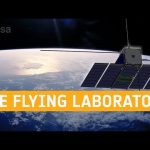
    What would you do with a powerful computer based in space? At just 30 cm in height, OPS-SAT is a tiny CubeSat designed to serve as a large-scale software laboratory in orbit – containing one of the most powerful flight computers ever flown – to test innovative control software from teams all over Europe. Anyone can apply to try out their software aboard OPS-SAT, from companies to research teams to computer clubs, linking directly from the internet. The small satellite packs in a high-resolution camera, radio antennas, optical receiver, reaction wheels and GPS. OPS-SAT can be rebooted if any experimental software crashes, allowing otherwise risky inflight testing as a way to make space smarter.

    ★ Subscribe: http://bit.ly/ESAsubscribe and click twice on the bell button to receive our notifications.

    Check out our full video catalog: http://bit.ly/SpaceInVideos
    Follow us on Twitter: http://bit.ly/ESAonTwitter
    On Facebook: http://bit.ly/ESAonFacebook
    On Instagram: http://bit.ly/ESAonInstagram
    On Flickr: http://bit.ly/ESAonFlickr

    We are Europe’s gateway to space. Our mission is to shape the development of Europe’s space capability and ensure that investment in space continues to deliver benefits to the citizens of Europe and the world. Check out http://www.esa.int/ESA to get up to speed on everything space related.

    Copyright information about our videos is available here: http://www.esa.int/spaceinvideos/Terms_and_Conditions

    #ESA
    #OPSSAT
    #Satellite

  • OPS-SAT: the flying laboratory

    OPS-SAT: the flying laboratory

    On 17 December, ESA will launch a first-of-its-kind space laboratory, OPS-SAT. The small, low-cost test satellite has been specifically designed for operational experiments in space, and includes the most powerful flight computer on board any current ESA spacecraft.

    Consumer electronics have gone through a revolution over the last 30 years with computers becoming ever faster, smaller and better. But when it comes to million- or even billion-euro satellites, their onboard hardware and software have not seen this revolution because of the risks of testing new technology in flight.

    As spacecraft managers dare to fly only tried-and-tested hard and software in the harsh conditions of space, innovation on the operational side of satellites is a very slow-moving process. This is where OPS-SAT steps in, bringing down the barriers to spacecraft operations it provides a chance to safely test out new mission control techniques.

    Anyone can apply to become an ‘experimenter’ and test their innovative software and new mission operations techniques in space. Proving technology for future missions and paving the way for satellites to further evolve with minimum risk, OPS-SAT will be launched with ESA’s Cheops satellite from Europe’s Spaceport in Kourou, French Guiana.

    ★ Subscribe: http://bit.ly/ESAsubscribe and click twice on the bell button to receive our notifications.

    Check out our full video catalog: http://bit.ly/SpaceInVideos
    Follow us on Twitter: http://bit.ly/ESAonTwitter
    On Facebook: http://bit.ly/ESAonFacebook
    On Instagram: http://bit.ly/ESAonInstagram
    On Flickr: http://bit.ly/ESAonFlickr

    We are Europe’s gateway to space. Our mission is to shape the development of Europe’s space capability and ensure that investment in space continues to deliver benefits to the citizens of Europe and the world. Check out http://www.esa.int/ESA to get up to speed on everything space related.

    Copyright information about our videos is available here: http://www.esa.int/spaceinvideos/Terms_and_Conditions

    #ESA
    #OPSSAT
    #Satellite

  • Paxi explores exoplanets!

    Paxi explores exoplanets!

    Join Paxi on a trip beyond our Solar System. In this video, targeted at children aged between 6 and 12 years, Paxi explores exoplanets.

    ★ Subscribe: http://bit.ly/ESAsubscribe and click twice on the bell button to receive our notifications.

    Check out our full video catalog: http://bit.ly/SpaceInVideos
    Follow us on Twitter: http://bit.ly/ESAonTwitter
    On Facebook: http://bit.ly/ESAonFacebook
    On Instagram: http://bit.ly/ESAonInstagram
    On Flickr: http://bit.ly/ESAonFlickr

    We are Europe’s gateway to space. Our mission is to shape the development of Europe’s space capability and ensure that investment in space continues to deliver benefits to the citizens of Europe and the world. Check out http://www.esa.int/ESA to get up to speed on everything space related.

    Copyright information about our videos is available here: http://www.esa.int/spaceinvideos/Terms_and_Conditions

    #ESAkids
    #Paxi
    #ExoPlanets

  • Paxi explore les exoplanètes !

    Paxi explore les exoplanètes !

    Rejoignez Paxi dans un voyage au-delà de notre système solaire. Dans cette vidéo destinée aux élèves de 6 à 12 ans, Paxi explore les planètes extrasolaires.

    ★ Subscribe: http://bit.ly/ESAsubscribe and click twice on the bell button to receive our notifications.

    Check out our full video catalog: http://bit.ly/SpaceInVideos
    Follow us on Twitter: http://bit.ly/ESAonTwitter
    On Facebook: http://bit.ly/ESAonFacebook
    On Instagram: http://bit.ly/ESAonInstagram
    On Flickr: http://bit.ly/ESAonFlickr

    We are Europe’s gateway to space. Our mission is to shape the development of Europe’s space capability and ensure that investment in space continues to deliver benefits to the citizens of Europe and the world. Check out http://www.esa.int/ESA to get up to speed on everything space related.

    Copyright information about our videos is available here: http://www.esa.int/spaceinvideos/Terms_and_Conditions

    #ESAKids
    #Paxi
    #exoplanètes

  • Paxi erkundet Exoplaneten!

    Paxi erkundet Exoplaneten!

    Begleite Paxi auf eine Reise über unser Sonnensystem hinaus. In diesem Video für Kinder zwischen 6 und 12 Jahren erkundet Paxi Planeten, die einen anderen Stern umkreisen.

    ★ Subscribe: http://bit.ly/ESAsubscribe and click twice on the bell button to receive our notifications.

    Check out our full video catalog: http://bit.ly/SpaceInVideos
    Follow us on Twitter: http://bit.ly/ESAonTwitter
    On Facebook: http://bit.ly/ESAonFacebook
    On Instagram: http://bit.ly/ESAonInstagram
    On Flickr: http://bit.ly/ESAonFlickr

    We are Europe’s gateway to space. Our mission is to shape the development of Europe’s space capability and ensure that investment in space continues to deliver benefits to the citizens of Europe and the world. Check out http://www.esa.int/ESA to get up to speed on everything space related.

    Copyright information about our videos is available here: http://www.esa.int/spaceinvideos/Terms_and_Conditions

    #ESAKids
    #Paxi
    #Exoplaneten

  • Paxi esplora gli esopianeti!

    Paxi esplora gli esopianeti!

    Unitevi a Paxi in un viaggio oltre il nostro sistema solare. In questo video, pensato per bambini di età da 6 a 12 anni, Paxi esplora pianeti extrasolari.

    ★ Subscribe: http://bit.ly/ESAsubscribe and click twice on the bell button to receive our notifications.

    Check out our full video catalog: http://bit.ly/SpaceInVideos
    Follow us on Twitter: http://bit.ly/ESAonTwitter
    On Facebook: http://bit.ly/ESAonFacebook
    On Instagram: http://bit.ly/ESAonInstagram
    On Flickr: http://bit.ly/ESAonFlickr

    We are Europe’s gateway to space. Our mission is to shape the development of Europe’s space capability and ensure that investment in space continues to deliver benefits to the citizens of Europe and the world. Check out http://www.esa.int/ESA to get up to speed on everything space related.

    Copyright information about our videos is available here: http://www.esa.int/spaceinvideos/Terms_and_Conditions

    #ESAKids
    #Paxi
    #esopianeti

  • Paxi explora exoplanetas!

    Paxi explora exoplanetas!

    Junta-te ao Paxi numa viagem para lá do Sistema Solar. Neste vídeo, destinado a crianças dos 6 aos 12 anos de idade, o Paxi explora planetas extrassolares.

    ★ Subscribe: http://bit.ly/ESAsubscribe and click twice on the bell button to receive our notifications.

    Check out our full video catalog: http://bit.ly/SpaceInVideos
    Follow us on Twitter: http://bit.ly/ESAonTwitter
    On Facebook: http://bit.ly/ESAonFacebook
    On Instagram: http://bit.ly/ESAonInstagram
    On Flickr: http://bit.ly/ESAonFlickr

    We are Europe’s gateway to space. Our mission is to shape the development of Europe’s space capability and ensure that investment in space continues to deliver benefits to the citizens of Europe and the world. Check out http://www.esa.int/ESA to get up to speed on everything space related.

    Copyright information about our videos is available here: http://www.esa.int/spaceinvideos/Terms_and_Conditions

    #ESAKids
    #Paxi
    #exoplanetas