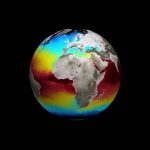
ESA’s Earth Explorer Aeolus satellite will be launched later this year to measure the world’s winds from space. The satellite carries one of the most sophisticated instruments ever to be put into orbit: Aladin, which includes two powerful lasers, a large telescope and very sensitive receivers. The laser generates ultraviolet light that is beamed down into the atmosphere to profile the world’s winds – a completely new approach to measuring the wind from space. These vertical slices through the atmosphere, along with information it gathers on aerosols and clouds, will improve our understanding of atmospheric dynamics and contribute to climate research. As well as advancing science, Aeolus will play an important role in improving weather forecasts. The mission will also complement information about the atmosphere being provided by the Copernicus Sentinel missions.
The Moon is a destination, a laboratory for science, a place to learn the skills of planetary exploration, and a source of materials and energy for use on the Moon and in space to create new spacefaring capability.
Advocate of a human return on the Moon, Paul D. Spudis, Senior Staff Scientist at the Lunar and Planetary Institute in Houston (Texas, USA), takes us on a journey to rediscover the value of lunar exploration, a topic on which he has spent more than 40 years of study, thought and publications.
Space Bites hosts the best talks on space exploration from the most inspiring and knowledgeable speakers from the field. Held at the technical heart of the European Space Agency in the Netherlands, the lectures are now also available on YouTube. If you want to know about the present and future challenges of ESA, stay tuned for more.
We are Europe’s gateway to space. Our mission is to shape the development of Europe’s space capability and ensure that investment in space continues to deliver benefits to the citizens of Europe and the world. Check out https://www.esa.int/ to get up to speed on everything space related.
For many years scientists have been working to simulate human perception and human actions in machines. The aim: artificial intelligence. But if artificial intelligence is already superior to people in some areas, what role will we then still play in the future? And how can we trust these systems if today’s computers are susceptible to viruses and hacking? Check out latest video to find out more about.
Script download: www.explainity.com/education-project/transskripte/
——-
This explainer video was produced by explainity GmbH
Homepage: www.explainity.com
E-Mail: info@explainity.com
This explanatory film was produced and published for private, non-commercial use and may be used free of charge in this context for private purposes without consultation or written authorization. Please note, however, that neither the content nor the graphics of this explanatory film may be altered in any way. Please always give explainity as the source when using the film, and if you publish it on the internet, provide a reference to www.explainity.com.
For commercial use or use for training purposes, such as projection of the film at training events (e.g. projection of the film as a teaching aid in school or in adult education), a licence is required. Further information on this subject will be found here: https://www.explainity.com/education-project
If you are interested in an own explainity explainer video, visit our website www.explainity.com and contact us. We are looking forward to your inquiry.
Chris from the UK shares his experience as an ESA YGT. He has a background in Materials Engineering and in this video, he shows the set-up that he has been using in the lab at ESTEC to test stress corrosion cracking in spacecraft propellant tanks.
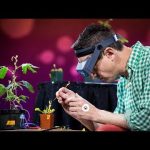
Neuroscientist Greg Gage takes sophisticated equipment used to study the brain out of graduate-level labs and brings them to middle- and high-school classrooms (and, sometimes, to the TED stage.) Prepare to be amazed as he hooks up the Mimosa pudica, a plant whose leaves close when touched, and the Venus flytrap to an EKG to show us how plants use electrical signals to convey information, prompt movement and even count.
The TED Talks channel features the best talks and performances from the TED Conference, where the world’s leading thinkers and doers give the talk of their lives in 18 minutes (or less). Look for talks on Technology, Entertainment and Design — plus science, business, global issues, the arts and more.
https://www.qualcomm.com/invention/5g
Artificial intelligence is making our devices more than just utilities. From smartphones to healthcare to autonomous cars, our own Gary Brotman explains the potential of AI to make our lives easier and more exciting.
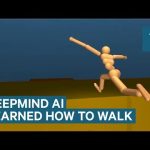
Google’s artificial intelligence company, DeepMind, has developed an AI that has managed to learn how to walk, run, jump, and climb without any prior guidance. The result is as impressive as it is goofy.
Artificial intelligence is rapidly moving into health care, led by some of the biggest technology companies and emerging startups using it to diagnose and respond to a raft of conditions.VIDEOGRAPHIC
This video is part of “Escaping from Children’s Abuse of Social Robots,” by Dražen Brščić, Hiroyuki Kidokoro, Yoshitaka Suehiro, and Takayuki Kanda from ATR Intelligent Robotics and Communication Laboratories and Osaka University, and “Why Do Children Abuse Robots?”, by Tatsuya Nomura, Takayuki Uratani, Kazutaka Matsumoto, Takayuki Kanda, Hiroyoshi Kidokoro, Yoshitaka Suehiro, and Sachie Yamada from Ryukoku University, ATR Intelligent Robotics and Communication Laboratories, and Tokai University, presented at the 2015 ACM/IEEE International Conference on Human-Robot Interaction. Learn more: http://spectrum.ieee.org/automaton/robotics/artificial-intelligence/children-beating-up-robot
The Tonight Show Starring Jimmy Fallon features hilarious highlights from the show including: comedy sketches, music parodies, celebrity interviews, ridiculous games, and, of course, Jimmy’s Thank You Notes and hashtags! You’ll also find behind the scenes videos and other great web exclusives.
Do you ever wonder what cities will be like in the next few decades?
With over two thirds of our population living in urban areas by 2050 the demands on cities’ services will increase significantly.
Technological improvements to our infrastructure will change the way citizens interact; artificial intelligence and the Internet of Things will allow the city to become smart; perhaps even allowing cities to think like a human brain.
What changes can we expect?
• Cities will become greener and have more cycle and walking space along with less pollution
• Buildings will generate their own energy from renewable sources and their design will be continually optimised thanks to smart data
• The high street will offer richer, interactive shopping experiences with augmented reality changing rooms
Smart buildings and sustainable cities
Be it a workplace, a hospital, school or library – public buildings will become smart and aware, constantly improving based on information they gather from themselves and the other buildings around them.
Buildings will also gather their energy source themselves through developments like solar windows; and surplus energy traded between nearby buildings and vehicles so that those in need never run dry. Through the data they have access to, they’ll run at optimum efficiency – aware of each of its occupants, keeping them at the right temperature and making sure they stay healthy and safe.
Shopping will also evolve – with augmented reality, AI and connected data all playing their parts. Imagine walking into a clothes shop and being presented with an interactive changing room. The shop would instantly know your size and use AI to present you a selection of clothing it thinks you would like based on your previous purchases and upcoming social calendar. Customisation of your choice will become available – tweak a design in an interactive mirror, and if it’s not in stock it can be delivered to your house by drone later that day.
More time for you
All of this will create more time for you, both socially and at work. AI and connected devices will play its part in the workplace too – automating things like waste collection pods to when demand in the city is high, and bringing care to people who need it.
Will this automation take over from people’s employment? The hope is that no, but instead will see a shift so that people can focus on where they are needed most and provide a higher quality, more personal service along with more insight towards where they are needed most.
There are plenty of cool robots and robotics gadgets or toy robots that kids will absolutely love. Robot toys are best tech toys that will keep your kids entertained and maybe even spark their interest in robotics.We have created a shortlist of the top five robot toys for kids. 5 Best Robots for Kids : Games, Fun and Learning
*********************************************
Welcome to ZedIOptimA
* Thanks for Watching If You Like my Content Please please
* Subscribe my channel :- https://goo.gl/CG0awN
* Hit Like
* Comment for encourage us
* Favorite in your list
* Share with your friends and family
—————————————-———————
‘The Moon – ESA’s interactive guide’ is a web documentary with over 40 videos narrated by scientists involved in lunar research. The platform allows you to explore your own path and discover the science, technology and the missions around our moon. An engaging space to satisfy your curiosity, learn and be inspired.
Dr. Canton sees the coming of more Artificial Intelligence uses in our everyday lives and in
solving global problems. He encourages us to think about its direction and how to maintain control of what we create.
Dr. James Canton is a leading global futurist, social scientist, keynote presenter, author, and visionary business advisor. For over 30 years, he has been insightfully predicting the key trends that have shaped our world. He is a leading authority on future trends with an emphasis on harnessing innovation. Dr. Canton has advised three White House Administrations and global business leaders.
This talk was given at a TEDx event using the TED conference format but independently organized by a local community. Learn more at http://ted.com/tedx
ESA astronaut Andreas Mogensen narrates this video on the inspiring endeavours of human spaceflight and how it changes our daily lives.
Andreas covers the first flight in Earth-orbit and the permanent inhabitation of space on the International Space Station to future exploration of our Solar System – and how these events inspired his work as an engineer and later astronaut.
The video touches on the amazing research done in space and for space and the technological impact this has making life on Earth better.
Currently around 63% of students are disengaged at school, meaning that they withdrawal either physically or mentally before they have mastered the skills that are required to flourish in later life. In this talk Scott Bolland explores the science of learning, the mismatch between how we teach and how the brain natural learns, and the important role that artificial intelligence could take in addressing the limitations in our current education system.
Dr Scott Bolland is the founder of New Dawn Technologies, a high-tech software company aiming to revolutionise education through the use of artificial intelligence. He has spent the last 20 years actively researching and teaching in the field of cognitive science – the scientific study of how the mind works – which spans disciplines such as psychology, philosophy, neuroscience, artificial intelligence and computer science. He holds a PhD in this field, as well as a university medal for outstanding academic scholarship.
This talk was given at a TEDx event using the TED conference format but independently organized by a local community. Learn more at http://ted.com/tedx
NASA works with the Maker community to create new ideas and technologies to drive exploration here on Earth and out in space. The agency uses prizes and challenges, like the Future Engineers 3-D printing challenge for students, and programs like the CubeSat Launch Initiative, which works with students across the country to build and launch small satellites, to encourage innovation and STEM development. During the National Week of Making 2016, NASA committed to continuing its work in order to help groups in all 50 states launch a satellite into orbit.
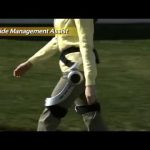
ASIMO—Advanced Step in Innovative Mobility—is a humanoid robot designed and developed by Honda as a multifunctional robotic assistant. Honda also developed the Bodyweight Support Assist device to help support bodyweight to reduce the load on the user’s legs while walking, going up and down stairs and in a semi-crouching position. A third Honda device, Stride Management Assist, is designed for the elderly or people with weakened leg muscles, but who can still walk on their own.
At age 42, Hong Kong designer Ricky Ma spent a little more than a year and $50,000 working on his childhood dream of building a life-sized humanoid robot.
» Subscribe to CNBC: http://cnb.cx/SubscribeCNBC
About CNBC: From ‘Wall Street’ to ‘Main Street’ to award winning original documentaries and Reality TV series, CNBC has you covered. Experience special sneak peeks of your favorite shows, exclusive video and more.
ESA’s new Earth observation satellite Sentinel-3A will soon be launched into orbit. Once more the European Space Agency proves it is on the forefront of monitoring our environment and the climate.
Using state of the art and proven technology the Sentinel-3 satellite is a fabulous piece of engineering set to play a key role in the European Commission’s Copernicus programme. However this technological piece of craftsmanship is only possible as the result of earlier scientific missions such as ERS, Envisat and Cryosat, with Sentinel-3 building on their heritage.
Tiny satellites the size of a small cube, jam-packed with the most advanced nanotechnologies: is this the future of Space missions?
To find out, ESA Euronews went to Tallin, Estonia, where students at the Mektory Space Centre are preparing the launch of their first nanosatellite.
Nanosatellites – tiny cubes of 10cm x 10cm x 10cm, full of nanotechnologies — are going to be more and more important in the future of space exploration, from Mars missions, to the surveillance of asteroids, which could potentially be dangerous for our planet.
Also known as ‘CubeSats’ these tiny satellites open up a whole world of possibilities for those who want to explore space.
A nanoműholdak egyre fontosabbak lesznek az űrkutatásban, a Mars megfigyelésétől a Földre veszélyt jelentő aszteroidák felkutatásáig. A bennük rejlő potenciált mindenki igyekszik kiaknázni, a nagy űrügynökségektől a tudományos diákkörökig. Ez a helyzet a Mektory Űrközpontban, az észt főváros, Talinn műszaki egyetemén, ahol a diákok az első nanoműholdjuk Föld körüli pályára állítását készítik elő.
– Azt hittem, soha nem fogok műholdat építeni, hiszen ilyesmit csak a NASA-nál csinálnak. Most meg műholdat építek az egyetemi laborban – hitetlenkedett az Euronewsnak Marta Hang, az űrközpont programasszisztense.
A Mektory nanoműhold-programja egy nemzetközi egyetemi kezdeményezés, amelyben az oktatók és a hallgatók együttműködnek az űrkutatásban érdekelt és más technológiai cégekkel. A cél az, hogy felkészítsék a hallgatókat arra, hogy az űriparban helyezkedjenek el. A csapat jelenleg az első űrküldetését tervezi.
– Egy kockaműholdat fejlesztünk, amely egy egységből áll, és távérzékelési célokat szolgál, vagyis képeket készít majd a Földről – magyarázza a Mektory Űrközpont igazgatója, Mart Vihmand.
The work NASA does, and will continue in 2016, helps the United States maintain its world leadership in space exploration and scientific discovery. The agency will continue investing in its journey to Mars, returning human spaceflight launches from American soil, fostering groundbreaking technology development, breakthroughs in aeronautics and bringing to every American the awe-inspiring discoveries and images captured by NASA’s missions in our solar system and beyond.
For more about NASA’s missions, research and discoveries, visit:
ESA astronaut Samantha Cristoforetti photographs stunning Earth images of Lufthansa worldwide destinations during her Futura mission onboard the ISS. An ESA for Lufthansa inflight film.
Artificial intelligence is getting smarter by leaps and bounds — within this century, research suggests, a computer AI could be as “smart” as a human being. And then, says Nick Bostrom, it will overtake us: “Machine intelligence is the last invention that humanity will ever need to make.” A philosopher and technologist, Bostrom asks us to think hard about the world we’re building right now, driven by thinking machines. Will our smart machines help to preserve humanity and our values — or will they have values of their own?
TEDTalks is a daily video podcast of the best talks and performances from the TED Conference, where the world’s leading thinkers and doers give the talk of their lives in 18 minutes (or less). Look for talks on Technology, Entertainment and Design — plus science, business, global issues, the arts and much more.
Find closed captions and translated subtitles in many languages at http://www.ted.com/translate
Sunday 5 October saw thousands of visitors converge on the European Space Agency’s technical heart for its annual Open Day. Touring across the site, they met astronauts, viewed spacecraft and inspected test facilities – and came face to face with a spectacular new world.
Our Galaxy the Milky Way is made up of a hundred billion stars. To truly understand its evolution we need to know exactly where we stand in this mass of constantly moving and changing celestial objects. To do this, astrometry, the science of measuring the position, distance and movement of stars around us, is just about to take a giant leap forward with the launch of ESA’s new space telescope, Gaia. Gaia will make it possible to measure a billion stars of our Milky Way.
ESA is looking to the future of space exploration using robots ranging from small humanoid robots to larger construction robots with varying degrees of autonomy and flexibility.
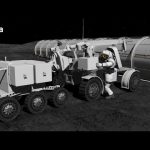
This animation shows advanced concepts of robots designed to explore, prepare and help humans in the very harsh conditions found on the Moon and beyond. For many of the concepts shown, ESA has already developed real-life prototypes, including the multifunctional wheels seen on the first robot in this video.
In this 3 Minute Thinking video Dr Sanjay Modgil imagines a future full of new technology and asks fundamental questions about artificial intelligence.
An Ninety Second Philosophy Introduction to the series of thought experiments on Artificial Intelligence, The Turing Test and The Chinese Room.
Interested in technology and consciousness? Check out the first play in this book: http://www.amazon.com/lol-other-modern-devised-plays/dp/1484144457
Information for this video gathered from The Stanford Encyclopedia of Philosophy, The Internet Encyclopedia of Philosophy, The Cambridge Dictionary of Philosophy, The Oxford Dictionary of Philosophy and more!
Information for this video gathered from The Stanford Encyclopedia of Philosophy, The Internet Encyclopedia of Philosophy, The Cambridge Dictionary of Philosophy, The Oxford Dictionary of Philosophy and more!
A breathtaking collection of photos taken by ESA Astronaut Paolo Nespoli during his 6-month MagISStra mission on the International Space Station 25 December 2010 – 24 May 2011.
Music: Dream Elements by Green Sun licensed by Ambient Music Garden.
Video produced for Lufthansa inflight entertainment (released June 2011).
Thursday 2 August 2012 marked the 50th successful Ariane flight in a row: an Ariane 5 was launched from Europe’s Spaceport in French Guiana to perform a dual deployment of two telecommunications satellites, Intelsat 20 and Hylas-2, into their planned transfer orbits.
Lift off of flight VA208 took place at 22:54 CEST; 17:54 French Guiana time. This was Ariane 5’s fourth launch of 2012, continuing a line of launch successes unbroken since 2003.
Traditionally, engineers faced with the task of designing a new, complex system or structure – a car, an aircraft or a satellite – work sequentially, one step at a time, passing the design from engineer to engineer. This is inefficient and consumes time and resources.
For more than a decade, many of ESA’s sophisticated spacecraft have been designed with the help of the CDF, making use of very advanced iterative techniques – hence its title ‘concurrent’.
Concurrent engineering puts all related engineers, with all their brain power and required tools together with the final user representative – or customer – in the same location at the same time. This allows for iterative design at a fast pace, with customer and designers agreeing requirements and taking decisions in real time to ensure the best design for the right cost and an acceptable risk.
This process has been developed and honed so it is now common to produce a risk assessed conceptual space mission design complete with various options and including scheduling, testing and operations in a matter of weeks.










![Artificial Intelligence News – Toddler Robots Help Solve How Children Learn☑️[Computer and Math]](https://video.kidibot.ro/wp-content/uploads/2019/12/923/artificial-intelligence-news-toddler-robots-help-solve-how-children-learnefb88fcomputer-and-math-150x150.jpg)