Tag: Test
-
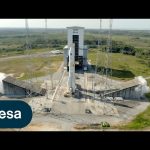
Hot-fire test of Ariane 6 core stage on launch pad
On 5 September 2023, teams from France’s space agency CNES and Arianegroup under the lead of ESA carried out a complete Ariane 6 launch sequence on its launch pad at Europe’s spaceport in French Guiana. The test ended with a hot-fire of the launcher’s core stage and startup of the Vulcain 2.1 engine.
This is a key step in the test campaign. It follows from initial integration of the Ariane 6 launcher on its launch pad, electrical and fluid system tests and the first launch sequence test run on 18 July 2023.
This test involved a launch sequence and final countdown representative of a launch, including removal of the Ariane 6 mobile gantry and filling the launcher’s upper and core stage tanks with liquid hydrogen and liquid oxygen. The test ended with the ignition and the startup of the core stage’s Vulcain 2.1 engine, followed by four seconds of firing.
The next milestone is to complete a core stage long hot-fire test, where the Vulcain 2.1 engine will operate for about 8 minutes.
Ariane 6 is an all-new design, created to succeed Ariane 5 as Europe’s heavy-lift launch system. With Ariane 6’s upper stage and its reignitable Vinci engine, Europe’s launch capability will be tailored to the needs of multiple payloads, for example to orbit satellite constellations. This autonomous capability to reach Earth orbit and deep space supports Europe’s navigation, Earth observation, scientific and security programmes. Ongoing development of Europe’s space transportation capabilities is made possible by the sustained dedication of thousands of talented people working in ESA’s 22 Member States.
www.esa.int/ariane
Credits: ESA/ARIANEGROUP/CNES – Optique vidéo du CSG
★ Subscribe: http://bit.ly/ESAsubscribe and click twice on the bell button to receive our notifications.
Check out our full video catalog: http://bit.ly/SpaceInVideos
Follow us on Twitter: http://bit.ly/ESAonTwitter
On Facebook: http://bit.ly/ESAonFacebook
On Instagram: http://bit.ly/ESAonInstagram
On LinkedIn: https://bit.ly/ESAonLinkedIn
On Pinterest: https://bit.ly/ESAonPinterest
On Flickr: http://bit.ly/ESAonFlickrWe are Europe’s gateway to space. Our mission is to shape the development of Europe’s space capability and ensure that investment in space continues to deliver benefits to the citizens of Europe and the world. Check out https://www.esa.int/ to get up to speed on everything space related.
Copyright information about our videos is available here: https://www.esa.int/ESA_Multimedia/Terms_and_Conditions
#ESA
#Ariane6
#Hot-fireTest -
First test images from Euclid Space Telescope 🤩 #shorts
Euclid’s two instruments have captured their first test images. The mesmerising results indicate that the space telescope will achieve the scientific goals that it has been designed for – and possibly much more
Although there are months to go before Euclid delivers its true new view of the cosmos, reaching this milestone means the scientists and engineers behind the mission are confident that the telescope and instruments are working well.
📹 ESA – European Space Agency
★ Subscribe: http://bit.ly/ESAsubscribe and click twice on the bell button to receive our notifications.
Check out our full video catalog: http://bit.ly/SpaceInVideos
Follow us on Twitter: http://bit.ly/ESAonTwitter
On Facebook: http://bit.ly/ESAonFacebook
On Instagram: http://bit.ly/ESAonInstagram
On LinkedIn: https://bit.ly/ESAonLinkedIn
On Pinterest: https://bit.ly/ESAonPinterest
On Flickr: http://bit.ly/ESAonFlickrWe are Europe’s gateway to space. Our mission is to shape the development of Europe’s space capability and ensure that investment in space continues to deliver benefits to the citizens of Europe and the world. Check out https://www.esa.int/ to get up to speed on everything space related.
Copyright information about our videos is available here: https://www.esa.int/ESA_Multimedia/Terms_and_Conditions
#ESA
#Euclid
#SpaceTelescope -

A Critical Preflight Test for Artemis I on This Week @NASA – September 23, 2022
A critical preflight test for Artemis I, the first trip to space for a NASA astronaut, and new Webb Space Telescope images of neighbors in our solar system … a few of the stories to tell you about – This Week at NASA!
Producer: Andre Valentine
Editor: Shane Apple
Music: Universal Production Music
Credit: NASA -
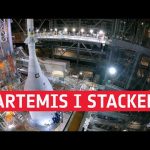
Artemis I stacked
Time lapse of the stacking of the Orion spacecraft on top of the fully assembled Space Launch System (SLS) rocket at NASA’s Kennedy Space Center in Florida, on 21 October 2021, in preparation for the uncrewed Artemis I launch.
For Artemis I, the European Service Module will take the spacecraft more than 64 000 km beyond the Moon in a test flight to demonstrate its capabilities.
The European Service Module is ESA’s contribution to NASA’s Orion spacecraft that will send astronauts to the Moon and beyond. It provides electricity, water, oxygen and nitrogen as well as keeping the spacecraft at the right temperature and on course.
Learn more about Orion: http://bit.ly/ESAOrion
★ Subscribe: http://bit.ly/ESAsubscribe and click twice on the bell button to receive our notifications.
Check out our full video catalog: http://bit.ly/SpaceInVideos
Follow us on Twitter: http://bit.ly/ESAonTwitter
On Facebook: http://bit.ly/ESAonFacebook
On Instagram: http://bit.ly/ESAonInstagram
On LinkedIn: https://bit.ly/ESAonLinkedIn
On Pinterest: https://bit.ly/ESAonPinterest
On Flickr: http://bit.ly/ESAonFlickrWe are Europe’s gateway to space. Our mission is to shape the development of Europe’s space capability and ensure that investment in space continues to deliver benefits to the citizens of Europe and the world. Check out https://www.esa.int/ to get up to speed on everything space related.
Copyright information about our videos is available here: https://www.esa.int/ESA_Multimedia/Terms_and_Conditions
#ESA
#Orion
#ForwardToTheMoon -

Drop tests for touchdown on Mars
The ExoMars team have performed important parachute drop tests as crucial preparation for a safe touchdown on Mars in 2023. The European Rosalind Franklin rover will search for signs of past life beneath the surface of Mars with its unique two metre drill and onboard laboratory. The Russian surface science platform Kazachok will study the environment at the landing site. Landing on Mars is always a challenging endeavour and all possible parameters are taken into account.
More information on ExoMars: http://www.esa.int/exomars
★ Subscribe: http://bit.ly/ESAsubscribe and click twice on the bell button to receive our notifications.
Check out our full video catalog: http://bit.ly/SpaceInVideos
Follow us on Twitter: http://bit.ly/ESAonTwitter
On Facebook: http://bit.ly/ESAonFacebook
On Instagram: http://bit.ly/ESAonInstagram
On Pinterest: https://bit.ly/ESAonPinterest
On Flickr: http://bit.ly/ESAonFlickrWe are Europe’s gateway to space. Our mission is to shape the development of Europe’s space capability and ensure that investment in space continues to deliver benefits to the citizens of Europe and the world. Check out https://www.esa.int/ to get up to speed on everything space related.
Copyright information about our videos is available here: https://www.esa.int/ESA_Multimedia/Terms_and_Conditions
#ESA
#ExoMars
#RosalindTheRover -
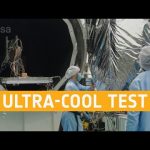
Ultra-cool test of Jupiter instrument
An instrument destined for Jupiter orbit undergoes eight days of cryogenic radio-frequency testing using a new test facility at ESA’s ESTEC technical centre in the Netherlands. The Submillimetre Wave Instrument of ESA’s Juice mission will survey the churning atmosphere of Jupiter and the scanty atmospheres of its Galilean moons.
Testing took place in ESA’s custom-built Low-temperature Near-field Terahertz chamber, or Lorentz. The first chamber of its kind, the 2.8-m diameter Lorentz chamber can perform high-frequency radio-frequency testing in realistic space conditions, combining space-quality vacuum with ultra-low temperatures.
★ Subscribe: http://bit.ly/ESAsubscribe and click twice on the bell button to receive our notifications.
Check out our full video catalog: http://bit.ly/SpaceInVideos
Follow us on Twitter: http://bit.ly/ESAonTwitter
On Facebook: http://bit.ly/ESAonFacebook
On Instagram: http://bit.ly/ESAonInstagram
On Flickr: http://bit.ly/ESAonFlickrWe are Europe’s gateway to space. Our mission is to shape the development of Europe’s space capability and ensure that investment in space continues to deliver benefits to the citizens of Europe and the world. Check out https://www.esa.int/ to get up to speed on everything space related.
Copyright information about our videos is available here: https://www.esa.int/ESA_Multimedia/Terms_and_Conditions
#ESA
#JuiceMission
#InTheCleanRoom -
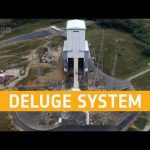
Ariane 6 launch pad water deluge system test
The water deluge system, which is activated at liftoff, was put to the test on the Ariane 6 launch pad at Europe’s Spaceport in April 2021. This is one of the qualification tests to prepare for the arrival of Ariane 6, Europe’s next generation heavy-lift launch vehicle.
Spraying huge volumes of water on the launch pad and beneath the launch table protects both the launch vehicle and its payloads by absorbing and deflecting the tremendous acoustic energy generated at liftoff. Shockwaves created as engine exhaust gases exceed the speed of sound and collide with ambient air cause noise levels to reach 180 decibels.
Three areas are deluged with water during launch, this is done in sequence.
At 20 seconds before liftoff, water sprays over the steel deflector 25 metres below the launch table. This deflector channels the engine exhaust into the two trenches.
At 6 seconds before liftoff, the exhaust tunnel under the launch table is deluged. This channels the engine exhaust below the launch table and into the underground trenches leading away from the launch pad.
Finally, as Ariane 6 lifts off the ground four arrays of pipes around the sides of the launch table will flood the launch pad.
This water also serves to cool and protect the ground installations, mainly the steel launch table.
About 700 cubic metres of water will be released during launch. This comes from the nearby tower which holds 1200 cubic metres of water. After launch it is refilled with water from a nearby lake.
After launch, any remaining water below the launch table is pumped away.
Credits: ESA- @CNES – @arianespace
★ Subscribe: http://bit.ly/ESAsubscribe and click twice on the bell button to receive our notifications.
Check out our full video catalog: http://bit.ly/SpaceInVideos
Follow us on Twitter: http://bit.ly/ESAonTwitter
On Facebook: http://bit.ly/ESAonFacebook
On Instagram: http://bit.ly/ESAonInstagram
On Flickr: http://bit.ly/ESAonFlickrWe are Europe’s gateway to space. Our mission is to shape the development of Europe’s space capability and ensure that investment in space continues to deliver benefits to the citizens of Europe and the world. Check out https://www.esa.int/ to get up to speed on everything space related.
Copyright information about our videos is available here: https://www.esa.int/ESA_Multimedia/Terms_and_Conditions
#ESA
#Ariane6
#DelugeSystem -

NASA Drop Test of Orion Spacecraft for Crewed Artemis Missions
Engineers will drop an 14,000-pound test version of the Orion spacecraft into the Hydro Impact Basin at NASA’s Langley Research Center’s Landing and Impact Research Facility in Hampton, Virginia at 1:45 p.m. EDT Tuesday, April 6.
This series of drop tests began March 23 to finalize computer models for loads and structures prior to the Artemis II flight test, NASA’s first mission with crew aboard Orion. Artemis II will carry astronauts around the Moon and back, paving the way to land the first woman and next man on the lunar surface and establish a sustainable presence at the Moon under the Artemis program.
-
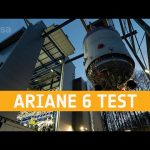
Ariane 6 upper stage installed for tests | Timelapse
This timelapse video shows the hot firing model of the Ariane 6 upper stage being installed on the P5.2 test stand at the @DLR German Aerospace Center in Lampoldshausen, Germany on 16 February 2021.
After arrival from the @ArianeGroup facilities in Bremen, this 5.4 m-diameter upper stage was hoisted out of its container, tilted vertical and installed on the test stand.
Tests will simulate all aspects of flight including stage preparation such as fuelling with liquid oxygen and liquid hydrogen, and draining its tanks.
Data will be gathered on non-propulsive ballistic phases, tank pressurisation to increase performance, Vinci engine reignitions, exhaust nozzle manoeuvres, ending with passivation where all remaining internal energy is removed. Tests will typically last about 18 hours each.
★ Subscribe: http://bit.ly/ESAsubscribe and click twice on the bell button to receive our notifications.
Check out our full video catalog: http://bit.ly/SpaceInVideos
Follow us on Twitter: http://bit.ly/ESAonTwitter
On Facebook: http://bit.ly/ESAonFacebook
On Instagram: http://bit.ly/ESAonInstagram
On Flickr: http://bit.ly/ESAonFlickrWe are Europe’s gateway to space. Our mission is to shape the development of Europe’s space capability and ensure that investment in space continues to deliver benefits to the citizens of Europe and the world. Check out https://www.esa.int/ to get up to speed on everything space related.
Copyright information about our videos is available here: https://www.esa.int/ESA_Multimedia/Terms_and_Conditions
#ESA
#VinciEngine
#Ariane6 -

Ep.21 💰 Revoluția BiTCOIN
🔸 DEVINO MEMBRU ►https://bit.ly/35Q8vXC
🔸 SPRIJINĂ ►https://patreon.com/cristianpresura❗Discord ► https://www.discord.gg/presura
❗Instagram ► https://www.instagram.com/cristianpresura/
❗Facebook ► https://www.facebook.com/presura
❗Facebook page ► https://www.facebook.com/pg/stiintaclub/posts/
❗Asociația “Știinta pentru toți” ► https://www.presura.ro/Urmareste aici toata #seriacool din care acest video face parte:
https://www.youtube.com/playlist?list=PLcod69NUBSYiWVp2QL98wG0hTZYO1JL7X🔊 Spotify Podcast ► https://spoti.fi/3dbvYo6
🔊 MixCloud Podcas ► https://www.mixcloud.com/StiintaClub/📙 Carte ► “O calatorie prin Univers”: https://bit.ly/3pdOfGp
📙 Carte ► “Fizica Povestita”: https://bit.ly/2YsKaAc
📙 Carte ► “Care e diferența dintre un copil și un laptop?” https://bit.ly/3h4auLZ🔸Distribuie pe Instagram! https://joinsnippet.com
-
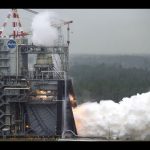
Engine Test for NASA Artemis Moon Rocket
Watch an RS-25 engine that will help power our Space Launch System rocket on future missions to the Moon and Mars come alive at NASA’s Stennis Space Center.
Today’s test fire will provide data to help enhance production of new, upgraded engines for flights under our Artemis Program.
Be sure to follow @NASAArtemis on Twitter for regular mission updates: https://twitter.com/NASAArtemis
-
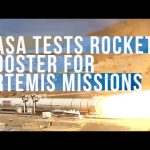
NASA Tests Space Launch System Rocket Booster for Artemis Missions
NASA completed a full-scale booster test for NASA’s Space Launch System rocket in Promontory, Utah, on Sept. 2.
The full-scale booster firing was conducted with new materials and processes that may be used for NASA’s Space Launch System (SLS) rocket boosters. NASA and Northrop Grumman, the SLS boosters lead contractor, will use data from the test to evaluate the motor’s performance using potential new materials and processes for Artemis missions beyond the initial Moon landing in 2024.
The SLS boosters are the largest, most powerful boosters ever built for flight. The two boosters on the rocket provide more than 75% of the thrust needed to launch NASA’s future deep space missions through NASA’s Artemis lunar program. Northrop Grumman is the lead contractor for the SLS boosters.
For a little over two minutes — the same amount of time that the boosters power the SLS rocket during liftoff and flight for each Artemis mission — the five-segment flight support booster fired in the Utah desert, producing more than 3 million pounds of thrust.
NASA and Northrop Grumman have previously completed three development motor tests and two qualification motor tests. Today’s test, called Flight Support Booster-1 (FSB-1), builds on prior tests with the introduction of propellant ingredients from new suppliers for boosters on SLS rockets to support flights after Artemis III.
For more on NASA’s SLS, visit: https://www.nasa.gov/sls
Producer Credit: Sonnet Apple
Music: Universal Production Music -

A Critical Test for Our Commercial Crew Program on This Week @NASA – January 25, 2020
A critical test for our Commercial Crew Program, spacewalkers focus on upgrades aboard the space station, and paying tribute to one of our Great Observatories … a few of the stories to tell you about – This Week at NASA!
This video is available from NASA’s Image and Video Library: https://images.nasa.gov/details-NHQ_2020_0125_A%20Critical%20Test%20for%20Our%20Commercial%20Crew%20Program%20on%20This%20Week%20@NASA%20%E2%80%93%20January%2025,%202020
-

Ghișeul Întrebărilor ”Stupide” revine – cu Cristian Presură – #IGDLCC E042 #PODCAST
Detalii și comentarii pe: https://buhnici.ro/?p=24110
#CRISTIANPRESURA #PODCAST #IGDLCC
Urmărește-mă și pe:
Facebook: https://www.facebook.com/gbuhnici
Instagram: https://www.instagram.com/gbuhnici -

AM TESTAT LIVE 5G ÎN BUCUREȘTI
Bateria și carcasele de fibră de carbon le găsiți la GSMNET, aici: https://bit.ly/2NmkZwS
Detalii și comentarii pe:
Urmărește-mă și pe:
Facebook: https://www.facebook.com/gbuhnici
Instagram: https://www.instagram.com/gbuhnici -
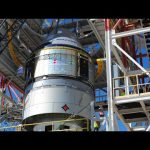
Pad Abort Test of Boeing’s Starliner Spacecraft, Nov. 4, 2019
TESTING 1…2…3🚀 Boeing put its #Starliner’s launch abort system to the test on Monday, Nov. 4 at the White Sands Missile Range in New Mexico, lifting off at 9:15 a.m. EST. The test demonstrated the spacecraft’s ability to protect Commercial Crew Program astronauts by carrying them safely away from the launch pad in the unlikely event of an emergency prior to liftoff.
-

Ghișeul Întrebărilor ”Stupide” cu Cristian Presură – #IGDLCC E035 #PODCAST
Detalii și comentarii pe: https://buhnici.ro/?p=23688
Radiația 5G, un pericol? – https://www.youtube.com/watch?v=Lsr2yyl31js
Calculatorul Cuantic – https://www.youtube.com/watch?v=rvE7z3sdIx0#IGDLCC #CRISTIANPRESURĂ
Urmărește-mă și pe:
Facebook: https://www.facebook.com/gbuhnici
Instagram: https://www.instagram.com/gbuhnici -
TRAIAN BERBECEANU, POLIȚIST DE LEGENDĂ – #IGDLCC E033 #PODCAST
Detalii și comentarii pe: https://buhnici.ro/?p=23597
Urmărește-mă și pe:
Facebook: https://www.facebook.com/gbuhnici
Instagram: https://www.instagram.com/gbuhnici -
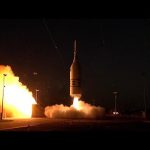
A Successful Milestone Test for Our Artemis Program on This Week @NASA – July 5, 2019
A milestone test for our Artemis Program, an update on our Commercial Lunar Payload Services project, and more honors for a NASA icon … a few of the stories to tell you about – This Week at NASA!
This video is available for download from NASA’s Image and Video Library: https://images.nasa.gov/details-NHQ_2019_0705_A%20Successful%20Milestone%20Test%20for%20Our%20Artemis%20Program%20on%20This%20Week%20@NASA%20%E2%80%93%20July%205,%202019.html
-
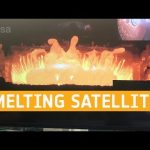
Melting a piece of a satellite
Researchers took one of the heaviest, bulkiest parts of an Earth-orbiting satellite, placed it in a plasma wind tunnel, then proceeded to melt it into vapour. Their goal was to better understand how satellites burn up during reentry, to minimise the risk of endangering anyone on the ground.
Taking place as part of our Clean Space initiative, the fiery testing occurred inside a plasma wind tunnel, reproducing reentry conditions, at the DLR German Aerospace Center’s site in Cologne.
A magnetotorquer – designed to interact magnetically with Earth’s magnetic field to shift satellite orientation – was heated to several thousands of degrees C within the hypersonic plasma.As part of a larger effort called CleanSat, we are developing technologies and techniques to ensure future low-orbiting satellites are designed according to the concept of ‘D4D’ – design for demise – ensuring they will burn up entirely when they reenter the atmosphere.
Credit: ESA/DLR/Belstead Research
Learn more: http://bit.ly/MeltingASatelliteAPieceAtATime
★ Subscribe: http://bit.ly/ESAsubscribe and click twice on the bell button to receive our notifications.
Check out our full video catalog: http://bit.ly/SpaceInVideos
Follow us on Twitter: http://bit.ly/ESAonTwitter
On Facebook: http://bit.ly/ESAonFacebook
On Instagram: http://bit.ly/ESAonInstagram
On Flickr: http://bit.ly/ESAonFlickrWe are Europe’s gateway to space. Our mission is to shape the development of Europe’s space capability and ensure that investment in space continues to deliver benefits to the citizens of Europe and the world. Check out http://www.esa.int/ESA to get up to speed on everything space related.
Copyright information about our videos is available here: http://www.esa.int/spaceinvideos/Terms_and_Conditions
#ESA
#Melting
#CleanSpace -

De ce este România în urmă? – cu Iulian Fota – #IGDLCC E016 #PODCAST
Detalii și comentarii pe: https://buhnici.ro/?p=22925
#RAZBOI #IULIANFOTA #PODCAST
Urmărește-mă și pe:
Facebook: https://www.facebook.com/gbuhnici
Instagram: https://www.instagram.com/gbuhniciPOATE CEL MAI BUN TELEFON REZISTENT – http://youtu.be/OoxMDOqY7Kk
CUM FACI BANI DIN FOTOGRAFIE – http://youtu.be/XUs3KEyWaiI
SAMSUNG GALAXY FOLD AMÂNAT – http://youtu.be/V6rn2PlqoEQ
HUAWEI P30 PRO – http://youtu.be/UPmD-hgtDrk
ÎMPREUNĂ FACEM CASE BUNE – http://youtu.be/EfPhNJ0SMyI
ROMÂNIA ”VÂNATĂ” CIBERNETIC – http://youtu.be/hrzkWQuOf00
NOUL BUHNICIMOBIL! – Tesla Model 3 – http://youtu.be/G4d9hSB4heE
FOLDABLE! – HUAWEI MATE X – http://youtu.be/IeGEUWlTdso
AM PLĂTIT CU CEASUL – http://youtu.be/4dJbc-m29ok
CE APLICATII AM PE TELEFON – http://youtu.be/i-rF7sR9-lQ
SAMSUNG GALAXY S10, S10+, S10e, S10 5G – http://youtu.be/x2z-D7E90QY
VÂND CURENT – http://youtu.be/hdUt08x8dNM
CÂT PRODUC DIN FOTOVOLTAICE – http://youtu.be/e4K0UUBE6aI
CĂȘTILE DE 2000 DE EURO – http://youtu.be/QfGJPOwMl58
CUM PREGĂTEȘTI GRĂDINA PENTRU IARNĂ – http://youtu.be/Jm5zEVm3oSw
CUM FACI POZE SUPER WIDE CU TELEFONUL – http://youtu.be/tFr-EnzUg-k
TELEFONUL CU ECRAN FLEXIBIL – http://youtu.be/xcxovYvnfZs
TELEFONUL CU 2 ECRANE – http://youtu.be/ymuMkGRQlJE
SAMSUNG GALAXY NOTE 9 CU 1 TB !!! – http://youtu.be/KmXKXk8Pdns
TELEFONUL CU 10 GB RAM – http://youtu.be/50ELgLTxC64
JBL CHARGE 4 – FACE OMLETĂ? – http://youtu.be/1yYYkdRfN8A
SAMSUNG GALAXY A9 – PATRU CAMERE – http://youtu.be/7DcFcQnlIXk
HUAWEI MATE 20 PRO – http://youtu.be/cjXdZEkpU_U -
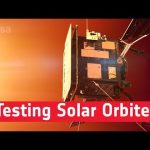
Testing Solar Orbiter
The Solar Orbiter spacecraft is undergoing important pre-launch tests at the IABG National Space Centre in Ottobrunn, Germany, ahead of its launch, scheduled for February 2020.
The mission will study the Sun, but first the spacecraft must pass vibration, acoustic and shock tests. This will ensure the spacecraft can withstand the stresses of lift off and the extreme environments it will encounter while in orbit around the Sun – from the coldness of space, 150 million km away, to temperatures up to 500 ºC reached when it will be a mere 46 million km away, closer than Mercury.
Solar Orbiter is an ESA-led mission with strong NASA participation. The spacecraft was built and is being tested by Airbus.
This film contains interviews with César García, ESA Solar Orbiter Project Manager, and Ian Walters, Solar Orbiter Project Manager at Airbus Defence and Space.
More information: http://bit.ly/GoodVibesForSolarOrbiter
★ Subscribe: http://bit.ly/ESAsubscribe and click twice on the bell button to receive our notifications.
Check out our full video catalogue: http://bit.ly/SpaceInVideos
Follow ESA on Twitter: http://bit.ly/ESAonTwitter
On Facebook: http://bit.ly/ESAonFacebook
On Instagram: http://bit.ly/ESAonInstagram
On Flickr: http://bit.ly/ESAonFlickrESA is Europe’s gateway to space. Our mission is to shape the development of Europe’s space capability and ensure that investment in space continues to deliver benefits to the citizens of Europe and the world. Check out http://www.esa.int/ESA to get up to speed on everything space related.
Copyright information about our videos is available here: http://www.esa.int/spaceinvideos/Terms_and_Conditions
#ESA
#SpaceScience
#SolarOrbiter -

NASA’s Test Orion Spacecraft in the Pacific Ocean at Sunset
Orion is NASA’s spacecraft for carrying astronauts on exploration missions to the Moon and beyond. When Orion returns to Earth from space, it will be slowed by parachutes before splashdown. Here, NASA’s recovery team and the U.S. Navy practice recovering a test Orion capsule from the ocean waters. Bonus: stunning views of the sunset in the Pacific off the coast of California!
This footage was captured on Nov. 1, 2018, during Underway Recovery Test-7 (URT-7) — one in a series of tests that NASA’s Exploration Ground Systems Recovery Team and the U.S. Navy are conducting: https://go.nasa.gov/2Ph6Mnr. These tests verify and validate procedures and hardware that will be used to recover the Orion spacecraft after it splashes down in the Pacific Ocean following deep space exploration missions.
NASA/Jamie Peer
Editor: NASA/Nasreen AlkhateebDownload original footage: https://images.nasa.gov/details-KSC_20181101_MH_JBP_0002_BTA_Open_Water_Sunset_DRONE.html
-
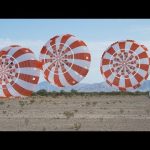
Successful Parachute Test for Orion on This Week @NASA – July 20, 2018
Another successful parachute test for Orion, how we’re getting back to the Moon, and an Apollo 11 virtual experience … a few of the stories to tell you about – This Week at NASA!
This video is available for download from NASA’s Image and Video Library: https://images.nasa.gov/details-NHQ_2018_0720_Successful%20Parachute%20Test%20for%20Orion%20on%20This%20Week%20@NASA%20%E2%80%93%20July%2020,%202018.html
-
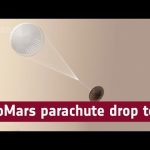
ExoMars low-altitude parachute drop test
The video features footage taken of the parachute deployment as seen from the ground, as well as from onboard GoPros fixed to the drop test vehicle and looking up at the parachute. The test focused on the deployment and inflation of the second main stage 35m-wide parachute, which will be the largest to fly on Mars.
Discussing the test are Stephane Langlois, ESA ExoMars engineer, and John Underwood, principal engineer at Vorticity.
The test was carried out by Vorticity Ltd under supervision of Thales Alenia Space France, Thales Alenia Space Italy and ESA, in Kiruna, Sweden, on 2 March 2018.
Credits: ESA & Vorticity Ltd
-
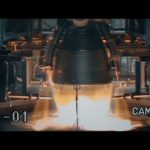
Successful first test of the Ariane 6 Vulcain 2.1 engine
The first hot firing of Ariane 6’s Vulcain 2.1 main engine was performed in January 2018 at the DLR German Aerospace Center test facility in Lampoldshausen, Germany.
The engine, developed by ArianeGroup, has a simplified and more robust nozzle, a gas generator made through additive manufacturing, and an oxygen heater for oxygen tank pressurisation. These features lower the cost of the engine and simplify manufacturing.
Credit: ArianeGroup
Latest news from ArianeGroup on Facebook at:
https://www.facebook.com/ArianeGroup/ -

Test your geography skills in this timelapse over Europe!
It’s time to test your geography skills! Can you name one or more cities in this night timelapse over Europe?
If yes, go and write your answers on Paolo’s social media accounts (Twitter, Facebook or Instagram) as a comment or a reply to his video using the hashtag #timelapsechallenge. Stay tuned for the answers!
A series of nighttime photos were taken by ESA astronaut Paolo Nespoli to create this time-lapse of the Earth as seen from the Space Station.
ESA astronaut Paolo Nespoli in currently working and living on board the International Space Station as part of the Italian Space Agency’s long-duration VITA mission.
Find out the answers here: https://www.youtube.com/watch?v=SsrgFFPpRKI
Follow the VITA mission: http://blogs.esa.int/VITAmission/
Connect with Paolo via http://paolonespoli.esa.intPaolo on Twitter: http://www.twitter.com/astro_paolo
Paolo on Facebook: https://www.facebook.com/ESAPaoloNespoli/
Paolo on Instagram: https://www.instagram.com/astro_paolo/ -

RS-25 Rocket Engine Test Firing
The 7.5-minute test conducted at NASA’s Stennis Space Center is part of a series of tests designed to put the upgraded former space shuttle engines through the rigorous temperature and pressure conditions they will experience during a launch. The tests also support the development of a new controller, or “brain,” for the engine, which monitors engine status and communicates between the rocket and the engine, relaying commands to the engine and transmitting data back to the rocket.
-

Big Test to Qualify Most Powerful Rocket Booster for Flight
NASA tested the largest, most powerful booster ever built for flight for the agency’s new rocket, the Space Launch System(SLS) on June 28 at Orbital ATK Aerospace System’s test facility in Promontory, Utah. SLS and NASA’s Orion spacecraft will launch astronauts on missions to explore multiple destinations on the journey to Mars.
This was the second two-minute, full duration qualification test for the booster, and will provide NASA with critical data to support booster qualification for flight. This second test measured the booster’s performance at the colder end of the accepted propellant temperature range, a targeted 40 degrees Fahrenheit. It was also the last time the booster will be fired in a test environment before the first flight of SLS and Orion in 2018.
-

Suited Test in Orion on This Week @NASA – April 1, 2016
Engineers at Johnson Space Center in Houston are using a mockup of NASA’s Orion spacecraft to evaluate how well astronauts are able to operate Orion’s rotational hand controller and cursor control device, while dressed in spacesuits. The controllers operate the displays and control system used to maneuver and interact with the spacecraft. The testing aims to provide data that can be used to make adjustments needed to ensure future Orion crews can interact appropriately with the spacecraft’s control system during deep space missions. Also, Milestone for Spaceport of the Future, Russian Supply Ship Launches to ISS, Team Selected to Build Planet-Hunting Instrument, First Heat Map of Super Earth and Milestone for Green Propellant Mission!
-
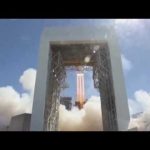
Orion flight test previewed on This Week @NASA – November 7, 2014
A NASA media briefing on Nov. 6 at Kennedy Space Center highlighted the fully assembled Orion spacecraft and details of its first test flight, scheduled for Dec. 4. The 4 and-a-half hour flight, called Exploration Flight Test-1, will send Orion 3,600 miles from Earth on a two-orbit flight to confirm its critical systems are ready for the challenges of eventually sending astronauts on deep space missions to an asteroid and Mars. Also, Delta IV Heavy wet dress test, Next ISS crew trains, Space agency leaders support ISS, Curiosity confirms orbital data and more!
-
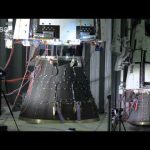
IXV separation test
ESA’s Intermediate eXperimental Vehicle, IXV, is put to the test at ESA’s technical centre, ESTEC, in the Netherlands. During the actual flight, at an altitude of 320 km, a pyrotechnic device will fire to open a clamp band for springs to push IXV away from the upper stage. This test shows mission planners that it can withstand the mechanical shock of the pyrotechnic detonation, mimicking the moment the craft separates from the Vega rocket.
To be launched on Vega in early November 2014, IXV will test in flight the technologies and critical systems for Europe’s future automated re-entry vehicles returning from low orbit.
-
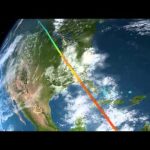
Orion recovery test update on This Week @NASA – August 8, 2014
NASA wrapped up its second Underway Recovery Test Aug. 4 with the Orion spacecraft, off the coast of San Diego, California. The agency teamed with Lockheed Martin, the U.S. Navy and the Department of Defense’s Human Space Flight Support Detachment 3 to evaluate primary and alternative methods to recover Orion after the spacecraft safely splashes down in the ocean at the conclusion of future deep space missions. Orion’s first spaceflight test with a splashdown in the Pacific Ocean is targeted for December. Also, Low-Density Supersonic Decelerator update, 2nd anniversary: 7 Minutes of Terror, Bolden visits MMS at Naval Research Lab, Scanning for algal blooms, Earth science showcase, and more!
-

Parrot vs Child: The Intelligence Test | Extraordinary Animals | Earth
It’s Griffin versus the nursery school children in another bird brain test for this Extraordinary Animal.
Subscribe to BBC Earth: http://bit.ly/BBCEarthSubBBC Earth YouTube Channel: http://www.youtube.com/BBCEarth
BBC Earth Facebook http://www.facebook.com/bbcearth (ex-UK only)
BBC Earth Twitter http://www.twitter.com/bbcearthVisit http://www.bbcearth.com for all the latest animal news and wildlife videos
This is a channel from BBC Studios who help fund new BBC programmes.
-
Rainbow Test Tube – Sick Science! #156
Get the science behind this here: http://www.stevespanglerscience.com/lab/experiments/rainbow-test-tube
Grow and color jelly-like crystals, then layer them in a plastic tube so you can see the colors blend and change. Our baby soda bottle “test tube” makes it easy to see the scientific results, and it’s small enough to carry your “rainbow” wherever you go! Included is a science activity guide to teach you all about crystals and color!
Want more experiments like this? Check out http://www.stevespanglerscience.com/product/naked-eggs-and-flying-potatoes
Sick Science™ is a trademark of Steve Spangler, inc.
© 2013 Steve Spangler Science all rights reserved
-
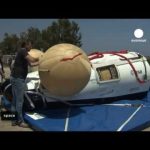
ESA Euronews: Test d’ammaraggio per l’IXV il nuovo veicolo spaziale europeo
Nel mare di Sardegna, poco distante da Muravera in Costa Rei, è stato testato l’IXV, un nuovo veicolo spaziale europeo. La navicella è stata progettata per rientrare nell’atmosfera terrestre in modo più preciso rispetto alla Soyuz.
Durante il test l’Intermediate eXperimental Vehicle è stato sollevato da un elicottero e, a tremila metri di altitudine, è stato sganciato.
Dopo una prima parte di tragitto in caduta libera, la corsa della navetta verso il Mar Mediterraneo è stata frenata, come previsto, da un paracadute.
Ma qualcosa non ha funzionato. Nell’impatto con l’acqua non si sono aperti i dispositivi di galleggiamento che garantiscono stabilità all’IXV.
Secondo Giorgio Tumino e Roberto Angelini, i due manager che seguono il progetto, rispettivamente per ESA e per Thales Alenia Space, l’ammaraggio è stato talmente ‘morbido’ che i quattro palloni praticamente non se ne sono ‘accorti’. Per questo non si sono gonfiati.
Il primo lancio nello spazio dell’IXV, con conseguente rientro nell’orbita terrestre, è previsto per il 2014. Per quella data, garantiscono gli ingegneri, tutto sarà perfetto. -

Flame Test Colorful Elements – Sick Science! #146
Find out the mystery powder HERE: http://www.stevespanglerscience.com/lab/experiments/flame-test
Have you ever seen a blue flame? What about green or purple? When you’re expecting a regular flame, these colorful changes can be an incredible surprise! What you may not know is these spectacular colors result from the presence of specific metals. We’re going to show you a couple of household materials that contain metals that are easily identifiable during a Flame Test!
Want more experiments like this? Check out http://www.stevespanglerscience.com/product/naked-eggs-and-flying-potatoes
Sick Science™ is a trademark of Steve Spangler, inc.
© 2013 Steve Spangler Science all rights reserved
-

Red Cabbage Chemistry – Cool Science Experiment
Check out this and other cool science experiments at http://www.stevespanglerscience.com/experiments/ Ahh, the sweet smell of science! Invite your friends over to share in this super smelly but really cool activity. Plug your nose and get ready to make your own red cabbage indicator that will test the acidity or alkalinity of certain liquids.
About Steve Spangler Science…
Steve Spangler is a celebrity teacher, science toy designer, speaker, author and an Emmy award-winning television personality. Spangler is probably best known for his Mentos and Diet Coke geyser experiment that went viral in 2005 and prompted more than 1,000 related YouTube videos. Spangler is the founder of www.SteveSpanglerScience.com, a Denver-based company specializing in the creation of science toys, classroom science demonstrations, teacher resources and home for Spangler’s popular science experiment archive and video collection. Spangler is a frequent guest on the Ellen DeGeneres Show where he takes classroom science experiments to the extreme. Check out his pool filled with 2,500 boxes of cornstarch!
Cool Science Toys – http://www.SteveSpanglerScience.com
Sign up for the Experiment of the Week – http://www.stevespanglerscience.com/experiment-of-the-week
Watch Spangler’s Science Videos – http://www.stevespanglerscience.com/video/
Attend a Spangler Hands-on Science Workshop for Teachers – http://www.stevespanglerscience.com/teacher_training/
Visit Spangler’s YouTube Channel – http://www.youtube.com/stevespanglerscienceJoin the conversation on Steve Spangler’s blog – http://www.SteveSpangler.com
Additional Information:
On the education side, Spangler started his career as a science teacher in the Cherry Creek School district for 12 years. Today, Steve travels extensively training teachers in ways to make learning more engaging and fun. His hands-on science boot camps and summer institutes for teachers inspire and teach teachers how to prepare a new generation for an ever-changing work force. Over the last 15 years, he has also made more than 500 television appearances as an authority on hands-on science and inquiry-based learning.
On the business side, Spangler is the founder and CEO of Steve Spangler Science, a Denver-based company specializing in the creation of educational toys and kits and hands-on science training services for teachers. The companys unique business strategies and viral creations have been featured in the Wall Street Journal, Inc. Magazine, Wired and TIME Magazine where online readers voted Steve Spangler #18 in the Top 100 Most Influential People of the Year for 2006 (what were they thinking?). You’ll find more than 140 Spangler created products available online at SteveSpanglerScience.com and distributed to toy stores and mass-market retailers worldwide.
Spangler joined NBC affiliate 9News in 2001 as the science education specialist. His weekly experiments and science segments are designed to teach viewers creative ways to make learning fun. His now famous Mentos Geyser experiment, turning 2-liter bottles of soda into erupting fountains, became an Internet sensation in September 2005 when thousands of people started posting their own Mentos explosions on YouTube.com.
As founder of SteveSpanglerScience.com, Spangler and his design team have developed more than 140 educational toys and science-related products featured by mass-market retailers like Target, Wal-Mart, Toys R’ Us, Discovery Channel Stores and over 1,400 independent specialty toy stores. His educational science catalog and on-line business offers more than a thousand science toys and unique learning resources. Recently, Spangler has been featured in the Wall Street Journal, Inc. Magazine, WIRED, the History Channel, Food Network and TIME Magazine where on-line readers voted Steve Spangler #18 in the Top 100 Most Influential People of the Year for 2006.
His recent appearances on the Ellen DeGeneres Show have taught viewers how to blow up their food, shock their friends, create mountains of foam, play on a bed of nails, vanish in a cloud of smoke and how to turn 2,500 boxes of cornstarch and a garden hose into a swimming pool of fun.
-

Balloon Boy – Helium Balloon Lifting Test
Steve Spangler and his partners at KUSA 9News in Denver look at the simplest lifting test for helium. What would it take to lift 10 pounds of potatoes?
About Steve Spangler Science…
Steve Spangler is a celebrity teacher, science toy designer, speaker, author and an Emmy award-winning television personality. Spangler is probably best known for his Mentos and Diet Coke geyser experiment that went viral in 2005 and prompted more than 1,000 related YouTube videos. Spangler is the founder of www.SteveSpanglerScience.com, a Denver-based company specializing in the creation of science toys, classroom science demonstrations, teacher resources and home for Spangler’s popular science experiment archive and video collection. Spangler is a frequent guest on the Ellen DeGeneres Show where he takes classroom science experiments to the extreme. Check out his pool filled with 2,500 boxes of cornstarch!
Cool Science Toys – http://www.SteveSpanglerScience.com
Sign up for the Experiment of the Week – http://www.stevespanglerscience.com/experiment-of-the-week
Watch Spangler’s Science Videos – http://www.stevespanglerscience.com/video/
Attend a Spangler Hands-on Science Workshop for Teachers – http://www.stevespanglerscience.com/teacher_training/
Visit Spangler’s YouTube Channel – http://www.youtube.com/stevespanglerscienceJoin the conversation on Steve Spangler’s blog – http://www.SteveSpangler.com
Additional Information:
On the education side, Spangler started his career as a science teacher in the Cherry Creek School district for 12 years. Today, Steve travels extensively training teachers in ways to make learning more engaging and fun. His hands-on science boot camps and summer institutes for teachers inspire and teach teachers how to prepare a new generation for an ever-changing work force. Over the last 15 years, he has also made more than 500 television appearances as an authority on hands-on science and inquiry-based learning.
On the business side, Spangler is the founder and CEO of Steve Spangler Science, a Denver-based company specializing in the creation of educational toys and kits and hands-on science training services for teachers. The companys unique business strategies and viral creations have been featured in the Wall Street Journal, Inc. Magazine, Wired and TIME Magazine where online readers voted Steve Spangler #18 in the Top 100 Most Influential People of the Year for 2006 (what were they thinking?). You’ll find more than 140 Spangler created products available online at SteveSpanglerScience.com and distributed to toy stores and mass-market retailers worldwide.
Spangler joined NBC affiliate 9News in 2001 as the science education specialist. His weekly experiments and science segments are designed to teach viewers creative ways to make learning fun. His now famous Mentos Geyser experiment, turning 2-liter bottles of soda into erupting fountains, became an Internet sensation in September 2005 when thousands of people started posting their own Mentos explosions on YouTube.com.
As founder of SteveSpanglerScience.com, Spangler and his design team have developed more than 140 educational toys and science-related products featured by mass-market retailers like Target, Wal-Mart, Toys R’ Us, Discovery Channel Stores and over 1,400 independent specialty toy stores. His educational science catalog and on-line business offers more than a thousand science toys and unique learning resources. Recently, Spangler has been featured in the Wall Street Journal, Inc. Magazine, WIRED, the History Channel, Food Network and TIME Magazine where on-line readers voted Steve Spangler #18 in the Top 100 Most Influential People of the Year for 2006.
His recent appearances on the Ellen DeGeneres Show have taught viewers how to blow up their food, shock their friends, create mountains of foam, play on a bed of nails, vanish in a cloud of smoke and how to turn 2,500 boxes of cornstarch and a garden hose into a swimming pool of fun.