The Crew-3 astronauts arrive at the launch site, a critical milestone for our water-hunting lunar robot, and a deeper, more full view down into Jupiter’s atmosphere … a few of the stories to tell you about – This Week at NASA!
Producer/Writer: Andre Valentine Editor: Shane Apple Music: Universal Production Music
Europe’s own satellite navigation system, Galileo, has become the world’s most precise, delivering metre-level accuracy, available anywhere on Earth. It is also saving lives, relaying distress calls for search and rescue. Today there are 26 Galileo satellites in orbit 23 222 km over our heads; the first of them were launched on 21 October 2011, with nine more launches in the following years. The satellites in space are supported by a globe-spanning ground segment. The system as a whole is set to grow, with the first of 12 ‘Batch 3’ about to join the current satellites in orbit and new ‘Galileo Second Generation’ satellites in development.
Galileo has been financed by the EU and developed by ESA, with services delivered by EUSPA.
★ Subscribe: http://bit.ly/ESAsubscribe and click twice on the bell button to receive our notifications.
We are Europe’s gateway to space. Our mission is to shape the development of Europe’s space capability and ensure that investment in space continues to deliver benefits to the citizens of Europe and the world. Check out https://www.esa.int/ to get up to speed on everything space related.
NASA’s #DARTmission will purposely crash a spacecraft into an asteroid to change its orbital period. But in order to hit the mark, this test mission needs to locate its target first. That’s why Johns Hopkins APL engineer Michelle Chen helped develop new autonomous navigation techniques that will ensure a bullseye. Follow DART: www.nasa.gov/DART
The DART mission is a test of a technique that could be used to mitigate the threat of an asteroid on a collision course with Earth should one be discovered in the future. DART’s target is not a threat to Earth. While no known asteroid larger than 140 meters in size has a significant chance to hit Earth for the next 100 years, only about 40 percent of those asteroids have been found as of October 2021.
NASA is crashing a spacecraft into an asteroid… on purpose! Our #DARTmission is a first-of-its-kind #PlanetaryDefense test to change the motion of an asteroid in space so that we could use this technique if an asteroid were ever discovered to be a threat to Earth. Follow DART: www.nasa.gov/DART
The DART mission is a test of a technique that could be used to mitigate the threat of an asteroid on a collision course with Earth should one be discovered in the future. DART’s target is not a threat to Earth. While no known asteroid larger than 140 meters in size has a significant chance to hit Earth for the next 100 years, only about 40 percent of those asteroids have been found as of October 2021.
Producer/Editor: Jessica Wilde Producer: Scott Bednar Videographers: James Lucas and Seth Robinson
NASA’s #DARTmission is crashing a spacecraft into an asteroid to try to change its motion in space. But how will we know if this test worked? That’s where Johns Hopkins APL scientist Andy Rivkin comes in. He’ll be studying the precise change in the asteroid’s motion right here from Earth. In fact, Andy loves DART so much, he even wrote a song about it. Follow DART: www.nasa.gov/DART
The DART mission is a test of a technique that could be used to mitigate the threat of an asteroid on a collision course with Earth should one be discovered in the future. DART’s target is not a threat to Earth. While no known asteroid larger than 140 meters in size has a significant chance to hit Earth for the next 100 years, only about 40 percent of those asteroids have been found as of October 2021.
ESA astronaut Thomas Pesquet takes you on a brief tour of the International Space Station like no other. Filmed with a 360 camera, he floats from Node-3 to Europe’s Columbus laboratory. Immerse yourself in this brief but unique fly through humankind’s orbital outpost.
We are Europe’s gateway to space. Our mission is to shape the development of Europe’s space capability and ensure that investment in space continues to deliver benefits to the citizens of Europe and the world. Check out https://www.esa.int/ to get up to speed on everything space related.
The Orion spacecraft for Artemis I is on the move, critical hardware for Artemis II is delivered, and a new telescope to study our Milky Way … a few of the stories to tell you about – This Week at NASA!
Producer/Writer: Andre Valentine Editor: Shane Apple Music: Universal Production Music
ESA’s Ariane 6 will offer more performance and flexibility than its predecessor Ariane 5 and will be available in two versions, with either two or four boosters.
This new rocket will launch from Europe’s Spaceport in French Guiana and its home, the recently inaugurated launch complex, is a marvel of engineering. Take a tour with Tony Dos Santos, ESA’s Technical Manager there.
The main elements of the Ariane 6 launch complex include the mobile gantry, launch pad and launch vehicle assembly building.
See tests being carried out to qualify vital systems involved in a launch campaign and hear how they work. This includes raising a mockup Ariane 6 core stage vertical in the 90 m-high mobile gantry. Watch the deluge system gush water to absorb the roar of launch and capture the moment the fluidic systems detach from the rocket as it lifts off.
The Ariane 6 programme is funded and developed by ESA. These tests by @CNESand @ArianeGroup teams were jointly performed under the responsibility of ESA.
Ariane 6 opens new opportunities and guarantees continued access to space for ESA Member States.
★ Subscribe: http://bit.ly/ESAsubscribe and click twice on the bell button to receive our notifications.
We are Europe’s gateway to space. Our mission is to shape the development of Europe’s space capability and ensure that investment in space continues to deliver benefits to the citizens of Europe and the world. Check out https://www.esa.int/ to get up to speed on everything space related.
The first mission to the Trojan asteroids, a prelaunch milestone for our Artemis I mission, and highlighting a few of our NASA centers … a few of the stories to tell you about – This Week at NASA!
The European Space Agency is playing a vital role in humankind’s return to the Moon. In a few months @NASA will launch Artemis I from the Kennedy Space Center. The uncrewed mission will carry NASA’s Orion spacecraft incorporating ESA’s European Service Module (ESM-1), built and tested by Airbus Bremen, in Germany, with the help of 10 European nations. ESM-1’s main engine and 32 thrusters will propel Orion into orbit around the Moon and return it to Earth.
As Artemis I prepares for launch, the second European Service Module (ESM-2) is about to ship to the US with ESM-3 also currently under construction. The second Artemis mission, however, has a crucial difference: it will carry four astronauts for a lunar flyby. ESM-2 will provide propulsion, power, oxygen, water and life support as well as controlling the temperature in the orbiting crew module. ESM-3 will go one step further and put the first person on the Moon for 50 years.
We are Europe’s gateway to space. Our mission is to shape the development of Europe’s space capability and ensure that investment in space continues to deliver benefits to the citizens of Europe and the world. Check out https://www.esa.int/ to get up to speed on everything space related.
🚀 Watch the newest #Landsat satellite lift off! This joint NASA-U.S. Geological Survey mission will contribute to the longest data record of Earth’s landscapes taken from space. Landsat 9 continues the nearly 50-year legacy of the Landsat Program: observing our changing home planet, monitoring its land and coastal regions, helping us manage its essential resources, and providing free, publicly available images and data.
Landsat 9 will launch Mon., Sept. 27 at 2:12 p.m. EDT (18:12 UTC) aboard a United Launch Alliance Atlas V rocket from Space Launch Complex 3 at Vandenberg Space Force Base in California. Landsat 9 will join its sister satellite, Landsat 8, in orbit in collecting images from across the planet every eight days.
🚩 The Italian Renaissance was a period in Italian history known for the development of a culture that spread across Europe and marked the transition from the Middle Ages to modernity.
Positioning the agency for future success, a lunar landing site selected for a robotic explorer, and highlighting diversity on the Moon … a few of the stories to tell you about – This Week at NASA!
NASA’s future will continue to be a story of human exploration, science, engineering and technology. Working together, we define the future, achieve the impossible and discover the unknown.
With our Artemis missions, NASA will land the first woman and first person of color on the Moon, using innovative technologies to explore more of the lunar surface than ever before. We will collaborate with commercial and international partners and establish the first long-term presence on the Moon. Then, we will use what we learn on and around the Moon to take the next giant leap: sending the first astronauts to Mars.
We will continue to nurture the development of a vibrant low-Earth orbit economy that builds on the work done to date by the International Space Station. Commercial companies will play an increasing role in the space industry: launching rockets and satellites, transporting cargo and crew, building infrastructure in low-Earth orbit.
NASA research and missions are essential to the future of Earth. The unique vantage point of space allows us to better understand Earth’s systems and use that knowledge to live sustainably on our home planet, protect life around the world, and adapt to natural and human-caused changes. Our data and observations will help protect our home planet.
Our James Webb Space Telescope will peer farther into the Universe than ever before. Our scientists will work to increase an understanding of our planet, our solar system and our place in the universe. We will continue to try to answer the question, “Are we alone?”
🚩 The Italian Renaissance was a period in Italian history known for the development of a culture that spread across Europe and marked the transition from the Middle Ages to modernity.
Preparing the space station for a future power boost, a mission extension for a couple of station crew members, and a spaceflight first for one of our commercial partners … a few of the stories to tell you about – This Week at NASA!
Does your weekend include any home improvements? Ours does! On Sun. Sept. 12 at 8:30 a.m. EDT (12:30 UTC), watch Japan Aerospace Exploration Agency astronaut Akihiko Hoshide and European Space Agency astronaut Thomas Pesquet venture outside the International Space Station to perform upgrades to the orbiting lab.
The duo will spend approximately 6.5 hours in the vacuum of space preparing the space station for the installation of its third new roll-up solar array.
NASA TV coverage starts at 7 a.m. EDT (11:00 UTC). Set a reminder to watch live!
Highlighting the value of NASA, the next resupply mission to the space station, and a milestone for the James Webb Space Telescope … a few of the stories to tell you about – This Week at NASA!
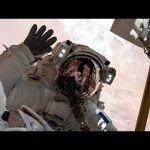
ESA astronaut Thomas Pesquet gives a tour of the International Space Station’s airlock – the module used to prepare for and carry out spacewalks.
In this video, Thomas provides an overview of the EMU spacesuit used for US spacewalks and its different components. The spacesuits can be adjusted depending on an astronaut’s size, but the gloves are customised to ensure each astronaut has maximum mobility in their hands and fingers.
Thomas shows the cameras and lighting systems that allow astronauts to continue work when over the side of Earth not lit by the sun, the visors they put down during periods of harsh light and the cooling garments worn under the suits that keep their bodies at the right temperature. He also explains the equipment lock and the crew lock, where astronauts breathe in a controlled way to rid their blood of nitrogen and adjust to the lower pressure of space.
We are Europe’s gateway to space. Our mission is to shape the development of Europe’s space capability and ensure that investment in space continues to deliver benefits to the citizens of Europe and the world. Check out https://www.esa.int/ to get up to speed on everything space related.
The Artemis missions will build a community on the Moon, driving a new lunar economy and inspiring a new generation. Narrator Drew Barrymore and NASA team members explain why returning to the Moon is the natural next step in human exploration, and how the lessons learned from Artemis will pave the way to Mars and beyond. As NASA prepares to launch the Orion spacecraft and Space Launch System rocket on the uncrewed Artemis I mission around the Moon, we’ve already begun to take the next step.
Video Credits: Writer: Paul Wizikowski Directors: Paul Wizikowski and Ryan Cristelli Editor: Phil Sexton Producers: Barbara Zelon and Aly Lee
Join ESA astronaut Thomas Pesquet for a tour of the International Space Station’s Russian MLM module. The module docked to the Station on 29 July 2021, bringing with it the European Robotic Arm (ERA) that will provide unprecedented access outside the Russian segment.
In this tour, Thomas explains what happened when the module arrived on Station and gives an overview of its facilities and functions. Short for Multipurpose Laboratory Module, and also known as Nauka, the module increases opportunities for science and research in microgravity.
Thomas shows the hatch to access the module, its main hall and a new toilet – the third toilet for the Space Station. He also shows the scientific racks, the piloting station for ERA, a crew quarter, and a second part of the module that will be used for docking with an airlock that will allow experiments to be sent out into the vacuum of space, and a window that – once it is functional – will provide more incredible views over Earth.
We are Europe’s gateway to space. Our mission is to shape the development of Europe’s space capability and ensure that investment in space continues to deliver benefits to the citizens of Europe and the world. Check out https://www.esa.int/ to get up to speed on everything space related.
Join us on Tues., Aug. 10 at 5:30 p.m. EDT (21:30 UTC) for live coverage of the launch of Northrop Grumman’s Antares rocket and Cygnus cargo spacecraft. Liftoff from our Wallops Flight Facility in Virginia is scheduled at 6:01 p.m. EDT (22:01 UTC). This Cygnus is named the SS Ellison Onizuka, in honor of the first Asian American astronaut.
What’s on board the spacecraft? Over 8,200 pounds (3,720 kg) of research, technology demonstrations, and crew supplies for the astronauts living and working on the station. Experiments heading to space will demonstrate 3D printing with dust, use engineered tissue to study muscle loss, analyze growth of slime mold, and more:https://youtu.be/R-jc-dTdK5g
To celebrate the Summer Games in Tokyo, astronauts and cosmonauts held the very first-ever space games aboard the International Space Station. Team Soyuz took on Team Dragon in a friendly competition of synchronized floating, no-hand ball, and more!
The station’s Expedition 65 crew split up into teams based on which spacecraft they took to the orbiting laboratory. NASA astronaut Mark Vande Hei and cosmonauts Oleg Novitskiy and Pyotr Dubrov of the Russian space agency Roscosmos were on Team Soyuz. NASA astronauts Shane Kimbrough and Megan McArthur, JAXA (Japan Aerospace Exploration Agency) astronaut Akihiko Hoshide, and ESA (European Space Agency) astronaut Thomas Pesquet were on Team Dragon for the SpaceX Crew Dragon spacecraft. Both spacecraft arrived in April to deliver the seven-member crew for a six-month science mission in microgravity.
Involving the U.S., Russia, Canada, Japan, and the participating countries of ESA, people have been living and working aboard the International Space Station for more than 20 years in one of the most ambitious international collaborations ever attempted. People from 19 countries have visited the unique microgravity laboratory, which has hosted more than 3,000 research investigations from scientists, researchers, and students from more than 108 countries and areas.
The engine for our Artemis Moon rocket is all fired up, final launch preparations for an historic mission, and how you can hear back billions of years into the past … a few of the stories to tell you about – This Week at NASA!
ESA’s Jupiter Icy moons Explorer, Juice, has successfully completed rigorous thermal tests simulating the extreme coldness of space and the warmth of the Sun at ESA’s test centre ESTEC, in The Netherlands.
The spacecraft underwent a month of round-the-clock testing and monitoring in the Large Space Simulator, which recreates the vacuum of space and is able to simulate both hot and cold space environments. The spacecraft was subjected to temperatures ranging from 250 degrees to minus 180 degrees Celsius, showing that it can survive its journey in space.
Juice will launch in 2022 to our Solar System’s largest planet. It will spend over four years studying Jupiter’s atmosphere, magnetosphere and its icy moons Europa, Callisto and Ganymede, investigating whether the moons’ subsurface oceans are habitable for life.
We are Europe’s gateway to space. Our mission is to shape the development of Europe’s space capability and ensure that investment in space continues to deliver benefits to the citizens of Europe and the world. Check out https://www.esa.int/ to get up to speed on everything space related.
The next commercial crew test flight to the space station, a new space station module, and another astronomical discovery by Hubble … a few of the stories to tell you about – This Week at NASA!
Producer Credit: Andre Valentine Editor: Sonnet Apple Music: Universal Production Music/”Another Way of Winning”
Contents:
0:00 Introduction 0:13 Next Commercial Crew Mission to Space Station 0:43 Arrival of New Space Station Module 1:25 First Evidence of Water Vapor at Jupiter’s Moon Ganymede 1:52 Tropical Rainforest Vulnerability Index 2:22 NASA Announces Winners of Future of Flight Challenge 2:58 50th Anniversary of Apollo 15
The Copernicus Sentinel-2 takes us over Malé, the capital and most populous city in the Republic of Maldives, in this edition of the Earth from Space programme.
We are Europe’s gateway to space. Our mission is to shape the development of Europe’s space capability and ensure that investment in space continues to deliver benefits to the citizens of Europe and the world. Check out https://www.esa.int/ to get up to speed on everything space related.
Ten years ago, the last shuttle mission (STS-135) dropped out of the predawn darkness and landed at Kennedy’s Shuttle Landing Facility Runway 15 for the final time.
Over the course of the more than eight days, Commander Chris Ferguson, Pilot Doug Hurley, and Mission Specialists Sandy Magnus and Rex Walheim had spent much of their time delivering a stockpile of supplies and parts to the space station.
The end of their mission aboard Atlantis may have been the end of the shuttle era, but it was the beginning a new stage of exploration.
0:00 – Intro 0:24 Preparing to launch 2:48 Launch delay 3:34 Launch 4:01 Arrive at the International Space Station 5:51 Returning Home 7:04 Landing 8:51 New Beginnings
NASA honors the 100th anniversary of the birth of space pioneer John Glenn. Glenn was one of NASA’s original seven Mercury astronauts, served four terms as a U.S. senator from Ohio, and flew on the space shuttle Discovery at the age of 77.
His flight on Friendship 7 on Feb. 20, 1962, showed the world that America was a serious contender in the space race with the Soviet Union. It also made Glenn an instant hero as the first American to orbit Earth.
After retiring from NASA in 1965, Glenn took an active part in Ohio politics and environmental protection efforts. He won his Senate seat in 1974, carrying all 88 counties of Ohio. He was re-elected in 1980 with the largest margin in Ohio history.
Ohio returned him to the Senate for a third term in 1986, again with a substantial majority. In 1992 he was elected again, becoming the first popularly elected senator from his state to win four consecutive terms.
In 1998, Glenn flew on the STS-95 Discovery shuttle flight, a 9-day mission during which the crew supported a variety of research payloads including deployment of the Spartan solar-observing spacecraft, the Hubble Space Telescope Orbital Systems Test Platform, and Glenn’s investigations on space flight and the aging process.
ESA’s first Earth observation mission dedicated to understanding our planet, the European Remote Sensing satellite (ERS-1), was launched into orbit on 17 July 1991. At the time, it was the most sophisticated Earth observation spacecraft developed and launched by Europe.
Thirty years ago, as the team went through the launch and early-orbit phase, the first synthetic aperture radar images were awaited in Kiruna and Fucino. Featuring video footage taken in 1991, the team involved tells the story of the anxious moments and important breakthroughs they made as the first images arrived. Get an insider view into the problem-solving moments from inside one of ESA’s processing rooms.
We are Europe’s gateway to space. Our mission is to shape the development of Europe’s space capability and ensure that investment in space continues to deliver benefits to the citizens of Europe and the world. Check out https://www.esa.int/ to get up to speed on everything space related.
The ESA Jupiter Icy Moons Explorer (Juice) team has been working very hard to prepare the spacecraft for the first test in the one-year long environmental test campaign. This is the so-called Thermal Balance Thermal Vacuum (TBTV) test.
Juice is in the Large Space Simulator (LSS), a unique facility in Europe (run by the European Test Center, at ESA/ESTEC in the Netherlands) that can simulate the vacuum and cold and hot temperature conditions in space, and also the Sun itself!
The TBTV started on 17 June with the closure of the LSS and the “pumping-down”, meaning the removal of air within the chamber to a pressure level of 10nbar (1/100 000 000th of the outside air pressure). This is the closest Juice will come to space conditions while on Earth. It will undergo 24/7 testing, ending on 16 July 2021.
In this episode this process is followed and several team members comment on the different moments.
Produced for ESA by Lightcurve Films. GoPro footage by ESA. Original music by William Zeitler.
★ Subscribe: http://bit.ly/ESAsubscribe and click twice on the bell button to receive our notifications.
We are Europe’s gateway to space. Our mission is to shape the development of Europe’s space capability and ensure that investment in space continues to deliver benefits to the citizens of Europe and the world. Check out https://www.esa.int/ to get up to speed on everything space related.
Staying safe and healthy moves us forward – for your family and the NASA family.
We prioritize the safety of our employees and our communities. All employees are strongly encouraged to monitor vaccine availability in their local communities while the agency updates its capabilities to support vaccine distribution and works with states to get vaccine for our mission-critical workforce.
Want to learn more about applications to ESA’s astronaut selection? Watch the replay of this media briefing to get an insight into the total number and spread of applications across all ESA Member and Associate Member states. Vacancies for the positions of astronaut and astronaut (with a physical disability) have closed on 18 June 2021, after a two-and-a-half-month-long application period.
★ Subscribe: http://bit.ly/ESAsubscribe and click twice on the bell button to receive our notifications.
We are Europe’s gateway to space. Our mission is to shape the development of Europe’s space capability and ensure that investment in space continues to deliver benefits to the citizens of Europe and the world. Check out https://www.esa.int/ to get up to speed on everything space related.
🚩 Video Sponsored by Ridge Wallet: https://www.ridge.com/HISTORY 🚩 Use Code “HISTORY ” for 10% off your order 👇 Push down for more cool stuff 👇
🚩The Battle of the Field of Blood and the broader struggle for Aleppo was an intensely complex affair, drawing in many factions—Frankish, Turkish, Armenian, Arab, and Byzantine. Like so many of the Crusader States’ wars, it was rarely a simple matter of Christians versus Muslims.
Join us on June 17, 2021 at 2 p.m. EDT for a conversation in honor of National LGBTQ+ Pride Month about what it means to be an ally, understanding some of the barriers faced by the lesbian, gay, bisexual, transgender, and queer community, and what you as an active ally can do to help break down those barriers. The panel discussion will be moderated by Charles Cockrell, associate director for strategy at NASA’s Glenn Research Center, and will feature:
• Melanie Saunders, NASA deputy associate administrator • Sarah J. Phillips, visual information specialist for the Image Technology Center at NASA’s Glenn Research Center • Ron Brade, retired associate center director at NASA’s Ames Research Center • Donna Shafer, associate center director at NASA’s Johnson Space Center
The event is sponsored by the LGBTQ+ Employee Alliance Group at NASA’s Langley Research Center, the LGBT Advisory Council at NASA’s Goddard Space Flight Center, Out & Allied at NASA’s Johnson Space Center; the LGBT Employee and Allies Network at NASA’s Kennedy Space Center, the LGBT Advisory Group at NASA’s Ames Research Center, the NASA HQ Pride Alliance; The Rainbow Alliance at NASA’s Glenn Research Center, Stennis Space Center, and the NASA Shared Services Center.
Choose your player! NASA is holding a naming contest beginning Wednesday, June 16 for the manikin that will fly on an upcoming mission around the Moon.
As NASA gears up for the Artemis I mission around the Moon that will pave the way to send the first woman and the first person of color to the lunar surface, we have an important task for you (yes, you!). Artemis I will be an uncrewed flight test of the Space Launch System rocket and the Orion spacecraft ahead of the first flight with crew on Artemis II. We want your help to select a name for the suited manikin, or Moonikin in this case, that will fly aboard Orion to help gather data before missions with astronauts!
We have eight names to choose from, but only one can win. Every other day starting Wednesday, June 16, we will be asking you on @NASAArtemis Twitter, Facebook, and Instagram, to vote between one of two names. The winners of each bracket compete with one another until the final showdown on Monday, June 28.
The final name of the Moonikin will be announced on Tuesday, June 29!
For more information, go to: nasa.gov/namethemoonikin
Meet Hera, our very own asteroid detective. Together with two CubeSats – Milani the rock decoder and Juventas the radar visionary – Hera is off on an adventure to explore Didymos, a double asteroid system that is typical of the thousands that pose an impact risk to planet Earth.
Suitable for kids and adults alike, this episode of ‘The Incredible Adventures of Hera’ takes you on a fun and informative journey to visit Didymos together with Hera. Along the way, you will discover who the main characters are, why this mission is so important, what ESA hopes to achieve with Hera and much more.
We are Europe’s gateway to space. Our mission is to shape the development of Europe’s space capability and ensure that investment in space continues to deliver benefits to the citizens of Europe and the world. Check out https://www.esa.int/ to get up to speed on everything space related.











![Enter the airlock with Thomas Pesquet [in French with English subtitles available]](https://video.kidibot.ro/wp-content/uploads/2025/04/21406-enter-the-airlock-with-thomas-pesquet-in-french-with-english-subtitles-available-150x150.jpg)