The giant planet shines bright in the night sky this week as it reaches opposition on Thursday (2 November.)
This means it is at its biggest when seen from Earth, and spends much of the night above the horizon – so it’s the perfect time to observe Jupiter yourself!
If you don’t have a telescope handy, don’t worry. You will be able to spot the planet with just your eyes. Look for a bright orange star-like dot just above the eastern horizon that is not twinkling. This is our big friendly giant! You can also use a stargazing app to help you find the planet.
Through a pair of binoculars, Jupiter will look like a white disk. Peer closely and you will see a line of three or four tiny white dots. These dots are Jupiter’s largest moons: Ganymede, Callisto, Io and Europa. These will soon be visited by our Jupiter Icy Moons Explorer, or Juice for short.
Use a telescope if you’re curious to see Jupiter’s famous red spot and brown bands.
Try to find a clear sky this week and say… hello Jupiter!
A new era of lunar exploration is on the rise, with dozens of Moon missions planned for the coming decade. As these missions will be operating on and around the Moon and needing to communicate together and fix their positions independently from Earth, this new era will require its own time.
Accordingly, space organisations have started considering how to keep time on the Moon. Having begun with a meeting at our technology centre in the Netherlands on November 2023, the discussion is part of a larger effort to agree a common ‘LunaNet’ architecture covering lunar communication and navigation services.
★ Subscribe: http://bit.ly/ESAsubscribe and click twice on the bell button to receive our notifications.
We are Europe’s gateway to space. Our mission is to shape the development of Europe’s space capability and ensure that investment in space continues to deliver benefits to the citizens of Europe and the world. Check out https://www.esa.int/ to get up to speed on everything space related.
Our Jupiter Icy Moons Explorer, Juice, will make detailed observations of the giant gas planet and its three large ocean-bearing moons – Ganymede, Callisto and Europa – with a suite of remote sensing, geophysical and in situ instruments. The mission will characterise these moons as both planetary objects and possible habitats, explore Jupiter’s complex environment in depth, and study the wider Jupiter system as an archetype for gas giants across the Universe.
Juliet will be taking us to Jupiter and its moons in the coming weeks. So stay tuned for more!
📹 @europeanspaceagency
★ Subscribe: http://bit.ly/ESAsubscribe and click twice on the bell button to receive our notifications.
We are Europe’s gateway to space. Our mission is to shape the development of Europe’s space capability and ensure that investment in space continues to deliver benefits to the citizens of Europe and the world. Check out https://www.esa.int/ to get up to speed on everything space related.
One of the greatest challenges for most people when it comes to understanding geology is the concept of time. When our lives are measured in minutes, hours, and days, what does 3-7 million years even mean? Or 4 billion years? Explore the conventions of geologic time during this week’s installment.
About the series: Join the Geology Gents, Gavin and Graham, for weekly conversations about rocks live on Facebook. Each week we’ll explore a different geologic topic, from Santa Cruz formations to tips for being a more effective rockhound. Graham Edwards and Gavin Piccione are PhD candidates in geochronology with the Department of Earth and Planetary Sciences at UC Santa Cruz.
Submit your questions ahead of time on Facebook or by emailing events@santacruzmuseum.org, or during the program live on Facebook. Feel free to include pictures of rocks you’d like identified! Pro-tip: the better the picture, the better the ID.
European Space Agency astronaut Thomas Pesquet shared this video on social media with the caption:
“100 days in space for #MissionAlpha. It feels like a long time ago, but we also installed new toilets shortly after arriving. I was looking at the procedures on the tablet velcroed to my thigh, and yes, this filter looked so much like a banjo, I had to. The same video specialist at ESA who edits the timelapse videos (and much, much more!), Melanie Cowan, spotted this clip from the Space Station onboard camera views, added some music and the result is… perfectly embarrassing! . True story: I actually helped Mark on this day. A little. Maybe. No one knows.”
Over 200 experiments are planned during Thomas’ time in space, with 40 European ones and 12 new experiments led by the French space agency @CNES.
We are Europe’s gateway to space. Our mission is to shape the development of Europe’s space capability and ensure that investment in space continues to deliver benefits to the citizens of Europe and the world. Check out https://www.esa.int/ to get up to speed on everything space related.
The launch of Sputnik, humankind’s first satellite, in 1957 marked the dawn of a new era for the people of the ‘Pale Blue Dot’.
Decades later, our planet is now surrounded by spacecraft carrying out extraordinary work to study our changing climate, save lives following disasters, deliver global communication and navigation services and help us answer important scientific questions.
But these satellites are at risk. Accidental collisions between objects in space can produce huge clouds of fast-moving debris. These clouds can spread and damage additional satellites with cascading effect, eventually making the most useful orbits around Earth no longer safe for spacecraft or people.
Satellites today have to carry out collision avoidance manoeuvres to avoid possible impact with debris. These are costly, and hundreds of collision avoidance alerts are already issued every week. [add para space}
And this is nothing compared to what is coming. Several companies have begun to launch mega-constellations into low-Earth orbit to provide global internet access. They have great benefits, but could be a source of huge disruption if we do not change our behaviour.
Our current methods for avoiding collisions in space will become inadequate in just a few years – and even compliance with space debris mitigation guidelines may no longer be enough.
It’s time to act.
ESA is developing technologies for an automated collision avoidance system, as well as methods for refuelling, repairing and upgrading satellites in orbit, extending the lifetime of missions and potentially reducing the number of new satellites that need to be launched.
ESA is also working on debris removal missions that will fly up to dead spacecraft and debris objects, capture them and move them to safety – either by sending them down to burn up in Earth’s atmosphere or up into ‘graveyard orbits’.
By reaching into space, we have brought huge benefits down to Earth, providing technologies that enrich our societies, connect people in previously unimaginable ways and give us an incredible perspective and understanding of our planet.
We know what will happen if we continue on our current path, but we also know exactly what we need to do to change that fate and ensure humankind’s access to space is guaranteed for future generations.
We are Europe’s gateway to space. Our mission is to shape the development of Europe’s space capability and ensure that investment in space continues to deliver benefits to the citizens of Europe and the world. Check out https://www.esa.int/ to get up to speed on everything space related.
Some of the smallest and lightest rockets in NASA’s lineup have made some of the biggest impacts on science. With a flight time of just about 15 minutes before falling back to Earth, sounding rockets collect unique observations on everything from our planet’s atmosphere to the Sun and even distant galaxies.
Join us live to hear from scientists who have traveled to the ends of the Earth to launch sounding rockets, flown cutting-edge instruments on these suborbital flights, and used sounding rockets to make brand-new scientific discoveries.
The Coriolis effect says that anytime you’re rotating—whether it’s on a playground toy or your home planet—objects moving in straight lines will appear to curve. This bizarre phenomenon affects many things, from the paths of missiles to the formation of hurricanes.
You may have heard that the Coriolis effect makes water in the bathtub spiral down the drain in a certain way, or that it determines the way that a toilet flushes. That’s actually wrong.
Although, as you may have noticed while tracking a hurricane on the news, storms in the Northern Hemisphere spin counterclockwise, while those in the Southern Hemisphere spin clockwise. Why do storms spin in different directions depending on their location? And why do they spin in the first place? The answer is the Coriolis effect.
The universe is incredibly old, astoundingly vast and populated by trillions of planets — so where are all the aliens? Astronomer Stephen Webb has an explanation: we’re alone in the universe. In a mind-expanding talk, he spells out the remarkable barriers a planet would need to clear in order to host an extraterrestrial civilization — and makes a case for the beauty of our potential cosmic loneliness. “The silence of the universe is shouting, ‘We’re the creatures who got lucky,’” Webb says.
The TED Talks channel features the best talks and performances from the TED Conference, where the world’s leading thinkers and doers give the talk of their lives in 18 minutes (or less). Look for talks on Technology, Entertainment and Design — plus science, business, global issues, the arts and more.
To support Kurzgesagt and learn more about Brilliant, go to https://www.brilliant.org/nutshell and sign up for free. The first 688 people that go to that link will get 20% off the annual Premium subscription.
Are wormholes real or are they just magic disguised as physics and maths? And if they are real how do they work and where can we find them?
🐦🐧🐤 PATREON BIRD ARMY 🐤🐧🐦
▀▀▀▀▀▀▀▀▀▀▀▀▀▀▀▀▀▀▀▀▀▀▀▀▀▀
Many Thanks to our wonderful Patreons from http://kgs.link/patreon who support us every month and made this video possible:
Big Skapinsky, Liam Wenzel, Juan Gonzalez, Grigory Sarnitsky, Brandon Cleary, Amanda Hutchings, Siddharth Amarsee, Maciamo Hay, Nick T., Gabriel Correa, Matthew McAteer, Javier Silva Calvo, javier canella, Gergely Szakács, Pernox, Alana leonhardy, Tommi Moilanen, David DiGiovanni, Jack Bernstein, Jonas Steen Nielsen, Thomas Pyke, Gizem Ozdemir, ShiroiYami, Alice Bater, Ennio Sialiti, Alexander Evans, Eric Chan, Peter Noort, Adrian Haslinger, Tomasz Różalski, Miro Cibula, Lyle Jeff, Sunil Pai, Aurélien Delaux, Piotr Pałek, Øyvind Helland, Khloudalahbaby, Nicola Larosa, Dave, Montant, Eli V, ryan oberfield, Iain Garioch, Janina Lamøy, Saurischian, Zachary Osman, Cody Douglas, Can Berk Güder, Jason Lin, Eric Lugo, Emil Hjort, Luuk Perdaems, Brandon Carraway, Zack Methven, dava, Gauthier Muguerza, Tim Andreev, Robin Gielings, Mihai Anei, Pranab Kumar Mishra, jeong-min, An, Nerijana, jongre1512, Mike Levy, David W., Jakob Stams, Linda Yancey, Leo White, John, Justin Boh, Thot, Matthew Dyet, Andrei Stefan, Patrick McKelvy, Kervan Govender, Rajiv Cruz, Peter Duncan, Ramsey Elbasheer, Zhuang Miao, Brayden Sola, frikinside, Yasmeen Mawlawi, Loic Rebillard, Nicholas Miller, Philipp Bergamin, K. Gustavo Carlos, Albin, Connor Wilson, Talal Al-Khaldi, NURO, Durham Goode, Christopher Hadley, Sean Holland, iulian constantin, Pumpk!nH34D, Douwe de Jong, Jens Baumann, Vladislav Aleynikov, Joshua Olson, Andrew Boggs, William Wu, Andrew Mckinley, Eric Burnett, Benjamin Bromberg, Barry Costa, Philippe Ryll, Barbieri Davide, Claire Baldauf, Ondrej Debreceni, Benjamin Sairanen, Elija Peterson, Eki Hassa, Ryan K. Allen, Ville Vuorela, Reinhold Dunkl, Gloria Hope, Matti Hanberg, Moritz Roell, Marco Schmidt, Trey, Jiesi Ren, Maurice Simmons, Simon Sardeson-Coe, Sam Day, Orphansmith, Noah T Blanchard, Gerald Balla, Yannick van Andel, Khaled I. Johari
You’ve probably seen atoms like this emoji ⚛ everywhere from science textbooks to the logo for The Big Bang Theory. But what does an atom really look like? The truth is much stranger.
SUBSCRIBE: http://youtube.com/whatthephysics?sub
What if the Earth were swallowed by a black hole? Would humanity’s legacy be gone forever? Or could you somehow get back that information from behind the event horizon?
There are three possible answers to this question…but they all break physics as we know it!
Have you ever wondered what it would be like to fall into a black hole? Take a 360° adventure to find out!
SUBSCRIBE: http://youtube.com/whatthephysics?sub
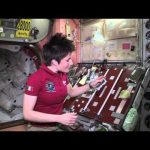
The astronauts on board the International Space Station get hungry from time to time during their long day of work in microgravity. We asked Samantha Cristoforetti, ESA astronaut on board the ISS for the Futura mission, to tell us about the kind of healthy snack she likes to eat during her breaks.
Has the universe a beginning or was it here since forever? Well, evidence suggests that there was indeed a starting point to this universe we are part of right now. But how can this be? How can something come from nothing? And what about time? We don’t have all the answers yet so let’s talk about what we know.
Also, we try to make this one not depressing. Tell us if we succeeded.
BY THE WAY. We have a website now. We’ll try to blog from time to time, show you guys how we make the videos and give more insight to our process. Also we sell stuff. We really don’t know where this whole kurzgesagt stuff leads us. But we are really thankful for all the attention and positive feedback and yeah, maybe we can make this our jobs — it would be pretty nice and we could do more content each month. But we’ll see. For now, thank you very much everybody for making this little adventure possible.
If you like the MUSIC of the video, you can get it here: http://bit.ly/1fCOlLI
Thomas did an aweful good job again. 🙂
Next Video: April. (as soon as we can but we kind of have to make a living and visit college) Topic: Nuclear Energy (probably, if we finish the research in time — if not something else)
Short videos, explaining things. For example Evolution, the Universe, Time, the Stock Exchange or controversial topics like Fracking. Because we love science.
We’re a bunch of Information designers from munich, visit us on our website, twitter, facebook or behance to say hi!
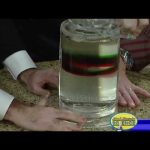
It’s a demonstration that almost has to be seen in person to believe. Otherwise, you’re likely to say, “It’s fake… there’s no way that could happen!” As you’re watching the video, please remember that there is absolutely no trick photography. When disbelievers see the demonstration performed, the reaction is nothing short of astonishing. Based on our past experience, we know that color mixing is not a reversible process. Mix red and blue and you make purple. Separating the colors back into their original form is not only tricky but incomprehensible for many of us. Watch the video… you’ll see why we call it a “Twist in Time.”
Help Keep PTSOS Going, Click Here: https://www.gofundme.com/ptsos
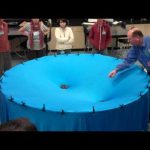
Dan Burns explains his space-time warping demo at a PTSOS workshop at Los Gatos High School, on March 10, 2012. Thanks to Shannon Range from the Gravity Probe B program for creating the original demonstration which he shared with Dan in 2004.
Information on how to make your own Spacetime Simulator can be found here: https://youtu.be/2JOf1ub9US0
Herschel will investigate how stars and galaxies formed and how they continue to form in our own and other galaxies, meanwhile Planck will look back at the dawn of time, helping astronomers to study the birth and evolution of the Universe.
Based on our past experience, we know that color mixing is not a reversible process. Mix red and blue and you make purple. Separating the colors back into their original form is not only tricky but incomprehensible for many of us. Watch the video… you’ll see why we call it a “Twist in Time.”