
NASA held a news conference April 4 at the Jet Propulsion Laboratory, with participation from NASA headquarters, to preview the final phase of the Cassini spacecraft’s mission to Saturn. On April 26, Cassini will begin its “Grand Finale” – a series of deep dives between the planet and its rings. No other mission has ever explored this unique region that is so close to the planet. Cassini will make 22 orbits that swoop between the rings and the planet before ending its 20-year mission on Sept. 15, with a final plunge into Saturn. The mission team hopes to gain powerful insights into the planet’s internal structure and the origins of the rings, obtain the first-ever sampling of Saturn’s atmosphere and particles coming from the main rings, and capture the closest-ever views of Saturn’s clouds and inner rings. Also, Next Space Station Crew Travels to Launch Site, New Target Launch Date for Orbital ATK Mission to ISS, Lightfoot Visits Industry Partners, Human Exploration Rover Challenge, and John Glenn Interred at Arlington National Cemetery.
Tag: TW@N
-

Warmest Global Temperature on Record on This Week @NASA – January 20, 2017
NASA and the National Oceanic and Atmospheric Administration (NOAA) announced on Jan. 18, that global surface temperatures in 2016 were the warmest since modern record keeping began in 1880. The finding was based on results of independent analyses by both agencies. According to analysis by scientists at NASA’s Goddard Institute for Space Studies (GISS) in New York, 2016 is the third year in a row to set a new record for global average surface temperatures, further demonstrating a long-term warming trend. Also, Cygnus Cargo Module Arrives at KSC, Up in 30 Seconds, and Remembering Gene Cernan.
-
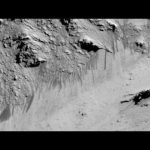
Water Flowing on Mars Today on This Week @NASA – October 2, 2015
A major scientific discovery was announced by NASA at a Sept. 28 news conference. From its vantage point high above the Martian surface, NASA’s Mars Reconnaissance Orbiter (MRO) spacecraft has found the strongest evidence yet, that under certain circumstances, liquid water has been found on Mars. Researchers say an imaging spectrometer on MRO detected signatures of hydrated minerals on slopes where downhill streaks, known as Recurring Slope Lineae (RSL) are seen. In the past, RSL flows have been described as possibly related to liquid water. But the new findings of hydrated minerals is key evidence. Hydrated salts can lower the freezing point of liquid brine – and produce liquid water. Also, Life beyond Earth in the next decade?, “The Martian” screening event, Cargo ship departs space station, New cargo ship delivers to space station, Rare double celestial treat and Espacio a Tierra!
-
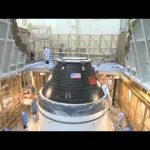
Halfway point of the one year mission on This Week @NASA – September 18, 2015
Sept. 15 marked the halfway point in the yearlong mission on the International Space Station with NASA astronaut Scott Kelly and Russian cosmonaut Mikhail Kornienko. An event the day before at the National Press Club in Washington included a discussion about the biomedical research conducted on the station, to help formulate future human missions to Mars. Kelly participated from the space station. His identical twin, retired NASA astronaut Mark Kelly, and NASA astronaut Terry Virts, who served as commander of Expedition 43, participated from the press club. Also, I spy the space station: Live!, Expedition 43 post-flight visit, Key milestone for Orion spacecraft, Global ocean on Enceladus, Connecting space to village and more!
-

Japanese supply ship delivers to space station on This Week @NASA – August 28, 2015
It was a busy week for the crew aboard the International Space Station. The Japanese Aerospace Exploration Agency’s fifth H-II Transfer Vehicle, or HTV-5 arrived on Aug. 24 with more than 8,000 pounds of equipment, supplies and experiments in its pressurized cargo compartment. The delivery included an investigation that will search for signatures of dark matter, as well as enough additional food and supplies to last through 2015. Also, Soyuz relocated to Zvezda, Orion parachute drop test, Rising Seas, Hurricane Katrina remembrance, Tail first crash test, Webb telescope’s backplane arrives and Hubble’s double black hole!
-
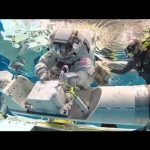
One year ISS crew at launch site on This Week @NASA
Expedition 43, the next crew headed to the International Space Station is conducting final training at the Baikonur Cosmodrome in Kazakhstan. NASA’s Scott Kelly and Gennady Padalka and Flight Engineer Mikhail Kornienko of the Russian Federal Space Agency (Roscosmos) are scheduled for launch aboard a Soyuz spacecraft on March 27 at 3:42 p.m. Eastern. Kelly and Kornienko will become the first crew to conduct a one-year research mission aboard the orbital laboratory. Expedition 44/45 news conference, Orion heat shield testing, Spacewalk training under water, Gemini 3 50th anniversary, SXSW Interactive and Total solar eclipse!
-

Dragon arrives at ISS on This Week @NASA
The SpaceX Dragon cargo spacecraft arrived at the International Space Station on Jan. 12, two days after its launch from Cape Canaveral Air Force Station in Florida. SpaceX’s fifth contracted resupply mission to the ISS includes delivery of more than two tons of supplies and experiments for the station’s crew. Also, One-year ISS mission previewed, Record global warmth in 2014, Successful RS-25 engine test and more!
-
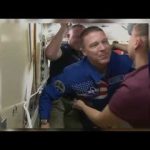
New crew launches to ISS on This Week @NASA – November 28, 2014
NASA’s Terry Virts and Expedition 42/43 crewmates, Anton Shkaplerov of the Russian Federal Space Agency and the European Space Agency’s Samantha Cristoforetti, launched Nov. 23 at 4:01 p.m. Eastern Standard Time, from Baikonur, Kazakhstan. Almost six hours later, their Soyuz spacecraft docked to the International Space Station – where they joined Expedition 42 Commander Barry Wilmore of NASA, and Flight Engineers Alexander Samokutyaev and Elena Serova of Roscosmos – returning the station crew to its full complement of six people. Also, First 3-D printed object in space, Orion flight test update, New airborne Earth Science missions and Happy Thanksgiving from space!
-

NASA is with you when you fly on This Week @NASA – November 21, 2014
NASA invited social media members Nov. 18 and 19 to the agency’s Armstrong Flight Research Center for a two-day event highlighting the ways NASA is with you when you fly. The NASA social gave participants an exclusive look at the latest tools and technologies being developed to improve the efficiency, safety and adaptability of air transportation. Also, Next ISS crew trains, 3D printer installed in space, Asteroid capture technology test, Journey to Mars media day and more!
-
Images From Comet’s Mars Flyby On This Week @NASA- October 24, 2014
Several Mars-based NASA spacecraft had prime viewing positions for comet Siding Spring’s October 19 close flyby of the Red Planet. Early images included a composite photo from NASA’s Hubble Space Telescope that combined shots of Mars, the comet, and a star background to illustrate Siding Spring’s distance from Mars at closest approach. Also, images from the Mars Reconnaissance Orbiter’s HiRISE camera, which represent the highest-resolution views ever acquired of a comet that came from the Oort Cloud, at the outer fringe of the solar system. The comet flyby – only about 87,000 miles from Mars – was much closer than any other known comet flyby of a planet. Also, Partial solar eclipse, Space station spacewalk, Preparing to release Dragon, Cygnus launch update, Welding begins on SLS, Astronaut class visits Glenn and more!
-
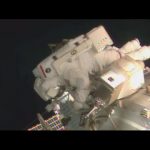
Power Spacewalk on This Week @NASA – October 17, 2014
During an October 15 spacewalk outside the International Space Station – the second U.S. spacewalk in as many weeks – Expedition 41 Flight Engineers Reid Wiseman and Barry Wilmore of NASA, replaced a failed voltage regulation device to restore the station’s electrical power output to full capacity. The pair also relocated camera and TV equipment as part of a major reconfiguration to accommodate new docking adapters for use by U.S. commercial crew spacecraft in the next few years. Also, MAVEN’s “First Light”, Hubble finds extremely distant galaxy, Possible bonus destination for New Horizons, New information about volcanic activity on our moon and more!
-

Orion’s protective backshell installed on This Week @NASA – August 25, 2014
Engineers at Kennedy Space Center have finished installing the Orion spacecraft’s backshell – the black protective tiles on the cone-shaped sides of NASA’s new deep space capsule. The backshell tiles are the same type that protected the underside of space shuttles — and will not only provide protection from debris while in space but from extreme temperatures in that area of the spacecraft as it returns from space – which could exceed 31-hundred degrees Fahrenheit. Also, SLS anti-geyser testing, Webb’s replica backplane, Arctic Sea ice loss, Ancient Earth, Alien Earths and more!
-

Apollo 11 yesterday, Next Giant Leap tomorrow on This Week @NASA
NASA is celebrating the 45th anniversary of the historic Apollo 11 mission to the moon. On July 20, 1969, Neil Armstrong and Buzz Aldrin, with crewmate Michael Collins manning the command service module from lunar orbit, became the first humans on the moon — with Armstrong’s historic first step onto the lunar surface becoming a symbolic giant leap for humanity. Today, with Apollo 11 as inspiration, NASA is taking the steps needed for America’s next giant leap, to send astronauts to Mars. The path to Mars will use a stepping stone approach consisting of key elements, including human health and technology research aboard the International Space Station; development and evolution of NASA’s Space Launch System rocket and Orion deep space capsule and development of other game-changing technologies to enable tomorrow’s missions. Also, Science instruments for Europa mission?, Cygnus cargo craft arrives at ISS, News conference with next ISS crew, 5th Anniversary of Bolden’s Confirmation, The Search for Life in the Universe.
-
The Dragon Takes Flight on This Week @NASA
SpaceX-3 launches to the International Space Station, Kepler finds a Earth-sized planet and LADEE ends its mission on the lunar surface. These stories and more on this week’s, This Week @NASA
-

Administrator Visits Aeronautics and Space Research Facilities on This Week @NASA
NASA Administrator Charlie Bolden visited aeronautics and space research facilities at Ames Research Center on March 17, including the laboratory for the volleyball-sized satellites called SPHERES, which are used onboard the International Space Station for space robotics and spacecraft navigation experiments. He also saw the high-fidelity airport control tower simulator called, “Future Flight Central”, used by NASA, the Federal Aviation Administration and other industry partners for joint research on next-generation air traffic management. Also, Rocket for Orion’s flight test highlighted, Future explorer celebrated at KSC, NASA’s new Chief Technologist, Coastal Flooding Challenge, Next space station crews , Hubble 24th anniversary image and more!
-
Mars Mission Briefed on This Week @NASA
During a news briefing at NASA headquarters officials and scientists discussed MAVEN, the agency’s next mission to Mars. Scheduled to launch November 18 from Cape Canaveral Air Force Station in Florida, MAVEN will study the history and change of Mars’ atmosphere, climate, and planetary habitability. Also, Bolden visits Langley, Power Up, Solar Flares, A busy time!, Free flight and Ice Flight!