Tredici miliardi e settecento milioni di anni fa nasceva l’Universo. Si tratta del Big Bang. Cos’è? Esisteva qualcosa prima? A quest’interrogativo si comincia a dare delle risposte grazie alla missione spaziale Planck.
Tag: universe
-
ESA Euronews: Searching for the origins
The universe was born 13.7 billion years ago with the Big Bang. But what is the Big Bang and what was there before?
Scientists are starting to get an answer thanks to the time-travelling Planck mission. -

Understanding the Universe with ESA’s next science missions
Herschel will investigate how stars and galaxies formed and how they continue to form in our own and other galaxies, meanwhile Planck will look back at the dawn of time, helping astronomers to study the birth and evolution of the Universe.
-

Space for Europe
Space touches us all on Earth – it is used for protecting our environment, for improving our everyday lives, for safety and security, and for stimulating our need for knowledge. Space is a key asset for Europe to face global challenges, for boosting our economic growth, for building our future.
-
Space: for protecting our environment
Space touches us all on Earth – it is used for protecting our environment, for improving our everyday lives, for safety and security, and for stimulating our need for knowledge. Space is a key asset for Europe to face global challenges, for boosting our economic growth, for building our future.
-

Traces of Martian life: Valles Marineris
Valles Marineris, the ‘Grand Canyon’ of Mars, a huge canyon system around 4000 km long, up to 240 km wide and 6.5 km deep, where water is believed to have flowed many thousands of years ago. The geological history of Valles Marineris still remains a mystery.
-
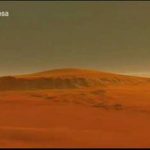
Traces of life on Mars: Olympus Mons
Olympus Mons is the highest volcano on Mars, and in our Solar System, towering 26 km above the surrounding plains.
-
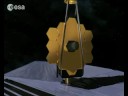
New Generation: The majestic James Webb in space
Seen here in this short movie, the JWST is the successor to the NASA/ESA Hubble Space Telescope and, with a six-metre mirror, it will be almost three times the size of Hubble.
-
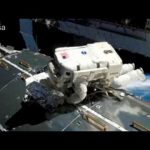
Columbus: ESA’s real estate’ in space
In February 2008, the Columbus module was launched on the Space Shuttle Atlantis, creating space history when it was attached to the International Space Station as the first European laboratory dedicated to long-term research in microgravity.
-
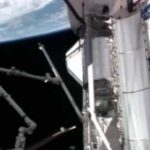
European missions to the International Space Station
Capturing the excitement of three highlights of European manned spaceflight in 2007 and 2008, these clips feature Paolo Nespoli’s STS-120 flight, the Columbus laboratory, and finally the ATV Jules Verne, Europe’s first space ferry.
-
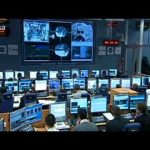
ESA’s space ferry: The Automated Transfer Vehicle
The International Space Station (ISS) depends on regular deliveries of equipment, food, air and water for its crews. Since the arrival of the first Automated Transfer Vehicle in April 2008, it has become one of the Stations indispensable supply ships.
-
ESA space music
For its Introduction video, ESA chose a piece of music called ‘The Reaktor Song’, by a German band called Eclipse Sol-Air. Complementing the images, the solo violin and piano evoke the pioneering history of European exploration, then the contemporary bass and drums capture the excitement of modern-day exploration and advanced technology.