We are Europe’s gateway to space. Our mission is to shape the development of Europe’s space capability and ensure that investment in space continues to deliver benefits to the citizens of Europe and the world. Check out https://www.esa.int/ to get up to speed on everything space related.
The world’s next generation cosmic observatory, the James Webb Space Telescope, is due for launch on an Ariane 5 from Europe’s Spaceport in French Guiana in late December.
Developed and constructed over more than 30 years, Webb is a remarkable feat of engineering and technology – with the largest astronomical mirror ever flown in space, sophisticated new scientific instruments, and a sunshield the size of a tennis court.
Webb is an international partnership between @NASA, ESA and the @Canadian Space Agency and will reveal the Universe in a whole new light. Optimised for infrared wavelengths, its detectors will be able to look back to shortly after the very dawn of time, revealing the formation of the first galaxies, as well as study stars and planets in our own Milky Way.
We are Europe’s gateway to space. Our mission is to shape the development of Europe’s space capability and ensure that investment in space continues to deliver benefits to the citizens of Europe and the world. Check out https://www.esa.int/ to get up to speed on everything space related.
Discover what NASA’s Earth data sounds like when it’s turned into music. With each passing Earth Day, the drums get louder. Every sound and instrument tell a story.
The higher the pitch of the music, the more data collected from NASA Earth science missions. The guitar represents the mission launches. The orchestra is split up based on the field of each mission:
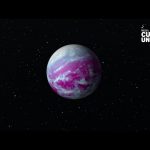
Our alien friend Paxi, ESA Education’s mascot, went to visit American astronaut Mark Vande Hei on board the International Space Station. Vande Hei shows Paxi the views outside of the Cupola, the biggest window on Earth in the International Space Station.
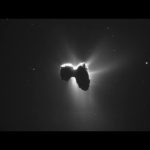
These 210 images reflect Rosetta’s ever-changing view of Comet 67P/Churyumov–Gerasimenko between July 2014 and September 2016.
The sequence begins in the month leading up to Rosetta’s arrival on 6 August, when the comet was barely a few pixels in the field of view. Suddenly, the curious shape was revealed and Rosetta raced to image its surface, coming within 10 km, to find a suitable place for Philae to land just three months later.
Philae’s landing is featured with the ‘farewell’ images taken by both spacecraft of each other shortly after separation, and by Philae as it drew closer to the surface at its first touchdown point. An image taken at the final landing site is also shown.The subsequent images, taken by Rosetta, reflect the varying distance from the comet as well as the comet’s rise and fall in activity as they orbited the Sun.
Before the comet reached its most active phase in August 2015, Rosetta was able to make some close flybys, including one in which the lighting geometry from the Sun was such that the spacecraft’s shadow could be seen on the surface.
Then, owing to the increase of dust in the local environment, Rosetta had to maintain a safer distance and carry out scientific observations from afar, but this also gave some impressive views of the comet’s global activity, including jets and outburst events.
Once the activity began to subside, Rosetta could come closer again and conduct science nearer to the nucleus, including capturing more high-resolution images of the surface, and looking out for changes after this active period.
Eventually, as the comet returned to the colder outer Solar System, so the available solar power to operate Rosetta fell. The mission concluded with Rosetta making its own dramatic descent to the surface on 30 September 2016, the final images taken reflected in the last images shown in this montage.
Credits: ESA/Rosetta/NavCam – CC BY-SA IGO 3.0; ESA/Rosetta/MPS for OSIRIS Team MPS/UPD/LAM/IAA/SSO/INTA/UPM/DASP/IDA; ESA/Rosetta/Philae/CIVA; ESA/Rosetta/Philae/ROLIS/DLR
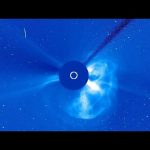
The Sun unleashed powerful solar flares on 6 September, one of which was the strongest in over a decade. An X2.2-class flare was launched at 09:10 GMT and an X9.3 flare was observed at 12:02 GMT. An M-class flare was also observed two days earlier on 4 September.
The images were captured by the ESA/NASA Solar and Heliospheric Observatory, SOHO. The flares were launched from a group of sunspots classified as active region 2673.The shaded disc at the centre of the image is a mask in SOHO’s LASCO instrument that blocks out direct sunlight to allow study of the faint details in the Sun’s corona. The white circle added within the disc shows the size and position of the visible Sun.
On May 16, NASA held a media event at Marshall Space Flight Center in Huntsville, Alabama, to highlight the recent arrival of the barge Pegasus with the first core stage test article for NASA’s Space Launch System (SLS) rocket. NASA modified Pegasus to accommodate the massive SLS core stage, increasing the barge’s length and weight-carrying capacity. The core stage test article – manufactured at the agency’s Michoud Assembly Facility, in New Orleans – is the first of four core stage test articles scheduled to be delivered to Marshall for testing. This delivery marks a critical milestone toward Exploration Mission-1 (EM-1), the first flight of SLS and NASA’s Orion spacecraft. It also brings the agency a step closer to sending humans to deep space destinations – including Mars. Also, Lightfoot Discusses Future Exploration Goals, Ochoa, Foale Inducted into Hall of Fame, and Virtual Tour of Meteorite Lab!
ESA astronaut Thomas Pesquet completed his first spacewalk 13 January 2017 together with NASA astronaut Shane Kimbrough to complete a battery upgrade to the outpost’s power system.
Thomas recorded the spacewalk for the first time with a camera in a space-proof casing that was mounted to a bracket on his chest called the mini work station. This video shows scenes from the spacewalk using this camera.
The spacewalk went as planned and, even better, Shane and Thomas performed a number of extra tasks once they had installed the batteries. They retrieved a failed camera, installed a protective cover on an unused docking port, moved handrails in preparation for future spacewalks and took pictures of external facilities for ground control.
The duo spent five hours and 58 minutes outside the International Space Station.
Thomas is spending six months on the International Space Station as part of his Proxima mission. During Proxima, Thomas will perform around 50 scientific experiments for ESA and France’s space agency CNES as well as take part in many research activities for the other Station partners. The mission is part of ESA’s vision to use Earth-orbiting spacecraft as a place to live and work for the benefit of European society while using the experience to prepare for future voyages of exploration further into the Solar System.
This animation highlights some of the many discoveries made by ESA’s Planck space telescope over its 4.5 year observing career, from new discoveries in our home Milky Way Galaxy stretching back to the first few moments after the Big Bang 13.82 billion years ago.
NASA hosts a news update about the June 26 launch of the Interface Region Imaging Spectrograph (IRIS) mission from Vandenberg Air Force Base in California.
IRIS is a NASA Small Explorer Mission to observe how solar material moves in a dynamic million-degree atmosphere that drives the solar wind around the Sun’s atmosphere. The region is the origin of most of the ultraviolet solar emission that impacts the near-Earth space environment and Earth’s climate.
This movie shows a sequence of images taken as ESA’s Rosetta spacecraft flew past the main-belt asteroid (21) Lutetia, during the spacecraft’s 10-year journey towards comet 67P/Churyumov-Gerasimenko.
The flyby took place on 10 July 2010, when Rosetta flew past the asteroid at a distance of 3168.2 km and at a relative speed of 15 km/s. The first image shown in the sequence was taken nine and a half hours before closest approach, from a distance of 500 000 km to Lutetia; the last image was taken six minutes after closest approach, at 6300 km from the asteroid.
The OSIRIS camera on board Rosetta has surveyed the part of Lutetia that was visible during the flyby – about half of its entire surface, mostly coinciding with the asteroid’s northern hemisphere. These unique, close-up images have allowed scientists to study the asteroid’s surface morphology, composition and other properties in unprecedented detail.