NASA+ is our ad-free, no cost, family-friendly streaming service, featuring NASA’s Emmy-award-winning live coverage and new, original video series: https://plus.nasa.gov
Our fall 2024 lineup includes: “The Color of Space,” “Other Worlds,” “Far Out,” “An Ocean in Bloom,” “Expanding Universe,” “Space Out,” “Planetary Defenders,” and “Our Alien Earth.”
NASA+ is available on most major platforms via the NASA App on iOS and Android mobile and tablet devices, streaming media players such as Roku, Apple TV, and Fire TV, and on the web across desktop and mobile devices.
Don’t miss the live conversation between ESA astronaut and commander of the International Space Station (ISS) Andreas Mogensen and the 2023 Nobel Prize laureates Ferenc Krausz (in physics) and Moungi Bawendi (in chemistry). The event will take place at the Nobel Prize Museum in Oslo which will be connected to the ISS. Andreas will show a Nobel Prize he brought with him to the Space Station.
★ Subscribe: http://bit.ly/ESAsubscribe and click twice on the bell button to receive our notifications.
We are Europe’s gateway to space. Our mission is to shape the development of Europe’s space capability and ensure that investment in space continues to deliver benefits to the citizens of Europe and the world. Check out https://www.esa.int/ to get up to speed on everything space related.
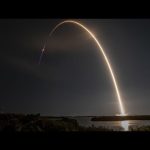
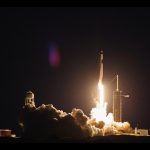
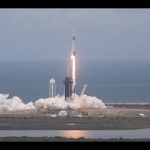
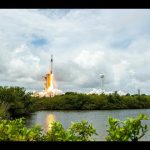
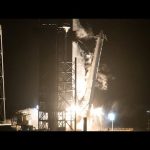
SpaceX’s 29th cargo resupply mission to the International Space Station is scheduled to lift off at 8:28 p.m. EST on Thursday, Nov. 9 (0128 UTC Nov. 10), from Launch Complex 39A at NASA’s Kennedy Space Center in Florida.
This uncrewed launch of SpaceX’s Dragon spacecraft will carry a new laser data communication investigation device, a study on the effects of spaceflight on ovulation, research on the respiratory system, an infrared instrument to measure atmospheric gravity waves, and essential supplies for our astronauts living and working aboard the orbiting laboratory.
On Oct. 14, 2023, a “ring of fire,” or annular, solar eclipse will travel from the Oregon coast to the Gulf of Mexico. Weather permitting, most of the Americas will be able to view at least a partial solar eclipse. Click here to see the NASA 2023 and 2024 Solar Eclipse Map: https://go.nasa.gov/USEclipseMaps
An annular solar eclipse occurs when the Moon passes between the Sun and the Earth, but is just far away enough in its orbit that the Sun is not completely covered—creating a large, bright ring in the sky.
Not in the path of the eclipse? Watch with us from anywhere in the world. We will provide live broadcast coverage on Oct. 14 from 11:30 a.m. to 1:15 p.m. EDT (1530-1715 UTC) on NASA TV, NASA.gov, the NASA app, and right here on YouTube: https://youtube.com/live/LlY79zjud-Q
SpaceX’s 28th cargo resupply mission to the International Space Station is now scheduled to lift off at 11:47 a.m. EDT on Monday, June 5 (1547 UTC), from Launch Complex 39A at NASA’s Kennedy Space Center in Florida.
This uncrewed launch of SpaceX’s Dragon spacecraft will carry a new set of roll-out solar panels to boost the station’s power capacity, along with medical research, student-developed technology demonstrations, and essential supplies for our astronauts living and working aboard the orbiting laboratory.
On April 19 (in the US) / April 20 (Australia), the Moon will pass between the Sun and Earth, creating a total solar eclipse visible from Australia and Southeast Asia.
Starting at 10:30 p.m. EDT Wednesday, April 19 (0230 UTC Thursday, April 20) we will share live telescope views of the eclipse. Join NASA experts to learn about this rare phenomenon, see the eclipse through a telescope, and hear about the two upcoming eclipse events in the United States. Questions? Ask them in our live chat!
Click here to find out about upcoming eclipses around the world, including the annular eclipse in North and South America on Oct. 14, 2023, and the total solar eclipse in North America on April 8, 2024: https://solarsystem.nasa.gov/eclipses/future-eclipses/
Telescope feed compiled by timeanddate/Perth Observatory
SpaceX’s 27th cargo resupply mission (CRS-27) to the International Space Station is scheduled to lift off at 8:30 p.m. EDT on Tuesday, March 14 (0030 UTC March 15), from Launch Complex 39A at NASA’s Kennedy Space Center in Florida.
CRS-27 will carry supplies, equipment for our international crew, and science, including Space Station hardware designed by high school students, and research that could help fight heart disease.
Additionally, a pair of small satellites, called CubeSats, will hitch a ride to space on the mission. The two university-built satellites, named ARKSAT-1, created by students at the University of Arkansas, and LightCube, by Arizona State University with Vega Space Systems and Mexico’s CETYS Universidad. ARKSAT-1 will illuminate an LED from orbit and use a ground spectrometer to track and perform atmospheric measurements. LightCube features a flash bulb that can be controlled remotely by amateur radio operators on Earth who will be able to activate the satellite to produce a brief flash visible from the ground.
SpaceX’s CRS-26 cargo mission is now targeted to lift off at 2:20 p.m. EST (1920 UTC) Saturday, Nov. 26 from Launch Complex 39A at NASA’s Kennedy Space Center in Florida. A Nov. 22 launch attempt was scrubbed due to poor weather conditions along Florida’s Space Coast. The Dragon spacecraft will deliver a variety of NASA investigations, including the next pair of International Space Station Roll Out Solar Arrays (iROSAs), which will augment power to the orbiting laboratory.
The spacecraft also will carry a study to grow dwarf tomatoes to help create a continuous fresh-food production system in space, as well as an experiment that tests an on-demand method to create specific quantities of key nutrients.
SpaceX’s CRS-26 cargo mission is set to lift off at 3:54 p.m. EST (2054 UTC) Tuesday, Nov. 22 from Launch Complex 39A at NASA’s Kennedy Space Center in Florida. The Dragon spacecraft will deliver a variety of NASA investigations, including the next pair of International Space Station Roll Out Solar Arrays (iROSAs), which will augment power to the orbiting laboratory.
The spacecraft also will carry a study to grow dwarf tomatoes to help create a continuous fresh-food production system in space, as well as an experiment that tests an on-demand method to create specific quantities of key nutrients.
Enjoy a meteor shower with our tips: 1. Allow your eyes to adjust to the dark. 2. Use a red flashlight to preserve night vision. 3. Wear warm clothes. 4. Lie on a deck chair or mattress. 5. Enjoy the cosmic show!
★ Subscribe: http://bit.ly/ESAsubscribe and click twice on the bell button to receive our notifications.
We are Europe’s gateway to space. Our mission is to shape the development of Europe’s space capability and ensure that investment in space continues to deliver benefits to the citizens of Europe and the world. Check out https://www.esa.int/ to get up to speed on everything space related.
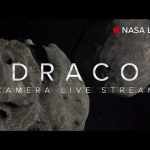
NASA’s Double Asteroid Redirection Test (DART) has one single instrument onboard – the Didymos Reconnaissance and Asteroid Camera for Optical Navigation, aka the DRACO camera. DRACO serves as the spacecraft’s eye and will guide DART to its final destination: impact with asteroid Dimorphos. The stream you’re watching is a real-time feed from the DART spacecraft enabled through the DRACO camera sending one image per second to Earth. For the DART impact broadcast with commentary, watch: https://youtu.be/4RA8Tfa6Sck
In the hours before impact, the screen will appear mostly black, with a single point of light. That point is the binary asteroid system Didymos which is made up of a larger asteroid named Didymos and a smaller asteroid that orbits around it called Dimorphos. As the 7:14 p.m. EDT (23:14 UTC) impact of asteroid Dimorphos nears closer, the point of light will get bigger and eventually detailed asteroids will be visible.
At 7:14 p.m., the DART spacecraft is slated to intentionally crash into asteroid Dimorphos. This stream will be delayed due to the time it takes the images to arrive at Earth, plus additional time for feeding the images to various platforms. For the most up-to-date DRACO camera feed, please tune into the NASA DART Impact Broadcast here: https://youtu.be/4RA8Tfa6Sck
After impact, the feed will turn black – due to a loss of signal. After about 2 minutes, this stream will turn into a replay – showing the final moments leading up to impact. That replay file will also become available on NASA websites and social media accounts.
DART is a spacecraft designed to impact an asteroid as a test of technology. DART’s target asteroid is NOT a threat to Earth. This asteroid system is a perfect testing ground to see if intentionally crashing a spacecraft into an asteroid is an effective way to change its course, should an Earth-threatening asteroid be discovered in the future.
SpaceX’s CRS-25 mission is set to lift off atop a Falcon 9 rocket from launchpad 39-A at the Kennedy Space Center in Cape Canaveral, Florida. Launch is targeted for 8:44 p.m. EDT (00:44 UTC), Friday, July 14. The Dragon spacecraft will deliver new science investigations, supplies, and equipment for the international crew, including an image spectrometer to be mounted on the exterior of the station to better understand how dust plumes affect our climate, and a study of immune aging and potential for reversing those effects. It also will carry an investigation from a team of students at Stanford University that will test the process of creating biopolymer soil composite, a concrete alternative, in microgravity. https://www.nasa.gov/mission_pages/station/research/news/spacex-25-research-highlights
Go outside with NASA and watch the total lunar eclipse! On the evening of May 15, Earth will pass between the Sun and the Moon, blocking sunlight and casting a shadow on the lunar surface. Starting at 9:32 p.m. EDT (1:32 UTC on May 16), people with clear skies in the Americas, Europe, and parts of Africa will begin to see the Moon get bathed in the red glow of every sunrise and sunset refracted through Earth’s atmosphere. Totality will occur at 12:12 a.m. EDT on May 16 (4:12 UTC).
Join NASA experts to learn about this incredible natural phenomenon, look through telescope views across the world, and hear about plans to return humans to the lunar surface with the Artemis program. Have questions? Ask them in our live chat.
The four astronauts of Crew-3 are on the way home to Earth. Watch live as they reenter the atmosphere and splash down off the coast of Florida. Splashdown is targeted for 12:37 a.m. EDT (4:37 UTC), Friday, May 6.
NASA astronauts Raja Chari, Tom Marshburn, and Kayla Barron, and ESA (European Space Agency) astronaut Matthias Maurer spent six months living and working on the International Space Station. During their stay, they contributed to experiments to benefit life on Earth: https://go.nasa.gov/3vQmSXL
We’re ready to GOES – are you? Join us to watch the launch of the National Oceanic and Atmospheric Administration’s (NOAA) next weather observing and environmental monitoring system satellite. The satellite, currently known as GOES-T, will provide critical data to improve weather forecasting and to better track storms and other hazards.
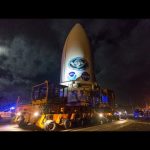
GOES-T is scheduled for liftoff at 4:38 p.m. EST (21:38 UTC) aboard a United Launch Alliance Atlas V 451 rocket to join our fleet of spacecraft monitoring Earth from space. There is a two-hour launch window. This launch is being managed by NASA’s Launch Services Program based at Kennedy Space Center. NOAA’s Geostationary Operational Environmental Satellites (GOES) constantly monitor weather across the Western Hemisphere, as well as weather in space caused by activity from our Sun.
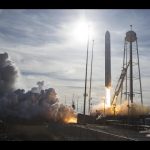
Watch Northrop Grumman’s Cygnus spacecraft lift off atop an Antares rocket from NASA’s Wallops Flight Facility in Virginia to deliver cargo to the International Space Station. The Cygnus bears the name S.S. Piers Sellers, in honor of the late NASA astronaut and climate researcher, and will transport research, crew supplies, and hardware to the orbiting laboratory. Onboard science includes:
• A study that examines the effects of a drug on breast and prostate cancer cells • A new combustion facility • An investigation on skin aging in microgravity • New hydrogen sensors that will be tested for the space station’s oxygen generation system • A system that will test hydroponic and aeroponic techniques for plant growth
Watch the 24th SpaceX cargo resupply mission to the International Space Station lift off from NASA’s Kennedy Space Center.
Launch is targeted for 5:07 a.m. (10:07 UTC). On board are a variety of scientific investigations, including a protein crystal growth study that could improve how cancer treatment drugs are delivered to patients and a handheld bioprinter that could one day be used to print tissue directly onto wounds for faster healing.
There are also experiments from students at several universities as part of the Student Payload Opportunity with Citizen Science (SPOCS) program and an investigation that examines using clothes detergent in microgravity. Dragon will arrive to the space station the following day at about 4:30 a.m. (09:30 EST).
We’re sending a new pair of X-ray eyes into the universe!
NASA’s Imaging X-ray Polarimetry Explorer (IXPE) is our first satellite dedicated to measuring the polarization of X-rays. Polarized light is made up of electric fields that vibrate in a single direction—and IXPE’s state-of-the-art X-ray vision will help scientists study the spin of black holes, the magnetic fields of pulsars, and other cosmic phenomena.
IXPE is targeted to launch at 1:00 a.m. EST, Dec. 9 (06:00 UTC), aboard a SpaceX Falcon 9 rocket from NASA’s Kennedy Space Center in Florida.
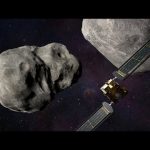
Can we change the motion of an asteroid? Our #DARTMission is set to be the first to try! The Double Asteroid Redirection Test (DART) mission is a spacecraft designed to impact an asteroid as a test of technology to see if it can change the motion of an asteroid in space. The goal of the mission is to see if intentionally crashing a spacecraft into an asteroid is an effective way to change its course, should an Earth-threatening asteroid be discovered in the future. DART’s target is the binary near-Earth asteroid Didymos and its moonlet, which pose no threat to Earth.
This mission is targeted to launch at 1:21 a.m. EST, Nov. 24 (06:21 UTC), aboard a SpaceX Falcon 9 rocket from Vandenberg Space Force Base in California.
Learn more about the mission at: www.nasa.gov/dart
On Nov. 10 at 9:03 p.m. EST (02:03 UTC Nov. 11), the Crew-3 flight will carry NASA astronauts Raja Chari, mission commander; Tom Marshburn, pilot; and Kayla Barron, mission specialist; as well as ESA (European Space Agency) astronaut Matthias Maurer, who will serve as a mission specialist, to the International Space Station for a six-month science mission. Once there, they will perform space station upgrades, conduct science experiments to benefit life on Earth, and continue preparing humanity for future missions to the Moon – and eventually Mars. This is the third crew rotation mission with four astronauts flying on a commercial spacecraft.
Join us on Tues., Aug. 10 at 5:30 p.m. EDT (21:30 UTC) for live coverage of the launch of Northrop Grumman’s Antares rocket and Cygnus cargo spacecraft. Liftoff from our Wallops Flight Facility in Virginia is scheduled at 6:01 p.m. EDT (22:01 UTC). This Cygnus is named the SS Ellison Onizuka, in honor of the first Asian American astronaut.
What’s on board the spacecraft? Over 8,200 pounds (3,720 kg) of research, technology demonstrations, and crew supplies for the astronauts living and working on the station. Experiments heading to space will demonstrate 3D printing with dust, use engineered tissue to study muscle loss, analyze growth of slime mold, and more:https://youtu.be/R-jc-dTdK5g
Starting at 1 p.m. EDT (17:00 UTC), Thurs., June 3, tune in for coverage of the 22nd SpaceX cargo resupply mission to the International Space Station. Liftoff is scheduled at 1:29 p.m. EDT (17:29 UTC) for the Falcon 9 rocket and Cargo Dragon spacecraft from Launch Complex 39A at Kennedy Space Center in Florida.
What’s on board? Science heading to the space station includes an experiment that could help develop better treatments for kidney disease on Earth, and a study of cotton root systems that could identify varieties of plants that require less water and pesticides. A study of bobtail squid will examine the effects of spaceflight on interactions between beneficial microbes and their animal hosts, while another will examine the adaptation of microscopic tardigrades (water bears) to conditions in low-Earth orbit, which could help us better understand stress factors affecting humans in space.
Dragon’s unpressurized trunk section will deliver the first two of six new roll-out solar arrays, based on a design tested on the station in 2017. A robotic arm will extract them and astronauts will install them during a series of spacewalks this summer.
Tune in live as the Crew Dragon Endeavour spacecraft docks to the International Space Station with astronauts Shane Kimbrough, Megan McArthur of NASA, Thomas Pesquet of ESA (European Space Agency), and Akihiko Hoshide of JAXA (Japan Aerospace Exploration Agency) aboard. The four astronauts will begin a six-month science mission on the station. Docking is scheduled to occur at 5:10 a.m. EDT (9:10 a.m. UTC), Saturday, April 24, followed by the hatch opening at 7:15 a.m. EDT (11:15 a.m. UTC), and a welcome ceremony at 7:45 a.m. EDT (11:45 a.m. UTC) Saturday, April 24.
At 5:49 a.m. EDT (9:49 UTC), the SpaceX Crew Dragon Endeavour spacecraft and Falcon 9 rocket will lift off from NASA’s Kennedy Space Center in Florida. Shane Kimbrough and Megan McArthur of NASA, Thomas Pesquet of the European Space Agency, and Akihiko Hoshide of the Japan Aerospace Exploration Agency will join the station’s crew, for a mission of approximately six months.
This will be the first launch through our Commercial Crew Program to fly two international partner astronauts, and the first reuse of a Crew Dragon spacecraft and Falcon 9 rocket for a crew mission.
Once aboard the station, the Crew-2 astronauts will spend a lot of time on science — in areas such as medical technology, human health, and materials to benefit life on Earth. The space station is a unique scientific platform, enabling researchers from all over the world to put their talents to work on innovative experiments. It has instruments that monitor our home planet’s global climate, environmental changes, and natural hazards.
New video from NASA’s Mars 2020 Perseverance rover chronicles major milestones during the final minutes of its entry, descent and landing (EDL) on the Red Planet on Feb. 18 as the spacecraft plummeted, parachuted, and rocketed toward the surface of Mars.
From the moment of parachute inflation, the camera system covers the entirety of the descent process, showing some of the rover’s intense ride to Mars’ Jezero Crater. The footage from high-definition cameras aboard the spacecraft starts 7 miles (11 kilometers) above the surface, showing the supersonic deployment of the most massive parachute ever sent to another world and ends with the rover’s touchdown in the crater.
Producer Credit: Sonnet Apple Music: “DMC 12″/Universal Production Music
Watch an epic journey unfold on Thursday, Feb. 18 as our Perseverance rover lands on Mars. To reach the surface of the Red Planet, the rover has to survive the harrowing final phase known as Entry, Descent, and Landing.
Only then can the rover – the biggest, heaviest, cleanest, and most sophisticated six-wheeled robot ever launched into space – search Jezero Crater for signs of ancient life and collect samples that will eventually be returned to Earth.
Tune in to a live video feed of key landing activities and commentary from Mission Control at NASA’s Jet Propulsion Laboratory.
Tune in live starting at 10:45 a.m. EST, Sun., Dec. 6 as the 21st SpaceX cargo resupply mission to the International Space Station lifts off from Launch Complex 39A at NASA’s Kennedy Space Center. Launch is targeted at 11:17 a.m. The targeted date has changed due to poor weather conditions on Sat., Dec. 5 in the recovery area. This will be the first flight of the upgraded cargo version of the Dragon 2 spacecraft. On board are over 250 science investigations, as well as the Nanoracks Bishop Airlock, set to be attached to the station’s Tranquility module. This first commercially funded space station airlock will increase the capacity for external space research at the space station.
We’re sending the Sentinel-6 Michael Freilich satellite to space to collect the most accurate data yet on global sea level and how our oceans are rising in response to climate change. This #SeeingTheSeas mission, a historic U.S.-European partnership, will launch from Vandenberg Air Force Base in California aboard a SpaceX Falcon 9 rocket at 12:17 p.m. EST (9:17 a.m. PST, 5:17 p.m. UTC).
The satellite, and its twin Sentinel-6B, is jointly developed by ESA (European Space Agency), the European Organisation for the Exploitation of Meteorological Satellites (EUMETSAT), NASA, and the National Oceanic and Atmospheric Administration (NOAA), with funding support from the European Commission and support from France’s National Centre for Space Studies (CNES). Sentinel-6 Michael Freilich is named in honor of the former director of NASA’s Earth Science Division, who was instrumental in advancing space-based ocean measurements.
Tune in live as the Crew Dragon “Resilience” spacecraft docks to the International Space Station with astronauts Michael Hopkins, Shannon Walker, and Victor Glover of NASA and Soichi Noguchi of JAXA (Japan Aerospace Exploration Agency) aboard. The four astronauts will begin a six-month science mission on the station. Docking is scheduled at 11 p.m. EST (4 a.m. UTC), Monday, Nov. 16 followed by the hatch opening at 1:10 a.m. EST (6:30 a.m. UTC), and a welcome ceremony at 1:40 a.m. EST (6:40 a.m. UTC) Tuesday, Nov. 17.
Watch as we #LaunchAmerica! Join us for live coverage of SpaceX Crew-1, the first crew rotation flight to the International Space Station by a U.S. commercial spacecraft. The crew is set to arrive at the International Space Station on Monday, Nov. 16 at 11 p.m. EST (Nov. 17 at 4 a.m. UTC). Watch continuous coverage of their entire ride, HERE: https://youtu.be/21X5lGlDOfg
The Crew Dragon ‘Resilience’ will carry astronauts Michael Hopkins, Victor Glover, and Shannon Walker of NASA and Soichi Noguchi of JAXA (Japan Aerospace Exploration Agency) to the station. Liftoff was at 7:27 p.m. EST, Sunday, Nov. 15 from Launch Complex 39A at NASA’s Kennedy Space Center in Florida.
NASA astronaut Chris Cassidy and cosmonauts Anatoly Ivanishin and Ivan Vagner of Roscosmos will return to Earth from the International Space Station on Wed., Oct. 21, 2020. Tune in for deorbit burn and landing coverage as their Soyuz spacecraft descends to a parachute-assisted landing, set for 10:55 p.m. EDT southeast of the remote town of Dzhezkazgan, Kazakhstan.
The three crew members will wrap up a 196-day mission spanning 3,136 orbits of Earth and 83 million miles. Cassidy is completing his third spaceflight for a total of 378 days in space, the fifth highest total among U.S. astronauts. Ivanishin is completing his third flight into space, totaling 476 days. This was Vagner’s first spaceflight. During their expedition, Cassidy, Ivanishin, and Vagner welcomed the arrival of NASA astronauts Robert Behnken and Douglas Hurley on NASA’s SpaceX Demo-2 mission, the first crewed flight of a commercial spacecraft and the first launch of humans from American soil to the space station since 2011.
Let’s do this, OSIRIS-REx! Time to journey #ToBennuAndBack. Tune in to our live broadcast as our spacecraft descends to the surface of asteroid Bennu, touches down for a few seconds & attempts to capture regolith (rocks and dust) using a “Touch-And-Go,” or TAG, maneuver. The spacecraft must target Bennu’s rocky surface with great accuracy, touching down within a rocky area just 52 ft (16 m) in diameter. During the maneuver, the spacecraft and the asteroid will be approximately 207 million miles (334 million km) from Earth.
Live coverage from Lockheed Martin’s facility in Denver, Colorado, with mission managers from the University of Arizona, Lockheed Martin, and NASA’s Goddard Space Flight Center begins at 5 p.m. EDT.
The spacecraft is scheduled to depart Bennu in 2021, and to deliver the collected sample to Earth on Sep. 24, 2023. It will be the first U.S. mission to carry samples from an asteroid back to Earth, and the largest sample returned from space since the Apollo era.
Tune in LIVE as three space travelers launch to the International Space Station on Wednesday, Oct. 14, at 1:45 a.m. EDT.
Astronaut Kate Rubins of NASA, and Sergey Ryzhikov and Sergey Kud-Sverchkov of the Russian space agency Roscosmos will lift off aboard the Soyuz MS-17 spacecraft for a two-orbit, three-hour journey to dock to the orbiting laboratory. Live coverage of the launch begins at 12:45 a.m. EDT.
This is the second trip to space for both Rubins and Ryzhikov, and the first for Kud-Sverchkov. During their six-month mission, they will welcome SpaceX Crew-1 astronauts Mike Hopkins, Victor Glover and Shannon Walker of NASA, and Soichi Noguchi of JAXA (Japan Aerospace Exploration Agency).
Was there once life on Mars? Our Perseverance rover aims to find out! On Thursday, July 30, watch our new robotic astrobiologist launch on a seven-month journey to the Red Planet. Launching on board will be the most sophisticated set of tools ever sent to Mars, with the hope Perseverance will uncover the planet’s secrets.
Tune in to our live launch broadcast starting at 7 a.m. EDT. Teams are targeting 7:50 a.m. EDT for liftoff of Perseverance atop United Launch Alliance’s Atlas V rocket from Kennedy Space Center in Florida. Don’t forget to set a reminder to join us in the #CountdownToMars – you won’t want to miss this historic mission take flight!
On the latest Watch This Space, NASA administrator Jim Bridenstine looks back at 15 years of discoveries by our Opportunity rover on Mars, and forward to new commercial partnerships for missions to the Moon. Learn how we’ll work with American companies to design and develop human lunar landers and reusable systems so we can return to the Moon — to stay.
This video is available for download from NASA’s Image and Video Library: https://images.nasa.gov/details-NHQ_2019_0221_Watch%20This%20Space%20with%20NASA%20Administrator%20Jim%20Bridenstine%20with%20the%20latest%20from%20the%20Moon%20and%20Mars.html
Watch as atoms of gold particles move under elevated temperatures in a TEM using a Protochips Aduro holder. Near the end 2 gold particles actually merge to form 1.