As recently reported by Copernicus ECMWF in its European State of the Climate Report, Europe experienced several climate extremes like glacier ice loss, severe floods, wildfires, and heatwaves. But the continent didn’t experience the same weather uniformly: data show a distinct east‑west contrast during 2024, with eastern areas generally sunny and warm while western areas were cloudier and wetter.
📹 European Space Agency (ESA) 📸 Contains modified CopernicusEU Sentinel data (2022 & 2024), processed by ESA CC BY-SA 3.0 IGO 📊 C3S/Copernicus ECMWF/KNMI
ESA’s newly graduated astronauts reach the end of one year of rigorous basic astronaut training. Discover the journey of Sophie Adenot, Rosemary Coogan, Pablo Álvarez Fernández, Raphaël Liégeois, Marco Sieber, and Australian Space Agency astronaut candidate Katherine Bennell-Pegg. Selected in November 2022, the group began their training in April 2023.
Basic astronaut training provides the candidates with an overall familiarisation and training in various areas, such as spacecraft systems, spacewalks, flight engineering, robotics and life support systems as well as survival and medical training. They received astronaut certification at ESA’s European Astronaut Centre on 22 April 2024.
Following certification, the new astronauts will move on to the next phases of pre-assignment and mission-specific training – paving the way for future missions to the International Space Station and beyond.
Credits: Video: ESA – European Space Agency ISS and EVA footage: ESA/NASA
Music: Scorekeepers
★ Subscribe: http://bit.ly/ESAsubscribe and click twice on the bell button to receive our notifications.
We are Europe’s gateway to space. Our mission is to shape the development of Europe’s space capability and ensure that investment in space continues to deliver benefits to the citizens of Europe and the world. Check out https://www.esa.int/ to get up to speed on everything space related.
As 2024 kicks into gear, we invite you to look ahead with ESA and see what awaits us in the coming 12 months.
After Ariane 5’s retirement in 2023, Europe’s new and versatile heavy-duty launcher Ariane 6 will continue the Ariane legacy of excellence and reliability. After years of development and construction, Ariane 6 will be ready for its first flight from Europe’s Spaceport in Kourou.
In 2024, we’ll see a return-to-flight for Vega-C. Vega-C will continue to provide Europe with its own affordable lightweight launcher. Together both projects guarantee Europe’s independent access to space.
We also continue to collaborate internationally with NASA on the Artemis lunar programme. This Spring, another European Service Module, ESM-3, for the third Artemis mission will be shipped to the United States for mating with its Orion capsule.
In 2024, Proba-3 will be launched, the first precision formation-flying mission. The Coronagraph and Occulter spacecraft will fly together forming a 144 m coronagraph studying the Sun’s corona closer to the solar rim than ever before.
At the beginning of the year, the first scientific data gathered by our latest space telescope, Euclid, will be revealed. Euclid was designed to explore the composition and evolution of dark matter and dark energy.
Another exciting mission that will launch later in 2024 is the Hera mission. This mission will fly to the binary asteroid system of Dimorphos and Didymos to observe the aftermath of the impact made by NASA’s Dart mission.
In Earth observation, there are several satellites ready to be launched: the ESA/JAXA mission EarthCARE mission, the Arctic Weather Satellite mission and the European Union’s Copernicus Sentinel-1C and Sentinel-2C satellites.
2024 will bring new developments as well for Galileo: two more first-generation satellites are to be launched in April, followed by two more later in the year. These will expand the constellation and help guarantee Galileo’s optimal performance. Meanwhile, the first hardware deliveries will take place for the second-generation Galileo satellites.
The five career astronauts from the 2022 astronaut class will finish their basic training this year and then be ready for mission assignments.
For Swedish project astronaut Marcus Wandt, there is no such wait. In January, he will be launched to the Space Station as a mission specialist on the Axiom-3 commercial mission – just time to catch up in space with his Danish colleague, ESA astronaut Andreas Mogensen, who is scheduled to return to Earth after a six-month stay on the Space Station in February.
Credits: ESA – European Space Agency
★ Subscribe: http://bit.ly/ESAsubscribe and click twice on the bell button to receive our notifications.
We are Europe’s gateway to space. Our mission is to shape the development of Europe’s space capability and ensure that investment in space continues to deliver benefits to the citizens of Europe and the world. Check out https://www.esa.int/ to get up to speed on everything space related.
2023’s highlight was the highly anticipated launch of Juice, Europe’s Jupiter Icy Moon Explorer. The Juice spacecraft was placed on course to Jupiter on the second-to-last Ariane 5 launch vehicle in April. After an eight-year journey, Juice will begin observing the giant gas planet and its three large ocean-bearing moons – Ganymede, Calisto and Europa.
The Euclid space telescope was launched in July with the aim of unravelling the enigmas of ‘dark matter’ and ‘dark energy’. Euclid’s first images were released in November, revealing razor-sharp astronomical images with detail never before seen by a telescope across such a large patch of the sky.
After almost five years in space, ESA’s Aeolus wind mission was retired. This trailblazing mission was tasked with observing wind patterns from space thereby improving weather forecasts and climate models.. Aeolus data and technology will have an important role to play in the accuracy of future weather forecasting. On 28 July, it burned up in an assisted re-entry – the first assisted re-entry by a mission which was not designed to do so.
As space debris becomes an increasingly serious issue, ESA is determined to search for solutions. Together with its commercial and institutional partners, ESA has developed the ‘Zero Debris Charter’, launched this year. By signing the Charter, space entities worldwide can register their intent to work together towards the sustainable use of Earth’s orbital environment.
Earlier in in 2023, MTG-I1, the first of the Meteosat Third Generation missions, sent back its first images. The satellite was launched in 2022 and carries two instruments: a flexible combined imager and a lighting imager. Both instruments performed beyond expectation and a stunning combined image from both was revealed.
Earth observation is key to keeping our planet and the population as a whole, safe. Today, monitoring earthquakes, forest fires or flooding from space already helps to coordinate rescue response but the data can also be used to better understand phenomena such as climate change and support the IPCC climate reports.
Last year, NASA’s Dart mission impacted on a small moonlet of the asteroid Didymos, changing its course. We’ll soon be launching ESA’s Hera spacecraft to collect data on the aftermath of this collision. The Hera spacecraft was integrated and underwent testing this year in ESA ESTEC’s test centre in the Netherlands.
2023 also saw the first hardware tests for the second generation of Galileo satellites but even more importantly the Galileo High Accuracy Service was launched in January. This new service delivers centimetre accuracy from space further cementing Galileo’s reputation as the most accurate satellite navigation system in the world.
★ Subscribe: http://bit.ly/ESAsubscribe and click twice on the bell button to receive our notifications.
We are Europe’s gateway to space. Our mission is to shape the development of Europe’s space capability and ensure that investment in space continues to deliver benefits to the citizens of Europe and the world. Check out https://www.esa.int/ to get up to speed on everything space related.
In October 2023, NASA is launching the Heliophysics Big Year – a global celebration of solar science and the Sun’s influence on Earth, our solar system, and beyond.
Modeled after the “Big Year” concept from citizen scientists in the bird-watching community, the Heliophysics Big Year challenges everyone to get involved with fun Sun-related activities.
Credits: Music: “Rise Now Our Hero” by Dan Thiessen [BMI] via Universal Production Music Video credit: NASA’s Goddard Space Flight Center Beth Anthony (KBRwyle): Producer
This video can be freely shared and downloaded at https://svs.gsfc.nasa.gov/14428. While the video in its entirety can be shared without permission, the music and some individual imagery may have been obtained through permission and may not be excised or remixed in other products. Specific details on such imagery may be found here: https://svs.gsfc.nasa.gov/14428.
2409 new objects were launched into space in 2022, that’s more than ever before.
Last year though, also saw a record number of satellites reenter Earth’s atmosphere.
The rising number of reentries is not necessarily a bad thing. Disposing of satellites efficiently is one of the most important things for keeping low-Earth orbits safe.
However, most objects reenter in an uncontrolled manner: they are switched off at the end of their mission and left to fall and burn up in Earth’s atmosphere.
There is good news though. Advancing technology has seen a recent increase in “controlled reentries” for rocket bodies. A controlled reentry allows operators to remove their hardware from protected regions more quickly and with greater control over where, when and how it reenters – and even lands – at the cost of allocating some fuel to do so.
By the way, just because an older satellite wasn’t designed to be controlled during its descent doesn’t mean it’s impossible to do so. In July 2023, our teams guided the Aeolus satellite to burn up over uninhabited regions in the Atlantic and Antarctica, even though the satellite was designed in the late 1990s with no intention to control it in this way.
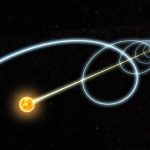
As Mars orbits around our Sun, time on the Red Planet is measured in years. However, there are some significant differences between a year on Mars and a year on Earth. Let’s look at some similarities and differences between a year on the two planets.
We are Europe’s gateway to space. Our mission is to shape the development of Europe’s space capability and ensure that investment in space continues to deliver benefits to the citizens of Europe and the world. Check out https://www.esa.int/ to get up to speed on everything space related.
With a budget increase of more than 6% from the previous year, NASA will continue to boost its ingenuity in exploration, technology, aeronautics and science. This is a year of innovation.
This budget increases our ability to better understand Earth as a system –allowing us to tackle climate change in new ways. We will develop more climate-friendly aviation systems, like the X-57 Maxwell, and launch the James Webb Space Telescope that will enable groundbreaking research. Including a diverse and more inclusive workforce, we will continue pushing the boundaries of human exploration with Artemis, with goals of landing the first woman and the first person of color on the Moon, as well as fostering our international and commercial partnerships that help to make it all possible.
We look forward to continuing our legacy of inspiring the nation and the next generation of scientists, engineers and explorers, who will help us accomplish the ambitious goals that we’ve set out for NASA.
Producer/Editor: Lacey Young Music: Universal Production Music
2020 was historic for NASA. We launched humans to the International Space Station from America again, made progress on our plans to return humans to the Moon and explore Mars, had an unprecedented encounter with an asteroid, and displayed perseverance and resilience in space and on Earth … all, while helping the country deal with a global crisis. Here’s a look back at highlights from those and other things we did this year at NASA.
Our Artemis program will return U.S. astronauts to the surface of the Moon, a goal announced by Vice President Mike Pence on March 26, 2019. Take a look at all we’ve accomplished since then, from testing our Orion spacecraft and building our Space Launch System rocket to graduating a new Artemis Generation class of astronauts and creating partnerships with private industry.
This year, NASA is building momentum across the agency and across every mission. This is a year of action. With each milestone, NASA is preparing to go farther than ever before.
NASA is going to the Moon and on to Mars, in a measured, sustainable way. Working with U.S. companies and international partners, NASA will push the boundaries of human exploration forward to the Moon. NASA is working to establish a permanent human presence on the Moon within the next decade to uncover new scientific discoveries and lay the foundation for private companies to build a lunar economy. We inspire generations and change the course of history as we realize the next great scientific, economic and technical achievements in space.
The plan to put humans on the Moon by 2024, wrapping up a series of spacewalks on the space station, and an historic first look at a black hole … a few of the stories to tell you about – This Week at NASA!
This video is available for download from NASA’s Image and Video Library: https://images.nasa.gov/details-NHQ_2019_0412_Our%20Five-Year%20Plan%20to%20Return%20Humans%20to%20the%20Moon%20on%20This%20Week%20@NASA%20%E2%80%93%20April%2012,%202019.html
Statement by Anya Daneez Khan, age 10, on the occasion of the International Day of Women and Girls in Science (11 February).
———
February 11th marks the International Day of Women and Girls in Science. The theme for 2019 is “Investment in Women and Girls for Inclusive Green Growth,” and a two-day event began today (11 Feb) at UN Headquarters in New York, bringing together global experts and leaders to evaluate the economic and social impact of women’s participation in science-based sustainable development programmes.
The event featured a high-level panel focusing on the public-sector financing of science for green growth, investment to attract and retain high calibre women in science, and financing to ensure gender equality in science.
Anya Daneez Khan, a girl in the field of science, said “The reason we celebrate this Day is to make sure it becomes not a story about exceptional women but a norm that girls belong and succeed in science and technology.”
The United Nations General Assembly in 2015 declared 11 February as the International Day of Women and Girls in Science in order to achieve full and equal access to and participation in science for women and girls, and further achieve their empowerment as well as gender equality.
2017: A year of groundbreaking discoveries and record-setting exploration at NASA. The Moon became a focal point for the agency, we brought you unique coverage of the first coast-to-coast total solar eclipse in the U.S. in 99 years, we announced the most Earth-size planets ever found in the habitable zone of a star outside our solar system, and more!
Hear from Head of School: Engineering, Associate Professor Brenton Dansie and final year University of South Australia Engineering students as they showcase their student projects.
For more from University of South Australia visit:
2015 was an incredible year for aeronautics research, human exploration, earth science, space science, and technology. We can’t wait to show you what we have in store for 2016.
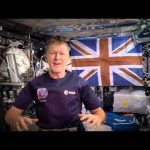
ESA astronaut Tim Peake wishes Earth a happy new year from the International Space Station.
Tim is spending six months in space to maintain the Space Station and run experiments for scientists on Earth. His Principia mission will see him perform over 30 experiments for European scientists alone.
Follow Tim and his mission via timpeake.esa.int.
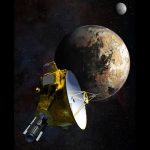
New Horizons is the first mission to the Kuiper Belt, a gigantic zone of icy bodies and mysterious small objects orbiting beyond Neptune. This region also is known as the “third” zone of our solar system, beyond the inner rocky planets and outer gas giants. Johns Hopkins University Applied Physics Laboratory (APL) in Maryland, designed, built and operates the New Horizons spacecraft, and manages the mission for NASA’s Science Mission Directorate in Washington. The Year of Pluto – NASA New Horizons is a one hour documentary which takes on the hard science and gives us answers to how the mission came about and why it matters. Interviews with Dr. James Green, John Spencer, Fran Bagenal, Mark Showalter and others share how New Horizons will answer many questions. New Horizons is part of the New Frontiers Program, managed by NASA’s Marshall Space Flight Center in Huntsville, Alabama.
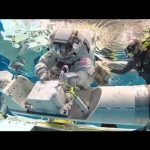
Expedition 43, the next crew headed to the International Space Station is conducting final training at the Baikonur Cosmodrome in Kazakhstan. NASA’s Scott Kelly and Gennady Padalka and Flight Engineer Mikhail Kornienko of the Russian Federal Space Agency (Roscosmos) are scheduled for launch aboard a Soyuz spacecraft on March 27 at 3:42 p.m. Eastern. Kelly and Kornienko will become the first crew to conduct a one-year research mission aboard the orbital laboratory. Expedition 44/45 news conference, Orion heat shield testing, Spacewalk training under water, Gemini 3 50th anniversary, SXSW Interactive and Total solar eclipse!
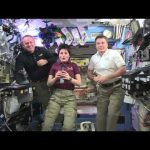
New Year greeting from ESA astronaut Samantha Cristoforetti and her crewmates, NASA astronauts Barry Wilmore and Terry Virts, who are currently living and working on board the International Space Station as part of the Expedition 42 crew.
In this edition of Space we look back at the past 50 years of space in Europe; five decades of discovery, drama and innovation that have had a profound impact on how we see ourselves and our planet. Historian John Krige gives his insight on how Europe’s space sector has evolved, while veteran space scientists recount their experiences in major missions and launches.
At 12 years old, Rohan Agrawal knows more than most PhD students in robotics about programming robots. This summer he’s interning at Ologic, a research and development firm that has designed robots for the likes of Google, Disney, and Hasbro. He’s been programming since he was 4 years old, and we were curious about how he got started.
We quickly learned that his story was not just one about a child prodigy programmer but more about how to find and cultivate your child’s inner genius. The formula is straightforward but requires patience and careful observation. Expose your children to a wide range of possible interests, see which they gravitate to, and open the doors for them. Children will spend endless hours doing the things they love to do.
At Play-i, we’re developing a fun and accessible way for children to learn computer science at a young age. We’re inspiring creation by cultivating a love for learning. To learn more, sign up at http://play-i.com.
—————————————-————————————–
About the series:
We are sharing stories of how young people doing great things got to where they are. It starts with a spark of curiosity. Every child is different and every story is different, and we’re hoping to show how to help your little ones live up to their full potential.
So what can a planetary rover do with a year on Mars? All NASA’s Curiosity rover did was beam back over 190 gigabits of data, more than 36-thousand images and zap 75-thousand-plus laser shots at science targets … and oh by the way, it also completed the mission’s main science goal by finding evidence that life was possible on Mars in the past. The agency celebrated the one year anniversary of Curiosity’s landing on Mars with live events from the Jet Propulsion Laboratory — featuring rover team members. And at NASA Headquarters — a discussion about how Curiosity and other robotic projects are benefitting future human space exploration. Also, Maven Arrives, Garver Leaving NASA, Great Ball of Fire, Supply Ship Arrives Safely, Carbon Copy, The First Barrel Segment and more!
From understanding our Earth, to new clues about possible life elsewhere. From fostering life-changing research in space, to sharing our vision of the future with those destined to journey there. From the end of one monumental mission, to the beginning of a new era in the human exploration of our solar system. “This Year @NASA” looks back at the stories that made 2011 — and help frame our path ahead.
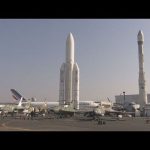
Ariane 5, the European space industry’s workhorse, continues to successfully carry payloads into orbit. Two new launchers will soon complement Ariane 5, offering a full range of competitive services to Europe. 2011 will be the year of the launchers.