This video summarises advice given by ESA astronauts during the ESA Astronaut Careers Fair on 22 April 2021. Samantha Cristoforetti, Thomas Reiter and André Kuipers have all flown in space as ESA astronauts and offer their perspectives on the selection process and the work and life of an astronaut.
See the astronaut vacancy notice and other opportunities to work at ESA at https://jobs.esa.int
★ Subscribe: http://bit.ly/ESAsubscribe and click twice on the bell button to receive our notifications.
We are Europe’s gateway to space. Our mission is to shape the development of Europe’s space capability and ensure that investment in space continues to deliver benefits to the citizens of Europe and the world. Check out https://www.esa.int/ to get up to speed on everything space related.
Did you know that in microgravity we are preparing one of the most promising fuels for the future?
Microgravity is helping to find answers and models to refine the processes needed to efficiently burn solid fuel like iron dust. Are we witnessing the rise of a new “Iron Age”? Could we use metal powders instead of petrol to fuel our cars?
Solid fuels are used for burning a match, lighting a sparkler on New Year’s Eve as well as the fuel inside the boosters of Ariane and of other rockets. But metals such as iron can also burn, in powder form, and are entirely smokeless and carbon free.
Metals could be produced using clean energy, such as from solar cells or wind turbines. That electricity is stored as chemical energy in the metal powder at energy densities that are competitive with fossil fuels. This has the potential to reduce greenhouse gasses emission globally, but a barrier to implementing this technology is the development of combustion systems that can efficiently burn the metal fuels, which requires a solid understanding of their combustion physics.
To understand the physics of metal fuel combustion, a cluster of iron powder needs to be suspended for about 30 seconds, the time needed to observe and study how a flame propagates. Researchers used sounding rockets and parabolic flights to run experiments in weightlessness and to validate existing models, yielding promising results.
The density of iron particles and the composition of gases in the combustion chamber are essential parameters, like in a petrol car engine. Microgravity allows for the study of the laws of flame propagation, to optimise parameters in industrial burner designs, and reduce impact on the environment.
These space experiments also help us understand similar phenomena, such as the spreading of contagious microbes and forest fires.
In a vote of confidence for the technique a student team at TU Eindhoven in The Netherlands worked with industrial partners to design a metal combustion facility now installed at Swinkels Family Brewers, subsidised by the Dutch province of Noord-Brabant, used to produce steam for the brewing process.
The step to space research is closer than you might think. Get involved with spaceflight research via https://www.esa.int/spaceflightAO. Find out about our commercial partnerships and opportunities in human and robotic exploration via https://www.esa.int/explorationpartners to run your research in microgravity as well.
★ Subscribe: http://bit.ly/ESAsubscribe and click twice on the bell button to receive our notifications.
We are Europe’s gateway to space. Our mission is to shape the development of Europe’s space capability and ensure that investment in space continues to deliver benefits to the citizens of Europe and the world. Check out https://www.esa.int/ to get up to speed on everything space related.
Want to know more about our solar system but don’t know where to start? We’ve got you covered. Our What You Need to Know series takes you on a tour across the solar system, exploring some of the most intriguing features about our tiny slice of the Milky Way galaxy.
From moons that hide vast liquid oceans to asteroids that hold the secrets of our universe to worlds that could be friendly to life, tune in to find out What You Need to Know.
No matter who you are or where you are, YOU can participate in the science done at NASA and make new discoveries alongside NASA scientists. Watch #NASAScience Live on Wednesday, Dec. 16 at 3:00 p.m. EST to hear from people around the globe about how they’re doing NASA science and learn how you too can get involved with NASA’s citizen science projects.
You’ve heard of asteroids… But have you heard of Trojan asteroids?
Our upcoming Lucy mission will study these time capsules from the birth of our solar system for the first time ever. Find out what you need to know about Trojan Asteroids.
For more information about Lucy, check out this episode of NASA Science Live: Lucy in the Sky with Asteroids: https://youtu.be/180pFU_h5Eg
Earth is not the only place in the solar system with rain, rivers, lakes and seas. Saturn’s moon Titan has them, too — not of water, but of liquid methane and ethane. This Earth-like world even hides an ocean of liquid water deep beneath its surface! Find out what you need to know about Titan.
Here at ESA, the European Space Agency, space is our business. It’s a place we explore, heading outwards while also looking back, to improve life on our own blue planet. Why go out there? Because space is useful and valuable; because it’s the place we all live. That’s why ESA does what we do: because Earth is only the start. Here’s what you need to know about the stuff that surrounds us.
★ Subscribe: http://bit.ly/ESAsubscribe and click twice on the bell button to receive our notifications.
We are Europe’s gateway to space. Our mission is to shape the development of Europe’s space capability and ensure that investment in space continues to deliver benefits to the citizens of Europe and the world. Check out http://www.esa.int/ESA to get up to speed on everything space related.
Beneath its icy surface, Saturn’s icy moon Enceladus has many surprises: a reservoir of liquid water, organic chemical compounds, and hydrothermal vents. Find out what you need to know about Enceladus, an ocean world which may have conditions friendly to life.
Our planet is a beautiful water-filled world, teeming with life. But did you know that Earth is not the only world in our solar system with an ocean? Here’s what you need to know about Ocean Worlds.
How will Perseverance help with future human exploration? And how will the Mars Ingenuity Helicopter work?
NASA’s Mars 2020 Perseverance rover is creating a lot of excitement. The new rover will look for signs of past microbial life, cache rock and soil samples, and prepare for future human exploration.
As part of the assembly, test, and launch operations team, NASA engineer Michelle Colizzi explains the Perseverance rover’s mission. She details how the drill will collect core samples and outlines plans to test a new technology to produce oxygen from the Martian atmosphere.
For more information about the mission, go to: mars.nasa.gov/mars2020/ Send your questions to our experts using: #AskNASA For more information about Artemis: https://www.nasa.gov/what-is-artemis
The search for ancient life. Planetary evolution. Preparing for future human exploration. There are so many reasons to study the Red Planet. If you’re craving more, here’s what you need to know about Mars!
Have burning questions about asteroids? Our experts have answers!
(Spoiler Alert: none of them will hit Earth.)
Our solar system is littered with asteroids and comets and sometimes they get a little close to Earth. When an asteroid or comet looks like it could come near our home planet, we keep close watch to warn of any potential impacts.
It’s not just Mission Control that’s counting down — how are you preparing to #LaunchAmerica? From building your own rocket to binge-watching launch overage, share a video, a photo or simply your thoughts for a chance to be featured on our social media platforms, as we prepare for the return of human spaceflight to U.S. soil.
To explore the unknown. To be part of a team. A love of science, math, engineering and technology.
We asked our newest graduates why they wanted to #BeAnAstronaut. It turns out, there isn’t just one reason. What will be yours? Applications are open until March 31, 2020: https://www.nasa.gov/astronauts
NASA is hiring more new Artemis generation astronauts. Will you be next?
NASA’s latest astronaut class shares their journey.
To join them, astronaut candidates must have earned a master’s degree from an accredited institution in engineering, biological science, physical science, computer science or mathematics. The requirement for the master’s degree can also be met by:
• Two years (36 semester hours or 54 quarter hours) of work toward a Ph.D.
program in a related science, technology, engineering or math field;
• A completed doctor of medicine or doctor of osteopathic medicine degree;
• Completion (or current enrollment that will result in completion by June 2021) of a
nationally recognized test pilot school program.
Candidates also must have at least two years of related, progressively responsible professional experience, or at least 1,000 hours of pilot-in-command time in jet aircraft. Astronaut candidates must pass the NASA long-duration spaceflight physical.
Apply to be an astronaut by 31.
For more information about a career as a NASA astronaut, and application requirements, visit: http://www.nasa.gov/astronauts
Launching Americans from U.S. soil, sending a new rover to Mars and continuing to prepare for human missions to the Moon are just a few of the things NASA has planned for 2020.
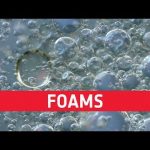
Foams are ubiquitous in our daily lives: they are used to produce food, detergents and plastics. Foams are inherently unstable in gravity, because the liquid between the bubbles is pulled downwards bursting the bubbles in the process. Experiments on the International Space Station have shown that foams are more stable in microgravity because they remain wet. It has even been possible to make foams from pure water.
Foam research in microgravity allows researchers to better understand the processes and calculate models in the most optimal conditions. This is leading to better production and assembly of products containing foams as well as more effective foam-suppression agents.
Many industrial applications benefit from foam research and development in space: cleaning products, cosmetics, fire-fighting and medicines are just some examples. The quality, texture, taste and shelf-life of food and beverages can be enhanced – from the supermarket to the consumers’ fridge.
“It is a game change for our business” says Cécile Gehin-Delval, from Nestlé Research Laboratories in Orbe, Switzerland.
The step to space research is closer than you might think. Get involved with spaceflight research via www.esa.int/spaceflightAO. Find out about our commercial partnerships and opportunities in human and robotic exploration via www.esa.int/explorationpartners to run your research in microgravity as well.
★ Subscribe: http://bit.ly/ESAsubscribe and click twice on the bell button to receive our notifications.
We are Europe’s gateway to space. Our mission is to shape the development of Europe’s space capability and ensure that investment in space continues to deliver benefits to the citizens of Europe and the world. Check out http://www.esa.int/ESA to get up to speed on everything space related.
How do you build a spaceship? It’s not easy – because space is hard. It’s endless vacuum, hot and cold at the same time, streaked with radiation – and you have to fly at eight kilometres per second just to get there. It takes clever engineering – and costly research and development – to operate in orbit. Space is risky, but past payoffs have been vast. Our track record lets us manage that risk, balancing it with chances for rich rewards.
We are Europe’s space agency, enabling its 22 Member States to achieve results that no individual nation can match. we combines space mission development with supporting labs, test and operational facilities plus in-house experts covering every aspect of space, supported through the our Basic Activities.
For our Space19+ set for the end of this year, we are asking Europe’s space ministers for a substantial investment for Basic Activities, to modernise infrastructure and speed up R&D cycles, helping to support a new generation of space missions as efficiently as possible.
★ Subscribe: http://bit.ly/ESAsubscribe and click twice on the bell button to receive our notifications.
ESA is Europe’s gateway to space. Our mission is to shape the development of Europe’s space capability and ensure that investment in space continues to deliver benefits to the citizens of Europe and the world. Check out http://www.esa.int/ESA to get up to speed on everything space related.
A simple and clear explanation of all the important features of quantum physics that you need to know. Check out this video’s sponsor https://brilliant.org/dos
I have spent a lot of time thinking about how best to explain quantum physics and this is the result of all my hours of pondering, and I’m really happy with how it turned out. I decided to just explain it as it actually is, rather than rely on analogies. The video explains the quantum wavefunction, particle-wave duality, the measurement problem, the double-slit experiment, superposition, entanglement, quantum tunnelling, the Heisenberg uncertainty principle, and energy quantisation. Let me know if it was helpful! Cheers Dx
Thanks so much to my supporters on Patreon. If you enjoy my videos and would like to help me make more this is the best way and I appreciate it very much. https://www.patreon.com/domainofscience
Further reading
For a more detailed introduction to quantum physics: ‘The Quantum Universe’ by Brian Cox and Jeff Forshaw is good.
And a slightly more advanced but fantastic description of what we do and don’t know about quantum physics is the excellent book ‘Beyond Weird’ by Philip Ball.
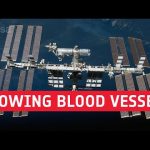
By cultivating human endothelial cells in space, researchers are gaining knowledge about the way our blood vessels function. This could help prevent and treat diseases such as atherosclerosis, hypertension, diabetes and thrombosis here on Earth, while keeping astronauts healthy in space.
In this video, biochemist and molecular biologist Dr Markus Wehland discusses the Spheroids experiment, which ran on the International Space Station during ESA astronaut Tim Peake’s Principia mission in 2016.
Cells cultivated in microgravity during this experiment assembled into globular and tubular structures. These structures were similar to the inner lining of blood vessels inside our bodies, but had never been achieved before by scientists cultivating cells on Earth.
Knowledge about cell growth and structure gained through this study could aid the development of tissue engineering techniques to replace damaged blood vessels in patients. It could also improve the efficiency and safety of drugs that help regulate vessel development.
It is good news for those affected by cardiovascular disease and a great example of the way in which research in microgravity is enhancing life on Earth.
The step to space research is closer than you might think. Get involved with spaceflight research via www.esa.int/spaceflightAO. Find out about our commercial partnerships and opportunities in human and robotic exploration via www.esa.int/explorationpartners to run your research in microgravity as well.
★ Subscribe: http://bit.ly/ESAsubscribe and click twice on the bell button to receive our notifications.
ESA is Europe’s gateway to space. Our mission is to shape the development of Europe’s space capability and ensure that investment in space continues to deliver benefits to the citizens of Europe and the world. Check out http://www.esa.int/ESA to get up to speed on everything space related.
At the Vehicle Assembly Building at Kennedy Space Center, technicians practice and prepare to stack NASA’s Space Launch System rocket. The SLS fueled-up core stage weighs around 2.3 million pounds and measures 212 feet long.
What would the outcome be if you took a leap of faith straight into a black hole? We looked to Einstein and Hawking to ponder the scenario.
Say one day you were exploring space looking for a new planet for humans to inhabit, but came across a black hole and decided – why not check it out? Would you have any chance of survival? How would you get out if at all? Would you find a shortcut to another universe? Watch the video to learn about what would happen if you fell into a black hole.
About What If: Produced by Underknown in Toronto, Canada, What If is a mini-documentary web series that takes you on an epic journey through hypothetical worlds and possibilities. Join us on an imaginary adventure — grounded in scientific theory — through time, space and chance, as we ask what if some of the most fundamental aspects of our existence were different.
A hostile artificial intelligence called NIM has taken over the world’s computers. You’re the only person skilled enough to shut it down, and you’ll only have one chance. Can you survive and shut off the artificial intelligence? Dan Finkel shows how.
Lesson by Dan Finkel, directed by Artrake Studio.
Thank you so much to our patrons for your support! Without you this video would not be possible! Jordan Tang, Christopher Jimenez, Juan, Tracey Tobkin, Sid, emily lam, Kathryn J Hammond, Elliot Poulin, Noel Situ, Oyuntsengel Tseyen-Oidov, Latora Slydell, Sydney Evans, Victor E Karhel, Bernardo Paulo, Eysteinn Guðnason, Andrea Feliz, Natalia Rico, Josh Engel, Bárbara Nazaré, Gustavo Mendoza, Zhexi Shan, Hugo Legorreta, PnDAA, Sandra Tersluisen, Ellen Spertus, Fabian Amels, sammie goh, Mattia Veltri, Quentin Le Menez, Yuh Saito, Joris Debonnet, Heather Slater, Dr Luca Carpinelli, Janie Jackson, Christophe Dessalles, Arturo De Leon, Eduardo Briceño, Bill Feaver, Ricardo Paredes, David Douglass, Grant Albert, Paul Coupe, Jen, Megan Whiteleather, and Mayank Kaul.
You and your team have crash-landed on an ancient planet. Can you appease the three alien overlords who rule it and get your team safely home? Created by logician Raymond Smullyan, and popularized by his colleague George Boolos, this riddle has been called the hardest logic puzzle ever. Alex Gendler shows how to solve it.
Lesson by Alex Gendler, animation by Artrake Studio.
Even if you don’t, watch anyway. Maybe I’ll convince you. And if not, maybe I’ll impart some important skills or perspectives upon you. A lot of what I say can be applied not only to physics, but to other academic disciplines as well.
Here are some resources for learning physics (in order of increasing difficulty)
Amateur (little to no math)
A Briefer History of Time by Stephen Hawking
The Grand Design by Stephen Hawking and Leonard Mlodinow
The Elegant Universe by Brian Greene
Cosmos by Carl Sagan
Fearful Symmetry by Anthony Zee
Recruit (some calculus, maybe a DiffEQ here or there)
University Physics by Roger Freedman
Physics (Vol 1 and 2) by Resnick, Halliday, and Krane
Regular (know calculus cold, and have a good handle on DiffEQs)
An Introduction to Mechanics by Kleppner and Kolenkow
Electricity and Magnetism by Purcell
Classical and Statistical Thermodynamics by Ashley Carter
Hardened (all of the “baby maths” should be second nature to you)
Classical Mechanics by Taylor
Introduction to Electrodynamics by Griffiths
Introduction to Quantum Mechanics by Griffiths
Introduction to Elementary Particles by Griffiths
Veteran (you will not survive)
A Modern Approach to Quantum Mechanics by Townsend
Quantum Field Theory in a Nutshell by Anthony Zee
Studies indicating that studying in pairs is ideal:
Hake, R. R. (1998). Interactive-engagement versus traditional methods: A six-thousand-student survey of mechanics test data for introductory physics courses. American journal of Physics, 66, 64.
NASA invited social media members Nov. 18 and 19 to the agency’s Armstrong Flight Research Center for a two-day event highlighting the ways NASA is with you when you fly. The NASA social gave participants an exclusive look at the latest tools and technologies being developed to improve the efficiency, safety and adaptability of air transportation. Also, Next ISS crew trains, 3D printer installed in space, Asteroid capture technology test, Journey to Mars media day and more!
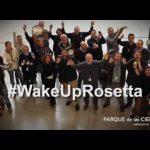
We don’t know where you’re going, but we do know that Rosetta is about to arrive at comet 67P/Churyumov-Gerasimenko. Join the adventure and share your ‘are we there yet?’ photos to win great prizes.
#WakeUpRosetta – What do you do Mondays at 10 am? At 10:00 UTC on 20 January 2014, ESA’s comet-chasing Rosetta spacecraft will wake up from 31 months in deep-space hibernation. Save the date and join the adventure. More info at www.esa.int/rosetta.
We wanted to know: How often do astronauts wash their clothes in space? We asked the members of the public in Europe what they think. Watch the video to discover the answer.
Frank De Winne is answering a few questions on the ISS submitted by the pupils of Class 7M from the Christian Morgenstern School in Hersching (Germany):
Question: – Jerome (13): How do you feel in orbit after 2 months? – Karina (13): How much time do you spend working outside the ISS? – Tamara: Do you have any real free time in the ISS, and how can you spend this time? How often do you contact your family? – Antoine (13): Have you ever felt scared in orbit? Has there ever been a moment that you wished to be back on Earth? – Regina (14): Has anything strange happened on the ISS that none of your colleagues have been able to explain? – Flavu: Which kind of education and qualification do you need for this kind of work?