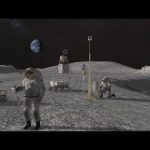
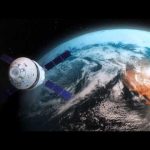
Building the international effort to go forward to the Moon, selecting new missions, and dropping a plane for safety … a few of the stories to tell you about – This Week at NASA!
This video is available for download from NASA’s Image and Video Library: https://images.nasa.gov/details-NHQ_2019_0621_Building%20International%20Effort%20for%20the%20Moon%20and%20Mars%20This%20Week%20@NASA%20%E2%80%93%20June%2021,%202019.html
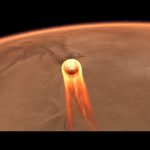
Our InSight mission arrives at Mars, announcing the companies that will help us get to the Moon, and the space station’s next crew wraps up prelaunch activities … a few of the stories to tell you about – This Week at NASA!
This video is available for download from NASA’s Image and Video Library: https://images.nasa.gov/details-NHQ_2018_1130_InSight%20Mission%20Lands%20Safely%20on%20Mars%20on%20This%20Week%20@NASA%20%E2%80%93%20November%2030,%202018.html
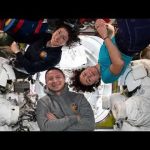
Right now, half of the crew members on board the International Space Station are American astronauts who are getting ready to celebrate Thanksgiving and they have a message for us. Check in with NASA’s Christina Koch, Jessica Meir and Andrew Morgan to learn more about what the holiday means to them – and get a look at what Thanksgiving in space will be like in 2019.
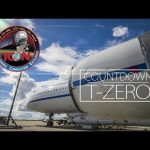
Where does Earth’s atmosphere end and space begin? This and other questions soon will be answered by NASA’s Ionospheric Connection Explorer, or ICON, satellite. Get ready to watch as the Pegasus countdown reaches T-Zero from its carrier aircraft flying near the Kennedy Space Center.
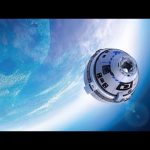
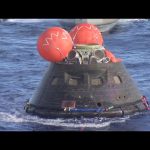
Tune in as Boeing’s uncrewed Starliner spacecraft lands at White Sands, New Mexico. Landing is scheduled at 7:57 a.m. EST on Sunday, Dec. 22. After its launch on Dec. 20, the Starliner did not reach the planned orbit and will not dock to the International Space Station. Teams worked quickly to ensure the spacecraft was in a stable orbit and preserved enough fuel for a landing opportunity.
It is part of the human spirit to explore. During 60 years, we have selected 350 people as astronauts to lead the way. For nearly two decades, humans have been living and working aboard the International Space Station in low-Earth orbit to enable future missions forward to the Moon and on to Mars while also leading discoveries that improve life on Earth. Congress passed the National Aeronautics and Space Act on July 16, and President Eisenhower signed it into law on July 29, 1958. NASA opened for business on Oct. 1, 1958. Our history tells a story of exploration, innovation and discoveries. That story continues in the next 60 years. Learn more: https://www.nasa.gov/60
In 2015, NASA explored the expanse of our solar system and beyond, and the complex processes of our home planet, while also advancing the technologies for our journey to Mars, and new aviation systems as the agency reached new milestones aboard the International Space Station.
“It was a fantastic year that brought us even closer to Mars,” said NASA Administrator Charles Bolden. “Our space program welcomed advances from commercial partners who will soon launch astronauts from the United States to the International Space Station, and progress on new technologies and missions to take us into deep space, improve aviation and explore our universe and home planet.”
Fifty years ago, humans took their first steps on the Moon and the world watched as we made history. On July 19, 2019, we broadcast this live salute to our #Apollo50th heroes and looked forward to our next giant leap for future #Artemis missions to the Moon and Mars.
NASA Deputy Associate Administrator recognizes the 2018 National Small Business Week; a time to celebrate the critical contributions of America’s entrepreneurs and small business owners. NASA honors its 2017 Agency Small Business Advocate Award winners and acknowledges the contributions made by NASA civil servant personnel throughout the Agency. The Agency 2017 Small Industry Award winners are also highlighted and they recognize the outstanding Small Business Prime Contractor, Small Business Subcontractor, Large Business Prime Contractor, and Mentor-Protégé Agreement that support NASA in achieving its mission.
The latest about our new mission to Saturn’s largest Moon, Launching new missions and landing astronauts … on the same night! And …restoring the glory to the Apollo Mission Control Room … a few of the stories to tell you about – This Week at NASA!
This video is available for download from NASA’s Image and Video Library: https://images.nasa.gov/details-NHQ_2019_0628_Announcing%20a%20New%20Mission%20to%20Saturn%E2%80%99s%20Largest%20Moon%20on%20This%20Week%20@NASA%20%E2%80%93%20June%2028,%202019.html
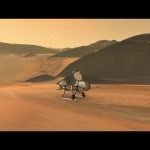
Introducing Dragonfly: our next New Frontiers Mission! Making multiple flights, the Dragonfly dual-quadcopter will explore a variety of locations on Saturn’s moon Titan. Titan is an analog to the very early Earth, and can provide clues to how life may have arisen on our planet.
In under an hour, Dragonfly will cover tens of miles or kilometers, farther than any planetary rover has traveled. With one hop per full Titan day (16 Earth days), the rotorcraft will travel from its initial landing site to cover areas several hundred kilometers away during the planned two-year mission. Despite its unique ability to fly, Dragonfly would spend most of its time on Titan’s surface making science measurements.
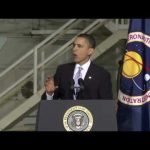
President Obama says his new budget request to increase NASA’s funding by $6 billion over the next five years is an investment in America’s future, and a challenge to the agency to build on its legacy of innovation and discovery.
“What we’re looking for is not just to continue on the same path”, said the President. “We want to leap into the future. We want major breakthroughs, transformative for NASA.”
Making his remarks to an audience of several hundred at the Kennedy Space Center in Florida prior to the start of a one-day “Conference on the American Space Program” for the 21st Century”, President Obama reassured those in attendance about his support for NASA.
“The bottom line is, nobody is more committed to manned spaceflight, the human exploration of space, than I am. But we cant do it the same old way, but in the smart way to get where we want to go.”
The space conference of senior officials, space and industry leaders, academic experts and others focuses the different aspects of the President’s new direction for the agency. President Obama was introduced by NASA Administrator Charles Bolden. (Details at: www.nasa.gov)
Miko 2 is a robot with Artificial Intelligence.
Premayee very excited to Unboxing Christmas gift 2019!!
#Miko2 #Kids #Robots #Unbox #ArtificialIntelligence #Miko2robot
video is for educational purpose only.Copyright Disclaimer Under Section 107 of the Copyright Act 1976, allowance is made for “fair use” for purposes such as criticism, comment, news reporting, teaching, scholarship, and research. Fair use is a use permitted by copyright statute that might otherwise be infringing. Non-profit, educational or personal use tips the balance in favor of fair use.
the tonight show jimmy fallon tonight showbotics snakebot sophia emotion butterflies nbc nbc tv television funny talk show comedic humor snl fallon stand-up fallon monologue tonight show jokes funny video interview variety comedy sketches talent celebrities video clip highlight robot bot tech technology lol girl lady fembot fem snake butterfly fly
Have you ever done a science experiment and wondered “What would this be like if it were HUGE?” Welcome to Science Max, the exciting new series that turbocharges all the science experiments you’ve done at home.
The 250th flight of an Ariane launcher was another success. The Ariane launcher programme has effectively put Europe on the map in the worldwide commercial satellites launcher market. Next 24 December will mark the 40th anniversary of the first Ariane Launch from Europe’ Spaceport in French Guiana and the situation has evolved along the years. An opportunity to look at what has been achieved and what can be expected for the future of Space Transportation in Europe.
★ Subscribe: http://bit.ly/ESAsubscribe and click twice on the bell button to receive our notifications.
We are Europe’s gateway to space. Our mission is to shape the development of Europe’s space capability and ensure that investment in space continues to deliver benefits to the citizens of Europe and the world. Check out http://www.esa.int/ESA to get up to speed on everything space related.
ESA’s parabolic flight project coordinator Neil Melville explains why 40 researchers working on 12 technologically-advanced experiments are put in an aircraft that flies at maximum thrust in repeated 50° angles at the limits of the Novespace aircraft’s design.
Parabolic flights offer sessions of 20 seconds of zero gravity giving a total of 10 minutes of weightlessness each flight. The advantage of parabolic flights over other platforms for experimentation in altered gravity is that researchers can join the flight and interact with their experiment – fine tuning hardware, running tests on human subjects or changing parameters on the fly. The experiments are carefully chosen for potential benefits, safety and uniqueness.
Neil highlights some of the experiments on ESA’s 72nd campaign that covered disciplines as diverse as astronomy, cooling techniques, metallurgy, weather and human physiology.
The Progra2 experiment is creating clouds of matter and recording how light is scattered by micrometre-sized particles. The carbon-based dust is chosen to resemble the clouds found in our Solar System such as around asteroids and comets. Knowing how light is scattered by these particles in microgravity will help interpret observations made from telescopes and increase our understanding the Universe.
An experiment from the Université Libre de Bruxelles in Belgium is looking at healing wounds with bio-mimetic materials by submitting them to mechanical stresses typical in weightlessness. The knowledge acquired will pave the way for the development of biophysical models and a have a direct impact on the industrial market of wearable electronics.
The VIP-GRAN team is looking into how particles behave in reduced gravity to understand the underlying physics in detail. On this flight they investigated the jamming of particles as they flow through small openings. This can be an annoyance on Earth when salt gets stuck in the shaker for example, but the phenomenon is influenced by gravity and the researchers want to know more. This was the ninth flight for the VIP-GRAN team and who are working towards having a version of their experiment fly on the International Space Station with even more weightless time.
Air Zero-G exterior footage courtesy of Airborne Films and Novespace.
★ Subscribe: http://bit.ly/ESAsubscribe and click twice on the bell button to receive our notifications.
We are Europe’s gateway to space. Our mission is to shape the development of Europe’s space capability and ensure that investment in space continues to deliver benefits to the citizens of Europe and the world. Check out http://www.esa.int/ESA to get up to speed on everything space related.
Samaira Mehta is an American coder and inventor. She is the founder and chief executive officer of CoderBunnyz.
Mehta is from Santa Clara, California.Her father is an engineer.She began coding when she was 6 years old. She created the board game CoderBunnyz, with the help of her little brother, to teach other children how to code.She designed the game over the course of a year.Mehta speaks at workshops and conferences including at Microsoft, Intel, and Google.She first started presenting at workshops at the Santa Clara City Library.She spoke at the 2019 C2 Montréal Conference.Mehta aims to eliminate gender bias and increase the number of women in engineering.
CoderBunnyz
The name, CoderBunnyz, combines her interest in board games and coding with bunnies, her favorite animal. The game provides instruction on basic concepts in artificial intelligence and Java.It includes five major topics including training, back propagation, inference, adaptive learning, and autonomous. The STEM game is used in over 106 schools.
Awards and honors
In 2016, Mehta won the $2,500 second-place prize at Think Tank Learning’s Pitchfest. She received a letter from former first lady Michelle Obama.
CoderBunnyz board game empowers girls and boys to learn code and become leaders in tech. Started in 2015 CoderBunnyz hosts workshops in libraries, schools, communities and tech events. The “Girls U Code” arm of CoderBunnyz hosts workshops for underprivileged girls and helps create a national community changing the role of girls and women in tech. “Cookies with CoderBunnyz” is an interview series with distinguished personalities whose journey help inspire the next generation entrepreneurs.
CoderBunnyz conducts workshops at various tech-events, corporations and city libraries across SF/Silicon valley and has taught over 1400 kids, including multiple workshops at Google HQ!
Coder Bunnyz – The Most Comprehensive STEM Coding Board Game Ever! Learn All The Concepts You Ever Need in Computer Programming in a Fun Adventure. Featured at TIME, NBC, Sony, Google, Maker Faires! https://amzn.to/2EIzAxK
CoderMindz Game for AI Learners! World’s First Ever Board Game for Boys and Girls Age 6 and up That Teaches Artificial Intelligence and Computer Programming Through Fun Robot and Neural Adventure! https://amzn.to/2tINCgv
Code Your Success Shirt – Let’s spread the Love of Coding!
by Coderbunnyz Coding Game
$16.99 https://amzn.to/2rgfTtO
Code Your Kindness Shirt – Let’s Spread the Love of Coding!
by CoderBunnyz Coding Game
$16.99 https://amzn.to/35MlCGF
I think AI should have the capacity to do evil. Just like a child learning right from wrong by making mistakes and being corrected, so too should AI be given that possibility. Humans seem to be incapable of perfection, even with collective effort. Given this, setting out to design a perfect form of consciousness might result in the exact opposite. It might be that the perfection we create deems it’s creator imperfect and unworthy. If, on the other hand, we give it the capacity for evil, it might also have sympathy for our sometimes miserable existence.
Boeing’s Starliner spacecraft launched aboard an Atlas V rocket on an Orbital Flight Test at 6:36 a.m. EST, Friday, Dec. 20, 2019. The spacecraft had an off-nominal orbit insertion, but was placed in a safe orbit and configuration and landed at White Sands, New Mexico on Dec. 22. Watch the landing: https://www.youtube.com/watch?v=lPzNHeX7OYM
Coming soon to a city near you: Flying taxis! 🚁 We’re leading the nation to quickly open a new era in air travel called urban air mobility that will transform how people move around cities. In this episode of NASA in Silicon Valley Live, hear about new technologies being developed to shape this exciting future of flight. Tune in!
While Apollo placed the first steps on the Moon, Artemis opens the door for humanity to sustainably work and live on another world for the first time. Using the lunar surface as a proving ground for living on Mars, this next chapter in exploration will forever establish our presence in the stars. ✨
We are returning to the Moon – to stay – and this is how we are going!
Actress Kelly Marie Tran of “Star Wars: The Rise of Skywalker” lent her voice to this project.
Have you ever done a science experiment and wondered “What would this be like if it were HUGE?” Welcome to Science Max, the exciting new series that turbocharges all the science experiments you’ve done at home.
What is ESA’s Characterising Exoplanet Satellite, Cheops, and how will it improve our knowledge of exoplanets? Find out more in this interview with Kate Isaak, ESA Cheops project scientist.
We are Europe’s gateway to space. Our mission is to shape the development of Europe’s space capability and ensure that investment in space continues to deliver benefits to the citizens of Europe and the world. Check out http://www.esa.int/ESA to get up to speed on everything space related.
We are Europe’s gateway to space. Our mission is to shape the development of Europe’s space capability and ensure that investment in space continues to deliver benefits to the citizens of Europe and the world. Check out http://www.esa.int/ESA to get up to speed on everything space related.
Alăturați-vă lui Paxi într-o călătorie dincolo de sistemul nostru solar. În acest videoclip, destinat copiilor cu vârste cuprinse între 6 și 12 ani, Paxi explorează planetele extrasolare.
★ Subscribe: http://bit.ly/ESAsubscribe and click twice on the bell button to receive our notifications.
We are Europe’s gateway to space. Our mission is to shape the development of Europe’s space capability and ensure that investment in space continues to deliver benefits to the citizens of Europe and the world. Check out http://www.esa.int/ESA to get up to speed on everything space related.
We are Europe’s gateway to space. Our mission is to shape the development of Europe’s space capability and ensure that investment in space continues to deliver benefits to the citizens of Europe and the world. Check out http://www.esa.int/ESA to get up to speed on everything space related.
Kom med Paxi på en rejse ud af vores solsystem. I denne video, som er beregnet til børn i alderen fra 6 til 12 år, udforsker Paxi ekstrasolare planeter.
★ Subscribe: http://bit.ly/ESAsubscribe and click twice on the bell button to receive our notifications.
We are Europe’s gateway to space. Our mission is to shape the development of Europe’s space capability and ensure that investment in space continues to deliver benefits to the citizens of Europe and the world. Check out http://www.esa.int/ESA to get up to speed on everything space related.
Připojte se k Paximu na cestě za hranice naší sluneční soustavy. V tomto videu určeném pro děti ve věku od 6 do 12 let zkoumá Paxi extrasolární planety.
★ Subscribe: http://bit.ly/ESAsubscribe and click twice on the bell button to receive our notifications.
We are Europe’s gateway to space. Our mission is to shape the development of Europe’s space capability and ensure that investment in space continues to deliver benefits to the citizens of Europe and the world. Check out http://www.esa.int/ESA to get up to speed on everything space related.
What would you do with a powerful computer based in space? At just 30 cm in height, OPS-SAT is a tiny CubeSat designed to serve as a large-scale software laboratory in orbit – containing one of the most powerful flight computers ever flown – to test innovative control software from teams all over Europe. Anyone can apply to try out their software aboard OPS-SAT, from companies to research teams to computer clubs, linking directly from the internet. The small satellite packs in a high-resolution camera, radio antennas, optical receiver, reaction wheels and GPS. OPS-SAT can be rebooted if any experimental software crashes, allowing otherwise risky inflight testing as a way to make space smarter.
★ Subscribe: http://bit.ly/ESAsubscribe and click twice on the bell button to receive our notifications.
We are Europe’s gateway to space. Our mission is to shape the development of Europe’s space capability and ensure that investment in space continues to deliver benefits to the citizens of Europe and the world. Check out http://www.esa.int/ESA to get up to speed on everything space related.
On 17 December, ESA will launch a first-of-its-kind space laboratory, OPS-SAT. The small, low-cost test satellite has been specifically designed for operational experiments in space, and includes the most powerful flight computer on board any current ESA spacecraft.
Consumer electronics have gone through a revolution over the last 30 years with computers becoming ever faster, smaller and better. But when it comes to million- or even billion-euro satellites, their onboard hardware and software have not seen this revolution because of the risks of testing new technology in flight.
As spacecraft managers dare to fly only tried-and-tested hard and software in the harsh conditions of space, innovation on the operational side of satellites is a very slow-moving process. This is where OPS-SAT steps in, bringing down the barriers to spacecraft operations it provides a chance to safely test out new mission control techniques.
Anyone can apply to become an ‘experimenter’ and test their innovative software and new mission operations techniques in space. Proving technology for future missions and paving the way for satellites to further evolve with minimum risk, OPS-SAT will be launched with ESA’s Cheops satellite from Europe’s Spaceport in Kourou, French Guiana.
★ Subscribe: http://bit.ly/ESAsubscribe and click twice on the bell button to receive our notifications.
We are Europe’s gateway to space. Our mission is to shape the development of Europe’s space capability and ensure that investment in space continues to deliver benefits to the citizens of Europe and the world. Check out http://www.esa.int/ESA to get up to speed on everything space related.
We are Europe’s gateway to space. Our mission is to shape the development of Europe’s space capability and ensure that investment in space continues to deliver benefits to the citizens of Europe and the world. Check out http://www.esa.int/ESA to get up to speed on everything space related.
Rejoignez Paxi dans un voyage au-delà de notre système solaire. Dans cette vidéo destinée aux élèves de 6 à 12 ans, Paxi explore les planètes extrasolaires.
★ Subscribe: http://bit.ly/ESAsubscribe and click twice on the bell button to receive our notifications.
We are Europe’s gateway to space. Our mission is to shape the development of Europe’s space capability and ensure that investment in space continues to deliver benefits to the citizens of Europe and the world. Check out http://www.esa.int/ESA to get up to speed on everything space related.
Begleite Paxi auf eine Reise über unser Sonnensystem hinaus. In diesem Video für Kinder zwischen 6 und 12 Jahren erkundet Paxi Planeten, die einen anderen Stern umkreisen.
★ Subscribe: http://bit.ly/ESAsubscribe and click twice on the bell button to receive our notifications.
We are Europe’s gateway to space. Our mission is to shape the development of Europe’s space capability and ensure that investment in space continues to deliver benefits to the citizens of Europe and the world. Check out http://www.esa.int/ESA to get up to speed on everything space related.
Unitevi a Paxi in un viaggio oltre il nostro sistema solare. In questo video, pensato per bambini di età da 6 a 12 anni, Paxi esplora pianeti extrasolari.
★ Subscribe: http://bit.ly/ESAsubscribe and click twice on the bell button to receive our notifications.
We are Europe’s gateway to space. Our mission is to shape the development of Europe’s space capability and ensure that investment in space continues to deliver benefits to the citizens of Europe and the world. Check out http://www.esa.int/ESA to get up to speed on everything space related.
Junta-te ao Paxi numa viagem para lá do Sistema Solar. Neste vídeo, destinado a crianças dos 6 aos 12 anos de idade, o Paxi explora planetas extrassolares.
★ Subscribe: http://bit.ly/ESAsubscribe and click twice on the bell button to receive our notifications.
We are Europe’s gateway to space. Our mission is to shape the development of Europe’s space capability and ensure that investment in space continues to deliver benefits to the citizens of Europe and the world. Check out http://www.esa.int/ESA to get up to speed on everything space related.