Saptamana viitoare va aparea noua mea carte “O calatorie prin Univers”. Va astept la lansare, sambata 23 noiembrie, ora 12:30, targul de carte Gaudeamus Bucuresti, standul Humanitas. De aici se poate deja cumpara: t.ly/RkRED
Some very complex work outside the space station, key milestones for our Artemis program, and a fitting tribute for an historic flyby … a few of the stories to tell you about – This Week at NASA!
This video is available for download from NASA’s Image and Video Library: https://images.nasa.gov/details-NHQ_2019_1115_A%20Very%20Complex%20Spacewalk%20Outside%20the%20Space%20Station%20on%20This%20Week%20@NASA%20%E2%80%93%20November%2015,%202019
Astronauts Andrew Morgan of NASA and Luca Parmitano of the European Space Agency (ESA) will venture outside the International Space Station starting at ~7:05 a.m. EST to begin repairing the Alpha Magnetic Spectrometer (AMS) instrument. This is the first in a series of repair spacewalks – the most complex of this kind since the servicing of the Hubble Space Telescope. AMS is attached to the outside of the space station, where it has been operating since 2011. It is a particle physics experiment working to help us understand dark matter and the origins of the universe.
On 20 July 2019, ESA astronaut Luca Parmitano was launched to the International Space Station from the Baikonur Cosmodrome in Kazakhstan. During the Beyond mission he will participate in several spacewalks (EVA) to repair the dark matter hunter Alpha Magnetic Spectrometer, or AMS-02. Attached to the station during the STS-134 shuttle mission in May 2011, the AMS was never designed to be maintained in orbit. Luca has trained extensively for this challenging task, which will involve complicated techniques and the use of specially-designed tools.
We are Europe’s gateway to space. Our mission is to shape the development of Europe’s space capability and ensure that investment in space continues to deliver benefits to the citizens of Europe and the world. Check out http://www.esa.int/ESA to get up to speed on everything space related.
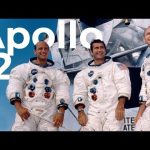
Apollo 12 launched from Cape Kennedy on Nov. 14, 1969, into a cloudy, rain-swept sky. Launch controllers lost telemetry contact at 36 seconds, and again at 52 seconds, when the Saturn V launch vehicle was struck by lightning.
In addition to continuing Apollo’s lunar exploration tasks, Charles Conrad, Alan Bean, and Richard Gordon deployed the Apollo Lunar Surface Experiments Package, a set of investigations left on the Moon’s surface to gather data.
Have you ever done a science experiment and wondered “What would this be like if it were HUGE?” Welcome to Science Max, the exciting new series that turbocharges all the science experiments you’ve done at home.
ESA astronaut Luca Parmitano will soon take part in several challenging spacewalks to service the International Space Station’s largest scientific instrument.
The Alpha Magnetic Spectrometer (AMS) is a sub-atomic particle detector that looks for dark matter, antimatter and measures cosmic rays – high energy particles that travel through space at close to the speed of light.
The AMS took 16 countries nearly 20 years to develop. It was assembled at CERN, tested at ESA’s ESTEC facility in The Netherlands and installed on the Space Station in 2011. Since then it has collected over 145 billion cosmic ray events across a range of energy levels and has already provided the first insights into potential antimatter and dark matter.
The maintenance of the AMS’ cooling system will ensure it can continue to provide more data and groundbreaking science. This film contains soundbites from the instrument’s Principal Investigator, Nobel Prize-winning physicist Professor Samuel Ting (MIT/CERN).
We are Europe’s gateway to space. Our mission is to shape the development of Europe’s space capability and ensure that investment in space continues to deliver benefits to the citizens of Europe and the world. Check out http://www.esa.int/ESA to get up to speed on everything space related.
Our alien friend Paxi went to visit American astronaut Anne McClain on board the International Space Station. Anne shows Paxi the EVA suits that astronauts wear during a spacewalk outside of the ISS.
★ Subscribe: http://bit.ly/ESAsubscribe and click twice on the bell button to receive our notifications.
We are Europe’s gateway to space. Our mission is to shape the development of Europe’s space capability and ensure that investment in space continues to deliver benefits to the citizens of Europe and the world. Check out http://www.esa.int/ESA to get up to speed on everything space related.
Find the best Ai toys at Ai Toys Tech channel and site https://aitoystech.com. We review in depth Ai robots toys, best Ai toys and also machine learning toys for both boys and girls of all ages. Adults are not forgotten on the contrary we cover all range of best Ai robot toys, best tech toys as well as some of the coolest new tech toys you may find. We have from Ai for kids, cool tech toys, cool gadgets for kids to electronic educational toys and the new tech toys. We make reviews of the very best tech toys.
Kids have a very different and refreshing aspect to see life,
see life from their innocent point of view.
When kids try fun activities, trying artificial intelligence.
kids doing various activities. kids and technology. kids with new technology. kids having fun with technology. children take technology as fun. Technology and fun with kids. New era new technology new kinds of fun activities with kids. kids fun activities.
funny kids with technology. artificial intelligence with kids. how kids take artificial inteligence.
In September 2019 in Slovenia, astronauts from five space agencies around the world took part in ESA’s CAVES training course – Cooperative Adventure for Valuing and Exercising human behaviour and performance Skills.
The six ‘cavenauts’ were ESA astronaut Alexander Gerst, NASA astronauts Joe Acaba and Jeanette Epps, Roscosmos cosmonaut Nikolai Chub, Canadian Space Agency astronaut Joshua Kutryk and Japan’s space agency JAXA’s Takuya Onishi.
The three-week course prepares astronauts to work effectively in multicultural teams in an environment where safety is critical.
As they explored the caves, they encountered caverns, underground lakes and strange microscopic life. They tested new technology and conducted science – much like life on the International Space Station.
Inhospitable and hard to access, caves are untouched worlds and hold many scientific secrets. The astronauts performed a dozen experiments and were on the lookout for signs of life that has adapted to the extremes. They paid special attention to their environment, monitoring air and water quality, and looking for signs of pollution.
We are Europe’s gateway to space. Our mission is to shape the development of Europe’s space capability and ensure that investment in space continues to deliver benefits to the citizens of Europe and the world. Check out http://www.esa.int/ESA to get up to speed on everything space related.
A critical milestone for commercial crew, resupply spacecraft delivers to the space station, and a new wide-eyed view of the southern sky … a few of the stories to tell you about – This Week at NASA!
This video is available for download from NASA’s Image and Video Library: https://images.nasa.gov/details-NHQ_2019_1108_A%20Critical%20Milestone%20for%20Commercial%20Crew%20on%20This%20Week%20@NASA%20%E2%80%93%20November%208,%202019
Karen Moore shares her story on how her 2018 internship at NASA’s Langley Research Center allowed her to support the Minority University Research and Education Project for American Indian and Alaskan Native STEM Engagement (MAIANSE). The NASA Office of Education’s MAIANSE initiative supports tribal colleges or universities with career development and internship opportunities.
The Copernicus Sentinel-2 mission takes us over Holbox Island, off the Quintana Roo coast of Mexico, in this week’s edition of the Earth from Space programme.
We are Europe’s gateway to space. Our mission is to shape the development of Europe’s space capability and ensure that investment in space continues to deliver benefits to the citizens of Europe and the world.
As the planet warms, fire seasons burn year-round and more areas are becoming flammable. #NASAExplorers are studying how fires are changing with the climate, and tracking how landscapes change after fires. With satellite data, people on the ground and partners with communities and agencies around the planet, #NASAExplorers are helping prepare for the “new normal” of fires on Earth. #S3E5
Have you ever done a science experiment and wondered “What would this be like if it were HUGE?” Welcome to Science Max, the exciting new series that turbocharges all the science experiments you’ve done at home.
TESTING 1…2…3🚀 Boeing put its #Starliner’s launch abort system to the test on Monday, Nov. 4 at the White Sands Missile Range in New Mexico, lifting off at 9:15 a.m. EST. The test demonstrated the spacecraft’s ability to protect Commercial Crew Program astronauts by carrying them safely away from the launch pad in the unlikely event of an emergency prior to liftoff.
Important cargo headed to the space station, installing the thrust behind our return to the Moon, and a devastating wildfire seen from space … a few of the stories to tell you about – This Week at NASA!
This video is available for download from NASA’s Image and Video Library: https://images.nasa.gov/details-NHQ_2019_1102_Important%20Cargo%20Headed%20to%20the%20Space%20Station%20on%20This%20Week%20@NASA%20%E2%80%93%20November%202,%202019
On Sat., Nov. 2 at 9:59 a.m. EDT, Northrop Grumman’s Antares rocket and Cygnus spacecraft launched from Wallops Flight Facility in Virginia on a cargo resupply mission to the International Space Station. Cygnus delivered around 8,200 pounds of research, supplies, and hardware to the orbiting laboratory, including supplies for upcoming spacewalks and student CubeSats.
SMOS has been in orbit for a decade. This remarkable satellite has not only exceeded its planned life in orbit, but also surpassed its original scientific goals. It was designed to deliver data on soil moisture and ocean salinity which are both crucial components of Earth’s water cycle. By consistently mapping these variables, SMOS is not only advancing our understanding of the water cycle and the exchange processes between Earth’s surface and the atmosphere, but is also helping to improve weather forecasts and contributing to climate research as well as contributing to a growing number practical everyday applications.
We are Europe’s gateway to space. Our mission is to shape the development of Europe’s space capability and ensure that investment in space continues to deliver benefits to the citizens of Europe and the world. Check out http://www.esa.int/ESA to get up to speed on everything space related.
The Copernicus Sentinel-1 mission takes us over cracks in the Brunt ice shelf, which lies in the Weddell Sea sector of Antarctica, in this week’s edition of the Earth from Space programme.
We are Europe’s gateway to space. Our mission is to shape the development of Europe’s space capability and ensure that investment in space continues to deliver benefits to the citizens of Europe and the world. Check out http://www.esa.int/ESA to get up to speed on everything space related.
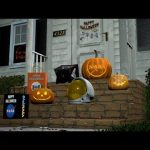
The Helmet was created by the talented folks at NASA’s Ames Research Center. You can download it and other models from NASA’s 3D Model page: https://nasa3d.arc.nasa.gov/models
Our little Spiders are here to represent. This is the 50th Anniversary of Apollo, and Apollo 9 had the first Lunar Module to be deployed in space; and its name was “Spider”: https://images.nasa.gov/details-as09-21-3183.html
Have you ever done a science experiment and wondered “What would this be like if it were HUGE?” Welcome to Science Max, the exciting new series that turbocharges all the science experiments you’ve done at home.
“Earth science is a subject far too big for one country, one agency, to tackle all by itself.” So #NASAExplorers team up with researchers from around the country and the planet to answer some big questions about fires, clouds and climate from the Western Pacific, where we still have a lot to learn about the interaction between fires and cloud formation. #S3E4
With over 14 000 registrations for ESA’s Open Day in the Netherlands on 6 October 2019 another attendance record was achieved. People from all over Europe and the world met astronauts, space experts and saw behind the scenes of Europe’s space adventure at ESA’s largest establishment.
The theme of 2019 was ‘ESA to the Moon’. Dutch ESA astronaut André Kuipers was joined by pioneering Apollo astronauts Walt Cunningham, who flew on the first crewed Apollo mission, and Rusty Schweickart, who was the first person to fly the Lunar Module and use an Apollo lunar spacesuit for a spacewalk.
With areas for children organised by ESA education, and the NL Space Tent to meet with Dutch space professionals. ESA’s open days are the opportunity to come nose to nose with space hardware, hear where we’re going next and meet Europe’s space agents – space scientists, engineers and mission designers.
Talks and events were organised with astronauts, space experts and celebrities such as Scott Manley.
ESA hosts the annual open day at ESA’s technical centre ESTEC where new missions are designed, their industrial development is managed and the resulting satellites are tested for flight in space.
★ Subscribe: http://bit.ly/ESAsubscribe and click twice on the bell button to receive our notifications.
We are Europe’s gateway to space. Our mission is to shape the development of Europe’s space capability and ensure that investment in space continues to deliver benefits to the citizens of Europe and the world. Check out http://www.esa.int/ESA to get up to speed on everything space related.
Open your child’s world to millions of possibilities by bridging play and learning. Miko 2 is all about giving your child a fun, exciting platform to help them grow, whether their next step is kindergarten or middle school. Now available at Miko.ai with Free US shipping!
A Personal, At-Home Teacher For Playful Learning
From academic topics to child-friendly news bulletins, fun facts and more, Miko 2 is packed with relevant and freshly updated content specially designed by educationists and child-specialists. Your little one won’t even realize they’re learning.
Entertainment that Lasts For Hours
Miko can sing, dance, play games, narrate stories, share jokes and run fun quizzes. Your child won’t even know that while they’re laughing, they’re learning!
Personality That Adapts To Your Child
Advanced facial and voice recognition technology allow Miko 2 to understand and react to your child’s moods. Improving over time, Miko 2 learns who your child is and what matters to them.
See & Speak Through Miko 2
Away from your child? Use the camera and chat features to engage with your child remotely with completely encrypted control.
Healthy Technology Experience
Miko 2 is a healthy alternative to traditional screen time exposure. Curated content and parental controls give your child all the benefits—and you all of the control.
Complete Parental Control
Get insights and analytics on your child’s interests. Easily limit playtime and even control conversation topics—all from your smartphone.
Private, Secure & Safe
End-to-end data encryption ensures your child and your privacy are safe. No personal information is shared or stored.
Engineers have completed their testing of ESA’s Solar Orbiter spacecraft in preparation for launch early next year.
Equipped with a suite of ten instruments, Solar Orbiter will capture the closest ever pictures of our star, the first images of its poles, and make detailed observations of solar activity. Its specially designed heatshield is capable of enduring temperatures of more than 500 degrees Celsius.
Over the past year, Solar Orbiter has been undergoing a series of rigorous tests at the IABG test centre near Munich, Germany. The spacecraft is due to be packed into an Antonov cargo plane on 31 October for shipping to Florida. Launch on an Atlas 5 rocket from Cape Canaveral, is planned for February 2020.
We are Europe’s gateway to space. Our mission is to shape the development of Europe’s space capability and ensure that investment in space continues to deliver benefits to the citizens of Europe and the world. Check out http://www.esa.int/ESA to get up to speed on everything space related.
International partnerships for the Moon and Mars, an update on that historic all-woman spacewalk, and a milestone for the James Webb Space Telescope … a few of the stories to tell you about –- This Week at NASA!
This video is available for download from NASA’s Image and Video Library: https://images.nasa.gov/details-NHQ_2019_1025_International%20Partnership%20for%20the%20Moon%20and%20Mars%20on%20This%20Week%20@NASA%20%E2%80%93%20October%2025,%202019
Need a #NASACostume idea for Halloween? Join us at 7 p.m. EDT for a new episode of NASA in Silicon Valley Live to see some space-tacular outfits as we host our annual NASA-themed Halloween costume and cosplay contest!
This month space experts from all over the world convened in Luxembourg for the first Space Resources Week to discuss how best to explore our Solar System sustainably and limit costly transport of resources from Earth – for example can we produce water and oxygen on the Moon?
From extracting water to creating metals from lunar dust, preparing for the next century of exploration will take industry and commercial partnerships off Earth while using resources we find there.
The first days of the convention included a professional course with space engineers, scientists and lawyers and economists followed by a space mining summit on the legal and business aspects and technical challenges of resource use.
On the last two days of Space Resource Week ESA organised a workshop together with the Luxembourg Space Agency to plan the steps Europe will take in the next five years. With over 350 participants from a broad range of disciplines including academia, industry, mining and energy companies as well as politicians, entrepreneurs, investors and economists.
This is just the beginning, humankind is returning to the Moon and we are setting the international collaboration required to do this sustainably and in partnership, we are an inter-disciplinary community of space resource personnel and will convene again next year to review the progress made towards some key breakthroughs, making Europe a leader in this field.
★ Subscribe: http://bit.ly/ESAsubscribe and click twice on the bell button to receive our notifications.
We are Europe’s gateway to space. Our mission is to shape the development of Europe’s space capability and ensure that investment in space continues to deliver benefits to the citizens of Europe and the world. Check out http://www.esa.int/ESA to get up to speed on everything space related.
Have you ever done a science experiment and wondered “What would this be like if it were HUGE?” Welcome to Science Max, the exciting new series that turbocharges all the science experiments you’ve done at home.
In the Arctic, fires are a natural part of the ecosystem. But as the climate changes, fires are burning longer and hotter, releasing long-buried carbon from the soil. #NASAExplorers are looking from high in the sky to deep below the ground to better understand how a warming climate affects fires in the Arctic…and how fires in the region will contribute to climate change in the future. #S3E3
Launched in December 2013, the Gaia mission is revolutionising our understanding of the Milky Way. The space telescope is mapping our galaxy in unprecedented detail – measuring the position, movement and distance of stars.
At a meeting in Groningen in the Netherlands, scientists have been discussing the challenge of processing and visualising Gaia data.
We are Europe’s gateway to space. Our mission is to shape the development of Europe’s space capability and ensure that investment in space continues to deliver benefits to the citizens of Europe and the world. Check out http://www.esa.int/ESA to get up to speed on everything space related.
We are Europe’s gateway to space. Our mission is to shape the development of Europe’s space capability and ensure that investment in space continues to deliver benefits to the citizens of Europe and the world. Check out http://www.esa.int/ESA to get up to speed on everything space related.
On Oct 18, NASA astronauts Jessica Meir and Christina Koch performed the first all-woman spacewalk. Koch & Meir replaced a faulty battery charge/discharge unit that failed to activate after a previous spacewalk. This was the fourth spacewalk for Christina Koch and the first for Jessica Meir.