Science Max | MAGNETIC LEVITATION | Kids Science | Experiments
Magnets have poles – when you put opposite ones together, they attract. But when you but the same ones together, they repel. Could we find magnets powerful enough to repel each other and float Phil off the ground? Plus, watch magnets defy gravity all on their own.
Have you ever done a science experiment and wondered “What would this be like if it were HUGE?” Welcome to Science Max, the exciting new series that turbocharges all the science experiments you’ve done at home.
In season 1, join Phil as he builds rocket cars, uses elastic energy to hurl pumpkins on a giant catapult, builds a bridge out of pasta that can hold a human, find magnets powerful enough to float Phil off the ground, and many more experiments taken to the MAX!
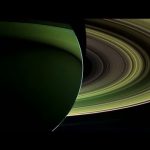
Cassini-Huygens was launched on 15 October 1997 from Cape Canaveral, Florida.After nearly 13 years in orbit around Saturn, the international Cassini-Huygens mission is going through its final chapter: NASA’s Cassini spacecraft is performing a series of daring dives between the planet and its rings, leading to a dramatic final plunge into Saturn’s atmosphere on 15 September.
On 14 January 2005, ESA’s Huygens probe, which hitched a ride to the Saturn system attached to Cassini during the seven-year voyage, entered the history books by descending to the surface of Titan, Saturn’s largest moon. This was humanity’s first successful attempt to land a probe on another world in the outer Solar System.
Huygens made a 21-day solo cruise toward the haze-shrouded moon. Plunging into Titan’s atmosphere, the probe touched down safely on Titan’s frozen surface.
Huygens provided a stream of data representing a unique treasure trove of in situ measurements from the planet-sized satellite which scientists are still mining today.
This video recalls the ‘one of a kind’ journey of Huygens.
4-year old Sophia talks and plays with Buddy’s Flashcards (MyBuddy.ai) to learn numbers and discover animals. English is Sophia’s second language, and Buddy helps her to learn new words and improve her pronunciation. She picks it up right away.
Sign up at MyBuddy.ai to be notified when the App will be available on the App Store.
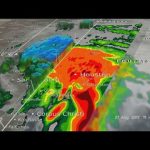
We worked with our partner agencies to use space-based assets to capture imagery of Hurricane Harvey that impacted the Texas-Louisiana Gulf Coast region. Imagery captured from the vantage point of space, provides data that weather forecasters, emergency responders and other officials can use to better inform the public. Views from the International Space Station, and NOAA’s GOES East satellite showed the massive size and movement of the storm. While our Global Precipitation Measurement (GPM) Mission analyzed the storm’s record-breaking rainfall – which led to catastrophic flooding in Texas and Louisiana. Due to the storm, our Johnson Space Center in Houston is closed through Labor Day, while the region recovers, but Mission Control remains operational in support of the crew aboard the International Space Station. Also, Final RS-25 Engine Test of the Summer, Key SLS Rocket Hardware Finished, and Researching Quiet Supersonic Flight!
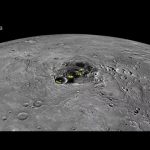
ESA’s first mission to Mercury, BepiColombo, is now set for final thermal tests before launching to the hottest planet in our Solar System in October 2018. Europe said farewell to the spacecraft in July when it was at the European Space Research and Technology Centre (ESTEC) in Noordwijk, the Netherlands, in its launch configuration.
BepiColombo is a joint mission to Mercury between the ESA and the Japan Aerospace Exploration Agency (JAXA) and consists of two science orbiters: ESA’s Mercury Planetary Orbiter and JAXA’s Mercury Magnetospheric Orbiter.
The European Space Operations Centre, ESOC, in Darmstadt, Germany, has served as Europe’s gateway to space for half a century. In 2017, the centre is celebrating its 50th anniversary, highlighting a rich history of achievement in space.
This video offers a high-speed visual tour through five decades of mission control, which encompasses 77 spacecraft, ranging from telecom, weather, Earth observation and climate monitoring satellites to spacecraft studying the Sun and peering deep into our Universe.
Exploring our Solar System, teams at ESOC have flown missions to the Moon, Mars and Venus, as well as three epoch-making triumphs: Giotto’s flyby of Halley’s Comet in 1986, the Huygens landing on Saturn’s moon Titan in 2005 and Rosetta’s delivery of Philae to comet 67P/Churyumov–Gerasimenko in 2014 – humanity’s first landing on a comet.
This visualization tracks the trajectory of the Voyager 1 spacecraft through the solar system. Launched on September 5, 1977, it was one of two spacecraft sent to visit the giant planets of the outer solar system. Voyager 1 flew by Jupiter and Saturn before being directed out of the solar system.
To fit the 40 year history of the mission into a short visualization, the pacing of time accelerates through most of the movie, starting at about 5 days per second at the beginning and speeding up to about 11 months per second after the planet flybys are past.
The termination shock and heliopause are the ‘boundaries’ created when the plasma between the stars interacts with the plasma flowing outward from the Sun. They are represented with simple grid models and oriented so their ‘nose’ is pointed in the direction (Right Ascension = 17h 24m, declination = 17 degrees south) represented by more recent measurements from other missions. https://svs.gsfc.nasa.gov/4139
Credit: NASA’s Scientific Visualization Studio
This visualization tracks the trajectory of the Voyager 2 spacecraft through the solar system. Launched on August 20, 1977, it was one of two spacecraft sent to visit the giant planets of the outer solar system. Like Voyager 1, Voyager 2 flew by Jupiter and Saturn, but the Voyager 2 mission was extended to fly by Uranus and Neptune before being directed out of the solar system.
To fit the 40 year history of the mission into a short visualization, the pacing of time accelerates through most of the movie, starting at about 5 days per second at the beginning and speeding up to about 11 months per second after the planet flybys are past.
The termination shock and heliopause are the ‘boundaries’ created when the plasma between the stars interacts with the plasma flowing outward from the Sun. They are represented with simple grid models and oriented so their ‘nose’ is pointed in the direction (Right Ascension = 17h 24m, declination = 17 degrees south) represented by more recent measurements from other missions.
Science Max – Ever wanted to build a bridge out of pasta? It’s not too hard and works better than you’d think. But what if we were to try to make a pasta bridge big enough for Phil to walk across? Plus, learn how to build a sandcastle you can stand on!
Have you ever done a science experiment and wondered “What would this be like if it were HUGE?” Welcome to Science Max, the exciting new series that turbocharges all the science experiments you’ve done at home.
In season 1, join Phil as he builds rocket cars, uses elastic energy to hurl pumpkins on a giant catapult, builds a bridge out of pasta that can hold a human, find magnets powerful enough to float Phil off the ground, and many more experiments taken to the MAX!
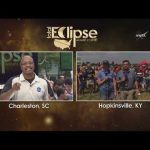
The Aug. 21 eclipse across America generated interest and excitement far and wide. Our coverage of the historic eclipse – the first coast-to-coast total solar eclipse for the U.S. in 99 years – was widespread … Anchored from the College of Charleston, in South Carolina – we showed you views of the eclipse that only NASA could. Views from space, from Earth’s atmosphere and from the ground – with expert observation and analysis provided from many of the 14 states around the country, situated along the path of totality. That’s where thousands of people flocked – for the ultimate eclipse experience – total darkness in the middle of the day!
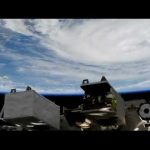
The National Hurricane Center (NHC) upgraded the remnants of tropical storm Harvey to a tropical depression on August 23, 2017 at 11 a.m. EDT (1500 UTC). Harvey became better organized and was revived after moving from Mexico’s Yucatan Peninsula into the Bay of Campeche. The warm waters of the Gulf of Mexico and favorable vertical wind shear promoted the regeneration of the tropical cyclone. This video includes views from The International Space Station recorded on August 24, 2017 at 6:15 p.m. Eastern Time.
During the eclipse, 14 states across the U.S. were in the path of totality and experienced more than two minutes of darkness in the middle of the day – with a partial eclipse viewable all across North America. The broadcast – Eclipse Across America: Through the Eyes of NASA – covered locations along the path of totality, from Oregon to South Carolina including public reactions from all ages. The eclipse’s long path over land provided a unique opportunity to study the Sun, Earth, Moon and their interaction.
This video is available for download from NASA’s Image and Video Library:
Aboard the International Space Station, Expedition 52 Flight Engineers Peggy Whitson, Jack Fischer and Randy Bresnik of NASA conducted a question and answer session with the agency’s newest class of astronauts during an in-flight “orientation” session Aug. 22 with the new selectees. Twelve new astronauts were announced by NASA on June 7 and will begin extensive training this year for future flight assignments.
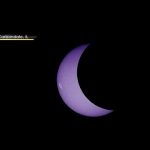
As the US enjoyed a total solar eclipse on 21 August 2017, ESA’s Sun-watching Proba-2 satellite captured three partial eclipses from its viewpoint, 800 km above Earth. Proba-2 orbits Earth about 14.5 times per day, and thanks to the constant change in viewing angle, it dipped in and out of the Moon’s shadow several times during the solar eclipse.
The Proba-2 images were taken by the SWAP imager, and show the solar disc in extreme-ultraviolet light to capture its turbulent surface and swirling corona corresponding to temperatures of about a million degrees.
Science Max – Phil starts with a balloon powered hover disc, then tries to make a maxed out version big enough to ride. In fact, why not make two and then race them! Phil also tries to use the power of friction to climb the walls and even to fly!
Have you ever done a science experiment and wondered “What would this be like if it were HUGE?” Welcome to Science Max, the exciting new series that turbocharges all the science experiments you’ve done at home.
In season 1, join Phil as he builds rocket cars, uses elastic energy to hurl pumpkins on a giant catapult, builds a bridge out of pasta that can hold a human, find magnets powerful enough to float Phil off the ground, and many more experiments taken to the MAX!
On Friday, August 18, NASA launched the third in a series of three advanced, Tracking and Data Relay Satellites, known as TDRS-M, from Cape Canaveral Air Force Station, in Florida. This latest addition to the fleet will augment a space communications network that provides the critical path for high data-rate communication to a host of spacecraft including the International Space Station and its resupply vehicles, the Hubble Space Telescope and many of NASA’s Earth-observing fleet spacecraft.
Scientific notes:
Stellar mass black holes vs. supermassive black holes
* Stellar mass black holes form from the collapse of massive stars at the ends of their lives, so they have roughly the same mass as a star. Supermassive black holes are physically identical to their smaller counterparts, except they are 10 thousand to a billion times the size of the sun. However, their formation is more of a mystery. They may form from the merging of smaller black holes. http://astronomy.swin.edu.au/cosmos/S/Supermassive+Black+Hole
Supermassive black holes at the center of galaxies
* Almost every large galaxy has a supermassive black hole at its center, but researchers are not yet sure (https://jila.colorado.edu/research/astrophysics/black-holes-galaxies) why that’s the case, how they originate, and what their role is in the creation and evolution of galaxies.
Why are stars different colors?
* The color of a star depends on its temperature (http://www.atnf.csiro.au/outreach/education/senior/astrophysics/photometry_colour.html). The hotter a star, the higher energy its light will be. Higher energy/temperature corresponds with the blue end of the visible spectrum and lower energy/temperature corresponds with the red end.
How does dark matter make stars spin faster?
* In the 1960s, astronomers Vera Rubin and Kent Ford noticed that stars at the edges of galaxies were moving just as fast as stars at the center, which surprised them: it appeared that the force of gravity causing stars to orbit the center of the galaxy was not weakening over distance. Their observation implied that something else, distributed throughout the galaxy, was exerting a gravitation pull. We now know that that “something else,” now named dark matter, accounts for about 85% of the matter in the universe. (It existence was inferred in the 1930s, when the astronomer Fritz Zwicky(http://www2.astro.psu.edu/users/rbc/a1/week_10.html) noticed that galaxies in clusters were moving faster than they should.)
Size of the universe
* The universe is only 13.8 billion years old, but has a radius of about 46 billion light-years. If nothing can travel faster than the speed of light, how can that be? The expansion of the universe, driven by dark energy, is causing distances between objects to grow. Note that it is not moving those objects apart; rather, it is increasing the amount of space between them. https://phys.org/news/2015-10-big-universe.html
Cosmic webs
* Galaxies are not distributed randomly (http://skyserver.sdss.org/dr1/en/astro/structures/structures.asp) in space; instead, clusters of galaxies form web-like patterns. These webs consist of filaments, where dark matter and ordinary (baryonic) matter are concentrated, and voids, where galaxies are scarce. Researchers believe that these large-scale structures grew out of minor fluctuations in density at the beginning of the universe.
Composition of the early universe
* Moments after the Big Bang, the universe formed the nuclei for what would be come the universe’s hydrogen and helium atoms, with one helium nucleus for every 10 or 11 hydrogen (http://umich.edu/~gs265/bigbang.htm). When the first stars formed, there were no heavier elements — those elements formed inside stars.
String Theory Landscape
* The String Theory Landscape is a theory that the universe we live in is one of many universes. It attempts to explain how certain constants of nature seem “fine-tuned” for life, which contradicts the anthropic principle, or the notion that we humans hold a special place in the universe. https://www.scientificamerican.com/article/multiverse-the-case-for-parallel-universe/%0A
Disintegration of the universe
* In the future Degenerate Era of the universe, as space-time expands and stars burn up, all of the matter in stars will be consumed by black holes. But even black holes are not forever. Stephen Hawking theorized that black holes will slowly radiate away their mass in what is now called Hawking radiation until they too dissipate away. http://www.nytimes.com/books/first/a/adams-universe.html
______
MEDIA CREDITS:
Music provided by APM
Sound effects: Freesound.org
Additional Animations:
– Galaxy within Universe: Edgeworx;
– Stars at center of Milky Way – NASA/NCSA University of Illinois Visualization by Frank Summers, Space Telescope Science Institute, Simulation by Martin White and Lars Hernquist, Harvard University
Science Max – Phil starts with a Popsicle stick catapult. Then he uses everything he knows about elastic energy to build a full-size catapult that hurls pumpkins! Plus, a maxed out paddle wheel boat and a historical re-enactment (sort of) of how catapults were used in medieval days.
Have you ever done a science experiment and wondered “What would this be like if it were HUGE?” Welcome to Science Max, the exciting new series that turbocharges all the science experiments you’ve done at home.
In season 1, join Phil as he builds rocket cars, uses elastic energy to hurl pumpkins on a giant catapult, builds a bridge out of pasta that can hold a human, find magnets powerful enough to float Phil off the ground, and many more experiments taken to the MAX!
Phil builds a balloon powered car in the lab. Then he tries to make one big enough to ride. Can the Science Max build team find a big enough balloon? Or are balloons the way to go? Plus, Newton’s Cradle out of bowling balls, how Guinea Pigs got their name and Newton’s 3rd Law.
Have you ever done a science experiment and wondered “What would this be like if it were HUGE?” Welcome to Science Max, the exciting new series that turbocharges all the science experiments you’ve done at home.
In season 1, join Phil as he builds rocket cars, uses elastic energy to hurl pumpkins on a giant catapult, builds a bridge out of pasta that can hold a human, find magnets powerful enough to float Phil off the ground, and many more experiments taken to the MAX!
BuzzFeedBlue
Sports, video games, Unsolved & more epic daily videos!
MUSIC
Licensed via Audio Network
STILLS
O.J. Simpson Criminal Trial – Simpson Tries on Bloodstained Gloves – June 15, 1995
Lee Celano/Getty Images
Attingham Park
Andreas von Einsiedel/Getty Images
USA, Florida, Jacksonville, satellite image
Stocktrek/Getty Images
A John Dillinger wanted poster.
John Parrot/Stocktrek Images/Getty Images
Front page article covering the case of ‘Granny Killer’ John Wayne Glover from T
Fairfax Media / Contributor/Getty Images
Black Binder Clips (with path)
subjug/Getty Images
Evidence in plastic bags
Paul Taylor/Getty Images
vintage map of the world 1831
javarman3/Getty Images
rope string
Picsfive/Getty Images
Old paper sheets, vintage photo frames and corners, open book
LiliGraphie/Getty Images
Bulletin Board
subjug/Getty Images
pushpins
ConstantinosZ/Getty Images
Blank old corkboard
GuidoVrola/Getty Images
Lotto ticket
eduardrobert/Getty Images
Royalty free vector illustration Most Wanted Poster
bubaone/Getty Images
Classified files
EXTREME-PHOTOGRAPHER/Getty Images
Headlines From The Charles Stuart Shooting
Boston Globe / Contributor/Getty Images
Parcel wrap
Nastco/Getty Images
Receipts
DNY59/Getty Images
Planning notes on a napkin next to coffee
edfuentesg/Getty Images
Call me napkin
grapegeek/Getty Images
“Missing” and “Wanted” posters taped to brick wall
RapidEye/Getty Images
passport
Howard Sokol/Getty Images
gun for hire
THEPALMER/Getty Images
Secret document folder
Robert Mizerek/Getty Images
Set of various paint splatters
itchySan/Getty Images
Vintage light bulbs
choness/Getty Images
Finger Print Distressed
ScottTalent/Getty Images
1970s Detective
Robbie Augspurger/Getty Images
A white theater mask
Adam Burn/Getty Images
1950s 1960s PORTRAIT MALE…
H. Armstrong Roberts/ClassicStock /Getty Images
Royalty – Coronation of Queen Elizabeth II – London
PA Images / Contributor/Getty Images
1960s SMILING MAN IN SUIT…
H. Armstrong Roberts/ClassicStock/Getty Images
A blue blanket, folded
Dorling Kindersley/Getty Images
Pedigree Pram
Raymond Kleboe Collection / Contributor/Getty Images
Cardboard box on beach
MGP/Getty Images
Abandoned Tractor On Field
Cami Lind / EyeEm/Getty Images
Child touching wet metallic surface
PhotoAlto/Anne-Sophie Bost/Getty Images
Loopable snowfall alpha layer with foreground
Robin_Hoood/Getty Images
helix soft background lines
bacalaofilms/Getty Images
No pictures!
Lev Olkha/Getty Images
Steel compartments in morgue
Frank P wartenberg/Getty Images
Unknown Boys Footprints
Temple University library, Philadelphia, PA/Getty Images
Woman Depressed And Alone
sdominick/Getty Images
Stay Away!
markgoddard/Getty Images
Remmington Bristow
Daily News by Satif Piatat/Getty Images
Artificial Intelligence and Mind related vector icon set.
lushik/Getty Images
A run-down, abandoned house with graffiti on it, Detroit, Michigan, USA
Peter Baker/Getty Images
Mother hitting daughter
Peter Dazeley/Getty Images
Salvation Army at work, attending to nee
RALPH MORSE/Getty Images
Boy on Mechanical Horse
MacGregor and Gordon/Getty Images
llegitimate infant boy is separated fro
ALLAN GRANT/Getty Images
USA, New Jersey, Mendham, Garage sale
Daniel Grill/Getty Images
Baby’s Crib Alone in Attic Room
LOOK Photography/Getty Images
1950s 1960s YELLOW HOUSE.
H. Armstrong Roberts/ClassicStock/Getty Images
Psychic/Palm Reading dwelling, home, business
Pete Starman/Getty Images
High Angle View Of Boy Sleeping On Bed
Orenda Randuch / EyeEm/Getty Images
Family w Christmas tree at home
George Marks/
Science Max brings you a special compilation including some of our favourite episodes from season 1. Tune in and prepare for a heap of science madness!
Have you ever done a science experiment and wondered “What would this be like if it were HUGE?” Welcome to Science Max, the exciting new series that turbocharges all the science experiments you’ve done at home.
In season 1, join Phil as he builds rocket cars, uses elastic energy to hurl pumpkins on a giant catapult, builds a bridge out of pasta that can hold a human, find magnets powerful enough to float Phil off the ground, and many more experiments taken to the MAX!
Steve Wilson: “Look, there was another point I wanted to make about the limits of AI. One of the most commercially realistic technologies these days is conversation technology, the chatbots. The idea of helping people through the complexity of their interactions, their business interactions through chat is a powerful idea. Some recent experience with chatbots that have gone feral, chatbots that have gone wild, and adopted racist guises. Calling a bot racist is a problematic idea, but let’s just call it what it is. The Microsoft Tay bot [was] released into Twitter to learn the mores and foibles of human language and to adopt those lessons of conversation and then start automating conversation. [It] proved to be a disaster within hours. The salutary lesson of the Tay experience was: Think about a toddler. The salutary lesson of the Tay experience was that this artificial intelligence was fundamentally not human-like. It’s so far short of human that we need to understand this. If a toddler learned some foul language in the playground and brought that home, and she started speaking inappropriately, then you take the toddler, you sit her down and you explain to her. You have an attitude adjustment, is the euphemism that we need. We’re reprogramming the toddler. What they did with Tay was they turned her off. They switch her off, it was like the digital death penalty for becoming unacceptable. The really deep problem here is that there is no teachable moment for an artificial intelligence. You cannot take the artificial intelligence and sit it down and explain where it went wrong. We are so far short of having a teachable moment for artificial intelligence, we’re so far short of having self-awareness, that we need to be really careful with the sort of implicit assumption that self-driving cars will make ethical decisions. Or that conversational robots will have human-like properties. We don’t even know how self-awareness works in ourselves, let alone how we’re going to program it.”
Acting Administrator Robert Lightfoot was in Kazakhstan on July 28 to observe the launch to the International Space Station of our astronaut Randy Bresnik with his crewmates – Sergey Ryazanskiy of Roscosmos, and Paolo Nespoli of the European Space Agency. The trio is scheduled to spend more than four months on the station working on hundreds of science and technology experiments. Also, New 4K Footage of Spacewalk, NASA Technologies Showcased at AirVenture Event, Preparing to Chase the Total Solar Eclipse from the Sky, and Another Successful RS-25 Engine Test!
ESA astronaut Paolo Nespoli, NASA astronaut Randy Bresnik and Roscosmos commander Sergey Ryazansky launched to the International Space Station on 28 July from Baikonur Cosmodrome on their Soyuz MS-05 spacecraft.
Paolo, Randy and Sergey will spend five months in space working and living on the International Space Station.
What if everything in the universe came to your doorstep…in a box?! What The Physics is BACK! Future episodes will explore the universe—but first, let’s unbox it.
Subscribe: http://youtube.com/whatthephysics?sub…
↓Want more info?↓
SCIENTIFIC NOTES:
Explosive young stars
* The average lifetime of a star is about 10 billion years, but the bigger the star, the shorter its life. One rare type of star, called a hypergiant, can be tens, hundreds, or even a thousand times the mass of our sun. These stars burn out and explode into supernovae in just a few million years. http://www.guide-to-the-universe.com/hypergiant-star.html
Black holes
* Black holes form from the collapse of a massive star at the end of its life, but this only happens in stars about three times as massive as the sun. http://burro.case.edu/Academics/Astr201/EndofSun.pdf
How big is the universe?
* Probably infinite. No one knows the size of the universe for sure, and we may never know, but the latest thinking is that it probably goes on forever. https://map.gsfc.nasa.gov/universe/uni_shape.html
Standard cosmological model
* According to the standard cosmological model, the universe started with a big bang, underwent rapid inflation within the first fraction of a second, and continues to expand, driven by a vacuum energy called dark energy. All of the structure we see in the universe has come from interactions between dark energy and dark matter (which accounts for about 85% of the universe’s matter). This model describes and predicts many phenomena in the universe but is not perfect. https://physics.aps.org/articles/v8/108
False vacuum model
* The false vacuum model is a real, albeit unlikely theory. All the fundamental forces of nature have corresponding fields (e.g., gravitational fields, magnetic fields, etc.), and we generally believe that the universe is at rest in a global minimum of the potentials of those fields. But if we are instead at rest in a local minimum, or a “false vacuum,” the universe could potentially be nudged, catastrophically, into a lower minimum.
Recycling stars into life
* Before the first stars, the universe was all hydrogen and helium. All heavier elements, including the building blocks of life, were forged in stars.
Dark matter and dark energy
* Only 5% of the universe is made up of matter we can see. The “missing mass” later dubbed dark matter was first noticed in the 1930s; dark energy was discovered in the 1990s. In both cases, their existence was inferred by their effect on objects they interact with. However, they are still not directly observable, so nobody knows yet what they are made of.
Leftover light from the Big Bang
* The theory of the Big Bang predicted the existence of cool radiation pervading the universe, left over from its beginning. In an accidental discovery, two New Jersey scientists discovered the cosmic microwave background, a nearly uniform bath of radiation throughout the universe at a temperature of about 3 Kelvin, or -454 degrees Fahrenheit.
Gravitational waves
* Albert Einstein predicted the existence of gravitational waves in his theory of general relativity in 1916. According to his theory, the acceleration of massive objects, like black holes, should send ripples through space-time at the speed of light. A century after his prediction, two merging black holes sent a ripple through space-time that was detected on Earth as a signal that stretched the 4-kilometer arms of a detector by less than 1/1,000 the width of a proton.
Cosmic dust
* Cosmic dust is cast off from stars at the end of their lives and hovers in galaxies as clouds. These clouds of dust absorb ultraviolet and visible light, obscuring much of what lies behind them. This makes it notoriously difficult to study things like the dusty center of our galaxy.
The observable universe
* The universe is 13.8 billion years old. Since the distance we can observe is limited by the time it takes light to travel to Earth, we can only ever observe a fraction of the universe: an expanding sphere around us that is now about 46 billion years in radius. However, the universe is much larger than what we can observe.
CREDITS:
Host, Writer, Producer: Greg Kestin
Animation & Compositing: Danielle Gustitus
Contributing Writers: Lissy Herman, HCSUCS
Filming, Writing, & Editing Contributions from:
Samia Bouzid and David Goodliffe
Creation of Sad Star Image: Drew Ganon
Special thanks:
Julia Cort
Lauren Aguirre
Ari Daniel
Anna Rothschild
Allison Eck
Fernando Becerra
And the entire NOVA team
Engineers conduct the third in a series of RS-25 flight controller tests on July 25, 2017, for NASA’s Space Launch System (SLS) rocket. The more than 8 1/2 minute test on the A-1 Test Stand at NASA’s Stennis Space Center in Mississippi signaled another step toward launch of NASA’s new Space Launch System (SLS). The SLS rocket, powered by four RS-25 engines, along with the Orion spacecraft will take astronauts on a new era of exploration beyond Earth’s orbit into deep space.
Science Max brings you a special compilation including some of our favourite episodes from season 1. Tune in and prepare for a heap of science madness!
Have you ever done a science experiment and wondered “What would this be like if it were HUGE?” Welcome to Science Max, the exciting new series that turbocharges all the science experiments you’ve done at home.
In season 1, join Phil as he builds rocket cars, uses elastic energy to hurl pumpkins on a giant catapult, builds a bridge out of pasta that can hold a human, find magnets powerful enough to float Phil off the ground, and many more experiments taken to the MAX!
Discover more about our planet with the Earth from Space video programme. In this special edition, Jean-Yves Le Gall, President of the CNES French Space Agency, and Josef Aschbacher, Director of ESA’s Earth Observation Programmes, join the show to discuss how cooperation will further benefit Earth observation and the Copernicus environmental monitoring programme.
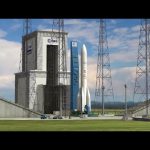
At the European spaceport in Kourou, French Guiana, the new launch facilities for ESA’s Ariane 6 launcher are being built. With the Ariane 6 launcher and the upgrade of the Vega to Vega C, Europe expands its launching capacities by creating versatile launchers that meet market demands. At the same time ESA supports both institutional missions and European industry as both Ariane 6 and Vega C will be fully European. With Ariane 6 and Vega C, Europe secures its independent access to space for years to come.
Science Max brings you a special compilation including some of our favourite episodes from season 1. Tune in and prepare for a heap of science madness!
Have you ever done a science experiment and wondered “What would this be like if it were HUGE?” Welcome to Science Max, the exciting new series that turbocharges all the science experiments you’ve done at home.
In season 1, join Phil as he builds rocket cars, uses elastic energy to hurl pumpkins on a giant catapult, builds a bridge out of pasta that can hold a human, find magnets powerful enough to float Phil off the ground, and many more experiments taken to the MAX!
The LISA Pathfinder mission ends on 18 July 2017 after a successful demonstration of the technology needed to detect gravitational waves in space. These vibrations in spacetime, first predicted by Einstein over a hundred years ago, are produced by huge astronomical events – such as two black holes colliding – and will allow scientists to open new windows into our universe.
The success of the LISA Pathfinder mission has paved the way for the newly selected LISA mission which, when built and launched, will detect gravitational waves from objects up to a million times larger than our Sun.
The film features interview soundbites from Dr Paul McNamara, LISA Pathfinder Project Scientist, at the European Space Agency’s European Technology and Science facility (ESTEC) in The Netherlands.
NASA Langley – 100 Years: Something happened 100 years ago that changed forever the way we fly, the way we explore space and how we study our home planet. That something was the establishment of what is now NASA’s Langley Research Center in Hampton, Virginia, which commemorates its 100th anniversary on July 17, 2017.
Astronaut Neil Armstrong, the first human to step foot on the moon and who learned how to do so by training at Langley said, “If a competition were held to determine the organization that had accomplished the largest number of advancements to aeronautic and aerospace progress, my nomination would be this place.”
This 45-minute documentary looks back across the 100 years, updates us on work being done at Langley today, and takes a peek into the future.
Find out more about NASA Langley’s centennial at: https://www.nasa.gov/langley/100
It’s an age when many of us would be considering winding down, and cutting back on physical exertion. Not so for Paolo Nespoli, who is about to embark on his third space mission at the age of 60, which makes him Europe’s oldest astronaut. At the end of July he will voyage to the International Space Station (ISS), where he will remain for some months.
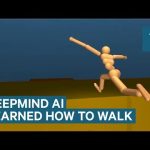
Google’s artificial intelligence company, DeepMind, has developed an AI that has managed to learn how to walk, run, jump, and climb without any prior guidance. The result is as impressive as it is goofy.
Science Max brings you a special compilation including some of our favourite episodes from season 1. Tune in and prepare for a heap of science madness!
Have you ever done a science experiment and wondered “What would this be like if it were HUGE?” Welcome to Science Max, the exciting new series that turbocharges all the science experiments you’ve done at home.
In season 1, join Phil as he builds rocket cars, uses elastic energy to hurl pumpkins on a giant catapult, builds a bridge out of pasta that can hold a human, find magnets powerful enough to float Phil off the ground, and many more experiments taken to the MAX!
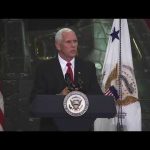
Vice President Mike Pence spoke to employees on July 6 at our Kennedy Space Center in Florida, highlighting the public/private partnerships transforming the center into a multi-user spaceport, and changing the way we do business in low-Earth orbit. Acting Administrator Robert Lightfoot and Kennedy Director Bob Cabana accompanied the Vice President on tours of several facilities currently being leased by private space companies. The tour showcased hardware, systems and infrastructure, that will soon facilitate U.S. based astronaut launches and eventual missions to deep space. Also, SpaceX Dragon Released from Space Station, Happy July 4th from Space, and 3D-Printed Habitat Challenge!
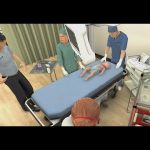
Recently, we partnered with Children’s Hospital Los Angeles (CHLA) to build a VR simulation that places medical students and staff in rare yet high-risk pediatric trauma situations where split-second decisions determine whether a patient lives or dies. Thanks to the immersive power of VR, we can replicate these training scenarios in true-to-life fashion, complete with paramedics rattling off symptoms, nurses and techs urging you to make a decision, and distraught parents praying for their child’s survival.
These visceral, interactive exercises up the stakes compared to traditional educational tools like non-VR simulations and mannequins. Powered by AiSolve and brought to life by the Hollywood VFX magic of BioflightVR, these virtual scenarios based on actual CHLA case studies let doctors and students practice and learn in realistic workplace conditions. Not only does this new innovation stand to significantly reduce the time and cost associated with mannequin-based training, it also better prepares people to respond in the real world.
Vice President Mike Pence visited NASA’s Kennedy Space Center in Florida today and addressed employees at the iconic Vehicle Assembly Building. The vice president also toured Kennedy to learn more about the center’s work as a multi-user spaceport for commercial and government clients, and he saw the agency’s progress toward launching from U.S. soil on spacecraft built by American companies. He visited the Neil Armstrong Operation’s and Checkout Building to see NASA’s Orion spacecraft that will travel past the moon, and eventually on to Mars atop the Space Launch System rocket.