Discover how you can participate in ESA programmes as a student, and learn about your entry options once you’ve got your Masters degree. ESA recruitment and education colleagues share some valuable info with you.
Author: kidibot
-
Tim Peake mission overview
Named after Isaac Newton’s text Naturalis Principia Mathematica, ESA’s Principia mission will be the eighth long-duration mission to the International Space Station. British astronaut Tim Peake will be launched from Baikonur in Kazakhstan onboard a Russian Soyuz vehicle, spending five months in orbit. He’ll carry out an intensive schedule of European and international experiments, in addition to numerous educational activities from space.
-

Sugar Kaleidoscope – SICK Science #232
Want more experiments like this? Check out http://www.stevespanglerscience.com/p…
SICK Science® is a registered trademark of Steve Spangler, Inc.
© 2015 Steve Spangler Science all rights reserved
-
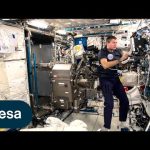
Andreas Mogensen: MARES sessions
This timelapse shows ESA astronaut Andreas Mogensen working with Roscosmos cosmonaut Sergei Volkov during the iriss mission to unpack, setup, test and then store the MARES muscle-measurement machine in Europe’s space laboratory Columbus on the International Space Station over three days.
The Muscle Atrophy Research and Exercise System, or MARES for short, is a three-in-one muscle-measurement machine on the International Space Station that monitors astronauts’ muscles as they work out.
Muscle strength decreases during spaceflight and researchers need to know why this happens in order to prepare for long-duration missions and safe space tourism. MARES is an exercise bench that offers detailed information about how muscles behave during spaceflight.
MARES was a large part of Andreas’s ten-day iriss mission to the International Space Station that started 2 September 2015.
Follow Andreas via http://andreasmogensen.esa.int/
Read more about the MARES experiment on the iriss blog.Find out more about Juice in ESA’s launch kit: https://esamultimedia.esa.int/docs/science/Juice-LaunchKit.pdf
★ Subscribe: http://bit.ly/ESAsubscribe and click twice on the bell button to receive our notifications.
Check out our full video catalog: http://bit.ly/SpaceInVideos
Follow us on Twitter: http://bit.ly/ESAonTwitter
On Facebook: http://bit.ly/ESAonFacebook
On Instagram: http://bit.ly/ESAonInstagram
On LinkedIn: https://bit.ly/ESAonLinkedIn
On Pinterest: https://bit.ly/ESAonPinterest
On Flickr: http://bit.ly/ESAonFlickrWe are Europe’s gateway to space. Our mission is to shape the development of Europe’s space capability and ensure that investment in space continues to deliver benefits to the citizens of Europe and the world. Check out https://www.esa.int/ to get up to speed on everything space related.
Copyright information about our videos is available here: https://www.esa.int/ESA_Multimedia/Terms_and_Conditions
#ESA
#ISS
#AndreasMogensen -
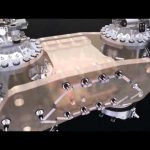
Lisa Pathfinder mission overview
LISA Pathfinder will pave the way for future missions by testing in flight the very concept of gravitational wave detection: it will put two test masses in a near-perfect gravitational free-fall and control and measure their motion with unprecedented accuracy. LISA Pathfinder will use the latest technology to minimise the extra forces on the test masses, and to take measurements.
The inertial sensors, the laser metrology system, the drag-free control system and an ultra-precise micro-propulsion system make this a highly unusual mission.
LISA Pathfinder is an ESA mission, which will also carry a NASA payload.
-
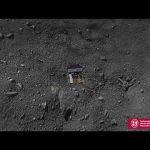
Reconstructing Philae’s flight
Data from both the Philae lander and Rosetta orbiter experiments, as well as simulation results based on Philae’s mechanical design have been used to reconstruct the lander’s attitude and motion during its descent and touchdowns on Comet 67P/Churyumov-Gerasimenko on 12 November 2014.
The new animation presented today, one year after Philae touched down on the comet, focuses on Philae’s dramatic two-hour flight from Agilkia to Abydos.
More details in the Rosetta blog: http://blogs.esa.int/rosetta/2015/11/12/reconstructing-philaes-flight-across-the-comet/
Credits: The video was prepared with inputs from the ROMAP, RPC-MAG, OSIRIS, ROLIS, CIVA CONSERT, SESAME and MUPUS instrument teams as well as from the Lander Control Centre at DLR and Science Operation and Navigation Center at CNES.
-
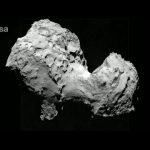
Rosetta Philae landing: one year
It’s been an extraordinary year for the Rosetta comet mission since Philae landed on the surface of Comet 67P/Churyumov-Gerasimenko on 12 November 2014.
Continual data from the orbiter, together with information collected over several days from the lander, is providing a comprehensive picture of a remnant from our Solar System.
This film covers the most recent science news from the Rosetta mission, as well as selected scientific highlights from the last year. It includes the comet’s unusual surface terrace structure, its formation from two colliding objects producing the unusual rubber duck shape, how water is transported from inside the comet towards the surface, and the surprising detection of molecular oxygen – familiar on Earth but not on a comet.
Find out more about the Rosetta mission: http://rosetta.esa.int/
-
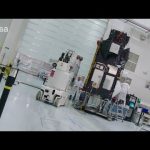
Sentinel-3 mission overview
Sentinel-3A’s preparation is finished and the satellite will soon be shipped to the Russian Cosmodrome of Plesetsk, in Northern Russia for its launch on top of a Rockot planned end of this year. Carrying a suite of state-of-the-art instruments, Sentinel-3 is set to play a key role in Copernicus, the world’s largest environmental monitoring programme operated by the European Commission. It will provide highly accurate measurements on Earth’s oceans, land, ice and atmosphere.
-
Astronaut Recruitment
NASA is on a Journey to Mars and we are on the lookout for a new generation of space pioneers. Do you think you have what it takes to join NASA’s next astronaut class? Visit: http://www.nasa.gov/astronauts
-

Magic Color Changing Sugar – SICK Science! #231
This is a magic trick. We reveal the secret in this video. Understand that this is meant to be performed without sharing the secret ingredient.
Want more experiments like this? Check out http://www.stevespanglerscience.com/product/naked-eggs-and-flying-potatoes
Sick Science® is a trademark of Steve Spangler, inc.
© 2015 Steve Spangler Science all rights reserved
-
Advancing the Journey to Mars on This Week @NASA – October 30, 2015
During an Oct. 28 keynote speech at the Center for American Progress, in Washington, NASA Administrator Charlie Bolden spoke about the advancement made on the journey to Mars and what lies ahead for future administrations and policy makers. NASA’s recently released report “Journey to Mars: Pioneering Next Steps in Space Exploration,” outlines its plan to reach Mars in phases – with technology demonstrations and research aboard the International Space Station, followed by hardware and procedure development in the proving ground around the moon, before sending humans to the Red Planet. Also, Space station spacewalk, Another record in space for Kelly, Mars Landing Sites/ Exploration Zones Workshop, Cassini’s “deep dive” flyby and more!
-
Third Rock Radio – Radio Powered with NASA
Explore and discover new worlds of music with NASA’s Third Rock Radio. RFC Media matches “new rock discovery” with tales of NASA’s exciting, on-going mission to create one of the most talked about digital radio channels on, or off the planet. Third Rock fans worldwide share their discoveries from Music Explorers who present ”the best new rock out there – really out there!” Third Rock’s disarmingly hip, street-smart context connects and engages young adults and helps NASA deepen relationships with its next generation of avid supporters. Third Rock Radio is a recognized New Media phenomenon attracting the brightest and best, tech-savvy young adults. Third Rock’s audience is a blend of scientists, engineers, researchers, innovators and astronauts, together with students and music lovers everywhere, all of whom share a love for the new and undiscovered.
Listen Live: ThirdRockRadio.net
-
Space Rocks
There are lots of names associated with space rocks, so what is the difference? Join the Royal Observatory Greenwich astronomers to find out. They will also explore what space rocks can tell us about our very own planet Earth. http://bit.ly/rogvideo #rogspacerocks
Credits:
ROG – Creator
Beakus – Producer
Amaël Isnard – Director -

The Rosetta Mission
The Rosetta Mission has captured the interest and imagination of a generation and it is not over yet! Take a look at this Royal Observatory Greenwich video which explains what Rosetta and Philae have achieved as well as the impact the mission has had on our knowledge of our very own solar system. http://bit.ly/rogvideo #rogrosetta
Credits:
ROG – Creator
Beakus – Producer
Amaël Isnard – Director -
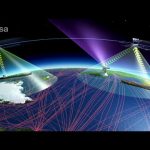
Safe at sea with satellites
At sea, space technology is used to help save lives every day: managing traffic between ships, picking up migrants and refugees in distress or spotting oil spills. The European Space Agency is once again at the forefront developing new technologies and satellites: to keep us safe at sea and to monitor the environment. Space makes a difference here on Earth and certainly at sea where there is no infrastructure.
-

Real-Life Robots
Meet some real-life robots, and find out what robots really are, and what they do for us every day!
———-
Like SciShow? Want to help support us, and also get things to put on your walls, cover your torso and hold your liquids? Check out our awesome products over at DFTBA Records: http://dftba.com/SciShowOr help support us by becoming our patron on Patreon:
https://www.patreon.com/scishow
———-
Looking for SciShow elsewhere on the internet?
Facebook: http://www.facebook.com/scishow
Twitter: http://www.twitter.com/scishow
Tumblr: http://scishow.tumblr.com
Instagram: http://instagram.com/thescishowSOURCES:
http://www.sciencekids.co.nz/robots.htmlhttp://idahoptv.org/sciencetrek/topics/robots/facts.cfm
https://student.societyforscience.org/article/cool-jobs-wide-world-robots
http://www.robothalloffame.org/inductees/03inductees/unimate.html
http://mars.nasa.gov/msl/mission/rover/
http://www.nasa.gov/mission_pages/station/main/robonaut.html#.VgJFGJc7FwU
-
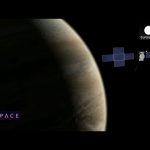
ESA Euronews: Unlocking the secrets of the Jupiter’s Icy Moons
In this edition of Space we set a course for Jupiter, destination of the next European Space Agency mission.
The aim of JUICE (JUpiter ICy moon Explorer) is to provide the most comprehensive exploration of the giant planet and, in particular, of its moons; supposedly hiding habitable zones under their icy crusts.
Jupiter is more than eleven times larger than Earth but is mainly made of gas. During its three and a half year mission, which blasts off in 2022, JUICE will travel around the giant planet, studying its atmosphere and three of its planet-sized satellites: Ganymede, Europa, and Callisto.
This video is also available in the following languages:
French: https://www.youtube.com/watch?v=NNRq08gzJik
German: https://www.youtube.com/watch?v=_Ckhlff_3Fs
Spanish: https://www.youtube.com/watch?v=Rj2q4naBi40
Italian: https://www.youtube.com/watch?v=G_H3UfanowA
Portuguese: https://www.youtube.com/watch?v=rkWwwUEtiCY
Greek: https://www.youtube.com/watch?v=WCz6jL0Cm4M
Hungary: https://www.youtube.com/watch?v=AelLZAp8DR0 -
ESA Euronews: Φως στα μυστικά του Δία
Καλώς ήλθατε στο νέο επεισόδιο του Space. Προσπαθήστε να φανταστείτε ένα ηλιακό μοντέλο στο οποίο κάποιοι πλανήτες θα έχουν κάτω από την επιφάνεια περισσότερο νερό από ότι υπάρχει στη γη.
Αυτός είναι ο επόμενος στόχος της Ευρωπαϊκής Υπηρεσίας Διαστήματος. Θα επανέλθουμε στο θέμα, αφού πρώτα μάθουμε κάποια διαστημικά νέα.
-
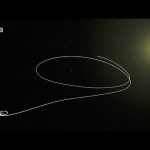
LISA Pathfinder’s journey to L1
The journey and final orbit of LISA Pathfinder, ESA’s technology demonstration mission that will pave the way for future gravitational-wave observatories in space.
LISA Pathfinder is scheduled for launch on 2 December 2015 on a Vega rocket from Europe’s Spaceport in French Guiana. Vega will place the spacecraft into an elliptical orbit, with a perigee (closest approach to Earth) of 200 km, apogee (furthest point) of 1540 km, with the path angled at 6.5º to the equator.
Then, once Vega’s final stage is jettisoned, LISA Pathfinder will continue under its own power, beginning a series of six apogee-raising manoeuvres over the next two weeks.
The last burn will set LISA Pathfinder on its way towards its final orbiting location. The cruise will last about six weeks, and the propulsion module will be discarded along the way four weeks in.
Eventually, the spacecraft will circle the L1 Sun–Earth Lagrangian point. There, LISA Pathfinder will begin its six months of demonstrating key technologies for space-based observation of gravitational waves.
-
Inspiral Carpets dedicate ‘Saturn V’ to Tim Peake
The iconic group Inspiral Carpets from Oldham, Greater Manchester, have dedicated their classic song Saturn V to ESA astronaut Tim Peake. Formed by musicians Graham Lambert and Stephen Holt in 1983, Inspiral Carpets were one of the bands associated with the ‘Madchester’ scene that came to prominence in the late 1980s and early 1990s. The band send this message: “From Inspiral Carpets, with respect and love, to our friend Tim Peake!”
Tim Peake is set for launch to the International Space Station on his five-month Principia mission on 15 December 2015.
Connect with Tim at http://timpeake.esa.int and follow him on Twitter: @astro_timpeake
#spacerocks
#PrincipiaWith thanks to Martyn Walsh & Inspiral Carpets
Flimed by BOSC Productions (www.facebook.com/BoscProductions) -

Perfect Fake Blood – Easiest Recipe EVER – SICK Science! #230
This is hands down the BEST and easiest fake blood recipe out there. Our secret is the unique combination of Imperial powdered sugar and cocoa powder. The combination with red food coloring makes this the sickest BLENDER BLOOD you can make.
Learn more about fake blood at http://www.stevespanglerscience.com/lab/experiments/fake-blood-recipes/
Check out http://www.HalloweenScience.com for more spooky fun.
Want more experiments like this? Check out http://www.stevespanglerscience.com/product/naked-eggs-and-flying-potatoes
Sick Science® is a trademark of Steve Spangler, inc.
© 2015 Steve Spangler Science all rights reserved
-
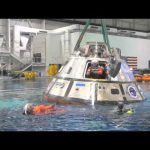
NASA & USDA teams to plant seeds Today on This Week @NASA – October 9, 2015
On Monday, October 5th, NASA Deputy Administrator Dava Newman and U.S. Department of Agriculture (USDA) Deputy Secretary Krysta Harden planted “Outredgeous” Red Romaine Lettuce seeds in USDA’s People’s Garden, sister seeds of those grown and harvested on the International Space Station. During the event in Washington, D.C., they also signed an a new interagency agreement expanding USDA and NASA’s commitment to promoting careers in science, technology, engineering, agriculture and math to young people. Also, CubeSats launched to test new technology, New Orion crew egress test, NASA living of Land in Space? NASA lends a helping hand for Start Ups, Meet the New Inductees to the Glenn Hall of Fame, and it’s National Cybersecurity Awareness Month, so Stop, Think & Connect.
-
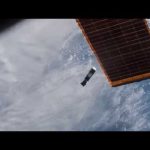
ESA CubeSats deployed from the ISS
On 5 October at 15:55 CEST two ESA CubeSats, the student-built AAUSAT5 and the professional technology demonstrator GomX-3, were deployed from the International Space Station (ISS). The two satellites have just started their mission in space.
Credit: ESA/NASA/Nanoracks
-

iriss Soyuz TMA-18M timelapse (4K)
This timelapse video shows the Soyuz TMA-18M spacecraft moving from its integration facility to it launch pad in Baikonur Cosmodrome and the launch on 2 September 2015 with commander Sergei Volkov, ESA astronaut Andreas Mogensen and Aidyn Aimbetov to the International Space Station.
Andreas became Denmark’s first astronaut when he left our planet on his 10-day ‘iriss’ mission. ESA used the mission to test new technologies and conduct a series of scientific experiments.
Andreas returned to Earth with Soyuz spacecraft commander Gennady Padalka and Kazakh cosmonaut Aidyn Aimbetov on 12 September.
Follow Andreas via http://andreasmogensen.esa.int
Credit: Directed by Stephane Corvaja – ESA and edited by Manuel Pedoussaut – Zetapress ; Music by Hubrid TMA-18
-
Teresa Antoja – My work as post doc on the Gaia Mission
Teresa Antoja holds a PhD in Physics and works as Research Fellow on the Gaia Mission. She gets everything ready so that the data coming down from the spacecraft can be used quickly and efficiently, contributing to its scientific exploitation by scientists all over the world that will revolutionise our view of our galaxy.
-

Tyche: The True AI Companion for Kids
TYCHE is an AI robot companion for children. It creates an atmosphere that promotes learning, socializing, and playing as it enhances the imagination and creativity of young minds. The robot talks, listens, thinks and reasons to plan activities and solve problems.
-

Does this look white to you?
When you mix red and green, what do you get? White light is all of the colors, right? So, how do computer screens show you every wavelength of light? Or do they?
Only some humans can see this type of light https://www.youtube.com/watch?v=CSu0cV3fqi8
Singing this Note is IMPOSSIBLE! https://www.youtube.com/watch?v=F64xcPKKES8https://instagram.com/thephysicsgirl
https://twitter.com/thephysicsgirl
https://facebook.com/thephysicsgirl
https://physicsgirl.orgHelp us translate our videos! http://www.youtube.com/timedtext_cs_panel?c=UC7DdEm33SyaTDtWYGO2CwdA&tab=2
Host/Writer: Dianna Cowern
Editor: sefdstuff.com/sciencePhysics Girl has joined PBS Digital Studios! https://www.youtube.com/user/pbsdigitalstudios
RGB Image: Luís Flávio Loureiro dos Santos, https://video.kidibot.ro/wp-content/uploads/2020/12/youtubomatic/a-3ELCD_RGB.jpg
-

Sugar Yeast Experiment – Sick Science! #229
Want more experiments like this? Check out http://www.stevespanglerscience.com/lab/experiments/
Sick Science® is a trademark of Steve Spangler, inc.
© 2015 Steve Spangler Science all rights reserved
-
OMD dedicate ‘Electricity’ to Tim Peake
The pioneering and highly influential British synthpop band Orchestral Manoeuvres in the Dark (OMD) have dedicated their classic song ‘Electricity’ to ESA astronaut Tim Peake.
The band have always been fascinated by science, technology and transport, with songs inspired in particular by aircraft and space, so they have been following Tim’s preparations for his upcoming Principia mission with great interest. OMD are Andy McCluskey and Paul Humphreys, backed by Malcolm Holmes and Martin Cooper.
Connect with Tim Peake at timpeake.esa.int, follow Tim on Twitter at @astro_timpeake.
Video: NASA/ESA (images by A. Gerst)
Music: OMD, published by BMG Music, © Universal Music -
ESA – Space to Relax / Gerst’s room with a view
Kick back to images and videos captured by ESA astronaut Alexander Gerst during his Blue Dot mission on the ISS. An ESA for Lufthansa inflight film.
Music Space by Borisov. Images: ESA/NASA.
-
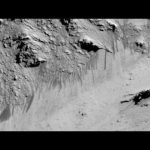
Water Flowing on Mars Today on This Week @NASA – October 2, 2015
A major scientific discovery was announced by NASA at a Sept. 28 news conference. From its vantage point high above the Martian surface, NASA’s Mars Reconnaissance Orbiter (MRO) spacecraft has found the strongest evidence yet, that under certain circumstances, liquid water has been found on Mars. Researchers say an imaging spectrometer on MRO detected signatures of hydrated minerals on slopes where downhill streaks, known as Recurring Slope Lineae (RSL) are seen. In the past, RSL flows have been described as possibly related to liquid water. But the new findings of hydrated minerals is key evidence. Hydrated salts can lower the freezing point of liquid brine – and produce liquid water. Also, Life beyond Earth in the next decade?, “The Martian” screening event, Cargo ship departs space station, New cargo ship delivers to space station, Rare double celestial treat and Espacio a Tierra!
-

ESA – Space to Relax / Fly with Samantha to…
ESA astronaut Samantha Cristoforetti photographs stunning Earth images of Lufthansa worldwide destinations during her Futura mission onboard the ISS. An ESA for Lufthansa inflight film.
Music by Jeff Woodall.
Images: ESA/NASA.
-
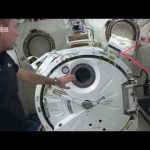
ESA Cubesats on International Space Station
ESA astronaut Andreas Mogensen, the first astronaut from Denmark, explains the deployment of the student-built AAUSAT5 CubeSat – the first ESA student CubeSat mission launched from space and the pilot project of ESA’s ‘Fly Your Satellite from the ISS!’ education programme.
AAUSAT5, a CubeSat entirely built by a university team with ESA’s support, was launched to the International Space Station aboard the Japanese HTV-5 cargo vehicle 19 August 2015. Andreas gives a brief tour of the Japanese cargo vehicle’s storage space, where AAUSAT5 was housed during its flight to the Station. AAUSAT5 was taken to the Japanese Kibo Laboratory, put in a Nanoracks deployer, and placed into the airlock to be launched into space.
AAUSAT5 will be deployed into orbit 5 October 2015. Aalborg University will host a special event in Aalborg, Denmark entitled “ESA CubeSats from the Space Station: a new path for education and technology” to celebrate the deployment.
Credits: ESA/NASA
-

Ariane 5 liftoff on flight VA226
On 30 September 2015, Ariane 5 flight VA226 lifted off from Europe’s Spaceport in French Guiana and delivered two telecom satellites, Sky Muster and Arsat-2, into their planned orbits.
-
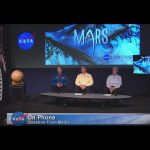
Water Flowing on Present-Day Mars
During a news conference at NASA headquarters, agency scientists and officials discussed new findings from the Mars Reconnaissance Orbiter (MRO) that provide the strongest evidence yet that liquid water flows intermittently on present-day Mars. Using an imaging spectrometer on MRO, researchers detected signatures of hydrated minerals on slopes where mysterious streaks are seen on the Red Planet. These downhill flows, known as recurring slope lineae (RSL), often have been described as possibly related to liquid water.
-
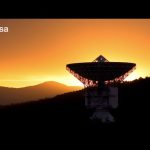
Ground station chillax
“11,2 km/s” is the official theme music for ESA’s Estrack ground station network. It was composed by Gautier Acher, a 17-year-old student living in Paris, France, and entered in the 2015 Tracking Station Music Contest, which celebrated the 40th anniversary of the Estrack network.
Gautier’s top-ranked entry was selected from a field 117 submissions received from over a dozen countries.
Gautier wrote: This track is a triptych that shows space is vast, but is full of interesting things, such as humankind, stars, comets, planets… It describes great achievements, in the past, and in the future.
While only three entrants could win prizes in the music contest, and only 10 could be at the top, the ESA judging panel praised all 117 submissions.
Judges commented that, “We heard some marvellous stuff created by people who are passionate, motivated and imaginative in their pursuit of music that reflects the central themes of exploration into our Universe, technological excellence and the dreams of humanity’s journeys into space.”
In 1975, the ground station at Villafranca in Spain became the kernel of the ESA tracking network, which now comprises 10 stations in seven countries and in 2015 celebrates four decades of providing links to space for ESA’s science, Earth, observatory and exploration missions.
Since inception, Estrack has expanded worldwide and today employs cutting-edge technology to link mission controllers with spacecraft orbiting Earth, voyaging deep in our Solar System and anywhere in between (more information in our Estrack web site http://www.esa.int/estrack).
Congratulations the top 10 entrants as well as the top three prize winners: http://www.esa.int/Our_Activities/Operations/Estrack/Music_contest_winners
Special congratulations to Gautier Acher https://soundcloud.com/gautier-acher
-
Does Dark Matter BREAK Physics? | Space Time | PBS Digital Studios
Tweet at us! @pbsspacetime
Facebook: facebook.com/pbsspacetime
Email us! pbsspacetime [at] gmail [dot] com
Comment on Reddit: http://www.reddit.com/r/pbsspacetime
Support us on Patreon! http://www.patreon.com/pbsspacetimeHelp translate our videos! http://www.youtube.com/timedtext_cs_panel?tab=2&c=UC7_gcs09iThXybpVgjHZ_7g
SPACETIME IS BACK! And with this episode we welcome in Matt O’Dowd as the new host to rigorously take you through the mysteries of space, time, and the nature of reality. We’re starting off this new season with perhaps one of the most mysterious things of all — DARK MATTER. What is it? Where does it come from? And is it even real? Watch this episode of Space Time to find out!
—————————————-———
Comment Links
SafetySkull
https://www.youtube.com/watch?v=vNaEBbFbvcY&lc=z13zunhjrov4sdl2n22zjlq5fsumsbib304Agen0000
https://www.youtube.com/watch?v=vNaEBbFbvcY&lc=z132eztqnvzoft4qb04ccpnyglqmfhm5hu40k—————————————-———
Let us know what topics you want to learn more about:http://bit.ly/spacetimepoll -
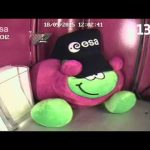
Paxi in the Large Diameter Centrifuge
ESA Education mascot Paxi was placed in a Large Diameter Centrifuge gondola which normally houses researchers’ and students’ experiments at ESA’s ESTEC establishment. As the centrifuge starts spinning, the relative g-levels within the gondola increase and this causes Paxi’s weight to increase. At 20 g, Paxi weighs 20 times what he normally does on Earth. As the centrifuge spins down, the g levels decrease and eventually when the centrifuge stops, return to normal.
-
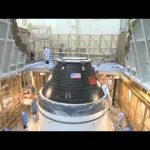
Halfway point of the one year mission on This Week @NASA – September 18, 2015
Sept. 15 marked the halfway point in the yearlong mission on the International Space Station with NASA astronaut Scott Kelly and Russian cosmonaut Mikhail Kornienko. An event the day before at the National Press Club in Washington included a discussion about the biomedical research conducted on the station, to help formulate future human missions to Mars. Kelly participated from the space station. His identical twin, retired NASA astronaut Mark Kelly, and NASA astronaut Terry Virts, who served as commander of Expedition 43, participated from the press club. Also, I spy the space station: Live!, Expedition 43 post-flight visit, Key milestone for Orion spacecraft, Global ocean on Enceladus, Connecting space to village and more!