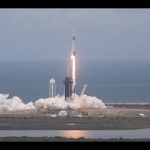
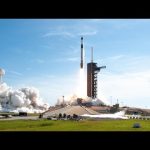
SpaceX’s CRS-26 cargo mission is now targeted to lift off at 2:20 p.m. EST (1920 UTC) Saturday, Nov. 26 from Launch Complex 39A at NASA’s Kennedy Space Center in Florida. A Nov. 22 launch attempt was scrubbed due to poor weather conditions along Florida’s Space Coast. The Dragon spacecraft will deliver a variety of NASA investigations, including the next pair of International Space Station Roll Out Solar Arrays (iROSAs), which will augment power to the orbiting laboratory.
The spacecraft also will carry a study to grow dwarf tomatoes to help create a continuous fresh-food production system in space, as well as an experiment that tests an on-demand method to create specific quantities of key nutrients.
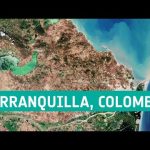
Barranquilla lies strategically next to the delta of the Magdalena River, one of the main rivers in Colombia, flowing northwards for around 1500 km through the west half of the country before emptying into the Caribbean Sea.
Owing to large quantities of sediment, as seen by the extensive sediment plume at its mouth and the brownish colour of its waters, the Magdalena requires frequent dredging of its main channel to allow access to Barranquilla’s port for oceangoing vessels.
We are Europe’s gateway to space. Our mission is to shape the development of Europe’s space capability and ensure that investment in space continues to deliver benefits to the citizens of Europe and the world. Check out https://www.esa.int/ to get up to speed on everything space related.
Have you ever done a science experiment and wondered “What would this be like if it were HUGE?” Welcome to Science Max, the exciting new series that turbocharges all the science experiments you’ve done at home.
On Saturday, Nov. 26, at 8:42 a.m EST (13:42 UTC) the Orion spacecraft will break the record for farthest distance traveled by a spacecraft designed to carry humans to deep space and safely return them to Earth. This distance is currently held by the Apollo 13 spacecraft. In this video, Apollo astronauts and flight directors give their insights into the Apollo program, the nation’s reaction then, and how the Artemis program will benefit the nation today. As we go back to the Moon, Artemis will prepare us to travel even deeper into space.
At 4:52 p.m. EST (21:52 UTC), the Orion spacecraft will perform a burn burn to enter a distant retrograde orbit around the Moon, an orbit that is high altitude from the surface of the Moon and opposite the direction of the Moon travels around Earth. Live coverage will begin at 4:30 p.m. EST (21:30 UTC).
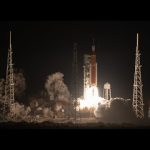
At 1:47 a.m. EST (6:47 UTC) on November 16, NASA’s Orion spacecraft launched aboard the Space Launch System (SLS), the world’s most powerful rocket, from historic Launch Complex 39B at NASA’s Kennedy Space Center on a path to the Moon, officially beginning the Artemis I mission. This mission is the first integrated test of NASA’s deep space exploration systems: the Orion spacecraft, the SLS rocket, and Kennedy Space Center ground systems.
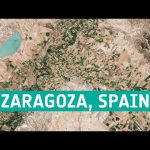
In this week’s edition of the Earth from Space programme, we explore the province of Zaragoza, in northeast Spain, thanks to the Copernicus Sentinel-2 mission.
We are Europe’s gateway to space. Our mission is to shape the development of Europe’s space capability and ensure that investment in space continues to deliver benefits to the citizens of Europe and the world. Check out https://www.esa.int/ to get up to speed on everything space related.
Have you ever done a science experiment and wondered “What would this be like if it were HUGE?” Welcome to Science Max, the exciting new series that turbocharges all the science experiments you’ve done at home.
Get to know the ESA Astronaut Class of 2022 as they answer the following questions: – Why did you apply to become an astronaut? – Tell us about your background – How did you feel when you found out you would be part of ESA’s Astronaut Class of 2022? – What excites you most about human exploration, and how do you see yourself as part of this challenge? – What message do you have for young people today who are passionate about space and science?
00:00 – 00:02 – Intro 00:03 – 05:20 – Sophie Adenot from France 05:21 – 07:48 – Pablo Álvarez Fernández from Spain 07:49 – 11:33 – Meganne Christian from the United Kingdom 11:34 – 15:59 – Anthea Comellini from Italy 16:00 – 19:50 – Rosemary Coogan from the United Kingdom 19:51 – 23:45 – Sara García Alonso from Spain 23:46 – 27:10 – Raphaël Liégeois from Belgium 27:11 – 32:19 – John McFall from the United Kingdom 32:20 – 35:58 – Andrea Patassa from Italy 35:59 – 40:41 – Carmen Possnig from Austria 40:42 – 45:30 – Arnaud Prost from France 45:31 – 48:41 – Amelie Schoenenwald from Germany 48:42 – 54:05 – Marco Sieber from Switzerland 54:06 – 56:23 – Aleš Svoboda from Czech Republic 56:24 – 1:02:09 – Sławosz Uznański from Poland 1:02:10- 1:04:55 – Marcus Wandt from Sweden 1:04:56 – 1:08:47 – Nicola Winter from Germany
We are Europe’s gateway to space. Our mission is to shape the development of Europe’s space capability and ensure that investment in space continues to deliver benefits to the citizens of Europe and the world. Check out https://www.esa.int/ to get up to speed on everything space related.
Se poate prevedea un cutremur, ce este acumularea de stres tectonic si ce se poate face în zonele cu risc ridicat de cutremur? Sunt doar cateva dintre intrebarile la care va raspunde in urmatoarea ora invitatul nostru in Deschis la Cercetare, Bogdan Enescu, profesor la departamentul de Geofizică al Universităţii din Kyoto, într-o discuție LIVE moderată împreună cu Ada Roseti miercuri de la ora 21.00. Dacă întrebarea pusă de tine e aleasă de Bogdan Enescu pentru a primi răspuns la începutul discuţiei, poți câștiga o carte de la Editura Humanitas.
Are there rivers and lakes on other worlds? You bet. Just like Earth, Saturn’s moon Titan is home to these fairly unique features, except these lakes and rivers aren’t filled with water. Planetary scientist Dr. Sarah Hörst spills the science tea: https://go.nasa.gov/2QzAAIt
Producers: Scott Bednar, Jessica Wilde Editor: Matthew Schara
ESA’s new class of astronauts was announced in Paris on 23 November 2022. It includes career astronauts, reserve astronauts and astronauts with a physical disability for a feasibility project.
Last year and for the first time since 2008, ESA launched a call for applications and it received more than 22 500 valid applications. At an event on 23 November, ESA revealed which of these were successful. The event was moderated by Louise Houghton.
We are Europe’s gateway to space. Our mission is to shape the development of Europe’s space capability and ensure that investment in space continues to deliver benefits to the citizens of Europe and the world. Check out https://www.esa.int/ to get up to speed on everything space related.
💥 Embark on an epic journey on the Oregon Trail: https://gmlft.co/historymyt 💥 Enjoy endlessly fun and replayable adventures with procedurally generated events, as your party survives blizzards, boken limbs, snakebites, and the dreaded dysentery.
Sources: • Stirling Bridge & Falkirk 1297-98 (Pete Armstrong). ISBN: 978-1-84176-510-5 • Robert the Bruce, King of Scots (Ronald McNair Scott). ISBN: 978-1-78211-177-1 • A Great and Terrible King: Edward I and the Forging of Britain (Marc Morris). ISBN: 978-0-091-79684-6 • The Hammer of the Scots: Edward I and the Scottish Wars of Independence (David Santiuste). ISBN: 978-1-78159-012-6 • Edward I (Michael Prestwich). ISBN: 978-0-300-07157-3 • William Wallace: Brave Heart (James MacKay). ISBN: 9781780574288
SpaceX’s CRS-26 cargo mission is set to lift off at 3:54 p.m. EST (2054 UTC) Tuesday, Nov. 22 from Launch Complex 39A at NASA’s Kennedy Space Center in Florida. The Dragon spacecraft will deliver a variety of NASA investigations, including the next pair of International Space Station Roll Out Solar Arrays (iROSAs), which will augment power to the orbiting laboratory.
The spacecraft also will carry a study to grow dwarf tomatoes to help create a continuous fresh-food production system in space, as well as an experiment that tests an on-demand method to create specific quantities of key nutrients.
Short animation featuring key moments of the Mars Sample Return campaign: from landing on Mars and securing the sample tubes to launching them off the surface and ferrying them back to Earth.
NASA and the European Space Agency (ESA) are developing plans for one of the most ambitious campaigns ever attempted in space: bringing the first samples of Mars material safely back to Earth for detailed study. European scientists are part of an international team giving advice on what samples to choose for return and the best analysis methods to use once they land on Earth.
The diverse set of scientifically curated samples being collected by NASA’s Mars Perseverance rover could help scientists answer the question of whether ancient life ever arose on the Red Planet.
Bringing samples of Mars to Earth for future study would happen in several steps with multiple spacecraft, and in close collaboration between ESA and NASA.
The first step of the campaign began with the arrival of the Perseverance rover at Jezero Crater on 18 February 2021.
ESA will give robotic assistance with the Sample Transfer Arm. The 2.5 m robotic arm will pick up the tubes filled with precious material from Mars and transfer them to a rocket for a launch into martian orbit.
The European Earth Return Orbiter will then be the first interplanetary spacecraft to capture samples in orbit and make a return trip between Earth and Mars.
This strategic partnership with NASA will be the first to return samples from another planet. The samples to be returned are thought to be the best opportunity to reveal the early evolution of Mars, including the potential for life.
Credit: @NASA/ESA/@NASA Jet Propulsion Laboratory/@NASA Goddard/@NASA’s Marshall Space Flight Center
★ Subscribe: http://bit.ly/ESAsubscribe and click twice on the bell button to receive our notifications.
We are Europe’s gateway to space. Our mission is to shape the development of Europe’s space capability and ensure that investment in space continues to deliver benefits to the citizens of Europe and the world. Check out https://www.esa.int/ to get up to speed on everything space related.
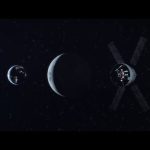
The Earth is seen rising from behind the shadowed surface of the Moon in this video taken on the sixth day of the Artemis I mission by a camera on the tip of one of Orion’s solar arrays. The spacecraft had just successfully executed the Outbound Powered Flyby maneuver which brought it within 80 miles of the lunar surface, the closest approach of the uncrewed Artemis I mission, before moving into a distant retrograde orbit around the Moon. The spacecraft entered the lunar sphere of influence Sunday, Nov. 20, making the Moon, instead of Earth, the main gravitational force acting on the spacecraft.
The Earth is seen setting from the far side of the Moon just beyond the Orion spacecraft in this video taken on the sixth day of the Artemis I mission by a camera on the tip of one of Orion’s solar arrays. The spacecraft was preparing for the Outbound Powered Flyby maneuver which would bring it within 80 miles of the lunar surface, the closest approach of the uncrewed Artemis I mission, before moving into a distant retrograde orbit around the Moon. The spacecraft entered the lunar sphere of influence Sunday, Nov. 20, making the Moon, instead of Earth, the main gravitational force acting on the spacecraft.
Raw NASA camera footage, taken from the Space Launch System’s (SLS) core stage, shows the SLS separation of the solid rocket boosters two minutes and 11 seconds after liftoff.
At 1:47 am EST (6:47 UTC) on November 16, NASA’s Orion spacecraft launched aboard the SLS rocket from historic Launch Complex 39B at NASA’s Kennedy Space Center on a path to the Moon, officially beginning the Artemis I mission.
This mission is the first integrated test of NASA’s deep space exploration systems: the Orion spacecraft, the SLS rocket, and Kennedy Space Center ground systems.
ESA’s Council at Ministerial level taking place on 22-23 November 2022. It is a crucial milestone as Europe sets out its ambitions and plans for space activities in the coming years and decades.
We want to strengthen Europe’s space sector and ensure we continue to serve European citizens by, for example: Tick preparing new groundbreaking missions to make new scientific discoveries, tick observing the Earth to make sure we collect enough data to mitigate climate change, Tick launching new nav satellites to improve GPS signals across Europe Tick and supporting entrepreneurs and space related businesses.
Stay tuned and find out more about what we are putting on the table at CM22.
★ Subscribe: http://bit.ly/ESAsubscribe and click twice on the bell button to receive our notifications.
We are Europe’s gateway to space. Our mission is to shape the development of Europe’s space capability and ensure that investment in space continues to deliver benefits to the citizens of Europe and the world. Check out https://www.esa.int/ to get up to speed on everything space related.
We are Europe’s gateway to space. Our mission is to shape the development of Europe’s space capability and ensure that investment in space continues to deliver benefits to the citizens of Europe and the world. Check out https://www.esa.int/ to get up to speed on everything space related.
Have you ever done a science experiment and wondered “What would this be like if it were HUGE?” Welcome to Science Max, the exciting new series that turbocharges all the science experiments you’ve done at home.
The region of the Sundarbans appears in dark shades of green in this image, while the adjacent areas in brighter colours are densely populated and dominated by agriculture.
The Sundarbans National Park, established in 1984 and a designated @UNESCO World Heritage Site, is a core region within the Bengal Tiger Reserve. The almost extinct Bengal tiger is the national animal of Bangladesh and is considered the second largest tiger in the world.
We are Europe’s gateway to space. Our mission is to shape the development of Europe’s space capability and ensure that investment in space continues to deliver benefits to the citizens of Europe and the world. Check out https://www.esa.int/ to get up to speed on everything space related.
🚩 Thanks to Established Titles for sponsoring this video! Go to https://establishedtitles.com/MARCHE10 to shop their Black Friday Sale, plus get an additional 10% off on any purchase with code MARCHE10 and help support the channel!
In this week’s edition of the Earth from Space programme, the Copernicus Sentinel-2 mission takes us over the Egyptian city of Sharm El-Sheikh, where world leaders have convened for the past two weeks at the COP27 UN Climate Summit.
We are Europe’s gateway to space. Our mission is to shape the development of Europe’s space capability and ensure that investment in space continues to deliver benefits to the citizens of Europe and the world. Check out https://www.esa.int/ to get up to speed on everything space related.
Watch live as NASA’s Orion spacecraft performs a close approach of the lunar surface on its way to a distant retrograde orbit, a highly stable orbit thousands of miles beyond the Moon. During the Artemis I flight test, launched on Nov. 16, Orion will travel 280,000 miles (450,000 km) from Earth and 40,000 miles (64,000 km) beyond the far side of the Moon, carrying science and technology payloads to expand our understanding of lunar science, technology developments, and deep space radiation.
Through Artemis missions, NASA will land the first woman and the first person of color on the Moon, paving the way for a long-term lunar presence and serving as a steppingstone to send astronauts to Mars. We are going.
Where do moons come from? From cataclysmic impacts to gravitational capture, NASA planetary scientist Joe Renaud walks us through some of the many theories of how the unique and captivating moons in our solar system came to be. https://solarsystem.nasa.gov/moons/overview/
Producers: Scott Bednar, Jessica Wilde Editor: James Lucas
Galileo is Europe’s largest satellite constellation – and the world’s most accurate satnav system. The work on Galileo began two decades ago with two test GIOVE satellites, followed by a series of operational launches.
The two GIOVE satellites, the first Galileo In-Orbit Validation satellite and all 34 Galileo Full Operational Capability satellites were tested at ESA’s ESTEC Test Centre, Europe’s largest satellite testing facility.
On this day the very last satellite in the Galileo First Generation series leaves the site, and the people responsible for readying them for space have gathered to say goodbye. Next will come the Galileo Second Generation satellites, already in development.
Galileo is managed and funded by the European Union. The @EuropeanCommission, ESA and EUSPA (the EU Agency for the Space Programme) have signed an agreement by which ESA acts as design authority and system development prime on behalf of the Commission and EUSPA as the exploitation and operation manager of Galileo/EGNOS. ★ Subscribe: http://bit.ly/ESAsubscribe and click twice on the bell button to receive our notifications.
We are Europe’s gateway to space. Our mission is to shape the development of Europe’s space capability and ensure that investment in space continues to deliver benefits to the citizens of Europe and the world. Check out https://www.esa.int/ to get up to speed on everything space related.
Have you ever done a science experiment and wondered “What would this be like if it were HUGE?” Welcome to Science Max, the exciting new series that turbocharges all the science experiments you’ve done at home.
Multimedia constă dintr-o combinație de medii digitale discrete (text, imagini statice) și continue (sunet, imagini în mișcare, secvență video), sincronizate și legate astfel încât să permită utilizatorului o consultare interactivă. Apariția produselor și serviciilor multimedia în ultimii ani, coroborată cu evoluția tehnologică (de exemplu, capacitatea de calcul, arhitecturile algoritmice, Internetul obiectelor, cloud computing, 5G) au bulversat producția și au declanșat masivizarea datelor multimedia. În ceea ce privește inteligența artificială, cercetătorii au dezvoltat algoritmi pentru analizarea unor cantități mari de date brute pentru a extrage modele (învățare automată sau machine learning). Prin creșterea relevanței modelelor sale, metodele de învățare profundă au condus la progrese incredibile în vederea prin computer, recunoașterea vorbirii, traducerea automată, procesarea limbajului natural, analiza imaginii medicale, mașinile autonome, jocurile și robotica. În mod logic, putem pune întrebarea: “Ce se întâmplă atunci când multimedia întâlnește inteligența artificială?”
Despre invitat Ioan Roxin este profesor universitar de clasă excepțională la Departamentul de Multimedia, Tehnologiile Informației și Comunicațiilor de la Universitatea Franche-Comté din Franța. Este director al laboratorului ELLIADD (Editură, Literaturi, Limbi Străine, Informatică, Arte, Didactică, Discurs) din mai 2014. Este președinte al filialei Montbéliard a Universității Deschise. Pentru meritele sale științifice și culturale, a fost recompensat cu titlul de Ofițer în Ordinul Palmelor Academice. În 1980, a absolvit ca șef de promoție Facultatea de Planificare și Cibernetică Economică din București.
NASA’s Artemis I mission lifted off on Nov. 16, 2022, from Kennedy Space Center’s Launch Complex 39B. This video includes highlights from the event.
With 8.8 million pounds of thrust, the Space Launch System (SLS), is NASA’s most powerful rocket. It will send the uncrewed Orion spacecraft beyond the Moon, 280,000 miles from Earth, farther than any human-rated spacecraft has ever flown.
After 26 days and a total distance of over a million miles, Orion will return home faster and hotter than any spacecraft has before.
The primary goals for Artemis I are to demonstrate Orion’s systems in a spaceflight environment and ensure a safe re-entry, descent, splashdown, and recovery prior to the first flight with crew on Artemis II.
The first in a series of increasingly complex missions, Artemis I will demonstrate our commitment and capability to build a long-term human presence at the Moon for decades to come.
Watch live as the Orion spacecraft, after having launched into space aboard the Space Launch System (SLS) rocket, shares its first Earth views during its outbound coast to the Moon. During Artemis I, Orion will travel 280,000 miles (450,000 km) from Earth and 40,000 miles (64,000 km) beyond the far side of the Moon, carrying science and technology payloads to expand our understanding of lunar science, technology developments, and deep space radiation.
Through Artemis missions, NASA will land the first woman and the first person of color on the Moon, paving the way for a long-term lunar presence and serving as a steppingstone to send astronauts to Mars. We are going.
Watch live as NASA’s Orion spacecraft completes its first outbound trajectory burn on the way to the Moon after having launched aboard the Space Launch System (SLS) rocket and began the Artemis I mission. During Artemis I, Orion will travel 280,000 miles (450,000 km) from Earth and 40,000 miles (64,000 km) beyond the far side of the Moon, carrying science and technology payloads to expand our understanding of lunar science, technology developments, and deep space radiation.
Through Artemis missions, NASA will land the first woman and the first person of color on the Moon, paving the way for a long-term lunar presence and serving as a steppingstone to send astronauts to Mars. We are going.
Leaders from across NASA discuss the successful launch of #Artemis I flight test to the Moon.
The Space Launch System (SLS) rocket and Orion spacecraft launched Wednesday, Nov. 16 at 1:47 a.m. EST (0647 UTC) for its 26 day mission around the Moon.
The post-launch mission update will begin onWednesday, Nov. 16, 2022, at no earlier than 5 a.m. EST (1000 UTC). Participants include:
Bill Nelson, NASA administrator Mike Sarafin, Artemis mission manager, NASA Headquarters Charlie Blackwell-Thompson, Artemis launch director, Exploration Ground Systems Program, Kennedy Emily Nelson, chief flight director, NASA Johnson Melody Lovin, weather officer, U.S. Space Launch Delta 45
For more information about Artemis, visit www.nasa.gov/specials/artemis/
The Space Launch System (SLS) rocket with the Orion spacecraft aboard lifted off at 07:47 CET from @NASA’s Kennedy Space Center in Florida, USA on 16 November 2022.
The most powerful rocket ever built sent NASA’s Orion spacecraft and ESA’s European Service Module (ESM) to a journey beyond the Moon and back. No crew will be on board Orion this time, and the spacecraft will be controlled by teams on Earth.
ESM provides for all astronauts’ basic needs, such as water, oxygen, nitrogen, temperature control, power and propulsion.
Much like a train engine pulls passenger carriages and supplies power, the European Service Module will take the Orion capsule to its destination and back.
We are Europe’s gateway to space. Our mission is to shape the development of Europe’s space capability and ensure that investment in space continues to deliver benefits to the citizens of Europe and the world. Check out https://www.esa.int/ to get up to speed on everything space related.
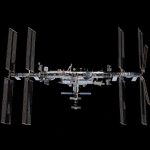
NASA astronauts Josh Cassada and Frank Rubio are conducting a spacewalk outside the International Space Station on Tuesday, Nov. 15, to assemble a mounting bracket on the starboard side of the station’s truss assembly. The spacewalk, which will prepare the future deployment of additional solar arrays for the station, is scheduled to begin around 8 a.m. EST (1300 UTC) and last for about seven hours.
Cassada (wearing the suit with red stripes) and Rubio (wearing the unmarked suit) are part of NASA’s SpaceX Crew-5 mission, which arrived at the station on Oct. 6, 2022. This is the first spacewalk for both astronauts.
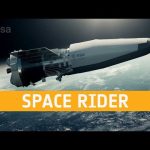
Space Rider is an uncrewed robotic laboratory about the size of two minivans. After launch on Vega-C, this reusable spacecraft will stay in low orbit for about two months, conducting research in microgravity or observing the Earth or deep space. At the end of its mission, Space Rider will return to Earth with its payloads to be unloaded and refurbished for another flight.
Credit: ESA/Frame by Frame
★ Subscribe: http://bit.ly/ESAsubscribe and click twice on the bell button to receive our notifications.
We are Europe’s gateway to space. Our mission is to shape the development of Europe’s space capability and ensure that investment in space continues to deliver benefits to the citizens of Europe and the world. Check out https://www.esa.int/ to get up to speed on everything space related.
🚩 Thanks to Kamikoto for sponsoring this video! Get an additional $50 off on any purchase with code HISTORYMARCHE during their Early Black Friday sale. Go to https://kamikoto.com/historymarche and help support the channel.
Sources: • Stirling Bridge & Falkirk 1297-98 (Pete Armstrong). ISBN: 978-1-84176-510-5 • Robert the Bruce, King of Scots (Ronald McNair Scott). ISBN: 978-1-78211-177-1 • A Great and Terrible King: Edward I and the Forging of Britain (Marc Morris). ISBN: 978-0-091-79684-6 • The Hammer of the Scots: Edward I and the Scottish Wars of Independence (David Santiuste). ISBN: 978-1-78159-012-6 • Edward I (Michael Prestwich). ISBN: 978-0-300-07157-3 • William Wallace: Brave Heart (James MacKay). ISBN: 9781780574288
A quick recap of NASA’s history in space exploration segueing to Artemis serves as the opening video for the launch broadcast for the agency’s Artemis I mission. The broadcast originates from Kennedy Space Center in Florida, where NASA’s Space Launch System rocket and Orion spacecraft will lift off from Launch Complex 39B no earlier than November 16 on a mission beyond the Moon and back to Earth.
Credits: Music Courtesy of Gothic Storm Music Produced and Edited by Oxcart and Sami Aziz
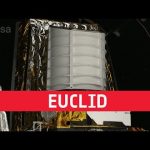
At the Thales Alenia Space test facility in Cannes, France, the massive door of the thermal vacuum chamber was opened after a month of rigorous testing of ESA’s Euclid mission to explore the dark Universe. In Cannes the fully integrated spacecraft was subjected to the conditions of space and its subsystems were fully tested for the first time. With the Euclid space telescope, scientists hope to learn more about dark matter and dark energy which could make up more than 95% of our Universe.
The film includes soundbites from ESA Euclid Mission and Payload Manager: Alexander Short and ESA Euclid VIS-Instrument Engineer: Magdalena Szafraniec.
★ Subscribe: http://bit.ly/ESAsubscribe and click twice on the bell button to receive our notifications.
We are Europe’s gateway to space. Our mission is to shape the development of Europe’s space capability and ensure that investment in space continues to deliver benefits to the citizens of Europe and the world. Check out https://www.esa.int/ to get up to speed on everything space related.