The space station crew is safe following a debris event, our recently returned Crew-2 astronauts discuss their mission, and what our Crew-1 astronauts did in Washington … a few of the stories to tell you about – This Week at NASA!
We are Europe’s gateway to space. Our mission is to shape the development of Europe’s space capability and ensure that investment in space continues to deliver benefits to the citizens of Europe and the world. Check out https://www.esa.int/ to get up to speed on everything space related.
Ștefan Szedlacsek a realizat prima clonare în Romania. Diseara, de la 21:00 pe https://www.youtube.com/watch?v=fZwhFhzaiOo Stefan ne va povesti aceasta aventura, impreuna cu alte subiecte fascinante: enzimele, biochimia, semnalizare celulara si receptorii moleculari. In cadrul intalnirii vom da un premiu in direct, unuia dintre cei care vor urmari interventia LIVE! Premiul este oferit de Editura Humanitas.
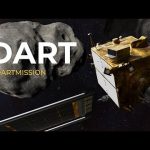
On Nov. 24, 2021, our Double Asteroid Redirection Test (DART) spacecraft will lift off on a ten-month journey to crash into a distant asteroid – on purpose.
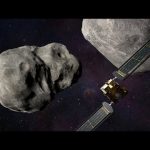
As a test of NASA’s planetary defense technologies, DART will collide with and slightly change the speed of Dimorphos, a small ‘moonlet’ orbiting the asteroid Didymos. Dimorphos will be over 6 million miles away at the time of impact and does not pose a threat to Earth, either before or after DART’s collision. With nearby satellites and Earth-based telescopes, NASA and our international partners will track DART’s effect on Dimorphos and use this data to help protect Earth from future asteroid impact threats.
DART’s first launch attempt is scheduled for 1:20 a.m. EST (06:20 UTC) on Nov. 24. Launch coverage starts at 12:30 a.m. EST (05:30 UTC) on NASA TV, the NASA app, and @NASA social media. Be a part of DART’s historic launch day by using the hashtag #DARTMission.
Producer/Editor: Lacey Young Voiceover: Elena Adams, Michelle Chen, Kelly Fast, Andy Rivkin, Justyna Surowiec Music: Universal Production Music
Can we change the motion of an asteroid? Our #DARTMission is set to be the first to try! The Double Asteroid Redirection Test (DART) mission is a spacecraft designed to impact an asteroid as a test of technology to see if it can change the motion of an asteroid in space. The goal of the mission is to see if intentionally crashing a spacecraft into an asteroid is an effective way to change its course, should an Earth-threatening asteroid be discovered in the future. DART’s target is the binary near-Earth asteroid Didymos and its moonlet, which pose no threat to Earth.
This mission is targeted to launch at 1:21 a.m. EST, Nov. 24 (06:21 UTC), aboard a SpaceX Falcon 9 rocket from Vandenberg Space Force Base in California.
Learn more about the mission at: www.nasa.gov/dart
Are we really crashing a spacecraft into an asteroid? We sure are — all in the name of planetary defense. The #DARTMission is a technology test to see if an impactor could change the trajectory of an asteroid. Nancy Chabot of the Johns Hopkins University Applied Physics Laboratory tells us more.
Science fiction meets science fact – Netflix’s upcoming movie “Don’t Look Up” is a fictional story about three scientists warning the planet about a doomsday comet. NASA’s upcoming DART mission is a real spacecraft that will intentionally crash itself into an asteroid as a test to see if this could be a viable way to move its motion in space. Hear from movie director Adam McKay as he compares the two.
DART is a spacecraft designed to impact an asteroid as a test of technology. DART’s target asteroid is NOT a threat to Earth. This asteroid system is a perfect testing ground to see if intentionally crashing a spacecraft into an asteroid is an effective way to change its course, should an Earth-threatening asteroid be discovered in the future.
NASA’s #DARTMission is crashing a spacecraft into an asteroid to try to change its motion in space. But how will we know if this test worked? That’s where Johns Hopkins APL scientist Andy Rivkin comes in. He’ll be studying the precise change in the asteroid’s motion right here from Earth. Have questions about DART? Submit them using #askNASA and tune in on Monday, Nov. 15 at 4:30 pm ET for a LIVE Q&A with Andy.
🚩Install Mech Arena for Free 🤖 IOS/ANDROID: https://clcr.me/HistoryMarche_MA and get a special starter pack 💥 Available only for the next 30 days
🚩 This is the story about Sophie Scholl, a young German student who defied Adolf Hitler by printing leaflets in opposition to the Nazi regime. She was arrested in February 1943, tried, conviced and beheaded by guilotine. She was only 21 years old.
Satellites observe the Earth using a range of wavelengths on the electromagnetic spectrum. Different wavelengths allow us to probe different aspects of Earth’s land, atmosphere and ocean. By sampling the electromagnetic spectrum at multiple wavelengths, we can build a more complete picture of Earth’s complex climate system.
We are Europe’s gateway to space. Our mission is to shape the development of Europe’s space capability and ensure that investment in space continues to deliver benefits to the citizens of Europe and the world. Check out https://www.esa.int/ to get up to speed on everything space related.
Our Crew-3 mission launches to the space station, Crew-2 makes a splash at the end of its record-setting mission, and a big honor for our deputy administrator … a few of the stories to tell you about – This Week at NASA!
Producer/Writer: Andre Valentine Editor: Shane Apple Music: Universal Production Music
NASA’s DART spacecraft will intentionally crash into an asteroid to test if impacting an object is a viable way to deflect an asteroid, should a threat ever be discovered in the future. Watch as NASA astronaut Shane Kimbrough and European Space Agency astronaut Thomas Pesquet demonstrate how DART’s mission will work. Spoiler alert: it’s like a pillow fight in microgravity.
DART is a spacecraft designed to impact an asteroid as a test of technology. DART’s target asteroid is NOT a threat to Earth. This asteroid system is a perfect testing ground to see if intentionally crashing a spacecraft into an asteroid is an effective way to change its course, should an Earth-threatening asteroid be discovered in the future.
ESA astronaut Matthias Maurer and @NASA astronauts Raja Chari, Tom Marshburn and Kayla Barron liftoff to the International Space Station in the @SpaceX Crew Dragon spacecraft “Endurance”.
Collectively known as “Crew-3”, the astronauts were launched from launchpad 39A at @NASAKennedy in Florida, USA at 02:03 GMT/03:03 CET Thursday 11 November.
The spacecraft docked to the International Space Station at 00:32 CET Friday, 12 November/23:32 GMT Thursday, 11 November, marking the official start of Matthias’s first mission ‘Cosmic Kiss’.
Crew-3 will spend around six months living and working aboard the orbital outpost before returning to Earth. It is the first space mission for Matthias, who’s become the 600th human to fly to space. He chose the name “Cosmic Kiss” for his mission as a declaration of love for space.
Matthias has a background in materials science and looks forward to supporting a wide range of science and research in orbit. The work he carries out throughout his mission will contribute to the success of future space missions and help enhance life on Earth.
We are Europe’s gateway to space. Our mission is to shape the development of Europe’s space capability and ensure that investment in space continues to deliver benefits to the citizens of Europe and the world. Check out https://www.esa.int/ to get up to speed on everything space related.
The Copernicus Sentinel-2 takes us over Cancún, on the northeast coast of Mexico’s Yucatán Peninsula, in this edition of the Earth from Space programme.
We are Europe’s gateway to space. Our mission is to shape the development of Europe’s space capability and ensure that investment in space continues to deliver benefits to the citizens of Europe and the world. Check out https://www.esa.int/ to get up to speed on everything space related.
Watch the SpaceX Crew-3 astronauts arrive at the International Space Station aboard the Crew Dragon Endurance spacecraft. Kayla Barron, Raja Chari, and Thomas Marshburn of NASA, and Matthias Maurer of the European Space Agency will begin a six-month mission aboard the orbiting laboratory. Once aboard, they will join their station crewmates to conduct hundreds of scientific experiments and perform space station maintenance and upgrades. Endurance is scheduled to automatically dock to the space station at 6:32 p.m. EST (23:32 UTC).
Crew-3 lifted off from NASA’s Kennedy Space Center in Florida at 9:03 p.m. EST on Nov. 10 (02:03 UTC Nov. 11).
Urmareste intalnirea si castiga o carte de la Humanitas! Diseara la 21:00, pe https://www.youtube.com/watch?v=raFbm5-IJVU vorbim despre biodiversitate, cu Lucian Pârvulescu, in noua serie “Deschis la cercetare” moderata impreuna cu Ada Roseti.
Is NASA aware of any Earth-threatening asteroids? Luckily there are no known asteroid threats to Earth for at least 100 years. But that doesn’t mean we’re not looking. Asteroid expert Davide Farnocchia of our@NASA Jet Propulsion Laboratory breaks it down.
ESA astronaut Thomas Pesquet gives a brief interview in Cologne, Germany, less than 48 hours after leaving the International Space Station.
He talks with ESA Web TV editor Julien Harrod about returning to Earth after his six-month International Space Station mission Alpha, how it feels to splash down in a @SpaceX Crew Dragon, and the differences with the Russian Soyuz spacecraft that flew him to space on his first mission, Proxima, in 2017.
After completing two six-month Space Station missions in five years, Thomas recounts the changes he saw while observing our planet Earth from 400 km above.
Thomas is the first European to fly to the International Space Station and return on a commercial spacecraft. SpaceX’s Crew Dragon Endeavour transporting Crew-2 autonomously undocked from the International Space Station and after a series of burns, entered Earth’s atmosphere and deployed parachutes for a soft water-landing. Thomas and crew splashed down on 9 November 2021 at 03:33 GMT (04:33 CET).
Thomas flew to Cologne, Germany, where he is being monitored by ESA’s space medicine team as he readapts to Earth’s gravity at ESA’s European Astronaut Centre (EAC) and @DLR ‘Envihab’ facility.
Over 200 experiments were run during Thomas’ time in space, with 40 European ones and 12 new experiments led by the French space agency @CNES. The experiments continue on Earth charting the astronauts physical adaptation to living with gravity again.
We are Europe’s gateway to space. Our mission is to shape the development of Europe’s space capability and ensure that investment in space continues to deliver benefits to the citizens of Europe and the world. Check out https://www.esa.int/ to get up to speed on everything space related.
On Nov. 10 at 9:03 p.m. EST (02:03 UTC Nov. 11), the Crew-3 flight will carry NASA astronauts Raja Chari, mission commander; Tom Marshburn, pilot; and Kayla Barron, mission specialist; as well as ESA (European Space Agency) astronaut Matthias Maurer, who will serve as a mission specialist, to the International Space Station for a six-month science mission. Once there, they will perform space station upgrades, conduct science experiments to benefit life on Earth, and continue preparing humanity for future missions to the Moon – and eventually Mars. This is the third crew rotation mission with four astronauts flying on a commercial spacecraft.
Astăzi, virtualizarea și privatizarea spațiului a condus la de-spațializarea proceselor sociale, orașul devenind în mod progresiv o rețea de interacțiuni sociale virtuale (online), decuplată teritorial de un loc bine definit și de orașul în sine. Spațiul urban, dar și cel privat este pe cale să-și piardă dimensiunea teritorială, devenind tot mai mult unul electronic, virtual.
Their spacecraft has undocked from the International Space Station, and four astronauts are on the journey home to Earth. Watch live as the SpaceX Crew Dragon Endeavour re-enters the atmosphere, and parachutes to splashdown in a landing zone off the coast of Pensacola, Florida. Splashdown is targeted for 10:33 p.m. EST Nov. 8 (03:33 UTC Nov. 9).
Shane Kimbrough and Megan McArthur of NASA, Thomas Pesquet of the European Space Agency, and Akihiko Hoshide of the Japan Aerospace Exploration Agency spent over six months living and working on the space station. They contributed to hundreds of scientific investigations and technology demonstrations to help prepare for future exploration missions and generate innovations to benefit life on Earth: https://youtu.be/AtjR-gHufxg
Watch the Crew Dragon Endeavour spacecraft undock from the International Space Station, with four astronauts aboard: Shane Kimbrough and Megan McArthur of NASA, Thomas Pesquet of the European Space Agency, and Akihiko Hoshide of the Japan Aerospace Exploration Agency. The Crew Dragon fired its thrusters for a 360-degree flyaround of the space station, making it the first spacecraft to do so since the space shuttle.
The Crew Dragon safely splashed down off the coast of Pensacola, Florida at 10:33 p.m. EST Mon., Nov. 8 (03:33 UTC Nov. 9).
ESA astronaut Thomas Pesquet is sharing scenes from life on board the International Space Station during his second mission “Alpha”. Here he gives a quick tour of the @SpaceX Cargo Dragon Endeavour that brought him to the Space Station together with @JAXA | 宇宙航空研究開発機構 astronaut Aki Hoshide and @NASA astronauts Shane Kimbrough and Megan McArthur. The same astronauts, Crew-2, will use the spacecraft to return home after undocking with the Station and fly to Earth for a splashdown off the coast of Florida, USA.
Over 200 experiments are planned during Thomas’ time in space, with 40 European ones and 12 new experiments led by the French space agency @CNES.
We are Europe’s gateway to space. Our mission is to shape the development of Europe’s space capability and ensure that investment in space continues to deliver benefits to the citizens of Europe and the world. Check out https://www.esa.int/ to get up to speed on everything space related.
The urgency of Earth science and climate studies took the spotlight Friday, Nov. 5, as U.S. Vice President Kamala Harris visited NASA’s Goddard Space Flight Center in Greenbelt, Maryland. Alongside NASA Administrator Bill Nelson, the vice president received a firsthand look at how NASA studies climate change and provides crucial information to understand our planet’s changes and their impacts on our lives.
The vice president met with scientists and engineers to discuss: • The first images captured by the Landsat 9 satellite, a joint mission of NASA and the U.S. Geological Survey (USGS) that launched in late September to monitor the Earth’s land surface. • A new Earth science mission entitled Investigation of Convective Updrafts (INCUS) that will study the behavior of tropical storms and thunderstorms, including their impacts on weather and climate models. • The Plankton, Aerosol, Cloud, ocean Ecosystem (PACE) mission, which involves an instrument currently under construction at Goddard for a 2022 launch. PACE will extend and improve NASA’s record of satellite observations of global ocean biology, aerosols (tiny particles suspended in the atmosphere), and clouds. • The GOES-R program, whose GOES-T satellite is scheduled to launch for NOAA in February 2022 to improve weather forecasts.
🚩 The divergent evolution of the Norse world from the 11th century onwards was, above all, influenced by each country’s geopolitical limitations. This explains the different stages of military Europeanisation that each region attained up to the late twelfth century. Changes in warfare, initially obtained through imitation, slowly started to show growing regional differences from around 1200 AD onwards, a phenomenon mainly fuelled by the disparate conquest interests of the Scandinavian kingdoms.
Join ESA astronaut Thomas Pesquet on a tour of the International Space Station. On his second space mission Alpha, Thomas flew to space from Florida, USA, as part of Crew-2 in the @SpaceX Crew Dragon Endeavour together with @NASA astronauts Megan McArthur, Shane Kimbrough and @JAXA | 宇宙航空研究開発機構 astronaut Aki Hoshide
In this guided tour, a first shot in 4K, Thomas takes you through the modules of the International Space Station including the Dragon. Recorded in October 2021 the Space Station had just seen the departure of Soyuz MS-18 and the relocation of a Progress supply spacecraft. On board where also NASA astronaut Mark VandeHei and Russian cosmonauts Anton Shkaplerov and Pyotr Dubrov.
Over 200 investigations are planned during Thomas’ time in space, with 40 European ones and 12 new experiments led by the French space agency @CNES.
We are Europe’s gateway to space. Our mission is to shape the development of Europe’s space capability and ensure that investment in space continues to deliver benefits to the citizens of Europe and the world. Check out https://www.esa.int/ to get up to speed on everything space related.
The Vice President checks out new Earth Science work, two decades and counting of continuous human presence in space, and 29 days on the edge for the Webb Space Telescope team … a few of the stories to tell you about – This Week at NASA!
Vice President Kamala Harris will visit NASA’s Goddard Space Flight Center in Greenbelt, Maryland today to get a firsthand look at the agency’s work to combat the climate crisis and protect vulnerable communities.
The Vice President, joined by NASA Administrator Bill Nelson and leaders from the National Oceanographic and Atmospheric Administration (NOAA) and the U.S. Geological Survey (USGS), will tour the climate-oriented space activities underway at Goddard and learn about the collaboration among U.S. federal agencies on space missions that are central to tackling the climate crisis and improving our scientific understanding of Earth’s systems.
Following the tour, around 4:45 p.m. EDT, the vice president will deliver remarks, which will be streamed live here.
The Copernicus Sentinel-2 takes us over the Shetland Islands, an archipelago in the Northern Isles of Scotland, in this edition of the Earth from Space programme.
We are Europe’s gateway to space. Our mission is to shape the development of Europe’s space capability and ensure that investment in space continues to deliver benefits to the citizens of Europe and the world. Check out https://www.esa.int/ to get up to speed on everything space related.
Pune o intrebare mai jos si castiga o carte! Diseara la 20:00 (mai devreme cu o ora decat in mod obisnuit!), pe https://www.youtube.com/presura1 vorbim despre imunitate, sanatate si cercetare cu Mihai Netea (castigator al premiului “Spinoza” pentru cei mai buni cercetatori in Olanda si membru al Academiei Olandeze de Arte și Științe), in noua serie “Deschis la cercetare” moderata impreuna cu Ada Roseti. Pune ACUM o intrebare despre imunitate la comentariul pozei si poti castiga o carte de stiinta de la Humanitas! La unele dintre intrebari vom raspunde diseara, iar cea mai interesanta intrebare va primi premiul cel mare. Numele castigatorului il vom anunta la inceputul intalnirii de diseara.
Glaciers across the globe have lost over nine trillion tonnes of ice in half a century. How will glaciers look over the coming decades? “It all depends on what humans are doing now in terms of greenhouse gas emissions:” this is the message one scientist delivered during an ESA-led expedition to the Gorner Glacier in Switzerland – one of the biggest ice masses in the Alps.
As world leaders gather for the 26th @United Nations Climate Change Conference of Parties, watch the exclusive premiere of the documentary that follows ESA astronaut Luca Parmitano, along with a team of glaciologists and climate experts, on their journey across the Alps to learn how rising global temperatures are taking their toll on glaciers.
The documentary features breathtaking scenery of the Gorner Glacier as well as interviews with climate specialists as they explain how we can monitor glaciers using both satellite data and in situ measurements.
We are Europe’s gateway to space. Our mission is to shape the development of Europe’s space capability and ensure that investment in space continues to deliver benefits to the citizens of Europe and the world. Check out https://www.esa.int/ to get up to speed on everything space related.
Invitat: Augustin Ioan (arhitect) Ce va mai însemna să locuim în condiții de mobilitate neliniștită, angoasata, de pendulare migratorie între destinații temporare, un temporar permanentizat? Cum arată, oare, casele de mâine, locuirea întreolaltă, vecinătatea, singurătatea? Dar faptul că se locuiește, deja, în afara planetei noastre și că urmează baze lunare și marțiene? Până atunci, aici, pe pământ, avem de discutat despre ipostaze ale locuirii ca reglaje fine ale raportului public (comunitarist) versus privat. ___________________ Augustin Ioan (n. 1965) este profesor la Universitatea de Arhitectură și Urbanism „Ion Mincu” din București. Eseist, poet, publicist, este doctor în arhitectură și în filosofie, cu o licență în teologie, a urmat o parte din studii la Universitatea din Cincinnati. A fost profesor invitat la numeroase universități din Europa și din Statele Unite. Este autorul a peste douăzeci de lucrări consacrate arhitecturii, cu deosebire arhitecturii sacre, istoriei arhitecturii și transformărilor ei contemporane. Câștigător al concursului pentru Catedrala Patriarhala București, cu un colectiv de arhitecți si studenți de la Universitatea de Arhitectură și Urbanism „Ion Mincu” București (2002), a proiectat și a realizat noua Catedrală Arhiepiscopală din Curtea de Argeș.
A collection of the best timelapse videos made during ESA astronaut Thomas Pesquet’s second mission to the International Space Station, “Alpha” in 2021. The camera is setup to take pictures at intervals of two a second, and the pictures are then edited into this video that plays at 25 pictures a second. Most videos around 12 times faster than real speed.
Thomas shared this video on social media with the caption:
“Probably the last the timelapse from space, and fittingly here is a special edition “best of” montage: aurora, lightning, spacewalks, day views and spacecraft reentry in less than five minutes. Get comfy, cast it to your largest screen in the house and enjoy!”
Over 200 experiments are planned during Thomas’ time in space, with 40 European ones and 12 new experiments led by the French space agency @CNES.
We are Europe’s gateway to space. Our mission is to shape the development of Europe’s space capability and ensure that investment in space continues to deliver benefits to the citizens of Europe and the world. Check out https://www.esa.int/ to get up to speed on everything space related.
When was the last time an asteroid hit Earth? Small asteroids and other tiny particles bombard our planet daily, but almost all of them burn up safely in the atmosphere. Bigger impacts are extremely rare, but scientists like Marina Brozovic are keeping their eyes on the sky.
After more than six months aboard the International Space Station, the astronauts of NASA’s SpaceX Crew-2 mission are returning home. The four crew members — NASA astronauts Shane Kimbrough and Megan McArthur, JAXA (Japan Aerospace Exploration Agency) astronaut Akihiko Hoshide, and ESA (European Space Agency) astronaut Thomas Pesquet — will travel back to Earth inside a SpaceX Crew Dragon capsule.
These crew members contributed to hundreds of scientific investigations and technology demonstrations while aboard the orbiting laboratory. This valuable scientific research helps to prepare humans for future space exploration missions while generating numerous innovations and benefits for humanity on Earth. Here is a look at some of the scientific milestones accomplished during the Crew-2 mission.
Satellites play a vital role in monitoring the rapid changes taking place in the Arctic. Tracking ice lost from the world’s glaciers, ice sheets and frozen land shows that Earth is losing ice at an accelerating rate. Currently more than a trillion tonnes of ice is lost each year. The sooner Earth’s temperature is stabilised, the more manageable the impacts of ice loss will be.
Credit: ESA/Planetary Visions
★ Subscribe: http://bit.ly/ESAsubscribe and click twice on the bell button to receive our notifications.
We are Europe’s gateway to space. Our mission is to shape the development of Europe’s space capability and ensure that investment in space continues to deliver benefits to the citizens of Europe and the world. Check out https://www.esa.int/ to get up to speed on everything space related.











![Dragon Endeavour tour [in French with English subtitles]](https://video.kidibot.ro/wp-content/uploads/2021/11/11313-dragon-endeavour-tour-in-french-with-english-subtitles-150x150.jpg)



![Space Station tour with your guide Thomas Pesquet | 4K [in French with English subtitles available]](https://video.kidibot.ro/wp-content/uploads/2021/11/11271-space-station-tour-with-your-guide-thomas-pesquet-4k-in-french-with-english-subtitles-available-150x150.jpg)