A change of command aboard the space station, getting curious for World Space Week, and expanding commercial opportunities in space … a few of the stories to tell you about – This Week at NASA!
On Oct. 16, 2021, our Lucy spacecraft will begin its journey to visit a record-breaking number of asteroids. The 12-year mission starts from NASA’s Kennedy Space Center where it’ll launch aboard a United Launch Alliance Atlas V 401 rocket. From there, Lucy will be the first spacecraft to visit a record number of destinations in independent orbits around the sun – one main belt asteroid and seven of Jupiter’s Trojan Asteroids. Like the mission’s namesake – the fossilized human ancestor, “Lucy,” whose skeleton provided unique insight into humanity’s evolution – Lucy will revolutionize our knowledge of planetary origins and the formation of the solar system.
Lucy’s first launch attempt in its 21-day launch window is scheduled for 5:34 a.m. EDT on Oct. 16. Launch coverage starts at 5 a.m. EDT on NASA TV, the NASA app, and @NASA social media. Be a part of Lucy’s historic launch day by using the hashtag #LucyMission!
Producer/Editor: Lacey Young Music: Universal Production Music
We are Europe’s gateway to space. Our mission is to shape the development of Europe’s space capability and ensure that investment in space continues to deliver benefits to the citizens of Europe and the world. Check out https://www.esa.int/ to get up to speed on everything space related.
Pentru a folosi calculatoarele cuantice, pentru a invata sa le programam, aven nevoie sa intelegem cum functioneaza ele si cum sa le programam. Laurentiu Nita este student doctorand la Universitatea Durham din UK si specialist in calculatoare cuantice. El ne va povesti cum se programeaza calculatoarele cuantice si ne va prezenta un start-up pe care el l-a pornit pentru a invata cum se programeazaȘ Quarks Interactive.
Join host and award-winning journalist Soledad O’Brien for NASA’s “Hispanic Heritage: El Ayer y El Mañana” (The Past and the Future) event, a conversation about the upcoming Smithsonian National Museum of the American Latino, NASA’s influence on Hispanic-American culture, and the pioneering spirit of Latinos.
Participants include Dr. Ellen R. Stofan, under secretary for Science and Research at the Smithsonian Institution, and Dr. Marla Pérez-Davis, director of NASA’s Glenn Research Center. NASA astronauts Frank Rubio and Joe Acaba join other voices from across the agency, and Administrator Bill Nelson delivers closing remarks.
00:00-00:15 Show open 00:15-2:15 Host Soledad O’Brien’s opening remarks 2:15-12:13 Conversation with Smithsonian’s Dr. Ellen R. Stofan about the National Museum of the American Latino 12:13-17:27 Remarks from Dr. Marla Pérez-Davis, Center Director at NASA Glenn Research Center 17:27-22:50 Remarks from Debbie Martínez, Marlyn Andino, Miguel Alvarez, Gaudy Bezos-O’Connor, and George Altamirano at NASA Langley Research Center 22:50-27:03 Remarks from Sandra Cauffman, Earth Science Deputy Director 27:03-30:47 Remarks from Gisela Muñoz, Crew Systems Astronaut Instructor at NASA Johnson Space Center 30:47-34:22 Continued conversation about the National Museum of the American Latino 34:22-42:24 Conversation with NASA astronauts Dr. Frank Rubio and Joe Acaba 42:24-46:09 Continued conversation about the National Museum of the American Latino 46:09-50:35 Workforce remarks from Liliana Villarreal at NASA Kennedy Space Center, Elio Morillo at NASA Jet Propulsion Laboratory, and Cesar Acosta at NASA Ames Research Center 50:35-52:33 Continued conversation about the National Museum of the American Latino 52:33-54:29 Host Soledad O’Brien’s closing remarks 54:25-55:44 Closing remarks from NASA’s Hispanic Outreach and Leadership Alliance 55:44-57:32 Closing remarks from NASA Administrator Bill Nelson
Producers: Lacey Young, David Anderson Editor: David Anderson Music: Universal Production Music
ESA astronaut Thomas Pesquet is sharing scenes from life on board the International Space Station during his second mission “Alpha”. He shared this video on social media with the caption:
“Space workout anyone? The Advanced Resistive Exercise Device or ARED is called this for a reason, it uses pressurized air in two cylinders and complicated machinery to allow us to weightlift in space: squats, deadlifts, bench press, shoulder press, biceps curl, etc, we can do it all… but we do a lot of squats: these muscles don’t do much work during our normal day. We never skip exercise on the International Space Station. Every. Single. Day. I miss having a shower, and I miss the rain, and I miss fresh food, but secretly I also miss having a day without having to exercise. Don’t tell my flight surgeon!”
Over 200 experiments are planned during Thomas’ time in space, with 40 European ones and 12 new experiments led by the French space agency @CNES.
We are Europe’s gateway to space. Our mission is to shape the development of Europe’s space capability and ensure that investment in space continues to deliver benefits to the citizens of Europe and the world. Check out https://www.esa.int/ to get up to speed on everything space related.
In honor of World Space Week, we’re visiting the Naval Observatory in Washington to talk to none other than Vice President Kamala Harris about the National Space Council. We also hear from NASA astronaut Shane Kimbrough, who joins us from the International Space Station – that’s right, from space! Plus, we’re building a DIY telescope that you can make yourself at home.
To learn more about space-related educational activities, head over to nasa.gov/stem.
Ce legături mai păstrează etica zilelor noastre cu reflecţiile filosofilor din Antichitate despre cum să ducem o viaţă bună, să găsim împlinirea, să fim împăcaţi cu deciziile noastre, ba chiar să dobândim recunoştinţa celor care vor veni după noi? Pe o piaţă invadată de reclame înşelătoare, influenceri fără substanţă şi reţete de fericire în câţiva paşi, cum ne identificăm reperele valorice şi cum restabilim sursele încrederii? Cum ne exersăm atenţia, răbdarea şi capacităţile reflexive, când lumea de mâine parcă nu mai are răbdare cu noi? Cum putem să ne construim pe noi înşine, lăsându-ne răgazul unor încercări felurite, fără să ne grăbim să spunem că asta e ceea ce suntem sau ceea ce vrem cu adevărat? Cum construim relaţii personale durabile şi de calitate, în era online? Despre aceste subiecte şi multe alte provocări sau capcane pândind etica viitorului, vă invit să discutăm miercuri seară.
Cristian Iftode este conferenţiar dr., directorul Departamentului de Filosofie Practică şi Istoria Filosofiei de la Universitatea din Bucureşti. Susţine cursuri de etică, terapie filosofică, estetică şi filosofie contemporană. A publicat numeroase studii în lucrări colective sau reviste de specialitate din ţară şi străinătate, precum şi volume de autor, dintre care menţionăm Filosofia ca mod de viaţă: Sursele autenticităţii (Ed. Paralela 45, 2010), Aristotel. Problema analogiei şi filosofia donaţiei (Ed. Universităţii din Bucureşti, 2015) şi Viaţa bună.O introducere în etică (Ed. Trei, 2021). Susţine constant conferinţe publice, ateliere de filosofie practică şi desfăşoară o substanţială activitate publicistică, menită să probeze relevanţa filosofiei pentru viaţa de zi cu zi.
Lagrange points are places around a planet where the pull of its gravity, the Sun’s gravity and the motion of the orbit are balanced. Things at these points take very little energy to stay in place. NASA’s Lucy mission will visit Lagrange points where “Trojan asteroids” have been trapped for billions of years, holding clues to the formation of our solar system. NASA’s Dr. Adriana Ocampo has more.
The European Space Agency is playing a vital role in humankind’s return to the Moon. In a few months @NASA will launch Artemis I from the Kennedy Space Center. The uncrewed mission will carry NASA’s Orion spacecraft incorporating ESA’s European Service Module (ESM-1), built and tested by Airbus Bremen, in Germany, with the help of 10 European nations. ESM-1’s main engine and 32 thrusters will propel Orion into orbit around the Moon and return it to Earth.
As Artemis I prepares for launch, the second European Service Module (ESM-2) is about to ship to the US with ESM-3 also currently under construction. The second Artemis mission, however, has a crucial difference: it will carry four astronauts for a lunar flyby. ESM-2 will provide propulsion, power, oxygen, water and life support as well as controlling the temperature in the orbiting crew module. ESM-3 will go one step further and put the first person on the Moon for 50 years.
We are Europe’s gateway to space. Our mission is to shape the development of Europe’s space capability and ensure that investment in space continues to deliver benefits to the citizens of Europe and the world. Check out https://www.esa.int/ to get up to speed on everything space related.
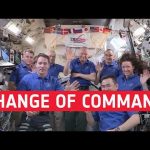
On 4 October 2021 ESA astronaut Thomas Pesquet became commander of the International Space Station, taking over from @JAXA | 宇宙航空研究開発機構 astronaut and fellow Crew-2 member Akihiko Hoshide. Thomas will hold this role until shortly before Crew-2 return to Earth in November. Thomas officially accepted his new position during a traditional ceremony, broadcast live from the International Space Station, where a symbolic handover of a key from Aki to Thomas denoted the change of command. The full title of this role is International Space Station crew commander. While overall command of the Station lies with ground-based flight directors, unless there is an emergency on board, the role of crew commander is vital to mission success. Aki became commander on 27 April 2021 when he took over from @NASA astronaut Shannon Walker. In September Aki and Thomas conducted the first spacewalk without a Russian or US astronaut.
We are Europe’s gateway to space. Our mission is to shape the development of Europe’s space capability and ensure that investment in space continues to deliver benefits to the citizens of Europe and the world. Check out https://www.esa.int/ to get up to speed on everything space related.
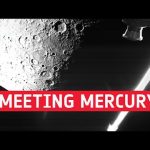
A beautiful sequence of 53 images taken by the monitoring cameras on board the ESA/JAXA BepiColombo mission as the spacecraft made its first close flyby of its destination planet Mercury on 1 October 2021.
The compilation includes images from two of the three Monitoring Cameras (MCAM) onboard the Mercury Transfer Module, which provides black-and-white snapshots at 1024 x 1024 pixel resolution. It is not possible to image with the high-resolution camera suite during the cruise phase. The MCAMs also capture parts of the spacecraft: MCAM-2 sees the medium-gain antenna and magnetometer boom, while the high-gain antenna is in the MCAM-3 field-of-view.
The sequence opens with the closest images acquired by MCAM-2 and MCAM-3, taken at a distance of around 1000 km from the surface of the planet. Closest approach at 199 km took place about five minutes earlier, at 23:34:41 UTC.
During the half hour following the close approach, imaging alternated between the two cameras. In general, MCAM-2 pointed towards the northern hemisphere of Mercury, while MCAM-3 pointed towards the southern hemisphere. Thus the subsequent images show a set of complementary views from each camera in turn, ranging from a distance of about 2420 km to 6140 km from the surface of Mercury. In these relatively close images, it is possible to identify prominent impact craters, scarps, and other geological features that BepiColombo will study in more detail once in orbit around the planet at the end of 2025.
The final part of the compilation illustrates BepiColombo’s departure from Mercury as the spacecraft changed attitude along its trajectory, giving the impression Mercury’s apparent movement changes direction. The final image was taken at 03:03:49 UTC on 2 October from a distance of approximately 93 thousand kilometres. The final departure sequence has been speeded up by a factor of about 900.
Several different exposure times were used throughout the imaging sequence in order to try and capture the rapidly-varying brightness of Mercury, and in some cases the spacecraft and/or the planet are overexposed, particularly in the final departure sequence. Optical and electronic artefacts are also visible in some images.
The gravity assist manoeuvre was the first at Mercury and the fourth of nine flybys overall. During its seven-year cruise to the smallest and innermost planet of the Solar System, BepiColombo makes one flyby at Earth, two at Venus and six at Mercury to help steer it on course to arrive in Mercury orbit in 2025. The Mercury Transfer Module carries two science orbiters: ESA’s Mercury Planetary Orbiter and JAXA’s Mercury Magnetospheric Orbiter. They will operate from complementary orbits to study all aspects of mysterious Mercury from its core to surface processes, magnetic field and exosphere, to better understand the origin and evolution of a planet close to its parent star.
Credit: ESA/BepiColombo/MTM, CC BY-SA 3.0 IGO; Music composed and performed by Anil Sebastian and Ingmar Kamalagharan.
★ Subscribe: http://bit.ly/ESAsubscribe and click twice on the bell button to receive our notifications.
We are Europe’s gateway to space. Our mission is to shape the development of Europe’s space capability and ensure that investment in space continues to deliver benefits to the citizens of Europe and the world. Check out https://www.esa.int/ to get up to speed on everything space related.
🚩 Video Sponsored by Ridge Wallet: https://www.ridge.com/HISTORY 🚩 Use Code “HISTORY ” for 10% off your order 👇 Push down for more cool stuff 👇
🚩 The Reformation was a major movement within Western Christianity in 16th century Europe that posed a religious and political challenge to the Catholic Church and in particular to papal authority. It arose from what were perceived to be errors, abuses, and discrepancies by the Catholic Church. The Reformation split the Western Church into Protestantism and what is now the Roman Catholic Church.
Timestamps 0:00 – Intro 1:31 – Sponsored ad 2:50 – Renaissance Part 3
Earth is changing, and these changes can be seen from space. A series of satellites built by NASA and operated by the U.S. Geological Survey (USGS) have been monitoring and tracking changes across our planet for almost 50 years. Adding to this legacy circling the globe every 99 minutes and collecting images of the Earth landscapes and coastal regions, Landsat 9 will continue to answer the many questions we have about Earth’s climate change, population growth and even your very own food supply. Join experts on #NASAScience Live Thursday, Sept. 30 at 3:00 p.m. ET to learn more. Submit your questions by using #Landsat
Meet the experts: Your host for this episode is Jacob Richmond, the Earth Science Communications Manager at NASA’s Goddard Space Flight Center. Jacob joined NASA after retiring from the Air Force after 20 years of service. In his spare time he loves to hike and travel with his family.
Dr. Liz Hoy is a Senior Scientist at NASA Goddard and is our fire expert for this episode. Dr. Hoy started her graduate studies in remote sensing science where she went to Alaska, hiked around and took tree and soil measurements to compare them with NASA satellite observations. She really enjoys working with a group of scientists all focused on the same goal – to better study the Earth system. In her spare time, Dr. Hoy enjoys outdoor activities – hiking, biking, boating, swimming, and taking her dog for a walk.
Ms. Nikki Tulley is a Research Assistant with NASA’s Wester Water Applications Office (WWAO). Her time at NASA began when she was selected for a summer internship with the WWAO Navajo Nation Drought Severity Evaluation Tool (DSET) project in 2020. In this role, Ms. Tulley was able to create important connections to the community where DSET would be used through developing language connections through the Navajo Language. Her favorite part of working with NASA is that she gets to break down stereotypes and let people know how accessible data is to help their communities. In her spare time and every chance she gets, Ms. Tulley travels home back to the Navajo Nation.
A new Earth-observing mission launches to space, a move to make room aboard the space station, and some valuable space station science returns to Earth … a few of the stories to tell you about – This Week at NASA!
In this week’s edition of the Earth from Space programme, the Copernicus Sentinel-1 mission takes us over the Mackenzie River, a major river system in the Canadian boreal forest.
We are Europe’s gateway to space. Our mission is to shape the development of Europe’s space capability and ensure that investment in space continues to deliver benefits to the citizens of Europe and the world. Check out https://www.esa.int/ to get up to speed on everything space related.
What are the Trojan asteroids? These mysterious space rocks have been gravitationally trapped in Jupiter’s orbit around the Sun for billions of years and hold clues to the formation of our solar system. NASA’s Lucy mission will be the first spacecraft to study these ancient relics up close. Scientist Audrey Martin at Northern Arizona University has the details.
Learn more about Lucy’s mission to the Trojans, launching Oct. 16:
Producers: Jessica Wilde & Scot Bednar Editor: Matthew Schara
The European Astro Pi Challenge offers young people from age 7 up to 19 years the chance to run their code in space. This year students can take their codes for Mission Space Lab to the next level thanks to two brand new Astro Pi computers offering new experiment capabilities.
We are Europe’s gateway to space. Our mission is to shape the development of Europe’s space capability and ensure that investment in space continues to deliver benefits to the citizens of Europe and the world. Check out https://www.esa.int/ to get up to speed on everything space related.
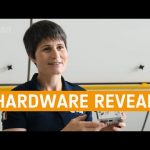
After 7 years of operation on the International Space Station, it’s time to upgrade the Astro Pi computers. In this video ESA astronaut Samantha Cristoforetti reveals the new Astro Pi computers and their specs. The new units will launch to the International Space Station later this year.
We are Europe’s gateway to space. Our mission is to shape the development of Europe’s space capability and ensure that investment in space continues to deliver benefits to the citizens of Europe and the world. Check out https://www.esa.int/ to get up to speed on everything space related.
Cu Gianina Cărbunariu și Florin Șerban Teatrul? Având în vedere evoluția contextului pandemic, îmi pun în primul rând întrebări legate de stagiunea care tocmai a început. Cum vom lucra în teatre și cum vom reuși să ne întâlnim cu publicul? Ce strategii va trebui să inventăm nu doar pentru a supraviețui, ci pentru a face lucruri care să aibă sens în această realitate? Și nu e vorba doar de virus, ci de tot ceea ce virusul a accelerat și a acutizat în societate: polarizarea discursurilor în spațiul public, precaritatea, vulnerabilitatea, anxietatea și individualismul feroce. Vom reuși să construim legături care să ducă la o solidaritate de breaslă și la un dialog cu spectatorii? În ceea ce privește planurile pe termen lung, nu am nici o îndoială că teatrul va continua să existe, însă nu pot să nu mă întreb: ce fel de teatru va supraviețui și în ce fel de lume? Cât de mare va fi presiunea comercialului asupra artelor performative? Văzând ce se întâmplă, de exemplu, în Polonia sau Ungaria, dar și în România, mă întreb iarăși ce forme va lua confruntarea dintre spiritul critic al unor artiști și viziunile politice conservatoare. Filmul? Dacă mi s-ar pune întrebarea „Cum va arăta filmul în viitor?”, aș fi excesiv de precaut cu răspunsul. M-aș afla într-o postură asemănătoare cu cel care, la apariția sonorului, e întrebat cum va arăta filmul în viitor, și, neatent, ar putea spune „În viitor filmul va avea sonor”. Spunând asta însă, ratează și întrebarea, ratează și răspunsul. Răspunsul la o astfel de întrebare – „Cum va arăta filmul în viitor?” nu poate fi, în zilele noastre ca și atunci, decât unul singur – „Va arăta la fel.” Dar, ar trebui adăugat, „în viitor, filmul va fi văzut diferit”. Cred că, de fapt, aici suntem. De-acum încolo, filmul va fi văzut diferit și, ne place sau nu, filmul începe să se întoarcă la origini. ________________________________ Invitații: Gianina Cărbunariu Regizoare și dramaturgă, Gianina este directoare a Teatrului Tineretului și curatoare a Festivalului de Teatru din Piatra Neamț. Spectacolele sale de ficțiune au ca sursă de inspirație documentarea prin interviuri sau prin studierea unor arhive. Temele abordate privesc anumite realități sociale și politice de astăzi, dar și din istoria recentă românească și europeană. Din 2001 face parte din grupul dramAcum, iar din 2004 lucrează atât ca artist independent, cât și ca artist invitat în teatre de stat din România sau din străinătate. A participat cu spectacole la peste 40 de festivaluri internaționale și turnee în peste 15 țări. A fost prezentă în selecția oficială a Festivalului Avignon în 2014, cu spectacolul „Solitaritate”, co-produs de TNRS Sibiu și Festivalul Avignon, iar în 2016 spectacolul Tigrul (al cărui scenariu îl semnează) a fost inclus tot în selecția oficială a Festivalului Avignon. Scenariile sale au fost traduse, publicate și montate de alți regizori în diferite teatre din lume, printre care Royal Court Londra, Schaubuehne Berlin, Kammerspiele Munchen, Royal Dramatic Theatre Stockholm, Volkstheater Viena. Spectacole recente: VA URMA. Pe Planeta Oglindă (Teatrul Tineretului Piatra Neamț, 2021), VA URMA. Ghid performativ pentru spectator (TT, 2020), Frontal (Teatrul Tineretului Piatra Neamț, 2019), Elogiul lenei (Centro Dramatico Nacional, Madrid, 2018), Work in Progress (Emilia Romagna Teatro, Modena, 2018). __________________________________ Florin Șerban Florin Șerban este regizor, scenarist și producător de film. A debutat în film în 2010 cu Eu când vreau să fluier, fluier câștigând la Berlin atât Marele Premiu al Juriului, cât și premiul Alfred Bauer pentru inovație în film. Au urmat BOX (2015), Dragoste 1. Câine (2018), Dragoste 2. America (2020) și peste 30 de premii internaționale. Acum, Florin predă la Școala de Actorie și produce pentru Fantascope Films.
ESA astronaut Thomas Pesquet takes you on a tour of the International Space Station like no other. Filmed with a 360 camera, the Space Station 360 series lets you explore for yourself alongside Thomas’s explanation – episode six is NASA’s Node-3, also known as Tranquility.
Node 3 has cylindrical hull 4.5 m in diameter with a shallow conical section enclosing each end. It is almost 7 m long and, together with the Space Station’s observatory Cupola, weighed over 13.5 tonnes at launch. Built in Europe, Node 3 houses the life-support equipment, the toilet and equipment racks.
We are Europe’s gateway to space. Our mission is to shape the development of Europe’s space capability and ensure that investment in space continues to deliver benefits to the citizens of Europe and the world. Check out https://www.esa.int/ to get up to speed on everything space related.
Visualisation of BepiColombo flying by Mercury on 1 October 2021. The spacecraft makes nine gravity assist manoeuvres (one of Earth, two of Venus and six of Mercury) before entering orbit around the innermost planet of the Solar System.
The closest approach is at 23:34 UTC on 1 October (01:34 CEST 2 October) at a distance of about 200 km.
BepiColombo is an international collaboration between #ESA and #JAXA.
Credit: ESA/ATG medialab
★ Subscribe: http://bit.ly/ESAsubscribe and click twice on the bell button to receive our notifications.
We are Europe’s gateway to space. Our mission is to shape the development of Europe’s space capability and ensure that investment in space continues to deliver benefits to the citizens of Europe and the world. Check out https://www.esa.int/ to get up to speed on everything space related.
🚀 Watch the newest #Landsat satellite lift off! This joint NASA-U.S. Geological Survey mission will contribute to the longest data record of Earth’s landscapes taken from space. Landsat 9 continues the nearly 50-year legacy of the Landsat Program: observing our changing home planet, monitoring its land and coastal regions, helping us manage its essential resources, and providing free, publicly available images and data.
Landsat 9 will launch Mon., Sept. 27 at 2:12 p.m. EDT (18:12 UTC) aboard a United Launch Alliance Atlas V rocket from Space Launch Complex 3 at Vandenberg Space Force Base in California. Landsat 9 will join its sister satellite, Landsat 8, in orbit in collecting images from across the planet every eight days.
Timelapse video made during ESA astronaut Thomas Pesquet’s second mission to the International Space Station, “Alpha”. The camera is setup to take pictures at intervals of two a second, and the pictures are then edited into this video that plays at 25 pictures a second. The video is around 12 times faster than real speed.
Thomas shared this video on social media with the caption: “A night #timelapse over South-East Asia. Green lights of squid fishing, bright city lights of Hong Kong and Shanghai followed by Seoul until the border of the Korean peninsula closes on a pitch black DPRK.”
Over 200 experiments are planned during Thomas’ time in space, with 40 European ones and 12 new experiments led by the French space agency #CNES.
Latest updates on the Alpha mission can be found via @esaspaceflight on Twitter, with more details on ESA’s exploration blog via thomaspesquet.esa.int.
Background information on the Alpha mission is available at www.esa.int/MissionAlpha with a brochure at www.esa.int/AlphaBrochure.
★ Subscribe: http://bit.ly/ESAsubscribe and click twice on the bell button to receive our notifications.
We are Europe’s gateway to space. Our mission is to shape the development of Europe’s space capability and ensure that investment in space continues to deliver benefits to the citizens of Europe and the world. Check out https://www.esa.int/ to get up to speed on everything space related.
🚩 The Italian Renaissance was a period in Italian history known for the development of a culture that spread across Europe and marked the transition from the Middle Ages to modernity.
Positioning the agency for future success, a lunar landing site selected for a robotic explorer, and highlighting diversity on the Moon … a few of the stories to tell you about – This Week at NASA!
NASA Science Live is back and we’re LIVE from the Moon to Mars Ice & Prospecting Challenge. Ten teams from across the country have been tasked with one goal: to extract ice beneath a simulated lunar or Martian surface. As we look forward to NASA’s Artemis program to the Moon and even one-day crewed missions to Mars, ideas from challenges like this will be essential in creating technology to access resources like water for humans to survive on other worlds. Join us on Sept 24th at 3:00 p.m. to hear from NASA experts and the teams.
Meet the experts Alejandro Pensado is an Aerospace Engineer at NASA Langley Research Center. In 2018, Alejandro joined the Space Mission Analysis Branch at NASA Langley, working on in-situ resource utilization, propulsion, and Moon and Mars mission architectures. He says he loves the variety of his work and enjoys collaborating with creative and talented people which makes his job more fun. In his spare time, he loves photography, cooking, and traveling.
Shelley Spears is the National Institute of Aerospace Director of Education and Outreach. As one of the organizers of the competition, Shelley says she loves the magnitude of impact her work has on society and its contribution to American competitiveness. In her spare time she loves boating, golfing, bird hunting with her dogs, traveling, staying fit, as well as cooking and entertaining with family and friends.
Christopher Jones is a Senior Aerospace Engineer at NASA Langley Research Center. Ever since he was a young boy, Christopher always dreamt of working for NASA. Soon his opportunity came as he joined the Space Mission Analysis Branch at NASA Langley. He says he loves working on the diverse mix of projects that all support improving life on Earth through space. Outside of work, he spends his time playing racquetball, cooking, playing board games, and writing.
Invitați: Dan Dediu și Vava Ștefănescu Cred că viitorul muzicii se va construi pe muzici ale trecutului. Muzicile viitorului, cele ce ar suna cu totul nou, vor trebui să mai aştepte. Un alt ev, poate altfel organizat şi mai puţin comod decât al nostru, le va putea aduce în prim-plan. Nu însă şi viitorul apropiat. Căci el se va hrăni în continuare din vampirizarea muzicilor trecutului, multiplicându-le, combinându-le la nesfârşit şi schimbându-le funcţia ori cadrul în societate. Ecuaţia viitorului muzicii va fi următoarea: dispecerat plus necrofilie. Dispecerat – pentru că va clasa, organiza şi distribui traficul muzical pe întreaga planetă -, necrofilie – pentru că se va hrăni cu muzici ale epocilor defuncte, pe care le va resuscita într-un mod artificial. Là ou j’allume le feu c’est ma demeure ! Proverb țigănesc (rom) din Boemia. Oriunde se așează dansul, nu-și pierde proprietățile, particularitățile, natura. Oricât de mult s-ar duce în muzică, teatru, cinema sau alte arte, dansul spre deosebire de gimnastică sau mersul pe jos este un mod de a înțelege cu alte „instrumente” ceea ce este „aici” și „acum”. Oriunde e dans, este trăire, experiment, cunoaștere.
Dansul este o artă a dispariției, și, ca în tot ce este performativ , este un mod de comunicare în care nu poți să faci „undo”, nu poți să iei înapoi ceea ce este făcut, ceea ce este „comis”. Tocmai din acest motiv este o artă care în orice instanță este deschisă spre viitor, spre momentul următor. Un moment absolut. Știința dispariției „convoacă prezentul, trecutul, viitorul”*Gheisha Fontaine – Les danses du temps
Indiferent de formele prin care se va manifesta dansul în viitor, cred că acestea sunt punctele în care va continua să existe. Formele se diversifică, vor fi mode, stiluri, conjugări sau transgresii, dar noi vom continua să dansăm. O zi în care nu dansăm, este o zi pierdută pentru noi zicea Nietzsche; de ce oare? Pina Bausch o imensă personalitate a coregrafiei moderne a parafrazat spunând : dansați, dansați altfel suntem pierduți!
Invitați: Dan Dediu A studiat compoziţia la Bucureşti cu Ştefan Niculescu şi Dan Constantinescu, iar la Viena cu Francis Burt. A compus peste 170 de opusuri ce acoperă aproape toate genurile muzicale: 5 simfonii şi alte 20 piese pentru orchestră, 10 concerte (saxofon, violă, vioară, pian, violoncel, trombon, dublu concert pentru vioară, violoncel, triplu concert pentru flaut, clarinet, violoncel, triplu concert pentru vioară, violoncel, pian), 7 cvartete de coarde, muzică de cameră în diferite formaţii, muzică pentru pian, coruri, patru opere (Post-ficţiunea, Münchhausen, Eva!, O scrisoare pierdută) și o ConcertOperă (Wagner Under). Este laureat al mai multor premii naţionale şi internaţionale de compoziţie și a coordonat în calitate de director artistic festivalul Săptămâna Internațională a Muzicii Noi (în 1999, 2001, 2007, 2008, 2016-2021). Dan Dediu este profesor de compoziţie, director artistic al ansamblului Profil, iar între 2008-2016 a fost rectorul Universităţii Naţionale de Muzică din Bucureşti. De asemenea, este doctor honoris causa al Universității de Arte ”George Enescu” din Iași și al Universității din Craiova.
Vava Ștefănescu este coregrafă și dansatoare care trăiește și lucrează în România. Are un master în management cultural – Cooperare Artistică Internațională la Universitatea Paris VIII UFR Arts, Paris, Franța. Portofoliul său artistic conține peste 45 de spectacole originale ori realizate în colaborare cu regizori importanți de teatru (Mihai Măniuțiu, Tompa Gaborr, David Zinder, Atila Vizayer, ș.a.) din care amintim Despre Tine (1998, 2020), Uitarea în regia lui Mihai Măniuțiu (2001,2008 – Teatrul Național Cluj), Visele călătorilor de pe Titanic (2004 – Teatrul Tony Bulandra, Târgoviște), Perscuitorii de perle (2002 – Opera Națională București), 16 lecții despre dezastrele…(2001, Teatrul Oleg Danovski, Constanța), Solo on line (2004, Teatrul Național Cluj), O vară fierbinte pe Iza (2007, Teatrul Național Cluj), Cvartet pentru o lavalieră instalaţie coregrafică (2008), Ghetto blaster, (2008Teatrul Masca Bucureşti), After All (2011, Festivalul Temps d’ Images, Cluj), Occupy Vava – instalație performativă (2012, TNC)… Spectacolele sale au fost prezenate în presigioase festivaluri naționale și internaționale.
Is there oxygen on Mars? Technically yes, but it’s nothing like the amount we have on Earth. So breathing is out of the question. However, there IS a lot of carbon dioxide (CO2) on Mars. Now a new technology — MOXIE — has proven that we can convert Martian CO2 into oxygen for use by future explorers. NASA engineer Asad Aboobaker tells us more. Learn more about MOXIE: https://go.nasa.gov/37ujwOl
Producers: Jessica Wilde & Scott Bednar Editor: Matthew Schara
ESA astronaut Thomas Pesquet is sharing scenes from life on board the International Space Station during his second mission “Alpha”. He shared this video moving through NASA’s Destiny laboratory, detailing the elements of a normal day in the research module.
From the exercise bike to the robotics workstation and all the research facilities, Thomas shows how astronauts work in the US space laboratory.
Over 200 experiments are planned during Thomas’ time in space, with 40 European ones and 12 new experiments led by the French space agency @CnesFrance.
We are Europe’s gateway to space. Our mission is to shape the development of Europe’s space capability and ensure that investment in space continues to deliver benefits to the citizens of Europe and the world. Check out https://www.esa.int/ to get up to speed on everything space related.
NASA’s future will continue to be a story of human exploration, science, engineering and technology. Working together, we define the future, achieve the impossible and discover the unknown.
With our Artemis missions, NASA will land the first woman and first person of color on the Moon, using innovative technologies to explore more of the lunar surface than ever before. We will collaborate with commercial and international partners and establish the first long-term presence on the Moon. Then, we will use what we learn on and around the Moon to take the next giant leap: sending the first astronauts to Mars.
We will continue to nurture the development of a vibrant low-Earth orbit economy that builds on the work done to date by the International Space Station. Commercial companies will play an increasing role in the space industry: launching rockets and satellites, transporting cargo and crew, building infrastructure in low-Earth orbit.
NASA research and missions are essential to the future of Earth. The unique vantage point of space allows us to better understand Earth’s systems and use that knowledge to live sustainably on our home planet, protect life around the world, and adapt to natural and human-caused changes. Our data and observations will help protect our home planet.
Our James Webb Space Telescope will peer farther into the Universe than ever before. Our scientists will work to increase an understanding of our planet, our solar system and our place in the universe. We will continue to try to answer the question, “Are we alone?”
Tune in to hear NASA Administrator Bill Nelson and other senior leaders provide updates about our human spaceflight programs, projects, and activities.
🚩 The Italian Renaissance was a period in Italian history known for the development of a culture that spread across Europe and marked the transition from the Middle Ages to modernity.
We are Europe’s gateway to space. Our mission is to shape the development of Europe’s space capability and ensure that investment in space continues to deliver benefits to the citizens of Europe and the world. Check out https://www.esa.int/ to get up to speed on everything space related.
Preparing the space station for a future power boost, a mission extension for a couple of station crew members, and a spaceflight first for one of our commercial partners … a few of the stories to tell you about – This Week at NASA!
Bineti ati venit la seria noua “arhivele viitorului”!
Cu Iulia Militaru & Miki Braniște
Odată cu situația particulară în care ne-au împins evenimentele recente a sporit și interesul general pentru „ce-va-să-fie” și „cum mai proiectăm viitorul?”. Ne-am trezit deodată în imposibilitatea de a discuta adecvat și de a adapta noțiunea de viitor contextului actual, orice reprezentare a lui devenind imposibilă. Cauza pare a fi în primul rând o eradicare a gândirii utopice din conștiința colectivă cu rădăcini în spaima occidentală față de această gândire și în teoriile sfârșitului istoriei, a neîncrederii în marile narațiuni, totul culminând într-un discurs conservator, antiprogresist, și generând un val de pesimism și o lipsă de perspectivă. Literatura pseudo-progresistă care a mai supraviețuit ieșirii din postmodernitate reflectă de fapt această situație a neputinței de a imagina. Literatura contemporană începe să se închidă într-o formă de performativitate sterilă și apolitică, atunci când nu eșuează complet în cinism. Cum poate să contribuie literatura la reabilitarea imaginației și la mobilizarea speranței active pentru viitor? *** Presiunea constantă în vederea asigurării nevoilor de bază pentru supraviețuire sau unui trai decent a unei părți majoritare a populației globului este tot mai mare în timp ce bogăția se acumulează la cei 1%. În această situație de presiune sunt incluși și artiștii și persoanele care contribuie la cultura vie, lucru ce îi îndepărtează de ceea ce ar trebui să fie mizele muncii lor. Arta și cultura sunt locul din care ne putem inspira pentru modele alternative de trai într-o lume globală care se bazează pe narațiuni dominante create în jurul creșterii economice cu orice preț. Retragerea statului din susținerea domeniului artistic și cultural este tot mai evidentă, iar presiunea financiară are deja efecte. Supraviețuirea individuală și instituțională duce la schimbarea focusului către subiecte care ne fac mai ușoară adaptarea la condițiile existente, conforme unei realități care nu trebuie schimbată, adică o realitate care stimulează o gândire ne-critică. Marginile, încă vii și în auto-chestionare în raport cu centrul, pot fi sursa de gândire laterală care poate impulsiona imaginația către viitoruri alternative.
Miki Braniște Curator, manager cultural, lector asociat la Universitatea „Babeș-Bolyai” din Cluj-Napoca. Manager cultural și curator pentru arte performative și proiecte interdisciplinare, Miki este președintă a asociației Colectiv A din Cluj. A fost directorul festivalului TEMPS D’IMAGES din Cluj din 2008 până în anul 2017. Între 2009 si 2019 a fost membră a board-ului de conducere a spațiului de artă contemporană Fabrica de Pensule participând activ la strategia generală a acestuia. Între 2017-2019 a realizat programul artistic dedicat artelor spectacolului la Fabrica de Pensule. Începând cu anul 2017 a creat, în calitate de curator, programul Cultural Management Academy la inițiativa Goethe Institut Bucharest. A dezvoltat o activitate susținută în curatoriat și management cultural acestea reprezentând totodată și domeniile ei de expertiză. Începând cu anul 2018 a devenit lector asociat la Facultatea de Teatru și Film din cadrul Universității Babeș-Bolyai din Cluj.
Does NASA know about ALL the asteroids? We know about the vast majority of larger ones and none of those pose a threat, but space is big, so we’re always on the lookout. NASA asteroid expert Dr. Amy Mainzer explains. Learn more: nasa.gov/planetarydefense
Producer: Scott Bednar Producer/Editor: Jessica Wilde











![Node 3 | Space Station 360 [in French with English subtitles available]](https://video.kidibot.ro/wp-content/uploads/2025/06/21958-node-3-space-station-360-in-french-with-english-subtitles-available-150x150.jpg)