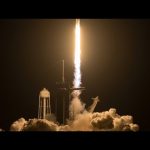
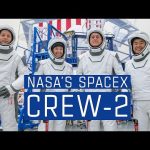
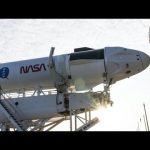
At 5:49 a.m. EDT, NASA’s SpaceX Crew-2 mission lifted off from Launch Complex 39A at Kennedy Space Center in Florida. The Crew Dragon Endeavour spacecraft with four astronauts aboard is safely in orbit, on the way to the International Space Station for docking on Saturday, April 24.
Tune in at 7:30 a.m. EDT for a post launch news update. Participants are:
• Steve Jurczyk, acting NASA administrator • Kathy Lueders, associate administrator, Human Exploration and Operations Mission Directorate, NASA Headquarters • Steve Stich, manager, NASA’s Commercial Crew Program • Hiroshi Sasaki, vice president and director general, JAXA’s Human Spaceflight Technology Directorate • Frank de Winne, manager, International Space Station Program, ESA • A SpaceX representative
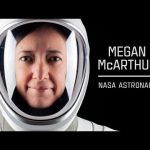
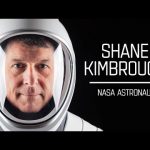
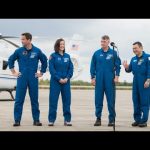
At 5:49 a.m. EDT (9:49 UTC), the SpaceX Crew Dragon Endeavour spacecraft and Falcon 9 rocket will lift off from NASA’s Kennedy Space Center in Florida. Shane Kimbrough and Megan McArthur of NASA, Thomas Pesquet of the European Space Agency, and Akihiko Hoshide of the Japan Aerospace Exploration Agency will join the station’s crew, for a mission of approximately six months.
This will be the first launch through our Commercial Crew Program to fly two international partner astronauts, and the first reuse of a Crew Dragon spacecraft and Falcon 9 rocket for a crew mission.
Once aboard the station, the Crew-2 astronauts will spend a lot of time on science — in areas such as medical technology, human health, and materials to benefit life on Earth. The space station is a unique scientific platform, enabling researchers from all over the world to put their talents to work on innovative experiments. It has instruments that monitor our home planet’s global climate, environmental changes, and natural hazards.
“I have dreamt of becoming an astronaut since my childhood.”
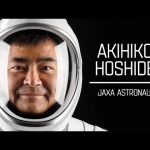
Japan Aerospace Exploration Agency astronaut Akihiko Hoshide was born on December 28th, 1968 in Tokyo, Japan. He received a bachelor’s degree in Mechanical Engineering from Keio University in 1992, and a Master of Science in Aerospace Engineering from the University of Houston, Cullen College of Engineering in 1997. He is the third Japanese astronaut to walk in space and has flown on both the Space Shuttle and Soyuz spacecraft. He launches on April 23rd at 5:49 a.m. aboard the NASA SpaceX Crew-2 mission to the International Space Station.
“I like new experiences. I like to learn all the time.”
Born in Rouen, France, Thomas Pesquet is a European Space Agency Astronaut and is assigned as a Crew-2 Mission Specialist.
Thomas was selected as an ESA astronaut in May 2009. In 2016, he launched to the International Space Station for his six-month Proxima mission, as a flight engineer for Expeditions 50 and 51. His busy mission was the first to see all four cargo vehicles in operation at the time (HTV, Cygnus, Dragon and Progress). He tracked and captured two of them using the Station’s robotic arm.
During his stay in space, he took part in over 50 experiments and the six crew members set a record for hours of time spent working on science. Other highlights of his mission included two spacewalks to maintain the Station: one to replace batteries on an electrical channel, and one to fix a cooling leak and service the robotic arm.
Thomas is a black belt in judo and enjoys basketball, jogging, swimming, squash and outdoor sports such as mountain biking, kite surfing, sailing, skiing and mountaineering. He also has extensive experience in scuba diving and skydiving. His other interests include travelling, playing the saxophone and reading. Get to know Thomas Pesquet, Crew-2 Mission Specialist.
Born in Honolulu, Hawaii, NASA Astronaut Megan McArthur is currently assigned as Pilot of the NASA SpaceX Crew-2 mission to the International Space Station.
Her previous spaceflight experience includes STS-125 for the servicing of the Hubble Space Telescope. McArthur worked as the flight engineer and robotic arm operator. She carefully retrieved the Hubble Space telescope and placed it in the shuttle’s cargo bay. The STS-125 mission was accomplished in 12 days, 21 hours, 37 minutes and 9 seconds, traveling 5,276,000 miles in 197 Earth orbits.
Megan enjoys SCUBA diving, backpacking, and cooking. Get to know Megan McArthur, Crew-2 Pilot.
“I love it, it doesn’t matter what I’m flying, it’s just incredible.”
NASA astronaut Shane Kimbrough was born June 4, 1967, in Killeen, Texas. He graduated from The Lovett School, Atlanta, Georgia, in 1985; received a Bachelor of Science degree in Aerospace Engineering from the United States Military Academy, West Point, New York, in 1989 and a Master of Science degree in Operations Research from the Georgia Institute of Technology in 1998. He has completed 6 spacewalks and logged 189 days in space. He has flown on both the Space Shuttle and Soyuz spacecraft. He launches on April 23nd at 5:49 a.m. aboard the NASA SpaceX Crew-2 mission to the International space station.
Daca ne uităm, de exemplu, la crearea României Mari, observăm după 1918 fuzionarea unor teorii naționaliste diverse (lingvistice, culturale, religioase, biologice) care a atins dimensiuni (românești) extreme. Deși s-a bazat mereu pe o idee de națiune română așa cum au definit-o naționaliștii romantici ai secolului al XIX-lea, în perioada interbelică naționaliștii români și-au dorit un stat român omogen din punct de vedere etnic. Acest naționalism etnic a devenit elementul central al transformării biopolitice gândite mai întâi de Carol II și continuate apoi de mareșalul Ion Antonescu. În perioada comunistă, asistăm la o adaptare continuă a naționalismului interbelic și a proiectului de a face din Romania un stat-națiune perfect.
Marius Turda este Profesor la Oxford Brookes University și Director al Centrului de Studii de Studii Umaniste și Medicale al aceleiași universități. Director fondator al Institutului Cantemir de la Universitatea Oxford (2012-2013). Printre cărțile lui recente se numără Theology and Modernity (2019); Religion, Evolution and Heredity (2018); Historicizing Race (2018, ed. română 2019); The History of Eugenics in East-Central Europe, 1900-1945: Sources and Commentaries (2015; 2017); Latin Eugenics in Comparative Perspective (2014; 2016); Eugenics and Nation in Early 20th Century Hungary (2014; ed. română 2020); Modernism and Eugenics (2010, ed. română 2014).
This year at NASA, EarthDay is about connections—to our planet and to each other. Our planet is home to over 7 billion people of diverse backgrounds and experiences, but we are all #ConnectedByEarth. Join NASA climate experts to learn about the connections between human activity and climate change.
Dr. Kimberley R. Miner will host this episode and is a climate scientist at NASA’s Jet Propulsion Laboratory (JPL). While she’s been at JPL since July 2020, she has been studying and exploring the Earth since…forever! Dr. Miner loves working outside, asking questions about nature and protecting the animals and plants all around us. She loves that being an Earth Scientist lets her do all these things.
Dr. Lesley Ott is a climate scientist at NASA’s Goddard Space Flight Center where she’s worked since getting her PhD 15 years ago. She studies the processes that control greenhouse gas concentrations and always loves seeing the ways that springtime changes in vegetation show up in satellite data.
Ms. Equisha Glenn is a graduate student research assistant at NASA Goddard Institute for Space Studies (NASA GISS) and is finishing her PhD in Civil Engineering. Growing up, Ms. Glenn used to watch TV shows about the environment and loves how diverse Earth is, yet everything works together. Ms. Glenn is passionate about bridging the gap between data, climate and end users to help build a more resilient future for cities and society.
We are all connected to and by Earth — whether it’s the trees and plants that give us the oxygen we breathe, the snow-capped mountains that provide the water we drink, or the breathtaking geophysical forces that shape the land beneath our feet. NASA has over 20 satellites measuring the height of oceans and inland water, clouds and precipitation, carbon dioxide and much more. By understanding our changing world, we improve lives and safeguard our future.
Need Earth Day plans? 😎 We’ve got you covered. On April 22 at 11 a.m. EDT, NASA astronauts Mike Hopkins, Shannon Walker, Victor Glover, Mark Vandehei, and Soichi Noguchi of Japan Aerospace Exploration Agency will go LIVE from space for a special Earth focused Q&A with guest host Shawn Mendes!
The International Space Station live stream will feature your questions sent in from around the world! Don’t miss this opportunity to hear how NASA Earth and astronauts use space to monitor the health of our planet, what life is like on the orbiting lab, and more!
Have you ever done a science experiment and wondered “What would this be like if it were HUGE?” Welcome to Science Max, the exciting new series that turbocharges all the science experiments you’ve done at home.
Our planet is surrounded by spacecraft helping us study our changing climate, save lives following disasters, deliver global communication and navigation services and help us answer important scientific questions.
But these satellites are at risk. Accidental collisions between objects in space can produce huge clouds of fast-moving debris that can spread and damage additional satellites with cascading effect.
In this animation, find out how teams at ESA’s European Space Operations Centre in Darmstadt, Germany, take action to keep satellites safe after receiving an alert warning of a possible collision between an active satellite and a piece of space debris.
When the alert is raised, ESA experts determine the risk of a collision and plan a collision avoidance manoeuvre that can be used to get the satellite out of harm’s way if necessary.
Additional observations of the piece of space debris help the team better understand its path and the risk of collision. If that risk remains too high (typically 1 in 10 000), the planned manoeuvre is carried out to temporarily change the orbit of the satellite until the threat has passed.
Each manoeuvre comes at a price. They take skill and time to plan, cost precious fuel – shortening the lifetime of the mission – and often require instruments to be temporarily shut off, preventing them from collecting important data.
While most alerts do not end up requiring evasive action, the number of alerts is rapidly increasing. Hundreds are already issued every week. Several companies have begun to launch large constellations into low-Earth orbit to provide global internet access. They have great benefits, but could be a source of huge disruption if we do not change our behaviour.
In just a few years, our current methods for avoiding collisions in space will no longer be enough. To safeguard humankind’s continued access to space for future generations, ESA is developing technologies for an automated collision avoidance system.
We are Europe’s gateway to space. Our mission is to shape the development of Europe’s space capability and ensure that investment in space continues to deliver benefits to the citizens of Europe and the world. Check out https://www.esa.int/ to get up to speed on everything space related.
On April 23, 2021, NASA astronauts Shane Kimbrough and Megan McArthur, ESA astronaut Thomas Pesquet, and JAXA astronaut Akihiko Hoshide will launch on NASA’s SpaceX Crew-2 mission headed for the International Space Station. Once there, they will perform space station upgrades, conduct science experiments to benefit life on Earth, and continue preparing humanity for future missions to the Moon – and eventually Mars.
This is the second crew rotation mission with four astronauts flying on a commercial spacecraft, and the first with two international partners. It’s time to #LaunchAmerica!
Producer/Editor: Lacey Young Music: Universal Production Music
On 19 April, 2001, Umberto Guidoni was launched to the International Space Station, becoming the first European astronaut on board. In April 2021, ESA celebrates 20 years of European astronaut missions to this unique orbital outpost.
In this video, ESA astronauts past and present share their experiences of the International Space Station and spaceflight more generally. They identify some of their favourite moments and voice their hopes for the future of space exploration.
Here are the timestamps for each message:
0:00 – Intro 0:39 – Umberto Guidoni 3:31 – Claudie Haigneré 6:31 – Frank De Winnie 7:42 – Pedro Duque 10:36 – André Kuipers 11:38 – Thomas Reiter 14:38 – Christer Fuglesang 16:58 – Hans Schlegel 19:39 – Luca Parmitano 20:29 – Alexander Gerst 22:29 – Samantha Cristoforetti 28:20 –Thomas Pesquet 29:07 – Andreas Mogensen 30:05 – Tim Peake 31:02 – Matthias Maurer 32:57 – Jean François Clervoy 38:49 – Michel Tognini 42:23 – Reinhold Ewald
The International Space Station is humankind’s science laboratory in space. Its unique microgravity environment enables researchers to study phenomena and carry out experiments that would not be possible on Earth. Around 400 ESA investigations have been performed since the first module was launched and thousands more are led by the four other space agencies that work together to keep the Space Station aloft: @NASA, Russia’s @Роскосмос ТВ, Japan’s @JAXA | 宇宙航空研究開発機構, and the @Canadian Space Agency.
Scientific discoveries made on Station are applied widely from health to metallurgy, while the increased knowledge we gain about our solar system helps build a deeper understanding of Earth and life itself.
We are Europe’s gateway to space. Our mission is to shape the development of Europe’s space capability and ensure that investment in space continues to deliver benefits to the citizens of Europe and the world. Check out https://www.esa.int/ to get up to speed on everything space related.
We are counting down to #LaunchAmerica at Kennedy Space Center! At 8:30 a.m. EDT (12:30 UTC), join acting NASA Administrator Steve Jurczyk and officials from NASA, ESA (European Space Agency) and JAXA (Japan Aerospace Exploration Agency) live from Kennedy Space Center, for a preview of NASA’s SpaceX Crew-2 mission.
Crew-2 is now set for liftoff on Fri., April 23 at 5:49 a.m. EDT. Astronauts Shane Kimbrough and Megan McArthur of NASA, Thomas Pesquet of ESA, and Akihiko Hoshide of JAXA will launch aboard the Crew Dragon ‘Endeavour’ spacecraft to the International Space Station. A Thursday launch attempt was rescheduled due to unfavorable weather conditions along the flight path.
Join us live at 8 a.m. EDT (12:00 UTC) from NASA’s Kennedy Space Center in Florida for a news update on NASA’s SpaceX Crew-2 mission, targeted for liftoff Thurs., April 22 at 6:11 a.m. EDT (10:11 UTC).
The SpaceX Falcon 9 rocket and Crew Dragon Endeavour spacecraft will carry astronauts Shane Kimbrough and Megan McArthur of NASA, Thomas Pesquet of the European Space Agency and Akihiko Hoshide of the Japan Aerospace Exploration Agency to the International Space Station.
Experts from NASA, SpaceX, ESA, JAXA, and the U.S. Space Force 45th Weather Squadron will discuss the launch. Participants are:
• Steve Stich, manager, Commercial Crew Program, Kennedy • Joel Montalbano, manager, International Space Station, Johnson • Kirt Costello, chief scientist, International Space Station Program, Johnson • Norm Knight, deputy manager, Flight Operations Directorate, Johnson • Benji Reed, senior director, Human Spaceflight Programs, SpaceX • Junichi Sakai, manager, International Space Station Program, JAXA • Frank de Winne, manager, International Space Station Program, ESA • Brian Cizek, launch weather officer, U.S. Space Force 45th Weather Squadron
The launch of Sputnik, humankind’s first satellite, in 1957 marked the dawn of a new era for the people of the ‘Pale Blue Dot’.
Decades later, our planet is now surrounded by spacecraft carrying out extraordinary work to study our changing climate, save lives following disasters, deliver global communication and navigation services and help us answer important scientific questions.
But these satellites are at risk. Accidental collisions between objects in space can produce huge clouds of fast-moving debris. These clouds can spread and damage additional satellites with cascading effect, eventually making the most useful orbits around Earth no longer safe for spacecraft or people.
Satellites today have to carry out collision avoidance manoeuvres to avoid possible impact with debris. These are costly, and hundreds of collision avoidance alerts are already issued every week. [add para space}
And this is nothing compared to what is coming. Several companies have begun to launch mega-constellations into low-Earth orbit to provide global internet access. They have great benefits, but could be a source of huge disruption if we do not change our behaviour.
Our current methods for avoiding collisions in space will become inadequate in just a few years – and even compliance with space debris mitigation guidelines may no longer be enough.
It’s time to act.
ESA is developing technologies for an automated collision avoidance system, as well as methods for refuelling, repairing and upgrading satellites in orbit, extending the lifetime of missions and potentially reducing the number of new satellites that need to be launched.
ESA is also working on debris removal missions that will fly up to dead spacecraft and debris objects, capture them and move them to safety – either by sending them down to burn up in Earth’s atmosphere or up into ‘graveyard orbits’.
By reaching into space, we have brought huge benefits down to Earth, providing technologies that enrich our societies, connect people in previously unimaginable ways and give us an incredible perspective and understanding of our planet.
We know what will happen if we continue on our current path, but we also know exactly what we need to do to change that fate and ensure humankind’s access to space is guaranteed for future generations.
We are Europe’s gateway to space. Our mission is to shape the development of Europe’s space capability and ensure that investment in space continues to deliver benefits to the citizens of Europe and the world. Check out https://www.esa.int/ to get up to speed on everything space related.
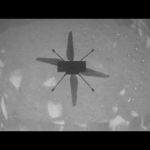
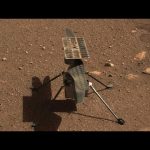
Today, the Ingenuity #MarsHelicopter became the first aircraft in history to make a powered, controlled flight on another planet.
Join us for a news briefing at 2 p.m. ET (1800 UTC) for an analysis of Ingenuity’s first flight and what this means for NASA.
The participants are: * Thomas Zurbuchen, associate administrator of NASA’s Science Mission Directorate * Michael Watkins, JPL director * MiMi Aung, Ingenuity Mars Helicopter project manager at JPL * Bob Balaram, Ingenuity Mars Helicopter chief engineer at JPL * Håvard Grip, Ingenuity Mars Helicopter chief pilot at JPL * Justin Maki, Perseverance Mars rover imaging scientist and deputy principal investigator of Mastcam-Z instrument at JPL
Up, up, and away! The Ingenuity #MarsHelicopter is set to make history. It will make the first attempt at powered flight on another planet on Monday, April 19. Don’t miss your chance to watch live with helicopter team in mission control beginning at 6:15 a.m. EDT (10:15 a.m. UTC) as they receive the data and find out if they were successful.
We’re doing science at 17,500 miles per hour! The International Space Station is a state-of-the-art microgravity laboratory that is unlocking discoveries not possible on Earth, and helping us push farther into deep space. We’re testing technologies that are critical to our return to the Moon and great leap to Mars. Station research has contributed to medical and social benefits on our home planet, allowing us to find new ways to combat disease back on Earth, and develop technologies to deliver clean water to remote communities in need. We’re inspiring future generations, from a platform that is one of the largest international collaborations of our time.
More than two billion smartphones, with users worldwide are now making use of Europe’s Galileo navigation satellite constellation. But how do satellites thousands of kilometres away in space manage to tell you where you are and where you’re going? Simply being so far away is part of the answer – learn the details of the world’s most precise navigation system in this new video.
★ Subscribe: http://bit.ly/ESAsubscribe and click twice on the bell button to receive our notifications.
We are Europe’s gateway to space. Our mission is to shape the development of Europe’s space capability and ensure that investment in space continues to deliver benefits to the citizens of Europe and the world. Check out https://www.esa.int/ to get up to speed on everything space related.
A safe return to Earth from the space station, greeting the astronauts of the next Commercial Crew flight, and an update on the development of a human lunar landing system … a few of the stories to tell you about – This Week at NASA!
Tune in at 9:45 a.m. EDT (1:45 p.m. UTC) as four NASA’s SpaceX Crew-2 astronauts discuss their April 22 launch and mission in space. They’ll speak from the Crew Quarters at our Kennedy Space Center in Florida, just five days before liftoff of the Falcon 9 rocket and Crew Dragon Endeavour spacecraft that will carry them to the International Space Station.
Astronauts Shane Kimbrough and Megan McArthur of NASA, Thomas Pesquet of the European Space Agency and Akihiko Hoshide of the Japan Aerospace Exploration Agency will join live.
In 2008, Thomas Pesquet applied to become an ESA astronaut. On 22 April 2021, he will fly his second mission to the International Space Station. In this video Thomas shares how he found his way to space, and encourages viewers to follow their passions as ESA seeks its next class of astronauts.
Nobody is perfect on their first attempt at a task, but Thomas says the only way to improve is to try and keep trying. Though becoming an astronaut seemed a distant dream when he was younger, by continuing to challenge himself and learn along the way he developed the skills he needed to put himself forward and become one of a small group who have travelled to space.
Whatever your passion, his advice is universal: try your best, and if you don’t succeed it doesn’t matter. What does matter is perseverance.
We are Europe’s gateway to space. Our mission is to shape the development of Europe’s space capability and ensure that investment in space continues to deliver benefits to the citizens of Europe and the world. Check out https://www.esa.int/ to get up to speed on everything space related.
Thomas Pesquet a postulé en 2008 pour devenir un astronaute de l’ESA. Le 22 avril 2021, il décollera à destination de la Station spatiale internationale pour sa deuxième mission. Thomas partage dans cette vidéo la manière dont il s’est frayé un chemin vers l’espace, et encourage son audience à suivre la passion qui les anime alors que l’ESA est à la recherche de sa prochaine classe d’astronautes.
Personne n’est parfait la première fois qu’il effectue une tâche, mais Thomas explique que la seule manière de s’améliorer, c’est d’essayer et de continuer à essayer. Même si devenir astronaute semblait un rêve lointain quand il était plus jeune, c’est en se mettant continuellement au défi et en apprenant au fil du temps qu’il a développé les compétences nécessaires pour se présenter et faire partie du petit groupe de personnes qui sont allées dans l’espace.
Son conseil s’applique quelle que soit votre passion : faites de votre mieux, et si vous ne réussissez pas, ce n’est pas grave. Ce qui importe, c’est la persévérance.
Rendez-vous sur le https://bit.ly/YourWayToSpace pour en savoir plus sur comment devenir un astronaute de l’ESA et découvrir les autres opportunités de carrière à l’ESA.
★ Subscribe: http://bit.ly/ESAsubscribe and click twice on the bell button to receive our notifications.
We are Europe’s gateway to space. Our mission is to shape the development of Europe’s space capability and ensure that investment in space continues to deliver benefits to the citizens of Europe and the world. Check out https://www.esa.int/ to get up to speed on everything space related.
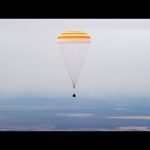
Tune in live at 11:30 p.m. EDT, Fri., April 16 as three space travelers return home from the International Space Station. NASA Astronaut Kate Rubins and cosmonauts Sergey Ryzhikov and Sergey Kud-Sverchkov of the Russian space agency Roscosmos, aboard their Soyuz spacecraft, will make a parachute-assisted landing at 12:56 a.m., Sat., April 17, on the steppes of Kazakhstan, southeast of the remote town of Dzhezkazgan.
During her six month mission, Kate Rubins spent hundreds of hours working on space station experiments, talking with the researchers behind the studies, and serving as an ambassador for science in downlinks with the National Science Foundation, National Institutes of Health, Centers for Disease Control, and others. She built on experiments conducted during her first mission in 2016, working on new heart research and DNA sequencing.
Read more about Rubins’ scientific journey: go.nasa.gov/3a8LReH
NASA is getting ready to send astronauts to explore more of the Moon as part of the Artemis program, and the agency has selected SpaceX to continue development of the first commercial human lander that will safely carry the next two American astronauts to the lunar surface.
The agency’s powerful Space Launch System rocket will launch four astronauts aboard the Orion spacecraft for their multi-day journey to lunar orbit. There, two crew members will transfer to the SpaceX human landing system (HLS) for the final leg of their journey to the surface of the Moon. After approximately a week exploring the surface, they will board the lander for their short trip back to orbit where they will return to Orion and their colleagues before heading back to Earth.
On Fri., April 16 at 12:45 p.m. EDT (16:45 UTC), four astronauts arrive by plane at Kennedy Space Center in Florida, less than one week before their scheduled April 22 launch aboard the Crew Dragon Endeavour to the International Space Station (ISS). Astronauts will join experts from NASA and our partner agencies to discuss the mission.
Crew-2 Astronauts: – Shane Kimbrough (NASA) – Megan McArthur (NASA) – Thomas Pesquet (European Space Agency, or ESA) – Akihiko Hoshide (Japan Aerospace Exploration Agency, or JAXA)
Partner Agency Experts: – Steve Jurczyk (Acting NASA Administrator) – Bob Cabana (Kennedy Space Center Director) – Junichi Sakai (JAXA ISS Program Manager) – Frank de Winne (ESA ISS Program Manager)
The Copernicus Sentinel-2 mission takes us over Cape Canaveral, USA, in a region known as the Space Coast, in this edition of the Earth from Space programme. From here, on 22 April 2021, ESA astronaut Thomas Pesquet is planned to return to the International Space Station for his second mission, Alpha.
We are Europe’s gateway to space. Our mission is to shape the development of Europe’s space capability and ensure that investment in space continues to deliver benefits to the citizens of Europe and the world. Check out https://www.esa.int/ to get up to speed on everything space related.
Have you ever done a science experiment and wondered “What would this be like if it were HUGE?” Welcome to Science Max, the exciting new series that turbocharges all the science experiments you’ve done at home.
Istoria eugeniei în Romania este puțin cunoscută. Până în 1918, atât maghiarii cât și sașii din Transilvania au avut o intensă activitate eugenică, atât la nivel local cât și internațional. În Regatul României, dezbateri despre importanța eugeniei apar după 1900. O mișcare eugenică românească propriu-zisa se dezvoltă însă abia după 1919. Avem o așa-zisă „școală” de la Cluj, condusă de Iuliu Moldovan și o așa-zisă „școală de la București” condusă de Gh. Marinescu. Programele eugenice propuse de aceste „școli” au coexistat și mulți dintre eugeniștii care au colaborat cu Moldovan au fost participanți și în alte proiecte culturale și științifice, cum au fost cele coordonate de D. Gusti, de exemplu. Printre cei mai importanți eugeniști români se numără Iuliu Moldovan, cel care în 1926 a publicat Biopolitica. El a fost cel care a introdus noțiunea de biopolitică în discursul public românesc. Tot el a fondat cel mai longevivă revistă de biopolitică și eugenie din România, Buletin Eugenic și Biopolitic, care a apărut la Cluj și la Sibiu. Un alt eugenist de marca este Gheorghe Marinescu, cel care în 1935 a fondat Societatea Regală Română de Eugenie și Studiul Eredității și a reprezentat România la Federația Internațională a Societăților Latine de Eugenie. Amintim și pe Gheorghe Banu, celui căruia i-a fost încredințată catedra de igienă socială în București la începutul anilor 1940; Sabin Manuilă, directorul Institutului Central de Statistică, promotor al relației dintre demografie și eugenie, sau doctorul C. Androescu, printre primii care au cerut introducerea sterilizării în Romania, încă din 1914. Combinația eugeniei cu naționalismul este una din trăsăturile specifice mișcării eugenice din România. Dacă ideile eugenice și biopolitice au oferit cadrul necesar pentru biologizarea apartenenței naționale, așa cum s-a întâmplat în anii ’20, fanteziile biopolitice bazate pe rasă s-au dovedit a fi o sursă de inspirație pentru toți aceia care doreau în anii ’40 transformarea etnică a României într-un stat național omogen. Menținerea potențialului rasial al națiunii a devenit atunci un obiectiv de primă importanță, și oricine punea în pericol acest potențial era stigmatizat ca inamic al statului. Această formă radicală de biopolitică a fost exprimată prin schimburi de populație, deportări de evrei și romi în Transnistria și Holocaust. Mișcarea eugenică a luat sfârșit în Romania, în mod oficial, între 1947 și 1950, însă multe din ideile eugenice au continuat să își facă simțit impactul în politicile legate de sănătatea națiunii, dezbaterile despre criteriile valorice ale grupurilor sociale, biomedicalizarea fertilității excesive a unor grupuri și în programe educaționale.
___________________________ Marius Turda este Profesor la Oxford Brookes University și Director al Centrului de Studii de Studii Umaniste și Medicale al aceleiași universități. Director fondator al Institutului Cantemir de la Universitatea Oxford (2012-2013). Printre cărțile lui recente se numără Theology and Modernity (2019); Religion, Evolution and Heredity (2018); Historicizing Race (2018, ed. română 2019); The History of Eugenics in East-Central Europe, 1900-1945: Sources and Commentaries (2015; 2017); Latin Eugenics in Comparative Perspective (2014; 2016); Eugenics and Nation in Early 20th Century Hungary (2014; ed. română 2020); Modernism and Eugenics (2010, ed. română 2014). Este și curatorul a două expoziții (2018-2020) despre antropologie, biopolitică și eugenism în România și a fost unul dintre specialiștii care au contribuit la recentul documentar BBC intitulat „Eugenics: Science’s Greatest Scandal” (2019). Este editorul general al colecției A Cultural History of Race, în 6 volume, publicata de Bloomsbury in 2021.
When we describe different types of exoplanets – planets outside our solar system – what do we mean by “hot Jupiters,” “warm Neptunes,” and “super-Earths”? Since we’re still surveying and learning about the variety of worlds out there among the stars, it’s sometimes helpful to refer to characteristics they share with planets we’re familiar with in our own planetary system.
On 20 April 2021, ESA will host the 8th European Conference on Space Debris from Darmstadt, in Germany. Scientists, engineers, industry experts and policy makers will spend the virtual four day conference discussing the latest issues surrounding space debris. They will exchange the latest research, try to come up with solutions for potential problems and define the future direction of any necessary action.
There are currently over 129 million objects larger than a millimetre in orbits around Earth. These range from inactive satellites to flakes of paint. But no matter how small the item of debris, anything travelling up to 56 000 km/h in an orbit is dangerous if it comes into contact with the many satellites that connect us around the world, be it for GPS, mobile phone data or internet connectivity. The solution is to take action before it’s too late. This is why ESA has commissioned ClearSpace-1 – the world’s first mission to remove space debris – for launch in 2025.
We are Europe’s gateway to space. Our mission is to shape the development of Europe’s space capability and ensure that investment in space continues to deliver benefits to the citizens of Europe and the world. Check out https://www.esa.int/ to get up to speed on everything space related.
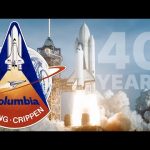
On April 12, 1981, space shuttle Columbia launched for the first time with NASA astronauts John Young and Bob Crippen aboard.
With 10 years of design and development, the shuttle was the first of its kind — a reusable vehicle for travel to low-Earth orbit.
The STS-1 Mission would demonstrate safe launch into orbit and safe return of the orbiter and crew and verify the combined performance of the entire shuttle vehicle – orbiter, solid rocket boosters and external tank. Commander John Young called the flight “something just short of a miracle.”
The success of the STS-1 Mission was the beginning of an era and over the course of three decades, the space shuttle program redefined what we know about living in a microgravity environment.
🔸Distribuie pe Instagram! https://joinsnippet.com 0:00 Introducere 0:52 Scrisoare din secolul XVII citita cu raze X 6:10 Cometele din colectia planetei Jupiter
The President’s funding request for NASA, preparing for first flight on another world, and a new crew heads to the space station … a few of the stories to tell you about – This Week at NASA!