Asteroids are prehistoric treasures that hold the lost tales about the origin of our solar system. We are slowly starting to unfold this story and NASA’s Lucy mission will launch in about a year to venture on a 12-year tour studying diverse primordial worlds. Join mission experts on #NASAScience Live and learn about the first ever spacecraft to study the swarm of asteroids associated with Jupiter, known as the Trojans.
This episode was originally broadcast live on Thursday, Dec. 3, 2020.
Have you ever done a science experiment and wondered “What would this be like if it were HUGE?” Welcome to Science Max, the exciting new series that turbocharges all the science experiments you’ve done at home.
What progress have we made on returning to the Moon to build a sustainable human presence there? Tune in starting at 12:30pm ET, Wed., Dec. 9 for the eighth meeting of the National Space Council, including a news update from Vice President Pence and NASA Administrator Jim Bridenstine on our Artemis program to send the first woman and next man to the Moon by 2024. The National Space Council advises the president on America’s space policy and strategy and reviews the nation’s long-range goals for space activities.
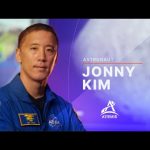
NASA astronaut Jonny Kim is a member of the Artemis Team, a select group of astronauts charged with focusing on the development and training efforts for early Artemis missions.
Through the Artemis program NASA and a coalition of international partners will return to the Moon to learn how to live on other worlds for the benefit of all. With Artemis missions NASA will send the first woman and the next man to the Moon in 2024 and about once per year thereafter.
Through the efforts of humans and robots, we will explore more of the Moon than ever before; to lead a journey of discovery that benefits our planet with life changing science, to use the Moon and its resources as a technology testbed to go even farther and to learn how to establish and sustain a human presence far beyond Earth.
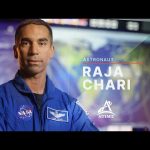
NASA astronaut Raja Chari is a member of the Artemis Team, a select group of astronauts charged with focusing on the development and training efforts for early Artemis missions.
Through the Artemis program NASA and a coalition of international partners will return to the Moon to learn how to live on other worlds for the benefit of all. With Artemis missions NASA will send the first woman and the next man to the Moon in 2024 and about once per year thereafter.
Through the efforts of humans and robots, we will explore more of the Moon than ever before; to lead a journey of discovery that benefits our planet with life changing science, to use the Moon and its resources as a technology testbed to go even farther and to learn how to establish and sustain a human presence far beyond Earth.
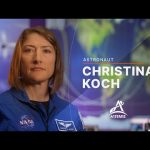
NASA astronaut Christina Koch is a member of the Artemis Team, a select group of astronauts charged with focusing on the development and training efforts for early Artemis missions.
Through the Artemis program NASA and a coalition of international partners will return to the Moon to learn how to live on other worlds for the benefit of all. With Artemis missions NASA will send the first woman and the next man to the Moon in 2024 and about once per year thereafter.
Through the efforts of humans and robots, we will explore more of the Moon than ever before; to lead a journey of discovery that benefits our planet with life changing science, to use the Moon and its resources as a technology testbed to go even farther and to learn how to establish and sustain a human presence far beyond Earth.
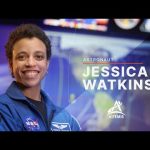
NASA astronaut Jessica Watkins is a member of the Artemis Team, a select group of astronauts charged with focusing on the development and training efforts for early Artemis missions.
Through the Artemis program NASA and a coalition of international partners will return to the Moon to learn how to live on other worlds for the benefit of all. With Artemis missions NASA will send the first woman and the next man to the Moon in 2024 and about once per year thereafter.
Through the efforts of humans and robots, we will explore more of the Moon than ever before; to lead a journey of discovery that benefits our planet with life changing science, to use the Moon and its resources as a technology testbed to go even farther and to learn how to establish and sustain a human presence far beyond Earth.
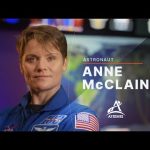
NASA astronaut Anne McClain is a member of the Artemis Team, a select group of astronauts charged with focusing on the development and training efforts for early Artemis missions.
Through the Artemis program NASA and a coalition of international partners will return to the Moon to learn how to live on other worlds for the benefit of all. With Artemis missions NASA will send the first woman and the next man to the Moon in 2024 and about once per year thereafter.
Through the efforts of humans and robots, we will explore more of the Moon than ever before; to lead a journey of discovery that benefits our planet with life changing science, to use the Moon and its resources as a technology testbed to go even farther and to learn how to establish and sustain a human presence far beyond Earth.
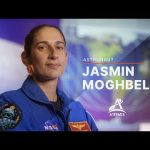
NASA astronaut Jasmin Moghbeli is a member of the Artemis Team, a select group of astronauts charged with focusing on the development and training efforts for early Artemis missions.
Through the Artemis program NASA and a coalition of international partners will return to the Moon to learn how to live on other worlds for the benefit of all. With Artemis missions NASA will send the first woman and the next man to the Moon in 2024 and about once per year thereafter.
Through the efforts of humans and robots, we will explore more of the Moon than ever before; to lead a journey of discovery that benefits our planet with life changing science, to use the Moon and its resources as a technology testbed to go even farther and to learn how to establish and sustain a human presence far beyond Earth.
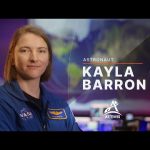
NASA astronaut Kayla Barron is a member of the Artemis Team, a select group of astronauts charged with focusing on the development and training efforts for early Artemis missions.
Through the Artemis program NASA and a coalition of international partners will return to the Moon to learn how to live on other worlds for the benefit of all. With Artemis missions NASA will send the first woman and the next man to the Moon in 2024 and about once per year thereafter.
Through the efforts of humans and robots, we will explore more of the Moon than ever before; to lead a journey of discovery that benefits our planet with life changing science, to use the Moon and its resources as a technology testbed to go even farther and to learn how to establish and sustain a human presence far beyond Earth.
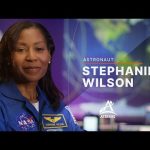
NASA astronaut Stephanie Wilson is a member of the Artemis Team, a select group of astronauts charged with focusing on the development and training efforts for early Artemis missions.
Through the Artemis program NASA and a coalition of international partners will return to the Moon to learn how to live on other worlds for the benefit of all. With Artemis missions NASA will send the first woman and the next man to the Moon in 2024 and about once per year thereafter.
Through the efforts of humans and robots, we will explore more of the Moon than ever before; to lead a journey of discovery that benefits our planet with life changing science, to use the Moon and its resources as a technology testbed to go even farther and to learn how to establish and sustain a human presence far beyond Earth.
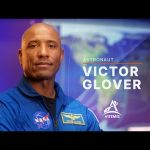
NASA astronaut Victor Glover is a member of the Artemis Team, a select group of astronauts charged with focusing on the development and training efforts for early Artemis missions.
Through the Artemis program NASA and a coalition of international partners will return to the Moon to learn how to live on other worlds for the benefit of all. With Artemis missions NASA will send the first woman and the next man to the Moon in 2024 and about once per year thereafter.
Through the efforts of humans and robots, we will explore more of the Moon than ever before; to lead a journey of discovery that benefits our planet with life changing science, to use the Moon and its resources as a technology testbed to go even farther and to learn how to establish and sustain a human presence far beyond Earth.
At NASA, we have always answered the innate call to explore and our achievements have changed the course of history. Now, we’re returning to the Moon under the Artemis program to learn to live and work on another world for the benefit of humanity.
NASA has selected an initial team of astronauts – the Artemis Team – to help pave the way for our next human missions on and around the Moon. The Artemis program includes sending the first woman and next man to walk on the lunar surface. Let’s meet the team!
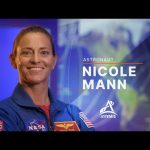
NASA astronaut Nicole Mann is a member of the Artemis Team, a select group of astronauts charged with focusing on the development and training efforts for early Artemis missions.
Through the Artemis program NASA and a coalition of international partners will return to the Moon to learn how to live on other worlds for the benefit of all. With Artemis missions NASA will send the first woman and the next man to the Moon in 2024 and about once per year thereafter.
Through the efforts of humans and robots, we will explore more of the Moon than ever before; to lead a journey of discovery that benefits our planet with life changing science, to use the Moon and its resources as a technology testbed to go even farther and to learn how to establish and sustain a human presence far beyond Earth.
In late 2019, ESA astronaut and geophysicist Alexander Gerst travelled to one of the harshest environments on Earth to learn more about our solar system, and to gather operational knowledge for missions to planetary surfaces such as the Moon. Travel with him to Antarctica and discover the many secrets held by meteorites in this documentary from the ice.
Since its inception in 1976, the US-led Antarctic Search for Meteorites (ANSMET) has recovered more than 22,000 specimens. These are rocks that fell from space, originating from several sources in our solar system, including the Moon and Mars. After each field season the newly recovered specimens are shipped (still frozen and sterile) to the Antarctic Meteorite laboratory at NASA’s Johnson Space Center in Houston, Texas. There they are thawed, dried, carefully examined, and shipped to planetary scientists world-wide. These rock fragments enable scientists to look beyond our planet, and Earth’s orbit, into the depths of space.
As a member of the 2019-2020 crew, Alexander gained and shared knowledge with his team mates and followed in the footsteps of great Antarctic explorers before him, spending weeks in a remote field camp, only a few hundred kilometres from the South Pole. The team recovered 346 meteorites during this season. His mission also shared many similarities with what astronauts will encounter when flying to the Lunar South Pole in the not-so-distant future – making it another valuable step in preparing for what might lie ahead.
We are Europe’s gateway to space. Our mission is to shape the development of Europe’s space capability and ensure that investment in space continues to deliver benefits to the citizens of Europe and the world. Check out https://www.esa.int/ to get up to speed on everything space related.
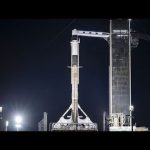
Tune in live starting at 10:45 a.m. EST, Sun., Dec. 6 as the 21st SpaceX cargo resupply mission to the International Space Station lifts off from Launch Complex 39A at NASA’s Kennedy Space Center. Launch is targeted at 11:17 a.m. The targeted date has changed due to poor weather conditions on Sat., Dec. 5 in the recovery area. This will be the first flight of the upgraded cargo version of the Dragon 2 spacecraft. On board are over 250 science investigations, as well as the Nanoracks Bishop Airlock, set to be attached to the station’s Tranquility module. This first commercially funded space station airlock will increase the capacity for external space research at the space station.
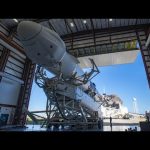
Critical cargo on the next space station resupply mission, NASA is at a virtual Earth and space science meeting, and a key piece of hardware installed on the Orion spacecraft … a few of the stories to tell you about – This Week at NASA!
➤ Sources
Appian – Historia Romana-Civil Wars
Plutarch – Life of Caesar
Caesar – De bello civili
Pharsalus, 48BC – Si Sheppard
➤ Music:
Music provided by No Copyright Music: https://www.youtube.com/c/royaltyfree…
Kevin MacLeod “The Descent”
Kevin MacLeod “Drums of the Deep”
LionFreeMusic “Dramatic War Tension Background Instrumental”
RoyaltyFreeZone “The guardians”
RoyaltyFreeZone “Monsters”
Abraham Cupeiro : Cornu de Pompeii (a small bit)
#Rome #Caesar #RomanEmpire #Pompey
This is the continuation of the mini series about “Caesar’s civil War”.
The battle of Pharsalus was the decisive engagement that cemented Caesars legacy and finalized the procedure of Rome’s transition from a Republic to an Empire.
Caesar’s civil war would continue even after Pharsalus but that was the turning point.
We are Europe’s gateway to space. Our mission is to shape the development of Europe’s space capability and ensure that investment in space continues to deliver benefits to the citizens of Europe and the world. Check out https://www.esa.int/ to get up to speed on everything space related.
Wusstest du, dass Fossilien nicht immer braun oder schwarz sind? Die Farbe hängt davon ab, welche Mineralien es am Ort der Versteinerung gegeben hat. So wurden schon Fossilien gefunden. die goldglänzend waren, weil sie druch Katzengold-Mineralien versteinert wurden. Und sogar wie ein Regenbogen schimmern manche Fossilien. Dann nämlich, wenn Opal-Edelsteine beim Versteinern “geholfen” haben.
După ce am încercat într-o emisiune trecută să aflăm ce este modernismul și cât de mult a fost el preluat de estetica și de ideologia comunistă, în această emisiune vom încerca, împreună cu arhitectul Augustin Ioan, să aflăm de ce se crede că postmodernismul s-a născut la ora 15.32 în ziua de 15 iulie 1972. În acea zi, un ansamblu de locuințe premiat cu doar câțiva ani în urmă pentru că ar fi fost o „mașină de locuit pentru o viață modernă” a fost dinamitat, întrucât ar fi fost considerat ca nepotrivit pentru un mediu sănătos de viață al locuitorilor cu venituri mici.
Din contestarea antimodernă a anilor 1960, se naște postmodernismul. Din îndoiala privind capacitatea demiurgică a statelor, instituțiilor sau savanților de a cuprinde lumea întreagă într-un proces unic de transformare se nasc nenumărate strategii pluraliste care privilegiază adaptarea la specificul local, tehnica amestecurilor și colajelor, dar și deschiderea spre alte lumi și alte voci. Din povestirea eliberării universale, prin mântuire, prin revoluție, prin cunoaștere sau prin îmbogățire și după toate experiențele tragice ale secolului XX, ies la lumină poveștile niciodată auzite până atunci ale femeilor, ale minorităților sexuale sau rasiale, ale popoarelor colonizate etc.
Această înmulțire a vocilor și figurilor tulbură toate criteriile adevărului, binelui, dreptății, pe care gândirea raționalistă modernă crezuse că le-a stabilit pe veci. Lumea postmodernă devine astfel o lume a adevărurilor multiple și a moralelor alternative, intens difuzate într-un sistem al comunicării globale. O lume considerată relativistă și eclectică, în care diversitatea este la mare preț, ba chiar se vinde bine, căci în această lume postmodernă totul e de vânzare.
Dar ce anume este postmodern în societatea românească de azi? De ce a devenit modernitatea noastră incompletă o postmodernitate a consumului și a comunicării generalizate? Vom încerca să răspundem la aceste întrebări și la multe altele un fizician, un filosof și un arhitect, joi seara de la 8.
ESA has signed an €86 million contract with an industrial team led by Swiss start-up ClearSpace SA to purchase a unique service: the first-ever removal of an item of space debris from orbit.
As a result, in 2025, ClearSpace will launch the first active debris removal mission, ClearSpace-1, which will rendezvous, capture and take down for reentry the upper part of a Vespa (Vega Secondary Payload Adapter) used with Europe’s Vega launcher. This object was left in an approximately 801 km by 664 km-altitude gradual disposal orbit, complying with space debris mitigation regulations, following the second flight of Vega back in 2013.
★ Subscribe: http://bit.ly/ESAsubscribe and click twice on the bell button to receive our notifications.
We are Europe’s gateway to space. Our mission is to shape the development of Europe’s space capability and ensure that investment in space continues to deliver benefits to the citizens of Europe and the world. Check out https://www.esa.int/ to get up to speed on everything space related.
Have you ever done a science experiment and wondered “What would this be like if it were HUGE?” Welcome to Science Max, the exciting new series that turbocharges all the science experiments you’ve done at home.
Now that we have started to work on the second season of our animated historical documentary series on the Mongol Empire, we decided to make this video to refresh the memory of what happened during the rise of the Mongols. In this video we are covering the conquests of China, Central Asia, Iran, Caucasus, Eastern Europe via the battles of Yehuling, Parwan, Indus River, Kalka, Mohi, Legnica, Ain Jalut, Yamen and others, featuring Genghis Khan, Ogedei, Batu, Kublia, Chagatai, Subutai, Jebe, Tolui, Jalal-ad-din, Baibars, Qutuz and others.
Mircea Ivan este unul dintre cei mai reputati cercetatori romani in biologie moleculara. Cercetarea lui a contribuit la atribuirea premiului Nobel in medicina in 2019. Dupa video , continuam discutia pe https://www.discord.gg/presura impreuna cu un alt cercetator in biologie moleculara, Horea Szedlaceck!
Cercetatorii William G. Kaelin Jr, Sir Peter J. Ratcliffe si Gregg L. Semenza au primit luni Premiul Nobel pentru Medicina in 2019. Cercetarile lor au ajutat la descoperirea si intelegerea modului in care celulele simt si se adapteaza la nivelul de oxigen disponibil, iar Mircea Ivan a jucat un rol esential in aceasta descoperire. De Ziua Nationala, o discutie despre biologie moleculara si cercetare cu Mircea Ivan.
Asteroids are prehistoric treasures that hold the lost tales about the origin of our solar system. We are slowly starting to unfold this story and NASA’s Lucy mission will launch in about a year to venture on a 12-year tour studying diverse primordial worlds. Join mission experts on #NASAScience Live Thursday, Dec. 3 at 3:00 p.m. ET and learn about the first ever spacecraft to study the swarm of asteroids associated with Jupiter, known as the Trojans. Have questions? Use #askNASA.
Europe’s Rosalind Franklin ExoMars rover has a younger ’sibling’, ExoMy. The blueprints and software for this mini-version of the full-size Mars explorer are available for free so that anyone can 3D print, assemble and program their own ExoMy.
Learn more at www.esa.int/exomy
★ Subscribe: http://bit.ly/ESAsubscribe and click twice on the bell button to receive our notifications.
We are Europe’s gateway to space. Our mission is to shape the development of Europe’s space capability and ensure that investment in space continues to deliver benefits to the citizens of Europe and the world. Check out https://www.esa.int/ to get up to speed on everything space related.
Few conflicts have rivaled the scale and destruction of the Punic wars fought between Rome and Carthage. In this first episode I set the stage for a conflict that will reshape history!
Sources:
“The Fall of Carthage” by Adrian Goldsworthy
“In the Name of Rome” by Adrian Goldsworthy
“The Rise of Rome” by Anthony Everitt
The gameplay comes from Total War: Rome 2
“Please note this is an unofficial video and is not endorsed by SEGA or the Creative Assembly in any way. For more information on Total War, please visit www.totalwar.com.”
Play Call of War for FREE on PC or Mobile:
💥 https://thld.co/callofwar_historymarche
Receive an Amazing New Player Pack, only available for the next 30 days!
📝 Special thanks to Byron Waldron for researching and writing the script!
📢 Narrated by David McCallion
🎼 Music, courtesy of EpidemicSound
📝 Sources
Barnes, T. D. 1982: The New Empire of Diocletian and Constantine, Cambridge, MA & London.
– 1996: Emperors, Panegyrics, Prefects, Provinces and Palaces (284-317), JRA 9, 532-552.
Davenport, C. 2019: A History of the Roman Equestrian Order, Cambridge & New York.
De Blois, L. 2016: Rome and Persia in the Middle of the Third Century AD (230-266), in Slootjes & Peachin, Rome and the Worlds beyond Its Frontiers, 33-44.
– 2018: Image and Reality of Roman Imperial Power in the Third Century AD: The Impact of War, London.
Dignas, B. & E. Winter. 2007: Rome and Persia in Late Antiquity: Neighbours and Rivals, Cambridge & New York.
Dodgeon, M. H. & S. N. C. Lieu. 1991: The Roman Eastern Frontier and the Persian Wars AD 226-363: A Documentary History, London & New York.
Farrokh, K. 2005: Sassanian Elite Cavalry AD 224-642, Oxford & New York.
Frye, R. N. 1984: The History of Ancient Iran, Munich.
Leadbetter, W. 2009: Galerius and the Will of Diocletian, London & New York.
Waldron, B. 2018: Diocletian, Hereditary Succession and the Tetrarchic Dynasty, PhD Dissertation, University of Sydney.
Wilkinson, K. W. 2012 : The Sarmatian and the Indians: A New Satirical Epigram on the Victory Titles of Galerius, ZPE 183, 39-52.
Kyle Harper – Pandemics and Passages to Late Antiquity: Rethinking of the Plague of 249-70, described by Cyprian (Journal of Roman Archaeology 28 (2015)
Hrană din piatră seacă, partea a II-a. Fiecare picătură de apă este valorificata în Israel. Noi avem o reţea hidrografică şi precipitaţii abundente de care ne batem joc.
Learn more about the Napoleonic Wars with titles from our co-production partner Osprey Publishing (as an Amazon Associate I earn from qualifying purchases):
Austerlitz 1805 http://geni.us/DlxI
Trafalgar 1805 http://geni.us/4zBYD
French Napoleonic Infantry Tactics 1792 – 1815 http://geni.us/lodnYm
Music from Filmstro: https://filmstro.com/?ref=7765
Get 20% off an annual license with this exclusive code: EPICHISTORYTV_ANN
“The Great Courses Plus is currently available to watch through a
web browser to almost anyone in the world and optimized for the US market. The Great Courses Plus is currently working to both optimize the product globally and accept credit card payments globally.”
Making ready for the first Artemis mission around the Moon and back, the space station is getting a new doorway to space, and how to know when and where you can look up to spot the station … a few of the stories to tell you about – This Week at NASA!