Building Costs are being kept to a minimum by using advanced low-cost technologies and existing production facilities used for Ariane launchers, making access to space easier, quicker and cheaper.
Category: Astronomie
-
ESA Satellite Telecommunications
Global communications underpin modern society and represent an important commercial sector. Satellites are a fundamental part of global telecommunications networks, providing all kind of services, efficiently and seamlessly, over almost every region of our planet.
-

What medical conditions would stop you becoming an astronaut?
Frank De Winne is answering a question on the ISS submitted by Mrs. Shahi from Birmingham (United Kingdom):
What medical conditions would stop you becoming an astronaut? -
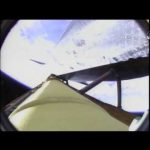
STS-127 Launch HD
NASA’S SHUTTLE ENDEAVOUR LAUNCHES TO COMPLETE JAPANESE MODULE
CAPE CANAVERAL, Fla. — Space shuttle Endeavour and its seven-member crew launched at 6:03 p.m. EDT Wednesday from NASA’s Kennedy Space Center in Florida. The mission will deliver the final segment to the Japan Aerospace Exploration Agency’s Kibo laboratory and a new crew member to the International Space Station.
Endeavour’s 16-day mission includes five spacewalks and the installation of two platforms outside the Japanese module. One platform is permanent and will allow experiments to be directly exposed to space. The other is an experiment storage pallet that will be detached and returned with the shuttle. During the mission, Kibo’s robotic arm will transfer three experiments from the pallet to the exposed platform. Future experiments also can be moved to the platform from the inside of the station using the laboratory’s airlock.
Shortly before liftoff, Commander Mark Polansky thanked the teams that helped make the launch possible.
“Endeavour has patiently waited for this,” said Polansky. “We’re ready to go, and we’re going to take all of you with us on a great mission.”
-
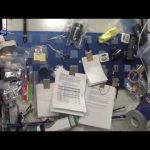
NASA ASTRONAUT LEADS TOUR OF SPACE STATION IN HD
Expedition 20 Flight Engineer Michael Barratt provides a 20-minute tour of the International Space Station, documenting the full 167 feet of the space station’s pressurized modules. Barratts commentary describes to Mission Control in Houston how equipment and supplies are arranged and stored, and provides engineers with a detailed assessment of each module-to-module hatchway.
-
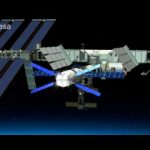
ATV: ‘Trucking’ in space
The ISS depends on regular deliveries of experiments and spare parts, as well as food, air and water for its permanent crew. ESA’s Automated Transfer Vehicle is one of the ISS’s indispensable supply spaceships.
-
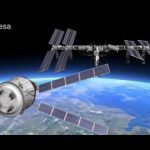
ARV: Europe’s space ferry
With ATV’s cargo hold replaced by a re-entry capsule equipped with a heatshield, the Advanced Re-entry Vehicle will be able to bring back hundreds of kilograms of cargo and valuable experiments.
-
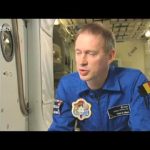
Frank De Winne: ESA astronaut
Astronaut Frank De Winne talks about his OasISS mission, being the first European commander of the International Space Station, about living in space… and missing a few home comforts, like a shower or a glass of wine!
-
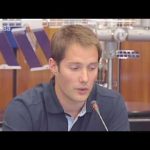
New ESA Astronaut: Thomas Pesquet
Thomas is French, an aeronautical engineer and commercial arline pilot, born in 1978
-
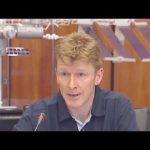
New ESA Astronaut: Timothy Peake
37-year-old Tim Peake is a helicopter test pilot in the British army.
-
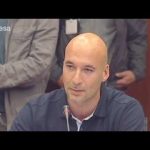
New ESA Astronaut: Luca Parmitano
33-year-old Luca is an experimental test pilot in the Italian air force.
-
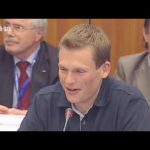
New ESA Astronaut: Andreas Mogensen
33-year-old Andreas is from Denmark, a space navigation & control engineer.
-
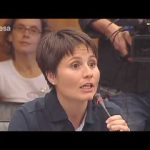
New ESA Astronaut: Samantha Cristoforetti
32-year-old Samantha is a fighter pilot in the Italian air force.
-
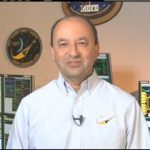
NASA Commander Tweets To Take Questions In Space
NASA astronaut Mark Polansky, commander of the next space shuttle mission to the
International Space Station, is sharing the final weeks of his training on Twitter.
Polansky invites followers to submit questions that he will answer from orbit during
his mission, STS-127, targeted to launch in June. Questions should be submitted in
the form of a video not longer than 30 seconds, posted to YouTube, and a link to the
video sent to Polansky’s twitter account at:http://twitter.com/Astro_127.Questions will be selected each week to be among those Polansky will answer from space,
live on NASA Television. The questions that have been selected will be announced on
his Twitter feed each week. -

Understanding the Universe with ESA’s next science missions
Herschel will investigate how stars and galaxies formed and how they continue to form in our own and other galaxies, meanwhile Planck will look back at the dawn of time, helping astronomers to study the birth and evolution of the Universe.
-
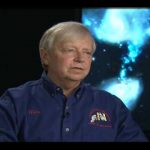
NASA’S Head of Science Mission Directorate Discusses History of Hubble Space Telescope
Dr. Ed Weiler is considered by many as the face of the Hubble Space Telescope. He is presently serving his second tour as head of NASA’s Science Mission Directorate in Washington. His scientific expertise and commitment to excellence have earned him numerous distinctions over the years. His relationship with the observatory spans three decades. From his beginning role as chief scientist to numerous management responsibilities, Weiler has been involved with the telescope for 33 years, well before Hubble’s 1990 launch, subsequent technical challenges, and eventual place in history as one of humankind’s greatest scientific achievements.
-

Our Moon: Earth’s only natural satellite
The Moon has fascinated mankind throughout the ages. Discover how our Moon was formed, probably by a collision with a huge object when Earth was very young.
-
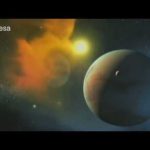
Cosmic Impact: Comet Shoemaker-Levy 9 crashes into Jupiter
Spectacular images of Jupiter during and after impacts, when over twenty fragments of Comet Shoemaker-Levy 9 smashed into the planet in July 1994.
-

NASA Edge Promo with ESPN’s Mike and Mike In the Morning
NASA EDGE takes an inside and outside look at all things NASA. For more information, visit http://www.nasa.gov/nasaedge.
-
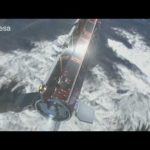
Introducing the GOCE Earth Explorer satellite
To achieve its crucial scientific objectives, ESA’s ‘Gravity field and steady-state Ocean Circulation Explorer’, or GOCE, satellite must orbit as low as possible, in order to sense minute variations in the Earth’s gravitational field – at the edge of space and the limits of the atmosphere at only 268 km!
-
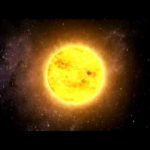
Kepler – A Search for Habitable Planets
“Kepler is a critical component in NASA’s broader efforts to ultimately find and study planets where Earth-like conditions may be present,” said Jon Morse, the Astrophysics Division director at NASA Headquarters in Washington. “The planetary census Kepler takes will be very important for understanding the frequency of Earth-size planets in our galaxy and planning future missions that directly detect and characterize such worlds around nearby stars.”
The mission will spend three and a half years surveying more than 100,000 sun-like stars in the Cygnus-Lyra region of our Milky Way galaxy. It is expected to find hundreds of planets the size of Earth and larger at various distances from their stars. If Earth-size planets are common in the habitable zone, Kepler could find dozens; if those planets are rare, Kepler might find none.
In the end, the mission will be our first step toward answering a question posed by the ancient Greeks: are there other worlds like ours or are we alone?
-
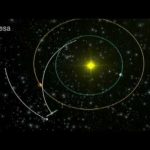
ESA’s comet chaser Rosetta revisits Earth
After making its third and last Earth flyby in November 2009 to pick up extra speed, Rosetta will eventually arrive in the vicinity of Comet 67P/Churyumov-Gerasimenko in May 2014.
-

NASA TV Emmy Award – Part 2 of 2
NASA Television is honored with an Emmy award for lifetime achievement.
-
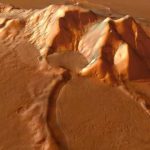
ESA / Mars 3D
3D visualization of the Mars surface based on Mars-Express HRSC data and Mars Observer Camera and Mars Orbiter Laser Altimeter data.
3D-Visualisierung des Mars von 3D RealityMaps.
-
A Tale of Two Rovers
The Mars Exploration Rovers “Spirit” and “Opportunity” were sent to Mars for what was planned to be a 90 day mission. 5 years later they are still roving the surface of Mars, making new discoveries almost every day. This video celebrates the extraordinary success of these “Intrepid Explorers”.
-
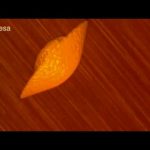
Cosmic Vision – See how Huygens landed on Titan
After an epic space journey, the European Huygens probe landed on Saturn’s moon Titan, a mysterious satellite that has perplexed astronomers for decades. On 14 January 2005, Huygens made the farthest touchdown of any human-built object sent to land on another world.
-
NASA Mission Update: New Horizon
Three billion miles away from Earth, near the farthest reaches of our solar system, is the heavenly body with an extreme orbit known for 76 years as Pluto. Discovered by astronomers in 1930, Pluto was considered the ninth planet in our solar system until 2006 — when, after much debate, it was reclassified by the International Astronomical Union as a “dwarf planet,” officially dropping its name — for a number.
Denis Bogan, New Horizons Program Scientist: “Well, it certainly doesnt affect Pluto. Pluto is the same thing it was before it was discovered, before it was given a name, and before the name was changed.”
Nor does Pluto’s reclassification change the importance of NASA’s first mission to study it.
Launch Announcer: “We have ignition and lift off of NASAs New Horizon spacecraft on a decade-long”
Launched in January 2006, the thousand-pound New Horizons spacecraft will travel through space for 9-1/2 years before meeting up with Pluto in the summer of 2015.
Denis Bogan: “The last time Pluto was in this position in its orbit was during the French and Indian War. It takes 248 Earth years to travel around its orbit and come back to the same place again. At the speed of light, sending a radio signal back from the spacecraft, from Pluto to Earth, will take 4-1/2 hours.”
Operating on less power than a pair of common 100-watt light bulbs, New Horizons will map the highest-interest areas of Pluto to a resolution of 50 meters, less than the length of a football field — three billion miles away. Itll then move on to survey Pluto’s neighborhood: the atmosphere, ancient materials and small bodies of the Kuiper Belt, a chaotic region astrophysicists believe can tell us how Earth, the planets, even our sun were made.
Denis Bogan: “We have primitive material chunks of rock and ice, millions of objects of objects out there in the Kuiper Belt and we know very little about it. We didnt discover it until 1992.”
Traveling 3 billion miles to frozen, rocky Pluto and its environs, New Horizon is, in a way, going back in time to the chemical building blocks of the solar system, and life.
To learn more about the New Horizons mission visit www.nasa.gov
-
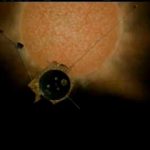
NASA Mission Update: ULYSSES
The sun is the source of life-sustaining energy here on Earth. Much of how it works – and affects us — remains a source of scientific mystery. Sunspots were first recorded by humans in the 16-hundreds. Astrophysicists have since linked heightened sunspot activity with the solar wind. It’s a million-mile-an-hour force of magnetically-charged particles emanating from the sun’s upper atmosphere. Ebbing and flowing in minimum and maximum intensities over eleven year cycles, this so-called space weather can seriously affect how things work here on Earth, such as disrupting satellite communications, telephone service and personal electronics.
Arik Posner, Program Scientist: “It would help our technology, to safeguard the technology by knowing when and in what intensity space weather occurs and where these effects might show up”
Launch Announcer : “2 -1 ignition and liftoff of Discovery and the Ulysses spacecraft bound for the polar regions of the sun.”
Until the launch of Ulysses from space shuttle Discovery in 1990, data for understanding and predicting space weather had come from a limited sampling area: the plane extending from the suns equator. Ulysses has since made three orbits above and below the poles of the sun, vastly expanding the territory from where raw space weather data are gathered.
Arik Posner: “So Ulysses was really the first spacecraft that leaped out of this confinement, and it gives us a view of the global heliosphere.”
Ulysses has found that the solar minimum were in right now is producing the lowest levels of solar wind seen since accurate readings became available a half-century ago. But for heliophysicists, these data raise as many questions as they answer.
Arik Posner: “The Space Age is only 50 years now, and the Sun just operates on longer time scales than these 50 years. So we might have just glimpsed just the surface of what is really going on.”
By expanding its reach, both in time and space, Ulysses is helping the discipline of space weather prediction grow beyond its infancy for the betterment of life here on Earth.
For more about Ulysses, the heliosphere, and space weather, log onto: www.nasa.gov/missions and click on ‘Ulysses.’
-
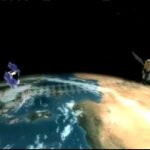
NASA Mission Update: CALIPSO
NASA Mission Update: CALIPSO
Clouds have forever held the imagination of skygazers who are captivated by their endless beauty and seeming randomness. But clouds, and whats in them, also hold fascination for scientists who seek to understand the many effects they have on life here on Earth.
Hal Maring, Program Scientist, CALIPSO: “Low clouds, which are white, can reflect sunlight and cause cooling of the Earth, and high clouds tend to warm the Earth by absorbing and re-radiating warmth back into the atmosphere.”
Launch Announcer: “2-1 We have ignition and we have lift-off of NASAs Calipso/Cloudsat spacecraft.”
Since its launch in April 2006, the Cloud-Aerosol Lidar and Infrared Pathfinder Satellite Observation mission, CALIPSO, has provided new insight into the role that clouds play in regulating our climate. As CALIPSO orbits the Earth, its light detection and ranging, or lidar system, emits short pulses of green and infrared light, producing a 300-feet wide snapshot of what’s in the atmosphere from top to bottom — clouds and airborne particles. Snapshots collected along the same orbit are then streamed together to paint a picture of what a vertical slice of our atmosphere looks like.
Hal Maring: “Its basically a large laser range finder, and it shoots light down into the atmosphere. And, its able to detect and measure, clouds in the vertical .Not like a photograph, which tends to be two-dimensional, but gives us vertical curtains of measurements of clouds, i.e., their altitude.”
These critical cloud data from CALIPSO are used with information gathered by other satellites in NASAs A-train constellation of Earth-observing spacecraft to quantify just how much sunlight reaches the planet — and how much gets radiated back into space. This so-called energy budget is a key to documenting and understanding climate change.
Hal Maring: “We have found, it appears as though, the Earth is warming and its warming because of an imbalance or a change in the Earths energy budget.”
To see and learn more about CALIPSOs cloud images, or how CALIPSOs also helping scientists understand how climate may be changed by naturally-occurring and manmade particulates in the atmosphere called aerosols, go to www.nasa.gov/missions and click on “CALIPSO.”
-

Space for Europe
Space touches us all on Earth – it is used for protecting our environment, for improving our everyday lives, for safety and security, and for stimulating our need for knowledge. Space is a key asset for Europe to face global challenges, for boosting our economic growth, for building our future.
-
Space: for protecting our environment
Space touches us all on Earth – it is used for protecting our environment, for improving our everyday lives, for safety and security, and for stimulating our need for knowledge. Space is a key asset for Europe to face global challenges, for boosting our economic growth, for building our future.
-

“Fly Me To The Moon” at NASA’s 50th gala
A special live performance directed by Quincy Jones and performed by Frank Sinatra, Jr., at the AIAA 50th anniversary celebration for NASA. Learn more at www.nasa.gov.
-
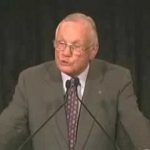
Neil Armstrong: NASA 50th Anniversary Gala
Neil Armstrong speaks at the AIAA 50th anniversary celebration for NASA on Sept. 24, 2008. Learn more at www.nasa.gov.
-

NASA 50th Video Part 2 of 2
This is the second portion of the video presentation at the AIAA 50th anniversary celebration for NASA on Sept. 24, 2008. Learn more at www.nasa.gov.