What do Metallica and NASA’s Artemis missions to the Moon have in common? Both love “Fuel” and fire. See footage of the Artemis I launch scored by Metallica’s “Fuel.”
Learn more about how NASA’s Space Launch System (SLS) rocket and Orion spacecraft will send four astronauts on a lunar flyby around the Moon for NASA’s Artemis II mission: https://nasa.gov/sls
This month marks one year since the James Webb Space Telescope astonished the world with the release of its first images and data. Since then, the observatory has been transforming the way we see the universe, from revealing details of planets and moons in our own solar system, to providing new understanding of how stars and galaxies form.
Join experts on Wednesday, July 12, as they highlight Webb’s first year of science and answer your questions about the mission. Submit questions during our live chat.
Where does space begin? Well, it depends. There’s no sharp boundary that marks the end of atmosphere and beginning of space. But no matter where you draw the line in the sand — or the air — Earth’s atmosphere is full of all kinds of interesting stuff. That’s why scientists like Doug Rowland are studying its many layers: https://climate.nasa.gov/news/2919/earths-atmosphere-a-multi-layered-cake/
If you think its only possible be held in orbit around a central body of mass – say a planet or a star – you’d be wrong. It is in fact possible to orbit around an invisible point, an oasis of forces, infinitesimal in size. ESA’s Euclid mission was launched on 1 July 2023 to uncover the secrets of the dark universe. Its destination? Like many astronomy missions before it, Lagrange point 2.
‘L2’ is an ideal location for astronomy missions because they can keep the Sun, Earth and Moon behind them at all times, so they don’t interfere with observations, while at the same time getting a clear view of deep space and pointing an antenna back to Earth to remain in close communication. The permanent sunlight on Euclid at L2 also keeps the telescope thermally stable, allowing for the extremely high stability required for the instrument’s long exposure observations. Euclid’s orbit around Lagrange point 2 is big. In terms of distance, the ‘radius’ of Euclid’s orbit varies from about 400 000 kilometres at its closest to the centre, and up to 800 000 kilometres at its furthest. By the time Euclid has completed one full revolution around L2, the Moon will have circled the Earth six times.
The reason for this large orbit is that it is almost free, in terms of fuel, to get there. The better the accuracy of the rocket that launches a mission into such a large halo orbit around L2, the less fuel that’s needed to perform correction manoeuvres – and Euclid only required a tiny correction manoeuvre after its near-perfect launch on a Space X Falcon 9.
This animation, created using “Gaia Sky”, shows Euclid’s path from Earth to this unique and useful position in space. Located about 1.5 million kilometres from Earth in the opposite direction from the Sun, the second Lagrange point (or Libration point) is about four times further away than our Moon.
Euclid will spend about a month getting to ‘L2’ followed by a planned six years in orbit, from where it will study the mysterious nature of dark matter and dark energy, that make up 95% of our Universe, but about which very little is known.
Credits: ESA/Gaia/DPAC, CC BY-SA 3.0 IGO
★ Subscribe: http://bit.ly/ESAsubscribe and click twice on the bell button to receive our notifications.
We are Europe’s gateway to space. Our mission is to shape the development of Europe’s space capability and ensure that investment in space continues to deliver benefits to the citizens of Europe and the world. Check out https://www.esa.int/ to get up to speed on everything space related.
The Ariane 5 launch vehicle liftoff for flight VA261 from Europe’s Spaceport in French Guiana on 5 July at 23:00 BST (6 July at 00:00 CEST). Flight VA261 carried two payloads into space – the German space agency DLR’s experimental communications satellite Heinrich Hertz and the French communications satellite Syracuse 4b. The flight was the 117th and final mission for Ariane 5, a series which began in 1996.
Credits: ESA/CNES/Arianespace
★ Subscribe: http://bit.ly/ESAsubscribe and click twice on the bell button to receive our notifications.
We are Europe’s gateway to space. Our mission is to shape the development of Europe’s space capability and ensure that investment in space continues to deliver benefits to the citizens of Europe and the world. Check out https://www.esa.int/ to get up to speed on everything space related.
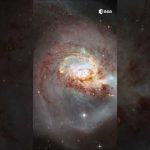
This video takes the viewer on a journey through space to the peculiar galaxy NGC 3256.
This distorted galaxy is the wreckage of a head-on collision between two spiral galaxies which likely occurred 500 million years ago, and it is studded with clumps of young stars which were formed as gas and dust from the two galaxies collided.
We are Europe’s gateway to space. Our mission is to shape the development of Europe’s space capability and ensure that investment in space continues to deliver benefits to the citizens of Europe and the world. Check out https://www.esa.int/ to get up to speed on everything space related.
Here’s a big question: How did life begin on Earth? We don’t quite know, but this fundamental question is a driving force behind astrobiology research at NASA. Understanding how life originated on our planet could inform us about the potential for life to exist throughout the universe.
Astrobiology expert Shawn Domagal-Goldman explains more about our search for answers. Explore more about astrobiology at NASA: https://astrobiology.nasa.gov
Discover the first results from Europe’s first Lightning Imager onboard the Meteosat Third Generation. The Lightning Imager can continuously detect rapid flashes of lighting in Earth’s atmosphere whether day or night from a distance of 36 000 km.
This is the first time a geostationary weather satellite has the capability to detect lightning across Europe, Africa and the surrounding waters. Each camera can capture up to 1000 images per second and will continuously observe lightning activity from space. The data will give weather forecasters greater confidence in their predictions of severe storms.
We are Europe’s gateway to space. Our mission is to shape the development of Europe’s space capability and ensure that investment in space continues to deliver benefits to the citizens of Europe and the world. Check out https://www.esa.int/ to get up to speed on everything space related.
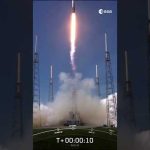
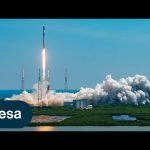
ESA’s latest astrophysics mission, Euclid, lifted off on a Space X Falcon 9 from Cape Canaveral in Florida, USA, at 17:12 CEST on 1 July 2023.
Euclid has now started its month-long journey to Sun-Earth Lagrange point L2, located 1.5 million kilometres from Earth, in the opposite direction from the Sun.
The telescope will survey one third of the sky with unprecedented accuracy and sensitivity. By observing billions of galaxies out to 10 billion light-years, it will create the most extensive 3D-map of the Universe, with the third dimension representing time.
ESA’s Euclid mission is designed to explore the composition and evolution of the dark Universe. Euclid will chart how the Universe has expanded and how large-scale structure is distributed across space and time, revealing more about the role of gravity and the nature of dark energy and dark matter.
Four weeks after launch, Euclid will enter its orbit around L2. Once in orbit, mission controllers will start the activities to verify all functions of the spacecraft, check out the telescope and finally turn the instruments on. Following this, scientists and engineers will be engaged in an intense two-month phase of testing and calibrating Euclid’s scientific instruments, and preparing for routine observations. The telescope begins its early phase of the survey of the Universe three months after launch.
We are Europe’s gateway to space. Our mission is to shape the development of Europe’s space capability and ensure that investment in space continues to deliver benefits to the citizens of Europe and the world. Check out https://www.esa.int/ to get up to speed on everything space related.
ESA’s latest astrophysics mission, Euclid, lifted off on a Space X Falcon 9 from Cape Canaveral in Florida, USA, at 17:12 CEST on 1 July 2023.
Euclid has now started its month-long journey to Sun-Earth Lagrange point L2, located 1.5 million kilometres from Earth, in the opposite direction from the Sun.
The telescope will survey one third of the sky with unprecedented accuracy and sensitivity. By observing billions of galaxies out to 10 billion light-years, it will create the most extensive 3D-map of the Universe, with the third dimension representing time.
ESA’s Euclid mission is designed to explore the composition and evolution of the dark Universe. Euclid will chart how the Universe has expanded and how large-scale structure is distributed across space and time, revealing more about the role of gravity and the nature of dark energy and dark matter.
Four weeks after launch, Euclid will enter its orbit around L2. Once in orbit, mission controllers will start the activities to verify all functions of the spacecraft, check out the telescope and finally turn the instruments on. Following this, scientists and engineers will be engaged in an intense two-month phase of testing and calibrating Euclid’s scientific instruments, and preparing for routine observations. The telescope begins its early phase of the survey of the Universe three months after launch.
We are Europe’s gateway to space. Our mission is to shape the development of Europe’s space capability and ensure that investment in space continues to deliver benefits to the citizens of Europe and the world. Check out https://www.esa.int/ to get up to speed on everything space related.
Watch a replay of the launch broadcast for ESA’s Euclid.
ESA’s Euclid mission was launched into space on a SpaceX Falcon 9 from Cape Canaveral in Florida, USA, on 1 July 2023. It is now on its way to Sun-Earth Lagrange point L2.
By observing billions of galaxies out to 10 billion light-years, the space telescope will create the most detailed 3D-map of the Universe, with time as the third dimension.
The launch broadcast programme includes live segments from the launch site and ESA’s European Spacecraft Operations Centre (ESOC) in Darmstadt, Germany.
Credits: ESA/SpaceX
00:00 – 45:35 Pre-launch programmes 45:35 – 55:00 Lift-off 55:00 – 01:27:00 Booster landing in the ocean 01:27:00 – 01:31:00 Euclid space craft separation 01:31:00 – 01:42:29 Acquisition of Signal (AOS)
★ Subscribe: http://bit.ly/ESAsubscribe and click twice on the bell button to receive our notifications.
We are Europe’s gateway to space. Our mission is to shape the development of Europe’s space capability and ensure that investment in space continues to deliver benefits to the citizens of Europe and the world. Check out https://www.esa.int/ to get up to speed on everything space related.
A crucial find by our James Webb Space Telescope, learning how life might be on Mars, and some tricky testing for a lunar roving robot … a few of the stories to tell you about – This Week at NASA!
Link to download this video: https://images.nasa.gov/details/NHQ_2023_0630_A%20Crucial%20Find%20by%20Our%20James%20Webb%20Space%20Telescope%20on%20This%20Week%20@NASA%20%E2%80%93%20June%2030,%202023
Video Producer: Andre Valentine Video Editor: Andre Valentine Narrator: Andre Valentine Music: Universal Production Music Credit: NASA
In September 2023, scientists with NASA’s OSIRIS-REx mission will gather in the Utah desert for the arrival of the largest asteroid sample ever received on Earth. “Asteroid City” actors, including Scarlett Johansson, Jason Schwartzman, Maya Hawke, Rupert Friend, Jake Ryan and Jeffrey Wright, join NASA OSIRIS-REx sample expert Dr. Danny Glavin to discuss how studying the asteroid sample will give scientists insight into how the early solar system formed and how life began on Earth.
After a seven-year round trip journey that included mapping Bennu’s surface (a near-Earth asteroid that is no threat to our planet), identifying minerals and chemicals, and collecting a sample from the surface, OSIRIS-REx is on its way back to Earth with more than eight ounces of material. For more information on NASA’s OSIRIS-REx mission: https://www.nasa.gov/osiris-rex/
Producers: Scott Bednar, Jessica Wilde, Emily Furfaro, Sami Aziz, Molly Wasser Editor: Jessica Wilde Movie Footage courtesy of Focus Features Asteroid City
ESA’s Euclid space telescope is nearly ready for launch. The spacecraft arrived in Florida on 30 April for final tests and checks, and now being integrated with the SpaceX Falcon 9 rocket that will carry it into space.
For the team at ESA’s European Space Operations Centre (ESOC) in Darmstadt, Germany, this means that the most intense phase of their work is about to begin. To prepare themselves, the team has simulated the launch operations, tackling issues ranging from team members falling ill to a computer mouse being taped over.
Euclid is ESA’s space telescope designed to explore the dark Universe. The mission will create the largest, most accurate 3D map of the Universe ever produced across 10 billion years of cosmic time. Euclid will explore how the Universe has expanded and how large-scale structure is distributed across space and time, revealing more about the role of gravity and the nature of dark energy and dark matter.
Euclid is targeted to launch on a SpaceX Falcon 9 rocket from Cape Canaveral in Florida, USA, at 11:11 local time / 16:11 BST / 17:11 CEST on Saturday 1 July 2023. A back-up launch date of Sunday 2 July 2023 is foreseen.
Credit: ESA – European Space Agency
★ Subscribe: http://bit.ly/ESAsubscribe and click twice on the bell button to receive our notifications.
We are Europe’s gateway to space. Our mission is to shape the development of Europe’s space capability and ensure that investment in space continues to deliver benefits to the citizens of Europe and the world. Check out https://www.esa.int/ to get up to speed on everything space related.
Is NASA mining asteroids? No, we’re not in the business of mining asteroids but we do love to study them.
This year, our #PsycheMission launches to a unique metal-rich asteroid to study what appears to be the exposed nickel-iron core of an early planet, one of the building blocks of our solar system. However, the science we gain from missions like this could one day benefit future humans in cosmic mining and resource endeavors.
And in September, our OSIRIS-REx mission will deliver an asteroid sample back to Earth. Analysis from the sample may help improve future asteroid missions: https://go.nasa.gov/43PoK2y
This is ESA WebTV, ESA’s digital channel, packed with original programmes on all things space related.
Stories about space and climate change, astronauts, rovers on faraway planets, space debris, new rockets, satellite operations, exploration of our universe, live launches – you name it, we’ve got it!
We are Europe’s gateway to space. Our mission is to shape the development of Europe’s space capability and ensure that investment in space continues to deliver benefits to the citizens of Europe and the world. Check out https://www.esa.int/ to get up to speed on everything space related.
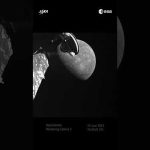
Watch Mercury appear from the shadows as the ESA/JAXA BepiColombo spacecraft sped by the planet’s night side during its 19 June 2023 close flyby, and enjoy a special flyover of geologically rich terrain.
Credits: Image: ESA/BepiColombo/MTM, CC BY-SA 3.0 IGO; Music composed by ILĀ. Shape from shading processing and animation (using Unity) by K. Wohlfarth and M. Tenthoff (TU Dortmund), based on techniques described by Tenthoff et al. (2020) and Domingue et al. (2015) with a global terrain model from Becker et al. (2016).
Music: Tim Garland – Moonlight Mystery
★ Subscribe: http://bit.ly/ESAsubscribe and click twice on the bell button to receive our notifications.
We are Europe’s gateway to space. Our mission is to shape the development of Europe’s space capability and ensure that investment in space continues to deliver benefits to the citizens of Europe and the world. Check out https://www.esa.int/ to get up to speed on everything space related.
On 22 June 2023 at Europe’s Spaceport in French Guiana, engineers rolled back the mobile gantry protecting Ariane 6 on its launch pad. The exercise helped validate ground systems and prepare for a series of engine fire tests.
Credits: ESA ; S. Corvaja, ESA/M. Pédoussaut, Zetapress
★ Subscribe: http://bit.ly/ESAsubscribe and click twice on the bell button to receive our notifications.
We are Europe’s gateway to space. Our mission is to shape the development of Europe’s space capability and ensure that investment in space continues to deliver benefits to the citizens of Europe and the world. Check out https://www.esa.int/ to get up to speed on everything space related.
Showcasing our new Earth Information Center, in search of an atmosphere around a rocky exoplanet, and getting ready for an important delivery … a few of the stories to tell you about – This Week at NASA!
Link to download this video: https://images.nasa.gov/details/Showcasing%20Our%20New%20Earth%20Information%20Center%20on%20This%20Week%20@NASA%20%E2%80%93%20June%2023,%202023
Video Producer: Andre Valentine Video Editor: Andre Valentine Narrator: Andre Valentine Music: Universal Production Music Credit: NASA
30 June marks Asteroid Day, which aims to emphasise the importance of asteroids –their role in the formation of our Solar System, their impact in space resources and the importance of defending our planet from future impacts.
This year we are celebrating along with @universalpictures and @focusfeatures for the release of Wes Anderson’s new movie @AsteroidCity to bring you all the information you need to know about asteroids and how we protect our planet from them.
Credits: ESA – European Space Agency
★ Subscribe: http://bit.ly/ESAsubscribe and click twice on the bell button to receive our notifications.
We are Europe’s gateway to space. Our mission is to shape the development of Europe’s space capability and ensure that investment in space continues to deliver benefits to the citizens of Europe and the world. Check out https://www.esa.int/ to get up to speed on everything space related.
ESA DG Josef Aschbacher, accompanied by TAS CEO Hervé Derrey, Airbus DS EVP Jean-Marc Nasr and OHB Board Member Lutz Bertling, among others, will unveil the Zero Debris Charter initiative, an ambitious drive towards European leadership in space debris mitigation and remediation.
★ Subscribe: http://bit.ly/ESAsubscribe and click twice on the bell button to receive our notifications.
We are Europe’s gateway to space. Our mission is to shape the development of Europe’s space capability and ensure that investment in space continues to deliver benefits to the citizens of Europe and the world. Check out https://www.esa.int/ to get up to speed on everything space related.
Watch Mercury appear from the shadows as the ESA/JAXA BepiColombo spacecraft sped by the planet’s night side during its 19 June 2023 close flyby, and enjoy a special flyover of geologically rich terrain.
The first part of the movie is composed of 217 images captured by BepiColombo’s monitoring camera M-CAM3. The image sequence starts from 19:46:25 UTC on 19 June 2023, at an altitude of 1 789 km above the planet’s surface, and ends at 20:34:25 UTC on 20 June 2023, when BepiColombo was 331 755 km away. The image cadence was roughly once per minute around closest approach, but much slower in the later phases.
The second part of the movie cuts to a flyover of a special region of interest, rotating around features such as the 600 km-long Beagle Rupes curved escarpment and the elongated Sveinsdóttir impact crater that it cuts through. It also features the 218 km-wide Manley Crater and the straight Challenger Rupes scarp. At the end, the animated topography fades out and the projected image used for 3D reconstruction appears. Regions like these will be important for BepiColombo’s main science mission, to learn more about Mercury’s geological history.
Music was composed for the sequence by ILĀ, with the assistance of AI tools developed by the Machine Intelligence for Musical Audio (MIMA) group, University of Sheffield.
Credits: Image: ESA/BepiColombo/MTM, CC BY-SA 3.0 IGO; Music composed by ILĀ. Shape from shading processing and animation (using Unity) by K. Wohlfarth and M. Tenthoff (TU Dortmund), based on techniques described by Tenthoff et al. (2020) and Domingue et al. (2015) with a global terrain model from Becker et al. (2016).
★ Subscribe: http://bit.ly/ESAsubscribe and click twice on the bell button to receive our notifications.
We are Europe’s gateway to space. Our mission is to shape the development of Europe’s space capability and ensure that investment in space continues to deliver benefits to the citizens of Europe and the world. Check out https://www.esa.int/ to get up to speed on everything space related.
Watch the replay of the live session from the Paris Air Show 2023 to watch the press briefing on space transportation. Speakers will share the current status of the Ariane 6 programme, and the next key milestones towards the inaugural flight.
★ Subscribe: http://bit.ly/ESAsubscribe and click twice on the bell button to receive our notifications.
We are Europe’s gateway to space. Our mission is to shape the development of Europe’s space capability and ensure that investment in space continues to deliver benefits to the citizens of Europe and the world. Check out https://www.esa.int/ to get up to speed on everything space related.
We are Europe’s gateway to space. Our mission is to shape the development of Europe’s space capability and ensure that investment in space continues to deliver benefits to the citizens of Europe and the world. Check out https://www.esa.int/ to get up to speed on everything space related.
Are there earthquakes on other planets? There sure are, but we don’t call them earthquakes. Instead, “moonquakes” & “marsquakes” are shaking things up in space. Dr. Jacob Richardson of NASA’s Goddard Space Flight Center explains more about what otherworldly quakes can teach us about not only the interiors of planetary bodies, but also what’s happening inside Earth.
Watch the opening and ribbon-cutting ceremony for the Earth Information Center at NASA Headquarters in Washington. The exhibit is a hybrid – part physical, part online – effort that shows how viewing Earth from space can improve lives in the face of disasters, environmental challenges, and climate change. Speakers include NASA Administrator Bill Nelson; Kate Calvin, NASA chief scientist and senior climate advisor; and Karen St. Germain, the director of NASA’s Earth Sciences Division. Agency partner representatives will also speak.
NASA created the Earth Information Center with founding partners National Oceanic and Atmospheric Administration (NOAA), U.S. Geological Survey (USGS), U.S. Department of Agriculture (USDA), U.S. Agency for International Development (USAID), Environmental Protection Agency (EPA), and Federal Emergency Management Administration (FEMA).
Watch the recording of the live session from the Paris Air Show 2023 for a conference examining Europe’s aspirations in human and robotic space exploration. Speakers include ESA Director General Josef Aschbacher, CNES CEO Philippe Baptiste, Director General of the German Space Agency Walther Pelzer, and President of the Italian Space Agency (ASI) Teodoro Valente. ESA astronauts Thomas Pesquet, Samantha Cristoforetti, and Matthias Maurer will provide their perspectives.
★ Subscribe: http://bit.ly/ESAsubscribe and click twice on the bell button to receive our notifications.
We are Europe’s gateway to space. Our mission is to shape the development of Europe’s space capability and ensure that investment in space continues to deliver benefits to the citizens of Europe and the world. Check out https://www.esa.int/ to get up to speed on everything space related.
Experience the thrill of the Paris Air Show 2023 with our 360VR tour! Join ESA astronaut Matthias Maurer as he guides you through the ESA pavilion, showcasing the Euclid satellite and the incredible journey of Juice to Jupiter. Immerse yourself in the excitement and mysteries of the universe. Don’t miss the chance to join us in person during the public days this weekend and get ready for an unforgettable adventure!
★ Subscribe: http://bit.ly/ESAsubscribe and click twice on the bell button to receive our notifications.
We are Europe’s gateway to space. Our mission is to shape the development of Europe’s space capability and ensure that investment in space continues to deliver benefits to the citizens of Europe and the world. Check out https://www.esa.int/ to get up to speed on everything space related.
Join NASA astronaut Victor Glover as he imparts an inspiring message about Juneteenth, a day that honors the sacrifices and struggles of past generations by continuing to fight for justice, equality, and freedom for all. The message reminds us of our shared past while pushing us towards an inclusive future.
By using concrete examples of the water and carbon cycles, the speakers in this session will focus on the grand science questions before us and how we can turn them into answers and solutions most useful to decision-makers at the front line of the climate crisis. Earth is a highly dynamic system where the transport and exchanges of energy and matter are influenced by a multitude of processes and feedback mechanisms. Untangling these complex processes to better understand how Earth works as a system is a major challenge; a challenge that satellites, with their global view, are ideally positioned to tackle. While each mission gives us unique insights, it is by combining their data that makes scientific findings shine the brightest. This, in turn, puts European and international collaboration at the heart of Earth observation today.
★ Subscribe: http://bit.ly/ESAsubscribe and click twice on the bell button to receive our notifications.
We are Europe’s gateway to space. Our mission is to shape the development of Europe’s space capability and ensure that investment in space continues to deliver benefits to the citizens of Europe and the world. Check out https://www.esa.int/ to get up to speed on everything space related.
ESA’s Euclid mission is designed to bring the dark side of the Universe to light. Based on the way galaxies rotate and orbit one another, and the way in which the Universe is expanding, astronomers believe that two unseen entities dominate the composition of our cosmos. They call these mysterious components dark matter and dark energy, yet to date we have not been able to detect either of them directly, only inferring their presence from the effects they have on the Universe at large.
To better understand what dark matter and dark energy may be, we need a mission that can more closely reveal what effects they have had on galaxies, galaxy clusters and the expansion of the Universe itself. Euclid is that mission.
ESA’s Euclid mission will create a 3D-map of the Universe, with the third dimension representing time itself. The further away a galaxy is located, the longer its light has taken to reach us and so the earlier in cosmic history we will see it. By observing billions of galaxies out to a distance of 10 billion light-years, scientists will be able to chart the position and velocity of galaxies over immense distances and through most of cosmic history, and trace the way the Universe has expanded during that time. Euclid’s extraordinary optics will also reveal subtle distortions in the appearance of galaxies.
From this wealth of new data, astronomers will be able to infer the properties of dark energy and dark matter more precisely than ever before. This will help theorists pin down the nature of these mysterious components and develop a refined understanding of how gravity behaves at the largest distances.
Credit: ESA – European Space Agency
★ Subscribe: http://bit.ly/ESAsubscribe and click twice on the bell button to receive our notifications.
We are Europe’s gateway to space. Our mission is to shape the development of Europe’s space capability and ensure that investment in space continues to deliver benefits to the citizens of Europe and the world. Check out https://www.esa.int/ to get up to speed on everything space related.
Equipping the space station to produce more power, our newest experimental X-plane, and preparing to test a new laser communications system … a few of the stories to tell you about – This Week at NASA!
Link to download this video: https://images.nasa.gov/details/Equipping%20the%20Space%20Station%20to%20Produce%20More%20Power%20on%20This%20Week%20@NASA%20%E2%80%93%20June%2016,%202023
Video Producer: Andre Valentine/Haley Reed Video Editor: Haley Reed Narrator: Jesse Carpenter Music: Universal Production Music Credit: NASA
The 30th June marks Asteroid Day, which aims to emphasise the importance of asteroids –their role in the formation of our solar system, their impact in space resources and the importance of defending our planet from future impacts. This year we are celebrating along with @UniversalPictures for the release of Wes Anderson’s new movie Asteroid City to bring you all the information you need to know about asteroids and how we protect our planet from them. #AsteroidCityxAsteroidDay #AsteroidDay2023
📹 @EuropeanSpaceAgency
★ Subscribe: http://bit.ly/ESAsubscribe and click twice on the bell button to receive our notifications.
We are Europe’s gateway to space. Our mission is to shape the development of Europe’s space capability and ensure that investment in space continues to deliver benefits to the citizens of Europe and the world. Check out https://www.esa.int/ to get up to speed on everything space related.
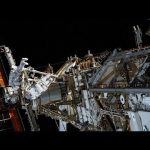
NASA astronauts Steve Bowen and Warren “Woody” Hoburg are taking a spacewalk on Thursday, June 15, to add a new solar panel to the International Space Station.
Bowen and Hoburg are scheduled to install a second International Space Station Roll-Out Solar Array, or IROSA, on this spacewalk, after previously installing one on June 9. The new arrays will increase the power capacity of the orbiting laboratory.
The spacewalk is scheduled to begin at 8:55 a.m. EDT (1255 UTC) and last about six hours. This is Bowen’s tenth spacewalk and the second for Hoburg.
The planet’s thick CO2-filled atmosphere is great at trapping heat. This creates a runaway greenhouse effect that makes Venus roughly 700°F (389°C) hotter than it would be otherwise. @NASAJPL’s Dr. Amy Hofmann provides all the sizzling details.
For a quarter century, Ariane 5 has been Europe’s heavy-lift workhorse. Flying from Europe’s Spaceport in French Guiana, Ariane 5 has carried to space a long series of commercial and scientific missions. Notable payloads include ESA’s comet-chasing Rosetta, a dozen of Europe’s Galileo navigation satellites – orbited with just three launches – the NASA/ESA/CSA James Webb Space Telescope and, in April 2023, ESA’s Juice mission to Jupiter.
Ariane 5 more than doubled the mass-to-orbit capacity of its predecessor, Ariane 4, which flew from 1988 until 2003 as a favourite of the telecommunications industry with its need to put large payloads into very high geosynchronous orbits. Ariane 5’s capacity enabled it to orbit two large telecommunications satellites on a single launch, or to push very large payloads into deep space.
After 117 flights, Ariane 5 is being replaced by an all-new launch vehicle, Ariane 6.
★ Subscribe: http://bit.ly/ESAsubscribe and click twice on the bell button to receive our notifications.
We are Europe’s gateway to space. Our mission is to shape the development of Europe’s space capability and ensure that investment in space continues to deliver benefits to the citizens of Europe and the world. Check out https://www.esa.int/ to get up to speed on everything space related.
Our #Gaia spacecraft has captured a huge dark blob, 800 times more massive than our Sun which seems to be squeezed into a surprisingly small volume of space suggesting it could be an intermediate-mass black hole.
We are Europe’s gateway to space. Our mission is to shape the development of Europe’s space capability and ensure that investment in space continues to deliver benefits to the citizens of Europe and the world. Check out https://www.esa.int/ to get up to speed on everything space related.
The level of practical expertise, technical and operational expertise required to operate in such a fast-paced, rapidly changing environment such as space needs to be permanently developed and improved to maintain the technical excellence at the right level. But the constant improvement of the technical and operational knowledge is an exciting journey. Nicolas has experienced this first-hand since he joined the European Space Agency Operation Centre as Ground Station Engineer. As a young engineer at ESA, you can gain extremely valuable expertise through launch campaigns, test and validation campaigns, time at the console in the operation control room together with your team, witnessing and learning from the whole life cycle of a real satellite mission, one impossible thing at the time.
With 35 years of experience at ESA, Nicolas Bobrinsky is the former Head of Ground Systems Engineering & Innovation Department. He initiated and further managed the Space Situational Awareness and later the ESA Space Safety Programme.
In four episodes of this new series of ESA Masterclass, Nicolas takes us through major events in his career at ESA, covering cornerstone missions, first attempts, overcoming technical challenges, leading diverse teams and solving the unexpected problems that are part of any space endeavour.
★ Subscribe: http://bit.ly/ESAsubscribe and click twice on the bell button to receive our notifications.
We are Europe’s gateway to space. Our mission is to shape the development of Europe’s space capability and ensure that investment in space continues to deliver benefits to the citizens of Europe and the world. Check out https://www.esa.int/ to get up to speed on everything space related.
Another power-generating spacewalk outside the space station, a commercial resupply spacecraft heads to the station, and sharing the experience of a ride aboard the space station … a few of the stories to tell you about – This Week at NASA!
NASA astronauts Steve Bowen and Warren “Woody” Hoburg are taking a spacewalk on Friday, June 9, to add a new unrolling solar panel to the International Space Station.
Bowen and Hoburg are scheduled to install an International Space Station Roll-Out Solar Array, or IROSA, on today’s spacewalk, with a second one to be installed on June 15. The new arrays will increase the power capacity of the orbiting laboratory.
The spacewalk, known formally as U.S. EVA 87, is scheduled to begin at 9:15 a.m. EDT (1315 UTC) and last about six and a half hours. Bowen will wear a suit with red stripes and Hoburg will wear an unmarked suit. This is Bowen’s ninth spacewalk and the first for Hoburg.