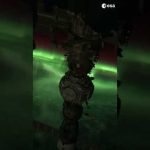
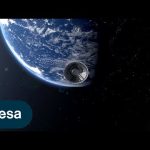
Timelapse video made during ESA astronaut Samantha Cristoforetti’s second mission to the International Space Station, “Minerva”. This timelapse was recorded looking aft (out from the rear) of the Space Station, showing the aurora shimmering away beyond the horizon.
★ Subscribe: http://bit.ly/ESAsubscribe and click twice on the bell button to receive our notifications.
We are Europe’s gateway to space. Our mission is to shape the development of Europe’s space capability and ensure that investment in space continues to deliver benefits to the citizens of Europe and the world. Check out https://www.esa.int/ to get up to speed on everything space related.
The Copernicus Data Space Ecosystem offers immediate access to a wide range of open and free Earth observation data and services. Following from the success of the current Copernicus Data Hub distribution, the new service ensures continuity and extends the portfolio for data access and data processing possibilities.
The Copernicus Data Space Ecosystem represents a significant leap forward in the way users can access and work with Earth observation data. The service aims to further improve access and exploitation of the Copernicus satellites data.
We are Europe’s gateway to space. Our mission is to shape the development of Europe’s space capability and ensure that investment in space continues to deliver benefits to the citizens of Europe and the world. Check out https://www.esa.int/ to get up to speed on everything space related.
The next crew headed to the space station, black holes on a collision course, and an anniversary on Mars … a few of the stories to tell you about – This Week at NASA!
Video Producer: Andre Valentine Video Editor: Shane Apple Music: Universal Production Music Credit: NASA
NASA and SpaceX are targeting no earlier than 1:45 a.m. EST Monday, Feb. 27, 2023, for the launch of the agency’s Crew-5 mission to the International Space Station.
The four Crew-6 crewmates – Commander Stephen Bowen, Pilot Warren “Woody” Hoburg, Mission Specialist UAE (United Arab Emirates) astronaut Sultan Alneyadi, and Mission Specialist Roscosmos cosmonaut Andrey Fedyaev – will dock the Dragon spacecraft, named Endeavour, to the forward port on the space station’s Harmony module about 23 hours after liftoff.
Crew-6’s science mission includes cutting edge research aimed at keeping astronauts and spacecraft safe during deep space exploration, and studies that could lead to improved medical treatments for humans back on Earth. Experiments will include studies of how particular materials burn in microgravity, tissue chip research on heart, brain, and cartilage functions, and an investigation that will collect microbial samples from the outside of the space station. These are just some of the more than 200 science experiments and technology demonstrations that will take place during their mission.
You can watch the launch live on NASA TV, NASA.gov, the NASA app, and on social media (@NASA).
In the 1980s, scientists discovered a gaping hole in Earth’s ozone layer, caused by humanmade chemicals. But thanks to the historical Montreal Protocol, the world came together to take bold action to save our planet. Decades later, we can see the steady recovery of the ozone hole. How did we do it? And what does space have to do with it? Join us as we explore the journey of the ozone hole, from its alarming discovery to the incredible strides made to fix it, and how satellites are helping us track its recovery.
★ Subscribe: http://bit.ly/ESAsubscribe and click twice on the bell button to receive our notifications.
We are Europe’s gateway to space. Our mission is to shape the development of Europe’s space capability and ensure that investment in space continues to deliver benefits to the citizens of Europe and the world. Check out https://www.esa.int/ to get up to speed on everything space related.
We are Europe’s gateway to space. Our mission is to shape the development of Europe’s space capability and ensure that investment in space continues to deliver benefits to the citizens of Europe and the world. Check out https://www.esa.int/ to get up to speed on everything space related.
NASA’s investment in low-Earth orbit has launched a commercial economy in space. See how the private sector will expand the economic sphere with commercial cargo to space, commercial spaceflights, and commercial destinations in orbit, and how it will enable NASA to be one of many customers and advance human space exploration.
What happens next for the new 2022 class of ESA astronauts? Which upcoming launch to a faraway planet and its moons is getting everyone excited? And which anniversary will we be celebrating on 12 March? Get all the answers and more in our new edition of Space Round Up, your news gateway to space.
We are Europe’s gateway to space. Our mission is to shape the development of Europe’s space capability and ensure that investment in space continues to deliver benefits to the citizens of Europe and the world. Check out https://www.esa.int/ to get up to speed on everything space related.
The Webb observations which revealed this small asteroid were not originally designed to hunt for new asteroids — in fact, they were calibration images of the main-belt asteroid (10920) 1998 BC1, which astronomers discovered in 1998, but the calibration team considered them to have failed for technical reasons due to the brightness of the target and an offset telescope pointing. Despite this, the data on asteroid 10920 were used by the team to establish and test a new technique to constrain an object’s orbit and to estimate its size. The validity of the method was demonstrated for asteroid 10920 using Webb observations combined with data from ground-based telescopes and ESA’s Gaia mission.
In the course of the analysis of Webb’s data, the team found the smaller and previously unknown interloper in the same field of view. The team’s results suggest the object measures 100–200 meters, occupies a very low-inclination orbit, and was located in the inner main-belt region at the time of the Webb observations.
We are Europe’s gateway to space. Our mission is to shape the development of Europe’s space capability and ensure that investment in space continues to deliver benefits to the citizens of Europe and the world. Check out https://www.esa.int/ to get up to speed on everything space related.
In this video, forestry expert Maurizio Santoro, senior researcher at Gamma Remote Sensing and one of the leaders of ESA projects related to the Climate Change Initiative (CCI), explains how the use of various data, whether in synergy or in comparison, can bring a great contribution/benefit to the field of mapping biomass and measuring this Essential Climate Variable.
★ Subscribe: http://bit.ly/ESAsubscribe and click twice on the bell button to receive our notifications.
We are Europe’s gateway to space. Our mission is to shape the development of Europe’s space capability and ensure that investment in space continues to deliver benefits to the citizens of Europe and the world. Check out https://www.esa.int/ to get up to speed on everything space related.
Naming a mountain on the Moon, watching and helping from space, and a sample wide shot from Mars … a few of the stories to tell you about – This Week at NASA!
This image takes the viewer to space to finish at Webb’s view of the galaxy merger II ZW 96.
This pair of galaxies is roughly 500 million light-years from Earth and lies in the constellation Delphinus, close to the celestial equator. As well as the wild swirl of the merging galaxies, a menagerie of background galaxies are dotted throughout the image. Learn more about the object here.
Credit: ESA/Webb, NASA, CSA, L. Armus, A. Evans, SDSS, E. Slawik, N. Risinger, M. Zamani (ESA/Webb), N. Bartmann (ESA/Webb) Music: Tonelabs – The Red North
★ Subscribe: http://bit.ly/ESAsubscribe and click twice on the bell button to receive our notifications.
We are Europe’s gateway to space. Our mission is to shape the development of Europe’s space capability and ensure that investment in space continues to deliver benefits to the citizens of Europe and the world. Check out https://www.esa.int/ to get up to speed on everything space related.
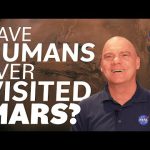
Have humans ever visited Mars? Not yet, but we’ve sent lots of rovers, landers and orbiters to explore the Red Planet.
NASA has two operating rovers — Curiosity and Perseverance — which are currently traversing the Martian terrain in search of rocks that could teach us about Mars’ ancient past. And with NASA Artemis, we’re working on new tech that could one day get humans to Mars. NASA scientist Dr. Mitch Schulte has more. https://mars.nasa.gov/
Producers: Scott Bednar, Jessica Wilde Editor: Daniel Salazar Credit: NASA
Terrae Novae is not only literally about exploring new worlds, but by describing the limitless opportunities for discovery, economic growth and inspiration it also expresses our ambitions for Europe’s future innovators, scientists and explorers.
This video shows the many exploration activities ESA is conducting or has planned in our Solar System, from the International Space Station to the Moon with the European Service Module and lunar Gateway modules for Artemis, and on to Mars with the Mars Sample Return campaign.
We are Europe’s gateway to space. Our mission is to shape the development of Europe’s space capability and ensure that investment in space continues to deliver benefits to the citizens of Europe and the world. Check out https://www.esa.int/ to get up to speed on everything space related.
The Cardinal Heart experiment used three-dimensional engineered heart tissues, seen in this clip, to study the effects of microgravity on the human heart. The investigation, which took place on station in 2021, confirmed that microgravity exposure causes significant changes in heart cell function and gene expression that could lead to damage.
Scheduled to launch on NASA’s SpaceX CRS-27 resupply mission in March, Cardinal Heart 2.0 takes this research one step further to test whether certain drugs can reduce or prevent microgravity-induced changes—which could also enable the development of countermeasures for patients at high risk of developing heart disease back on Earth.
Learn more about how research aboard the International Space Station is helping our hearts beat strong: https://go.nasa.gov/3jR1KPf
During a break from looking at planets around other stars, ESA’s CHaracterising ExOPlanet Satellite (Cheops) mission has observed a dwarf planet in our own Solar System and made a decisive contribution to the discovery of a dense ring of material around it.
Studying these dwarf planets is difficult because of their small sizes and extreme distances. Quaoar itself orbits the Sun at almost 44 times the Sun-Earth distance. So, occultations are particularly valuable tools. Until recently, however, it has been difficult to predict exactly when and where they will take place.
For an occultation to occur, the alignment between the occulting object (here the TNO), the star, and the observing telescope must be extremely precise. In the past, it has been almost impossible to meet the stringent accuracy requirements to be certain of seeing an event. Nevertheless, to pursue this goal the European Research Council Lucky Star project, coordinated by Bruno Sicardy, Sorbonne University & Paris Observatory – PSL (LESIA), was created to predict upcoming occultations by TNOs, and to co-ordinate the observation of these events from professional and amateur observatories around the globe.
We are Europe’s gateway to space. Our mission is to shape the development of Europe’s space capability and ensure that investment in space continues to deliver benefits to the citizens of Europe and the world. Check out https://www.esa.int/ to get up to speed on everything space related.
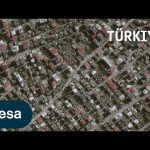
Türkiye and Syria are reeling from one of the worst earthquakes to strike the region in almost a century. Tens of thousands of people have been killed with many more injured in this tragedy. Turkish authorities, along with the United Nations and the International Federation Red Cross & Red Crescent Societies, activated the International Charter ‘Space and Major Disasters’. The Charter provides satellite images of the affected areas to support local teams with their rescue efforts. Philippe Bally, ESA Charter Representative, explains.
We are Europe’s gateway to space. Our mission is to shape the development of Europe’s space capability and ensure that investment in space continues to deliver benefits to the citizens of Europe and the world. Check out https://www.esa.int/ to get up to speed on everything space related.
Making space for all with the National Museum of African American History and Culture, celebrating the #DARTMission, and spotting a tiny asteroid with the James Webb Space Telescope.
The aurora isn’t unique to Earth. Some other worlds in our Solar System, such as Saturn and Jupiter, have magnetic fields too. Solar wind particles can collide with them just as happens with Earth! Would you like to fly to another planet and see its aurora?
📹 @EuropeanSpaceAgency
★ Subscribe: http://bit.ly/ESAsubscribe and click twice on the bell button to receive our notifications.
We are Europe’s gateway to space. Our mission is to shape the development of Europe’s space capability and ensure that investment in space continues to deliver benefits to the citizens of Europe and the world. Check out https://www.esa.int/ to get up to speed on everything space related.
A grand odyssey of exploration is about to begin. Humankind’s next bold mission to the outer Solar System, ESA’s Jupiter Icy Moons Explorer, Juice, is poised to explore giant planet Jupiter and its largest moons. These intriguing worlds have piqued our curiosity ever since Galileo first raised his telescope to the planet and discovered its four largest moons: Io, Europa, Ganymede and Callisto, three of which are thought to harbour underground oceans.
Early space probes visiting the Jovian system have raised more questions than answers. But thanks to Juice, many of those answers are now within reach. ESA is launching the spacecraft in April 2023 on an eight-year journey to the distant planet.
To uncover the hidden secrets of these mysterious worlds, Juice is equipped with the most powerful science instruments ever sent to the outer Solar System. The spacecraft will face many dangers along the way: radiation, extreme temperatures, and the vast gravitational pull of Jupiter, all while operating hundreds of millions of kilometres from Earth. But in the safe hands of ESA’s operators to guide it safely through these challenges, the dangers will be worth it for the science that Juice is destined to uncover.
The countdown to this new era of Jupiter system exploration has begun. Stay tuned: www.esa.int/juice
Credit: Produced by ESA/ATG medialab
★ Subscribe: http://bit.ly/ESAsubscribe and click twice on the bell button to receive our notifications.
We are Europe’s gateway to space. Our mission is to shape the development of Europe’s space capability and ensure that investment in space continues to deliver benefits to the citizens of Europe and the world. Check out https://www.esa.int/ to get up to speed on everything space related.
How do we communicate with spacecraft? For decades, satellites have beamed data back to Earth by way of radio waves, with a network of ground-based antennas collecting the incoming information. Now, we’re exploring laser communications, technology that will allow us to receive more data from farther than ever before — faster, too. NASA space communications expert Risha George tells us more: https://www.nasa.gov/lasercomms
Producers: Scott Bednar, Jessica Wilde Editor: James Lucas
Two teams of astronomers using ESA’s XMM-Newton space telescope have observed repeated outbursts of light from inactive black holes that partially destroy stars again and again. This discovery is unexpected, since outbursts of black holes usually appear only once when a black hole consumes a star.
We are Europe’s gateway to space. Our mission is to shape the development of Europe’s space capability and ensure that investment in space continues to deliver benefits to the citizens of Europe and the world. Check out https://www.esa.int/ to get up to speed on everything space related.
Gravity is the force that keeps us on our planet by drawing us so powerfully towards its centre. It has much the same effect on everything else floating in the cosmos, as long as it is big enough. All objects in the Universe are subject to their own force of gravity. It is one of the fundamental forces of our Universe.
As gravity pulls matter towards other matter, a sphere forms. Why? Only a sphere allows every point on its surface to have the same distance from the centre, so that no part of the object can further ‘fall’ toward its centre.
Smaller objects in space are spared from the overwhelming power of gravity, which is why we see asteroids that look like pieces of rubble. Why do these bodies have the shape that they have? Their shape arises from a simple electrostatic force.
📹 @EuropeanSpaceAgency
★ Subscribe: http://bit.ly/ESAsubscribe and click twice on the bell button to receive our notifications.
We are Europe’s gateway to space. Our mission is to shape the development of Europe’s space capability and ensure that investment in space continues to deliver benefits to the citizens of Europe and the world. Check out https://www.esa.int/ to get up to speed on everything space related.
Work to do outside the space station, honoring a pair of former astronauts, and a milestone on Mars … a few of the stories to tell you about – This Week at NASA!
Astronauts with their sights on the Moon receive world-class geology training during the fifth edition of ESA’s Pangaea campaign.
ESA astronaut Alexander Gerst and NASA’s Stephanie Wilson joined the course to learn how to read a landscape, collect scientifically relevant rocks and effectively communicate their geological observations. From choosing landing sites for a future Artemis mission, to designing science operations for a moonwalk, the course challenges space explorers to become field scientists.
The astronauts gather a wealth of geological knowledge and learn how to be the eyes and ears of scientists on the ground through a balanced mix of theory and field trips across Europe. A crew of leading European planetary scientists and engineers make sure the trainees work in tandem using the best geology observation techniques.
The course began in September 2022 in the Italian Dolomites with lessons on martian geology and asteroids at the Bletterbach canyon.
During the second leg of the training, Alexander and Stephanie followed the footsteps of Apollo astronauts to study the Ries crater in Germany, one of the best-preserved impact craters on Earth, where American crews trained before their flight to the Moon.
The astronauts travelled to the Spanish Canary Island of Lanzarote for an intense week of training in November 2022, where they learned about the geological interactions between volcanic activity and water – two key factors in the search for life.
Follow the latest news about Pangaea training on Twitter, read all about it on the blog and watch their steps with our Flickr gallery.
We are Europe’s gateway to space. Our mission is to shape the development of Europe’s space capability and ensure that investment in space continues to deliver benefits to the citizens of Europe and the world. Check out https://www.esa.int/ to get up to speed on everything space related.
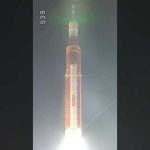
On Nov. 16, 2022, the Orion spacecraft launched aboard the Space Launch System (SLS) rocket from NASA’s Kennedy Space Center and embarked on the #Artemis I mission to the Moon and back. Orion orbited the Moon, getting as close as 79 miles to the lunar surface, and successfully splashed back down to Earth 25.5 days later on Dec. 11.
Four RS-25 engines and two five-segment solid rocket boosters provided more than 8.8 million pounds of thrust for SLS during liftoff and flight. Thanks in part to development of a new RS-25 engine controller that checks engine health 50 times per second, engineers were able to collect more than 100 measurements on pressures, temperatures, flows, speeds, and vibrations on the four RS-25 engines that helped power Artemis I. The preliminary post-flight data indicates that all SLS systems performed exceptionally and that the designs are ready to support a crewed flight on Artemis II.
The Artemis II mission will bring us closer to establishing a sustained human presence on the lunar surface and landing the first woman and first person of color on the Moon.
This video was captured from the Launch Pad 39B perimeter and was used by engineers to monitor and track the rocket during flight.
Video credit: NASA Music credit: Universal Production Music
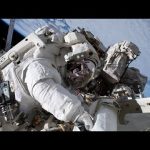
Astronauts Nicole Mann of NASA and Koichi Wakata of JAXA (Japan Aerospace Exploration Agency) are conducting a spacewalk on Thursday, Feb. 2, to continue preparations for the installation of new roll-out solar arrays, or iROSAs, outside the station later this summer. The new arrays will increase the orbiting laboratory’s power capacity.
The spacewalk is scheduled to begin at 8:15 a.m. EST (1315 UTC) and last about six and a half hours. This is the second spacewalk for both Mann and Wakata.
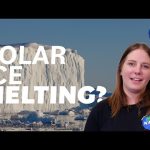
Is polar ice melting? The sobering answer is yes, and it’s the number one contributor to sea level rise. NASA scientist Dr. Brooke Medley tells us how NASA studies the relationship between ice sheets and sea level to better understand our changing planet. Explore more: https://climate.nasa.gov/vital-signs/ice-sheets/
Producers: Scott Bednar, Jessica Wilde Editor: Daniel Salazar
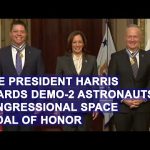
On Tuesday, Jan. 31 Vice President Kamala Harris awarded former NASA astronauts Douglas Hurley and Robert Behnken the Congressional Space Medal of Honor. Hurley and Behnken received the award for bravery in NASA’s SpaceX Demonstration Mission-2 (Demo-2) to the International Space Station in 2020.
NASA’s Commercial Crew Program began a new era of human spaceflight as American astronauts launched from American soil on an American rocket to the International Space Station. Behnken and Hurley flew on SpaceX’s Crew Dragon spacecraft, which lifted off on a Falcon 9 rocket on May 30, 2020, from Launch Complex 39A in Florida. This mission was the final flight test for SpaceX, validating the company’s crew transportation system, including the launch pad, rocket, spacecraft, and operational capabilities.
Once in orbit, Behnken and Hurley were welcomed aboard the ISS, and became members of the Expedition 63 crew. They performed tests on Crew Dragon in addition to conducting research and other tasks with the space station crew. Upon conclusion of the mission, the Crew Dragon autonomously undocked, re-entered the Earth’s atmosphere and splashed down just off Florida’s Atlantic Coast. Demo-2 was the final step before NASA’s Commercial Crew Program certified Crew Dragon for operational, long-duration missions to the space station, enabling NASA to continue important research and technology investigations onboard the station.
Watch the full medal ceremony: https://images.nasa.gov/details-Vice%20President%20Kamala%20Harris%20Awards%20Former%20NASA%20Astronauts%20Douglas%20Hurley%20and%20Robert%20Behnken%20the%20Congressional%20Space%20Medal%20of%20Honor
The “lunar hay fever”, as @NASA astronaut Harrison Schmitt described it during the Apollo 17 mission created symptoms in all 12 people who have stepped on the Moon. From sneezing to nasal congestion, in some cases it took days for the reactions to fade. Inside the spacecraft, the dust smelt like burnt gunpowder.
The Moon missions left an unanswered question of lunar exploration – one that could affect humanity’s next steps in the Solar System: can lunar dust jeopardise human health?
★ Subscribe: http://bit.ly/ESAsubscribe and click twice on the bell button to receive our notifications.
We are Europe’s gateway to space. Our mission is to shape the development of Europe’s space capability and ensure that investment in space continues to deliver benefits to the citizens of Europe and the world. Check out https://www.esa.int/ to get up to speed on everything space related.
Mecklenburg–West Pomerania is one of Germany’s least populated states. Nearly two-thirds is covered by farmland with the main crops being rye, wheat, barley and hay. The green areas present in this image are most likely winter wheat and winter rapeseed. The region’s pastures typically support sheep, horses and cattle.
On the state’s coastline on the Baltic Sea lie many holiday resorts, unspoilt nature and the islands of Rügen and Usedom, as well as many others.
We are Europe’s gateway to space. Our mission is to shape the development of Europe’s space capability and ensure that investment in space continues to deliver benefits to the citizens of Europe and the world. Check out https://www.esa.int/ to get up to speed on everything space related.
Honoring our fallen heroes, working on a nuclear option for space travel, and the next crewed mission to the space station … a few of the stories to tell you about – This Week at NASA!
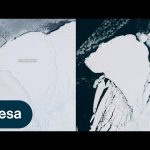
An iceberg around the size of Greater London broke off Antarctica’s Brunt Ice Shelf due to a natural process called ‘calving’. The iceberg, measuring 1550 sq km, detached from the 150 m-thick ice shelf a decade after scientists first spotted massive cracks in the shelf.
We are Europe’s gateway to space. Our mission is to shape the development of Europe’s space capability and ensure that investment in space continues to deliver benefits to the citizens of Europe and the world. Check out https://www.esa.int/ to get up to speed on everything space related.
We are Europe’s gateway to space. Our mission is to shape the development of Europe’s space capability and ensure that investment in space continues to deliver benefits to the citizens of Europe and the world. Check out https://www.esa.int/ to get up to speed on everything space related.
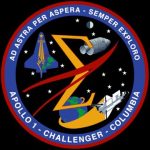
NASA remembers the crews of Apollo 1, space shuttles Challenger and Columbia during the agency’s Day of Remembrance on Jan. 26, 2023. Feb. 1 marks the 20th anniversary of the Columbia STS-107 accident.
NASA’s Day of Remembrance honors all members of the NASA family who lost their lives while furthering the cause of exploration and discovery.
Greenhouse gas emissions decreased a little during the first year of COVID, but not enough to make a lasting impact.
Less travel and cars on the road meant improved air quality. But greenhouse gases that cause climate change only decreased a little because we were still heating and cooling our homes, so these gases continued to build up in our atmosphere. NASA climate change scientist Lesley Ott tells us more about what scientists discovered.
Did you know that ESA is researching human hibernation for long distance spaceflight to Mars or beyond?
Hibernating astronauts could be the best way to save mission costs, reduce the size of spacecraft by a third and keep crew healthy on their way to Mars. An ESA-led investigation suggests that human hibernation goes beyond the realm of science-fiction and may become a game-changing technique for space travel.
When packing for a return flight to the Red Planet, space engineers account for around two years’ worth of food and water for the crew.
Torpor during hibernation is an induced state that reduces the metabolic rate of an organism. This ‘suspended animation’ is a common mechanism in animals who wish to preserve energy. Reducing the metabolic rate of a crew en route to Mars down to 25% of the normal state would dramatically cut down the amount of supplies and habitat size, making long-duration exploration more feasible.
Mimicking therapeutic torpor, the idea of putting human into a state of hibernation, has been around in hospitals since the 1980s – doctors can induce hypothermia to reduce metabolism during long and complex surgeries. However, it is not an active reduction of energy and misses most of the advantages of torpor. Studies on hibernation to visit other planets could offer new potential applications for patient care on Earth.
Animals hibernate to survive periods of cold and food or water scarcity, reducing their heart rate, breathing and other vital functions to a fraction of their normal life, while body temperature lowers close to ambient temperature. Tardigrades, frogs and reptiles are very good at it. Lower testosterone levels seem to aid long hibernation in mammals, estrogens in humans strongly regulate energy metabolism.
With the crew at rest for long periods, artificial intelligence will come into play during anomalies and emergencies.
The possibilities of hibernation for medical use is of particular interest to the European research community and could transform how we approach many severe illnesses.
Inducing torpor is already used in some medical environments such as surgical theathers to replace anesthesia in those patients allergic to anesthetic drugs.
The step to space research is closer than you might think. Get involved with spaceflight research via https://www.esa.int/spaceflightAO. Find out about our commercial partnerships and opportunities in human and robotic exploration via https://www.esa.int/explorationpartners to run your research in microgravity as well.
★ Subscribe: http://bit.ly/ESAsubscribe and click twice on the bell button to receive our notifications.
We are Europe’s gateway to space. Our mission is to shape the development of Europe’s space capability and ensure that investment in space continues to deliver benefits to the citizens of Europe and the world. Check out https://www.esa.int/ to get up to speed on everything space related.
Lessons learned and the importance of a strong safety culture were discussed as part of NASA’s Day of Remembrance activities to honor our fallen heroes. The panel included Administrator Bill Nelson, Deputy Administrator Pam Melroy and Associate Administrator Bob Cabana.
In 2023, NASA Day of Remembrance falls on Thursday, Jan. 26. We will never forget the crews of Apollo 1, Challenger STS-51L, and Columbia STS-107. https://www.nasa.gov/specials/dor2023/
Researchers have found evidence for the existence of a new type of planet they have called a “water world,” where water makes up a large fraction of the entire planet. These worlds, discovered in a planetary system 218 light-years away, are unlike any planets in our Solar System.
📹 @europeanspaceagency 🖥️ @nasa , ESA, L. Hustak
★ Subscribe: http://bit.ly/ESAsubscribe and click twice on the bell button to receive our notifications.
We are Europe’s gateway to space. Our mission is to shape the development of Europe’s space capability and ensure that investment in space continues to deliver benefits to the citizens of Europe and the world. Check out https://www.esa.int/ to get up to speed on everything space related.
We are Europe’s gateway to space. Our mission is to shape the development of Europe’s space capability and ensure that investment in space continues to deliver benefits to the citizens of Europe and the world. Check out https://www.esa.int/ to get up to speed on everything space related.