Category: Astronomie

  • Interview with Thomas Pesquet on return to Earth a second time

    Interview with Thomas Pesquet on return to Earth a second time

    ESA astronaut Thomas Pesquet gives a brief interview in Cologne, Germany, less than 48 hours after leaving the International Space Station.

    He talks with ESA Web TV editor Julien Harrod about returning to Earth after his six-month International Space Station mission Alpha, how it feels to splash down in a @SpaceX Crew Dragon, and the differences with the Russian Soyuz spacecraft that flew him to space on his first mission, Proxima, in 2017.

    After completing two six-month Space Station missions in five years, Thomas recounts the changes he saw while observing our planet Earth from 400 km above.

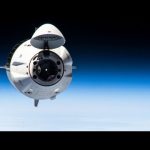
    Thomas is the first European to fly to the International Space Station and return on a commercial spacecraft. SpaceX’s Crew Dragon Endeavour transporting Crew-2 autonomously undocked from the International Space Station and after a series of burns, entered Earth’s atmosphere and deployed parachutes for a soft water-landing. Thomas and crew splashed down on 9 November 2021 at 03:33 GMT (04:33 CET).

    Thomas flew to Cologne, Germany, where he is being monitored by ESA’s space medicine team as he readapts to Earth’s gravity at ESA’s European Astronaut Centre (EAC) and @DLR ‘Envihab’ facility.

    Over 200 experiments were run during Thomas’ time in space, with 40 European ones and 12 new experiments led by the French space agency @CNES. The experiments continue on Earth charting the astronauts physical adaptation to living with gravity again.

    Watch interview in French: https://youtu.be/h98qTwsa2pc

    Follow Thomas: http://bit.ly/ThomasPesquetBlog

    ★ Subscribe: http://bit.ly/ESAsubscribe and click twice on the bell button to receive our notifications.

    Check out our full video catalog: http://bit.ly/SpaceInVideos
    Follow us on Twitter: http://bit.ly/ESAonTwitter
    On Facebook: http://bit.ly/ESAonFacebook
    On Instagram: http://bit.ly/ESAonInstagram
    On LinkedIn: https://bit.ly/ESAonLinkedIn
    On Pinterest: https://bit.ly/ESAonPinterest
    On Flickr: http://bit.ly/ESAonFlickr

    We are Europe’s gateway to space. Our mission is to shape the development of Europe’s space capability and ensure that investment in space continues to deliver benefits to the citizens of Europe and the world. Check out https://www.esa.int/ to get up to speed on everything space related.

    Copyright information about our videos is available here: https://www.esa.int/ESA_Multimedia/Terms_and_Conditions

    #ESA
    #MissionAlpha
    #ThomasPesquet
  • Watch NASA’s SpaceX Crew-3 Mission Launch (Trailer)

    Watch NASA’s SpaceX Crew-3 Mission Launch (Trailer)

    On Nov. 10 at 9:03 p.m. EST (02:03 UTC Nov. 11), the Crew-3 flight will carry NASA astronauts Raja Chari, mission commander; Tom Marshburn, pilot; and Kayla Barron, mission specialist; as well as ESA (European Space Agency) astronaut Matthias Maurer, who will serve as a mission specialist, to the International Space Station for a six-month science mission. Once there, they will perform space station upgrades, conduct science experiments to benefit life on Earth, and continue preparing humanity for future missions to the Moon – and eventually Mars. This is the third crew rotation mission with four astronauts flying on a commercial spacecraft.

    Video Producer/Editor: Amy Leniart

  • NASA’s SpaceX Crew-2 Returns Home: Splashdown

    NASA’s SpaceX Crew-2 Returns Home: Splashdown

    Their spacecraft has undocked from the International Space Station, and four astronauts are on the journey home to Earth. Watch live as the SpaceX Crew Dragon Endeavour re-enters the atmosphere, and parachutes to splashdown in a landing zone off the coast of Pensacola, Florida. Splashdown is targeted for 10:33 p.m. EST Nov. 8 (03:33 UTC Nov. 9).

    Shane Kimbrough and Megan McArthur of NASA, Thomas Pesquet of the European Space Agency, and Akihiko Hoshide of the Japan Aerospace Exploration Agency spent over six months living and working on the space station. They contributed to hundreds of scientific investigations and technology demonstrations to help prepare for future exploration missions and generate innovations to benefit life on Earth: https://youtu.be/AtjR-gHufxg

  • NASA’s SpaceX Crew-2 Returns Home: Undocking and Space Station Flyaround of Crew Dragon

    NASA’s SpaceX Crew-2 Returns Home: Undocking and Space Station Flyaround of Crew Dragon

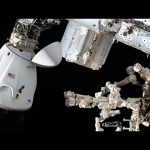
    Watch the Crew Dragon Endeavour spacecraft undock from the International Space Station, with four astronauts aboard: Shane Kimbrough and Megan McArthur of NASA, Thomas Pesquet of the European Space Agency, and Akihiko Hoshide of the Japan Aerospace Exploration Agency. The Crew Dragon fired its thrusters for a 360-degree flyaround of the space station, making it the first spacecraft to do so since the space shuttle.

    The Crew Dragon safely splashed down off the coast of Pensacola, Florida at 10:33 p.m. EST Mon., Nov. 8 (03:33 UTC Nov. 9).

  • Dragon Endeavour tour [in French with English subtitles]

    Dragon Endeavour tour [in French with English subtitles]

    ESA astronaut Thomas Pesquet is sharing scenes from life on board the International Space Station during his second mission “Alpha”. Here he gives a quick tour of the @SpaceX Cargo Dragon Endeavour that brought him to the Space Station together with @JAXA | 宇宙航空研究開発機構 astronaut Aki Hoshide and @NASA astronauts Shane Kimbrough and Megan McArthur. The same astronauts, Crew-2, will use the spacecraft to return home after undocking with the Station and fly to Earth for a splashdown off the coast of Florida, USA.

    Over 200 experiments are planned during Thomas’ time in space, with 40 European ones and 12 new experiments led by the French space agency @CNES.

    Follow Thomas: http://bit.ly/ThomasPesquetBlog

    ★ Subscribe: http://bit.ly/ESAsubscribe and click twice on the bell button to receive our notifications.

    Check out our full video catalog: http://bit.ly/SpaceInVideos
    Follow us on Twitter: http://bit.ly/ESAonTwitter
    On Facebook: http://bit.ly/ESAonFacebook
    On Instagram: http://bit.ly/ESAonInstagram
    On LinkedIn: https://bit.ly/ESAonLinkedIn
    On Pinterest: https://bit.ly/ESAonPinterest
    On Flickr: http://bit.ly/ESAonFlickr

    We are Europe’s gateway to space. Our mission is to shape the development of Europe’s space capability and ensure that investment in space continues to deliver benefits to the citizens of Europe and the world. Check out https://www.esa.int/ to get up to speed on everything space related.

    Copyright information about our videos is available here: https://www.esa.int/ESA_Multimedia/Terms_and_Conditions

    #ESA
    #ISSTour
    #MissionAlpha

  • Vice President Kamala Harris Visits NASA to See Climate Change Work

    Vice President Kamala Harris Visits NASA to See Climate Change Work

    The urgency of Earth science and climate studies took the spotlight Friday, Nov. 5, as U.S. Vice President Kamala Harris visited NASA’s Goddard Space Flight Center in Greenbelt, Maryland. Alongside NASA Administrator Bill Nelson, the vice president received a firsthand look at how NASA studies climate change and provides crucial information to understand our planet’s changes and their impacts on our lives.

    The vice president met with scientists and engineers to discuss:
    • The first images captured by the Landsat 9 satellite, a joint mission of NASA and the U.S. Geological Survey (USGS) that launched in late September to monitor the Earth’s land surface.
    • A new Earth science mission entitled Investigation of Convective Updrafts (INCUS) that will study the behavior of tropical storms and thunderstorms, including their impacts on weather and climate models.
    • The Plankton, Aerosol, Cloud, ocean Ecosystem (PACE) mission, which involves an instrument currently under construction at Goddard for a 2022 launch. PACE will extend and improve NASA’s record of satellite observations of global ocean biology, aerosols (tiny particles suspended in the atmosphere), and clouds.
    • The GOES-R program, whose GOES-T satellite is scheduled to launch for NOAA in February 2022 to improve weather forecasts.

    Learn more about NASA’s Earth science work at: https://climate.nasa.gov/

    Video Producer: Rich Melnick
    Video Editor: Mike Randazzo

  • Space Station tour with your guide Thomas Pesquet | 4K [in French with English subtitles available]

    Space Station tour with your guide Thomas Pesquet | 4K [in French with English subtitles available]

    Join ESA astronaut Thomas Pesquet on a tour of the International Space Station. On his second space mission Alpha, Thomas flew to space from Florida, USA, as part of Crew-2 in the @SpaceX Crew Dragon Endeavour together with @NASA astronauts Megan McArthur, Shane Kimbrough and @JAXA | 宇宙航空研究開発機構 astronaut Aki Hoshide

    In this guided tour, a first shot in 4K, Thomas takes you through the modules of the International Space Station including the Dragon. Recorded in October 2021 the Space Station had just seen the departure of Soyuz MS-18 and the relocation of a Progress supply spacecraft. On board where also NASA astronaut Mark VandeHei and Russian cosmonauts Anton Shkaplerov and Pyotr Dubrov.

    Over 200 investigations are planned during Thomas’ time in space, with 40 European ones and 12 new experiments led by the French space agency @CNES.

    Follow Thomas: http://bit.ly/ThomasPesquetBlog

    ★ Subscribe: http://bit.ly/ESAsubscribe and click twice on the bell button to receive our notifications.

    Check out our full video catalog: http://bit.ly/SpaceInVideos
    Follow us on Twitter: http://bit.ly/ESAonTwitter
    On Facebook: http://bit.ly/ESAonFacebook
    On Instagram: http://bit.ly/ESAonInstagram
    On LinkedIn: https://bit.ly/ESAonLinkedIn
    On Pinterest: https://bit.ly/ESAonPinterest
    On Flickr: http://bit.ly/ESAonFlickr

    We are Europe’s gateway to space. Our mission is to shape the development of Europe’s space capability and ensure that investment in space continues to deliver benefits to the citizens of Europe and the world. Check out https://www.esa.int/ to get up to speed on everything space related.

    Copyright information about our videos is available here: https://www.esa.int/ESA_Multimedia/Terms_and_Conditions

    #ESA
    #ISSTour
    #MissionAlpha

  • The Vice President Checks Out New Earth Science Work on This Week @NASA – November 5, 2021

    The Vice President Checks Out New Earth Science Work on This Week @NASA – November 5, 2021

    The Vice President checks out new Earth Science work, two decades and counting of continuous human presence in space, and 29 days on the edge for the Webb Space Telescope team … a few of the stories to tell you about – This Week at NASA!

    Download Link: https://images.nasa.gov/details-The%20Vice%20President%20Checks%20Out%20New%20Earth%20Science%20Work%20on%20This%20Week%20@NASA%20–%20November%205,%202021

  • Vice President Remarks on Climate, Live from NASA’s Goddard Space Flight Center

    Vice President Remarks on Climate, Live from NASA’s Goddard Space Flight Center

    Vice President Kamala Harris will visit NASA’s Goddard Space Flight Center in Greenbelt, Maryland today to get a firsthand look at the agency’s work to combat the climate crisis and protect vulnerable communities.

    The Vice President, joined by NASA Administrator Bill Nelson and leaders from the National Oceanographic and Atmospheric Administration (NOAA) and the U.S. Geological Survey (USGS), will tour the climate-oriented space activities underway at Goddard and learn about the collaboration among U.S. federal agencies on space missions that are central to tackling the climate crisis and improving our scientific understanding of Earth’s systems.

    Following the tour, around 4:45 p.m. EDT, the vice president will deliver remarks, which will be streamed live here.

  • Earth from Space: Shetland Islands, Scotland

    Earth from Space: Shetland Islands, Scotland

    The Copernicus Sentinel-2 takes us over the Shetland Islands, an archipelago in the Northern Isles of Scotland, in this edition of the Earth from Space programme.

    Download the image: https://www.esa.int/ESA_Multimedia/Images/2021/11/Shetland_Islands

    ★ Subscribe: http://bit.ly/ESAsubscribe and click twice on the bell button to receive our notifications.

    Check out our full video catalog: http://bit.ly/SpaceInVideos
    Follow us on Twitter: http://bit.ly/ESAonTwitter
    On Facebook: http://bit.ly/ESAonFacebook
    On Instagram: http://bit.ly/ESAonInstagram
    On LinkedIn: https://bit.ly/ESAonLinkedIn
    On Pinterest: https://bit.ly/ESAonPinterest
    On Flickr: http://bit.ly/ESAonFlickr

    We are Europe’s gateway to space. Our mission is to shape the development of Europe’s space capability and ensure that investment in space continues to deliver benefits to the citizens of Europe and the world. Check out https://www.esa.int/ to get up to speed on everything space related.

    Copyright information about our videos is available here: https://www.esa.int/ESA_Multimedia/Terms_and_Conditions

    #ESA
    #EarthFromSpace
    #ShetlandIslands

  • Melt

    Melt

    Glaciers across the globe have lost over nine trillion tonnes of ice in half a century. How will glaciers look over the coming decades? “It all depends on what humans are doing now in terms of greenhouse gas emissions:” this is the message one scientist delivered during an ESA-led expedition to the Gorner Glacier in Switzerland – one of the biggest ice masses in the Alps.

    As world leaders gather for the 26th @United Nations Climate Change Conference of Parties, watch the exclusive premiere of the documentary that follows ESA astronaut Luca Parmitano, along with a team of glaciologists and climate experts, on their journey across the Alps to learn how rising global temperatures are taking their toll on glaciers.

    The documentary features breathtaking scenery of the Gorner Glacier as well as interviews with climate specialists as they explain how we can monitor glaciers using both satellite data and in situ measurements.

    Learn more about this expedition: https://blogs.esa.int/exploration/a-tale-of-ice-and-water/

    ★ Subscribe: http://bit.ly/ESAsubscribe and click twice on the bell button to receive our notifications.

    Check out our full video catalog: http://bit.ly/SpaceInVideos
    Follow us on Twitter: http://bit.ly/ESAonTwitter
    On Facebook: http://bit.ly/ESAonFacebook
    On Instagram: http://bit.ly/ESAonInstagram
    On LinkedIn: https://bit.ly/ESAonLinkedIn
    On Pinterest: https://bit.ly/ESAonPinterest
    On Flickr: http://bit.ly/ESAonFlickr

    We are Europe’s gateway to space. Our mission is to shape the development of Europe’s space capability and ensure that investment in space continues to deliver benefits to the citizens of Europe and the world. Check out https://www.esa.int/ to get up to speed on everything space related.

    Copyright information about our videos is available here: https://www.esa.int/ESA_Multimedia/Terms_and_Conditions

    #ESA
    #ClimateChange
    #TogetherforOurPlanet

  • Best of Alpha mission timelapse

    Best of Alpha mission timelapse

    A collection of the best timelapse videos made during ESA astronaut Thomas Pesquet’s second mission to the International Space Station, “Alpha” in 2021. The camera is setup to take pictures at intervals of two a second, and the pictures are then edited into this video that plays at 25 pictures a second. Most videos around 12 times faster than real speed.

    Thomas shared this video on social media with the caption:

    “Probably the last the timelapse from space, and fittingly here is a special edition “best of” montage: aurora, lightning, spacewalks, day views and spacecraft reentry in less than five minutes. Get comfy, cast it to your largest screen in the house and enjoy!”

    Over 200 experiments are planned during Thomas’ time in space, with 40 European ones and 12 new experiments led by the French space agency @CNES.

    Follow Thomas: http://bit.ly/ThomasPesquetBlog

    ★ Subscribe: http://bit.ly/ESAsubscribe and click twice on the bell button to receive our notifications.

    Check out our full video catalog: http://bit.ly/SpaceInVideos
    Follow us on Twitter: http://bit.ly/ESAonTwitter
    On Facebook: http://bit.ly/ESAonFacebook
    On Instagram: http://bit.ly/ESAonInstagram
    On LinkedIn: https://bit.ly/ESAonLinkedIn
    On Pinterest: https://bit.ly/ESAonPinterest
    On Flickr: http://bit.ly/ESAonFlickr

    We are Europe’s gateway to space. Our mission is to shape the development of Europe’s space capability and ensure that investment in space continues to deliver benefits to the citizens of Europe and the world. Check out https://www.esa.int/ to get up to speed on everything space related.

    Copyright information about our videos is available here: https://www.esa.int/ESA_Multimedia/Terms_and_Conditions

    #ESA
    #Timelapse
    #MissionAlpha

  • When Was the Last Time an Asteroid Hit Earth? We Asked a NASA Expert

    When Was the Last Time an Asteroid Hit Earth? We Asked a NASA Expert

    When was the last time an asteroid hit Earth? Small asteroids and other tiny particles bombard our planet daily, but almost all of them burn up safely in the atmosphere. Bigger impacts are extremely rare, but scientists like Marina Brozovic are keeping their eyes on the sky.

    Explore more: https://www.nasa.gov/planetarydefense

    Producers: Scott Bednar, Jessica Wilde
    Editor: Matthew Schara

  • NASA’s SpaceX Crew-2 Astronauts Advance Research in Space

    NASA’s SpaceX Crew-2 Astronauts Advance Research in Space

    After more than six months aboard the International Space Station, the astronauts of NASA’s SpaceX Crew-2 mission are returning home. The four crew members — NASA astronauts Shane Kimbrough and Megan McArthur, JAXA (Japan Aerospace Exploration Agency) astronaut Akihiko Hoshide, and ESA (European Space Agency) astronaut Thomas Pesquet — will travel back to Earth inside a SpaceX Crew Dragon capsule.

    These crew members contributed to hundreds of scientific investigations and technology demonstrations while aboard the orbiting laboratory. This valuable scientific research helps to prepare humans for future space exploration missions while generating numerous innovations and benefits for humanity on Earth. Here is a look at some of the scientific milestones accomplished during the Crew-2 mission.

    https://go.nasa.gov/3bygmel

  • Change in the Arctic

    Change in the Arctic

    Satellites play a vital role in monitoring the rapid changes taking place in the Arctic. Tracking ice lost from the world’s glaciers, ice sheets and frozen land shows that Earth is losing ice at an accelerating rate. Currently more than a trillion tonnes of ice is lost each year. The sooner Earth’s temperature is stabilised, the more manageable the impacts of ice loss will be.

    Credit: ESA/Planetary Visions

    ★ Subscribe: http://bit.ly/ESAsubscribe and click twice on the bell button to receive our notifications.

    Check out our full video catalog: http://bit.ly/SpaceInVideos
    Follow us on Twitter: http://bit.ly/ESAonTwitter
    On Facebook: http://bit.ly/ESAonFacebook
    On Instagram: http://bit.ly/ESAonInstagram
    On Pinterest: https://bit.ly/ESAonPinterest
    On Flickr: http://bit.ly/ESAonFlickr

    We are Europe’s gateway to space. Our mission is to shape the development of Europe’s space capability and ensure that investment in space continues to deliver benefits to the citizens of Europe and the world. Check out https://www.esa.int/ to get up to speed on everything space related.

    Copyright information about our videos is available here: https://www.esa.int/ESA_Multimedia/Terms_and_Conditions

    #ESA
    #Arctic
    #EarthObservation

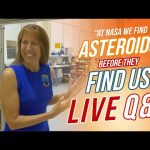
  • Live Q&A with NASA Planetary Defender

    Live Q&A with NASA Planetary Defender

    NASA planetary defender Dr. Kelly Fast has a hard and fast rule: “Find asteroids before they find us.” Working in NASA’s Planetary Defense Coordination Office, Kelly is helping send the #DARTMission to test “nudging” an asteroid in space. DART, short for Double Asteroid Redirection Test, is a planetary defense-driven test of technologies for preventing an impact of Earth by a hazardous near-Earth object. DART will be the first demonstration of the kinetic impactor technique to change the motion of an asteroid in space. NOTE: the target asteroid is currently not a threat to Earth.

    Get all the info on our #DARTMission: https://www.nasa.gov/dart

  • The Crew-3 Astronauts Arrive at the Launch Site on This Week @NASA – October 29, 2021

    The Crew-3 Astronauts Arrive at the Launch Site on This Week @NASA – October 29, 2021

    The Crew-3 astronauts arrive at the launch site, a critical milestone for our water-hunting lunar robot, and a deeper, more full view down into Jupiter’s atmosphere … a few of the stories to tell you about – This Week at NASA!

    Producer/Writer: Andre Valentine
    Editor: Shane Apple
    Music: Universal Production Music

    Download Link:
    https://images.nasa.gov/details-The%20Crew-3%20Astronauts%20Arrive%20at%20the%20Launch%20Site%20on%20This%20Week%20@NASA%20–%20October%2029,%202021mp4

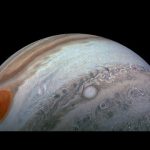
  • Jupiter’s 3D Atmosphere Revealed by NASA’s Juno Spacecraft (Media Briefing)

    Jupiter’s 3D Atmosphere Revealed by NASA’s Juno Spacecraft (Media Briefing)

    The science team for our Juno spacecraft at Jupiter will reveal new findings that provide the first 3D look at how the planet’s roiling atmosphere operates underneath the top layers of clouds, and how these revelations offer insight into the atmospheres of giant planets elsewhere in the universe.

    The event will take place at NASA’s Jet Propulsion Laboratory in Southern California, which manages the Juno mission.

    Briefing participants include:

    – Lucas Paganini, Juno program scientist, NASA Headquarters, Washington
    – Scott Bolton, Juno principal investigator, Southwest Research Institute, San Antonio
    – Marzia Parisi, Juno scientist, JPL
    – Keren Duer, Juno scientist, Weizmann Institute of Science, Rehovot, Israel
    – Leigh Fletcher, Juno participating scientist, University of Leicester, England
    – Alessandro Mura, Juno co-investigator, Institute for Space Astrophysics and Planetology, Rome

    For more about the Juno mission, visit nasa.gov/juno and missionjuno.swri.edu

    Credit: NASA/JPL-Caltech/SWRI
    Video thumbnail JunoCam image processing by David Marriott

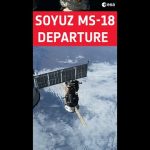
  • Soyuz MS-18 departure timelapse #shorts

    Soyuz MS-18 departure timelapse #shorts

    Timelapse video made during ESA astronaut Thomas Pesquet’s second mission to the International Space Station, “Alpha”. On 17 October 2021 at 01:14 GMT the Soyuz MS-18 undocked from the Space Station to return to Earth, inside were @Roscosmos Media cosmonaut Oleg Novitskiy (who had spent 191 days in space) and actress Yulia Peresild and Russian producer-director Klim Shipenko (who both spent 11 days in space). The trio landed on Earth just over three hours later.
    The camera for this timelapse was setup to take pictures at intervals of two a second, and the pictures are then edited into this video that plays at 25 pictures a second. The video is around 12 times faster than real speed.

    Thomas shared this video on social media with the caption:

    “Soyuz MS-18 departing two weekends ago already. Oleg left with Yulia and Klim and I see pictures of them back looking happy and healthy back on Earth. they were only in space for a few days though, a business trip, more than an expedition, for us and Oleg it will be a bit different: the physical and social readapting to Earth will require some work. This is a timelapse so it moves 12 times faster than in reality. I wasn’t the only one to film in the Cupola, and where the image shakes a bit is when one of my crewmates bumped the tripod! ”

    Over 200 experiments are planned during Thomas’ time in space, with 40 European ones and 12 new experiments led by the French space agency @CNES.

    Follow Thomas: http://bit.ly/ThomasPesquetBlog

    ★ Subscribe: http://bit.ly/ESAsubscribe and click twice on the bell button to receive our notifications.

    Check out our full video catalog: http://bit.ly/SpaceInVideos
    Follow us on Twitter: http://bit.ly/ESAonTwitter
    On Facebook: http://bit.ly/ESAonFacebook
    On Instagram: http://bit.ly/ESAonInstagram
    On LinkedIn: https://bit.ly/ESAonLinkedIn
    On Pinterest: https://bit.ly/ESAonPinterest
    On Flickr: http://bit.ly/ESAonFlickr

    We are Europe’s gateway to space. Our mission is to shape the development of Europe’s space capability and ensure that investment in space continues to deliver benefits to the citizens of Europe and the world. Check out https://www.esa.int/ to get up to speed on everything space related.

    Copyright information about our videos is available here: https://www.esa.int/ESA_Multimedia/Terms_and_Conditions

    #ESA
    #Timelapse
    #MissionAlpha

  • We Asked a NASA Expert: How Did Perseverance Pick its Landing Spot?

    We Asked a NASA Expert: How Did Perseverance Pick its Landing Spot?

    How did the Perseverance Mars rover pick its exact landing spot? Believe it or not, the rover made the decision on precisely where to land just moments before it touched down. How?! Thanks to the work of engineers like Swati Mohan and a new technology called Terrain Relative Navigation, Perseverance landed in the most challenging landscape ever attempted on Mars: https://go.nasa.gov/3yutGdH

    Producers: Scott Bednar & Jessica Wilde
    Editor: Thomas Shortridge

  • NASA’s SpaceX Crew-3 Astronauts Launch to the Space Station

    NASA’s SpaceX Crew-3 Astronauts Launch to the Space Station

    NASA’s SpaceX Crew-3 mission is set to lift off on Wednesday, Nov. 3 at 1:10 a.m. EDT (0510 UTC) from Kennedy Space Center in Florida. Astronauts Kayla Barron, Raja Chari, and Thomas Marshburn of NASA will fly to the International Space Station alongside astronaut Matthias Maurer of the European Space Agency. Once there, the crew of four will spend about six months conducting science experiments and performing maintenance upgrades aboard the orbiting laboratory. For Barron, Chari, and Maurer, this will be their first spaceflight, and the third for Marshburn.

    The Crew Dragon ‘Endurance’ spacecraft will dock to the space station on Wednesday, Nov. 3 at 11:00 p.m. EDT (0300 UTC Thursday). Watch continuous coverage of their entire ride, on NASA TV: https://youtu.be/21X5lGlDOfg

    Learn more about the mission: https://go.nasa.gov/3GhPMnY

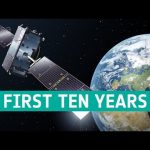
  • Galileo: the first ten years

    Galileo: the first ten years

    Europe’s own satellite navigation system, Galileo, has become the world’s most precise, delivering metre-level accuracy, available anywhere on Earth. It is also saving lives, relaying distress calls for search and rescue. Today there are 26 Galileo satellites in orbit 23 222 km over our heads; the first of them were launched on 21 October 2011, with nine more launches in the following years. The satellites in space are supported by a globe-spanning ground segment. The system as a whole is set to grow, with the first of 12 ‘Batch 3’ about to join the current satellites in orbit and new ‘Galileo Second Generation’ satellites in development.

    Galileo has been financed by the EU and developed by ESA, with services delivered by EUSPA.

    ★ Subscribe: http://bit.ly/ESAsubscribe and click twice on the bell button to receive our notifications.

    Check out our full video catalog: http://bit.ly/SpaceInVideos
    Follow us on Twitter: http://bit.ly/ESAonTwitter
    On Facebook: http://bit.ly/ESAonFacebook
    On Instagram: http://bit.ly/ESAonInstagram
    On LinkedIn: https://bit.ly/ESAonLinkedIn
    On Pinterest: https://bit.ly/ESAonPinterest
    On Flickr: http://bit.ly/ESAonFlickr

    We are Europe’s gateway to space. Our mission is to shape the development of Europe’s space capability and ensure that investment in space continues to deliver benefits to the citizens of Europe and the world. Check out https://www.esa.int/ to get up to speed on everything space related.

    Copyright information about our videos is available here: https://www.esa.int/ESA_Multimedia/Terms_and_Conditions

    #ESA
    #Galileo
    #SatelliteNavigation

  • Behind the Spacecraft: NASA’s DART, the Double Asteroid Redirection Test

    Behind the Spacecraft: NASA’s DART, the Double Asteroid Redirection Test

    NASA is crashing a spacecraft into an asteroid… on purpose! Our #DARTmission is a first-of-its-kind #PlanetaryDefense test to change the motion of an asteroid in space so that we could use this technique if an asteroid were ever discovered to be a threat to Earth. Follow DART: www.nasa.gov/DART

    The DART mission is a test of a technique that could be used to mitigate the threat of an asteroid on a collision course with Earth should one be discovered in the future. DART’s target is not a threat to Earth. While no known asteroid larger than 140 meters in size has a significant chance to hit Earth for the next 100 years, only about 40 percent of those asteroids have been found as of October 2021.

    Producer/Editor: Jessica Wilde
    Producer: Scott Bednar
    Videographers: James Lucas and Seth Robinson

  • Behind the Spacecraft: Michelle Chen

    Behind the Spacecraft: Michelle Chen

    NASA’s #DARTmission will purposely crash a spacecraft into an asteroid to change its orbital period. But in order to hit the mark, this test mission needs to locate its target first. That’s why Johns Hopkins APL engineer Michelle Chen helped develop new autonomous navigation techniques that will ensure a bullseye. Follow DART: www.nasa.gov/DART

    The DART mission is a test of a technique that could be used to mitigate the threat of an asteroid on a collision course with Earth should one be discovered in the future. DART’s target is not a threat to Earth. While no known asteroid larger than 140 meters in size has a significant chance to hit Earth for the next 100 years, only about 40 percent of those asteroids have been found as of October 2021.

  • Behind the Spacecraft: Andy Rivkin

    Behind the Spacecraft: Andy Rivkin

    NASA’s #DARTmission is crashing a spacecraft into an asteroid to try to change its motion in space. But how will we know if this test worked? That’s where Johns Hopkins APL scientist Andy Rivkin comes in. He’ll be studying the precise change in the asteroid’s motion right here from Earth. In fact, Andy loves DART so much, he even wrote a song about it. Follow DART: www.nasa.gov/DART

    The DART mission is a test of a technique that could be used to mitigate the threat of an asteroid on a collision course with Earth should one be discovered in the future. DART’s target is not a threat to Earth. While no known asteroid larger than 140 meters in size has a significant chance to hit Earth for the next 100 years, only about 40 percent of those asteroids have been found as of October 2021.

  • Floating through the Space Station in 360

    Floating through the Space Station in 360

    ESA astronaut Thomas Pesquet takes you on a brief tour of the International Space Station like no other. Filmed with a 360 camera, he floats from Node-3 to Europe’s Columbus laboratory.
    Immerse yourself in this brief but unique fly through humankind’s orbital outpost.

    Follow Thomas: http://bit.ly/ThomasPesquetBlog

    ★ Subscribe: http://bit.ly/ESAsubscribe and click twice on the bell button to receive our notifications.

    Check out our full video catalog: http://bit.ly/SpaceInVideos
    Follow us on Twitter: http://bit.ly/ESAonTwitter
    On Facebook: http://bit.ly/ESAonFacebook
    On Instagram: http://bit.ly/ESAonInstagram
    On Pinterest: https://bit.ly/ESAonPinterest
    On Flickr: http://bit.ly/ESAonFlickr

    We are Europe’s gateway to space. Our mission is to shape the development of Europe’s space capability and ensure that investment in space continues to deliver benefits to the citizens of Europe and the world. Check out https://www.esa.int/ to get up to speed on everything space related.

    Copyright information about our videos is available here: https://www.esa.int/ESA_Multimedia/Terms_and_Conditions

    #ESA
    #ISSTour
    #MissionAlpha

  • The Orion Spacecraft for Artemis I Is on the Move on This Week @NASA – October 22, 2021

    The Orion Spacecraft for Artemis I Is on the Move on This Week @NASA – October 22, 2021

    The Orion spacecraft for Artemis I is on the move, critical hardware for Artemis II is delivered, and a new telescope to study our Milky Way … a few of the stories to tell you about – This Week at NASA!

    Producer/Writer: Andre Valentine
    Editor: Shane Apple
    Music: Universal Production Music

  • Artemis I stacked

    Artemis I stacked

    Time lapse of the stacking of the Orion spacecraft on top of the fully assembled Space Launch System (SLS) rocket at NASA’s Kennedy Space Center in Florida, on 21 October 2021, in preparation for the uncrewed Artemis I launch.

    For Artemis I, the European Service Module will take the spacecraft more than 64 000 km beyond the Moon in a test flight to demonstrate its capabilities.

    The European Service Module is ESA’s contribution to NASA’s Orion spacecraft that will send astronauts to the Moon and beyond. It provides electricity, water, oxygen and nitrogen as well as keeping the spacecraft at the right temperature and on course.

    Learn more about Orion: http://bit.ly/ESAOrion

    ★ Subscribe: http://bit.ly/ESAsubscribe and click twice on the bell button to receive our notifications.

    Check out our full video catalog: http://bit.ly/SpaceInVideos
    Follow us on Twitter: http://bit.ly/ESAonTwitter
    On Facebook: http://bit.ly/ESAonFacebook
    On Instagram: http://bit.ly/ESAonInstagram
    On LinkedIn: https://bit.ly/ESAonLinkedIn
    On Pinterest: https://bit.ly/ESAonPinterest
    On Flickr: http://bit.ly/ESAonFlickr

    We are Europe’s gateway to space. Our mission is to shape the development of Europe’s space capability and ensure that investment in space continues to deliver benefits to the citizens of Europe and the world. Check out https://www.esa.int/ to get up to speed on everything space related.

    Copyright information about our videos is available here: https://www.esa.int/ESA_Multimedia/Terms_and_Conditions

    #ESA
    #Orion
    #ForwardToTheMoon

  • Earth from Space: Perth, Australia

    Earth from Space: Perth, Australia

    The Copernicus Sentinel-2 takes us over Perth, Western Australia’s capital and largest city, in this edition of the Earth from Space programme.

    Download the image: https://www.esa.int/ESA_Multimedia/Images/2021/10/Perth_Australia

    ★ Subscribe: http://bit.ly/ESAsubscribe and click twice on the bell button to receive our notifications.

    Check out our full video catalog: http://bit.ly/SpaceInVideos
    Follow us on Twitter: http://bit.ly/ESAonTwitter
    On Facebook: http://bit.ly/ESAonFacebook
    On Instagram: http://bit.ly/ESAonInstagram
    On LinkedIn: https://bit.ly/ESAonLinkedIn
    On Pinterest: https://bit.ly/ESAonPinterest
    On Flickr: http://bit.ly/ESAonFlickr

    We are Europe’s gateway to space. Our mission is to shape the development of Europe’s space capability and ensure that investment in space continues to deliver benefits to the citizens of Europe and the world. Check out https://www.esa.int/ to get up to speed on everything space related.

    Copyright information about our videos is available here: https://www.esa.int/ESA_Multimedia/Terms_and_Conditions

    #ESA
    #EarthFromSpace
    #Perth

  • Building NASA’s NEXT Generation Spacesuits

    Building NASA’s NEXT Generation Spacesuits

    NASA is partnering with industry for revolutionary NEW spacesuits for exploration like we’ve never seen before.

    These personalized spaceships will be more high-tech and modern, provide a better fit for a larger range of sizes, adapt to a more diverse group of astronauts and have better protection from the harsh environment of space. With enhanced mobility, our astronauts will be more nimble than ever before.

    New spacesuits will be used at the International Space Station, during Artemis lunar surface missions, atGateway orbiting the Moon, and will prepare us for humanity’s next giant leap – sending astronauts to Mars.

    Video Producer: Sonnet Apple
    Music: “The First Heist”/Universal Production Music

  • We Asked a NASA Scientist: What if an Asteroid Were Going to Hit Earth?

    We Asked a NASA Scientist: What if an Asteroid Were Going to Hit Earth?

    There are no known threats to Earth, but NASA asteroid expert Dr. Kelly Fast says it’s important to find the asteroids before they find us. That’s why NASA’s Planetary Defense Coordination Office keeps its eyes on the skies.

    This November, we’re launching the Double Asteroid Redirection Test, or DART. The test mission will attempt to change the course of an asteroid that is currently no threat to our planet. Get more info at nasa.gov/PlanetaryDefense.

    Producer: Scott Bednar
    Producer/Editor: Jessica Wilde

  • Welcome to the Ariane 6 launch complex

    Welcome to the Ariane 6 launch complex

    ESA’s Ariane 6 will offer more performance and flexibility than its predecessor Ariane 5 and will be available in two versions, with either two or four boosters.

    This new rocket will launch from Europe’s Spaceport in French Guiana and its home, the recently inaugurated launch complex, is a marvel of engineering. Take a tour with Tony Dos Santos, ESA’s Technical Manager there.

    The main elements of the Ariane 6 launch complex include the mobile gantry, launch pad and launch vehicle assembly building.

    See tests being carried out to qualify vital systems involved in a launch campaign and hear how they work. This includes raising a mockup Ariane 6 core stage vertical in the 90 m-high mobile gantry. Watch the deluge system gush water to absorb the roar of launch and capture the moment the fluidic systems detach from the rocket as it lifts off.

    The Ariane 6 programme is funded and developed by ESA. These tests by @CNESand @ArianeGroup teams were jointly performed under the responsibility of ESA.

    Ariane 6 opens new opportunities and guarantees continued access to space for ESA Member States.

    ★ Subscribe: http://bit.ly/ESAsubscribe and click twice on the bell button to receive our notifications.

    Check out our full video catalog: http://bit.ly/SpaceInVideos
    Follow us on Twitter: http://bit.ly/ESAonTwitter
    On Facebook: http://bit.ly/ESAonFacebook
    On Instagram: http://bit.ly/ESAonInstagram
    On LinkedIn: https://bit.ly/ESAonLinkedIn
    On Pinterest: https://bit.ly/ESAonPinterest
    On Flickr: http://bit.ly/ESAonFlickr

    We are Europe’s gateway to space. Our mission is to shape the development of Europe’s space capability and ensure that investment in space continues to deliver benefits to the citizens of Europe and the world. Check out https://www.esa.int/ to get up to speed on everything space related.

    Copyright information about our videos is available here: https://www.esa.int/ESA_Multimedia/Terms_and_Conditions

    #ESA
    #Ariane6
    #FrenchGuiana

  • Ariane 6 development: progress on all fronts

    Ariane 6 development: progress on all fronts

    These are exciting days at Europe’s Spaceport in French Guiana and throughout several sites in ESA Member States as the development of Ariane 6 enters its final phase. Ariane 6 parts are being shipped from Europe for combined tests on the new Ariane 6 launch base. These tests rehearse all activities and systems involving the rocket and launch base on an Ariane 6 launch campaign. On the final test, the Ariane 6 core stage will perform a static hot firing while standing on its recently inaugurated launch pad. It will be from this new launch base that ESA’s Ariane 6 rocket will soon be launched for the first time.

    Meanwhile in Europe, Ariane 6’s upper stage will experience the conditions of space at a new test bench at @DLR in Lampoldshausen. After this, all is ready for the much anticipated first flight of ESA’s new heavy-lift rocket from Europe’s Spaceport.

    ★ Subscribe: http://bit.ly/ESAsubscribe and click twice on the bell button to receive our notifications.

    Check out our full video catalog: http://bit.ly/SpaceInVideos
    Follow us on Twitter: http://bit.ly/ESAonTwitter
    On Facebook: http://bit.ly/ESAonFacebook
    On Instagram: http://bit.ly/ESAonInstagram
    On Pinterest: https://bit.ly/ESAonPinterest
    On Flickr: http://bit.ly/ESAonFlickr

    We are Europe’s gateway to space. Our mission is to shape the development of Europe’s space capability and ensure that investment in space continues to deliver benefits to the citizens of Europe and the world. Check out https://www.esa.int/ to get up to speed on everything space related.

    Copyright information about our videos is available here: https://www.esa.int/ESA_Multimedia/Terms_and_Conditions

    #ESA
    #Ariane6
    #FrenchGuiana

  • International #ObserveTheMoon Night with NASA

    International #ObserveTheMoon Night with NASA

    On Sat., Oct. 16 at 7:30 p.m. EDT (23:30 UTC), join lunar enthusiasts around the world for International #ObserveTheMoon Night, an annual celebration of Earth’s neighbor in space! Our live hosts will guide you on a scientific and cultural expedition to the Moon. Enjoy a close-up view of the lunar surface, watch flyovers of lunar features, and learn about our VIPER mission to search for water ice on the Moon’s South Pole, and our plans to send humans there with the Artemis program. More: https://moon.nasa.gov/observe

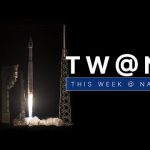
  • The First Mission to the Trojan Asteroids on This Week @NASA – October 16, 2021

    The First Mission to the Trojan Asteroids on This Week @NASA – October 16, 2021

    The first mission to the Trojan asteroids, a prelaunch milestone for our Artemis I mission, and highlighting a few of our NASA centers … a few of the stories to tell you about – This Week at NASA!

    Download Link: https://images.nasa.gov/details-The%20First%20Mission%20to%20the%20Trojan%20Asteroids%20on%20This%20Week%20@NASA%20%E2%80%93%20October%2016,%202021

    Producer: Andre Valentine
    Editor: Shane Apple
    Music: Universal Production Music

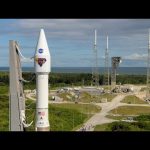
  • Launch of NASA’s Lucy Mission to Jupiter’s Trojan Asteroids

    Launch of NASA’s Lucy Mission to Jupiter’s Trojan Asteroids

    Set a reminder: Our Lucy mission is scheduled to launch on Sat., Oct. 16 at 5:34 a.m. EDT (9:34 UTC) to ancient asteroids called Trojans.

    The Trojan asteroids are rocky worlds as old as our solar system, and they share an orbit with Jupiter around the Sun. They’re thought to be remnants of the primordial material that formed the outer planets. On Oct. 16, NASA’s Lucy mission is scheduled to launch from Cape Canaveral, Florida, to explore these small worlds for the first time. Lucy was named after the fossilized human ancestor (called “Lucy” by her discoverers) whose skeleton expanded our understanding of human evolution. The Lucy Mission hopes to expand our understanding of solar system evolution by visiting these 4.5-billion-year-old planetary “fossils.”

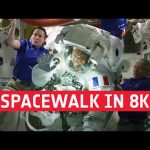
  • Spacewalk scenes with Thomas and Aki – 8K!

    Spacewalk scenes with Thomas and Aki – 8K!

    ESA astronaut Thomas Pesquet and @JAXA | 宇宙航空研究開発機構 astronaut Akihiko Hoshide performed a spacewalk on 12 September 2021 to prepare for the installation of a new solar array on the International Space Station.

    The new solar arrays, called IROSA or ISS Roll-Out Solar Array, are being gradually installed over the existing arrays to boost the International Space Station’s power system.

    Thomas and @NASA astronaut Shane Kimbrough prepared and installed two IROSA solar panels across three spacewalk in June. The arrays were taken from their storage area outside the Space Station and passed from spacewalker to spacewalker to the worksite. There the rolled arrays were secured, unfolded, connected and then unfurled.

    Aki and Thomas prepared the P4 truss for its IROSA installation. This is the same area as where Thomas and Shane installed two IROSA’s but closer to the main body of the Space Station, in an area called the 4A channel. Only one new solar array will be installed here, on a later spacewalk.
    While the extravehicular activity or EVA was already the fourth spacewalk during Thomas’ Alpha mission, it was his first with Aki and the first time a spacewalking pair did not feature a US or Russian astronaut.

    Aki and Thomas made good time preparing the 4A channel for the next IROSA and were able to complete a second task to replace a floating potential measurement unit that was faulty. This unit measures the difference between the Space Station’s conductive structures and the atmospheric plasma.

    Thomas and Aki completed their spacewalk in six hours and 54 minutes, which hands Thomas the ESA record for longest time spent spacewalking.

    Thomas posted this video on his social media channels with the caption: “Hanging out with my buddy Aki on last week’s spacewalk. The music and timelapse makes it look comical, but as you can see tools and equipment have a life of their own and never stop floating away. Keeping track and even just staying in position in front of the worksite is a constant fight! We got the support bracket done and the truss is ready for the new roll-out solar arrays. We are passing on the baton to the next crew, the arrays need to be launched still and they will be installed next year.”

    Over 200 experiments are planned during Thomas’ time in space, with 40 European ones and 12 new experiments led by the French space agency @CNES.

    Follow Thomas: http://bit.ly/ThomasPesquetBlog

    ★ Subscribe: http://bit.ly/ESAsubscribe and click twice on the bell button to receive our notifications.

    Check out our full video catalog: http://bit.ly/SpaceInVideos
    Follow us on Twitter: http://bit.ly/ESAonTwitter
    On Facebook: http://bit.ly/ESAonFacebook
    On Instagram: http://bit.ly/ESAonInstagram
    On Pinterest: https://bit.ly/ESAonPinterest
    On Flickr: http://bit.ly/ESAonFlickr

    We are Europe’s gateway to space. Our mission is to shape the development of Europe’s space capability and ensure that investment in space continues to deliver benefits to the citizens of Europe and the world. Check out https://www.esa.int/ to get up to speed on everything space related.

    Copyright information about our videos is available here: https://www.esa.int/ESA_Multimedia/Terms_and_Conditions

    #ESA
    #8K
    #MissionAlpha

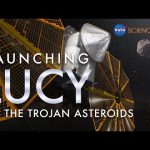
  • NASA Science Live: Launching Lucy to the Trojan Asteroids

    NASA Science Live: Launching Lucy to the Trojan Asteroids

    Going where no spacecraft has gone before, NASA’s Lucy mission will embark on a 12-year journey to Jupiter’s Trojan asteroids. As time capsules to the early solar system, these ancient remnants could give scientists vital clues about how the planets formed 4.5 billion years ago. Join mission experts on Friday, October 15 at 3:30 p.m. EDT as they take you behind-the-scenes at NASA’s Kennedy Space Center ahead of the Lucy spacecraft launch on Saturday. Submit questions using #askNASA to have them answered live during the show.

    Meet the experts:
    Dr. Carly Howett is the Assistant Director of the Department of Space Studies at the Southwest Research Institute. Her favorite part about her job is getting to explore the universe. Before working on the Lucy mission, Carly was on NASA’s New Horizons team when it flew past Pluto. When Carly isn’t working, she enjoys spending time with her husband, two young kids and participating in triathlons.

    Wil Santiago is the Deep Space Exploration Engineer at Lockheed Martin Space. His favorite part of the job is working with a team that helps design, develop and fly robotic missions that allow humanity to explore our solar system and beyond and continue pushing the boundaries of what’s possible. Outside of work, Wil enjoys exploring the outdoors and traveling.

  • Earth from Space: New Delhi, India

    Earth from Space: New Delhi, India

    The Copernicus Sentinel-2 takes us over New Delhi, the capital and second-largest city of India, in this edition of the Earth from Space programme.

    Download the image: https://www.esa.int/ESA_Multimedia/Images/2021/10/New_Delhi_India

    ★ Subscribe: http://bit.ly/ESAsubscribe and click twice on the bell button to receive our notifications.

    Check out our full video catalog: http://bit.ly/SpaceInVideos
    Follow us on Twitter: http://bit.ly/ESAonTwitter
    On Facebook: http://bit.ly/ESAonFacebook
    On Instagram: http://bit.ly/ESAonInstagram
    On LinkedIn: https://bit.ly/ESAonLinkedIn
    On Pinterest: https://bit.ly/ESAonPinterest
    On Flickr: http://bit.ly/ESAonFlickr

    We are Europe’s gateway to space. Our mission is to shape the development of Europe’s space capability and ensure that investment in space continues to deliver benefits to the citizens of Europe and the world. Check out https://www.esa.int/ to get up to speed on everything space related.

    Copyright information about our videos is available here: https://www.esa.int/ESA_Multimedia/Terms_and_Conditions

    #ESA
    #EarthFromSpace
    #NewDelhi