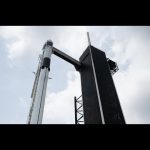
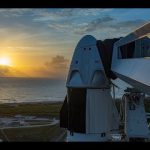
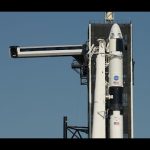
Reporting from the Countdown Clock at NASA’s Kennedy Space Center — America’s spaceport — officials from NASA provided an update May 29 about the upcoming second attempt on May 30 to launch SpaceX’s Crew Dragon spacecraft to space carrying NASA astronauts Robert Behnken and Douglas Hurley.
Watch this video to see NASA Administrator Jim Bridenstine, NASA Deputy Administrator Jim Morhard, Kennedy Space Center Director Bob Cabana, and astronauts Kjell Lindgren and Nicole Mann share their insights about the mission.
NASA and SpaceX now are targeting 3:22 p.m. EDT Saturday, May 30, for the launch of the first commercially built and operated American rocket and spacecraft carrying astronauts to the space station. The first launch attempt, on May 27, was scrubbed due to unfavorable weather conditions.
This video is available for download from NASA’s Image and Video Library: https://images.nasa.gov/details-What‘s%20the%20Status%20of%20NASA%20and%20SpaceX’s%20Mission%20to%20Launch%20Astronauts%20to%20Space
The Copernicus Sentinel-2 mission takes us over part of Abu Dhabi – one of the seven emirates that constitute the United Arab Emirates (UAE), in this week’s edition of the Earth from Space programme.
We are Europe’s gateway to space. Our mission is to shape the development of Europe’s space capability and ensure that investment in space continues to deliver benefits to the citizens of Europe and the world. Check out http://www.esa.int/ESA to get up to speed on everything space related.
In 2020, NASA and SpaceX will launch American astronauts to the International Space Station from U.S. soil for the first time since 2011.
Would you like to learn how to make your own Demo-2 to launch in your home? Watch this tutorial to learn how.
All you will need is paper, markers, scissors, tape, yarn or ribbon (optional) and a straw.
How are you preparing to #LaunchAmerica? From building your own rocket to binge-watching launch videos, share a video, a photo or simply your thoughts using #LaunchAmerica for a chance to be featured on our social media platforms.
Recorded May 27, 2020: Watch history unfold on Wednesday, May 27, as NASA and SpaceX launch astronauts Robert Behnken and Douglas Hurley to the International Space Station. This mission marks the first time since the retirement of the space shuttle in 2011 that humans will fly to the space station from U.S. soil.
Tune in starting at 12:15 p.m. EDT as NASA and SpaceX provide joint, live coverage from launch to arrival at the space station. Teams are targeting 4:33 p.m. EDT for the launch of the SpaceX Crew Dragon spacecraft atop a Falcon 9 rocket from historic Launch Complex 39A at NASA’s Kennedy Space Center in Florida. The Crew Dragon is scheduled to dock to the space station at 11:29 a.m. Thursday, May 28.
The Artemis programme is bringing humans back to the Moon. It depends heavily on NASA’s Orion spacecraft that consists of a crew module and the European Service Module, which will provide propulsion, life support, environmental control and electrical power. Main contractor Airbus has just been green-lighted by ESA to develop a third European Service Module.
We are Europe’s gateway to space. Our mission is to shape the development of Europe’s space capability and ensure that investment in space continues to deliver benefits to the citizens of Europe and the world. Check out http://www.esa.int/ESA to get up to speed on everything space related.
One day prior to NASA’s mission with SpaceX to launch American astronauts to the International Space Station aboard the Crew Dragon spacecraft, officials will talk about the mission live from NASA’s Kennedy Space Center in Florida.
NASA Administrator Jim Bridenstine, Kennedy Space Center Director Bob Cabana, and astronauts Kjell Lindgren and Nicole Mann will be on hand to talk about the upcoming mission to fly astronauts Douglas Hurley and Robert Behnken to the orbiting laboratory.
Teams are targeting 4:33 p.m. EDT Wednesday, May 27, for the launch of the mission, which will be the first time a commercially built and operated American rocket and spacecraft will carry humans to the space station.
Cold, dark, remote, Antarctica is as close to space as you can get on Earth. Humans conduct research in Antarctic bases on a wide range of topics, from climate studies and astronomy to glaciology and human physiology and psychology. Dr. Stijn Thoolen, the ESA-sponsored research doctor based at the French/Italian Concordia research station in Antarctica, discusses life in isolation in what is often referred to as White Mars.
We are Europe’s gateway to space. Our mission is to shape the development of Europe’s space capability and ensure that investment in space continues to deliver benefits to the citizens of Europe and the world. Check out http://www.esa.int/ESA to get up to speed on everything space related.
NASA’s mission with SpaceX to launch American astronauts to the International Space Station is cleared to proceed, officials said, following a successful Flight Readiness Review that concluded Friday, May 22, at NASA’s Kennedy Space Center in Florida.
Participants in a news briefing about the mission include:
· NASA Administrator Jim Bridenstine
· NASA Associate Administrator Steve Jurczyk
· Kathy Lueders, manager, NASA Commercial Crew Program
· Kirk Shireman, manager, International Space Station Program
· Benji Reed, director of crew mission management, SpaceX
· Norm Knight, deputy director, NASA Johnson Space Center Flight Operations
NASA and SpaceX are targeting 4:33 p.m. EDT Wednesday, May 27, for the launch of the Demo-2 flight, which will be the first time a commercially built and operated American rocket and spacecraft will carry humans to the space station.
How to virtually participate in ‘Launch America,’ Vice President Pence highlights the nation’s return to human spaceflight, and honoring a legendary astronomer … a few of the stories to tell you about – This Week at NASA!
This video is available for download from NASA’s Image and Video Library: https://images.nasa.gov/details-How%20to%20Virtually%20Participate%20in%20Launch%20America%20on%20This%20Week%20@NASA%20May%2022,%202020
NASA’s WFIRST mission will explore the universe, seeking answers to some of its biggest mysteries. From understanding the nature of dark energy to studying planets outside our solar system, this mission will expand our view of the cosmos. Join experts Wednesday, May 20 at 11 a.m. ET for an exciting announcement about the WFIRST mission.
It’s not just Mission Control that’s counting down — how are you preparing to #LaunchAmerica? From building your own rocket to binge-watching launch overage, share a video, a photo or simply your thoughts for a chance to be featured on our social media platforms, as we prepare for the return of human spaceflight to U.S. soil.
With the Covid-19 pandemic halting our daily lives and forcing many countries and region into lockdown, the economic effects have been devastating. Closed borders have caused traffic jams and disrupted supply chains. In Europe, for example, the agriculture industry has suffered. Normally the industry relies on migrant labour to harvest crops, but as the lockdown continues, crops remain unpicked – putting farmers and the food supply under pressure. How can the food supply chain more sustainable?
★ Subscribe: http://bit.ly/ESAsubscribe and click twice on the bell button to receive our notifications.
We are Europe’s gateway to space. Our mission is to shape the development of Europe’s space capability and ensure that investment in space continues to deliver benefits to the citizens of Europe and the world. Check out http://www.esa.int/ESA to get up to speed on everything space related.
On Tuesday, May 19, the National Space Council will meet at NASA Headquarters in Washington, DC. Vice President Pence will chair the meeting of the council, which advises the president on America’s space policy and strategy and reviews the nation’s long-range goals for space activities.
Unitevi all’astronauta ESA Samantha Cristoforetti per una visita guidata agli alloggi dell’equipaggio della Stazione Spaziale Internazionale – la camera da letto.
Dopo una giornata di lavoro ad eseguire esperimenti e a mantenere attivo il centro di ricerca in microgravità, gli astronauti possono ritirarsi nel proprio alloggio privato, che non è più grande di un un camerino. In questo piccolo spazio possono riporre oggetti personali, utilizzare un laptop per navigare in Internet e addormentarsi fluttuando nel proprio sacco a pelo.
We are Europe’s gateway to space. Our mission is to shape the development of Europe’s space capability and ensure that investment in space continues to deliver benefits to the citizens of Europe and the world. Check out http://www.esa.int/ESA to get up to speed on everything space related.
Modern rocket. Retro logo. Same mission. The Worm is back. And just in time to mark the return of human spaceflight on American rockets from American soil.
The retro, modern and iconic emblem will fly once again, this time on the side of the SpaceX Falcon 9 rocket that will ferry astronauts Robert Behnken and Douglas Hurley to the International Space Station on May 27 from Kennedy Space Center. Graphic designer Richard Danne explains how he and Bruce Blackburn created the logo in 1975. Take a trip down memory lane as we look to the future of our mission to #LaunchAmerica.
Honoring the past and present, NASA celebrates Asian American Pacific Islanders Heritage Month. These NASA employees, who have helped contribute to America’s space program, celebrate their diverse history, rich culture and contributions.
As the COVID-19 pandemic has disrupted lives across the globe, Earth-observing satellites take the pulse of our planet from space. While the global lockdown has had a massive impact on daily life and the economy, there have been environmental benefits that are visible from space. How can we preserve these positives when returning to ‘business as usual’?
★ Subscribe: http://bit.ly/ESAsubscribe and click twice on the bell button to receive our notifications.
We are Europe’s gateway to space. Our mission is to shape the development of Europe’s space capability and ensure that investment in space continues to deliver benefits to the citizens of Europe and the world. Check out http://www.esa.int/ESA to get up to speed on everything space related.
Counting down to the return of human spaceflight from Florida, a successful space station resupply mission, and a virtual tool to help develop lunar landers … a few of the stories to tell you about – This Week at NASA!
This video is available for download from NASA’s Image and Video Library: https://images.nasa.gov/details-Countdown%20To%20Return%20of%20Human%20Spaceflight%20from%20Florida%20on%20This%20Week%20@NASA%20%E2%80%93%20May%2015,%202020
The Copernicus Sentinel-2 mission takes us over San Francisco Bay in the US state of California, in this week’s edition of the Earth from Space programme.
We are Europe’s gateway to space. Our mission is to shape the development of Europe’s space capability and ensure that investment in space continues to deliver benefits to the citizens of Europe and the world. Check out http://www.esa.int/ESA to get up to speed on everything space related.
Together with SpaceX, NASA will return human spaceflight to American soil after nearly a decade. SpaceX will launch people into space for the first time ever with astronauts Bob Behnken and Doug Hurley on board Crew Dragon, which will dock to the International Space Station.
Prepare to #LaunchAmerica on May 27: www.nasa.gov/launchamerica
Discussing the approach to increasing on-site work, the launch pad is ready for Artemis I, and new findings from an Earth-observing mission … a few of the stories to tell you about – This Week at NASA!
This video is available for download from NASA’s Image and Video Library: https://images.nasa.gov/details-Discussing%20a%20Safe%20Return%20to%20On-site%20Work%20on%20This%20Week%20@NASA%20%E2%80%93%20May%208,%202020
We are Europe’s gateway to space. Our mission is to shape the development of Europe’s space capability and ensure that investment in space continues to deliver benefits to the citizens of Europe and the world. Check out http://www.esa.int/ESA to get up to speed on everything space related.
Making a pop-up card is the perfect way to celebrate NASA launching American astronauts to the International Space Station from U.S. soil for the first time since 2011.
All you will need is is some construction paper, scrapbook paper (or cardstock), scissors, drawing supplies, and adhesive. Watch this video to learn more.
How are you preparing to #LaunchAmerica? From building your own rocket to binge-watching launch videos, share a video, a photo or simply your thoughts using #LaunchAmerica for a chance to be featured on our social media platforms.
Featuring how the Sentinel-5P mission of the European Union’s Copernicus Programme has become a game-changer for monitoring our atmosphere while being one of the most important sources of data for the Copernicus Atmosphere Monitoring Service.
★ Subscribe: http://bit.ly/ESAsubscribe and click twice on the bell button to receive our notifications.
We are Europe’s gateway to space. Our mission is to shape the development of Europe’s space capability and ensure that investment in space continues to deliver benefits to the citizens of Europe and the world. Check out http://www.esa.int/ESA to get up to speed on everything space related.
Join NASA ice experts as we discuss important science about Earth’s icy regions, and how it can impact us here in warmer environments. NASA’s ICESat-2 mission uses a laser instrument on a satellite to precisely measure ice and just released new findings about how Earth’s ice is changing. Scientists discovered that enough ice has melted from Antarctica and Greenland to rise sea level about half an inch over the last 16 years. We’ll talk to these researchers to see what that means, and then take you to the coast of Virginia to see the real-world impacts of Earth’s melting ice.
NASA astronaut and U.S. Navy SEAL Chris Cassidy sends a message from the International Space Station, thanking all on the front lines facing COVID-19, our invisible enemy. From doctors and nurses in our hospitals, law enforcement and firefighters who protect us, warehouse personnel and grocery store clerks who keep the shelves stocked and the economy going – you are an inspiration to all and we sincerely thank you.
Highlighting our upcoming launch of astronauts from Florida, some news about our Moon to Mars effort, and our Mars helicopter has a new name … a few of the stories to tell you about – This Week at NASA!
This video is available for download from NASA’s Image and Video Library: https://images.nasa.gov/details-Highlighting%20Our%20Upcoming%20Launch%20of%20Astronauts%20from%20Florida%20on%20This%20Week%20@NASA%20%E2%80%93%20May%201,%202020
We are Europe’s gateway to space. Our mission is to shape the development of Europe’s space capability and ensure that investment in space continues to deliver benefits to the citizens of Europe and the world. Check out http://www.esa.int/ESA to get up to speed on everything space related.
NASA has selected three American companies – Blue Origin, Dynetics and SpaceX – to design and develop human landing systems for the Artemis program. With these awards, NASA is on track to land the next astronauts on the lunar surface by 2024, and establish sustainable human exploration of the Moon by the end of the decade.
This year, NASA is celebrating the Hubble Space Telescope’s 30 years of unlocking the beauty and mystery of space.
Hubble is revolutionizing modern astronomy for scientists, while taking the public on a wondrous journey of exploration and discovery. Hubble’s never-ending, breathtaking celestial snapshots provide a visual shorthand for Hubble’s top scientific achievements. Unlike any space telescope before it, Hubble made astronomy relevant, engaging and accessible for people of all ages. The space telescope’s iconic imagery has redefined our view of the universe and our place in time and space.
Have you heard about an asteroid close-approach happening on April 29? Asteroid 1998 OR2 poses no threat to our planet, but we can still learn a lot by studying it. Don’t miss a special Planetary Defense episode of NASA Science Live on Monday, April 27 at 3:00 p.m. EDT to learn how we find, track and monitor asteroids and near-Earth Objects.
Take a break with ESA astronauts Alexander Gerst, Samantha Cristoforetti, Luca Parmitano and Thomas Pesquet as they discuss living and working in space. In this video, our astronauts talk about their experiences of landing in a Russian Soyuz spacecraft upon returning from the International Space Station.
During a shared coffee break, Luca compares his first landing to his most recent landing – the second of which he found much softer than the first. Thomas finds humour in his experience of landing horizontally, while Alex describes a particularly high gravitational load on his return to Earth.
This clip is part of a series of four filmed in February 2020, following Luca’s return from the ISS mission on 6 February. It was filmed in the crew quarters of the German Aerospace Center DLR’s :envihab facility next to ESA’s European Astronaut Centre in Cologne, Germany.
For more about Luca’s Beyond mission and other ESA astronaut-related content, visit the Exploration blog: https://blogs.esa.int/exploration/
★ Subscribe: http://bit.ly/ESAsubscribe and click twice on the bell button to receive our notifications.
We are Europe’s gateway to space. Our mission is to shape the development of Europe’s space capability and ensure that investment in space continues to deliver benefits to the citizens of Europe and the world. Check out http://www.esa.int/ESA to get up to speed on everything space related.
Each year, the NASA/ESA Hubble Space Telescope dedicates a small portion of its precious observing time to taking a special anniversary image, showcasing particularly beautiful and meaningful objects. These images continue to challenge scientists with exciting new surprises and to enthral the public with ever more evocative observations.
To celebrate Hubble’s 30th anniversary, let’s look back at the beauty and science behind each of the anniversary images unveiled as of 2005. In this video, we will also feature the very special 2020 Hubble Space Telescope 30th anniversary image.
Credit:
Directed by: Bethany Downer
Visual design and editing: Martin Kornmesser
Written by: Bethany Downer
Narration: Sara Mendes da Costa
Images & VIdeos: NASA, ESA, M.Kornmesser, L. Calçada, ESO, NAOJ, G. Bacon, L. Frattare, Z. Levay and F. Summers (STScI/AURA), D. Lennon and E. Sabbi (ESA/STScI), J. Anderson, S.E. de Mink, R. van der Marel, T. Sohn, and N. Walborn (STScI), L. Bedin (INAF, Padua), C. Evans (STFC), H. Sana (Amsterdam), N. Langer (Bonn), P. Crowther (Sheffield), A. Herrero (IAC, Tenerife), N. Bastian (USM, Munich), and E. Bressert (ESO), the Hubble Heritage Team, T. Davis, L. Frattare, Z. Levay, (Viz 3D team, STScI), J. Anderson (STScI), the Hubble Heritage Team (STScI/AURA), A. Nota (ESA/STScI), and the Westerlund 2 Science Team, Eckhard Slawik (e.slawik@gmx.net).
Music: Johan B. Monell (www.johanmonell.com
Web and technical support: Raquel Yumi Shida
Executive producer: Mariya Lyubenova
★ Subscribe: http://bit.ly/ESAsubscribe and click twice on the bell button to receive our notifications.
We are Europe’s gateway to space. Our mission is to shape the development of Europe’s space capability and ensure that investment in space continues to deliver benefits to the citizens of Europe and the world. Check out http://www.esa.int/ESA to get up to speed on everything space related.
On 24 April 1990 the NASA/ESA Hubble Space Telescope was sent into orbit aboard the space shuttle Discovery, the first space telescope of its kind. It offered a new view of the Universe and has, for 30 years, reached and surpassed all expectations, beaming back data and images that have changed scientists’ understanding of the Universe and the public’s perception of it. Hubble’s discoveries have revolutionised nearly all areas of current astronomical research, from planetary science to cosmology, and its pictures are unmistakably out of this world.
This video revisits some of Hubble’s biggest science discoveries throughout its three decades of operation to celebrate the telescope’s 30th anniversary.
Credit:
Directed by: Bethany Downer
Visual design and editing: Martin Kornmesser
Written by: Bethany Downer
Narration: Sara Mendes da Costa
Images & Videos: NASA, ESA, M.Kornmesser, L. Calçada, ESO, G. Bacon (STScI), theHubble Heritage Team (STScI/AURA)-ESA/Hubble Collaboration, and H. Bond (STScI and Pennsylvania State University), A. Feild (STScI), and A. Riess (STScI/JHU), D. Jewitt (UCLA), F. Summers, Z. Levay, J. DePasquale, L. Hustak, L. Frattare, M. Robberto (STScI), R. Hurt (Caltech/IPAC) Acknowledgement: R. Gendler, spaceengine.org.
Music: Johan B. Monell (www.johanmonell.com)
Web and technical support: Raquel Yumi Shida
Executive producer: Mariya Lyubenova
★ Subscribe: http://bit.ly/ESAsubscribe and click twice on the bell button to receive our notifications.
We are Europe’s gateway to space. Our mission is to shape the development of Europe’s space capability and ensure that investment in space continues to deliver benefits to the citizens of Europe and the world. Check out http://www.esa.int/ESA to get up to speed on everything space related.
Answering the call to help combat coronavirus, a launch date for our Demo-2 mission, and … celebrating 30 years of Hubble … a few of the stories to tell you about – This Week at NASA!
This video is available for download from NASA’s Image and Video Library: https://images.nasa.gov/details-Answering%20the%20Call%20to%20Help%20Combat%20Coronavirus%20on%20This%20Week%20@NASA%20%E2%80%93%20April%2024,%202020
This month marks the 30th anniversary of the international Hubble Space Telescope.
Launched on 24 April 1990, and deployed from the Space Shuttle Discovery cargo bay a day later (25 April 1990), the telescope has given us a new perspective on the Universe.
The joint NASA/ESA mission has shown us distant galaxies and spectacular nebulae. It has revealed supermassive black holes and planets in distant solar systems; and has proved that the Universe is not only expanding, the expansion is accelerating.
Hubble’s mission has also been eventful. When it was first launched, a defect in the mirror meant it sent back blurry images. Since then, five servicing missions have enabled the telescope to be improved and upgraded. Today, it is still going strong.
We are Europe’s gateway to space. Our mission is to shape the development of Europe’s space capability and ensure that investment in space continues to deliver benefits to the citizens of Europe and the world. Check out http://www.esa.int/ESA to get up to speed on everything space related.
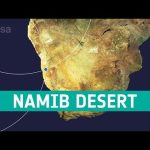
The Copernicus Sentinel-2 mission takes us over part of the Namib Desert, considered the oldest desert on Earth, in this week’s edition of the Earth from Space programme.
We are Europe’s gateway to space. Our mission is to shape the development of Europe’s space capability and ensure that investment in space continues to deliver benefits to the citizens of Europe and the world. Check out http://www.esa.int/ESA to get up to speed on everything space related.
In these times of confinement, ESA astronaut support engineer Romain Charles shares nine tips on how to live in isolation – he spent 520 days locked in a mockup spacecraft and is a true expert on the subject.
Mars500 locked six ‘marsonauts’ in a simulated spaceship near Moscow, Russia for 520 days, the time it would take to fly to Mars and back plus 30 days spent exploring its surface. It was the first full-length, high-fidelity simulation of a human mission to our neighbouring planet. The crew went into lockdown on 3 June 2010, and they did not open the hatch until 17 months later on 4 November 2011.
Mars 500 was a success in that it proved that humans can survive the inevitable isolation that is needed for a mission to Mars and back. Psychologically, we can do it!
The crew had their ups and downs, but these were to be expected. In fact, scientists anticipated many more problems, but the crew did very well coping with the monotonous mission, with little variation in food and even a communication delay over 12 minutes one-way.
During their simulated mission, the crew lived in isolation without fresh food, sunlight or fresh air. The participants from Italy, Russia, China and France had no external cues such as the Sun going down at night to remind them when to sleep.
Their bodies are among the most researched in the world. Years of constant monitoring, prodding and taking blood allowed scientists examined how they reacted to the time in confinement with experiments focussing on their bodies, mental states and performance.
More on Mars 500: www.esa.int/Mars500
★ Subscribe: http://bit.ly/ESAsubscribe and click twice on the bell button to receive our notifications.
We are Europe’s gateway to space. Our mission is to shape the development of Europe’s space capability and ensure that investment in space continues to deliver benefits to the citizens of Europe and the world. Check out http://www.esa.int/ESA to get up to speed on everything space related.
Let’s talk about science! Watch the sixth episode of our #EZScience series to learn about the 30th anniversary of NASA’s Hubble Space Telescope. As the first major optical telescope to be placed in space, Hubble has changed our fundamental understanding of the universe.
ABOUT THE SERIES: In our #EZScience video series with the National Air and Space Museum, NASA’s associate administrator for science Dr. Thomas Zurbuchen and Museum director Dr. Ellen Stofan talk about the latest in planetary science and exploration.
On the 50th anniversary of Earth Day, NASA astronaut Chris Cassidy of Expedition 63 reflects on what Earth Day means to him.
This Earth Day, we can still collectively appreciate the beauty of our planet and the extraordinary science that helps us understand how it all works — and we can do it from our homes. Join us in commemorating the 50th anniversary with #EarthDayAtHome.